

P2097 on 2019-2021 Mazda 3: Post-Catalyst Rich Fuel Trim Causes and Fixes
On a 2019-2021 Mazda 3, code P2097 is often caused by a software glitch requiring a PCM update from a dealer. Mazda TSB 01-012/20 addresses this for some models, and it's a known issue for the platform's early years. If software is current, the next most likely causes are an exhaust leak or a failing downstream oxygen sensor. A software update is a warranty item; a sensor replacement costs ~$150-$300.
- Your first step should be to check with a Mazda dealer if your vehicle needs a PCM software update, as per TSB 01-012/20.
- If software is not the issue, the most common causes are an exhaust leak or a faulty downstream oxygen sensor.
- Do not immediately replace the oxygen sensor without performing basic diagnostics first, such as checking for exhaust leaks.
- Continued driving is possible, but resolving the issue will restore fuel economy and prevent potential long-term damage to the catalytic converter.
What's Unique About the 2019-2021 Mazda 3
For the fourth-generation Mazda 3, a primary cause for P2097 can be a software issue related to its then-new cylinder deactivation technology. Mazda was one of the first to implement cylinder deactivation on a four-cylinder engine, and early models had software that was overly sensitive. Mazda released Technical Service Bulletin (TSB 01-012/20) for 2019-2020 models where 'improper PCM control logic' could falsely trigger this code. While the TSB specifies vehicles 'without cylinder deactivation', owners of models with cylinder deactivation have reported dealers performing a PCM reflash to resolve the code, indicating a broader software issue. This makes a software check the critical first step.
Symptoms You May Notice
- Check Engine Light is on
- Reduced fuel economy
- Rough or unstable idle
- Engine hesitation during acceleration
- Strong fuel smell from the exhaust
- Engine vibration at certain speeds
- Replacing the downstream O2 sensor without first checking for software updates or exhaust leaks. Given the known TSB, a software check should always be the first step. Many owners have replaced the sensor only to have the code return, then found the fix was a simple PCM reflash.
Most Likely Causes
- PCM Software Anomaly 🔴 High Probability Mazda issued TSB 01-012/20 for 2019-2020 models due to improper PCM logic. Although the TSB text specifies non-cylinder deactivation models, the issue is widely reported on all early 4th gen models. Forums are filled with owners of 2019+ models (with CD) who had the P2097 code resolved with a dealer PCM update.
How to confirm: A Mazda dealership can check the vehicle's VIN against TSBs and verify the current PCM software version using their Mazda Modular Diagnostic System (M-MDS). This should be the first diagnostic step.
Typical fix: Reprogramming the PCM with updated software provided by Mazda. This is performed by a dealer and is often covered under the 8-year/80,000-mile federal emissions warranty.
Est. part cost: $0 (if covered by warranty or TSB) - Exhaust System Leak 🟡 Medium Probability Leaks at gaskets or pipe connections, especially between the two oxygen sensors, can allow outside air to be pulled into the exhaust stream. This fools the downstream sensor into thinking the mixture is lean, causing the PCM to overcompensate by adding fuel, which the upstream sensor then reports as a rich condition that the downstream sensor confirms.
How to confirm: Perform a visual inspection of the exhaust system from the manifold to the tailpipe, looking for soot marks or cracks. A smoke test, where smoke is forced into the exhaust system, is the most effective method to pinpoint small leaks.
Typical fix: Replace the leaking gasket or tighten loose connections. In rare cases, a cracked exhaust component may need to be welded or replaced.
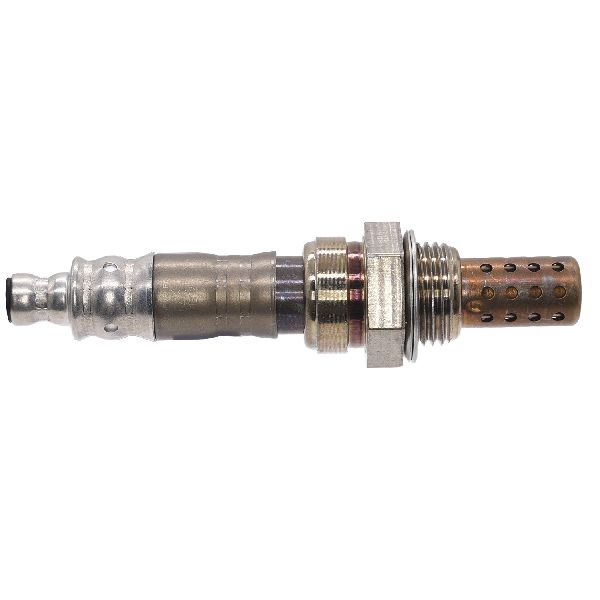
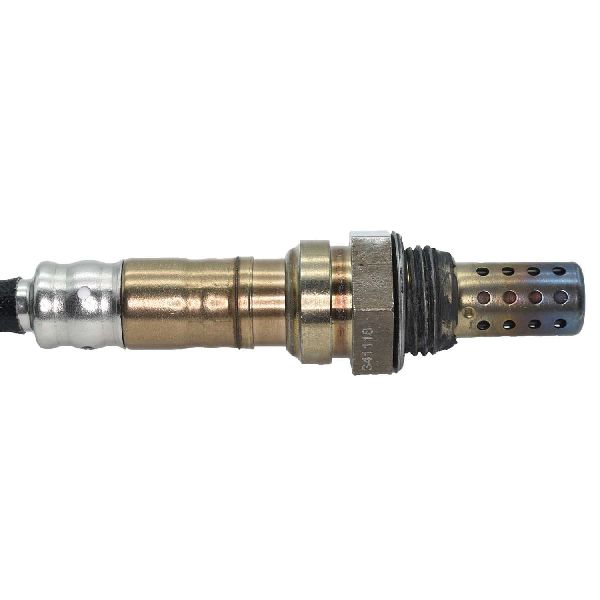
Est. part cost: $10-$50 for gaskets - Faulty Downstream Oxygen Sensor (HO2S) 🟡 Medium Probability → Shop Oxygen Sensor
How to confirm: Use a scan tool to monitor the voltage of the downstream O2 sensor (Bank 1, Sensor 2). A healthy sensor's voltage should be relatively stable, typically between 0.5V and 0.8V. If it's stuck high (above 0.8V) or fluctuating wildly like the upstream sensor, it is likely faulty.
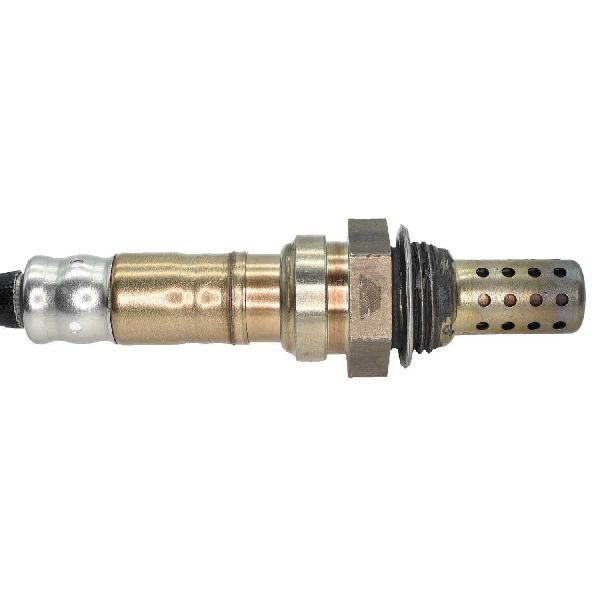
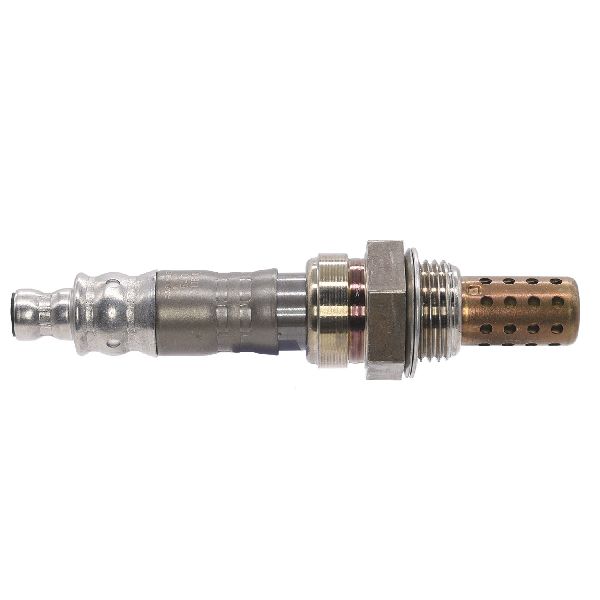
Typical fix: Replace the downstream oxygen sensor. The OEM Mazda part is PE5S-18-861A, which is a re-branded Denso sensor.
Est. part cost: $80-$200 - Faulty Upstream Air/Fuel Ratio (A/F) Sensor ⚪ Low Probability → Shop Oxygen Sensor
How to confirm: A failing upstream sensor can send incorrect data, causing the engine to actually run rich. The downstream sensor then correctly reports this rich condition. Diagnosing this requires a scan tool to compare the readings of both sensors; if the upstream sensor is lazy, biased, or not fluctuating rapidly as it should, it's the likely culprit.
Typical fix: Replace the upstream A/F sensor.
Est. part cost: $100-$250
Rare But Worth Checking
- Leaking Fuel Injector: → Shop Fuel Injector A fuel injector stuck partially open will dump excess fuel into a cylinder, causing a true rich condition. This would usually be accompanied by a misfire code (P030x), a rougher running engine, and a raw fuel smell.
- High Fuel Pressure: A faulty fuel pressure regulator or a failing fuel pump can cause system-wide high fuel pressure. A recall for the low-pressure fuel pump (Mazda recall #4620H, NHTSA Campaign #20V383000) was issued for some 2018-2019 Mazda models. While the 2019 Mazda 3 wasn't explicitly on the initial list, the issue was with Denso pumps used across the industry, making it a plausible, though rare, cause.
- Failing Catalytic Converter: → Shop Catalytic Converter While a failing converter more commonly causes a P0420 (Catalyst Efficiency) code, it can sometimes become contaminated or partially clogged, leading to incorrect readings from the downstream O2 sensor.
Diagnosis Steps
- Check for TSBs: Contact a Mazda dealer or use a professional database to see if TSB 01-012/20 or any other software update applies to your vehicle's VIN. This is the most critical first step for this specific vehicle.
- Scan for Other Codes: Check for any other stored codes that could point to the root cause, such as misfire (P030x) or upstream rich (P0172) codes.
- Inspect for Exhaust Leaks: Visually inspect the entire exhaust system for cracks or black soot marks, especially around sensor bungs and flange gaskets. A smoke test is recommended for a thorough check.
- Analyze Live Sensor Data: Use an OBD-II scanner to view live data. Observe the voltage readings for the upstream A/F sensor (Bank 1, Sensor 1) and the downstream O2 sensor (Bank 1, Sensor 2). The upstream sensor should fluctuate rapidly around its center point. The downstream sensor should be relatively steady around 0.7V. A downstream sensor stuck high (e.g., >0.8V) or mirroring the upstream sensor's fluctuations 🎬 Watch: How to tell if your Mazda oxygen sensor is bad points to a bad sensor or a true rich condition.
- Test Fuel System: If a true rich condition is suspected (e.g., P0172 is also present), check fuel pressure to ensure it is within specification. Investigate the status of the low-pressure fuel pump recall (Mazda #4620H).
- Inspect Fuel Injectors: If a specific cylinder is suspected, you can check the spark plug for signs of running rich (heavy black soot). A fuel injector balance test can confirm if one is leaking.
- Test the Downstream O2 Sensor: If all else is normal, the downstream O2 sensor is a likely hardware failure. It can be tested directly for response, but replacement is often the most practical step 🎬 See this walkthrough on how to replace Mazda O2 sensors at this point.
Parts You'll Likely Need
- Downstream Oxygen Sensor (Heated Oxygen Sensor, HO2S)
(OEM #PE5S-18-861A (Denso is the OEM manufacturer))— This sensor is responsible for triggering the code. It can fail by sending inaccurate rich readings to the PCM. After software issues, this is the most common hardware failure.
Trusted brands: Denso (OEM), Bosch, NGK/NTK
OEM price range: $150-$250
Aftermarket price range: $80-$150 - Upstream Oxygen Sensor (Air/Fuel Ratio Sensor)
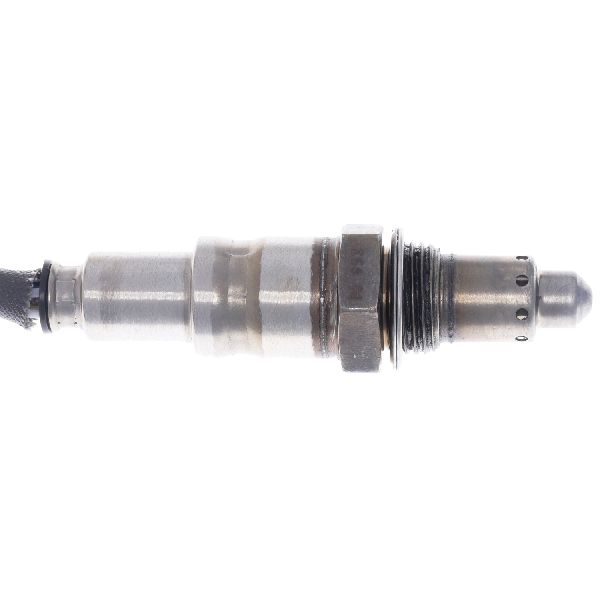
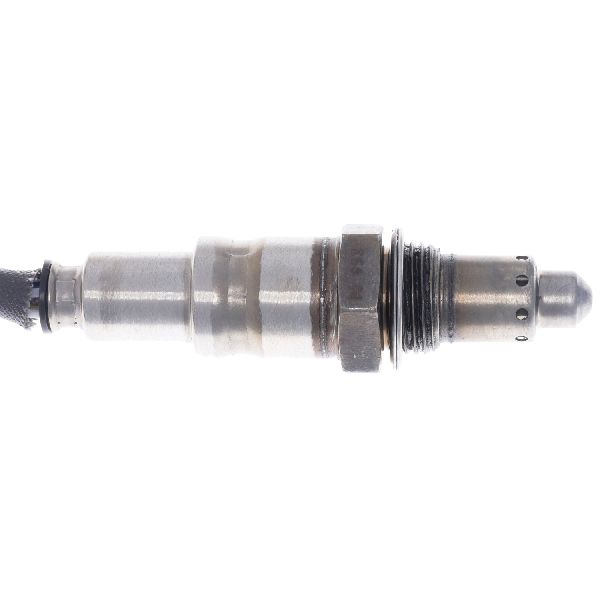
(OEM #PE5R-18-8G1)— A less common but possible cause. A failing upstream sensor can cause the engine to run rich, which the downstream sensor then correctly reports.
Trusted brands: Denso (OEM), Bosch
OEM price range: $200-$300
Aftermarket price range: $100-$200
Related Codes That Often Appear With This One
- P0172 — P0172 means 'System Too Rich Bank 1' based on the *upstream* sensor. If seen with P2097, it strongly indicates a true rich condition (e.g., leaking injector, high fuel pressure) rather than just a sensor or software fault.
- P2096 — This is the opposite code, 'Post Catalyst Fuel Trim System Too Lean'. Seeing it logged in history could indicate an intermittent sensor or wiring issue. The Mazda TSB 01-012/20 also applies to this code, reinforcing the likelihood of a PCM logic issue.
Technical Service Bulletins (TSBs) & Recalls
- 01-012/20 - Check Engine Light on with DTCs P2096:00, P2097:00, and/or P0524:00 due to improper PCM control logic. Applies to specific VIN ranges of 2019-2020 Mazda3, CX-3, CX-5, and MX-5.
- Bulletin #01-012-20-3738 - A manufacturer bulletin notes that some vehicles may experience a check engine light with DTC P2097:00 that cannot be cleared by itself, remaining on even if the detection condition has gone.
- Bulletin #SSPC0 - This manufacturer concern outline describes how on certain vehicles, if the PCM registers DTC P2097, it cannot be cleared even after the concern that created the code has been resolved.
Platform-Specific Known Issues
- A known software issue on 2019-2020 models can cause this code to be set erroneously. Mazda TSB 01-012/20 addresses this with a PCM update, though it officially lists models 'without cylinder deactivation'. Owner reports confirm a PCM update is the fix for many vehicles with cylinder deactivation as well.
- A recall (Mazda #4620H / NHTSA #20V383000) was issued for the low-pressure fuel pump on some 2018-2019 models, which could affect fuel pressure and contribute to a rich condition. The issue stemmed from defective Denso impellers.
Mechanic-Grade Diagnostic Values
- Downstream O2 Sensor (HO2S) Voltage Snap Test — expected: Voltage should rise above 0.45 V when the accelerator is suddenly depressed (rich condition) and fall below 0.45 V immediately after release (lean condition).. Failure: A slow or non-responsive sensor that does not cross the 0.45V threshold correctly during throttle changes.
- Post-Catalyst Fuel Trim (SHRTFT12 + LONGFT12) — expected: The sum of short-term and long-term post-catalyst fuel trims should remain within a specific range, typically not falling below -2.5%.. Failure: If the sum of the fuel trims is -2.5% or less for a continuous period of 25 seconds, the PCM will set DTC P2097:00.
- High-Pressure Fuel System Pressure — expected: The direct injection system operates at very high pressures, up to 200 bar (approx. 2900 psi). At full throttle, it should be at least 2176 psi.. Failure: While a specific idle pressure isn't listed, significant deviation or inability to reach high pressure under load could indicate a high-pressure fuel pump issue, though this is rare for a rich code.
Scan Tool Commands That Help
- Mazda M-MDS: Fuel Injector Simulation / Fail-Safe Operation — If a true rich condition is suspected (e.g., P0172 is also present), this function allows a technician to stop individual fuel injectors one by one. A lack of change in engine speed when an injector is disabled indicates that cylinder was not contributing correctly, pointing to a potential leaking or clogged injector.
Wiring & Ground Locations
- O2 Sensor Heater Circuit Wires — On the oxygen sensor's own pigtail/connector.. A faulty heater circuit can cause slow sensor response, leading to incorrect fuel trim readings. On many Mazda sensors, the two wires of the same color (often black) are for the heater circuit. They can be quickly tested for resistance and power/ground without a wiring diagram.
- Main Engine Ground — Typically a strap from the engine block or transmission bell housing to the chassis/firewall.. A poor engine ground can create a voltage offset, causing sensor signals (like O2 sensors) to read incorrectly to the PCM. Ensuring this ground is clean and tight is a crucial step in diagnosing any electronic issue.
- PCM/Dash Harness Ground — Often located in the driver or passenger kick panel area, bolted to the A-pillar or firewall.. The PCM and various interior electronics ground in this area. A loose or corroded ground here can cause erratic PCM behavior and false codes.
- Strut Tower Ground Point — A common grounding point on the driver's side strut tower where the negative battery cable often connects to the chassis.. This is a primary chassis ground point. Verifying it is clean and secure is fundamental before diagnosing complex sensor issues.
Real Owner Repair Stories
- Mazda3Revolution Forum User (2019 Mazda 3) — Check Engine Light with code P2097.
❌ Tried (didn't work) Replacing the downstream oxygen sensor.
✅ What actually fixed it The user took the vehicle to a Mazda dealership. The dealer performed a PCM software update (reflash) which permanently resolved the P2097 code. This aligns with TSB 01-012/20, even for models with cylinder deactivation.
Diagnostic Flowchart
Real Owner Stories
Aggregated from forums and TSBs cited above. Mileages and costs reflect what owners reported in those sources.
2021 Mazda 3
Symptoms: Check Engine Light (EML) came on. Later became a 'no-runner'. A scan revealed 138 DTCs, including P2097.
What fixed it: The issue was not resolved in the thread. The dealership replaced the battery, but the Check Engine Light returned. They then suggested replacing the fuel injectors.
Source hint: reddit.com r/mazda3 thread title: Not my Mazda. Seems a no runner. Read the codes and don't know what to advise
2019 Mazda 3
Symptoms: Intermittent P0524 warnings and emissions codes that could not be cleared from the PCM's memory even after the fault was fixed.
What fixed it: A dealer-level software update as described in TSB #01-012-20-3738 / #SSPC0.
Source hint: Reddit user via VertexAI Search Analysis of TSBs
2019 Mazda 3
Symptoms: Check Engine Light illuminated with the P2097 code.
What fixed it: A PCM software update performed by the dealership.
Source hint: Mazda3Revolution Forums thread titled 'P2097 Code on 2019 Mazda3'
Related OBD-II Codes
Frequently Asked Questions
Does TSB 01-012/20 apply to my Mazda 3 if it has cylinder deactivation?
Will the federal emissions warranty cover the PCM update for P2097 on my 2019-2021 Mazda 3?
Could the low-pressure fuel pump recall cause the P2097 code on my 2019 Mazda 3?
What is the OEM part number if I need to replace the downstream oxygen sensor?
Why won't my code reader clear the P2097 code after I fixed the issue?
Helpful Videos
![How to Fix P2097 Engine Code in 4 Minutes [2 DIY Methods / Only $9.84]](https://img.youtube.com/vi/rCwtzRmhMwY/mqdefault.jpg)
We Have This Part in Stock

The information in this article is provided for general reference and educational purposes only. Vehicle specifications, procedures, and part compatibility can vary by production date, trim level, and region. Always consult your vehicle's factory service manual and verify part numbers before purchasing or performing repairs. Safety-critical components such as airbags, seat belts, and braking systems should be installed by a qualified professional.
- Mazda 3:
- 🧭 Diagnostic Flowchart
- 🎬 Helpful Videos
- 🛍️ Shop This Part
- What's Unique About the 2019-2021 Mazda 3
- Symptoms You May Notice
- Most Likely Causes
- Rare But Worth Checking
- Diagnosis Steps
- Parts You'll Likely Need
- Related Codes That Often Appear With This One
- Technical Service Bulletins (TSBs) & Recalls
- Platform-Specific Known Issues
- Mechanic-Grade Diagnostic Values
- Scan Tool Commands That Help
- Wiring & Ground Locations
- Real Owner Repair Stories
- Real Owner Stories
- 2021 Mazda 3
- 2019 Mazda 3
- 2019 Mazda 3
- Related OBD-II Codes
- Frequently Asked Questions
- 🎟️ Get 5% Off