

P2097 on 2017-2024 Mazda CX-5: Post-Catalyst Fuel Trim Too Rich Causes and Fixes
On a 2017-2024 Mazda CX-5, code P2097 is very often caused by a software issue, especially on 2018-2020 models. A dealer PCM update as per TSB 01-012/20 is the most likely fix. If the software is current, the next most common cause is a failing downstream oxygen sensor, followed by exhaust leaks.
- For 2019-2020 models, your first step should be contacting a Mazda dealer to check if TSB 01-012/20 applies to your vehicle.
- Do not replace any parts, especially the expensive catalytic converter, until you have ruled out the software issue and performed basic diagnostics.
- If software is not the cause, the most likely failed part is the downstream (rear) oxygen sensor.
- Driving with this code on is possible, but it will hurt your fuel economy and could lead to more expensive catalytic converter damage over time.
What's Unique About the 2017-2024 Mazda CX-5
For the 2017-2024 Mazda CX-5, particularly 2018-2020 models, this code is frequently not a hardware problem. Mazda issued Technical Service Bulletin (TSB) 01-012/20 because 'improper PCM control logic' could falsely trigger the P2097 code. This issue is often linked to the introduction of cylinder deactivation on the 2.5L engine in 2018; early software was overly sensitive. The TSB covers 2018-2019 CX-5 vehicles with VINs between JM3KF**341877 - 689724. Therefore, checking for a required software update at a dealership is the critical first step before replacing any parts.
Symptoms You May Notice
- Check Engine Light is on
- Decreased fuel economy
- Rough or uneven idle
- Possible smell of fuel or sulfur (rotten eggs) from the exhaust
- Dark smoke from the tailpipe under load
- Hesitation during light acceleration 🎬 Watch: Understanding the causes and fixes for the P2097 code
- Replacing the oxygen sensor without first checking for the PCM software update TSB. This can lead to unnecessary expense as the code may return until the software is updated.
- Replacing the catalytic converter when the actual fault is a much cheaper O2 sensor or an exhaust leak.
Most Likely Causes
- Powertrain Control Module (PCM) Software Update Needed 🔴 High Probability → Shop Engine Control Module (ECM) Mazda released TSB 01-012/20 for 2018-2019 CX-5 models (VINs JM3KF**341877 - 689724) specifically to address this code being set erroneously by the PCM. The software logic was too sensitive and could not clear the code even after the condition was gone. This is the most important first check.
How to confirm: A Mazda dealership can verify if your vehicle's VIN is covered by the TSB and check the current software version. This is the definitive diagnostic step. The repair is often covered under the 8-year/80,000-mile federal emissions warranty.
Typical fix: The dealer reprograms the PCM with updated software. This is a labor-only charge if not covered by warranty.
Est. part cost: $0 - Failing Downstream (Post-Catalyst) Oxygen Sensor 🟡 Medium Probability → Shop Oxygen Sensor Oxygen sensors are wear items and can fail over time, sending incorrect rich signals to the PCM. This is a common cause on most modern vehicles once software issues are ruled out. The sensor can become biased or shorted internally.
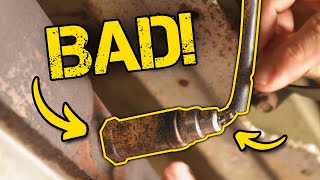
How to confirm: Use a scan tool to monitor the live voltage data from the downstream O2 sensor (Bank 1, Sensor 2). A healthy sensor on a warm engine in closed loop should show a relatively steady voltage, typically between 0.5V and 0.8V. If it's stuck high (above 0.8V) or fluctuating rapidly like the upstream sensor, it is likely faulty. 🎬 See how to test your O2 sensor with a scan tool
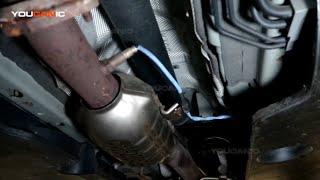
Typical fix: Replace the downstream oxygen sensor. An oxygen sensor socket is recommended for removal. 🎬 Watch this walkthrough for replacing the downstream oxygen sensor
Est. part cost: $60-$180 - Exhaust System Leak ⚪ Low Probability Leaks in the exhaust system between the upstream and downstream O2 sensors can allow outside air to enter. This can trick the PCM into enriching the fuel mixture, leading to a P2097 code. While not a rampant issue on the CX-5, flex pipes and gasket flanges are common leak points on many vehicles.
How to confirm: Perform a visual inspection of the exhaust system from the engine to the rear of the vehicle, looking for rust, holes, or loose flange connections. A smoke test is the most effective way to pinpoint small leaks. Some owners have found degraded pipes near the catalytic converter.
Typical fix: Repair the leak. This may involve replacing a gasket, tightening a flange, or using exhaust putty/wrap for a small hole. In severe cases, a section of pipe may need replacement.
Est. part cost: $10-$200
Rare But Worth Checking
- Leaking Fuel Injector(s): → Shop Fuel Injector This will cause a true rich condition. It is rare to see P2097 by itself in this case; it is usually accompanied by a P0172 (System Too Rich Bank 1) code and possibly misfire codes (P030x).
- Failing Catalytic Converter: → Shop Catalytic Converter A contaminated or failing catalytic converter can no longer efficiently process exhaust gases, which can lead to a rich reading from the downstream sensor. This is an expensive part and should only be replaced after all other causes, especially O2 sensors and exhaust leaks, have been definitively ruled out.
- Faulty Upstream Air/Fuel Ratio Sensor: → Shop Oxygen Sensor A failing or biased upstream (pre-catalyst) sensor can send incorrect lean signals, causing the PCM to command an overly rich mixture. This genuine rich condition is then correctly reported by the downstream sensor, triggering P2097. One owner on a forum reported a shorted front O2 sensor was the ultimate cause.
Diagnosis Steps
- Check for TSBs: Contact a Mazda dealer with your VIN to see if TSB 01-012/20 applies to your vehicle (specifically 2018-2019 models with VINs JM3KF**341877 - 689724). This is the absolute first step.
- Scan for Other Codes: Use an OBD-II scanner to check for any other pending or stored codes. Codes like P0172 can point towards a true rich condition, while P2096 or P0524 point strongly to the software TSB.
- Inspect the Exhaust System: Visually and audibly inspect the entire exhaust system for any signs of leaks, such as black soot marks, rust holes, or loose connections, particularly between the two oxygen sensors. A smoke test is the most reliable method.
- Analyze Live Sensor Data: Use a scan tool to observe the live data from the Bank 1 Sensor 2 (downstream) oxygen sensor. With the engine fully warmed up and in closed loop, the voltage should be relatively stable (typically between 0.5V and 0.8V). If it is stuck high (above 0.8V) or fluctuating rapidly like the upstream sensor, the sensor is suspect.
- Check Fuel Trims: Observe the short-term (SHRTFT12) and long-term (LONGFT12) fuel trim values for the post-catalyst sensor. Mazda's diagnostic criteria note that if the sum of these trims is less than -2.5%, the code will set. Significantly negative values confirm the PCM is trying to correct a rich condition.
- If a true rich condition is suspected (e.g., P0172 is also present), further diagnosis of the fuel system (fuel injectors, fuel pressure regulator, MAF sensor) and upstream A/F sensor is required.
Parts You'll Likely Need
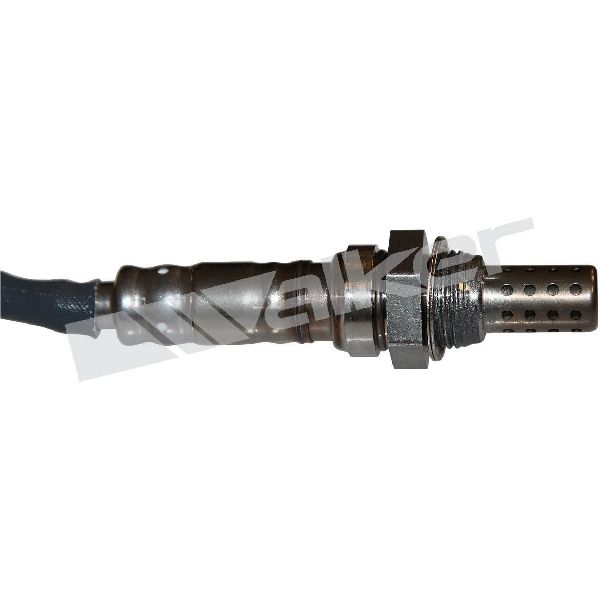
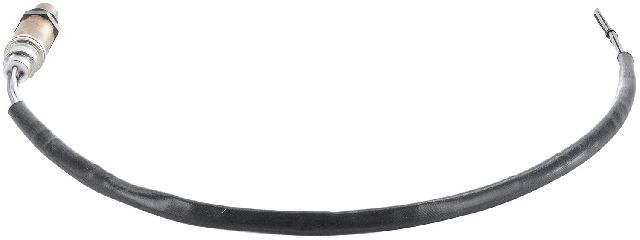
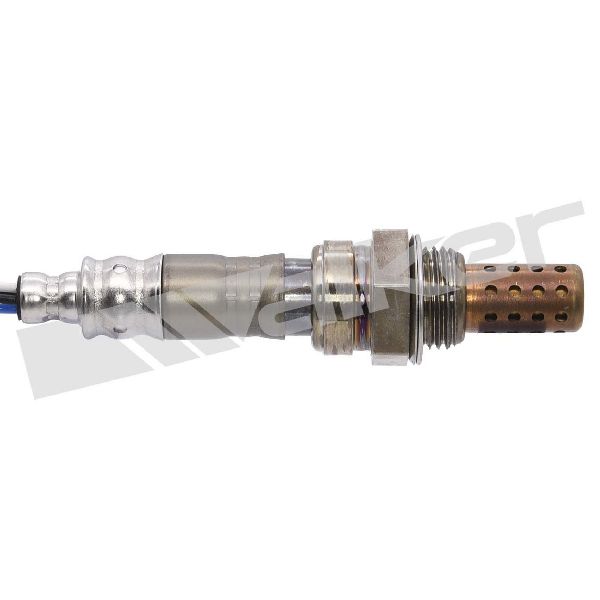
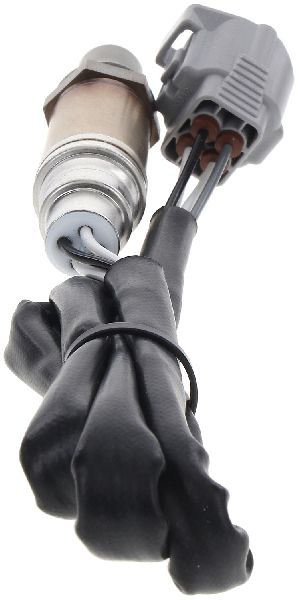
- Downstream Oxygen Sensor (Bank 1, Sensor 2)
(OEM #PE21-18-861B)— This is the most common hardware failure for this code after software issues are ruled out. The sensor's reading is what triggers the code in the first place.
Trusted brands: Denso, NGK/NTK, Bosch
OEM price range: $150-$250
Aftermarket price range: $60-$120
Related Codes That Often Appear With This One
- P2096 — This is the opposite code for a 'too lean' condition. TSB 01-012/20 addresses both P2096 and P2097, indicating the same PCM logic fault can cause either code to be stored and not clear properly.
- P0172 — This code means 'System Too Rich Bank 1' based on the *upstream* sensor. If you see both codes, it strongly suggests a genuine rich condition (like a leaking injector or faulty MAF sensor) is present, rather than just a sensor or software fault.
- P0524 — This code for 'Engine Oil Pressure Too Low' is also mentioned in TSB 01-012/20, as it can be erroneously triggered and stored by the same PCM software issue.
Technical Service Bulletins (TSBs) & Recalls
- 01-012/20: Check Engine Light on with DTCs P2096:00, P2097:00, and/or P0524:00 due to improper PCM control logic.
- TSB Bulletin #01-012-20-3738: Notes that some vehicles may experience a check engine light for P2097:00 that cannot be cleared by itself, and the light stays on even if the detection condition has gone.
- Bulletin #SSPC0: A manufacturer bulletin for other Mazda models (CX-3) confirms that if the vehicle sets DTC P2097, it may not be clearable even after the concern that created the DTC has been resolved.
- SA-012/19: Addresses tapping or knocking noise from hydraulic lash adjusters on engines with cylinder deactivation.
Platform-Specific Known Issues
- TSB 01-012/20: Erroneous CEL for P2097/P2096/P0524: Affects 2018-2019 CX-5 models with specific VINs (JM3KF**341877 - 689724), where improper PCM logic can falsely set a P2097 code that cannot be cleared. The fix is a dealer-installed software update.
- Recall 3719F (NHTSA 19V497000): Cylinder Deactivation Stall: Affects 2018-2019 CX-5 models for a PCM software error related to the cylinder deactivation feature that could cause a stall. While not directly for P2097, it highlights the prevalence of PCM software issues on these models during this period.
Mechanic-Grade Diagnostic Values
- Post-Catalyst Fuel Trim Sum (SHRTFT12 + LONGFT12) — expected: Greater than -2.3%. Failure: The code sets if the sum is less than -2.3% to -2.5% and holds for approximately 25 seconds.
- Downstream O2 Sensor (HO2S) Voltage Snap Test — expected: When the accelerator is suddenly depressed from idle, voltage should rise above 0.45V - 0.55V.. Failure: A slow or unresponsive sensor that does not quickly cross the 0.45V threshold indicates a faulty sensor.
- O2 Sensor Heater Circuit Resistance — expected: Typically 5-7 Ω.. Failure: A reading outside of the manufacturer's specified range indicates a faulty heater circuit within the sensor.
- DTC Set Condition: Mass Airflow — expected: N/A. Failure: The P2097 check logic will only run when the mass airflow sensor output is more than 8 g/sec, among other conditions.
- High-Pressure Fuel System (Direct Injection) — expected: Up to 200 bar (2900 psi) or 2176 psi under full throttle.. Failure: This is a reference value; diagnosis requires specialized tools. A significant deviation could indicate a high-pressure pump issue, but would likely be accompanied by other codes.
Hidden / Shadow Codes Worth Checking
- Pending Code (P2097): Mazda's diagnostic procedure emphasizes checking for a PENDING version of the code on the first drive cycle after clearing codes. Its presence indicates the fault is still active. (see via Use an advanced OBD-II scanner or the Mazda M-MDS to view pending codes and Mode 2 Freeze Frame Data.)
- Freeze Frame Data (Mode 2): Not a code, but a critical snapshot of engine parameters (coolant temp, RPM, speed, etc.) at the exact moment the P2097 code was first triggered. This data is essential for recreating the fault condition during a diagnostic drive. (see via Accessible via a capable OBD-II scanner or the Mazda M-MDS.)
Scan Tool Commands That Help
- Mazda M-MDS (or equivalent): Purge Control System Inspection — This is one of the first steps in the factory diagnostic tree to functionally test the purge solenoid valve. A stuck-open valve can cause a rich condition, triggering P2097.
- Mazda M-MDS (or equivalent): Fuel Injector Simulation / Fail-Safe Operation — Used when a true rich condition is suspected (e.g., P0172 is also present). This function allows a technician to disable individual fuel injectors. If disabling an injector causes no change in engine operation, it points to that injector being clogged or leaking.
- Mazda M-MDS (or equivalent): PID/DATA Monitor — Used to monitor live data PIDs like LONGFT1 (Long Term Fuel Trim) and SHRTFT12 (Short Term Fuel Trim for HO2S) to confirm if the system is actually running rich or if the sensor is biased.
Real Owner Repair Stories
- Mazdas247.com forum user (Mazda CX-5 (year not specified)) — P2097 and P2177 codes that would not clear.
❌ Tried (didn't work) Replacing the purge valve
✅ What actually fixed it The root cause was a shorted front O2 sensor (Air/Fuel Ratio sensor). Replacing the front sensor resolved the P2097 code.
"I Checked Everything" — The Actual Cause
- A common diagnostic path is to perform an exhaust smoke test to find leaks. However, if the smoke test is clean, the root cause can be electrical. In one documented case for a CX-5, a short circuit in the *upstream* (front) Air/Fuel ratio sensor was sending bad data, which ultimately caused the PCM to set the *downstream* P2097 code. A technician focused only on exhaust leaks would miss this.
When the Usual Fixes Don't Work
- While the most common fixes are a PCM update or a new downstream O2 sensor, there are confirmed cases where neither of these solved the problem. In one instance, a CX-5 owner found the ultimate cause to be a shorted *upstream* Air/Fuel ratio sensor. This is a counter-intuitive fix because P2097 is a *post-catalyst* code, leading many to ignore the upstream sensor. This highlights the importance of not ruling out components just because they are not the primary sensor reporting the fault.
Model Year Variations Within This Range
- 2018+: The 2.5L engine gained cylinder deactivation technology starting in the 2018 model year. This introduced new software complexity, which is the subject of TSB 01-012/20 and Recall 3719F for stalling, making software checks particularly critical for 2018-2020 models.
- 2017-2018 vs 2019+: Part catalogs show a difference in the upstream Air/Fuel Ratio sensor for these year ranges. For example, some brands list a different part for 2013-2018 models versus 2019+ models. Since a faulty upstream sensor can cause P2097, it's critical to use the correct part for the specific model year during replacement.
Diagnostic Flowchart
Other Known Issues on This Vehicle
Issues unrelated to this code that are worth knowing about as an owner of this generation:
- Cracked Cylinder Head (on models with Cylinder Deactivation) 🔴 High — Affects a small but significant percentage of 2018-2021 2.5L NA engines with cylinder deactivation. Can occur at various mileages. The crack typically causes an external oil leak near the exhaust manifold. (Ref: While no specific recall exists for the NA engine, Mazda has acknowledged the issue, and a similar problem on the 2.5T engine led to TSB 01-013/20.)
- Excessive Oil Consumption (2.5T Turbo Models) 🔴 High — Common on 2021 model year 2.5T engines. Owners report low oil warnings between 3,000-5,000 miles. The cause is faulty exhaust valve stem seals. (Ref: TSB 01-011/22 (supersedes 01-012/21) was issued to replace the valve stem seals with an improved design.)
- Carbon Buildup on Intake Valves 🟠 Medium — As a direct-injection engine, carbon buildup is a known long-term maintenance item. Affects 15-20% of vehicles, typically requiring cleaning after 60,000 miles to prevent performance loss.
- Failing Hydraulic Lash Adjusters (on models with Cylinder Deactivation) 🟠 Medium — Some 2018+ models with cylinder deactivation may develop a tapping or knocking noise from the top of the engine due to failing switchable lash adjusters. (Ref: TSB SA-012/19 addresses this noise.)
- Poor Quality Paint 🟡 Low — Very common complaint across all model years, especially the 'Soul Red Crystal' color. The paint is known to be thin and chips easily from road debris.
Used vs. New Parts: Buying Guide for This Vehicle
When a used part is the smart pick: For this code, used parts are generally not recommended for sensors or the catalytic converter. However, a used exhaust pipe or manifold from a low-mileage, non-salt-belt donor vehicle can be a cost-effective way to fix a physical leak.
Donor-vehicle mileage cap: roughly under 60000 miles for the part to have meaningful remaining life.
What to inspect on the donor part:
- For exhaust components, check for heavy rust, corrosion at the welds, or thin-feeling metal.
- Ensure all mounting flanges are flat and not warped.
- Avoid parts from regions with heavy road salt usage.
OEM-only on this vehicle (don't cheap out):
- Catalytic Converter: Aftermarket catalytic converters are widely reported to fail prematurely or not meet the efficiency standards required by the Mazda PCM, causing the code to return.
Aftermarket brands forum-validated for this vehicle:
- Denso and NGK/NTK are OEM suppliers to Mazda and are considered the most reliable aftermarket choices for oxygen sensors.
Real Owner Stories
Aggregated from forums and TSBs cited above. Mileages and costs reflect what owners reported in those sources.
Mazda CX-5 2.5L Skyactiv-G
Symptoms: Check Engine Light came on with P2097 and P2177 codes and would not go away.
What fixed it: Replacement of a shorted front O2 sensor (after a purge valve replacement failed to fix it).
Source hint: Mazdas247.com thread titled 'P2097 and P2177 CELs came on the other day, and won't go away'
2018-2019 Mazda CX-5 (VIN JM3KF******341877 - 689724)
Symptoms: Check Engine Light on with DTC P2097; code remains even if the underlying condition is gone due to sensitive logic.
What fixed it: Dealer reprogrammed the PCM with updated software per TSB 01-012/20.
Cost: $0-$0
Source hint: TSB 01-012/20
Related OBD-II Codes
Frequently Asked Questions
Does TSB 01-012/20 apply to my 2018 Mazda CX-5?
Will the repair for P2097 be covered under warranty on my CX-5?
Can I fix the P2097 code on my 2019 CX-5 by just clearing it with a scan tool?
Is the P2097 code related to the cylinder deactivation recall on my 2018 CX-5?
What should I check first on my 2018-2019 CX-5 before replacing the oxygen sensor?
If my CX-5 is a 2.5L Turbo model, does the same software TSB apply?
Helpful Videos


We Have This Part in Stock

The information in this article is provided for general reference and educational purposes only. Vehicle specifications, procedures, and part compatibility can vary by production date, trim level, and region. Always consult your vehicle's factory service manual and verify part numbers before purchasing or performing repairs. Safety-critical components such as airbags, seat belts, and braking systems should be installed by a qualified professional.
- Mazda CX-5:
- 🧭 Diagnostic Flowchart
- 🎬 Helpful Videos
- 🛍️ Shop This Part
- What's Unique About the 2017-2024 Mazda CX-5
- Symptoms You May Notice
- Most Likely Causes
- Rare But Worth Checking
- Diagnosis Steps
- Parts You'll Likely Need
- Related Codes That Often Appear With This One
- Technical Service Bulletins (TSBs) & Recalls
- Platform-Specific Known Issues
- Mechanic-Grade Diagnostic Values
- Hidden / Shadow Codes Worth Checking
- Scan Tool Commands That Help
- Real Owner Repair Stories
- "I Checked Everything" — The Actual Cause
- When the Usual Fixes Don't Work
- Model Year Variations Within This Range
- Other Known Issues on This Vehicle
- Used vs. New Parts: Buying Guide for This Vehicle
- Real Owner Stories
- Mazda CX-5 2.5L Skyactiv-G
- 2018-2019 Mazda CX-5 (VIN JM3KF******341877 - 689724)
- Related OBD-II Codes
- Frequently Asked Questions
- 🎟️ Get 5% Off