

P2097 on 2011-2013 Mitsubishi Outlander: Causes and Fixes for Rich Fuel Trim
For the 2011-2013 Mitsubishi Outlander, code P2097 is frequently caused by a software issue, not a faulty part. Mitsubishi issued Technical Service Bulletin TSB-15-13-002 for a false code triggered by sensitive A/F ratio adjustments on 2011 models. The primary fix is an ECM re-program at a dealer. Always check if this TSB applies to your vehicle before replacing parts like oxygen sensors.
- Before buying any parts for a P2097 code on a 2011 Outlander, contact a Mitsubishi dealer to check if TSB-15-13-002 applies to your vehicle.
- The most probable cause for the 2011 model is a software glitch that requires an ECM re-program, not a hardware failure.
- If the software fix does not apply or has already been performed, the next steps are to inspect for exhaust leaks and test the downstream oxygen sensor.
- Ignoring this code can lead to poor fuel mileage and potential long-term damage to the catalytic converter.
What's Unique About the 2011-2013 Mitsubishi OUTLANDER
On many vehicles, a P2097 code immediately points to a hardware failure like an O2 sensor or exhaust leak. However, for the 2011-2013 Outlander, Mitsubishi acknowledged a significant software issue. The factory ECM software was overly sensitive and could falsely trigger the P2097 code under certain acceleration conditions. This makes an ECM software update the most critical first step in diagnosis for the 2011 model, a unique starting point compared to other platforms where hardware is the primary suspect.
Diagnostic Flowchart
Tap your situation to follow the diagnostic path that matches what you're seeing on this vehicle.
Generation note: The 2011-2013 year range covers two generations of the Outlander: the end of the second generation (2011-2012) and the start of the third generation (2013). While the TSB specifically mentions the 2011 model, the underlying issue of a rich fuel trim code can have similar causes across both generations. However, the primary TSB fix is confirmed for the 2011 model.
Symptoms You May Notice
- Check Engine Light is on
- Decreased fuel economy
- Possible rough idle or hesitation during acceleration 🎬 Watch: Understanding the P2097 code and common fixes
- A faint smell of fuel or black smoke from the exhaust
- Failed emissions test
- Replacing the oxygen sensor before checking for the TSB. Many owners may replace the O2 sensor only to have the code return because the root cause was the ECM software. This is a well-documented issue in owner forums.
Most Likely Causes
- Engine Control Module (ECM) Software Requires Update 🔴 High Probability → Shop Engine Control Module (ECM) Mitsubishi issued TSB-15-13-002 (which revised TSB-14-13-003) specifically for 2011 models to address 'false MIL illumination with DTC P2097' by optimizing the target A/F ratio adjustment conditions during acceleration.
How to confirm: Contact a Mitsubishi dealership with your vehicle's VIN. They can verify if TSB-15-13-002 was ever performed or if it is still open for your vehicle. This is the most crucial first step.
Typical fix: The dealer will reprogram (re-flash) the ECM with updated software. This typically takes less than an hour.
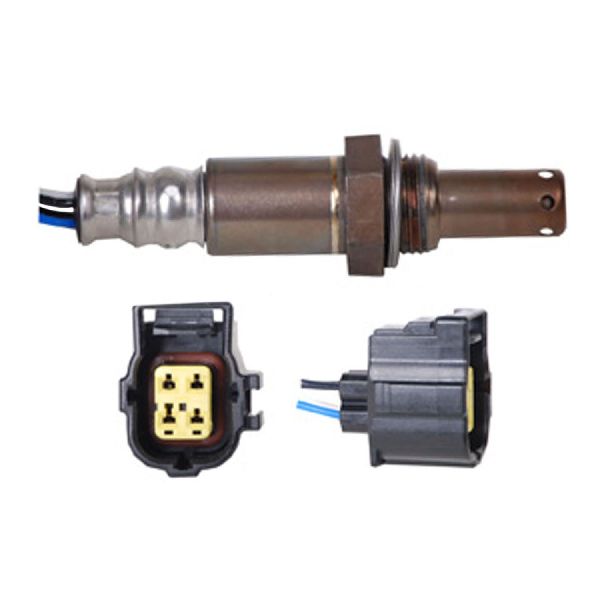
Est. part cost: $0-$300 (Cost varies by dealer for out-of-warranty software updates, with many charging around one hour of labor) - Failing Downstream Oxygen Sensor (Bank 1, Sensor 2) 🟡 Medium Probability → Shop Oxygen Sensor If the software update doesn't apply or has been done, the sensor itself is the next most likely cause. It can become contaminated or slow to respond with age, sending false 'rich' signals to the ECM.
How to confirm: Use a scan tool to monitor the voltage of the downstream O2 sensor. If it is stuck high (above 0.7V) and not fluctuating as expected, it's likely faulty. A healthy downstream sensor should show a relatively stable, lower voltage compared to the rapidly fluctuating upstream sensor.
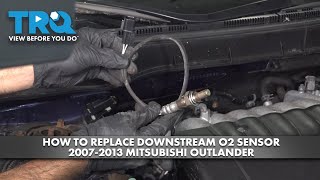
Typical fix: Replace the downstream (post-catalyst) oxygen sensor. This requires an O2 sensor socket and may require penetrating fluid if the old sensor is rusted in place. 🎬 Watch: Step-by-step downstream O2 sensor replacement guide
Est. part cost: $50-$150 - Exhaust System Leak ⚪ Low Probability Leaks in the exhaust system between the upstream and downstream O2 sensors can allow outside air to enter. This unmetered air tricks the upstream sensor into thinking the engine is lean, causing the ECM to add more fuel and creating a genuine rich condition that the downstream sensor then reports. Rust on exhaust pipe seams is a common source of leaks.
How to confirm: Perform a visual inspection of the exhaust system for rust, holes, or broken gaskets, especially around the catalytic converter and flex pipe. A smoke test is the most effective way to find small, hard-to-see leaks. 🎬 See this quick trick to find any exhaust leak
Typical fix: Repair the leak by replacing the gasket, patching the hole with exhaust putty for small leaks, or replacing the damaged section of pipe.
Est. part cost: $10-$250 (depending on the location and severity of the leak)
Rare But Worth Checking
- Leaking Fuel Injector: → Shop Fuel Injector A leaking or stuck-open injector can dump excess fuel into a cylinder, causing a genuine rich condition. This would usually be accompanied by other symptoms like a rough idle, misfires (potentially with a misfire code), or a strong fuel smell in the engine bay or oil.
- Failing Fuel Pressure Regulator: If the regulator fails and allows fuel pressure to become too high, the entire system will run rich. This is less common than sensor or software issues and would typically affect both engine banks on V6 models.
- Failing Upstream Oxygen Sensor (Bank 1, Sensor 1): → Shop Oxygen Sensor A faulty upstream O2 sensor (also called an Air/Fuel Ratio sensor) can send incorrect data to the ECM, causing it to command an improper fuel mixture which the downstream sensor then correctly identifies as a problem.
- Failing Catalytic Converter: → Shop Catalytic Converter A contaminated or failing catalytic converter can sometimes cause inaccurate readings from the downstream O2 sensor, though this is a less frequent cause for this specific code. Usually, a failing converter would trigger other codes like P0420.
Diagnosis Steps
- Scan for Codes: Read the trouble code and any other codes present in the ECM. Note any freeze-frame data.
- Check for TSBs: This is the most critical step. Contact a Mitsubishi dealer with your VIN to see if TSB-15-13-002 is applicable and outstanding for your 2011 vehicle. If it is, this is the most likely fix.
- Inspect the Exhaust: If the TSB is not the cause, carefully inspect the entire exhaust system from the engine to the rear O2 sensor for any signs of leaks, such as black soot, rust holes, or gasket failures.
- Analyze O2 Sensor Data: Use a scan tool to observe live data. According to Mitsubishi's diagnostic criteria, the code sets when the engine is warm (over 76°C / 169°F), in closed loop, and under load (MAF > 5 g/sec). Watch the downstream O2 sensor (Bank 1, Sensor 2). A healthy sensor on a warm engine should show a relatively stable voltage. If it's stuck high (e.g., >0.7V), it points to a rich condition or a faulty sensor.
- Check Fuel Trims: Observe short-term (STFT) and long-term (LTFT) fuel trims. Consistently negative numbers (e.g., below -10%) indicate the ECM is actively trying to remove fuel to correct a perceived rich condition.
- Test Fuel System: If a genuine rich condition is suspected, test the fuel pressure to ensure it is within specification. Consider having fuel injectors professionally tested for leaks or flow rate.
Parts You'll Likely Need
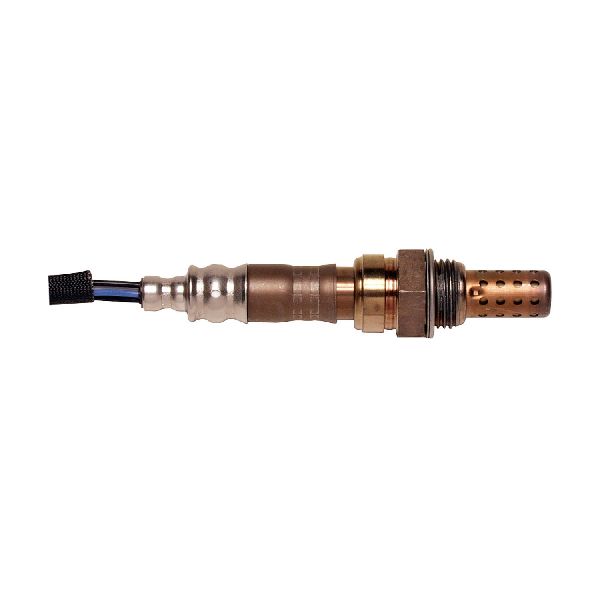
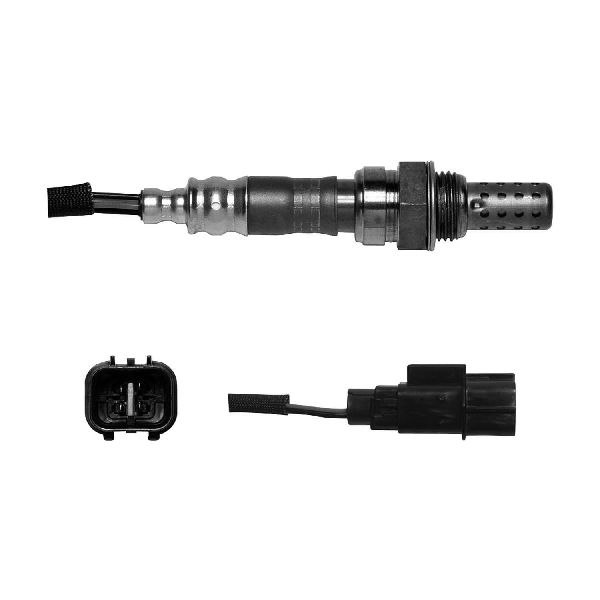
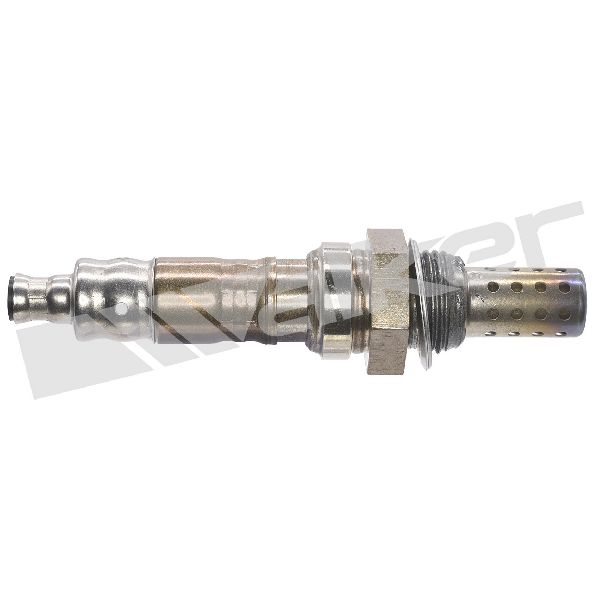
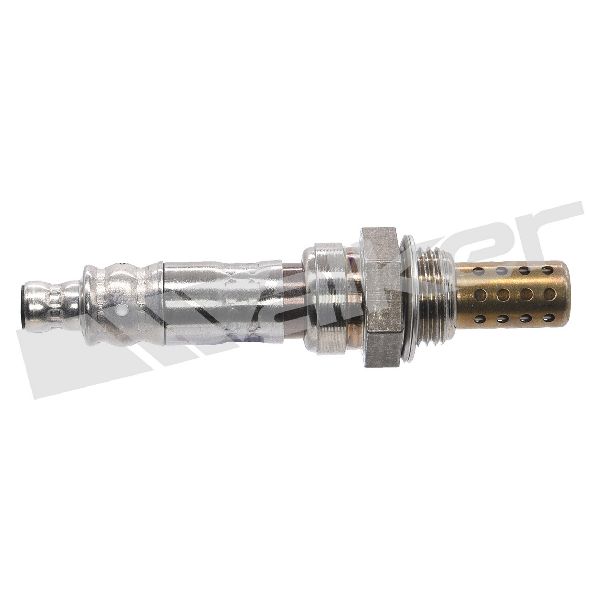
- Downstream Oxygen Sensor (Bank 1 Sensor 2)
(OEM #1588A363 (for Outlander Sport 2.0L, verify for specific Outlander model/engine), Denso 234-4116 (aftermarket equivalent for some models))— This is the sensor that triggers the code. If the ECM software is correct and there are no exhaust leaks, the sensor itself is the most likely hardware component to have failed.
Trusted brands: Denso, Bosch, NGK/NTK
OEM price range: $120-$220
Aftermarket price range: $50-$150
Technical Service Bulletins (TSBs) & Recalls
- TSB-15-13-002: Addresses 'false MIL illumination with DTC P2097' on 2011 models by providing a software update to optimize the target A/F ratio adjustment condition. This TSB revises a previous bulletin, TSB-14-13-003.
Platform-Specific Known Issues
- A primary issue for the 2011 model year is a false P2097 code caused by overly sensitive ECM software logic. Mitsubishi addressed this directly with Technical Service Bulletin TSB-15-13-002, which involves reprogramming the ECM.
- Owner experiences in forums frequently confirm that having the dealer perform the TSB re-flash is the correct fix, often after they had already replaced the O2 sensor without success.
Mechanic-Grade Diagnostic Values
- Heated Oxygen Sensor (Front or Rear) Heater Resistance — expected: 4.5 - 8.0 Ω at 20°C (68°F). Failure: Resistance outside of this range indicates a faulty heater element within the sensor.
- DTC Set Conditions (Live Data) — expected: Code is evaluated when: Engine Coolant Temp > 76°C (169°F), in closed loop, and Mass Airflow Sensor > 5 g/sec.. Failure: The fault (rich condition detected by rear O2) must persist for 5 seconds under these conditions to set the code.
- Downstream O2 Sensor (Bank 1, Sensor 2) Voltage — expected: Relatively steady voltage around 0.45V on a warm engine with a healthy catalytic converter.. Failure: Voltage stuck high (e.g., > 0.7V) or fluctuating rapidly similar to the upstream sensor can indicate a rich condition or a failing catalytic converter.
Scan Tool Commands That Help
- Mitsubishi M.U.T.-III: Read DTC and Live Data (Data List) — This is the official dealer tool (part number MB991958) used to read codes and monitor live sensor data according to Mitsubishi's diagnostic procedures. It is the primary tool for diagnosing issues and confirming if the ECM reflash TSB has been applied.
Wiring & Ground Locations
- D-37 — Harness-side connector for the heated oxygen sensor (rear).. This is the primary connector to test voltage and resistance for the sensor that triggers code P2097.
- C-44 — Harness-side connector for the heated oxygen sensor (front).. A faulty front sensor can cause this code. This connector is the test point for the front sensor.
- G11 / G12 — Ground points located on the left rear and left side of the engine compartment.. The Engine Control Module (ECM) is located in the left side of the engine compartment; poor grounds at these locations could cause erratic ECM behavior and false codes.
- G18 — Ground point located in the left kick panel area, inside the cabin.. Interior grounds can be related to the ETACS-ECU and other control modules that interface with the engine computer.
OEM Part Supersession History
1588A363→N/A— Part number verification issue
Heads up: The part number 1588A363, cited in Pass 2, is often listed for the 2014+ Outlander Sport, and sometimes as a front sensor. The upstream sensor for some 2011-2013 2.4L Outlanders may be 1588A228. A faulty upstream sensor can cause a P2097 code. Extreme care must be taken to verify the correct part number for the specific sensor (upstream/downstream) and vehicle (Outlander vs. Outlander Sport) using the VIN.
Model Year Variations Within This Range
- 2011-2013: Within this year range, some Outlander models (particularly those with the 2.4L 4B12 engine) may use a wideband Linear Air-Fuel Ratio (A/F) sensor for the upstream position instead of a conventional (narrowband) oxygen sensor. This changes the diagnostic priority, as Mitsubishi lists a failed Linear A/F sensor as a primary cause for P2097 on these systems, whereas systems with a conventional sensor point to the O2 sensor itself.
Helpful Videos

We Have This Part in Stock


The information in this article is provided for general reference and educational purposes only. Vehicle specifications, procedures, and part compatibility can vary by production date, trim level, and region. Always consult your vehicle's factory service manual and verify part numbers before purchasing or performing repairs. Safety-critical components such as airbags, seat belts, and braking systems should be installed by a qualified professional.
- Mitsubishi OUTLANDER:
- 🧭 Diagnostic Flowchart
- 🎬 Helpful Videos
- 🛍️ Shop This Part
- What's Unique About the 2011-2013 Mitsubishi OUTLANDER
- Symptoms You May Notice
- Most Likely Causes
- Rare But Worth Checking
- Diagnosis Steps
- Parts You'll Likely Need
- Technical Service Bulletins (TSBs) & Recalls
- Platform-Specific Known Issues
- Mechanic-Grade Diagnostic Values
- Scan Tool Commands That Help
- Wiring & Ground Locations
- OEM Part Supersession History
- Model Year Variations Within This Range
- 🎟️ Get 5% Off