

P2097 on 2005-2010 Pontiac G6: Causes for Post-Catalyst Rich Condition
For the 2005-2010 Pontiac G6, code P2097 is most often caused by an exhaust leak before the downstream O2 sensor or a failing sensor itself. On GM vehicles, leaking fuel injectors are also a known cause. Inspect for exhaust leaks first before replacing any parts.
- Code P2097 on a Pontiac G6 means the exhaust is too rich after the catalytic converter on Bank 1.
- Always inspect for exhaust leaks between the engine and the rear O2 sensor before buying any parts. This is a very common cause.
- Do not immediately assume the O2 sensor or catalytic converter is bad. Leaking fuel injectors and even software issues can be the root cause on GM vehicles.
- Driving with this code can lead to poor fuel mileage and will eventually damage the catalytic converter, resulting in a much more expensive repair.
What's Unique About the 2005-2010 Pontiac G6
While P2097 can occur on any modern vehicle, on GM platforms like the Pontiac G6, the diagnostic approach should be slightly different. Technicians and owners often find that exhaust leaks near the manifold or flex pipe are a primary cause. Furthermore, GM has issued technical service bulletins for other models of the same era pointing to leaking fuel injectors and software anomalies as potential causes for this code, suggesting these are more common on GM vehicles than one might expect. Therefore, it's crucial to rule out leaks and fuel system issues before assuming the oxygen sensor or catalytic converter is bad.
Symptoms You May Notice
- Check Engine Light is on
- Reduced fuel economy
- Rough or erratic idle
- Engine may hesitate during acceleration
- A smell of fuel or rotten eggs from the exhaust
- Black smoke from the tailpipe in extreme cases
- Engine may be hard to start when hot
- Immediately replacing the catalytic converter without performing diagnostic tests. The converter often fails as a result of an underlying issue (like a rich condition), not as the root cause.
- Replacing the downstream O2 sensor without first checking for exhaust leaks, which are a very common and cheaper fix.
Most Likely Causes
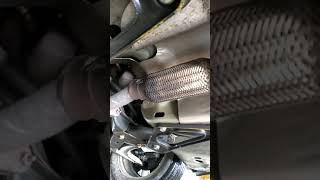
- Exhaust Leak 🔴 High Probability Flex pipes and manifold gaskets are common failure points on many vehicles, including the G6, due to heat cycles and vibration. A leak before the downstream O2 sensor can introduce outside air, fooling the sensor into a false rich reading.
How to confirm: Visually inspect the exhaust system from the engine to the downstream O2 sensor for black soot, cracks, or rust holes. Listen for ticking or hissing sounds when the engine is cold. A smoke test is the most effective way to find small leaks. 🎬 See common exhaust failure points on the Pontiac G6.
Typical fix: Replace the leaking gasket or exhaust component (e.g., flex pipe, manifold).
Est. part cost: $20-$250 - Faulty Downstream Oxygen (O2) Sensor (Bank 1, Sensor 2) 🟡 Medium Probability → Shop Oxygen Sensor O2 sensors are wear items with a finite lifespan and can fail from contamination or age, leading to inaccurate readings.
How to confirm: Use a scan tool to monitor the live voltage from the Bank 1 Sensor 2. A healthy downstream sensor on a warm engine should show a relatively stable voltage. If it's stuck high (above 0.8V) or fluctuating wildly like the upstream sensor, it may be faulty.
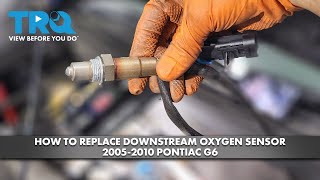
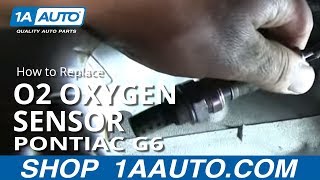
Typical fix: Replace the Bank 1, Sensor 2 oxygen sensor. 🎬 Watch: Step-by-step guide to replacing your downstream oxygen sensor.
Est. part cost: $40-$100 - Leaking Fuel Injector(s) 🟡 Medium Probability → Shop Fuel Injector GM has noted leaking injectors as a cause for P2097 on other platforms (per TSB PIP4964F), indicating a potential pattern for their fuel systems of this era. A leaking injector introduces excess fuel, creating a true rich condition.
How to confirm: Perform a fuel injector balance test to see if any injectors are leaking more fuel than others. You can also check fuel pressure; a drop in pressure after the engine is off can indicate a leak. Another sign is a spark plug from the suspect bank that is black and sooty.
Typical fix: Replace the faulty fuel injector(s). 🎬 Watch this walkthrough for replacing fuel injectors on the 2.4L engine.
Est. part cost: $50-$150 per injector - Faulty Upstream Oxygen (O2) Sensor (Bank 1, Sensor 1) ⚪ Low Probability → Shop Oxygen Sensor
How to confirm: A failing upstream sensor can send incorrect data, causing the ECM to enrich the fuel mixture unnecessarily. Monitor live data; if the upstream sensor is biased and not switching correctly, it can cause a genuinely rich condition detected by the downstream sensor.
Typical fix: Replace the Bank 1, Sensor 1 oxygen sensor.
Est. part cost: $50-$120
Rare But Worth Checking
- Failing Catalytic Converter: → Shop Catalytic Converter This is an expensive part and is often replaced unnecessarily. A converter can become contaminated or fail, losing its ability to process exhaust gases, which can be interpreted as a rich condition. Always confirm with a temperature test (outlet should be significantly hotter than inlet) or backpressure test before replacing.
- ECM Software Anomaly: On other GM vehicles, TSBs have been issued where a software glitch can falsely set a P2097 code. If no physical faults can be found, checking if a dealer software update is available may be a final step.
- High Fuel Pressure: A faulty fuel pressure regulator can cause system-wide high fuel pressure, leading to a rich condition. This should be checked with a fuel pressure gauge connected to the fuel rail.
Diagnosis Steps
- Check for other DTCs. If codes like P0172 or misfire codes are present, address them first as they point to the root cause of the rich condition.
- Visually inspect the entire exhaust system from the engine block to the post-catalyst O2 sensor. Look for any signs of leaks such as black soot, cracks, or rust. Listen for an audible leak when the engine is cold.
- Use an OBD-II scan tool to monitor live data. Observe the voltage of the Bank 1, Sensor 2 (downstream). It should be relatively steady on a warm, running engine. If it's stuck high (e.g., >0.8V), it confirms the rich reading.
- Compare the upstream (Sensor 1) and downstream (Sensor 2) O2 sensor readings. The upstream should fluctuate rapidly, while the downstream should be stable. If they mirror each other, it may indicate a bad catalytic converter.
- Test for exhaust leaks using a smoke machine for a definitive diagnosis if a visual inspection is inconclusive.
- Test fuel pressure using a mechanical gauge. Compare the reading to the manufacturer's specification to rule out a faulty fuel pressure regulator.
- Perform a fuel injector balance test or check for pressure drop after shutdown to identify leaking injectors.
- If all other tests pass, the downstream O2 sensor itself is the most likely remaining culprit.
Parts You'll Likely Need
- Downstream Oxygen Sensor (Bank 1, Sensor 2)
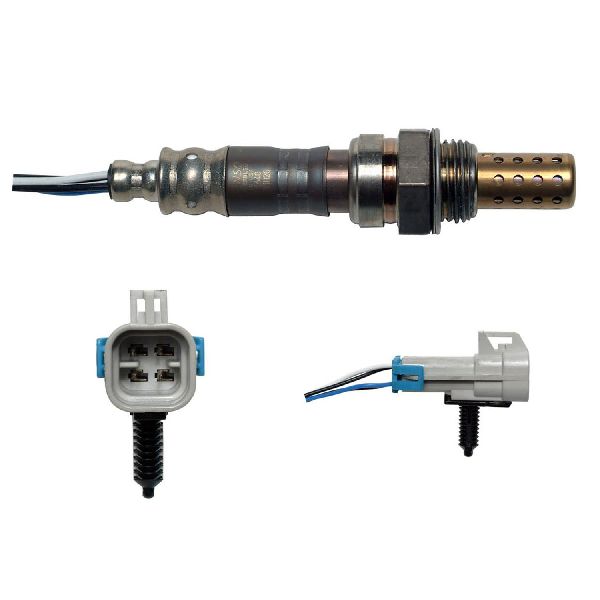
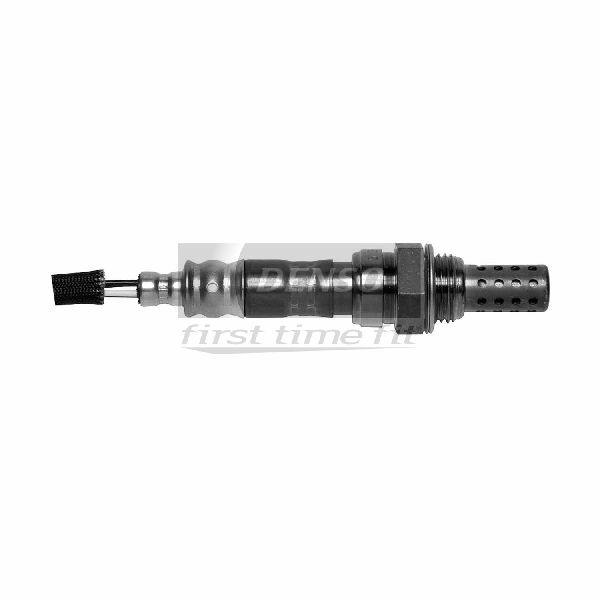
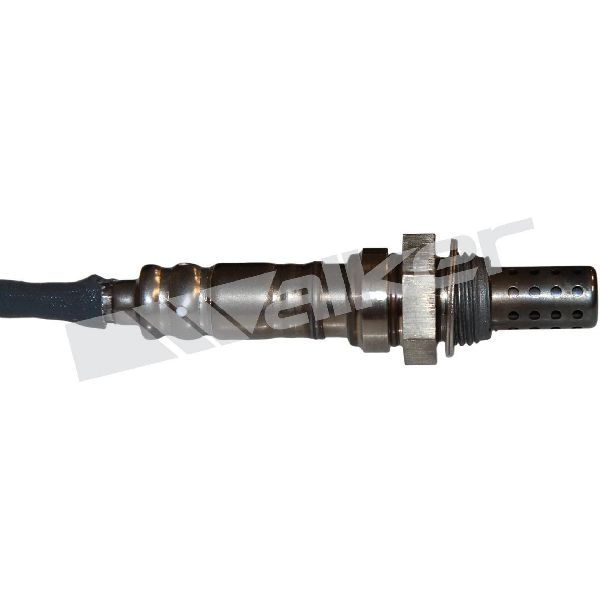
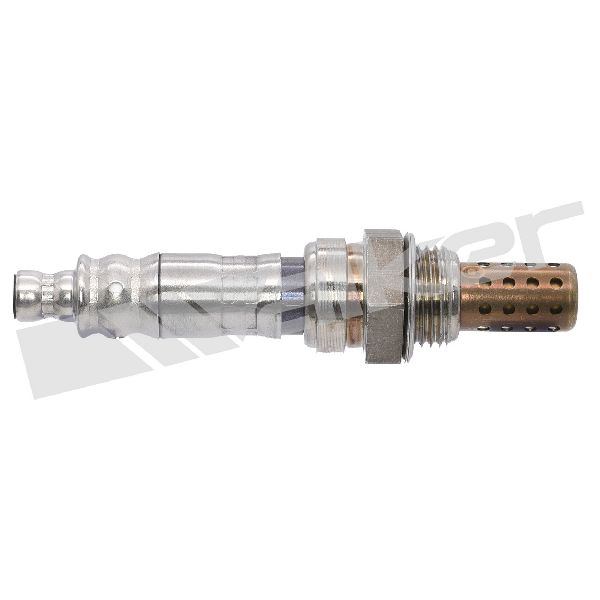
(OEM #ACDelco 213-4229 (GM 12609457) for 2.4L; ACDelco 213-1570 (GM 12573721) for 3.5L (verify fitment))— This sensor is what triggers the code. It may be faulty and sending incorrect rich signals, or it may be accurately reporting a rich condition caused by another problem.
Trusted brands: ACDelco, Denso, Bosch, Walker
OEM price range: $70-$130
Aftermarket price range: $40-$100 - Exhaust Manifold Gasket / Flex Pipe — Exhaust leaks are a very common cause of P2097, and these are the most likely components to fail and cause a leak before the downstream O2 sensor.
Trusted brands: Fel-Pro, Walker Exhaust, Bosal
OEM price range: $50-$200
Aftermarket price range: $20-$150 - Fuel Injector — A leaking fuel injector is a known cause of a true rich condition on many GM vehicles and can trigger this code.
Trusted brands: ACDelco, Bosch, Standard Motor Products
OEM price range: $90-$180
Aftermarket price range: $50-$150
Related Codes That Often Appear With This One
- P0172 — P0172 indicates 'System Too Rich (Bank 1)' based on the upstream O2 sensor. If both are present, it strongly points to a true rich condition like a leaking injector or fuel pressure issue, not just a sensor fault.
- P0420 — P0420 indicates 'Catalyst System Efficiency Below Threshold.' A long-term P2097 condition can damage the catalytic converter, eventually leading to a P0420 code.
- P0300-P0306 — These are misfire codes. A severely leaking fuel injector can foul a spark plug and cause a misfire in a specific cylinder on Bank 1, triggering a misfire code alongside P2097.
Technical Service Bulletins (TSBs) & Recalls
- Manufacturer TSB Bulletin #PIP4964F notes that for vehicles with a Service Engine Soon Malfunction Indicator Lamp and code P2097, technicians should perform an injector balance test or use an Active Fuel Injector Tester before proceeding with further diagnostics.
- While not for the G6 specifically, this TSB for other GM vehicles (like the Pontiac G8) with P2097 advises technicians to check for leaking fuel injectors before replacing O2 sensors, indicating a known pattern for this code on GM engines.
- Recall for sudden loss of electric power steering (EPS) assist on 2005-2009 Pontiac G6 models. The fix involves replacing the torque sensor assembly or other EPS components depending on the build date.
- Recall for 2007-2010 G6 models with the 4-speed automatic transmission (4T45-E). The tabs on the transmission shift cable end may fracture, causing the car to not be in the gear selected by the driver.
- Service bulletin regarding potential interior water leaks from the sunroof drain hose, instructing on inspection.
Mechanic-Grade Diagnostic Values
- Fuel Pressure (3.5L V6 Engine) — expected: 50-60 PSI (Key On, Engine Running). Failure: Pressure below 50 PSI indicates a weak fuel pump; pressure significantly above 60 PSI may indicate a regulator issue.
- Fuel Pressure (2.4L I4 Engine) — expected: 55-65 PSI. Failure: Pressure outside this range suggests a fuel pump or regulator fault.
- Downstream O2 Sensor (Bank 1, Sensor 2) Voltage — expected: Relatively stable voltage between 0.4V and 0.8V at warm idle.. Failure: Voltage stuck high (above 0.8V) confirms the rich condition reported by the ECM. If it fluctuates rapidly like the upstream sensor, it indicates a failing catalytic converter.
- ECM Bias Voltage at O2 Sensor Connector — expected: ~450 mV (Key On, Engine Off, Sensor Disconnected). Failure: A reading significantly different from 450 mV points to a wiring or ECM problem, not a sensor failure.
Scan Tool Commands That Help
- Tech2 / GDS2 (or equivalent professional scanner): Fuel Injector Balance Test — This command is used to identify a leaking fuel injector. The tool commands the fuel pump on, pressurizes the system, and then the pressure drop for each injector is measured. A significant pressure drop for one cylinder indicates a leak. This is a key step recommended by GM TSBs before replacing more expensive parts.
Wiring & Ground Locations
- Bank 1, Sensor 2 (Downstream O2 Sensor) — On V6 models (3.5L, 3.9L), Bank 1 is the rear bank, closer to the firewall. Sensor 2 is located in the exhaust pipe immediately after the catalytic converter for that bank. On 4-cylinder models, there is only one bank and one downstream sensor.. This is the specific sensor that triggers the P2097 code. Knowing its location is critical for inspection, testing, and replacement.
- ECM (Engine Control Module) — Located in the engine compartment, typically near the underhood fuse block.. The ECM processes the O2 sensor signals and controls fuel trim. All related wiring terminates here. Poor connections or corrosion at the ECM connectors can cause this code.
- G102 (Engine Ground) — Located at the left rear of the engine block.. A poor engine ground can introduce electrical noise and cause erratic sensor readings, including the O2 sensor signal. Ensuring this ground is clean and tight is a valid diagnostic step for persistent electrical faults.
- Downstream O2 Sensor Connector — This is a 4-terminal male connector, often white, connecting the sensor to the main engine harness under the vehicle.. This connector is exposed to the elements and can be a point of failure due to corrosion or damage, interrupting the signal to the ECM.
Real Owner Repair Stories
- YouTube user 'project GTO' (2008 Pontiac G6) — Symptoms suggested a leaky fuel injector.
❌ Tried (didn't work) A fuel injector balance test was performed, but all injectors dropped pressure equally, making a single leaky injector unlikely.
✅ What actually fixed it The root cause was a weak fuel pump. With the key on, engine off, the pump only produced ~38 PSI, well below the 50-60 PSI specification. While running, it only reached 46-47 PSI. The diagnosis concluded the fuel pump was bad.
OEM Part Supersession History
GM 12573721→This part number is still listed as valid for the 3.5L V6 downstream sensor but has multiple interchange numbers, including 12586996.— Standard part lifecycle updates.
Heads up: While listed for many GM vehicles, always verify fitment for the specific G6 engine and model year, as upstream and downstream sensors differ.GM 12609457→ACDelco 213-4229 is the current service part number.— Branding and part number consolidation under the ACDelco line.
Heads up: This part is specified for the 2.4L engine. Some sources indicate it may require programming or special setup procedures, though this is uncommon for a standard O2 sensor.
Diagnostic Flowchart
Other Known Issues on This Vehicle
Issues unrelated to this code that are worth knowing about as an owner of this generation:
- Electric Power Steering (EPS) Failure 🔴 High — Very common across 2005-2009 models, often occurring around 70,000-100,000 miles. Can result in a sudden loss of steering assist. (Ref: GM Recall N140115 (NHTSA #14V153000))
- 4-Speed Automatic Transmission (4T45-E) Problems 🔴 High — Commonly reported issues include hard shifting (especially 2-3 shift), slipping, or failure to engage gears, often appearing between 75,000 and 130,000 miles. (Ref: GM Recall 12106 (NHTSA #12V460000) for shift cable issue.)
- Leaking Sunroof Drains 🟠 Medium — Extremely common issue where drain tubes become disconnected or clogged, causing water to leak into the headliner, A-pillars, and floorboards, often leading to mold and electrical problems. (Ref: TSB #060601014)
- Body Control Module (BCM) Connector/Voltage Issues 🟠 Medium — Can cause bizarre electrical behavior, including non-working tail lights or brake light malfunctions. Sometimes caused by poor connection at the BCM. (Ref: GM Recall (NHTSA #14V252000) for BCM voltage fluctuations affecting brake lights.)
- Turn Signal Switch Failure 🟡 Low — The multifunction switch in the steering column can fail, causing turn signals to not activate or not cancel after a turn.
- Front Wheel Hub Bearing Failure 🟠 Medium — Characterized by a loud humming or 'helicopter' noise that changes with speed and while turning. A common wear item on this platform.
Used vs. New Parts: Buying Guide for This Vehicle
When a used part is the smart pick: Used parts like an exhaust manifold or a section of exhaust pipe can be a cost-effective choice, provided they come from a low-mileage, non-corroded donor vehicle. Structural components with no moving parts are generally safe bets.
Donor-vehicle mileage cap: roughly under 80000 miles for the part to have meaningful remaining life.
What to inspect on the donor part:
- For exhaust components, check for the absence of rust, especially at welds and flanges.
- Inspect exhaust manifolds for any visible hairline cracks.
- When buying a used fuel pump assembly, check the electrical connector for any signs of melting or corrosion.
OEM-only on this vehicle (don't cheap out):
- Oxygen (O2) Sensor: Aftermarket sensors have a high rate of compatibility issues and premature failure on GM vehicles. Using OEM ACDelco or known OE suppliers like Denso/NTK is strongly recommended to avoid repeat repairs.
- Catalytic Converter: Aftermarket converters for this platform are known to fail prematurely or not meet emissions standards, often triggering a P0420 code shortly after installation.
Aftermarket brands forum-validated for this vehicle:
- Denso, NTK (for O2 sensors if ACDelco is unavailable)
- Fel-Pro (for exhaust gaskets)
- Walker Exhaust (for pipes and flex sections)
Brands owners have reported issues with on this vehicle:
- Unbranded, generic "no-name" oxygen sensors and fuel injectors from online marketplaces are frequently cited in forums as being defective out of the box or failing within a short period.
Real Owner Stories
Aggregated from forums and TSBs cited above. Mileages and costs reflect what owners reported in those sources.
2007-2010 Pontiac G6 4-speed automatic — ~102500 miles
Symptoms: The car would not stay in the gear selected by the driver.
What fixed it: Replacement of the transmission shift cable as part of GM Recall 12106.
Source hint: NHTSA Campaign ID: 12V460000 (GM Recall 12106)
2005-2009 Pontiac G6 — ~85000 miles
Symptoms: Sudden loss of electric power steering (EPS) assist.
What fixed it: Replacing the torque sensor assembly or other EPS components.
Source hint: NHTSA Campaign ID: 14V153000 (GM Recall N140115)
2006 Pontiac G6
Symptoms: Interior water leaks from the sunroof area into the cabin.
What fixed it: Inspection and repair of the sunroof drain hose.
Source hint: Service bulletin 060601014
Related OBD-II Codes
Frequently Asked Questions
Does TSB PIP4964F apply to my Pontiac G6 if I have a P2097 code?
Could my P2097 code be related to the GM recall for the 4-speed automatic transmission?
Is there a recall for the electric power steering on my 2005-2009 G6?
I have water leaking into my cabin and a P2097 code; are they connected?
What is the most common physical failure on the G6 that causes a false P2097 reading?
Helpful Videos

We Have This Part in Stock


The information in this article is provided for general reference and educational purposes only. Vehicle specifications, procedures, and part compatibility can vary by production date, trim level, and region. Always consult your vehicle's factory service manual and verify part numbers before purchasing or performing repairs. Safety-critical components such as airbags, seat belts, and braking systems should be installed by a qualified professional.
- Pontiac G6:
- 🧭 Diagnostic Flowchart
- 🎬 Helpful Videos
- 🛍️ Shop This Part
- What's Unique About the 2005-2010 Pontiac G6
- Symptoms You May Notice
- Most Likely Causes
- Rare But Worth Checking
- Diagnosis Steps
- Parts You'll Likely Need
- Related Codes That Often Appear With This One
- Technical Service Bulletins (TSBs) & Recalls
- Mechanic-Grade Diagnostic Values
- Scan Tool Commands That Help
- Wiring & Ground Locations
- Real Owner Repair Stories
- OEM Part Supersession History
- Other Known Issues on This Vehicle
- Used vs. New Parts: Buying Guide for This Vehicle
- Real Owner Stories
- 2007-2010 Pontiac G6 4-speed automatic — ~102500 miles
- 2005-2009 Pontiac G6 — ~85000 miles
- 2006 Pontiac G6
- Related OBD-II Codes
- Frequently Asked Questions
- 🎟️ Get 5% Off