

P2097 on 2008-2009 Pontiac G8: Rich Fuel Trim Causes and Fixes
On a 2008-2009 Pontiac G8, code P2097 is most often caused by a leaking fuel injector, a known issue highlighted in GM Technical Service Bulletin #PIP4964F. Before replacing oxygen sensors, test the injectors. A single injector costs around $50-$100 for an aftermarket part.
- For a P2097 code on a 2008-2009 Pontiac G8, suspect a leaking fuel injector on Bank 1 before anything else.
- Follow the diagnostic advice in GM TSB #PIP4964F and have a fuel injector balance test performed.
- Do not immediately replace the oxygen sensor or catalytic converter, as this is often a misdiagnosis for this specific vehicle.
- Check thoroughly for exhaust leaks between the engine and the rear O2 sensor, a common issue especially after exhaust work.
- Continuing to drive with this code can lead to reduced fuel mileage and eventual damage to the catalytic converter.
What's Unique About the 2008-2009 Pontiac G8
While many vehicles with a P2097 code have issues with oxygen sensors or exhaust leaks, the 2008-2009 Pontiac G8 has a specific, documented history of this code being caused by faulty fuel injectors. General Motors issued a Technical Service Bulletin (TSB #PIP4964F) advising technicians to perform a fuel injector balance test early in the diagnostic process for this exact code on platforms using the 3.6L LLT and other engines. This elevates leaking injectors from a possibility to a primary suspect on this platform and its relatives like the Cadillac CTS and Chevy Camaro.
Diagnostic Flowchart
Tap your situation to follow the diagnostic path that matches what you're seeing on this vehicle.
Symptoms You May Notice
- Check Engine Light is on
- Reduced fuel economy
- Rough or erratic idle
- Engine hesitation or stumbling during acceleration
- A noticeable smell of fuel from the exhaust
- Black smoke from the tailpipe in some cases
- Engine backfiring when coasting downhill (reported by one owner)
- Replacing the downstream oxygen sensor without first testing the fuel injectors or checking for exhaust leaks. GM diagnostic aids specifically warn against this.
- Replacing the catalytic converter, which is an expensive repair, when the actual problem is a much cheaper component like a fuel injector or an exhaust gasket.
Most Likely Causes
- Leaking Fuel Injector(s) 🔴 High Probability → Shop Fuel Injector GM issued TSB #PIP4964F specifically for this issue on vehicles including the Pontiac G8, indicating it's a known fault. An injector can leak excess fuel into the cylinder, causing a rich condition detected downstream. This is especially noted on the 3.6L LLT V6 engine.
How to confirm: Perform a fuel injector balance test or use an Active Fuel Injector Tester (AFIT), as recommended by the TSB. This measures the flow from each injector to identify any that are leaking or imbalanced. A hard start when the engine is hot can also be a symptom of a leaking injector.
Typical fix: Replace the faulty fuel injector(s) on Bank 1. It is often recommended to replace all injectors on that bank at the same time for even performance.
Est. part cost: $50-$150 per injector - Exhaust System Leak 🟡 Medium Probability Leaks can develop at gaskets (e.g., exhaust manifold) or pipe connections due to age and heat cycles. A leak before the downstream O2 sensor can allow outside air to enter, skewing the sensor's readings and causing the computer to misinterpret the fuel mixture. On related platforms, broken welds on exhaust pipe brackets have been known to cause cracks and leaks that trigger this code.
How to confirm: Visually inspect the exhaust system from the engine to the catalytic converter for cracks, rust, or black soot marks indicating a leak. A smoke test is the most effective way to pinpoint the exact location of a small leak.
Typical fix: Repair the leak by replacing the faulty gasket or section of exhaust pipe. For small cracks or holes, exhaust putty or a wrap may be a temporary solution.
Est. part cost: $20-$200 - Faulty Oxygen (O2) Sensor ⚪ Low Probability → Shop Oxygen Sensor While a common cause on many cars, for this specific GM family of vehicles, the service documentation explicitly states not to replace the O2 sensor for this code until other causes like injectors and exhaust leaks are ruled out. The sensor is often correctly reporting a problem rather than being the problem itself. 🎬 Watch: A complete walkthrough on diagnosing and fixing the P2097 code.
How to confirm: Use a scan tool to monitor the live voltage data from the Bank 1 downstream (Sensor 2) O2 sensor. A properly functioning downstream sensor should show a relatively steady voltage (typically around 0.45V-0.7V). If it's stuck high (above 0.8V) or not responding, the sensor itself may be faulty.
Typical fix: Replace the Bank 1, Sensor 2 (post-catalyst) oxygen sensor. If the upstream sensor is faulty and causing a true rich condition, it would also need replacement.
Est. part cost: $40-$120
Rare But Worth Checking
- Failing Catalytic Converter: → Shop Catalytic Converter This is more often a result of a long-term P2097 code rather than the initial cause. A constant rich condition can overheat and destroy the converter. It should only be considered after all other causes are ruled out.
- Faulty Mass Air Flow (MAF) Sensor: A dirty or failing MAF sensor can send incorrect airflow data to the computer, causing it to command the wrong amount of fuel. Cleaning the MAF sensor with a dedicated cleaner is a simple first step before considering replacement.
Diagnosis Steps
- Use an OBD-II scanner to confirm P2097 is the primary code. Note any other codes present, especially fuel trim (P0172) or misfire codes (P030x).
- Perform a thorough visual inspection of the exhaust system for any signs of leaks (soot, cracks, damaged gaskets) between the engine's exhaust manifold and the downstream O2 sensor. Consider a smoke test for hard-to-find leaks.
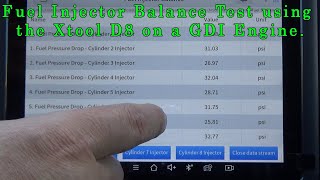
- Follow TSB #PIP4964F: Perform a fuel injector balance test to check for leaking or faulty injectors on Bank 1. This is the most critical step for this vehicle. 🎬 See how to perform a fuel injector balance test using a scan tool.
- If no injector issues are found, use a scan tool to observe live data from the Bank 1 upstream (Sensor 1) and downstream (Sensor 2) oxygen sensors. The downstream sensor's voltage should be relatively stable. If it fluctuates rapidly like the upstream sensor, the catalytic converter may be inefficient. If it's stuck high (e.g., >0.8V), the sensor itself may be faulty or there is a confirmed rich condition.
- Check fuel pressure to ensure it is within the manufacturer's specified range. High fuel pressure can cause a rich condition across all cylinders.
- Inspect the Mass Air Flow (MAF) sensor for contamination and clean it with a dedicated MAF sensor cleaner.
- If all other components test correctly, the catalytic converter may be at fault, likely damaged by the preceding rich condition.
Parts You'll Likely Need
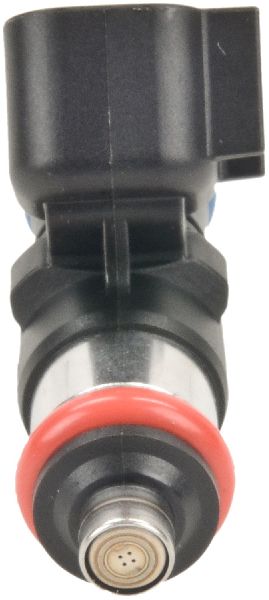
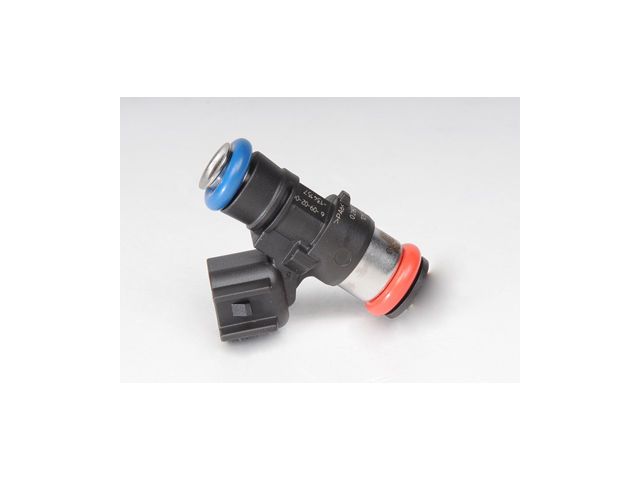
- Fuel Injector
(OEM #12576341 (For 6.0L L76 & 6.2L LS3 V8))— This is the most likely cause of P2097 on a Pontiac G8, as identified by GM's own service bulletin (PIP4964F).
Trusted brands: ACDelco, Bosch
OEM price range: $90-$180
Aftermarket price range: $50-$100 - Downstream Oxygen Sensor (Bank 1, Sensor 2) — If injectors and exhaust leaks are ruled out, the sensor that detects the fault may have failed itself. However, this is a less likely cause on this platform.
Trusted brands: ACDelco, Denso, Bosch
OEM price range: $70-$150
Aftermarket price range: $40-$90 - Exhaust Manifold Gasket — A common source for exhaust leaks that can trigger this code.
Trusted brands: Fel-Pro, ACDelco
OEM price range: $30-$60
Aftermarket price range: $15-$40
Related Codes That Often Appear With This One
- P0172 — P0172 means "System Too Rich (Bank 1)" and is detected by the upstream O2 sensor. If a fuel injector is leaking badly, both the upstream and downstream sensors will detect the rich condition, setting both codes and strongly pointing to a fuel delivery issue.
- P0301, P0303, P0305, P0307 — These are misfire codes for the cylinders on Bank 1 (V8). A severely leaking fuel injector can foul the spark plug and cause misfires on that cylinder. On the 6.0L L76 V8, misfire codes can also be an early sign of a failing AFM lifter, which is a known issue.
- P2099 — This is the same code but for Bank 2 ("Post Catalyst Fuel Trim System Too Rich Bank 2"). While unlikely to appear at the exact same time from a single component failure, seeing both may indicate a systemic issue like high fuel pressure affecting both banks or multiple leaking injectors.
Technical Service Bulletins (TSBs) & Recalls
- PIP4964F: Advises performing a fuel injector balance test when diagnosing DTC P2097 or P2099, pointing to faulty injectors as a likely cause. This TSB applies to a wide range of GM vehicles from 2008-2012, including the G8, Cadillac CTS, and Chevy Camaro.
Platform-Specific Known Issues
- Owner Experience with P2097 and P0420: On the 'Just Commodores' forum, a user with a VE Commodore (the G8's Australian counterpart) experienced a P2097 code. After cleaning the MAF and adding O2 sensor spacers, the code went away but was replaced by a P0420 (Catalyst System Efficiency Below Threshold), suggesting the original rich condition may have already damaged the catalytic converter. This highlights the importance of fixing the root cause of P2097 promptly.
- Code after Header Installation: A user on the Camaro5 forum reported getting P2097 and P2099 codes immediately after installing aftermarket headers on their V6 Camaro. This strongly indicates that an exhaust leak was introduced during installation or that the change in exhaust flow requires a custom tune to prevent the stock sensors from misinterpreting the exhaust gases.
Mechanic-Grade Diagnostic Values
- Fuel Pressure (V8 Engines) — expected: 380-410 kPa (55-60 psi) with fuel pump running.. Failure: Pressure below spec can indicate a weak pump; pressure above spec can indicate a faulty regulator.
- Fuel Pressure Leak-Down — expected: Pressure should not drop more than 34 kPa (5 psi) in 1 minute after the pump is turned off.. Failure: A rapid pressure drop suggests a leaking fuel injector or faulty check valve in the fuel pump.
- Downstream O2 Sensor (Bank 1, Sensor 2) Voltage — expected: A relatively steady voltage around 0.45V on a healthy, warm engine.. Failure: A steady voltage above 0.45V indicates a rich condition. If the voltage is stuck high (e.g., >0.8V), the sensor may be faulty or there is a definite rich condition.
- Upstream O2 Sensor (Bank 1, Sensor 1) Voltage — expected: Rapidly fluctuating between approximately 0.1V (lean) and 0.9V (rich).. Failure: A slow or non-responsive sensor will not fluctuate correctly and can cause fuel control problems.
- Fuel Injector Balance Test (Pressure Drop) — expected: The pressure drop for each injector should be within 20 kPa (3 psi) of the average for all injectors on that bank.. Failure: An injector with a significantly larger pressure drop is leaking or flowing too much fuel.
- Long Term Fuel Trim (at time of fault) — expected: Within -13% to +13%.. Failure: If trims are highly positive (>13%), it suggests the ECM is compensating for a perceived lean condition (like an intake leak), which can indirectly cause a P2097. If trims are normal when the code sets, it points more toward an O2 sensor or exhaust leak issue.
Scan Tool Commands That Help
- GM Tech 2 / GDS2: Fuel Injector Balance Test — This is the primary diagnostic step recommended by TSB #PIP4964F for a P2097 code on this platform. It directly tests for leaking or over-fueling injectors by measuring the fuel pressure drop as each injector is individually pulsed.
Wiring & Ground Locations
- G103 — Connects the right-hand (passenger side) front cylinder head to the ABS mounting bracket.. This is considered a primary engine block ground. A poor connection here can introduce electrical noise and cause incorrect readings from various engine sensors, including those that influence fuel trim.
- G112 — Connects the left-hand (driver's side) rear cylinder head to the engine wiring harness.. For V8 models, Bank 1 is the driver's side. This ground is critical for the components on that bank. A faulty ground could affect the Bank 1 O2 sensor readings.
- ECM (Engine Control Module) — Located in the engine bay, under the underhood fuse block on the passenger side.. This is the location for testing sensor wiring continuity back to the computer. Access differs by model year; 2008 models are accessible from the top, while 2009.5 models may require removing the passenger fender liner.
- Downstream O2 Sensor Connector — The sensors are in the exhaust pipe just after the catalytic converters, near the transmission crossmember. The wiring harness and connectors are just above them.. This is a common location for wiring to be damaged by road debris or heat, causing a sensor circuit fault that could trigger P2097.
"I Checked Everything" — The Actual Cause
- According to a related GM TSB (PIP5215A), if fuel trims are normal and a smoke test finds no exhaust leaks, the root cause may be a faulty post-catalyst O2 sensor heater or a problem in the sensor's electrical circuit, rather than a leak or fuel issue.
Model Year Variations Within This Range
- 2009.5: Access to the Engine Control Module (ECM) is more restricted compared to 2008 and early 2009 models. A metal bracket was added that often requires removing the passenger-side front wheel and fender liner to access the ECM, whereas earlier models allowed for top-down access after removing the air intake.
Helpful Videos
![How to Fix P2097 Engine Code in 4 Minutes [2 DIY Methods / Only $9.84]](https://img.youtube.com/vi/rCwtzRmhMwY/mqdefault.jpg)
We Have This Part in Stock



The information in this article is provided for general reference and educational purposes only. Vehicle specifications, procedures, and part compatibility can vary by production date, trim level, and region. Always consult your vehicle's factory service manual and verify part numbers before purchasing or performing repairs. Safety-critical components such as airbags, seat belts, and braking systems should be installed by a qualified professional.
- Pontiac G8:
- 🧭 Diagnostic Flowchart
- 🎬 Helpful Videos
- 🛍️ Shop This Part
- What's Unique About the 2008-2009 Pontiac G8
- Symptoms You May Notice
- Most Likely Causes
- Rare But Worth Checking
- Diagnosis Steps
- Parts You'll Likely Need
- Related Codes That Often Appear With This One
- Technical Service Bulletins (TSBs) & Recalls
- Platform-Specific Known Issues
- Mechanic-Grade Diagnostic Values
- Scan Tool Commands That Help
- Wiring & Ground Locations
- "I Checked Everything" — The Actual Cause
- Model Year Variations Within This Range
- 🎟️ Get 5% Off