

P2097 on 2009-2010 Saturn Outlook: Causes for Post-Catalyst Rich Fuel Trim
On a 2009-2010 Saturn Outlook, code P2097 is most often caused by a leaking fuel injector. A GM Technical Service Bulletin (PIP4964F) specifically directs technicians to test fuel injectors before replacing other parts like oxygen sensors. Another common cause on this platform is an exhaust leak from a cracked weld before the downstream O2 sensor.
- For a 2009-2010 Saturn Outlook, P2097 strongly points to a leaking fuel injector on Bank 1 (firewall side).
- Do not replace the oxygen sensor without first ruling out a fuel injector problem, as recommended by GM's TSB PIP4964F.
- Thoroughly inspect the exhaust system for leaks, especially the welded flange on the Y-pipe before the rear O2 sensor, as this is another very common cause on this platform.
What's Unique About the 2009-2010 Saturn OUTLOOK
The Saturn Outlook shares its GM Lambda platform and 3.6L V6 LLT direct-injection engine with the GMC Acadia, Buick Enclave, and Chevrolet Traverse. For this specific platform, General Motors issued Technical Service Bulletin #PIP4964F, which strongly suggests that a leaking or malfunctioning fuel injector is a very common cause for the P2097 code. This is a critical piece of information, as the direct-injection system on the LLT engine is known for injector issues that can lead to a misdiagnosis where the oxygen sensor is replaced unnecessarily. Additionally, the exhaust Y-pipe on these vehicles is known to develop cracks at the flange welds, creating a leak in the perfect spot to trigger this code.
🎬 Watch: A complete breakdown of P2097 symptoms and common causes.Diagnostic Flowchart
Tap your situation to follow the diagnostic path that matches what you're seeing on this vehicle.
Symptoms You May Notice
- Check Engine Light is on
- Reduced fuel economy
- Rough or uneven idle
- Engine hesitation or sputtering upon acceleration
- Odor of raw fuel or black smoke from the exhaust in severe cases
- Engine may be hard to start when hot
- Replacing the downstream oxygen sensor without first checking for fuel injector issues or exhaust leaks. The TSB for this platform specifically warns against this.
Most Likely Causes
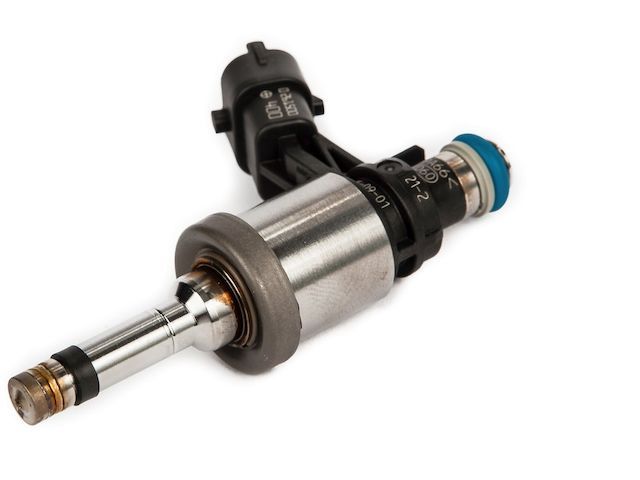
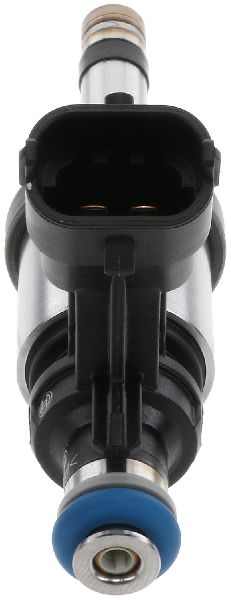
- Leaking or Faulty Fuel Injectors 🔴 High Probability → Shop Fuel Injector A GM Technical Service Bulletin (PIP4964F) specifically identifies faulty fuel injectors as a primary cause for P2097 on this platform. The direct injection system on the 3.6L LLT engine can be prone to issues.
How to confirm: Perform a fuel injector balance test or an Active Fuel Injector Tester (AFIT) test using a GM-specific scan tool (like a Tech2 or GDS2). This measures the pressure drop for each injector to identify a leaker.
Typical fix: Replace the faulty fuel injector(s). It is often recommended to replace them as a set on the affected bank, or all six at once, to ensure balanced fuel delivery.
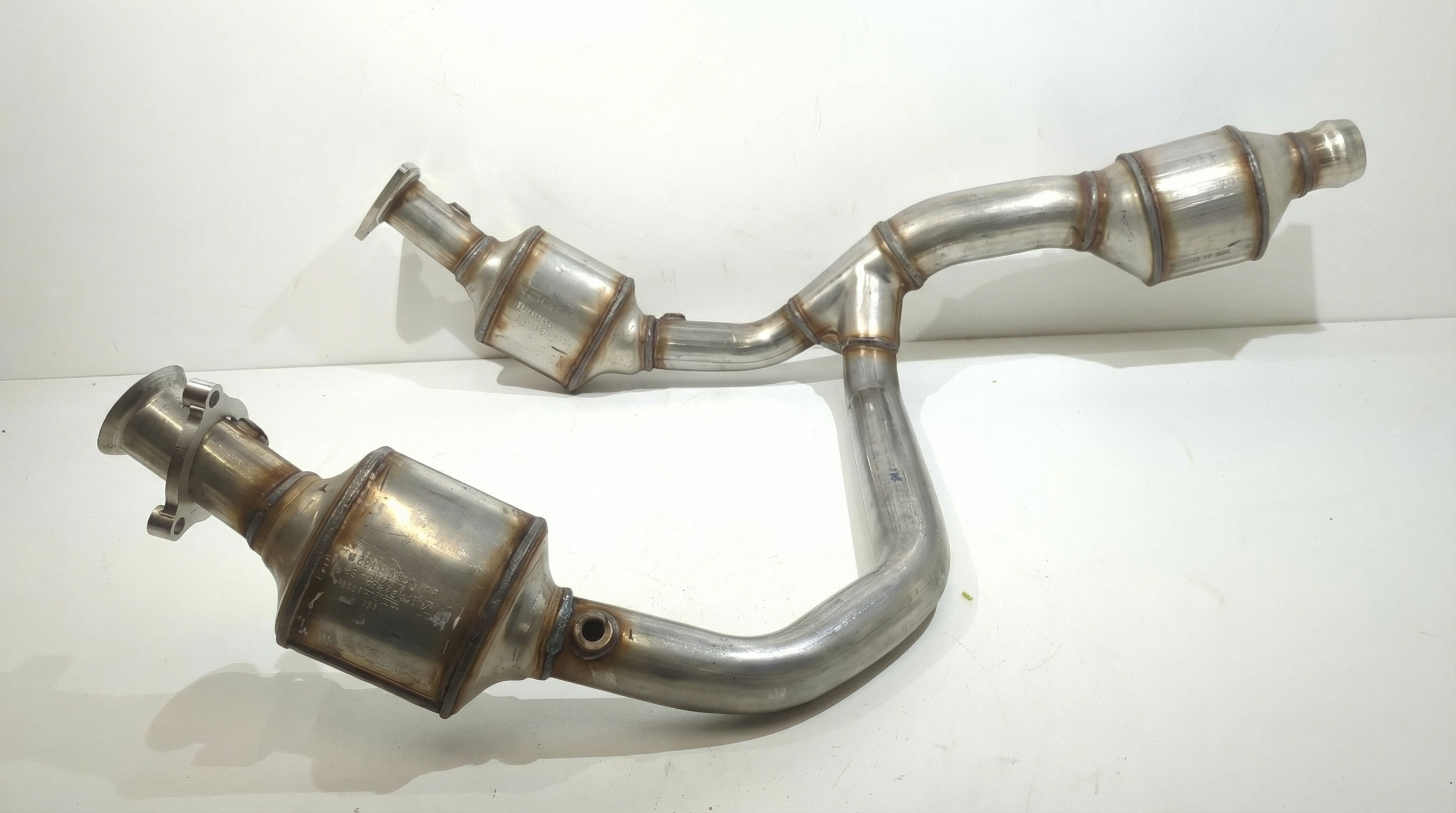
Est. part cost: $50-$150 per injector - Exhaust System Leak (before the downstream O2 sensor) 🔴 High Probability The exhaust systems on these Lambda platform vehicles are known to develop leaks. A very common failure point is a cracked factory weld on the intermediate exhaust pipe (Y-pipe) flange where it connects to the Bank 1 catalytic converter.
How to confirm: Visually inspect the exhaust system, focusing on the flanges and welds between the engine and the downstream O2 sensor. A shop can use a smoke machine to find small leaks. The leak is often visible as a black soot stain around the crack.
Typical fix: Repair the leak. This may involve replacing a gasket, re-welding a cracked flange, or replacing the entire Y-pipe section.
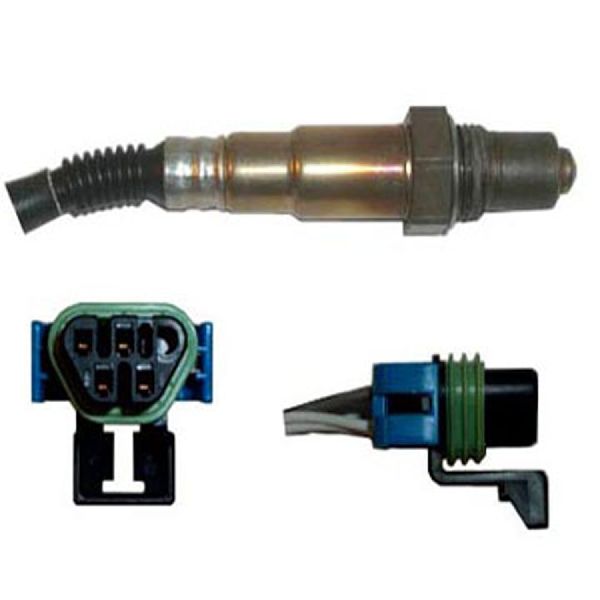
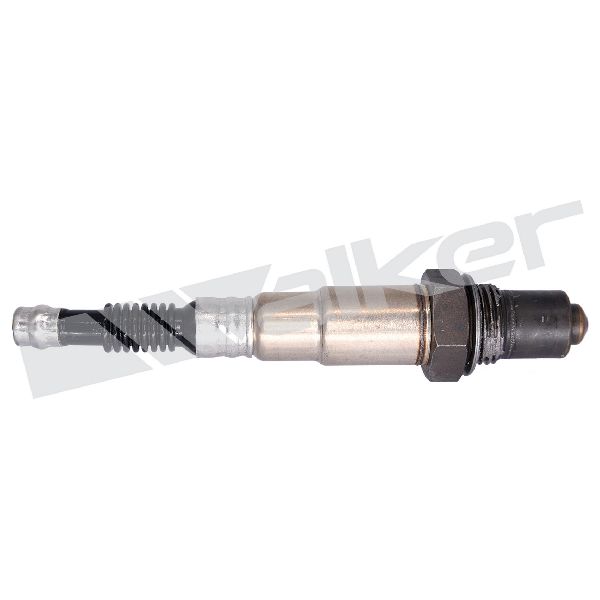
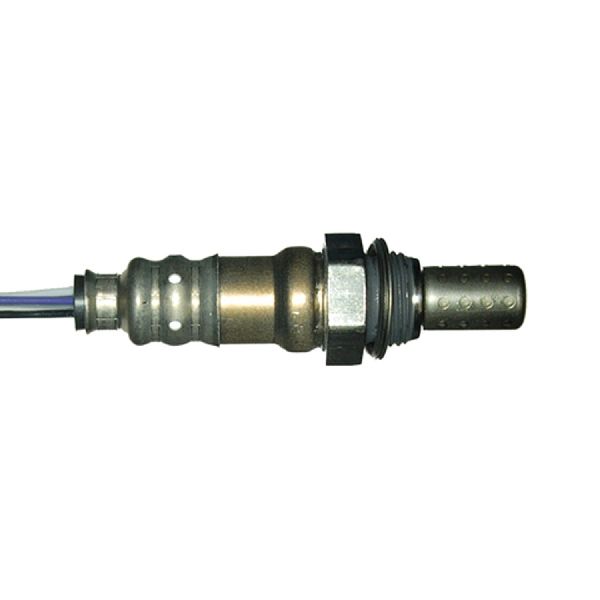
Est. part cost: $20-$800, depending on whether a weld repair or full pipe replacement is needed. - Faulty Downstream Oxygen Sensor (Bank 1, Sensor 2) ⚪ Low Probability → Shop Oxygen Sensor While the sensor itself can fail, it's more often correctly reporting a problem caused by something else. It is a common misdiagnosis to replace this part first.
How to confirm: Use a scan tool to monitor the live voltage data from the sensor. A healthy downstream sensor should show a relatively stable voltage when the engine is warm and running in closed loop. If it's stuck high (above 0.8V) or fluctuating wildly like an upstream sensor, it may be faulty.
Typical fix: Replace the Bank 1, Sensor 2 oxygen sensor after confirming other causes are not present.
Est. part cost: $35-$200
Rare But Worth Checking
- High Fuel Pressure: A failing fuel pressure regulator can cause a system-wide rich condition. This would likely trigger codes for both engine banks (P2097 and P2099).
- Faulty Mass Airflow (MAF) Sensor: A dirty or failing MAF sensor can send incorrect airflow data to the ECM, causing it to calculate the wrong fuel mixture.
- ECM Software Glitch: A separate TSB (#17058) for some GM models notes that a software glitch can sometimes cause a false P2097 code. A dealer can check if a software update is available and reprogram the ECM.
Diagnosis Steps
- Scan for all stored DTCs. Note if any other codes, such as P2099, P030x, or P0420, are present, as this can help narrow the diagnosis.
- Perform a thorough visual inspection of the exhaust system for signs of leaks. Pay close attention to the welded flange on the Y-pipe where it meets the Bank 1 (firewall side) catalytic converter, as this is a known failure point.
- Use a scan tool to observe live data for short-term and long-term fuel trims on both banks. High negative numbers on Bank 1 would confirm a rich condition.
- Following TSB #PIP4964F, perform a fuel injector balance test. This is the most critical platform-specific step. A professional shop or a DIYer with an advanced scan tool (GM Tech2/GDS2) can perform this test to identify leaking injectors.
- If injectors and exhaust are confirmed to be good, check fuel pressure to ensure it is within specification.
- Check for any available ECM software updates with a GM dealer, referencing TSB #17058.
- Only after all other causes are ruled out, test the Bank 1 downstream O2 sensor's operation and wiring.
Parts You'll Likely Need
- Fuel Injector
(OEM #12638530 (supersedes 12669384, 12611545, 12632255))— A GM TSB specifically points to faulty fuel injectors as a very common cause for this code on the 3.6L engine.
Trusted brands: ACDelco, Bosch, Standard Motor Products
OEM price range: $100-$200
Aftermarket price range: $40-$120 - Downstream Oxygen Sensor (Bank 1, Sensor 2)
(OEM #12612430 (ACDelco #213-4229))— This sensor is what triggers the code. While often not the root cause, the sensor itself can fail and send incorrect rich signals.
Trusted brands: ACDelco, Denso, Bosch
OEM price range: $70-$150
Aftermarket price range: $35-$100 - Exhaust Gasket (Catalytic Converter Outlet)
(OEM #15276331)— If an exhaust leak is found at the flange between the catalytic converter and the intermediate pipe, this gasket will be required for the repair.
Trusted brands: ACDelco, Fel-Pro
OEM price range: $30-$60
Aftermarket price range: $15-$40
Related Codes That Often Appear With This One
- P2099 — This is the same code but for Bank 2. If both are present, it points to a problem affecting the entire engine, such as fuel pressure, a MAF sensor issue, or a software glitch.
- P0300-P0306 — These are misfire codes. A severely leaking fuel injector can foul the spark plug in its cylinder, causing a misfire on that specific cylinder.
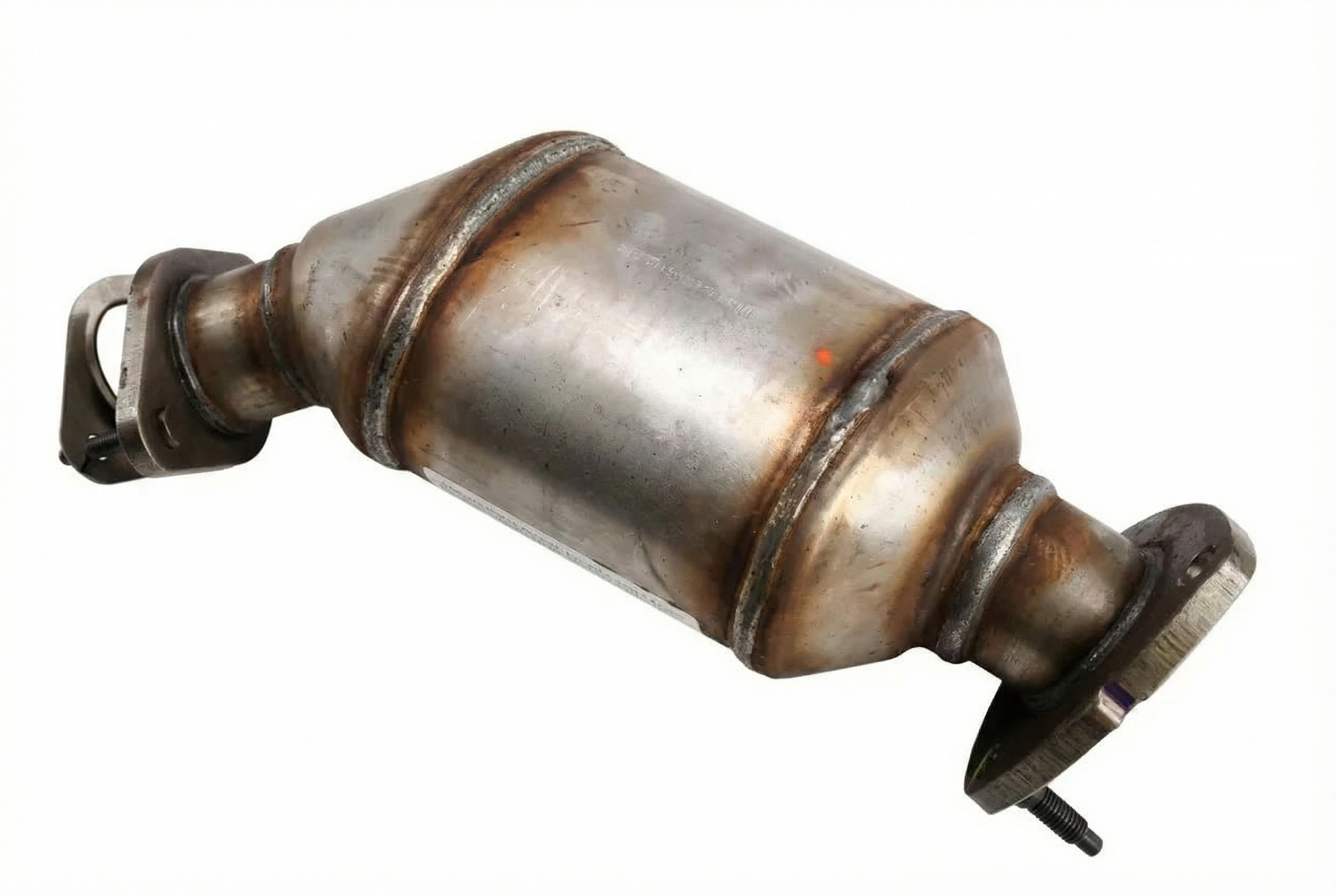
- P0420 — This code indicates 'Catalyst System Efficiency Below Threshold'. It can appear with P2097 if an exhaust leak is present between the upstream and downstream O2 sensors, or if the catalytic converter has been damaged by a long-term rich condition.
Technical Service Bulletins (TSBs) & Recalls
- PIP4964F: Advises that for a P2097 or P2099 code, the most common cause is a faulty fuel injector and recommends performing an injector balance test. It also suggests checking for exhaust leaks if injectors are okay.
- #17058: Notes that on some GM models, a software glitch in the ECM or other modules can cause a false P2097 to be set. The fix is a software update performed by a dealer.
Platform-Specific Known Issues
- Technical Service Bulletin #PIP4964F explicitly states that for a P2097 or P2099 code, a faulty fuel injector is a highly common cause and an injector balance test should be performed early in the diagnosis.
- The welded flange on the intermediate exhaust pipe (Y-Pipe) where the Bank 1 catalytic converter attaches is a known failure point that causes a significant exhaust leak, leading directly to code P2097.
Mechanic-Grade Diagnostic Values
- Fuel Injector Resistance (3.6L LLT Engine) — expected: 11 - 14 Ohms. Failure: A reading of 0 ohms (short), infinity/OL (open), or significant deviation from the expected range.
- Downstream O2 Sensor (Bank 1, Sensor 2) Voltage — expected: Relatively steady voltage around 0.45V - 0.7V when the engine is warm and at a steady RPM.. Failure: Voltage is stuck high (above 0.8V) without a confirmed rich condition, or it fluctuates rapidly like an upstream sensor.
- High Pressure Fuel System (Direct Injection) — expected: Around 800 PSI at idle, can exceed 2000 PSI under load.. Failure: Consistently high pressure (e.g., 1600-1700 PSI at idle) can indicate a problem with the high-pressure fuel pump or its control solenoid, forcing a rich condition.
- Low Pressure Fuel System (In-tank pump) — expected: Minimum pressure of 87 PSI, maximum of 130 PSI.. Failure: Pressure outside this range indicates a problem with the in-tank fuel pump module.
Scan Tool Commands That Help
- GDS2 / Tech2 / AFIT: Injector Balance / Active Fuel Injector Test — This is the primary diagnostic step recommended by GM TSB PIP4964F for a P2097 code on the 3.6L LLT engine to identify leaking or malfunctioning fuel injectors.
- GDS2 / Tech2: Fuel Trim Reset — After a repair is completed (e.g., replacing an injector or fixing a leak), this function should be used to clear the learned long-term fuel trim values, allowing the ECM to relearn the new baseline faster.
- GDS2 / Tech2: Fuel Pump Enable — Used to manually run the in-tank fuel pump with the engine off to test the low-pressure fuel system's maximum pressure and check for leaks.
Wiring & Ground Locations
- G115 — Left side of engine compartment, on the left inner fender panel.. A poor connection at this major engine compartment ground could cause erratic sensor readings, including from the O2 sensors or their control modules.
- Bank 1 O2 Sensor Locations — Bank 1 is the cylinder bank closer to the firewall. Sensor 1 is in the exhaust manifold before the catalytic converter. Sensor 2 (which sets this code) is after the catalytic converter on the same exhaust pipe.. Correctly identifying Bank 1 and Sensor 2 is critical for diagnosis and replacement. Swapping sensors on the wrong bank will not fix the issue.
- Engine Control Module (ECM) — Left side of the engine compartment.. All sensor data is processed here, and all injector commands originate here. The ECM's ground connection is critical for stable operation.
Real Owner Repair Stories
- YouTube video on a 2019 Chevrolet Traverse (same platform/engine family) (2019 Chevrolet Traverse 3.6L) — P2097 code present.
❌ Tried (didn't work) Initially suspected a leak at a different gasket and tried sealing it with RTV.
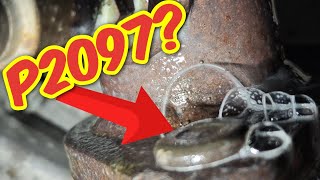
✅ What actually fixed it The final cause was a completely cracked and separated exhaust pipe right at the weld near the oxygen sensor, causing a massive leak. The entire pipe section had to be replaced.
OEM Part Supersession History
12611545, 12632255, 12638530→12669384— Standard part evolution, design improvement, or consolidation for the 3.6L V6 (LLT/LFX) engines.
Model Year Variations Within This Range
- 2009-2011 (LLT Engine): These models use high-impedance fuel injectors with a resistance of approximately 11-14 Ohms.
Helpful Videos
![How to Fix P2097 Engine Code in 4 Minutes [2 DIY Methods / Only $9.84]](https://img.youtube.com/vi/rCwtzRmhMwY/mqdefault.jpg)

Used OEM Parts in Stock
New Aftermarket Parts Available


The information in this article is provided for general reference and educational purposes only. Vehicle specifications, procedures, and part compatibility can vary by production date, trim level, and region. Always consult your vehicle's factory service manual and verify part numbers before purchasing or performing repairs. Safety-critical components such as airbags, seat belts, and braking systems should be installed by a qualified professional.
- Saturn OUTLOOK:
- 🧭 Diagnostic Flowchart
- 🎬 Helpful Videos
- 🛍️ Shop This Part
- What's Unique About the 2009-2010 Saturn OUTLOOK
- Symptoms You May Notice
- Most Likely Causes
- Rare But Worth Checking
- Diagnosis Steps
- Parts You'll Likely Need
- Related Codes That Often Appear With This One
- Technical Service Bulletins (TSBs) & Recalls
- Platform-Specific Known Issues
- Mechanic-Grade Diagnostic Values
- Scan Tool Commands That Help
- Wiring & Ground Locations
- Real Owner Repair Stories
- OEM Part Supersession History
- Model Year Variations Within This Range
- 🎟️ Get 5% Off