

Subaru Crosstrek P2097 (2017-2024): Post-Catalyst Rich Trim Causes & Fixes
For the 2017-2024 Subaru Crosstrek, code P2097 almost always points to a failing front air/fuel (A/F) ratio sensor, NOT the rear O2 sensor that triggers the code. An exhaust leak before the catalytic converter is the second most likely cause. Expect to pay $180-$280 for a quality Denso or OEM front A/F sensor. It is critical to use an OEM or Denso-branded sensor, as generic parts are known to cause performance issues and repeat codes.
- For code P2097 on a Subaru Crosstrek, immediately suspect the front air/fuel ratio sensor is failing, not the rear oxygen sensor.
- Thoroughly inspect for exhaust leaks between the engine and the catalytic converter before replacing any parts.
- Do not replace the rear O2 sensor or the catalytic converter unless you have definitively ruled out the front A/F sensor and exhaust leaks.
- When replacing the front A/F sensor, use a high-quality OEM brand like Denso for a reliable, long-lasting fix.
What's Unique About the 2017-2024 Subaru Crosstrek
On many vehicles, P2097 points to a bad rear O2 sensor. However, on modern Subarus like the Crosstrek, the opposite is true. The front Air/Fuel (A/F) ratio sensor is very often the actual culprit. It fails in a way that causes the ECM to inject too much fuel, and the rear O2 sensor correctly reports the resulting rich mixture, triggering the code. 🎬 Watch: A detailed breakdown of why Subarus trigger code P2097. Owners and even some shops frequently misdiagnose the issue by replacing the rear sensor when the front sensor was the root cause all along. This pattern is consistent across similar Subaru platforms like the Impreza, Forester, and WRX.
Generation note: The 2017-2024 range covers three Crosstrek generations. The 2017 model (1st gen) has a port-injected FB20B engine. The 2018-2023 models (2nd gen) use the direct-injected FB20D engine specified. The 2024 model begins the 3rd generation. While the root causes are similar across these generations, the primary focus of this guide is the 2nd generation (2018-2023) with the FB20D engine, where this issue is well-documented.
Symptoms You May Notice
- Check Engine Light is on
- Decreased fuel economy
- Rough idle
- Strong fuel smell from the exhaust
- Black smoke from the exhaust in severe cases
- Replacing the rear oxygen sensor first. The rear O2 sensor is usually just the messenger reporting a problem that started upstream. On this vehicle, the front A/F sensor is the more likely culprit.
- Replacing the catalytic converter. This is an expensive and usually unnecessary repair for P2097. The code indicates a fuel trim issue, not necessarily a converter failure.
Most Likely Causes
- Failing Front Air/Fuel (A/F) Ratio Sensor (Bank 1, Sensor 1) 🔴 High Probability → Shop Oxygen Sensor On modern Subaru platforms, the front A/F sensor is a common failure point that degrades over time, sending biased readings to the ECM. This tricks the computer into adding too much fuel, creating the rich condition that the rear sensor accurately reports.
How to confirm: Use a scan tool to monitor live data for both the front A/F sensor and rear O2 sensor. A healthy front sensor should fluctuate rapidly around a central point (e.g., 2.8V-3.3V). A lazy or biased sensor will show slow, stuck, or skewed readings, causing the ECM to command a rich mixture and long-term fuel trims to go significantly negative.
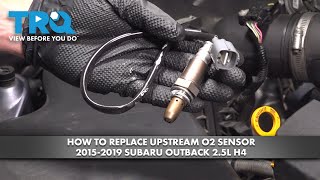
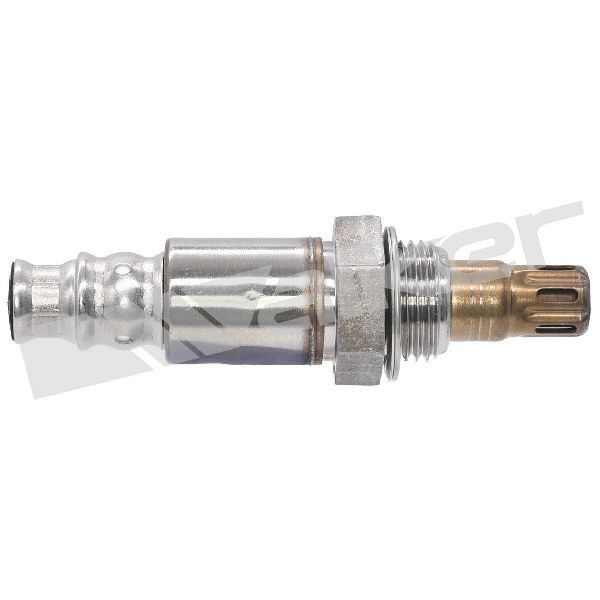
Typical fix: Replace the front A/F ratio sensor. It is critical to use an OEM or high-quality OEM-supplier part like Denso, as generic sensors are known to fail or cause performance issues. The correct part for many 2.0L Crosstreks is Subaru P/N 22641AA610, which corresponds to Denso P/N 234-9109. 🎬 Watch: Step-by-step walkthrough for replacing both Subaru oxygen sensors.
Est. part cost: $180-$280 - Exhaust Leak (before the catalytic converter) 🟡 Medium Probability Exhaust gaskets, particularly the donut gasket between the manifold and front pipe, can degrade. A leak before or near the front A/F sensor can draw in outside air, causing the sensor to read a false lean condition. The ECM then over-compensates by adding fuel, creating a true rich condition that the rear O2 sensor detects. This is often reported after other exhaust work has been performed.
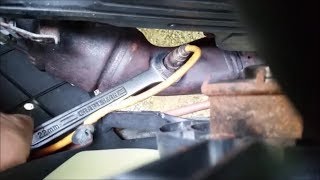
How to confirm: Perform a visual inspection of the exhaust manifold, gaskets, and front pipe for soot or cracks. A smoke test is the most definitive way to find a leak by forcing smoke into the exhaust system and watching where it escapes. Listen for an audible ticking or hissing sound when the engine is cold.
Typical fix: Replace the leaking gasket or repair the cracked component. Always use new gaskets when reinstalling exhaust components.
Est. part cost: $10-$50 for gaskets - Failing Rear Oxygen Sensor (Bank 1, Sensor 2) ⚪ Low Probability → Shop Oxygen Sensor While it's the sensor that reports the code, it's less often the actual cause on this platform. It can fail by becoming biased and sending a false rich signal even when the mixture is correct.
How to confirm: After confirming the front A/F sensor is working correctly and there are no exhaust leaks, monitor the rear O2 sensor's voltage with a scan tool. After the engine is warm, it should show a relatively steady voltage. If it's stuck high (above ~0.8V) even when live data suggests the mixture isn't rich, the sensor itself may be faulty.
Typical fix: Replace the rear oxygen sensor.
Est. part cost: $80-$220
Rare But Worth Checking
- Leaking Fuel Injectors: → Shop Fuel Injector A fuel injector stuck open will dump excess fuel into a cylinder, creating a true rich condition that can overwhelm the system and trigger P2097. This would likely be accompanied by other codes like P0172 (System Too Rich) or misfire codes.
- Failing Mass Airflow (MAF) Sensor: A dirty or failing MAF sensor can under-report the amount of air entering the engine, causing the ECM to calculate an incorrect (rich) fuel mixture. Cleaning the MAF sensor is a common first step in diagnosis if other symptoms align.
- Clogged or Failing Catalytic Converter: → Shop Catalytic Converter While a long-term rich condition can damage the converter, a failing converter itself can sometimes cause erratic readings and trigger this code. This is usually a last resort after all sensors and the fuel system have been checked.
Diagnosis Steps
- Check for other stored DTCs. Address any other codes, especially for misfires (P030x), MAF sensor (P0101, P0102), or rich condition (P0172), before diagnosing P2097.
- Visually inspect the exhaust system from the engine to the rear O2 sensor. Look for cracks, rust, or black soot indicating a leak. Pay close attention to gasket areas, especially if recent exhaust work was done.
- If a leak is suspected, perform a smoke test to confirm its location.
- Use a scan tool to observe live data. Warm up the engine to enter closed loop operation.
- Watch the front A/F sensor (Bank 1, Sensor 1) signal. It should fluctuate rapidly. If it's slow, stuck, or biased (e.g., consistently reading lean, causing the computer to add fuel), it's likely the cause.
- Watch the rear O2 sensor (Bank 1, Sensor 2) signal. It should be relatively stable. If it's stuck high (above ~0.8V), it confirms a rich condition is being detected.
- Check Short-Term and Long-Term Fuel Trims. With a P2097 code, you will likely see Long-Term Fuel Trim values that are significantly negative (e.g., -10% or more) as the ECM tries to pull fuel to compensate for the perceived rich condition.
- If sensors and exhaust are confirmed good, investigate the fuel system (fuel pressure, injector leakage) and MAF sensor readings.
Parts You'll Likely Need
- Front Air/Fuel Ratio Sensor (Bank 1, Sensor 1)
(OEM #22641AA610)— This is the most common cause of P2097 on this vehicle. It fails and sends incorrect data to the ECM, causing a rich condition.
Trusted brands: Denso (P/N: 234-9109), Subaru OE
OEM price range: $220-$280
Aftermarket price range: $180-$250
Related Codes That Often Appear With This One
- P0172 — P0172 means 'System Too Rich Bank 1' based on the front A/F sensor. Seeing both codes together strongly points to a true rich condition or a major failure of the front A/F sensor, as both primary and secondary sensors agree on the rich mixture.
- P0420 — If the rich condition from P2097 persists for a long time, it can overheat and damage the catalytic converter by coating it with unburnt fuel, eventually leading to a P0420 'Catalyst Efficiency' code.
Technical Service Bulletins (TSBs) & Recalls
- TSB Bulletin #18-228-25R: This bulletin announces the diagnostic procedures to be used when DTCs P2096 (POST CATALYST FUEL TRIM SYSTEM TOO LEAN BANK 1) and P2097 (POST CATALYST FUEL TRIM SYSTEM TOO RICH BANK 1) are detected by the Engine Control Module (ECM).: → Shop Engine Control Module (ECM)
- TSB 11-174-17R: Addresses potential battery discharge from short-trip driving and optimizes ECM logic. While not directly for P2097, it involves ECM reprogramming that can affect the charging and fuel systems.:
- TSB 05-70-19R: Pertains to premature rear wheel bearing failure on 2013-2019 Crosstreks, a common unrelated issue. It advises replacing the rear brake backing plate along with the hub assembly.:
Platform-Specific Known Issues
- P2097 Immediately After Clutch Replacement: A Reddit user on r/subaru reported that code P2097 began appearing frequently immediately after a clutch replacement. Since this repair requires removing and reinstalling the exhaust system, it strongly suggests an exhaust leak was created from a poorly seated or non-replaced gasket, leading to the rich code.
Mechanic-Grade Diagnostic Values
- Rear O2 Sensor (Bank 1, Sensor 2) Heater Circuit Resistance — expected: 5.6 Ohms +/- 0.8 Ohms at 68°F (20°C) for 2018+ models.. Failure: A reading of OL (Open Loop/infinite resistance) or a value significantly outside the specified range indicates a failed internal heater element.
- Front Air/Fuel (A/F) Sensor (Bank 1, Sensor 1) Voltage — expected: Fluctuates rapidly around a central point, typically between 2.8V and 3.3V at idle.. Failure: Voltage is stuck, slow to respond, or biased significantly from the central point. A reading of 2.8V was noted on an Outback with a P2097 code, indicating a potential lean bias causing the ECM to over-fuel.
- Rear Oxygen (O2) Sensor (Bank 1, Sensor 2) Voltage — expected: Relatively steady voltage, typically around 0.45V after the catalytic converter is warmed up.. Failure: Voltage is stuck high (consistently >0.8V), indicating a rich condition is being detected.
- Front Air/Fuel (A/F) Sensor Heater Circuit Resistance — expected: Between 2 and 3 ohms.. Failure: Resistance is outside the 2-3 ohm range, indicating a faulty heater element within the A/F sensor.
Scan Tool Commands That Help
- Subaru Select Monitor (SSM) or equivalent professional scanner: A/F Learning Value Reset / Clear — This function must be used after replacing an Air/Fuel sensor or fixing a major exhaust leak. It clears the long-term fuel trim adjustments the ECM 'learned' to compensate for the old fault, allowing it to create a fresh fuel map with the new, correct part. Failing to do this can cause the code to return even with a good part installed.
- Subaru Select Monitor (SSM) or equivalent professional scanner: Diagnostic Procedure from TSB 18-228-25R — When diagnosing P2097 or P2096, this TSB provides an updated diagnostic flowchart that supersedes the standard service manual. It is the manufacturer's recommended path for an accurate diagnosis.
- Generic OBD-II Scanner with Live Data: Idle Relearn Procedure — After disconnecting the battery or replacing major engine management components, a specific idle relearn procedure should be performed. This involves a sequence of turning the key on, idling for specific durations without electrical load, and a specific test drive pattern to allow the ECU to recalibrate the throttle body and idle speed correctly.
Wiring & Ground Locations
- E23 / E24 — The front oxygen (A/F) sensor plug itself.. This is the connector for the most likely failed part. Knowing the identifier helps locate it on a wiring diagram to test for power, ground, and signal continuity back to the ECM. The connector is on the passenger side of the engine bay, on the top corner of the engine.
- E25 — The wiring diagram identifier for the rear O2 sensor plug.. This connector, typically located on the driver's side near the rear of the transmission, is the primary point for electrical testing (voltage, ground, resistance) of the rear O2 sensor circuit without having to access the sensor itself. It's a common area for corrosion or damage.
Real Owner Repair Stories
- YouTube user 'melniks automotive' (Subaru vehicle (model not specified, but behavior is relevant)) — P2097 code, poor fuel economy (17.4 MPG), but no noticeable hesitation or lack of power.
❌ Tried (didn't work) The user noted that other common causes could be the front A/F sensor, MAF sensor, or exhaust leaks, but they diagnosed their specific issue differently.
✅ What actually fixed it Replacing the REAR oxygen sensor. After replacement and clearing codes, fuel economy immediately and dramatically improved to over 20 MPG, confirming the fix. - Reddit user on r/Crosstrek (2018 Crosstrek 6MT, 110k miles) — Intermittent Check Engine Light for the downstream O2 sensor heater circuit.
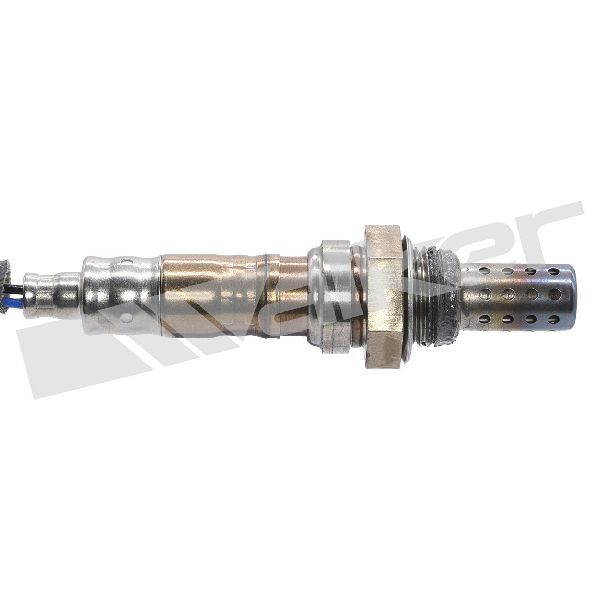
❌ Tried (didn't work) Replaced the rear O2 sensor with a Walker aftermarket part (PN: 350-34052). The code returned after about a week.
✅ What actually fixed it The final fix was not explicitly stated in the thread, but a responding mechanic noted, "It's usually the sensor. I usually install Denso sensors on Japanese Vehicles." This highlights the common issue of non-OEM/Denso parts failing to resolve the issue. The user confirmed the original sensor had a resistance of 6.0 Ohms, which is within the spec of 5.6 +/- 0.8 Ohms, suggesting the aftermarket part was the problem.
OEM Part Supersession History
N/A→22641AA610— This is the established OEM part number for the front A/F sensor for many vehicles in this range.
Heads up: The corresponding Denso part number is 234-9109. Denso is the Original Equipment Manufacturer (OEM) for Subaru. While a Subaru-branded part and a Denso-branded part are functionally identical, it is critical to avoid generic or other aftermarket brands, which are known to cause repeat failures or performance issues.
Model Year Variations Within This Range
- 2018-2023: These models use the FB20D direct-injected engine. While the common causes for P2097 remain the same (front A/F sensor, exhaust leak), the presence of a high-pressure fuel system introduces a very rare possibility of a high-pressure fuel pump or injector issue contributing to a rich condition.
- 2017: This model year uses the port-injected FB20B engine. The diagnostic process and common causes are nearly identical to the direct-injected version, as the code relates to the exhaust sensors which function the same way on both engine types.
Diagnostic Flowchart
Other Known Issues on This Vehicle
Issues unrelated to this code that are worth knowing about as an owner of this generation:
- Premature Rear Wheel Bearing Failure 🔴 High — Common on 2013-2019 models, often presenting as a humming or roaring noise that increases with speed. Can occur as early as 45,000 miles. (Ref: TSB 05-70-19R notes that an uneven surface on the brake backing plate can cause repeat failures and recommends replacing the plate with the hub.)
- Infotainment System Glitches (Freezing/Rebooting) 🟠 Medium — Widespread across many modern Subaru models, including the Crosstrek. Owners report unresponsive touchscreens, random reboots, and issues with Apple CarPlay/Android Auto. (Ref: TSB 15-312-23 was issued for 2024 models to fix firmware bugs causing these issues via a software update.)
- Battery Drain / Parasitic Draw 🟠 Medium — Owners report dead batteries after the car sits for a few days, especially with repeated short-trip driving. (Ref: TSB 11-174-17R and 11-176-17 include an ECM software update to change the battery charging logic and prevent this issue on 2017+ models.)
- Brake Light Switch Failure 🟠 Medium — Common on 2013-2017 models, causing brake lights to fail to illuminate. (Ref: A recall (WUE-90R) was issued to replace the faulty brake light switch, which could be affected by contaminants.)
- Manual Transmission Shift Fork Failure 🔴 High — Reported on 2017 models around 60,000 miles, leading to a sudden loss of ability to shift gears. (Ref: TSB 03-83-20R addresses this known defect for 2018-2020 models, but not explicitly for 2017, though they share the same transmission.)
Used vs. New Parts: Buying Guide for This Vehicle
When a used part is the smart pick: For this specific repair, using used parts is not recommended. The primary causes are electronic sensors that degrade with heat and time. A used sensor from a junkyard has unknown life expectancy and is a high-risk purchase.
What to inspect on the donor part:
- Not applicable as used sensors are not advised.
OEM-only on this vehicle (don't cheap out):
- Front Air/Fuel Ratio Sensor
- Rear Oxygen Sensor
Aftermarket brands forum-validated for this vehicle:
- Denso (OEM supplier for Subaru)
- NTK
Brands owners have reported issues with on this vehicle:
- Generic 'universal' sensors
- Store-brand sensors or unbranded parts from online marketplaces
- Walker (as noted in a specific forum post where the part failed to resolve the issue)
Real Owner Stories
Aggregated from forums and TSBs cited above. Mileages and costs reflect what owners reported in those sources.
2005 Subaru Impreza (FB-platform behavior)
Symptoms: Check Engine Light with code P2097 appeared frequently immediately after a clutch replacement.
What fixed it: Identifying and repairing an exhaust leak caused by not replacing gaskets during the reassembly of the exhaust system after the clutch job.
Source hint: Reddit r/subaru: Clutch replaced recently, now getting Check Engine with code P2097
2016 Subaru Crosstrek
Symptoms: Check engine lights came on out of nowhere with codes P0171 and P2097.
What fixed it: Diagnosis of the simultaneous lean (P0171) and rich (P2097) signals, often pointing to a biased front A/F sensor or exhaust leak.
Source hint: Reddit r/subaru: 16 crosstrek, these lights came on out of nowhere. P0171 and P2097
Related OBD-II Codes
Frequently Asked Questions
I just had my clutch replaced and now P2097 is appearing. Is this a coincidence?
Which specific replacement part should I use for the front A/F sensor on my 2.0L Crosstrek?
Can a bad battery or charging logic cause issues on my 2017+ Crosstrek?
Is the rear O2 sensor usually the cause of P2097 on the FB20D engine?
How can I confirm if an exhaust leak is causing my P2097 code?
Helpful Videos
We Have This Part in Stock

The information in this article is provided for general reference and educational purposes only. Vehicle specifications, procedures, and part compatibility can vary by production date, trim level, and region. Always consult your vehicle's factory service manual and verify part numbers before purchasing or performing repairs. Safety-critical components such as airbags, seat belts, and braking systems should be installed by a qualified professional.
- Subaru Crosstrek:
- 🧭 Diagnostic Flowchart
- 🎬 Helpful Videos
- 🛍️ Shop This Part
- What's Unique About the 2017-2024 Subaru Crosstrek
- Symptoms You May Notice
- Most Likely Causes
- Rare But Worth Checking
- Diagnosis Steps
- Parts You'll Likely Need
- Related Codes That Often Appear With This One
- Technical Service Bulletins (TSBs) & Recalls
- Platform-Specific Known Issues
- Mechanic-Grade Diagnostic Values
- Scan Tool Commands That Help
- Wiring & Ground Locations
- Real Owner Repair Stories
- OEM Part Supersession History
- Model Year Variations Within This Range
- Other Known Issues on This Vehicle
- Used vs. New Parts: Buying Guide for This Vehicle
- Real Owner Stories
- 2005 Subaru Impreza (FB-platform behavior)
- 2016 Subaru Crosstrek
- Related OBD-II Codes
- Frequently Asked Questions
- 🎟️ Get 5% Off