

P2097 on 2017-2024 Subaru Impreza: Causes and Fixes for Rich Fuel Trim
The P2097 code on a 2017-2024 Subaru Impreza most often points to a failing rear (downstream) oxygen sensor or an exhaust leak. Replacing the sensor (OEM part #22690AB08A) is a common fix, costing around $100-$200 for the part. Always check for exhaust leaks first, especially if other exhaust work was recently performed.
- P2097 means the computer sees a 'too rich' fuel mixture after the catalytic converter.
- The most likely cause on your Impreza is a bad rear oxygen sensor, followed by an exhaust leak.
- Do not immediately assume you need a new catalytic converter; it's an expensive part and usually not the root cause.
- Symptoms are typically a Check Engine Light and a noticeable decrease in gas mileage.
- A DIY-er with a basic scan tool and hand tools can often diagnose and fix this issue by replacing the rear O2 sensor.
What's Unique About the 2017-2024 Subaru IMPREZA
For this generation of Subaru Impreza and its platform-mate, the Crosstrek, Subaru has issued a specific Technical Service Bulletin (TSB #18-228-25R) that provides dealers with a unique diagnostic procedure for code P2097. This indicates that the manufacturer has identified common patterns or pitfalls in diagnosing this code on these specific vehicles and that their procedure supersedes the one in the standard service manual. 🎬 Watch: A detailed breakdown of Subaru's P2097 diagnostic process. While the root causes are similar to other cars, following the Subaru-specific diagnostic path is important for an accurate repair.
Diagnostic Flowchart
Tap your situation to follow the diagnostic path that matches what you're seeing on this vehicle.
Symptoms You May Notice
- Check Engine Light is on
- Reduced fuel economy
- Rough or erratic idle
- Engine hesitation or stumbling during acceleration
- Noticeable fuel odor
- In rare, extreme cases, black smoke from the exhaust
- Replacing the catalytic converter first. This is an expensive part and is often not the root cause of P2097. The issue is usually an upstream sensor or leak that should be diagnosed first.
Most Likely Causes
- Failing Rear (Downstream) Oxygen Sensor 🔴 High Probability → Shop Oxygen Sensor Oxygen sensors are wear items and can fail over time, sending incorrect signals to the ECM. This is a very common fix for this code across many Subaru models, as demonstrated in multiple owner forums and repair videos.
How to confirm: Use a scan tool to monitor the voltage of the downstream O2 sensor (Bank 1, Sensor 2). After the engine is warm and in closed loop, the reading should be relatively stable. If it is stuck at a high voltage (e.g., >0.8V), is unresponsive, or fluctuates wildly like the front A/F sensor, the sensor is likely faulty. A reading above 1.2V or below 0.03V also indicates a bad sensor.
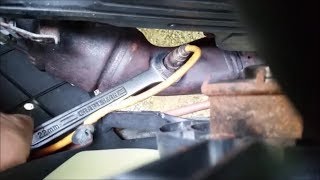
Typical fix: Replace the rear oxygen sensor. This sensor is located on the exhaust pipe after the catalytic converter.
Est. part cost: $80-$220 - Exhaust Leak 🟡 Medium Probability Exhaust gaskets, particularly at the manifold or flanges, can degrade and leak. Leaks are often created when the exhaust system is disturbed for other repairs, like a clutch replacement. A leak between the engine and the rear O2 sensor can introduce outside air, tricking the ECM into enriching the fuel mixture, which the rear O2 sensor then correctly reports as a rich condition, triggering P2097.
How to confirm: Visually inspect the exhaust system from the engine to the rear O2 sensor for black soot marks, which indicate a leak. Listen for ticking or hissing sounds. A shop can perform a smoke test to pressurize the exhaust and pinpoint the leak. Pay close attention to any flanges that were recently disassembled.
Typical fix: Replace the leaking gasket or repair the cracked section of the exhaust pipe. For small cracks or holes, high-temperature exhaust putty can be a temporary fix.
Est. part cost: $20-$100 - Failing Front Air/Fuel Ratio Sensor ⚪ Low Probability → Shop Oxygen Sensor The front sensor (Air/Fuel Ratio sensor) is the primary input for fuel control. If it provides an inaccurate 'lean' signal to the ECM, it will cause the engine to add too much fuel, creating a genuine rich condition that is then correctly detected by the rear sensor.
How to confirm: This is more difficult to diagnose without an advanced scan tool. A mechanic will compare the live data from the front and rear sensors and analyze short-term and long-term fuel trims to see if the front sensor's readings are causing the rich condition.
Typical fix: Replace the front Air/Fuel Ratio sensor.
Est. part cost: $150-$250 - Leaking Fuel Injector(s) ⚪ Low Probability → Shop Fuel Injector A fuel injector can get stuck partially open, dumping excess fuel into a cylinder and creating a genuine rich condition. While Subaru has TSBs for injector issues on other models, it's a less common cause for P2097 on the Impreza compared to sensors or leaks.
How to confirm: A fuel pressure test where pressure drops after the engine is off can indicate a leak. A more definitive method is a fuel injector balance test performed by a professional. Pulling the spark plugs may also reveal one plug that is significantly darker or more fouled than the others, indicating which cylinder is running rich.
Typical fix: Replace the faulty fuel injector(s). It is often recommended to replace them as a set.
Est. part cost: $100-$300 per injector
Rare But Worth Checking
- Clogged or Failing Catalytic Converter: → Shop Catalytic Converter While a failing catalytic converter is a possible cause, it's less common for this specific code than sensor or leak issues. A clogged converter can create backpressure and affect sensor readings. It should only be considered after other, more probable causes have been ruled out.
- Faulty Mass Airflow (MAF) Sensor: A dirty or failing MAF sensor can provide incorrect airflow readings, leading the ECM to miscalculate the fuel mixture. Cleaning the MAF sensor with a dedicated cleaner is a simple first step before considering replacement.
Diagnosis Steps
- Scan for Codes: Use an OBD-II scanner to confirm P2097 and check for any other stored codes.
- Inspect the Exhaust: Visually and audibly inspect the entire exhaust system from the engine manifold to the rear O2 sensor for any signs of leaks, such as soot, cracks, or gasket failures. Pay special attention to areas disturbed by recent repairs.
- Analyze Live Data: Use a scan tool to monitor live data. Watch the voltage readings from the rear O2 sensor (Bank 1, Sensor 2) once the engine is fully warmed up. The rear sensor's voltage should be relatively steady. If it's stuck high (e.g., >0.8V) or fluctuating rapidly like the front A/F sensor, it points towards a sensor or catalyst issue.
- Test the Rear O2 Sensor: If the exhaust is sealed and the live data is suspect, the rear O2 sensor is the most likely culprit and should be tested or replaced. A multimeter can be used to check the heater circuit resistance, which should typically be between 5-25 ohms.
- Check for True Rich Conditions: If the sensors appear to be reading correctly, investigate what could be causing a true rich condition, such as leaking fuel injectors, a faulty fuel pressure regulator, or a malfunctioning MAF sensor.
- Consult TSB: If available, refer to Subaru TSB #18-228-25R for the manufacturer's specific diagnostic flowchart for this code, as it supersedes the standard service manual.
Parts You'll Likely Need
- Rear Oxygen Sensor (Downstream)
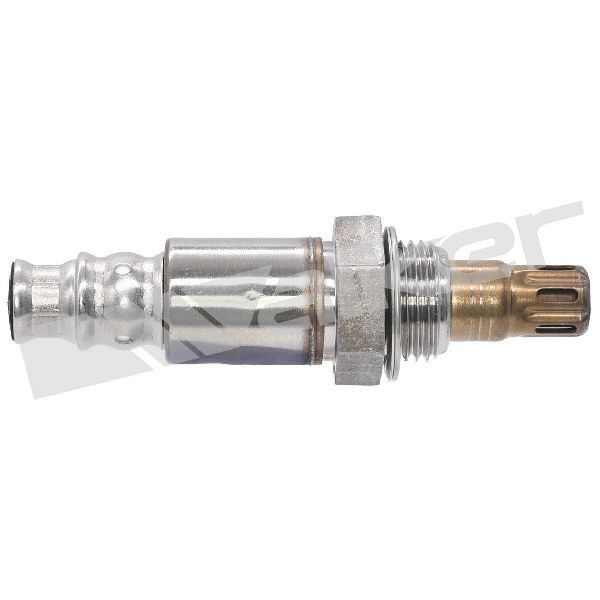
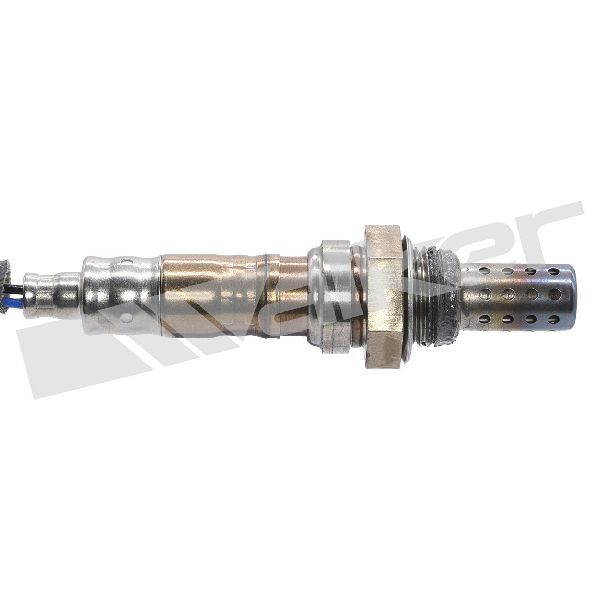
(OEM #22690AB08A (replaces 22690AB070))— This sensor is the most common failure point that directly triggers the P2097 code by sending incorrect 'rich' signals to the computer.
Trusted brands: Denso (OEM Manufacturer), NTK
OEM price range: $150-$220
Aftermarket price range: $80-$150 (Example: Denso 234-4513 for 2017 models) - Exhaust Gasket — If an exhaust leak is found at a flange (e.g., manifold to pipe), replacing the gasket is the required fix. This is especially common after other repairs required removing the exhaust.
Trusted brands: Fel-Pro, Walker Exhaust
OEM price range: $20-$40
Aftermarket price range: $10-$25
Related Codes That Often Appear With This One
- P0171 — System Too Lean Bank 1. Seeing this code with P2097 can be confusing but may point to a complex issue like a vacuum leak or a faulty front A/F sensor causing the fuel trims to swing to their limits in an attempt to compensate.
- P0420 — Catalyst System Efficiency Below Threshold. If you see P2097 alongside P0420, it could indicate that the rich condition has been present long enough to damage or degrade the catalytic converter's performance.
Technical Service Bulletins (TSBs) & Recalls
- 18-228-25R: Announces specific diagnostic procedures for DTCs P2096 (Too Lean) and P2097 (Too Rich) for post-catalyst fuel trim systems on the 2017-2025 Impreza and Crosstrek, among other models.
Platform-Specific Known Issues
- Subaru has issued Technical Service Bulletin #18-228-25R, which provides specific diagnostic procedures for DTCs P2096 and P2097, indicating this is a known area of concern for the manufacturer that requires a special diagnostic approach.
Mechanic-Grade Diagnostic Values
- Downstream O2 Sensor (Bank 1, Sensor 2) Voltage at idle (warm engine, closed loop) — expected: Relatively steady voltage, typically between 0.5V and 0.8V.. Failure: Voltage is stuck high (>0.8V), stuck low, unresponsive, or fluctuating rapidly like the upstream sensor. Readings below 0.03V or above 1.2V also indicate a fault.
- Downstream O2 Sensor Heater Circuit Resistance — expected: Approximately 5 to 25 ohms, depending on the specific sensor.. Failure: An open circuit (infinite resistance) or very high resistance (e.g., over 50 ohms) indicates a failed heater element within the sensor.
- Fuel Pressure (Low Pressure Side) — expected: Approximately 340 — 400 kPa (49 - 58 psi).. Failure: Significantly higher or lower pressure could indicate a problem with the fuel pump or regulator, leading to a rich condition.
Scan Tool Commands That Help
- Subaru Select Monitor (SSM) or equivalent professional scanner: ECM Reprogramming / Software Update — In some cases, particularly on other vehicle makes, a P2097 code can be falsely triggered by a logic error in the ECM. While no specific Subaru bulletin for the Impreza directly links a software update to fixing *only* P2097, it's a known possibility in diagnostics. If all mechanical and sensor tests pass, checking for an available ECM update with a dealer or specialized shop is a valid final step.
Wiring & Ground Locations
- Main Engine Ground — Often located on the top starter mounting bolt, connecting the engine block to the main wiring harness.. The ECM and its sensors rely on a clean, solid ground connection to the engine block for accurate readings. A loose or corroded main engine ground can introduce electrical noise and voltage offsets, potentially causing the O2 sensor to send incorrect data to the ECM.
- Intake Manifold Ground — The ECU gets its primary ground reference from the top of the intake manifold. Additional ground straps are often found on either side of the engine block, connecting to the chassis frame rails.. Since the ECU ground reference is on the intake manifold, a poor connection between the manifold, the engine block, and the chassis can cause erratic sensor behavior, including the O2 and A/F sensors that are critical for fuel trim calculations.
Real Owner Repair Stories
- YouTube channel 'melniks automotive' (2010 Subaru Impreza WRX (similar system logic)) — Check Engine Light on, drastically reduced fuel economy (17.4 MPG), but no hesitation or lack of power.
❌ Tried (didn't work) The owner initially suspected the aftermarket exhaust but ruled it out.
✅ What actually fixed it Replacing the rear (downstream) oxygen sensor. After replacement and clearing the code, fuel economy immediately and significantly improved to over 20 MPG, confirming the fix.
OEM Part Supersession History
22690AB070→22690AB08A— Standard part revision and update by the manufacturer.
Heads up: The new part number (22690AB08A) is the correct replacement for the original. No incompatibility is noted; they are interchangeable.
Model Year Variations Within This Range
- 2017-2024: The FB20D engine used in this generation Impreza features direct fuel injection, a higher compression ratio (12.5:1), and plastic valve covers, distinguishing it from the previous FB20B engine used before 2017. This means fuel delivery diagnostics (like injector testing and fuel pressure) are different from the prior generation.
Helpful Videos
![How to Fix SUBARU P2097 Engine Code in 4 Minutes [2 DIY Methods / Only $9.53]](https://img.youtube.com/vi/5NXvlfvN8_w/mqdefault.jpg)

We Have This Part in Stock

The information in this article is provided for general reference and educational purposes only. Vehicle specifications, procedures, and part compatibility can vary by production date, trim level, and region. Always consult your vehicle's factory service manual and verify part numbers before purchasing or performing repairs. Safety-critical components such as airbags, seat belts, and braking systems should be installed by a qualified professional.
- Subaru IMPREZA:
- 🧭 Diagnostic Flowchart
- 🎬 Helpful Videos
- 🛍️ Shop This Part
- What's Unique About the 2017-2024 Subaru IMPREZA
- Symptoms You May Notice
- Most Likely Causes
- Rare But Worth Checking
- Diagnosis Steps
- Parts You'll Likely Need
- Related Codes That Often Appear With This One
- Technical Service Bulletins (TSBs) & Recalls
- Platform-Specific Known Issues
- Mechanic-Grade Diagnostic Values
- Scan Tool Commands That Help
- Wiring & Ground Locations
- Real Owner Repair Stories
- OEM Part Supersession History
- Model Year Variations Within This Range
- 🎟️ Get 5% Off