

P2098 on 2014-2017 Chevrolet Corvette: Causes and Fixes for Lean Fuel Trim Bank 2
On a 2014-2017 C7 Corvette, code P2098 is most often caused by an exhaust leak before the downstream O2 sensor on Bank 2 (driver's side). Other likely causes are a faulty downstream O2 sensor or, as noted in GM bulletins, a sensitive ECU reacting to a 'tapping' driving style. A software update may be required in that case. Aftermarket modifications like headers are also a very common trigger for this code, often requiring a specific tune to resolve.
- P2098 on a C7 Corvette means the driver's side post-catalyst O2 sensor is detecting a lean condition.
- Before replacing any parts, thoroughly check for exhaust leaks between the engine and the rear O2 sensor; a smoke test is the best method.
- Be aware of the GM TSBs that link this code to a specific 'tapping' of the gas pedal; the fix could be a change in driving habits or a dealer software update.
- If no leaks are found, the most likely part to fail is the Bank 2 (driver's side) downstream O2 sensor.
- The code is not critical and the car is safe to drive, but it should be addressed to ensure proper emissions and prevent potential long-term damage to the catalytic converter.
What's Unique About the 2014-2017 Chevrolet CORVETTE
What's unique to the 2014-2017 Corvette is a known software sensitivity documented by General Motors. Technical Service Bulletins (TSBs) state that P2098 can be set by a specific driving style where the driver rapidly taps the accelerator on and off to maintain speed. This "digital driving" can trick the ECM into setting a false lean code when no mechanical fault exists. GM was aware of this and noted it as a normal operating characteristic, even creating a specific labor operation to clear the codes under warranty without further repairs. Additionally, as a highly modified platform, many C7s with aftermarket headers or superchargers will set this code if the vehicle's tune is not adjusted to compensate for the change in exhaust flow and sensor location.
Diagnostic Flowchart
Tap your situation to follow the diagnostic path that matches what you're seeing on this vehicle.
Symptoms You May Notice
- Check Engine Light (MIL) illuminated. 🎬 Watch: A quick overview of P2098 causes and fixes
- No other noticeable drivability symptoms in most cases, especially if caused by the driving-style TSB.
- Possible poor fuel economy.
- Potential for rough idle or poor acceleration if the root cause is severe (like a major exhaust or vacuum leak).
- In some cases, an audible exhaust leak hiss or a 'sucking' noise on acceleration may be present.
- Replacing the upstream (pre-catalyst) O2 sensor. This code specifically relates to the reading from the downstream (post-catalyst) sensor.
- Replacing the catalytic converter. While a possibility, converters are expensive and should only be replaced after exhaust leaks and O2 sensors have been definitively ruled out. A P0420 or P0430 code is a more direct indicator of converter failure.
- Blaming a K&N or oiled air filter. While an over-oiled filter can foul a MAF sensor, it typically causes other codes and affects both engine banks, not just Bank 2.
Most Likely Causes
- Exhaust System Leak 🔴 High Probability Exhaust clamp joints, manifold-to-catalytic converter connections, and even welds in the X-pipe are common points for small leaks to develop. Even a small leak upstream of the Bank 2 post-catalyst O2 sensor can pull in outside air on exhaust reversion pulses, causing a false lean reading. Some C7 owners report minor condensation drips from clamp areas, indicating they are not always perfectly sealed.
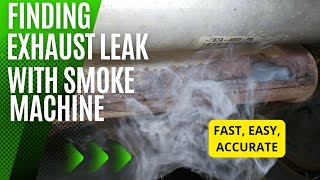
How to confirm: Visually inspect the exhaust system from the engine to the rear O2 sensor on the driver's side for soot marks or cracks. A smoke test is the most effective way to pinpoint a leak. 🎬 See how to perform a smoke test on a C7 Another method is to use a vacuum pump and soapy water to find bubbling at leak points.
Typical fix: Tighten exhaust clamps or replace failed gaskets. Small cracks in pipes may be welded. Common leak points are the donut gasket between the manifold and catalytic converter.
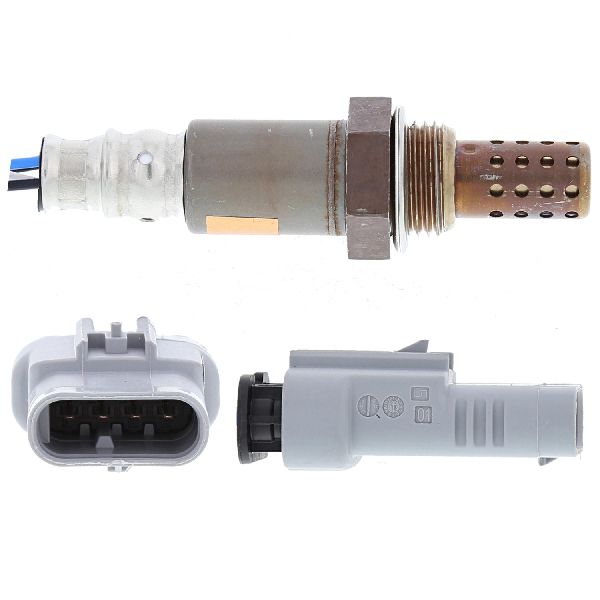
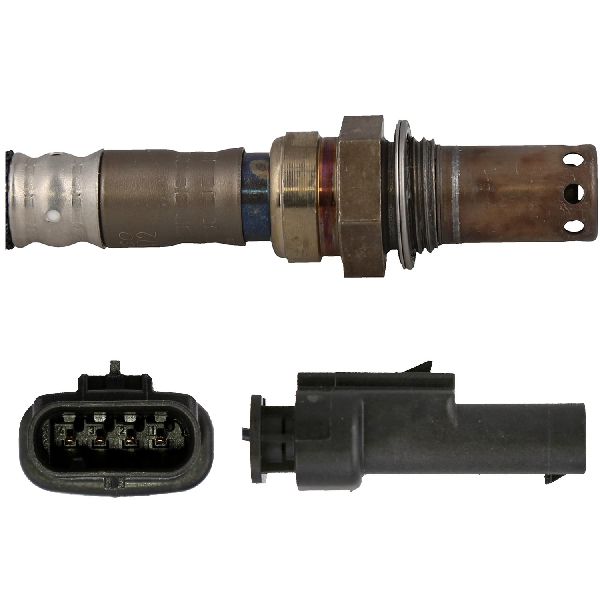
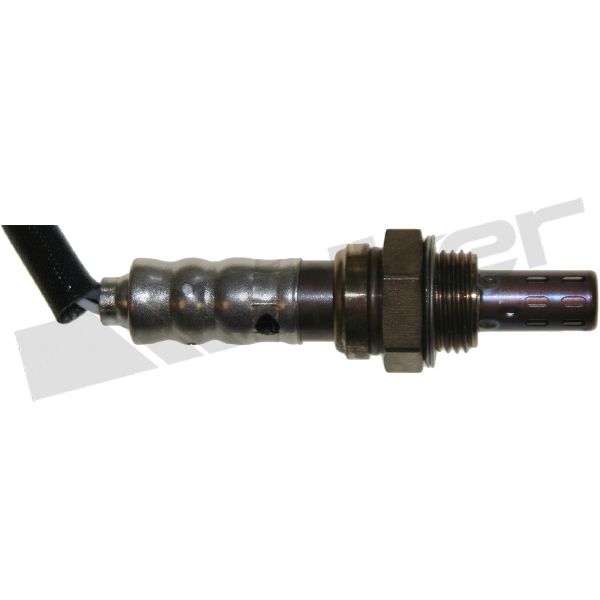
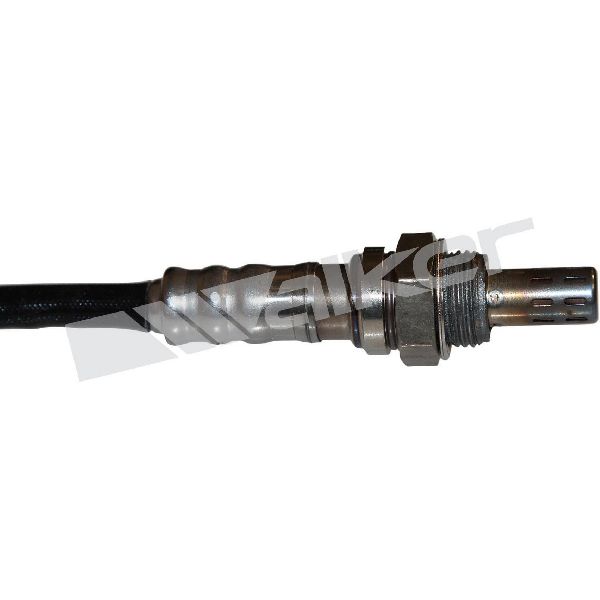
Est. part cost: $20-$100 - Faulty Downstream Oxygen Sensor (Bank 2) 🟡 Medium Probability → Shop Oxygen Sensor O2 sensors are wear items and can become slow, contaminated, or fail entirely, sending incorrect voltage signals to the ECM. Owners on forums report that replacing a stubborn sensor can be difficult due to seizure in the exhaust pipe, sometimes requiring heat or significant force.
How to confirm: Use a scan tool to monitor the live data for the Bank 2, Sensor 2 voltage. A healthy post-cat sensor should show a relatively stable voltage (typically between 0.6V and 0.8V) on a warm engine at steady RPM. If it's stuck low (e.g., below 0.2V) or fluctuating wildly like the upstream sensor, it is likely faulty. Swapping the Bank 1 and Bank 2 downstream sensors and seeing if the code moves to P2096 is a definitive diagnostic step.
Typical fix: Replace the Bank 2 (driver's side), downstream (post-catalyst) oxygen sensor. It is often recommended to unplug the sensor from the harness connector first, then remove the catalytic converter pipe to access and remove the sensor on a workbench, 🎬 Watch: How to properly replace your O2 sensor as it can be very difficult to remove in the car.
Est. part cost: $50-$150 - ECM Software Sensitivity / Driving Style 🟡 Medium Probability As per TSBs PIP5467 and PIP5467A, the factory calibration on some 2014-2017 Corvettes is sensitive to a rapid on-off tapping of the accelerator pedal, which can trigger P2098 without a mechanical fault. GM considers this a 'normal vehicle operating characteristic' and even provides a warranty labor operation just to clear the code.
How to confirm: If no exhaust leaks or sensor faults are found, and the driver's habits match the description in the TSB, this is the likely cause. Check with a Chevrolet dealership for any available ECM software updates related to this TSB, referencing PIP5467A.
Typical fix: Modify driving style to avoid 'digital' throttle inputs. If the issue persists, a dealer-installed ECM software update may be available to widen the acceptable parameters.
Est. part cost: $0-$200 - Aftermarket Exhaust or Tune 🔴 High Probability Corvettes are frequently modified. Installing long-tube headers moves the catalytic converters and O2 sensors further downstream, which can cause them to heat up slower and read differently, triggering P2096/P2098. Many forum users report these codes immediately after installing headers or superchargers.
How to confirm: If the vehicle has aftermarket headers, high-flow cats, or a supercharger, this is a highly probable cause. The check engine light will often appear within 50 miles of driving after the installation.
Typical fix: The ECM must be professionally tuned to account for the new hardware. The tuner will typically disable the diagnostic tests for post-catalyst fuel trim (DTCs P2096 and P2098) in the software. Simply clearing the code will not work; it will return.
Est. part cost: $300-$800 for a professional tune
Rare But Worth Checking
- Failing Catalytic Converter: → Shop Catalytic Converter A degraded or inefficient catalytic converter can sometimes cause this code, but it's much less common than O2 sensor or exhaust leak issues. This should be considered after other causes are ruled out.
- Engine Vacuum Leak: A vacuum leak can cause a lean condition, but it will typically set other codes first, such as P0171 or P0174 (System Too Lean Bank 1/2). If P2098 appears alone, a vacuum leak is less likely.
- Low Fuel Pressure or Clogged Injector: A fuel delivery issue specific to Bank 2 could cause a lean condition. This is uncommon and would likely be accompanied by other symptoms like misfires.
Diagnosis Steps
- Scan the ECM for any other stored trouble codes. Address other codes first, especially fuel trim or misfire codes.
- Carefully inspect the entire exhaust system on Bank 2 (driver's side) for any signs of leaks, such as black soot around flanges and clamps, or audible hissing. Pay close attention to the manifold-to-cat connection.
- For best results, perform an exhaust smoke test to definitively identify any leaks between the cylinder head and the downstream O2 sensor.
- If no leaks are found, use a diagnostic scanner to observe the live voltage data from the Bank 2, Sensor 2 (downstream) oxygen sensor. The voltage should be relatively steady above 0.5V on a warm, running engine. If it is stuck low (near 0.1V) or switching rapidly, the sensor is suspect.
- A definitive test is to swap the downstream O2 sensors between Bank 1 and Bank 2. If the code changes to P2096 (Bank 1), the sensor you moved is faulty.
- If sensors and exhaust are confirmed to be good, consider the TSBs regarding driving style. Contact a Chevrolet dealer to inquire about potential ECM software updates for this condition, referencing TSB PIP5467A.
- If the vehicle has aftermarket headers or a supercharger, the cause is almost certainly the tune. Contact a professional tuner to have the codes properly addressed in the ECM calibration.
Parts You'll Likely Need
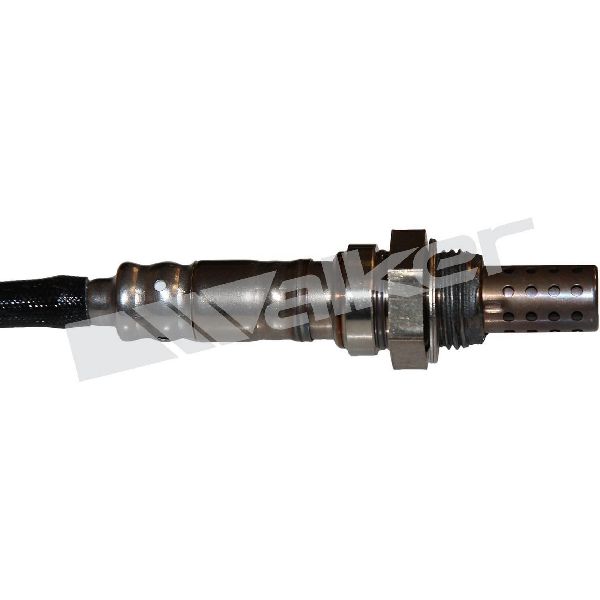
- Downstream Oxygen Sensor (Bank 2, Post-Catalyst)
(OEM #12639692)— This sensor is the primary input for this code. If it fails or becomes inaccurate, it is the most direct cause of the fault. This part is used on many GM vehicles.
Trusted brands: ACDelco
OEM price range: $25-$50
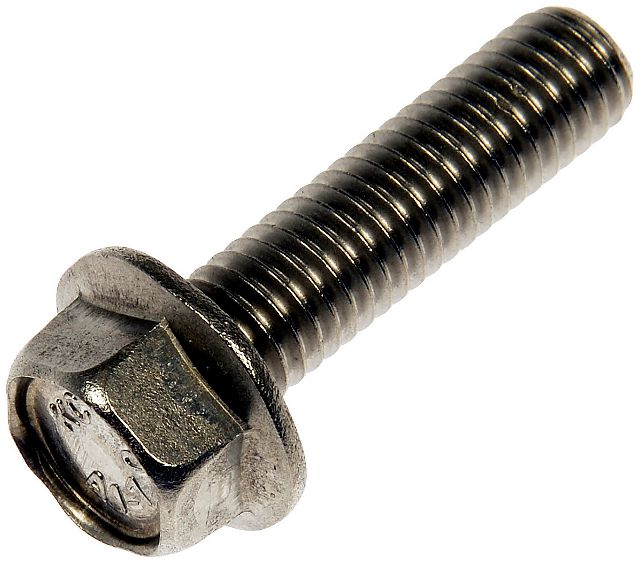
Aftermarket price range: $20-$40 - Exhaust Manifold Gasket (Manifold to Head)
(OEM #12657093)— If an exhaust leak is found at the manifold, this multi-layer steel (MLS) gasket will be required. It is sold individually.
Trusted brands: ACDelco, Fel-Pro
OEM price range: $15-$25
Aftermarket price range: $10-$20 - Exhaust Manifold t
Related Codes That Often Appear With This One
- P2096 — P2096 is the identical code for Bank 1 (passenger side). Both codes appearing together is specifically mentioned in the GM TSBs related to driving style and can also point to a common issue like an aftermarket tune or widespread exhaust leaks.
Technical Service Bulletins (TSBs) & Recalls
- PIP5467A: Communicates that repeat P2096 and P2098 codes can be set by a 'digital' driving style (tapping the accelerator). States this is a normal characteristic and provides a labor operation for clearing the code.
- PIP5467: An earlier version of the same bulletin which stated engineering was still investigating. This was superseded by PIP5467A.
- GM TechLink Article (summarizing PIP5467A): Explains the ECM uses fuel trim bias to optimize catalyst efficiency and that the 'digital driving' style can cause the bias to exceed its calibrated amount, setting the code.
Platform-Specific Known Issues
- A GM Technical Service Bulletin (TSB #PIP5467A) directly addresses P2098 on 2014-2017 Corvettes. It states the code can be set by a driver's habit of rapidly tapping the accelerator on and off to maintain speed. GM Engineering was aware of the condition and at the time of the bulletin, considered it a normal characteristic and authorized dealers 0.3 labor hours to clear the code under warranty.
- Installation of aftermarket long-tube headers is a very common modification that will almost certainly cause P2096 and P2098 codes to set due to the relocation of the O2 sensors and changes in exhaust gas velocity. A professional tune to disable these specific DTC checks is the standard fix.
- The AFM (Active Fuel Management) valves on automatic transmission models can sometimes develop rattles, indicating another potential area for exhaust system integrity issues, though not directly a cause of this code.
Mechanic-Grade Diagnostic Values
- Downstream O2 Sensor (B2S2) Voltage — expected: Relatively steady voltage, typically between 0.6V and 0.8V on a warm, running engine at steady RPM.. Failure: A persistent low voltage (e.g., ≤ 0.1–0.2 V) is interpreted as lean and will set the code. Voltage that fluctuates rapidly like an upstream sensor also indicates a problem.
- Long Term Fuel Trim (LTFT) Bank 2 — expected: Ideally close to 0%, but within +/- 10%.. Failure: A sustained positive correction greater than +10% to +15% indicates the ECM is adding significant fuel to compensate for a perceived lean condition.
- O2 Sensor Heater Circuit Resistance — expected: Varies by manufacturer, but typically between 2 and 16 ohms when measured across the two heater wires on the sensor connector.. Failure: An open circuit (infinite resistance) or a dead short (zero resistance) indicates a failed heater element, requiring sensor replacement.
- Upstream O2 Sensor (B2S1) Cross Counts — expected: At least 8 to 10 switches from rich to lean (cross counts) within a 10-second window at a steady, warm idle.. Failure: Low or inconsistent cross counts suggest a 'lazy' or failing upstream sensor, which can sometimes indirectly contribute to downstream fuel trim issues.
Scan Tool Commands That Help
- GM GDS2 (Global Diagnostic System 2): Module Diagnostics > ECM > Data Display — This is the primary function for viewing live data streams for all O2 sensors, short-term and long-term fuel trims, and catalyst monitor status. It is required for all 2014+ GM vehicles.
- GM GDS2 (Global Diagnostic System 2): Module Diagnostics > ECM > Control Functions — This menu allows for bidirectional control to perform diagnostic tests. For P2098, a technician might use this to run an injector balance test to check for a clogged injector on Bank 2, or to command changes in fuel delivery to test the O2 sensor's response.
- Advanced OBD-II Scanner: Live Data Graphing & Freeze Frame — Use graphing to visually compare the behavior of the Bank 2 Sensor 2 (downstream) to the Bank 1 Sensor 2. The Bank 2 sensor should not be stuck low while the Bank 1 sensor reads normally. Freeze frame data shows the exact engine conditions (RPM, load, temp) when the P2098 code was set, which is critical for diagnosis.
Wiring & Ground Locations
- G303 — The main engine block to frame ground stud, typically on the frame rail on the passenger side. The negative battery cable connects here.. A poor main engine ground can cause floating voltages and erratic sensor readings for all engine sensors, including the O2 sensors. A voltage drop test across this ground is a key diagnostic step for any electronic issue.
- Engine Block Grounds (Passenger Side) — Two ring terminals that ground directly to the passenger side of the engine block, near the starter.. One of these grounds is for the ECM. A poor connection here can directly impact the ECM's ability to correctly read sensor inputs.
- Chassis Ground Stud (Passenger Side) — A ground stud located on the passenger side fender well, just to the rear of the air filter housing.. This is an easily accessible ground point in the engine bay that is part of the main body harness ground circuit. It can be used as a reference point for testing or for ensuring auxiliary components are properly grounded.
- Chassis Ground Stud (Driver Side) — A ground on the driver's side frame rail, near the ABS pump block.. Provides the main ground path for components on the driver's side of the engine bay. Since Bank 2 is on the driver's side, checking this ground is relevant.
- O2 Sensor Connectors — The upstream (pre-cat) and downstream (post-cat) sensor connectors are located along the exhaust on each bank. On some later C7s, the upstream connector is black and the downstream is gray.. These connectors are exposed to heat and debris. Corrosion or damage to the pins for the signal, heater, or ground wires within the connector will cause the same symptoms as a failed sensor.
Real Owner Repair Stories
- CorvetteForum user 'turbo87' (2014 Corvette with an ECS supercharger and aftermarket tune.) — Check Engine Light with codes P2096 and P2098 came on about 10 miles after receiving a new tune. Car was also consuming an excessive amount of fuel.
❌ Tried (didn't work) Resetting the codes; they would return within 10 miles., The tuner suggested simply turning the codes off in the software, which other forum members advised against as it would only hide a potentially serious problem.
✅ What actually fixed it The resolution was not a specific part replacement, but the diagnosis that the tune itself was incorrect, causing a fuel mixture problem that the ECM could not correct. The advice from experienced members was to find a different, more reputable tuner to properly diagnose the air/fuel ratio with a wideband sensor and create a correct tune, rather than just disabling the trouble codes.
"I Checked Everything" — The Actual Cause
- The most common scenario for this on a stock Corvette is documented in GM TSB PIP5467A. A technician will perform a smoke test and find no exhaust leaks, and the O2 sensor will pass its electrical tests. The code will be cleared, only to return. The actual cause is the ECM's sensitivity to a 'digital' driving style (rapidly tapping the accelerator), which falsely triggers the lean code when no mechanical fault exists.
- Another possibility is a partially clogged fuel injector on one of the cylinders in Bank 2. A smoke test for exhaust leaks and a vacuum test for intake leaks would both come back clean. The O2 sensor is functioning correctly by reporting the lean condition caused by the one cylinder not getting enough fuel. This is often missed because diagnosis for a post-catalyst code focuses heavily on the exhaust system rather than the fuel system.
When the Usual Fixes Don't Work
- While replacing the downstream O2 sensor is a common fix, it's frequently done unnecessarily. The sensor is often just accurately reporting a problem that exists elsewhere. As noted in diagnostic guides, a persistent low voltage from the sensor (stuck lean) is a strong indicator of an exhaust leak upstream of the sensor, not necessarily a faulty sensor itself. Technicians and owners should always perform a thorough exhaust smoke test before replacing the sensor.
OEM Part Supersession History
12639692→12639692— N/A
Heads up: This part number appears to be stable for the downstream O2 sensor throughout the C7 generation and is shared with many other GM vehicles. No major supersessions or incompatibility issues have been noted in service literature for this specific vehicle range.
Model Year Variations Within This Range
- 2014 vs 2015-2017: The 2014 model year used a 6-speed 6L80 automatic transmission, while 2015-2019 models used an 8-speed 8L90 (RPO M5U) automatic. The GM TSB #PIP5467A regarding the 'digital driving' style specifically mentions the 8L90 transmission, suggesting the issue may be more prevalent or better documented on 2015-2017 models.
Helpful Videos

We Have This Part in Stock

The information in this article is provided for general reference and educational purposes only. Vehicle specifications, procedures, and part compatibility can vary by production date, trim level, and region. Always consult your vehicle's factory service manual and verify part numbers before purchasing or performing repairs. Safety-critical components such as airbags, seat belts, and braking systems should be installed by a qualified professional.
- Chevrolet CORVETTE:
- 🧭 Diagnostic Flowchart
- 🎬 Helpful Videos
- 🛍️ Shop This Part
- What's Unique About the 2014-2017 Chevrolet CORVETTE
- Symptoms You May Notice
- Most Likely Causes
- Rare But Worth Checking
- Diagnosis Steps
- Parts You'll Likely Need
- Related Codes That Often Appear With This One
- Technical Service Bulletins (TSBs) & Recalls
- Platform-Specific Known Issues
- Mechanic-Grade Diagnostic Values
- Scan Tool Commands That Help
- Wiring & Ground Locations
- Real Owner Repair Stories
- "I Checked Everything" — The Actual Cause
- When the Usual Fixes Don't Work
- OEM Part Supersession History
- Model Year Variations Within This Range
- 🎟️ Get 5% Off