

P2098 on 2016-2019 Ford Explorer 3.5L V6: Post-Catalyst Lean Condition Fixes
For a 2016-2019 Ford Explorer with a 3.5L V6, code P2098 is most often caused by an exhaust leak before the rear oxygen sensor or a failing Bank 2 downstream O2 sensor. Expect to pay $40-$90 for an aftermarket sensor and $100-$180 for an OEM one. Always check for exhaust leaks before replacing parts.
- P2098 on your Explorer means the exhaust is too lean on Bank 2 (front side of the engine) after the catalytic converter.
- The most likely causes are an exhaust leak (check manifold and flex pipe first) or a bad downstream oxygen sensor.
- Do not replace the catalytic converter unless you have ruled out leaks/sensors and also have a P0430 code.
- If you also have a P0174 code, the problem is a true engine lean condition (like a vacuum leak), not the downstream sensor.
What's Unique About the 2016-2019 Ford Explorer
On the 3.5L V6 engine used in the fifth-generation Explorer, the P2098 code is frequently linked to two primary culprits: exhaust leaks and oxygen sensor failure. While these are common causes on many vehicles, owners and technicians often report that exhaust leaks, particularly at manifold gaskets or flex pipes, are a very common trigger for this specific code. The downstream O2 sensor itself is also a high-probability failure point due to age and heat cycles.
Symptoms You May Notice
- Check Engine Light is on
- Reduced fuel economy
- Possible rough idle
- Sluggish acceleration or engine hesitation
- Replacing the catalytic converter when the actual problem is a much cheaper exhaust leak or a faulty oxygen sensor.
- Replacing the downstream O2 sensor when an exhaust leak between the upstream and downstream sensors is the true cause.
- Replacing the downstream O2 sensor when the actual problem is a true engine lean condition (e.g., vacuum leak) that should be diagnosed by looking at fuel trims and other codes like P0174.
Most Likely Causes
- Exhaust Leak (before or near the B2S2 sensor) 🔴 High Probability Exhaust components like manifold gaskets and flex pipes can develop cracks or rust over time, allowing outside air to be pulled into the exhaust stream, which falsely creates a lean reading at the O2 sensor.
How to confirm: Visually inspect the exhaust system for Bank 2 (front side) for cracks, rust, or black soot marks. A smoke test is the most effective method, where smoke is pumped into the exhaust to reveal the location of any leaks. You can also use a shop towel to temporarily block the tailpipe while the engine is running to increase pressure and make leaks more audible.
Typical fix: Repair or replace the leaking section of the exhaust. This could involve replacing a gasket, welding a crack, or replacing a component like a flex pipe or manifold. For small leaks, high-temperature exhaust putty can be a temporary fix.
Est. part cost: $20-$300 - Failing Downstream Oxygen (O2) Sensor (Bank 2, Sensor 2) 🔴 High Probability → Shop Oxygen Sensor Oxygen sensors are wear items that degrade over time from heat and contaminants. A failing sensor can send inaccurate (lean) readings to the ECM.
How to confirm: Use an OBD-II scanner with live data capability to monitor the voltage of the Bank 2, Sensor 2 (B2S2). A healthy downstream sensor should show a relatively stable voltage (typically 0.6-0.8V). If the voltage is stuck low (e.g., below 0.2V) or fluctuating rapidly like an upstream sensor, it is likely faulty.
Typical fix: Replace the Bank 2 downstream oxygen sensor. The sensor is located on the front-side catalytic converter. After replacement, it is critical to perform a 'Keep Alive Memory (KAM) Reset' using a capable scan tool to clear the old fuel trim adaptations.
Est. part cost: $40-$180 - Engine Running Lean on Bank 2 🟡 Medium Probability Issues like a vacuum leak (e.g., intake manifold gasket), a dirty or failing fuel injector, or a contaminated Mass Airflow (MAF) sensor can cause an entire bank to run lean.
How to confirm: Check for related codes like P0174 (System Too Lean Bank 2). If P0174 is present, the problem is likely an actual lean condition affecting the whole bank, not just a sensor or exhaust leak. Perform a vacuum test and check long-term fuel trims (LTFT) with a scan tool. A high positive LTFT (>15%) for Bank 2 confirms a true lean state.
Typical fix: Diagnose and repair the root cause of the lean condition, such as fixing the vacuum leak or cleaning/replacing the faulty fuel injector.
Est. part cost: $10-$250
Rare But Worth Checking
- Failing Catalytic Converter: → Shop Catalytic Converter While less common, a degraded catalytic converter can trigger this code, often in conjunction with P0430 (Catalyst Efficiency Below Threshold). A case study on a 3.5L F-150 showed that a failing cat was the cause after an O2 sensor replacement did not fix the P2098 code. This should be considered after ruling out exhaust leaks and O2 sensors.
- Damaged Wiring or Connectors: Frayed wires or corroded connectors for the O2 sensor can cause a poor signal, mimicking a sensor failure. Always inspect the wiring harness leading to the sensor before replacing it. An oil leak from a valve cover gasket can also drip onto and foul the sensor and its connector.
Diagnosis Steps
- Read all stored fault codes with an OBD-II scanner. Note if any other codes, like P0174, P0430, or P2096, are present, as this will guide your diagnosis.
- Visually inspect the entire exhaust system for Bank 2 (front side of the engine) for any signs of leaks, such as cracks, rust holes, or soot trails, especially around the exhaust manifold and flex pipe.
- Perform a smoke test on the exhaust system to definitively identify any leaks that are not visually apparent.
- If no leaks are found, use a scan tool to observe the live data for the Bank 2 downstream O2 sensor (B2S2). The voltage should be relatively steady around 0.7V. If it is stuck low (e.g., below 0.2V) or mirroring the upstream sensor's activity, the sensor is suspect.
- Inspect the wiring and connector for the B2S2 for any damage, corrosion, or loose connections. Check for oil contamination from above.
- If P0174 is also present, shift focus to diagnosing a vacuum leak or a fuel delivery issue on Bank 2. Check long-term fuel trims for Bank 2.
- If all other possibilities have been exhausted, especially on higher mileage vehicles or if code P0430 is also present, the catalytic converter may be the issue.
- After any repair, especially O2 sensor replacement, use a scan tool to perform a 'Reset Keep Alive Memory (KAM)' to clear adaptive fuel trims and allow the PCM to relearn with the new components.
Parts You'll Likely Need
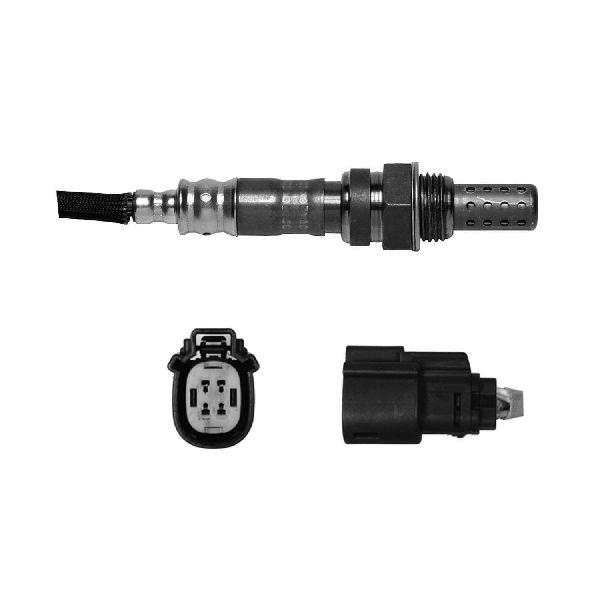
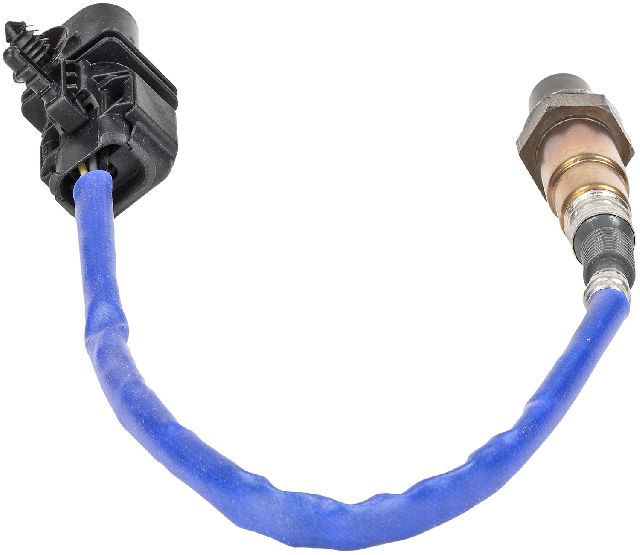
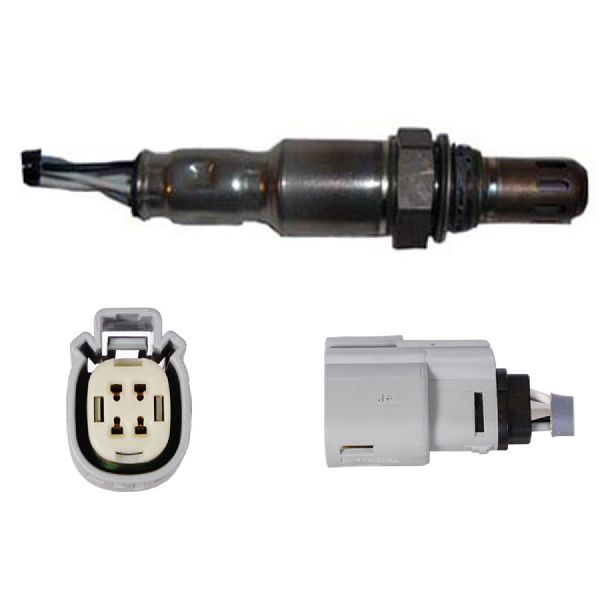
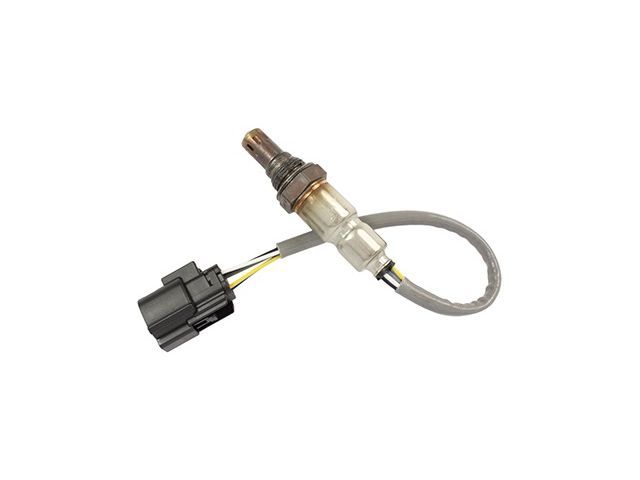
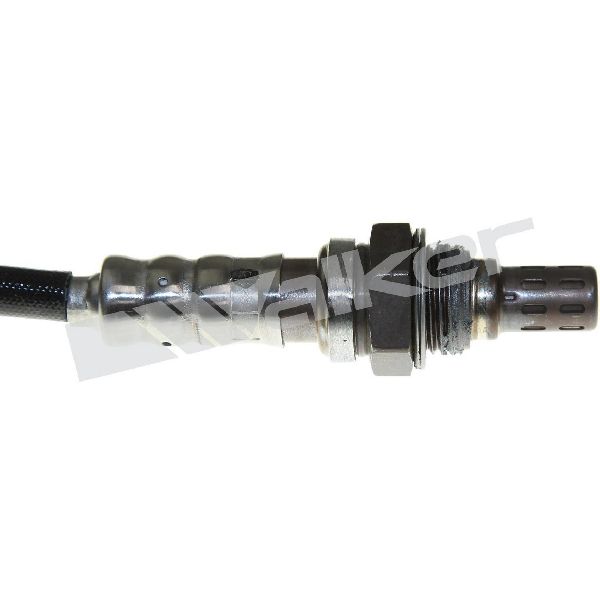
- Downstream Oxygen Sensor (Bank 2, Sensor 2)
(OEM #Motorcraft DY-1153)— This sensor is a common failure point due to age and heat, and it is directly responsible for the reading that triggers the P2098 code.
Trusted brands: Motorcraft, Bosch, Denso, NGK/NTK
OEM price range: $100-$180
Aftermarket price range: $40-$90 - Exhaust Manifold Gasket — A leak at the exhaust manifold gasket is a frequent cause of this code on the 3.5L V6 engine, allowing unmetered air to enter the exhaust.
Trusted brands: Motorcraft, Fel-Pro
OEM price range: $30-$50
Aftermarket price range: $15-$30
Related Codes That Often Appear With This One
- P0174 — P0174 (System Too Lean Bank 2) is detected by the upstream O2 sensor. If both codes are present, it strongly indicates a true lean condition (like a vacuum leak or fuel delivery issue) affecting all of Bank 2, rather than just a downstream sensor or localized exhaust leak.
- P0430 — P0430 (Catalyst System Efficiency Below Threshold Bank 2) points to a failing catalytic converter. If seen with P2098, it significantly increases the likelihood that the converter itself is the problem.
- P2096 — This is the same lean code but for Bank 1. If both P2096 and P2098 are present, it points to a global issue affecting the entire engine, such as a major vacuum leak, low fuel pressure, or a faulty MAF sensor.
Technical Service Bulletins (TSBs) & Recalls
- TSB 18-2255: While not directly for P2098, this TSB addresses fluid leaks from the Power Transfer Unit (PTU) seals, a common platform issue.
Platform-Specific Known Issues
- On the transverse-mounted 3.5L V6 in the Explorer, exhaust leaks are particularly common at the front bank (Bank 2) exhaust manifold gasket and the associated flex pipe. Due to engine movement, these components are under stress and can fail over time, making an exhaust leak a top suspect for P2098 that should be ruled out before replacing more expensive parts.
Mechanic-Grade Diagnostic Values
- Downstream O2 Sensor (B2S2) Voltage — expected: Relatively steady 0.6V - 0.9V on a warm, running engine in closed loop.. Failure: Voltage is stuck low (below 0.2V) or fluctuates wildly like an upstream sensor.
- O2 Sensor Heater Circuit Resistance — expected: Between 3 and 30 Ohms, measured across the two heater pins (often same-colored wires) on the disconnected sensor.. Failure: Open circuit (infinite resistance) or a direct short (near zero resistance) indicates a failed internal heater.
- Long-Term Fuel Trim (LTFT) Bank 2 — expected: Close to 0%, typically within +/- 10%.. Failure: Consistently high positive value (e.g., > +15%) when P2098 is active, especially if P0174 is also present. This points to a true engine lean condition, not just a sensor fault.
Scan Tool Commands That Help
- Ford IDS, FORScan, X431, XTool, or other professional scanner: Reset Keep Alive Memory (KAM) — This must be performed after replacing an O2 sensor or fixing a major vacuum/fuel issue. The PCM stores learned fuel adjustments in the KAM; failing to reset it can cause the new sensor to operate on old, incorrect data, potentially causing the code to return.
Wiring & Ground Locations
- PCM Connector C1551E — This is one of the main connectors at the Powertrain Control Module (PCM).. For advanced electrical diagnosis, this connector contains the pins for the O2 sensor signal and heater circuits. A technician would use a pinout diagram for C1551E to test for voltage, ground, and continuity directly at the PCM, ruling out wiring harness issues.
Real Owner Repair Stories
- YouTube channel 'TinkeringNerd' (2014 Ford Flex 3.5L V6 (platform-mate to the Explorer)) — Check Engine Light with code P2098.
❌ Tried (didn't work) Initial diagnosis focused on live data which showed the Bank 2 downstream O2 sensor voltage was behaving erratically.
✅ What actually fixed it Replacing the Bank 2, Sensor 2 (downstream) oxygen sensor resolved the code. The user showed live data after the repair, with the new sensor's voltage holding steady as expected.
"I Checked Everything" — The Actual Cause
- In a documented case on a 2016 Ford F-150 with the 3.5L engine, a P2098 code persisted after the downstream O2 sensor was replaced. A subsequent smoke test found no exhaust leaks. The actual root cause was a failing catalytic converter, which was diagnosed after all other common causes were eliminated.
When the Usual Fixes Don't Work
- While replacing the B2S2 O2 sensor is a high-probability fix, it is not guaranteed. In a case involving a 2017 F-150 3.5L, a technician replaced both the upstream and downstream O2 sensors on Bank 2, but the P2098 code returned within 24 miles. This highlights that if the root cause is a persistent exhaust leak, a failing catalytic converter, or a true engine lean condition, a new O2 sensor will not solve the problem.
OEM Part Supersession History
DY-1097→DY-1160 (Incorrectly cited in Pass 2)— Standard part lifecycle update.
Heads up: CRITICAL CORRECTION: The part number DY-1160, while a valid Motorcraft part, is an Ambient Air Temperature sensor, not an O2 sensor. The correct Motorcraft part number for the Bank 2 Downstream O2 sensor on this vehicle is DY-1153.
Diagnostic Flowchart
Other Known Issues on This Vehicle
Issues unrelated to this code that are worth knowing about as an owner of this generation:
- Internal Water Pump Failure 🔴 High — Commonly occurs between 60,000 and 150,000 miles. Failure can cause coolant to mix with engine oil, leading to catastrophic engine damage. Repair is extremely labor-intensive and costly ($2,000-$4,000+) as the pump is driven by the timing chain.
- Power Transfer Unit (PTU) Overheating/Failure 🟠 Medium — The PTU fluid can overheat and break down, leading to seal leaks and eventual gear failure in AWD models. Many owners perform preventative fluid changes, though it's not in the official maintenance schedule. A 'lifetime fluid' that often doesn't last the vehicle's lifetime. (Ref: TSB 18-2255 addresses a right-side transfer case fluid leak from the intermediate shaft seal.)
- Electronic Throttle Body (ETB) Malfunction 🟠 Medium — Can cause sudden loss of power, vehicle entering 'limp-home' mode, and rough idle. This was a widespread issue on many Ford models from this era. (Ref: Customer Satisfaction Program 16B32 was issued to replace faulty throttle bodies on certain 2016 Explorers.)
- Rear Suspension Toe Link Fracture 🔴 High — A recall was issued for potential fracture of the rear suspension toe links, which could cause a loss of steering control. (Ref: NHTSA Campaign Number: 21V293000)
- Detaching Roof Rail Covers 🟡 Low — Affects 2016-2019 models. The retention pins for the roof rail covers could loosen, allowing the covers to detach from the vehicle while driving. (Ref: NHTSA Recall Number: 21V316000)
Used vs. New Parts: Buying Guide for This Vehicle
When a used part is the smart pick: For this repair, using used parts is generally not recommended for sensors. However, a used exhaust component like a manifold or section of pipe from a low-mileage, non-corroded donor vehicle can be a cost-effective alternative to a new OEM part.
Donor-vehicle mileage cap: roughly under 60000 miles for the part to have meaningful remaining life.
What to inspect on the donor part:
- For exhaust parts: Check for heavy rust, cracks (especially near welds and flanges), and signs of previous repairs.
- Ensure the donor vehicle is from a dry, salt-free climate if possible to minimize corrosion.
- Verify the donor vehicle has the same engine (3.5L V6) as fitment can vary.
OEM-only on this vehicle (don't cheap out):
- Catalytic Converter: Aftermarket catalytic converters for modern Fords are notoriously problematic and can fail to meet the PCM's strict efficiency monitoring, leading to a P0430 code shortly after installation. Sticking with an OEM converter is strongly advised despite the high cost.
Aftermarket brands forum-validated for this vehicle:
- O2 Sensors: NTK (often the original OE manufacturer), Denso, and Motorcraft (OEM) are highly recommended.
- Exhaust Gaskets: Fel-Pro is a widely trusted brand for sealing solutions.
Brands owners have reported issues with on this vehicle:
- O2 Sensors: Some owners have reported premature or out-of-box failures with Bosch sensors on Ford applications, despite their strong reputation on other vehicle makes. It is safer to use NTK, Denso, or Motorcraft.
Real Owner Stories
Aggregated from forums and TSBs cited above. Mileages and costs reflect what owners reported in those sources.
2014 Ford Flex 3.5L V6
Symptoms: The Check Engine Light was on with code P2098.
What fixed it: Replacing the Bank 2 downstream oxygen sensor resolved the code. The old sensor appeared to have a crack.
Source hint: P2098 code troubleshooting and fix 2014 Ford Flex
Related OBD-II Codes
Frequently Asked Questions
Where is the oxygen sensor for code P2098 located on my 2016-2019 Explorer 3.5L?
What is the most common cause of a P2098 code on this specific Ford Explorer?
I replaced the O2 sensor for P2098, but the check engine light came back. What did I miss?
My mechanic also found code P0174 with P2098. What does that mean for the repair?
Is a smoke test really necessary to diagnose P2098?
Could a failing catalytic converter cause the P2098 code?
We Have This Part in Stock


The information in this article is provided for general reference and educational purposes only. Vehicle specifications, procedures, and part compatibility can vary by production date, trim level, and region. Always consult your vehicle's factory service manual and verify part numbers before purchasing or performing repairs. Safety-critical components such as airbags, seat belts, and braking systems should be installed by a qualified professional.
- Ford Explorer:
- 🧭 Diagnostic Flowchart
- 🛍️ Shop This Part
- What's Unique About the 2016-2019 Ford Explorer
- Symptoms You May Notice
- Most Likely Causes
- Rare But Worth Checking
- Diagnosis Steps
- Parts You'll Likely Need
- Related Codes That Often Appear With This One
- Technical Service Bulletins (TSBs) & Recalls
- Platform-Specific Known Issues
- Mechanic-Grade Diagnostic Values
- Scan Tool Commands That Help
- Wiring & Ground Locations
- Real Owner Repair Stories
- "I Checked Everything" — The Actual Cause
- When the Usual Fixes Don't Work
- OEM Part Supersession History
- Other Known Issues on This Vehicle
- Used vs. New Parts: Buying Guide for This Vehicle
- Real Owner Stories
- 2014 Ford Flex 3.5L V6
- Related OBD-II Codes
- Frequently Asked Questions
- 🎟️ Get 5% Off