

P2099 on 2009-2016 Buick Enclave: Post Catalyst Fuel Trim Too Rich (Bank 2) Causes and Fixes
On a 2009-2016 Buick Enclave, code P2099 most often points to a rich fuel condition on Bank 2 caused by a faulty or leaking fuel injector. A GM Technical Service Bulletin (TSB) advises performing a fuel injector balance test before replacing any other parts, like oxygen sensors. Bank 2 is the cylinder bank located closer to the radiator.
- For a 2009-2016 Buick Enclave, P2099 is most likely caused by a bad fuel injector on Bank 2 (the front, radiator-side bank).
- Follow the manufacturer's advice: test the fuel injectors before you decide to replace the more commonly suspected oxygen sensor.
- Driving with this code for an extended time can damage the catalytic converter, leading to a much more expensive repair.
- Be aware of specific symptoms like a strong fuel smell on startup or difficulty restarting the engine when warm, as these strongly point to a leaking injector.
What's Unique About the 2009-2016 Buick ENCLAVE
The 3.6L direct-injection V6 engines (LLT and LFX) in this generation of Enclave and its platform mates (GMC Acadia, Chevrolet Traverse) are known for fuel system issues that can trigger a P2099 code. 🎬 Watch: A quick overview of P2099 causes and common fixes. While many vehicles with this code have a bad oxygen sensor, GM has specifically identified faulty fuel injectors as a very common cause on this platform. A Technical Service Bulletin (TSB PIP4964 series) directs technicians to check the fuel injectors with a special test before investigating other potential causes like exhaust leaks or sensor failures.
Diagnostic Flowchart
Tap your situation to follow the diagnostic path that matches what you're seeing on this vehicle.
Symptoms You May Notice
- Check Engine Light is on
- Reduced fuel economy
- Smell of gasoline from the exhaust, especially on cold startup
- Rough idle or hesitation during acceleration
- Uneven or difficult cranking after a hot restart (symptom of a leaking injector causing a near hydro-lock condition).
- Replacing the oxygen sensor without first testing the fuel injectors. The manufacturer TSB for the Enclave specifically advises testing injectors *before* other diagnostic paths for this code.
Most Likely Causes
- Leaking or Faulty Fuel Injector (Bank 2) 🔴 High Probability → Shop Fuel Injector A GM Technical Service Bulletin (PIP4964 series) specifically calls out fuel injectors as the primary cause for this code on the 3.6L engine. Direct injection systems operate under very high pressure, making injectors susceptible to failure. Forum discussions frequently cite leaking injectors as the confirmed fix after other parts were replaced without success.
How to confirm: Perform a fuel injector balance test or an Active Fuel Injector Tester (AFIT) test as per the TSB. Note: The TSB states the injector balance test is not available for 2009 models. A classic owner-reported symptom is a hard start after the engine is warm, as fuel leaks into the cylinder.
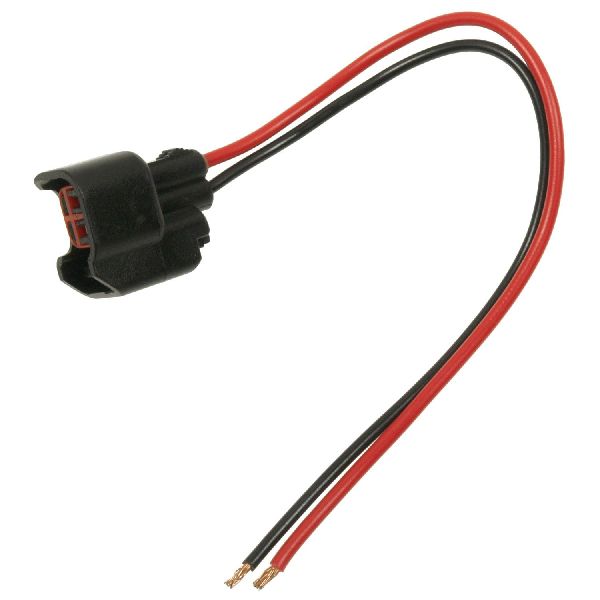
Typical fix: Replace the faulty fuel injector(s) on Bank 2. It is often recommended to replace all injectors on that bank (3 total) at the same time. The OEM part is ACDelco 12669384.
Est. part cost: $50-$150 per injector - Faulty Downstream Oxygen (O2) Sensor 🟡 Medium Probability → Shop Oxygen Sensor
How to confirm: Monitor the O2 sensor voltage on a scan tool. A sensor that is failing may have a voltage signal that is stuck high (e.g., above 0.8V), incorrectly telling the ECM the engine is running rich. However, this is often a symptom of a rich condition, not the cause. The TSB strongly advises testing injectors first.
Typical fix: Replace the Bank 2, Sensor 2 (downstream) oxygen sensor. The OEM part is ACDelco 213-4229.
Est. part cost: $50-$120 - Exhaust System Leak ⚪ Low Probability The TSB mentions this as a secondary cause if injectors test good. Leaks can occur at gaskets or welds between the cylinder head and the catalytic converter.
How to confirm: Visually inspect the exhaust system for cracks or loose connections. A smoke test can also be used. The TSB specifically suggests applying low-pressure air (5-8 psi) to the tailpipe and using a soapy solution on gaskets and welds to check for bubbles. A forum user reported a mechanic found and patched a pinhole leak, though the code returned, indicating it can be a contributing factor.
Typical fix: Repair the leak by replacing the gasket or damaged exhaust component.
Est. part cost: $20-$200 - High Fuel Pressure ⚪ Low Probability
How to confirm: Test the fuel pressure using a fuel pressure gauge to ensure it is within the manufacturer's specified range. This is less common on these models than injector failure.
Typical fix: Replace the fuel pressure regulator or fuel pump if pressure is out of spec.
Est. part cost: $100-$400
Rare But Worth Checking
- Faulty Mass Air Flow (MAF) Sensor: A dirty or failing MAF sensor can under-report the amount of air entering the engine, causing the ECM to inject too much fuel.
- Engine Control Module (ECM) Issue: → Shop Engine Control Module (ECM) In rare cases, a software glitch or internal failure in the ECM can cause incorrect fuel trim calculations.
- Purge Valve (EVAP) Solenoid Stuck Open: A stuck open purge valve can introduce unmetered fuel vapors into the intake manifold, creating a rich condition. This is often accompanied by an EVAP system code (like P0496) and difficulty starting after refueling.
Diagnosis Steps
- Connect an OBD-II scanner and confirm that P2099 is the active code. Check for any other codes, especially P2097, misfire codes (P030x), or EVAP codes (P0496).
- Review the freeze frame data to understand the engine conditions (speed, load, temperature) when the code was set.
- As per TSB #PIP4964F and its successors, the first major diagnostic step should be to perform a fuel injector balance test or use an Active Fuel Injector Tester (AFIT) to check for leaking or over-fueling injectors on Bank 2. (Note: Injector balance test not available on 2009 models).
- If injector tests are inconclusive, proceed to check for exhaust leaks as per the TSB. Use a smoke machine or apply 5-8 psi of air pressure to the tailpipe and spray gasket areas around the Bank 2 converter with soapy water, looking for bubbles.
- If steps 3 & 4 are negative, use the scanner to monitor live data for the Bank 2 downstream (Sensor 2) O2 sensor. Check if the voltage is stuck high, indicating a rich condition or a faulty sensor. Compare its behavior to the Bank 1 sensor.
- Check for vacuum leaks in the air intake system after the MAF sensor.
- Test the fuel pressure to ensure it is within the correct specifications.
- Inspect the MAF sensor for contamination and check its readings with a scan tool to ensure they are plausible for the given engine speed and load.
Parts You'll Likely Need
- Fuel Injector
(OEM #12669384)— This is the most common cause identified in a GM Technical Service Bulletin for the 2009-2016 Enclave with a P2099 code.
Trusted brands: ACDelco, Bosch
OEM price range: $100-$180
Aftermarket price range: $50-$120 - Downstream Oxygen Sensor (Bank 2, Sensor 2)
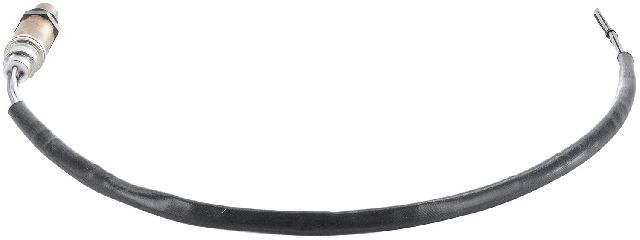
(OEM #213-4229)— This sensor provides the reading that triggers the code. If it fails, it can send false 'rich' signals to the computer. It is a common failure point but should be tested after checking the injectors on this vehicle.
Trusted brands: ACDelco, Denso, Bosch
OEM price range: $80-$150
Aftermarket price range: $50-$100
Related Codes That Often Appear With This One
- P2097 — This is the identical code for Bank 1 ('Post Catalyst Fuel Trim System Too Rich Bank 1'). If both are present, it may point to a systemic issue like high fuel pressure or a faulty MAF sensor affecting both engine banks.
- P0300, P0302, P0304, P0306 — These are misfire codes. A severely leaking injector on Bank 2 (cylinders 2, 4, or 6) can foul the spark plug and cause a misfire on that specific cylinder.
- P0496 — This code for 'EVAP Flow During a Non-Purge Condition' can indicate a faulty purge solenoid. If it's stuck open, it can create a rich condition that might contribute to or be mistaken for the cause of P2099.
Technical Service Bulletins (TSBs) & Recalls
- PIP4964F: Advises technicians to check for faulty fuel injectors using a balance test when diagnosing DTC P2097 or P2099. Also details a procedure for checking for exhaust leaks.
Platform-Specific Known Issues
- TSB #PIP4964F (and successors): This bulletin from GM addresses codes P2097 and P2099 on vehicles including the 2009-2016 Enclave. It states that a common cause is a faulty fuel injector and recommends performing an injector balance test early in the diagnostic process. It also provides a secondary diagnostic step of checking for exhaust leaks if injectors are okay.
- Real-World Symptom: Hard Starting When Warm: An owner on the ScannerDanner Forum with a 2011 Enclave and P2099 code described a specific symptom of a leaking injector: after starting the engine, shutting it off, and attempting to restart it, the engine would have an uneven crank and struggle to turn over, as if hydro-locked by excess fuel in a cylinder.
Mechanic-Grade Diagnostic Values
- Low-Side Fuel Pressure (Key On, Engine Off) — expected: 55-60 psi. Failure: Pressure below this range may indicate a weak in-tank fuel pump.
- Downstream O2 Sensor (Bank 2 Sensor 2) Voltage — expected: Should fluctuate slowly or hold a steady voltage, typically between 0.1V and 0.9V, once the engine is warm and in closed loop.. Failure: A voltage signal stuck consistently high (above 0.8V) indicates a persistent rich condition or a failed sensor.
- Engine Compression (HFV6 Engine) — expected: 150-185 psi average. Failure: No cylinder should be less than 140 psi. Low compression on a cylinder can lead to incomplete combustion and affect O2 sensor readings.
Scan Tool Commands That Help
- GM GDS2 (Global Diagnostic System 2): Active Fuel Injector Test (AFIT) — This is the manufacturer-specified procedure for diagnosing leaking or faulty injectors on this platform. It uses the CH-47976 AFIT tool in conjunction with the GDS2 software to accurately measure injector flow and balance, which is the first step recommended by TSB PIP4964F for a P2099 code.
- GM GDS2 (Global Diagnostic System 2): Injector Balance Test — This is a software-based test within GDS2 that disables one injector at a time and measures the corresponding drop in fuel rail pressure. While less definitive than the AFIT hardware test, it can still identify a grossly failing injector without special equipment beyond the GDS2/MDI interface. Note: This function is not available on 2009 models.
Wiring & Ground Locations
- G110 — On the right front of the engine, mounted to the cylinder head.. Bank 2 is the front bank of the engine. A poor ground at this location could potentially affect components on this bank, leading to erratic sensor readings or actuator performance. A bad ground can cause voltage offsets that the ECM might misinterpret.
- G103 — On the left side of the engine compartment, on the left inner fender panel (for 2009 models).. This ground point serves the Engine Control Module (ECM). A compromised ECM ground can cause a wide range of issues, including incorrect fuel trim calculations and false diagnostic trouble codes.
"I Checked Everything" — The Actual Cause
- The primary cause for P2099 on the Enclave, as identified by GM's TSB, is a leaking fuel injector. This is an internal fuel system fault that will not be found with an exhaust smoke test. Technicians may perform a smoke test, find no leaks, and incorrectly assume the exhaust system is sealed. However, the root cause is excess fuel entering the combustion chamber and overwhelming the catalytic converter, which is a condition a smoke test is not designed to detect.
OEM Part Supersession History
12638530→12669384— This is a common part number update for the 3.6L V6 fuel injectors. The newer part number represents a revised design or manufacturer change.
Heads up: While the new part number supersedes the old one, it is critical to verify the correct injector for the specific engine (LLT vs. LFX), especially for the 2012 model year. Always use a VIN to confirm the correct part.
Model Year Variations Within This Range
- 2009-2011 vs 2012-2016: The engine was updated from the LLT (VIN 'D') to the LFX around the 2012 model year. While both are 3.6L V6s, the LFX features integrated exhaust manifolds (the manifold is part of the cylinder head) and a different composite intake manifold. This changes exhaust components and some engine parts. For the 2012 model year specifically, technicians must verify the engine code via the 8th digit of the VIN, as both LLT and LFX engines may be found.
- 2009 only: As noted in TSB PIP4964F, the scan tool's 'Injector Balance Test' function is not available for the 2009 model year. Diagnosing a faulty injector on a 2009 model requires the dedicated Active Fuel Injector Tester (AFIT) hardware or other diagnostic methods.
Helpful Videos
![How to Fix P2099 Engine Code in 4 Minutes [2 DIY Methods / Only $9.49]](https://img.youtube.com/vi/tZdHNVnheeA/mqdefault.jpg)
We Have This Part in Stock



The information in this article is provided for general reference and educational purposes only. Vehicle specifications, procedures, and part compatibility can vary by production date, trim level, and region. Always consult your vehicle's factory service manual and verify part numbers before purchasing or performing repairs. Safety-critical components such as airbags, seat belts, and braking systems should be installed by a qualified professional.
- Buick ENCLAVE:
- 🧭 Diagnostic Flowchart
- 🎬 Helpful Videos
- 🛍️ Shop This Part
- What's Unique About the 2009-2016 Buick ENCLAVE
- Symptoms You May Notice
- Most Likely Causes
- Rare But Worth Checking
- Diagnosis Steps
- Parts You'll Likely Need
- Related Codes That Often Appear With This One
- Technical Service Bulletins (TSBs) & Recalls
- Platform-Specific Known Issues
- Mechanic-Grade Diagnostic Values
- Scan Tool Commands That Help
- Wiring & Ground Locations
- "I Checked Everything" — The Actual Cause
- OEM Part Supersession History
- Model Year Variations Within This Range
- 🎟️ Get 5% Off