

P2099 on 2017-2024 Buick Enclave: Post Catalyst Fuel Trim Too Rich Bank 2 Causes & Fixes
On 2017-2024 Buick Enclaves, code P2099 is frequently caused by a leaking or poorly performing fuel injector on Bank 2. A GM Technical Service Bulletin (TSB PIP4964F) highlights this as the primary cause. Other possibilities include exhaust leaks and faulty oxygen sensors, but injectors should be the first component investigated.
- For a P2099 code on a 2017-2024 Buick Enclave, suspect a leaking fuel injector on Bank 2 before anything else.
- Diagnosis should follow GM's TSB (PIP4964F) and start with a professional fuel injector balance test.
- Do not automatically replace the oxygen sensor; it is more likely to be correctly reporting a problem caused by something else.
- Bank 2 is the engine bank closer to the radiator.
- Driving with this code can eventually damage the catalytic converter, leading to a much more expensive repair.
What's Unique About the 2017-2024 Buick ENCLAVE
While many vehicles with a P2099 code suffer from exhaust leaks or bad oxygen sensors, the Buick Enclave and other GM vehicles with the 3.6L V6 have a documented history of this code being caused by faulty or leaking fuel injectors. GM issued a Technical Service Bulletin (PIP4964 series) specifically advising technicians to perform fuel injector balance tests early in the diagnosis for P2099, as it's a primary cause. Forum discussions among mechanics suggest the issue is often not a simple leak but a degraded spray pattern from clogged injector tips, which the downstream O2 sensor is sensitive enough to detect even when fuel trims appear normal.
Diagnostic Flowchart
Tap your situation to follow the diagnostic path that matches what you're seeing on this vehicle.
Generation note: The 2017 model year is the last of the first generation Enclave (3.6L LLT engine), while 2018-2024 models are the second generation (3.6L LFY engine). Both generations use a 3.6L V6 and both are covered under the GM TSB regarding fuel injector issues causing this code, indicating a persistent issue across the engine family.
Symptoms You May Notice
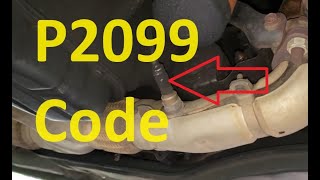
- Check Engine Light is on 🎬 Watch: A quick overview of P2099 causes and common fixes.
- Reduced fuel economy
- Rough or stumbling acceleration
- Engine performance issues
- Smell of fuel from the exhaust, especially on a cold start
- White smoke from exhaust on startup (if injector leak is severe)
- Replacing the oxygen sensor without performing other diagnostics. Given the prevalence of injector issues on this platform, the O2 sensor is often just reporting the problem, not the cause.
- Replacing the Mass Airflow (MAF) sensor. While a faulty MAF can cause fuel trim issues, it is not a primary cause for a single-bank rich code like P2099 on this vehicle.
Most Likely Causes
- Leaking or Faulty Fuel Injector(s) on Bank 2 🔴 High Probability → Shop Fuel Injector A GM Technical Service Bulletin (PIP4964F) explicitly identifies faulty fuel injectors as the most common cause for P2099 on this platform. Owner forums and repair videos frequently confirm this is the root cause after other parts were needlessly replaced.
How to confirm: Perform a fuel injector balance test or use an Active Fuel Injector Tester (AFIT) to measure flow rates and detect leaks, as recommended by GM. A professional diagnostic step. Pulling spark plugs on Bank 2 (front bank) may reveal one or more plugs are black and fouled with fuel.
Typical fix: Replace the faulty fuel injector(s) on Bank 2. Many owners and mechanics recommend replacing all three injectors on the affected bank at the same time to prevent future failures.
Est. part cost: $50-$180 per injector - Exhaust System Leak 🟡 Medium Probability The TSB mentions checking for leaks if injectors test good. Leaks can occur at gaskets or weld seams, particularly at the flange between the exhaust manifold and the catalytic converter, allowing outside air to be pulled in and skewing O2 sensor readings.
How to confirm: Visually inspect the exhaust system for soot trails or cracks. The TSB recommends pressurizing the exhaust to 5-8 PSI (DO NOT use full shop air) and spraying soapy water on joints, gaskets, and the O2 sensor boss to look for bubbles.
Typical fix: Replace the leaking gasket or repair/replace the cracked exhaust component. The TSB suggests filing the mating surface of the pipe flange when replacing a gasket to ensure a good seal.
Est. part cost: $20-$100 - Faulty Downstream Oxygen Sensor (Bank 2, Sensor 2) ⚪ Low Probability → Shop Oxygen Sensor While O2 sensors can fail, GM service information explicitly states it is 'very unlikely' for an O2 sensor to cause this DTC without setting other sensor-specific circuit codes. It is often misdiagnosed and replaced when the actual issue is an injector.
How to confirm: Use a scan tool to monitor the live voltage data from the Bank 2 Sensor 2. A healthy downstream sensor should show a relatively stable voltage. If it's stuck high or switching rapidly like an upstream sensor, it may be faulty. Swapping the downstream sensors between Bank 1 and Bank 2 and seeing if the code follows to P2097 (Bank 1) can also confirm a bad sensor.
Typical fix: Replace the Bank 2, Sensor 2 oxygen sensor.
Est. part cost: $50-$150
Rare But Worth Checking
- High Fuel Pressure: A faulty fuel pressure regulator can cause a system-wide rich condition. Check fuel pressure to rule this out. This may also trigger a P0089 code.
- Leaking EVAP Purge Solenoid: A purge solenoid stuck open can introduce extra fuel vapors into the intake manifold, causing a rich condition. This is often accompanied by an EVAP system code.
- Mechanical Valvetrain Issue: The TSB mentions that if injectors and exhaust are confirmed good, a mechanical issue like a sticking valve could be the cause, though this is rare and may or may not set a misfire code.
- Failing Catalytic Converter: → Shop Catalytic Converter A contaminated or inefficient catalytic converter can sometimes cause incorrect readings from the downstream O2 sensor, though this is less common than the converter being damaged by a persistent rich condition.
Diagnosis Steps
- Read the code with an OBD-II scanner and check for any other stored codes, especially misfire (P030x) or fuel pressure (P008x) codes.
- Review the TSB (PIP4964F) which strongly suggests a fuel injector issue is the most common cause.
- Perform a fuel injector balance test or use an AFIT tool to check for leaking or poorly performing injectors on Bank 2. This is the most critical step for this vehicle.
- If injectors test normal, inspect the exhaust system from the engine to the downstream O2 sensor for any signs of leaks. Perform a low-pressure (5-8 PSI) smoke or soapy water test as detailed in the TSB.
- Use a scan tool to monitor live data from the upstream and downstream O2 sensors on Bank 2. The downstream sensor (B2S2) voltage should be relatively stable and above 0.45V. If it's stuck high (above 0.8V), it confirms a rich condition being detected.
- Check fuel pressure to ensure it is within the manufacturer's specified range.
- Inspect for vacuum leaks, particularly a stuck-open EVAP purge valve, although this would typically affect both banks.
- Only after ruling out injectors and exhaust leaks should you consider a faulty downstream oxygen sensor or, in rare cases, a failing catalytic converter or mechanical engine issue.
Parts You'll Likely Need
- Fuel Injector
(OEM #ACDelco 12669384 (for 2017 LLT engine) or ACDelco 12634126 (for 2018+ LFY engine))— This is the most common cause of P2099 on this vehicle, as documented in a GM TSB. It's recommended to replace all three on Bank 2.
Trusted brands: ACDelco (GM Genuine), Bosch
OEM price range: $90-$180
Aftermarket price range: $50-$110 - Downstream Oxygen Sensor (Bank 2, Sensor 2)
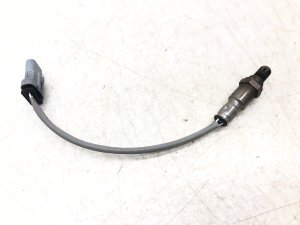
(OEM #ACDelco 213-4764)— This part may be replaced if it is confirmed to be faulty after ruling out injector and exhaust leak issues. Bank 2 Sensor 2 is located after the catalytic converter on the front (radiator) side of the engine.
Trusted brands: ACDelco, Denso, Bosch
OEM price range: $80-$150
Aftermarket price range: $50-$120 - Exhaust Manifold to Converter Gasket — If an exhaust leak is found at the flanged connection between the front manifold and catalytic converter, the gasket will need to be replaced.
Trusted brands: ACDelco, Fel-Pro
OEM price range: $25-$50
Aftermarket price range: $15-$30
Related Codes That Often Appear With This One
- P2097 — This is the equivalent code for Bank 1 ('Post Catalyst Fuel Trim System Too Rich Bank 1'). The GM TSB mentions both P2097 and P2099 together, as the root cause (like injectors) can affect either bank.
- P0300, P0302, P0304, P0306 — Misfire codes (P0300 for random, P0302, P0304, P0306 for Bank 2 cylinders) can occur if a leaking injector is severe enough to foul a spark plug or disrupt combustion.
- P0087 / P0089 — Fuel rail pressure codes may accompany a leaking injector, as the leak can cause a drop in rail pressure that the system detects.
Technical Service Bulletins (TSBs) & Recalls
- PIP4964F: Advises technicians to check for faulty fuel injectors
Platform-Specific Known Issues
- A General Motors Technical Service Bulletin (TSB #PIP4964F) exists for a range of GM vehicles, including the 2009-2024 Enclave, for codes P2097 and P2099. The bulletin states: 'The most common concerns we have seen has been related to fuel injectors. This should be caught on initial diagnosis for these codes. Perform injector balance or AFIT test prior to going further.'
Mechanic-Grade Diagnostic Values
- Downstream O2 Sensor (B2S2) Voltage, Normal Operation — expected: Relatively stable voltage, typically around 0.4V to 0.6V at idle.. Failure: A voltage consistently above 0.8V indicates a rich condition is being detected. If the voltage switches rapidly like the upstream sensor, the catalytic converter may be failing. If the voltage is stuck low (e.g., 0.1V-0.2V) or high, the sensor itself may be faulty.
- Fuel System Pressure (LLT & LFY engines) — expected: Key On, Engine Off (KOEO): 50-60 PSI. At Idle: 35-45 PSI. The pressure should increase with engine load.. Failure: Pressure significantly higher than spec can cause a rich condition. Pressure lower than spec could indicate a leak but is less likely to cause a P2099.
Scan Tool Commands That Help
- GM GDS2 / Tech2 or equivalent professional scan tool: Injector Balance Test / AFIT (Active Fuel Injector Test) — This is the primary diagnostic step recommended by GM's TSB for P2099. It directly tests the fuel injectors for leaks and proper flow, which is the most common cause of this code on the Enclave.
- GM GDS2 / Tech2 or equivalent professional scan tool: Fuel Trim Reset — After replacing a component like a fuel injector or oxygen sensor, this function should be used to clear the long-term fuel trim data from the ECM. This forces the computer to relearn the fuel strategy immediately with the new parts, preventing a false P2099 from reappearing due to old, stored data.
Wiring & Ground Locations
- G101 / G113 — G101 is on the left side of the engine compartment, on the frame rail. G113 is on the left side of the engine, at an engine-to-transmission stud.. These are primary grounds for the Engine Control Module (ECM). A poor or corroded connection at these points can cause erratic behavior and incorrect readings from various sensors, including the oxygen sensors, potentially leading to false fuel trim codes.
- G105 — On older models, located at the rear of the engine compartment on the instrument panel bulkhead. On some models, it is at the left front of the engine compartment behind cooling fan relays.. This ground point serves various components in the engine bay. While not a direct ECM ground, corrosion here can introduce electrical noise that may affect sensor readings. It's a known location for inspection during electrical diagnostics.
- O2 Sensor Harness — The wiring pigtail that is part of the oxygen sensor itself.. GM service information explicitly warns against repairing the oxygen sensor pigtail wiring. The sensor gets its clean air reference through the gaps in the wiring strands. Any solder or improper crimp can block this reference air path, leading to incorrect sensor readings and persistent codes. If the pigtail is damaged, the entire sensor must be replaced.
OEM Part Supersession History
12638530→12669384— Standard part evolution, likely for improved durability or manufacturing process.
Heads up: Part 12669384 is specified for the first generation Enclave (through 2017) with the LLT engine. It is not compatible with the second generation (2018+) LFY engine, which uses part 12634126.
Model Year Variations Within This Range
- 2017 vs 2018+: The 2018 model year marked a major redesign. The engine changed from the LLT 3.6L V6 (288 hp) to the LFY 3.6L V6 (310 hp). The transmission was upgraded from a 6-speed automatic to a 9-speed automatic. While both engines are 3.6L and suffer from similar injector issues causing P2099, key parts like the injectors themselves have different part numbers between generations.
Helpful Videos
We Have This Part in Stock

The information in this article is provided for general reference and educational purposes only. Vehicle specifications, procedures, and part compatibility can vary by production date, trim level, and region. Always consult your vehicle's factory service manual and verify part numbers before purchasing or performing repairs. Safety-critical components such as airbags, seat belts, and braking systems should be installed by a qualified professional.
- Buick ENCLAVE:
- 🧭 Diagnostic Flowchart
- 🎬 Helpful Videos
- 🛍️ Shop This Part
- What's Unique About the 2017-2024 Buick ENCLAVE
- Symptoms You May Notice
- Most Likely Causes
- Rare But Worth Checking
- Diagnosis Steps
- Parts You'll Likely Need
- Related Codes That Often Appear With This One
- Technical Service Bulletins (TSBs) & Recalls
- Platform-Specific Known Issues
- Mechanic-Grade Diagnostic Values
- Scan Tool Commands That Help
- Wiring & Ground Locations
- OEM Part Supersession History
- Model Year Variations Within This Range
- 🎟️ Get 5% Off