

P2099 on 2022-2023 Cadillac CT4: Post-Catalyst Fuel Trim Too Rich Causes & Fixes
On a 2022-2023 Cadillac CT4, code P2099 is most often caused by a faulty or leaking fuel injector. A GM Technical Service Bulletin (PIP4964F) specifically advises testing the fuel injectors before replacing other parts like oxygen sensors. Note that P2099 refers to Bank 2, while the technically correct code for an I4 engine is P2097 (Bank 1); both point to the same issue on this car.
- Do not immediately replace the oxygen sensor. The most likely cause for P2099 on a 2022-2023 CT4 is a faulty fuel injector.
- Reference GM Technical Service Bulletin #PIP4964F, which advises an injector balance test as the first major diagnostic step.
- Driving for an extended period with this code can lead to poor fuel mileage and costly damage to the catalytic converter.
- Be aware that P2099 (Bank 2) and P2097 (Bank 1) refer to the same problem on this car; the diagnosis is identical.
- For 2.7L engines, ask a dealer to check if your VIN is covered by Service Update N242450631 for an ECM reprogram.
What's Unique About the 2022-2023 Cadillac CT4
While P2099 on many vehicles might first point to a bad oxygen sensor, General Motors has issued a specific and long-standing Technical Service Bulletin (TSB #PIP4964F) that covers a wide range of its direct-injection engines, including the LSY and L3B in the CT4. This bulletin directs technicians to perform a fuel injector balance test as a primary diagnostic step. This indicates that GM has identified faulty or leaking fuel injectors as a known and highly probable cause for this code on these specific vehicles, making it a more critical first check than on other cars. Additionally, a separate service update (N242450631) exists for some 2020-2023 CT4s with the 2.7L L3B engine, requiring an ECM reprogram to better control fuel injector flow rates.
Diagnostic Flowchart
Tap your situation to follow the diagnostic path that matches what you're seeing on this vehicle.
Symptoms You May Notice
- Check Engine Light is on.
- Reduced fuel economy.
- Engine may lack power or accelerate poorly.
- Rough idle or misfires.
- Strong smell of gasoline from the exhaust.
- Black smoke from the exhaust, especially on startup or acceleration.
- Replacing the oxygen sensor first. The O2 sensor is often just accurately reporting the rich condition caused by another component, like a leaking fuel injector. The TSB for this vehicle specifically advises against this until injectors are tested.
Most Likely Causes
- Leaking or Faulty Fuel Injector(s) 🔴 High Probability → Shop Fuel Injector A specific GM Technical Service Bulletin (PIP4964F) identifies faulty fuel injectors as a primary cause for this code on this platform, directing technicians to test them early in the diagnostic process. Direct injection injectors operate under very high pressure and can be prone to leaking or developing poor spray patterns.
How to confirm: Perform a fuel injector balance test using a professional scan tool or an Active Fuel Injector Tester (AFIT), as recommended by the TSB. A leaking injector will often fail this test. Another method is to check the spark plugs; a plug from a cylinder with a leaking injector will often be black and sooty compared to the others.
Typical fix: Replace the faulty fuel injector(s). It is often recommended to replace them as a set, or at least all injectors on the affected bank (in this case, all four), to ensure proper balance and prevent future failures.
Est. part cost: $50-$150 per injector - Exhaust Leak 🟡 Medium Probability Exhaust system components experience extreme temperature cycles which can cause gaskets to fail or pipes to crack over time.
How to confirm: Visually inspect the exhaust system from the engine to the catalytic converter for any signs of cracks, rust, or loose connections at flanges. A smoke test can also be performed to pinpoint small leaks that are not visible. An exhaust leak before the O2 sensor can draw in outside air, confusing the sensor and leading to an incorrect fuel trim adjustment.
Typical fix: Repair the leak. This may involve replacing a gasket, tightening bolts, or using exhaust putty for a very small hole. For larger cracks, the affected pipe section may need to be welded or replaced.
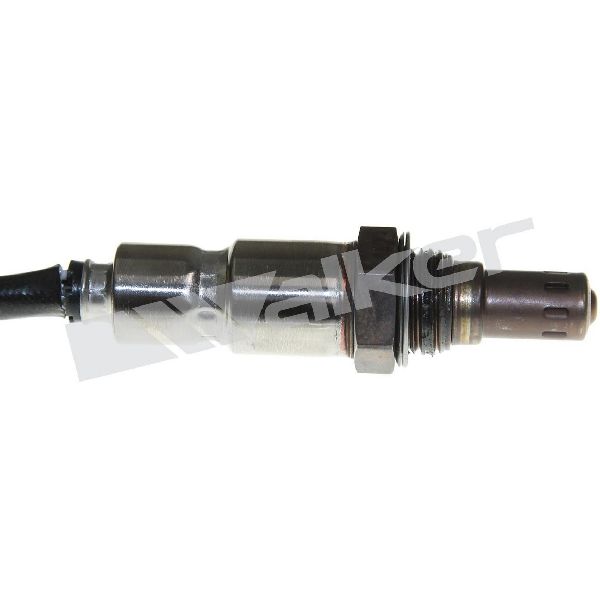
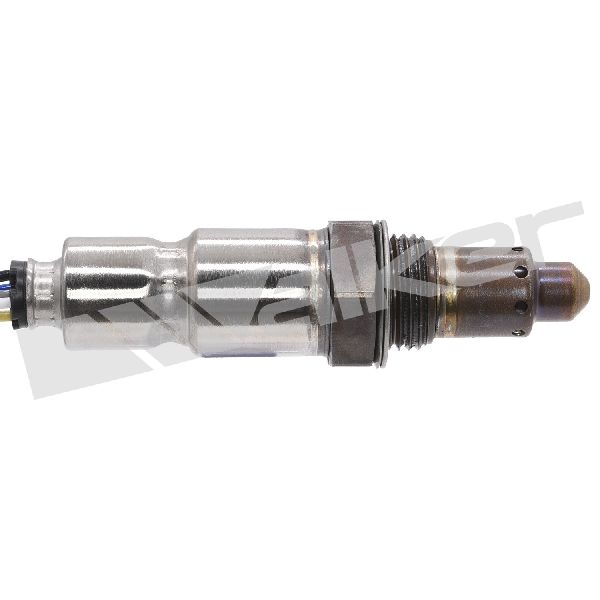
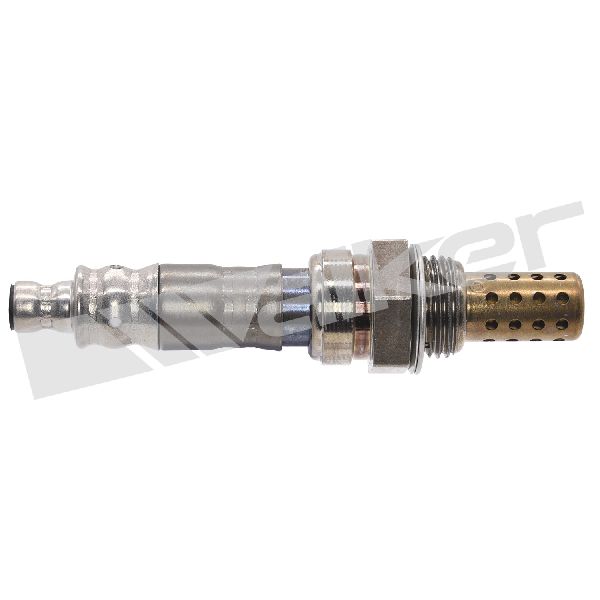
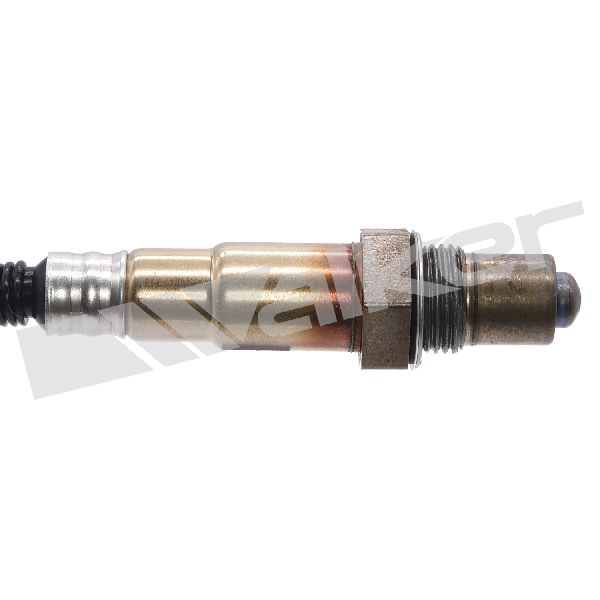
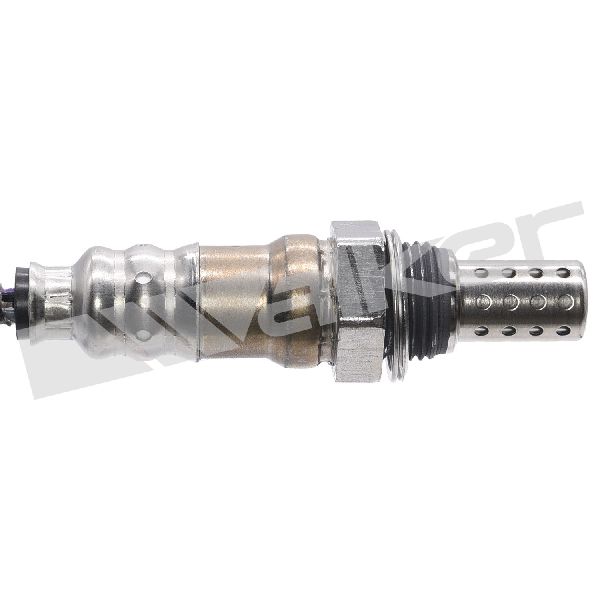
Est. part cost: $10-$200 - Faulty Downstream Oxygen Sensor ⚪ Low Probability → Shop Oxygen Sensor
How to confirm: Use a scan tool to monitor the live voltage data from the downstream O2 sensor. A healthy sensor's voltage should remain relatively stable. If the voltage is stuck high (e.g., above 0.7V), it may be faulty. However, this reading is also the expected result of a true rich condition, so it's critical to rule out injectors and leaks first, as per the TSB.
Typical fix: Replace the downstream (post-catalyst) oxygen sensor.
Est. part cost: $100-$180
Rare But Worth Checking
- High Fuel Pressure: This could be caused by a failing fuel pressure regulator or an issue with the high-pressure fuel pump. Check fuel pressure with a gauge to see if it is within the manufacturer's specified range.
- Faulty Mass Airflow (MAF) Sensor: A dirty or failing MAF sensor can send incorrect airflow readings to the PCM, causing it to command the wrong amount of fuel. Cleaning the sensor with a dedicated MAF sensor cleaner can sometimes resolve the issue.
- Engine Control Module (ECM) Software Issue: → Shop Engine Control Module (ECM) GM has issued a service update (N242450631) for some 2020-2023 CT4 models with the 2.7L L3B engine for an ECM reprogram to better control fuel injector flow. A dealer can check if this update applies to your vehicle's VIN.
Diagnosis Steps
- Scan the vehicle for any other stored trouble codes. Address any misfire, MAF, or fuel pressure codes first.
- As per TSB #PIP4964F, perform a fuel injector balance test using a capable scan tool (AFIT). This is the most critical step for this vehicle.
- If the injector test is inconclusive, visually inspect the exhaust system for any leaks between the cylinder head and the downstream O2 sensor. Pay close attention to flanges and welds.
- Use a scan tool to observe live data from the downstream oxygen sensor. If it reads consistently high (above 0.7V), it confirms a rich condition, but does not pinpoint the cause.
- Check fuel pressure to ensure it is within the OEM specified range.
- For 2.7L L3B engines, check with a GM dealer if Service Update N242450631 (ECM reprogram) is applicable to your vehicle's VIN.
- Inspect the air intake system for any blockages and clean the MAF sensor if it appears dirty.
- If all other possibilities are exhausted, the oxygen sensor itself may be faulty.
Parts You'll Likely Need
- Fuel Injector
(OEM #e.g., ACDelco 12694600 (for 2.0L LSY) or ACDelco 12712792 (for 2.7L L3B). Always verify with VIN.)— This is the most common cause of P2099/P2097 on this specific vehicle, as identified by GM's own Technical Service Bulletin (PIP4964F).
Trusted brands: ACDelco (OEM)
OEM price range: $50-$150
Aftermarket price range: $40-$100 - Downstream Oxygen Sensor
(OEM #e.g., ACDelco 213-4768 (GM 12678994). Always verify with VIN.)— This is a common cause for post-catalyst codes in general, but should only be replaced after ruling out injectors and exhaust leaks on this vehicle per the TSB.
Trusted brands: ACDelco (OEM), Bosch, Denso
OEM price range: $100-$180
Aftermarket price range: $60-$120
Related Codes That Often Appear With This One
- P2097 — P2097 is the equivalent code for 'Post Catalyst Fuel Trim System Too Rich Bank 1'. On inline engines like the CT4's, this is the technically correct code. The TSB #PIP4964F also lists P2097 alongside P2099 as being caused by the same injector issue.
- P0300-P0304 — These are random or specific cylinder misfire codes. A leaking fuel injector can foul the spark plug in its cylinder, leading to incomplete combustion and a misfire.
- P0172 — This code means 'System Too Rich Bank 1' and is detected by the *upstream* oxygen sensor. If seen with P2097/P2099, it strongly indicates a fuel delivery problem like a leaking injector, as the rich condition is being detected throughout the entire exhaust path.
Technical Service Bulletins (TSBs) & Recalls
- Bulletin #PIP4964F: Mentions that for a P2099 or P2097 code, technicians should perform a fuel injector balance test before further diagnosis, pointing to injectors as a likely cause. This is a long-standing bulletin covering many GM direct-injection engines.
- Bulletin #N242450631: A service update for certain 2020-2023 Cadillac CT4 models with the 2.7L L3B engine. It involves reprogramming the Engine Control Module (ECM) to correct how it controls fuel injector flow rate under certain conditions.
Platform-Specific Known Issues
- A known issue with faulty or leaking fuel injectors is documented in GM TSB #PIP4964F, making it the primary suspect for code P2099.
- Owner experiences shared on forums like CadillacForums.com corroborate the TSB. In one documented case for a related model (Cadillac CT5) with the same engine, a P2097 code was resolved by the dealer performing an injector balance test and replacing a single leaking fuel injector under warranty, which immediately fixed the issue.
- For the 2.7L L3B engine, GM issued Service Update N242450631 for some 2020-2023 models to reprogram the ECM to better control fuel injector flow rates, indicating a known software calibration sensitivity.
Mechanic-Grade Diagnostic Values
- Downstream O2 Sensor (Bank 1, Sensor 2) Voltage — expected: Relatively stable voltage between 0.4V and 0.7V at idle/steady cruise on a warm engine with a healthy catalytic converter.. Failure: Voltage is stuck high (above 0.7V), confirming the rich condition reported by the code. If voltage fluctuates rapidly, mirroring the upstream sensor, the catalytic converter is likely faulty.
- Fuel Injector Coil Resistance — expected: All injectors should have a resistance value within approximately 0.5 ohms of each other. High-impedance injectors are typically in the 12-16 ohm range.. Failure: One injector's resistance reading is significantly different from the others (e.g., an open circuit or a much lower/higher reading). This indicates a faulty injector coil.
- Fuel Injector Pulse Width at Idle — expected: Approximately 3.4 milliseconds at idle for a similar GM engine, though this can vary.. Failure: Significantly higher pulse width could indicate the PCM is trying to compensate for a separate issue, while comparing pulse width to fuel trims provides deeper diagnostic insight.
Hidden / Shadow Codes Worth Checking
- Mode $06 Data: This is not a trouble code, but a diagnostic mode on a scan tool that allows viewing of test results for non-continuously monitored systems. A technician can check the raw data for the O2 sensor and catalyst monitors (e.g., Monitor ID) to see if they are approaching failure thresholds before a code is officially set. (see via Advanced OBD-II scan tool with Mode $06 functionality.)
Scan Tool Commands That Help
- GDS2 (GM Global Diagnostic System 2): Active Fuel Injector Test (AFIT) — This is the primary diagnostic step recommended by GM TSB #PIP4964F for a P2099/P2097 code. The function automates an injector balance test by measuring fuel pressure drop as it individually fires each injector. It provides a clear GOOD/BAD result for each injector, quickly identifying a leaking or clogged one.
Wiring & Ground Locations
- Fuse Boxes — The 2023 CT4 has three fuse box locations: one in the engine compartment, one in the instrument panel (passenger compartment), and one in the rear compartment.. Fuses for the ECM, fuel injectors, and oxygen sensor heaters are located in these panels. A blown fuse could cause a sensor to read incorrectly or a component to fail, though it would typically set a different, more specific circuit code.
Real Owner Repair Stories
- Reddit user 'Any-Fault8482' in r/Silverado (2015 Silverado 1500 5.3L (Different vehicle, but related GM engine family and code)) — Recurring P2099 and P2097 codes.
❌ Tried (didn't work) The original poster had replaced catalytic converters and ignition coils without resolving the issue.
✅ What actually fixed it A different user in the thread reported fixing the same issue on their truck by discovering and replacing a torn throttle body boot (part of the air intake system).
Model Year Variations Within This Range
- 2020-2023: For the 2.7L L3B engine only, GM issued Service Update N242450631 for an ECM reprogram. This addresses an issue where the ECM does not sufficiently control the fuel injector flow rate in certain conditions. This does not apply to the 2.0L LSY engine.
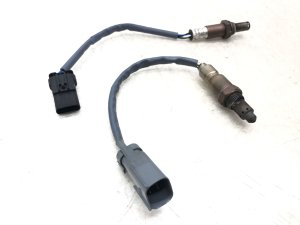
Used OEM Parts in Stock
New Aftermarket Parts Available

The information in this article is provided for general reference and educational purposes only. Vehicle specifications, procedures, and part compatibility can vary by production date, trim level, and region. Always consult your vehicle's factory service manual and verify part numbers before purchasing or performing repairs. Safety-critical components such as airbags, seat belts, and braking systems should be installed by a qualified professional.
- Cadillac CT4:
- 🧭 Diagnostic Flowchart
- 🛍️ Shop This Part
- What's Unique About the 2022-2023 Cadillac CT4
- Symptoms You May Notice
- Most Likely Causes
- Rare But Worth Checking
- Diagnosis Steps
- Parts You'll Likely Need
- Related Codes That Often Appear With This One
- Technical Service Bulletins (TSBs) & Recalls
- Platform-Specific Known Issues
- Mechanic-Grade Diagnostic Values
- Hidden / Shadow Codes Worth Checking
- Scan Tool Commands That Help
- Wiring & Ground Locations
- Real Owner Repair Stories
- Model Year Variations Within This Range
- 🎟️ Get 5% Off