

P2099 on 2010-2016 Cadillac SRX: Post-Catalyst Rich Fuel Trim Causes and Fixes
On a 2010-2016 Cadillac SRX, code P2099 is frequently caused by a leaking or malfunctioning fuel injector on Bank 2. A comprehensive GM Technical Service Bulletin (PIP4964F) specifically advises testing injectors for this code across a wide range of GM V6 vehicles. Other likely causes include a faulty downstream oxygen sensor or a small exhaust leak near the catalytic converter.
- For a 2010-2016 Cadillac SRX, P2099 strongly points towards a faulty fuel injector on Bank 2 (front of the engine).
- Do not immediately replace the oxygen sensor or catalytic converter without first testing the fuel injectors as per GM's own service bulletin.
- Symptoms include poor gas mileage, rough running, and potentially black exhaust smoke.
- Driving for an extended period with this code can cause expensive damage to the catalytic converter.
What's Unique About the 2010-2016 Cadillac SRX
While many vehicles can get a P2099 code, the 2010-2016 Cadillac SRX, along with its platform mates sharing the 3.0L and 3.6L V6 engines, has a known issue highlighted by General Motors itself. A Technical Service Bulletin (PIP4964F) directly connects this code to faulty fuel injectors, urging technicians to perform an injector balance test early in the diagnosis. This suggests that leaking or poorly atomizing injectors are a more common cause on this specific platform than on the average vehicle, where an oxygen sensor might be the first suspect.
Diagnostic Flowchart
Tap your situation to follow the diagnostic path that matches what you're seeing on this vehicle.
Generation note: The 2010-2016 SRX is the second generation. However, it used two different V6 engines. The 2010-2011 models primarily have the 3.0L (LF1) V6, while the 2012-2016 models have the 3.6L (LFX) V6. While the causes for P2099 are similar, specific part numbers for injectors or sensors will differ between these engines. The TSB for this issue applies to both engine types.
Symptoms You May Notice
- Check Engine Light is on
- Decreased fuel economy
- Engine may idle roughly, hesitate, or stall
- Noticeable loss of engine power
- Black smoke from the tailpipe, especially during acceleration
- A smell of raw fuel may be present around the vehicle
- Visible black soot accumulating on the rear of the vehicle.
- Immediately replacing the catalytic converter. The converter is expensive and its failure is usually a symptom of another problem, like a leaking injector that has been ignored. Always diagnose the root cause first.
- Replacing the O2 sensor without confirming the fuel system is healthy. The sensor is often correctly reporting a rich condition caused by something else.
Most Likely Causes
- Leaking or Faulty Fuel Injector(s) on Bank 2 🔴 High Probability → Shop Fuel Injector A manufacturer TSB (#PIP4964F) was issued for this platform, specifically mentioning code P2099 and directing technicians to check fuel injectors. The issue can be a leak or a clogged tip that degrades the spray pattern, which the sensitive downstream O2 sensor detects even if fuel trims seem normal.
How to confirm: Perform a fuel injector balance test using a professional scan tool with Active Fuel Injector Tester (AFIT) capabilities. A leaking or poorly performing injector will fail this test. Another method is to check the spark plugs on Bank 2; a plug that is black and sooty compared to others indicates a rich condition in that cylinder.
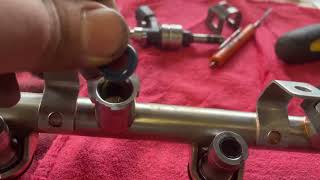
Typical fix: Replace the faulty fuel injector(s) on Bank 2. It is often recommended to replace all three injectors on that bank 🎬 Watch: Step-by-step guide for replacing fuel injectors on this engine. at the same time to ensure balanced performance.
Est. part cost: $50-$180 per injector - Faulty Bank 2 Downstream Oxygen Sensor (Sensor 2) 🟡 Medium Probability → Shop Oxygen Sensor
How to confirm: Use a scan tool to monitor the live voltage from the Bank 2 Sensor 2. If the voltage is stuck high (e.g., >0.8V) and doesn't fluctuate, the sensor is likely bad or reporting a true rich condition. You can also swap it with the Bank 1 Sensor 2 (if identical) and see if the code changes to P2097 (Bank 1 Rich).
Typical fix: Replace the Bank 2, Sensor 2 oxygen sensor.
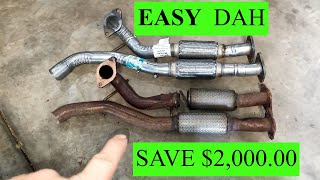
Est. part cost: $40-$150 - Exhaust Leak 🟡 Medium Probability TSB PIP4964F lists this as the second item to check after injectors. Leaks are common at gaskets or welds. The Y-pipe assembly, which contains flex pipes, is a known failure point that can rust and break, causing significant leaks.
How to confirm: Visually inspect the exhaust manifold, gaskets, and pipes on Bank 2 for cracks or signs of black soot. The TSB recommends a specific test: apply low air pressure (5-8 PSI) to the tailpipe and spray a soapy solution on the exhaust components from the manifold to the post-cat sensor. Look for large bubbles, not just foam. DO NOT use full shop air pressure.
Typical fix: Replace the leaking gasket or repair/replace the cracked exhaust component. Aftermarket flex pipe repair kits are available.
Est. part cost: $20-$200 - Failing Catalytic Converter ⚪ Low Probability → Shop Catalytic Converter
How to confirm: With a scan tool, observe the live data for the upstream and downstream O2 sensors. If the downstream sensor's waveform mimics the upstream sensor's, the converter is not working efficiently. This usually throws a P0430 code, but can contribute to P2099. A backpressure test reading greater than 1.5 PSI at 2,000 RPM can indicate a clogged converter.
Typical fix: Replace the Bank 2 catalytic converter. This should only be done after confirming the root cause (like a leaking injector) has been fixed.
Est. part cost: $500-$1500
Rare But Worth Checking
- High Fuel Pressure: A failing fuel pressure regulator can force too much fuel into the engine. This is less common than an injector or sensor issue but worth checking if other tests are inconclusive.
- Powertrain Control Module (PCM) Issue: → Shop Engine Control Module (ECM) In very rare cases, a software glitch or internal failure in the engine computer can cause it to misinterpret sensor data and set a false code.
- Mechanical Valvetrain Issue: As a final diagnostic step, TSB PIP4964F suggests checking for mechanical issues like a sticking valve or a lifter follower that is out of place, which may or may not cause a misfire but can affect exhaust composition.
Diagnosis Steps
- Connect an OBD-II scanner and confirm P2099 is the active code. Note any other codes present and review freeze frame data.
- Per TSB PIP4964F, the first and most critical step for this vehicle is to perform a fuel injector balance test using an Active Fuel Injector Tester (AFIT). This will identify leaking or poorly performing injectors, the most common cause.
- If injectors test okay, proceed to check for exhaust leaks. Perform a low-pressure test by introducing 5-8 PSI of air into the tailpipe and spraying gaskets and welds on Bank 2 with a soapy solution. Visually inspect for soot trails, paying close attention to the flex pipe section of the Y-pipe. 🎬 See how to identify and repair a leaking exhaust flex pipe.
- Use the scanner's live data function to view the voltage from the Bank 2 oxygen sensors. The upstream sensor (Sensor 1) should fluctuate rapidly. If the downstream sensor (Sensor 2) is stuck high (e.g., above 0.8 volts), it confirms the rich signal being sent to the PCM.
- Test the Bank 2 downstream O2 sensor itself. Check its wiring for damage or swap it with the Bank 1 sensor to see if the fault moves to Bank 1 (triggering P2097). 🎬 Watch: How to test and diagnose a faulty oxygen sensor.
- Check fuel pressure to ensure it is within the manufacturer's specified range. The 3.6L LFX uses direct injection, so both low and high-pressure systems must be checked.
- If all other steps fail, TSB PIP4964F suggests a final check for rare mechanical valvetrain issues on Bank 2, such as a sticking valve.
Parts You'll Likely Need
- Fuel Injector
(OEM #ACDelco 217-3427 (For 3.6L LFX, verify fitment))— This is the most likely cause according to GM Technical Service Bulletin (PIP4964F) for the P2099 code on this vehicle family.
Trusted brands: ACDelco, Bosch, Delphi
OEM price range: $100-$180
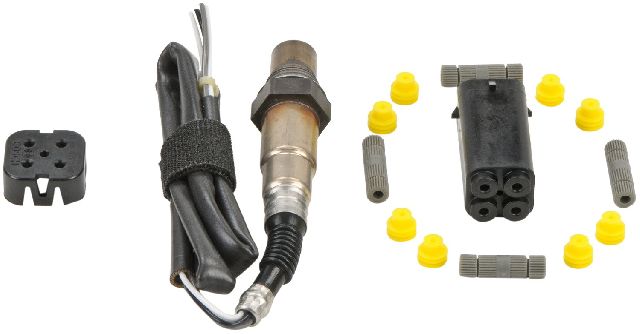
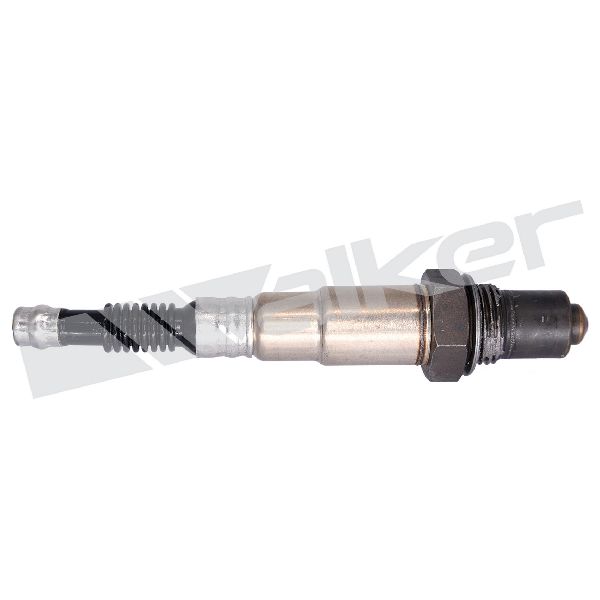
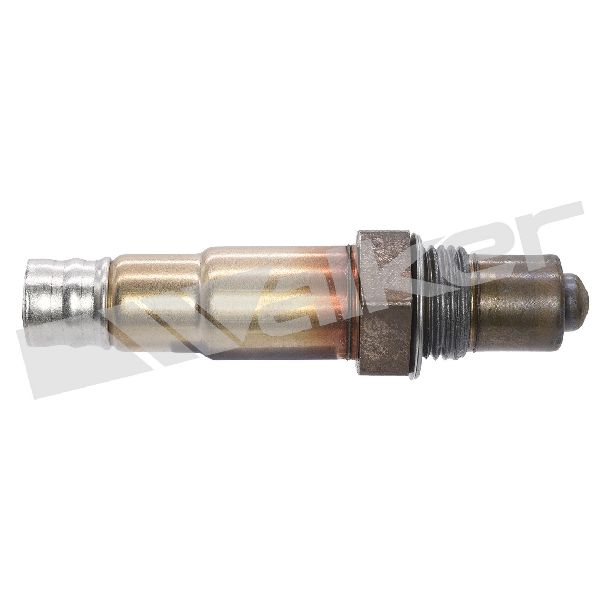
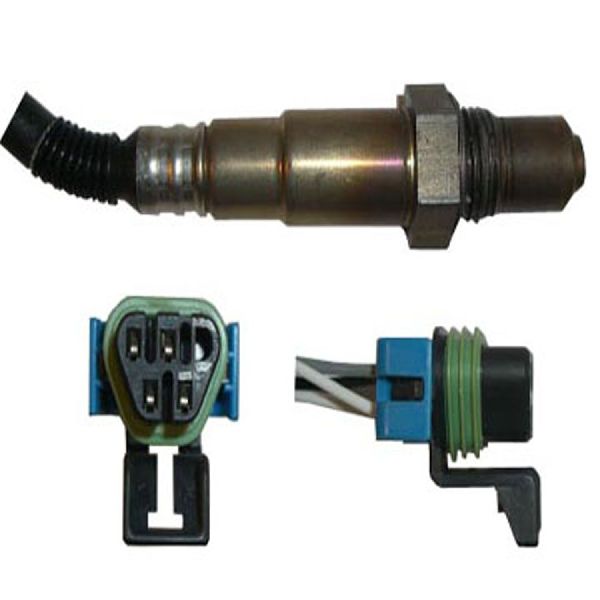
Aftermarket price range: $50-$120 - Downstream Oxygen Sensor (Bank 2, Sensor 2)
(OEM #ACDelco 213-4768 / GM 12639692 (Verify fitment))— This sensor is responsible for reporting the post-catalyst fuel mixture. If it fails, it can send a false 'rich' signal to the computer.
Trusted brands: ACDelco, Denso, Bosch, Walker
OEM price range: $80-$150
Aftermarket price range: $40-$100 - Exhaust Manifold Gasket — If an exhaust leak is found at the manifold, this gasket will need to be replaced to seal it.
Trusted brands: Fel-Pro, ACDelco
OEM price range: $30-$60
Aftermarket price range: $15-$40
Related Codes That Often Appear With This One
- P0302, P0304, P0306 — These are misfire codes for cylinders on Bank 2. A severely leaking fuel injector can foul the spark plug and cause misfires on that cylinder.
- P0174 — System Too Lean Bank 2. While opposite to P2099, a vacuum leak (causing P0174) can sometimes lead to erratic fuel trim corrections by the PCM, which may overcompensate and trigger a P2099 as a secondary effect.
- P0430 — Catalyst System Efficiency Below Threshold Bank 2. This code often appears alongside P2099 if the rich condition has been present long enough to damage the catalytic converter.
Technical Service Bulletins (TSBs) & Recalls
- PIP4964F (and earlier revisions): Directs technicians to check for DTC P2097 or P2099 and perform an injector balance test (AFIT) as the first step. If injectors are good, it then advises checking for exhaust leaks and, finally, mechanical valvetrain problems.
Platform-Specific Known Issues
- A known issue with fuel injectors can cause this code, as documented in TSB PIP4964F. This should be a primary diagnostic focus.
- Exhaust leaks at the manifold or converter outlet are the second most likely cause according to the same TSB. The flex pipes on the Y-pipe assembly are a common point of failure due to rust and vibration.
Mechanic-Grade Diagnostic Values
- Downstream O2 Sensor (B2S2) Voltage — expected: Relatively stable voltage, slowly fluctuating. Normal range is 0.1V (lean) to 0.9V (rich).. Failure: Stuck high, consistently >0.8V, indicates a rich condition or failed sensor.
- Exhaust Backpressure — expected: Less than 1.5 PSI at 2,000 RPM.. Failure: Pressure >1.5 PSI at 2,000 RPM indicates a clogged catalytic converter.
- Exhaust Leak Test Pressure — expected: 5-8 PSI applied to the tailpipe.. Failure: Large bubbles forming at gaskets or welds when sprayed with soapy water. Foam is normal.
- Oxygen Sensor Torque Specification — expected: 31 ft-lbs. Failure: N/A
Scan Tool Commands That Help
- GDS2 / Tech2: Active Fuel Injector Tester (AFIT) / Injector Balance Test — This is the first diagnostic step recommended by GM TSB PIP4964F to identify leaking or malfunctioning fuel injectors, which are a primary cause of P2099 on this platform.
- Professional Scan Tool (e.g., Foxwell NT710): Live Data Graphing - O2 Sensor Voltage — To observe the behavior of the Bank 2 Sensor 2. If its waveform is too active and mimics the upstream sensor, the catalytic converter may be bad. If it's stuck high (>0.8V), it confirms a rich signal.
Wiring & Ground Locations
- Bank 2 Sensor 2 O2 Sensor — Downstream of the left (front/radiator side) catalytic converter.. This is the specific sensor that triggers the P2099 code. Its wiring is critical.
- Engine Block Grounds (3.6L LFX) — There are typically three smaller ground connections on the engine harness. One is on the rear of the cylinder head, another near the front corner. The main battery ground connects either to the front left side of the block near the starter or behind it.. A poor ground connection can cause erratic sensor readings, including from the O2 sensors, leading to false trouble codes.
- O2 Sensor Wiring Harness — Runs from the sensor on the exhaust to the main engine harness.. It is critical not to solder repairs on O2 sensor wiring. The sensor gets its clean air reference through the wire strands themselves. Damaging or soldering the wires can obstruct this reference and degrade sensor performance, causing incorrect readings.
Real Owner Repair Stories
- YouTube user 'Mongo Fix' (2012 Cadillac SRX 3.6L) — Bad exhaust leak, loud noise.
❌ Tried (didn't work) The owner was quoted over $1700 by the dealership for a new catalytic converter and Y-pipe assembly.
✅ What actually fixed it The exhaust flex pipe on the Y-pipe assembly had broken completely in half. The fix was to cut out the old Y-pipe and install an aftermarket repair section (Walker PN: 73010) which replaces both flex pipes. This resolved the massive exhaust leak which can cause incorrect O2 sensor readings and trigger codes like P2099.
"I Checked Everything" — The Actual Cause
- Per TSB PIP4964F, if diagnostics for exhaust leaks and O2 sensors are inconclusive, the cause may be faulty fuel injectors that are not identified by other means. An AFIT/injector balance test is required.
- The TSB also notes that if all fuel and exhaust-related tests pass, a rare mechanical valvetrain issue (like a sticking valve) on Bank 2 could be the root cause, which would not be found with a smoke test.
Model Year Variations Within This Range
- 2010-2011 vs 2012-2016: The primary engine changed from the 3.0L V6 (LF1) in 2010-2011 to the 3.6L V6 (LFX) from 2012-2016. While the P2099 diagnosis is similar, components like fuel injectors, O2 sensors, and intake gaskets will have different part numbers and may have slightly different replacement procedures.
Helpful Videos
We Have This Part in Stock



The information in this article is provided for general reference and educational purposes only. Vehicle specifications, procedures, and part compatibility can vary by production date, trim level, and region. Always consult your vehicle's factory service manual and verify part numbers before purchasing or performing repairs. Safety-critical components such as airbags, seat belts, and braking systems should be installed by a qualified professional.
- Cadillac SRX:
- 🧭 Diagnostic Flowchart
- 🎬 Helpful Videos
- 🛍️ Shop This Part
- What's Unique About the 2010-2016 Cadillac SRX
- Symptoms You May Notice
- Most Likely Causes
- Rare But Worth Checking
- Diagnosis Steps
- Parts You'll Likely Need
- Related Codes That Often Appear With This One
- Technical Service Bulletins (TSBs) & Recalls
- Platform-Specific Known Issues
- Mechanic-Grade Diagnostic Values
- Scan Tool Commands That Help
- Wiring & Ground Locations
- Real Owner Repair Stories
- "I Checked Everything" — The Actual Cause
- Model Year Variations Within This Range
- 🎟️ Get 5% Off