

P2099 on 2020-2024 Cadillac XT6: Post-Catalyst Rich Fuel Trim Causes and Fixes
On a 2020-2024 Cadillac XT6 with the 3.6L V6 engine, code P2099 is frequently caused by a leaking or faulty fuel injector on Bank 2. A long-standing GM Technical Service Bulletin (PIP4964 series) advises testing the injectors before replacing other parts like oxygen sensors. Bank 2 on this transverse engine is the cylinder bank closer to the radiator.
- For a P2099 code on a 2020-2024 Cadillac XT6, do not immediately assume the oxygen sensor is bad.
- The most likely cause, supported by a manufacturer TSB, is a leaking or faulty fuel injector on Bank 2.
- A professional diagnosis involving an injector balance test is the recommended first step to avoid replacing unnecessary parts.
- Checking for exhaust leaks between the engine and the rear O2 sensor is the second most important diagnostic step.
- Bank 2 refers to the side of the engine opposite cylinder #1.
What's Unique About the 2020-2024 Cadillac XT6
For the Cadillac XT6 and its platform mates with the 3.6L V6 engine (LGX), there is a strong, documented emphasis on fuel injectors as a root cause. A repeatedly updated Technical Service Bulletin (TSB #PIP4964F and its successors) directly instructs technicians to investigate fuel injectors with a balance test for code P2099 before pursuing other diagnoses. This shifts the diagnostic priority away from immediately suspecting an oxygen sensor, which might be the first step on other makes and models. This code is not applicable to the 2.0L 4-cylinder engine option, as it only has one bank.
Diagnostic Flowchart
Tap your situation to follow the diagnostic path that matches what you're seeing on this vehicle.
Symptoms You May Notice
- Check Engine Light is on
- Decreased fuel economy
- Rough engine idle or hesitation during acceleration
- Black smoke from the exhaust, especially on startup or acceleration
- Engine may lack power or feel sluggish
- Noticeable smell of gasoline from the exhaust
- Hard starting, especially after the vehicle has been sitting (hot soak)
- Immediately replacing the downstream oxygen sensor without first checking for exhaust leaks or testing the fuel injectors as per TSB #PIP4964F. The O2 sensor is often just accurately reporting the rich condition caused by another component.
Most Likely Causes
- Leaking or Faulty Fuel Injector(s) on Bank 2 🔴 High Probability → Shop Fuel Injector A manufacturer TSB (#PIP4964F) specifically points to this as a primary cause for P2099 on related GM vehicles with the 3.6L engine, suggesting a known issue with injector performance or longevity. These direct injection systems run at very high pressure, and internal seals can fail, causing fuel to leak into the cylinder.
How to confirm: A professional will use a GM-specific scan tool (GDS2) to perform an 'Active Fuel Injector Tester' (AFIT) or an injector balance test. This test measures the fuel pressure drop for each injector activation. A larger-than-specified pressure drop on a Bank 2 cylinder indicates a leaking injector. Another sign can be fuel smell on the oil dipstick, indicating dilution.
Typical fix: Replace the faulty fuel injector(s) on Bank 2. It is often recommended to replace all three injectors on the same bank at the same time for balanced performance and to prevent future failures.
Est. part cost: $90-$150 per injector - Exhaust Leak (before or near the O2 sensor) 🟡 Medium Probability Platform mates like the Chevy Traverse have a known issue with cracked exhaust pipes near support brackets (TSB #PIP5681C), which can also affect the XT6. Leaks at the manifold or catalytic converter flange gaskets are also possible.
How to confirm: Visually inspect the exhaust system from the engine manifold to the downstream O2 sensor for cracks, soot trails, or gasket leaks. A smoke test, where smoke is forced into the cold exhaust system, is the most effective way to reveal the precise location of any leaks.
Typical fix: Repair the leak. This may involve replacing a gasket, tightening loose flange bolts, or welding a crack. If the pipe is severely cracked as described in related TSBs, the affected pipe section must be replaced.
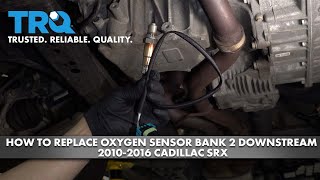
Est. part cost: $10-$350 depending on the nature of the repair - Faulty Downstream Oxygen Sensor (Bank 2, Sensor 2) 🟡 Medium Probability → Shop Oxygen Sensor
How to confirm: Use a scan tool to monitor the voltage of the Bank 2 downstream O2 sensor. A healthy sensor will show a relatively stable voltage, typically between 0.5V and 0.8V on a warm engine. If the voltage is stuck high (consistently above 0.8V) and does not fluctuate, the sensor may be faulty or biased. However, this reading can also be a correct indication of a rich condition, which is why injectors and leaks must be checked first.
Typical fix: Replace the Bank 2, Sensor 2 oxygen sensor. This should only be done after ruling out fuel injectors and exhaust leaks.
Est. part cost: $50-$150 - Faulty Upstream Oxygen Sensor (Bank 2, Sensor 1) ⚪ Low Probability → Shop Oxygen Sensor
How to confirm: A faulty upstream sensor can incorrectly tell the ECM the engine is lean, causing it to add too much fuel (negative fuel trims). This results in the downstream sensor correctly reporting a rich condition. Analyzing both upstream and downstream sensor data alongside fuel trims with a scan tool can help identify this discrepancy.
Typical fix: Replace the Bank 2, Sensor 1 oxygen sensor.
Est. part cost: $60-$180
Rare But Worth Checking
- High Fuel Pressure: This could be caused by a failing fuel pressure regulator or an issue with the high-pressure fuel pump. If both P2099 (Bank 2) and P2097 (Bank 1) are present, it points towards a systemic fuel issue like this.
- Mass Airflow (MAF) Sensor Issues: A dirty or failing MAF sensor can send incorrect airflow data to the ECM, leading to an improper air/fuel mixture. This usually affects both engine banks and may be accompanied by other codes. A user with a platform-mate vehicle reported fixing P2099 by replacing the MAF sensor.
- Engine Harness Chafing: On some GM vehicles with the 3.6L engine, TSBs like #PI0631G have noted that the engine wiring harness can rub against the transmission case or cylinder head, causing shorts in the O2 sensor or injector circuits, which could trigger a P2099 code.
Diagnosis Steps
- Scan for all DTCs. Note any other codes present, especially P0175 (Bank 2 rich), P2097 (Bank 1 rich), or any misfire codes (P030x).
- Perform a thorough visual inspection of the Bank 2 exhaust system (radiator side) for cracks, especially near welds and brackets, and for black soot indicating a leak.
- Use a scan tool to observe live data. Watch the Bank 2 Sensor 2 (downstream) O2 sensor voltage. A reading stuck above 0.8V indicates a rich condition. Compare it to Bank 1 Sensor 2 for reference.
- Following TSB #PIP4964F, perform a fuel injector balance test or use an AFIT to check for leaking or over-fueling injectors on Bank 2. This is the most critical diagnostic step for this vehicle.
- If injectors test good, perform an exhaust smoke test to find any hard-to-see leaks.
- If no leaks or injector issues are found, test the Bank 2 downstream O2 sensor's response and wiring to ensure it is not faulty.
- As a final check, inspect the MAF sensor for contamination and verify fuel pressure is within the manufacturer's specified range.
Parts You'll Likely Need
- Fuel Injector
(OEM #12669384 (Superseded by 12672368, which may also be superseded. Verify with VIN))— This is the most probable cause according to GM's own technical service bulletin for this code on the 3.6L engine platform. A single leaking injector is a common failure point.
Trusted brands: ACDelco (OEM)
OEM price range: $90-$150
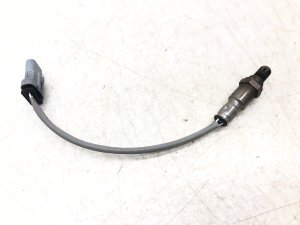
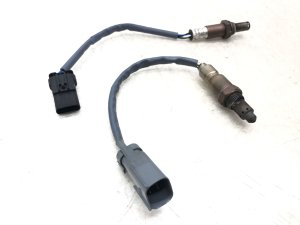
Aftermarket price range: $50-$100 - Downstream Oxygen Sensor (Bank 2, Sensor 2) — If fuel injectors and exhaust leaks are ruled out, a faulty sensor sending incorrect 'rich' signals is the next likely culprit.
Trusted brands: ACDelco, Denso, NGK
OEM price range: $50-$150
Aftermarket price range: $45-$75
Related Codes That Often Appear With This One
- P2097 — This is the same 'Post Catalyst Fuel Trim Too Rich' code, but for Bank 1. If both codes appear together, it strongly suggests a problem common to both sides of the engine, such as a fuel pressure issue or a faulty MAF sensor.
- P0175 — This code means 'System Too Rich (Bank 2)' as measured by the *upstream* O2 sensor. Seeing both P0175 and P2099 together is a strong confirmation that the engine is genuinely running rich, pointing directly at causes like leaking injectors.
- P0302, P0304, P0306 — These are misfire codes for the individual cylinders on Bank 2 (2, 4, and 6). A severely leaking fuel injector can foul the spark plug in its cylinder, causing a misfire and triggering one of these codes alongside P2099.
Technical Service Bulletins (TSBs) & Recalls
- PIP4964F: Advises technicians to check for Diagnostic Trouble Code P2097 or P2099 and perform an injector balance or Active Fuel Injector Tester prior to further diagnosis. This is the key document for this issue.
- PIP5681C: While for platform mates, this TSB describes a cracked exhaust pipe issue near a bracket that can cause exhaust leaks leading to fuel trim codes. It's a relevant potential cause for the XT6 as well.
Platform-Specific Known Issues
- GM Technical Service Bulletin #PIP4964F directly addresses codes P2097 and P2099, advising technicians to perform an injector balance test before replacing other components. This indicates a known tendency for fuel injector issues to cause this code on this platform.
- Bank 2 on the transverse 3.6L V6 engine is the cylinder bank located at the front of the vehicle, by the radiator, making its components (like the O2 sensors) generally easier to access than Bank 1.
Mechanic-Grade Diagnostic Values
- Downstream O2 Sensor (Bank 2, Sensor 2) Voltage — expected: Relatively stable voltage between 0.1V and 0.9V on a warm, closed-loop engine.. Failure: A voltage stuck consistently high (e.g., >0.8V) confirms a rich condition or indicates a biased sensor.
- High-Pressure Fuel System (Direct Injection) — expected: Pressures can exceed 2,000 PSI (200 bar) during operation.. Failure: While a specific value isn't used for this code, leaks from improperly torqued fuel rail (20 Nm) or pump bolts (15 Nm) have been noted in service bulletins for this engine family.
- Low-Pressure Fuel System (In-Tank Pump) — expected: 50-100 PSI with key-on, engine-off when commanded by a scan tool.. Failure: Pressure below this range may indicate a weak in-tank pump, starving the high-pressure pump.
- Mass Airflow (MAF) Sensor Reading at Idle — expected: Approximately 3.5 to 5.0 grams/second (g/s) for the 3.6L V6 at normal operating temperature.. Failure: Readings significantly outside this range can cause the ECM to miscalculate fuel delivery.
- Ground Circuit Resistance — expected: Less than 5 Ω between a ground point and the negative battery terminal.. Failure: Higher resistance indicates a poor ground, which can cause erratic sensor readings.
Scan Tool Commands That Help
- GM GDS2 (or equivalent professional scanner): Active Fuel Injector Tester (AFIT) / Injector Balance Test — This is the primary diagnostic step recommended by GM TSB #PIP4964F for a P2099 code. It precisely measures the fuel pressure drop from each injector to identify a leaking or over-fueling injector, which is the most common cause.
- GM GDS2 (or equivalent professional scanner): Fuel Trim Reset — After replacing a fuel injector, fixing an exhaust leak, or replacing a sensor, this function should be used to clear the ECM's long-term learned fuel adjustments. This forces the system to re-learn immediately based on the corrected hardware, speeding up the validation of the repair.
Wiring & Ground Locations
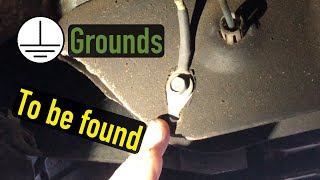
- G102 — Generally located on the left (radiator side, Bank 2) cylinder head or engine block.. This is a critical engine ground. High resistance or a loose connection here can cause erratic signals from the oxygen sensors and other engine components on Bank 2, leading to incorrect fuel trim calculations.
- G103 / G110 — Often found on the cowl above the brake booster (G103) or on the rear of the cylinder heads (G110).. These are major ground points for the ECM and various sensors. A poor connection, especially if disturbed during a previous repair, can lead to hard-to-diagnose electrical issues and fault codes.
- Engine Harness (Bank 2) — The harness for the Bank 2 injectors and O2 sensor runs across the front of the engine.. As noted in TSB #PI0631G for related platforms, this harness can chafe against engine or transmission components, potentially causing a short in an O2 sensor or injector circuit that could trigger P2099.
Real Owner Repair Stories
- Chevrolet Equinox Forum User (2013 Chevrolet Equinox 3.6L V6 (platform mate)) — P2099 code, Check Engine Light.
❌ Tried (didn't work) Replacing oxygen sensors, Performing a smoke test, which came back clean
✅ What actually fixed it A dealer performed a fuel injector balance test and found two injectors on Bank 2 were leaking. Replacing the faulty injectors and all spark plugs resolved the P2099 code. - Camaro6 Forums user (2016 Chevrolet Camaro 3.6L LGX) — P2099 code.
✅ What actually fixed it Found a loose flange bolt on the Bank 2 catalytic converter. Tightening the bolt fixed the associated exhaust leak and cleared the code. - Traverse Forum user (2010 Chevrolet Traverse 3.6L) — P2099 code, rattling/ticking noise from the front of the vehicle.
❌ Tried (didn't work) Replacing the downstream O2 sensor
✅ What actually fixed it The owner discovered a hairline crack in the housing of the Bank 2 catalytic converter, near the weld for the O2 sensor bung. Replacing the catalytic converter resolved the issue.
"I Checked Everything" — The Actual Cause
- In multiple owner-reported cases on vehicles with the 3.6L V6, a smoke test for exhaust or vacuum leaks comes back negative, leaving the owner confused. The actual cause is later diagnosed as one or more internally leaking fuel injectors on Bank 2. A smoke test is designed to find unmetered air entering the system (which typically causes a lean code) and cannot detect excess fuel being dripped directly into a cylinder. This is precisely why GM's TSB #PIP4964F directs technicians to perform an injector balance test as a primary step, bypassing the often-inconclusive smoke test for this specific rich code.
OEM Part Supersession History
12669384→12672368— Part consolidation and design updates for the 3.6L direct injection engine family.12672368→12684125— Part has been discontinued and replaced by a newer revision.
Heads up: Using the latest part number (12684125 or 12692884 for LGX) is critical to ensure you get the most updated design. Always verify the correct part number with the vehicle's VIN.
Model Year Variations Within This Range
- 2020-2024: While the Cadillac XT6 has used the 3.6L LGX engine consistently, related GM platforms show that the P2099 code being caused by fuel injectors is a persistent issue across engine family updates (e.g., from LLT to LFY/LGX engines). This strengthens the diagnostic priority of testing the injectors first, regardless of model year within this range.
Helpful Videos
We Have This Part in Stock

The information in this article is provided for general reference and educational purposes only. Vehicle specifications, procedures, and part compatibility can vary by production date, trim level, and region. Always consult your vehicle's factory service manual and verify part numbers before purchasing or performing repairs. Safety-critical components such as airbags, seat belts, and braking systems should be installed by a qualified professional.
- Cadillac XT6:
- 🧭 Diagnostic Flowchart
- 🎬 Helpful Videos
- 🛍️ Shop This Part
- What's Unique About the 2020-2024 Cadillac XT6
- Symptoms You May Notice
- Most Likely Causes
- Rare But Worth Checking
- Diagnosis Steps
- Parts You'll Likely Need
- Related Codes That Often Appear With This One
- Technical Service Bulletins (TSBs) & Recalls
- Platform-Specific Known Issues
- Mechanic-Grade Diagnostic Values
- Scan Tool Commands That Help
- Wiring & Ground Locations
- Real Owner Repair Stories
- "I Checked Everything" — The Actual Cause
- OEM Part Supersession History
- Model Year Variations Within This Range
- 🎟️ Get 5% Off