

P2099 on 2010-2015 Chevrolet Camaro 3.6L V6: Causes and Fixes for Rich Fuel Trim
On a 2010-2015 Camaro with the 3.6L V6, P2099 means the engine is running too rich on Bank 2 (driver's side). The most common causes are exhaust leaks from loose flange bolts, a faulty downstream O2 sensor, or a leaking fuel injector. Always check for exhaust leaks before buying parts, as forum members frequently report this as a simple fix.
- P2099 on your Camaro V6 means the driver's side exhaust is running too rich.
- Before buying any parts, ALWAYS check for exhaust leaks, especially loose bolts at the catalytic converter.
- A faulty downstream O2 sensor is a common cause, but should be confirmed by testing before replacement.
- Leaking fuel injectors are a known issue on this engine and should be suspected if exhaust leaks and O2 sensor issues are ruled out.
- Ignoring the code can lead to reduced MPG and eventual damage to the catalytic converter.
What's Unique About the 2010-2015 Chevrolet Camaro
The 2010-2015 Camaro range includes two different 3.6L V6 engines: the LLT (2010-2011) and the LFX (2012-2015). While P2099 can occur on both, GM has issued a specific Technical Service Bulletin (TSB PIP4964F) for this engine family that prioritizes checking for leaking fuel injectors as a primary cause. This makes injector testing a more critical early diagnostic step than on many other vehicles. Additionally, the LLT engines are particularly known for stretched timing chains which can lead to poor combustion and a variety of codes, including fuel trim issues. The LFX engine features an integrated exhaust manifold, meaning an exhaust leak is more likely to be at the gasket where the catalytic converter bolts to the cylinder head, rather than a separate manifold gasket.
Generation note: The 2010-2015 Chevrolet Camaro is the fifth generation. However, the 3.6L V6 engine changed during this period. Models from 2010-2011 use the LLT engine, while 2012-2015 models use the updated LFX engine. While many causes for P2099 are similar, the LLT is more susceptible to timing chain issues. Part numbers for critical components like oxygen sensors and fuel injectors differ between the LLT and LFX engines, so verifying the correct part for the model year is essential.
Symptoms You May Notice
- Check Engine Light is on
- Decreased fuel economy
- Rough idle or engine hesitation
- Noticeable smell of gasoline from the exhaust
- Black smoke from the exhaust, especially on acceleration
- Exhaust noise on cold start that lessens as the engine warms up (indicative of an exhaust leak).
- Immediately replacing the catalytic converter. The P2099 code is a fuel trim issue; the converter is usually damaged by the rich condition, not the cause of it.
- Replacing the oxygen sensor without testing. The sensor is often accurately reporting a real problem, such as an exhaust leak or leaking injector, as highlighted by GM's TSBs.
Most Likely Causes
- Exhaust Leak 🔴 High Probability Forum discussions on Camaro5.com and Camaro6.com frequently mention loose bolts on the catalytic converter flange as a simple and common cause. One owner on Camaro6.com reported their P2099 on a new car was fixed simply by tightening a loose flange bolt on the passenger side cat. Leaks can occur at gaskets or from cracks in the exhaust components, allowing outside air to be pulled in, which skews the O2 sensor's reading.
How to confirm: Visually inspect the exhaust system from the engine to the rear O2 sensor for soot trails, loose bolts, or cracks. A user on Camaro5.com noted a noise like a muffler hole on cold startups that diminished as the car warmed up, which pointed to an exhaust leak. A smoke test can also be performed to pinpoint leaks that are not visually apparent.
Typical fix: Tighten loose hardware to the manufacturer's specification or replace the failed exhaust gasket. Some owners have successfully used high-temperature sealant for a better seal.
Est. part cost: $10-$50 for gaskets - Faulty Downstream Oxygen (O2) Sensor 🟡 Medium Probability → Shop Oxygen Sensor The O2 sensor is the component that reports the rich condition. Over time, sensors can become lazy, contaminated, or fail outright, sending incorrect readings to the ECM. It's a common wear-and-tear item.
How to confirm: Use a scan tool to monitor the voltage of the Bank 2, Sensor 2. It should fluctuate slowly. If it's stuck high (above 0.8V), the sensor is likely faulty. A common diagnostic trick is to swap the Bank 1 and Bank 2 downstream sensors and see if the code changes to P2097 (Bank 1 Rich). If it does, the sensor is bad.
Typical fix: Replace the Bank 2 downstream (post-catalyst) oxygen sensor.
Est. part cost: $50-$150 - Leaking Fuel Injector(s) 🟡 Medium Probability → Shop Fuel Injector GM has issued technical service bulletins (like PIP4964F) for the 3.6L engine family that specifically advise technicians to check for leaking injectors as a primary cause for P2099. A leaking injector allows excess fuel to enter the cylinder, creating a genuine rich condition that the O2 sensor correctly reports.
How to confirm: A professional will need to perform a fuel injector balance test. As noted in Bulletin #PIP4964F, technicians should perform an injector balance or use an Active Fuel Injector Tester prior to going further with the diagnosis. A DIY method is to pull the spark plugs on Bank 2 (driver's side cylinders 2, 4, and 6) and check for signs of running rich, such as dark, sooty, or fuel-wet deposits.
Typical fix: Replace the faulty fuel injector(s). It is often recommended to replace all injectors on that bank at the same time to ensure balanced performance.
Est. part cost: $70-$200 per injector
Rare But Worth Checking
- Stretched Timing Chains: This is a well-documented issue on the 3.6L LLT engine (2010-2011). Incorrect valve timing leads to poor combustion, which can manifest as fuel trim codes. This is usually accompanied by other codes like P0008, P0017, or P0009. The issue was largely addressed in the LFX engine, but can still occur due to poor oil maintenance.
- Failing Catalytic Converter: → Shop Catalytic Converter While less common for a rich code, a clogged or inefficient catalytic converter can trap gases and cause strange readings from the downstream O2 sensor. It is more often a victim of the rich condition rather than the cause. One owner reported that replacing a clogged Bank 2 catalytic converter ultimately resolved their recurring P2099.
- High Fuel Pressure: A failing fuel pressure regulator or high-pressure fuel pump can cause a system-wide rich condition. This would typically set codes for both banks (P2097 and P2099).
- Excessive Carbon Buildup on Valves: Direct injection engines like the LLT and LFX are prone to carbon buildup on intake valves. This can affect airflow and lead to improper combustion and misfires, which can indirectly cause fuel trim issues. GM has issued TSBs (like PIP5029H) regarding this issue and cleaning procedures.
Diagnosis Steps
- Check for other stored DTCs that could provide more clues (e.g., misfire codes P030x, timing codes P00xx, or Bank 1 rich code P2097).
- Thoroughly inspect the exhaust system for any leaks, paying close attention to the flange connecting the catalytic converter on the driver's side (Bank 2). Check for loose bolts and signs of soot.
- Use a scan tool to observe the live data for the Bank 2 downstream O2 sensor (B2S2). A sensor stuck reading high (over 0.8V) may be faulty.
- If possible, swap the downstream O2 sensors from Bank 1 and Bank 2. If the code changes to P2097 (Bank 1), the O2 sensor is confirmed to be the problem.
- If no exhaust leaks are found and the O2 sensor appears to be functioning, inspect the spark plugs on Bank 2 (driver's side) for signs of a rich condition (black, sooty deposits). This can indicate a leaking injector.
- Following GM TSB PIP4964F, the next step is to test the fuel injectors on Bank 2. This is best done by a professional with an injector balance tester.
- If all else fails, investigate rarer causes like high fuel pressure or mechanical engine issues like timing chain stretch, especially if codes like P0008/P0017 are present.
Parts You'll Likely Need
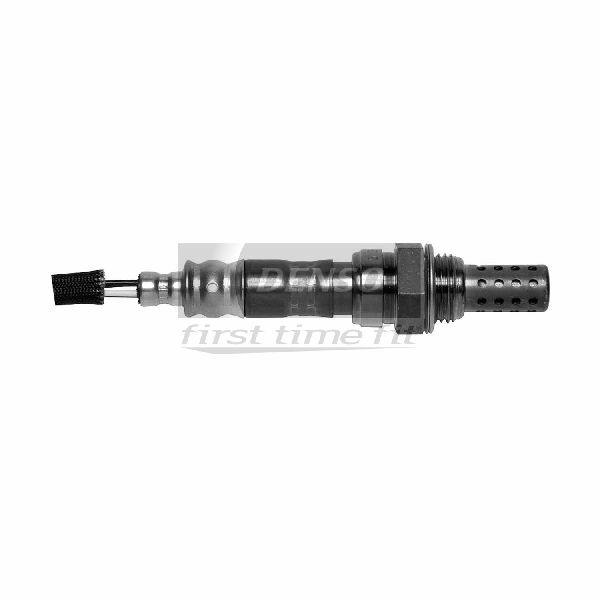
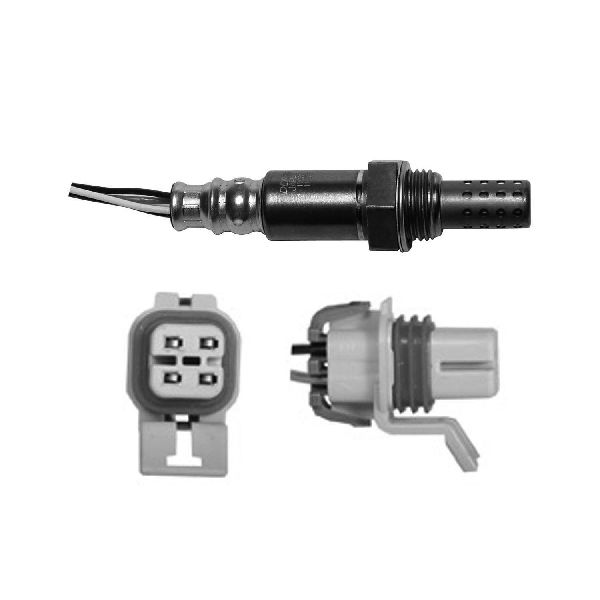
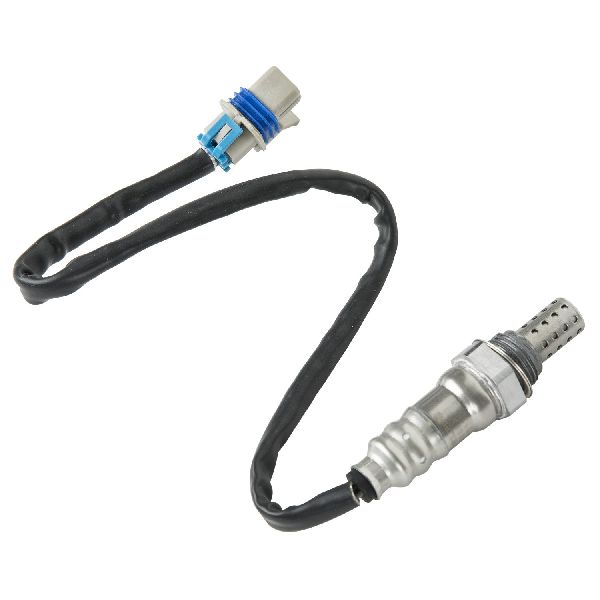
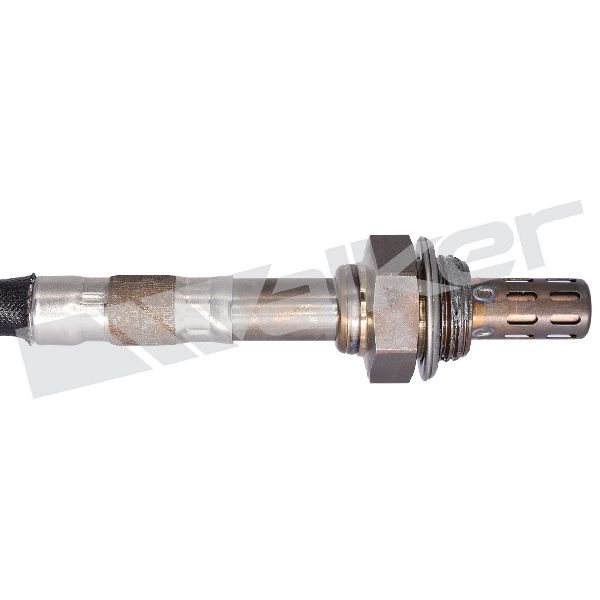
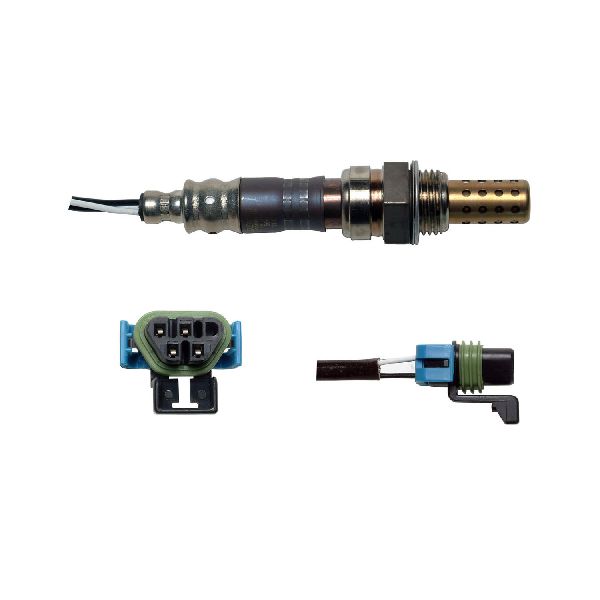
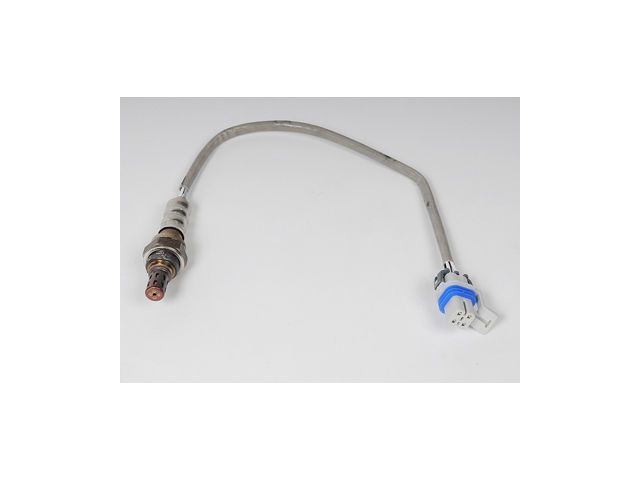
- Downstream Oxygen Sensor (Bank 2, Sensor 2)
(OEM #LLT (2010-2011): 12634063; LFX (2012-2015): 12640453)— This sensor provides the reading that triggers the code and is a common failure point due to age and contamination.
Trusted brands: ACDelco, Denso, Bosch, NTK
OEM price range: $80-$120
Aftermarket price range: $50-$90 - Exhaust Flange Gasket — Exhaust leaks at the catalytic converter flange are a very common cause of P2099 on this platform, and a failed gasket is often the culprit.
Trusted brands: Fel-Pro, ACDelco, Walker Exhaust
OEM price range: $15-$30
Aftermarket price range: $10-$20 - Fuel Injector (Bank 2)
(OEM #LLT (2010-2011): 12613412; LFX (2012-2015): 12634126)— A GM TSB points to leaking injectors as a likely cause for this code on the 3.6L engine family.
Trusted brands: ACDelco, Bosch, Hitachi
OEM price range: $150-$220
Aftermarket price range: $70-$150
Related Codes That Often Appear With This One
- P0300, P0302, P0304, P0306 — Misfire codes on Bank 2 cylinders can result from a rich condition caused by a leaking injector or lead to unburned fuel in the exhaust.
- P0008, P0017 — These codes indicate a timing chain issue, a known problem on the 3.6L V6 that can cause poor combustion and lead to fuel trim codes like P2099.
- P0175 — This code for "System Too Rich (Bank 2)" is measured by the upstream O2 sensor. Seeing it with P2099 strongly confirms a true rich condition, pointing towards injectors or fuel pressure.
Technical Service Bulletins (TSBs) & Recalls
- PIP4964F: Addresses P2097 and P2099, directing technicians to check for leaking fuel injectors as a primary cause before checking for exhaust leaks or O2 sensor failure. It notes that an injector balance test should be performed when the Malfunction Indicator Lamp is on for these codes.
- 12-06-01-009F: Provides information on timing chain service kits for the High Feature V6 engine to address codes like P0008 and P0017, which are often related to stretched chains on LLT engines.
- PIP5029H: Discusses carbon buildup on the intake valves of direct injection engines and provides cleaning procedures.
- PI0631G: Notes that on some 3.6L vehicles, the engine wiring harness can chafe against the transmission case, potentially shorting O2 sensor wires and causing various codes.
Platform-Specific Known Issues
- The 3.6L LLT V6 (2010-2011) is known for premature timing chain stretching, which can cause codes P0008/P0017 and indirectly lead to fuel trim issues like P2099. GM issued TSB #12-06-01-009F regarding this, which details the service kits. The issue is often linked to extended oil change intervals.
- The LFX V6 (2012-2015) has an improved timing chain design, but failures can still occur, especially on 2012 models or if oil levels are not maintained.
- A user on the Camaro5.com forum with a 2012 LFX experienced P2099 along with a cold start exhaust noise, pointing to a likely exhaust leak as the cause.
- A user on the Camaro6.com forum fixed their P2099 code on a nearly new car by simply tightening a loose catalytic converter flange bolt.
Mechanic-Grade Diagnostic Values
- Downstream O2 Sensor (B2S2) Voltage at Idle — expected: Relatively stable voltage between 0.6V and 0.8V after the engine is warm and the catalytic converter is efficient.. Failure: A voltage consistently stuck high (above 0.8V) for an extended period, indicating a rich condition.
- O2 Sensor Heater Element Resistance — expected: Approximately 5 to 8.6 ohms when tested across the heater circuit pins on a disconnected sensor.. Failure: An open circuit (infinite resistance) or a reading far outside the expected range indicates a failed heater element, which can cause slow sensor response and trigger codes.
- Low-Side Fuel Pressure (Key On, Engine Off) — expected: 50-60 PSI (345-414 kPa). This pressure is supplied by the in-tank fuel pump to the high-pressure pump.. Failure: Pressure below this range can indicate a weak in-tank pump, which can indirectly affect the high-pressure system's ability to function.
- High-Side Fuel Pressure (At Idle) — expected: Approximately 300-350 kPa (around 44-51 PSI) at idle. Note: This is the direct injection high-pressure system, which can reach over 2,000 PSI under load.. Failure: Significantly higher pressure at idle could indicate a faulty high-pressure pump or fuel pressure sensor, forcing a rich condition.
- Long Term Fuel Trim (LTFT) for Bank 2 — expected: Within +/- 10% on a scan tool.. Failure: A highly negative number (e.g., -15% or more) shows the ECM is trying to remove a large amount of fuel to compensate for a perceived rich condition. The P2099 code sets when this adjustment reaches its maximum limit.
Scan Tool Commands That Help
- GDS2 (GM Global Diagnostic System 2) or equivalent high-end scan tool: Fuel Injector Balance Test — This is a critical diagnostic step recommended by GM TSB PIP4964F for P2099. The test commands each injector to fire for a set duration and measures the corresponding pressure drop in the fuel rail. A smaller pressure drop for one injector indicates it's flowing less fuel, while a larger drop can indicate a leak. This directly tests injector performance without removal.
- GDS2 or equivalent: Fuel Trim Reset — After replacing a component that caused the rich condition (like a leaking injector or faulty O2 sensor), a fuel trim reset should be performed. This forces the ECM to erase its learned long-term fuel adjustments and start fresh, allowing for a quicker return to normal operation and confirmation that the fix was successful.
- GDS2 or equivalent: Cylinder Power Balance — If a leaking injector is suspected, this test can help identify which cylinder is affected. The tool disables cylinders one by one and measures the drop in engine RPM. A cylinder with a leaking injector may show a smaller RPM drop when disabled because it was already running poorly.
Wiring & Ground Locations
- G107 — Located on the left rear of the engine block on the 3.6L V6.. This is a primary engine ground point. A loose or corroded G107 can cause erratic behavior from the ECM and various sensors, including the O2 sensors and fuel injector drivers, leading to false codes or intermittent issues.
- G108 / G109 — Located on the back of both cylinder heads. Another key ground is on the side of the block under the passenger exhaust manifold, near the starter, which is known to be loose from the factory.. The ECM and its sensor circuits are highly sensitive to ground integrity. Poor grounding at these locations can introduce voltage offsets and noise, causing the ECM to misinterpret sensor readings and set fuel trim codes like P2099.
- ECM Connector X2 — The 58-pin connector at the Engine Control Module (ECM).. The Bank 2 downstream O2 sensor signal and heater control circuits run through this connector. When diagnosing a suspected wiring issue, checking for continuity, shorts, and pin integrity at this specific connector is essential to isolate the fault between the sensor and the ECM.
Real Owner Repair Stories
- Camaro6.com user 'mgwarlock' (2016 Camaro 2SS (Note: Newer model, but same code and common cause)) — Service light on with code P2099 at only 2500 miles.
❌ Tried (didn't work) Initial scanning and code reading.
✅ What actually fixed it The user was advised to check the flange bolts on the passenger side catalytic converter for a possible loose bolt causing an exhaust leak. The user confirmed, "Yes, I check one of the volt and it was loose. Tighten it up and hope that will fix it." This implies the common fix for an exhaust leak resolved the issue. - ScannerDanner Forum user 'ghost' (2010 Chevrolet Traverse 3.6L (Same engine family, LLT)) — Persistent P2099 code.
❌ Tried (didn't work) A mechanic found and patched a pinhole in the exhaust, but the code returned.
✅ What actually fixed it The forum discussion pointed towards a faulty Heated Oxygen Sensor as the most likely culprit after an exhaust leak was addressed but failed to solve the problem. The final resolution was not posted by the original user, but the expert consensus guided them toward testing and likely replacing the O2 sensor.
"I Checked Everything" — The Actual Cause
- In cases involving the GM 3.6L engine family, a smoke test for exhaust leaks may come back clean, yet the P2099 code persists. According to TSB PIP4964F, the actual cause is often a leaking fuel injector. The ECM correctly identifies a rich condition from the excess fuel, but the technician may waste time searching for an exhaust or vacuum leak that doesn't exist.
OEM Part Supersession History
Unknown early part numbers→12640453 (For LFX 2012-2015)— Standard part evolution and consolidation. This part number is listed for multiple positions (upstream/downstream, left/right) on various GM vehicles.
Heads up: This part requires programming and/or special setup procedures as described in GM Service Information to ensure proper operation. Simply installing it may not resolve the issue without the proper calibration.Unknown early part numbers→12634063 (For LLT 2010-2011)— Part updates for improved performance and reliability.
Heads up: This sensor is specific to the LLT engine and is not interchangeable with the LFX sensor (12640453) due to differences in wiring, connectors, or calibration.
Model Year Variations Within This Range
- 2010-2011 (LLT Engine): These models use the LLT engine, which is more known for timing chain stretch issues (often setting P0008/P0017) and a PCV system with a small, fixed orifice that is prone to clogging. A popular DIY modification is to drill the PCV orifices to a larger size (e.g., 7/64" and 5/64") to prevent clogging.
- 2012-2015 (LFX Engine): These models use the updated LFX engine, which features integrated exhaust manifolds and a revised PCV system design intended to address the clogging issues of the LLT. However, the PCV system can still be a source of problems. The fuel injectors and O2 sensors also carry different part numbers from the earlier LLT models.
Diagnostic Flowchart
Other Known Issues on This Vehicle
Issues unrelated to this code that are worth knowing about as an owner of this generation:
- Premature Timing Chain Wear (LLT Engine) 🔴 High — Common on 2010-2011 LLT V6 engines, often appearing before 100,000 miles. Exacerbated by extended oil change intervals. (Ref: TSB 12-06-01-009F)
- Key Stuck in Ignition 🟡 Low — Reported by some owners of automatic transmission models, where a faulty shifter interlock prevents key removal after parking. (Ref: Recall N140324 (for ignition switch, not interlock))
- Torque Converter Shudder (Automatic) 🟠 Medium — Some owners of automatic models report a shudder or vibration at low speeds (around 40-50 mph), often indicating a failing torque converter.
- Faulty Passenger Seat Occupancy Sensor 🟠 Medium — Can cause the airbag warning light to illuminate constantly, even with no passenger. Requires sensor mat replacement.
- Intake Valve Carbon Buildup 🟠 Medium — A common issue for all direct-injection engines (LLT/LFX), leading to potential hesitation and performance loss over time. Requires periodic cleaning. (Ref: TSB PIP5029H)
- Water Pump Failure 🟠 Medium — Some V6 models experience premature water pump failure, leading to coolant leaks before 100,000 miles.
Used vs. New Parts: Buying Guide for This Vehicle
When a used part is the smart pick: For this repair, used parts are generally not recommended for the primary failure components. However, if a cracked exhaust component (like a manifold or downpipe) is diagnosed as the cause, a used, inspected part from a low-mileage donor vehicle could be a cost-effective option.
Donor-vehicle mileage cap: roughly under 70000 miles for the part to have meaningful remaining life.
What to inspect on the donor part:
- For exhaust components, check for the absence of hairline cracks, especially around welds and flanges.
- Ensure all mounting studs are intact and not excessively rusted.
- Avoid parts from regions with heavy road salt usage, as they will have accelerated corrosion.
OEM-only on this vehicle (don't cheap out):
- Fuel Injectors: Given the direct injection system's high pressures and the specificity of GM's TSB, using new OEM (ACDelco) injectors is strongly advised to avoid performance issues and repeat failures.
- Catalytic Converter: Aftermarket converters are notoriously problematic on this platform and often fail to meet the ECM's efficiency monitoring standards, leading to recurring P0420/P0430 codes. Stick with OEM if a replacement is truly needed.
Aftermarket brands forum-validated for this vehicle:
- Oxygen Sensors: Denso, NTK, and Bosch are reputable OEM suppliers and provide reliable alternatives to the ACDelco branded part.
- Exhaust Gaskets: Fel-Pro and Walker are well-regarded brands for exhaust gaskets and hardware.
Brands owners have reported issues with on this vehicle:
- Avoid unbranded, low-cost 'white box' oxygen sensors and fuel injectors from online marketplaces. They frequently have high failure rates, incorrect calibration, and can cause more problems than they solve.
Real Owner Stories
Aggregated from forums and TSBs cited above. Mileages and costs reflect what owners reported in those sources.
2010-2015 Chevrolet Camaro 3.6L V6 — ~5000 miles
Symptoms: Check Engine Light with code P2099 on a nearly new car.
What fixed it: Tightening a loose flange bolt on the passenger side catalytic converter.
Source hint: Camaro6.com forum thread titled 'P2099'
Related OBD-II Codes
Frequently Asked Questions
My 2011 Camaro LLT has a P2099 and a P0008 code. Are they related?
I have a P2099 code. Should I be worried about a leaking fuel injector on my Camaro?
My Camaro makes an exhaust noise on cold starts and has a Check Engine Light for P2099. What's the likely cause?
Could something as simple as a loose bolt cause the P2099 code on my 3.6L Camaro?
Is swapping the downstream O2 sensors from side-to-side a valid diagnostic test for P2099 on this car?
My Camaro is a 2014 with the LFX engine. Is it still at risk for the timing chain problems that can cause P2099?
Helpful Videos
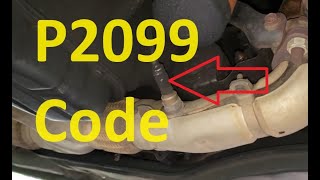

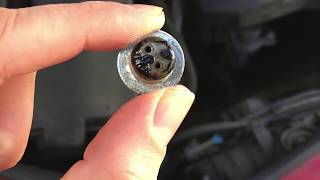
We Have This Part in Stock

The information in this article is provided for general reference and educational purposes only. Vehicle specifications, procedures, and part compatibility can vary by production date, trim level, and region. Always consult your vehicle's factory service manual and verify part numbers before purchasing or performing repairs. Safety-critical components such as airbags, seat belts, and braking systems should be installed by a qualified professional.
- Chevrolet Camaro:
- 🧭 Diagnostic Flowchart
- 🎬 Helpful Videos
- 🛍️ Shop This Part
- What's Unique About the 2010-2015 Chevrolet Camaro
- Symptoms You May Notice
- Most Likely Causes
- Rare But Worth Checking
- Diagnosis Steps
- Parts You'll Likely Need
- Related Codes That Often Appear With This One
- Technical Service Bulletins (TSBs) & Recalls
- Platform-Specific Known Issues
- Mechanic-Grade Diagnostic Values
- Scan Tool Commands That Help
- Wiring & Ground Locations
- Real Owner Repair Stories
- "I Checked Everything" — The Actual Cause
- OEM Part Supersession History
- Model Year Variations Within This Range
- Other Known Issues on This Vehicle
- Used vs. New Parts: Buying Guide for This Vehicle
- Real Owner Stories
- 2010-2015 Chevrolet Camaro 3.6L V6 — ~5000 miles
- Related OBD-II Codes
- Frequently Asked Questions
- 🎟️ Get 5% Off