

P2099 on 2016-2017 Chevrolet Equinox 3.6L V6: Causes for Rich Fuel Trim and Fixes
On a 2016-2017 Equinox with the 3.6L V6, P2099 almost always points to a leaking fuel injector on Bank 2 (the front cylinder bank, closer to the radiator). A critical GM Technical Service Bulletin (PIP4964F) advises performing a fuel injector balance test before replacing the O2 sensor, which is a very common and costly misdiagnosis on this platform.
- For the 2016-2017 Equinox 3.6L V6, P2099 is most likely caused by a leaking fuel injector on Bank 2 (the front bank).
- Do not replace the oxygen sensor as a first step. This is a common misdiagnosis that usually fails to fix the issue.
- Refer to GM Technical Service Bulletin #PIP4964F, which recommends a professional fuel injector balance test.
- Driving with this code can lead to poor fuel mileage and will eventually damage the catalytic converter, a much more expensive repair.
What's Unique About the 2016-2017 Chevrolet EQUINOX
For the 3.6L V6 LFX direct-injection engine in this generation of Equinox, General Motors has specifically identified faulty fuel injectors as a primary cause for P2099. A key Technical Service Bulletin (TSB #PIP4964F) directs technicians to perform a fuel injector balance test early in the diagnosis, as many mechanics might otherwise default to replacing oxygen sensors. This is often not the root cause on this particular platform. The issue is common across a wide range of GM vehicles using the same 3.6L V6 engine, including the GMC Terrain, Chevrolet Traverse, and Cadillac SRX.
🎬 Watch: Real-world diagnostic fix for P2099 on GM 3.6L enginesDiagnostic Flowchart
Tap your situation to follow the diagnostic path that matches what you're seeing on this vehicle.
Symptoms You May Notice
- Check Engine Light is on
- Decreased fuel economy
- Rough idle or engine hesitation during acceleration
- Black smoke from the exhaust, especially on startup or acceleration
- Engine may lack power or run rough
- Noticeable smell of gasoline or rich exhaust fumes
- Replacing the downstream oxygen sensor (Bank 2, Sensor 2) without performing further diagnosis. The sensor is often just doing its job by reporting the rich condition caused by a leaking injector, which is the actual root cause on this platform.
Most Likely Causes
- Leaking Fuel Injector(s) on Bank 2 🔴 High Probability → Shop Fuel Injector A GM Technical Service Bulletin (PIP4964F) specifically identifies leaking direct fuel injectors as a known, high-probability issue on the 3.6L V6 engine leading to P2099. Carbon buildup on the injector tip can cause it to leak or have a poor spray pattern.
How to confirm: A professional technician should perform a fuel injector balance test using a GM-specific scan tool (GDS2) or an Active Fuel Injector Tester (AFIT), as recommended by the TSB. This test measures the pressure drop for each injector to identify one that is flowing too much fuel. A DIY check involves inspecting the spark plugs on Bank 2 (front bank, cylinders 2, 4, 6) for signs of being wet with fuel or covered in heavy black soot.
Typical fix: Replace the faulty fuel injector(s) on Bank 2. It is strongly recommended to replace all three injectors on that bank at the same time to ensure balanced fueling. Some owners replace all six injectors to prevent future issues on Bank 1.
Est. part cost: $50-$180 per injector - Exhaust Leak 🟡 Medium Probability Exhaust components like manifold gaskets or the flange after the catalytic converter can develop leaks from heat cycles and corrosion. TSB PIP4964F also mentions checking for small leaks at the converter outlet gasket.
How to confirm: Visually inspect the exhaust system from the engine to the post-catalyst O2 sensor for black soot trails or cracks, especially around welds and gaskets. A smoke test is the most effective method, where a machine pressurizes the exhaust with smoke to reveal small, hard-to-see leaks.
Typical fix: Replace the leaking gasket or repair/replace the cracked exhaust component.
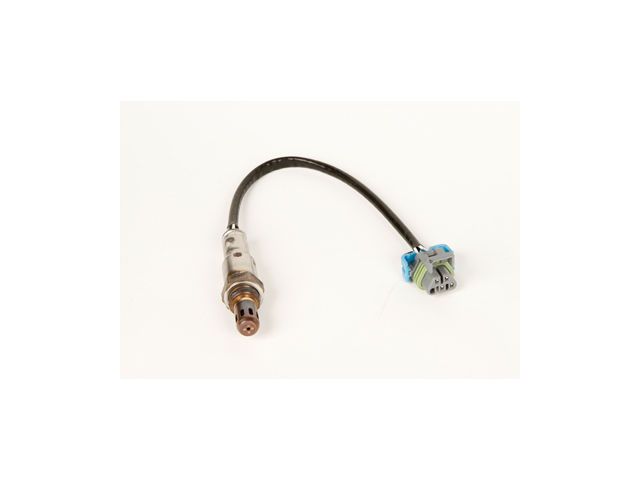
Est. part cost: $20-$100 - Faulty Downstream Oxygen (O2) Sensor ⚪ Low Probability → Shop Oxygen Sensor While the sensor can fail, it's more often correctly reporting a problem caused by something else (like a leaking injector). GM specifically advises against replacing the O2 sensor as a first step for this code. It is the most common misdiagnosis for this issue.
How to confirm: Use a scan tool to monitor the live voltage from the Bank 2, Sensor 2. On a warm, running engine, a healthy downstream sensor should show a relatively stable voltage. If it's stuck high (above 0.8V), it's likely reading a true rich condition. If it fluctuates rapidly like an upstream sensor, the catalytic converter may be failing. If it shows no activity or is stuck low, the sensor itself or its wiring may be faulty.
Typical fix: Replace the Bank 2, Sensor 2 oxygen sensor only after definitively ruling out fuel injectors and exhaust leaks through proper testing.
Est. part cost: $50-$150
Rare But Worth Checking
- High Fuel Pressure: A failing fuel pressure regulator or a problem with the high-pressure fuel pump can cause a rich condition across all cylinders, but may trigger a code on only one bank first.
- Failing Catalytic Converter: → Shop Catalytic Converter An inefficient or clogged catalytic converter can alter the post-catalyst exhaust chemistry and cause incorrect readings from the downstream O2 sensor. However, the converter is usually the victim of the rich condition, not the cause of the P2099 code.
- Powertrain Control Module (PCM) Issue: → Shop Engine Control Module (ECM) In very rare cases, a software glitch or internal failure in the PCM can cause incorrect fuel trim calculations or misinterpretation of sensor data.
Diagnosis Steps
- Scan the ECM for any other stored trouble codes to get a complete picture of the issue.
- Use a scan tool to observe live data. Pay close attention to long-term and short-term fuel trims for both banks. For P2099, you will likely see high negative long-term fuel trim on Bank 2 as the ECM tries to compensate. Also, monitor the voltage from all four oxygen sensors. Bank 2 Sensor 2 voltage will likely be stuck high (>0.8V).
- Crucial Step: Following TSB #PIP4964F, perform a fuel injector balance test using a GM GDS2 scan tool or an AFIT device. This is the most important step to confirm or rule out the most common cause.
- If injector tests are normal, perform an exhaust smoke test to check for leaks between the cylinder head and the downstream O2 sensor on Bank 2. Pay special attention to the exhaust manifold gasket and the flange gasket after the catalytic converter.
- Test the fuel pressure to ensure the fuel pressure regulator and high-pressure fuel pump are operating within OEM specifications.
- As a final step, if all other causes are ruled out, test the Bank 2 downstream O2 sensor's function. You can induce a lean condition (e.g., creating a vacuum leak) and observe if the sensor's voltage drops as expected on the scan tool.
Parts You'll Likely Need
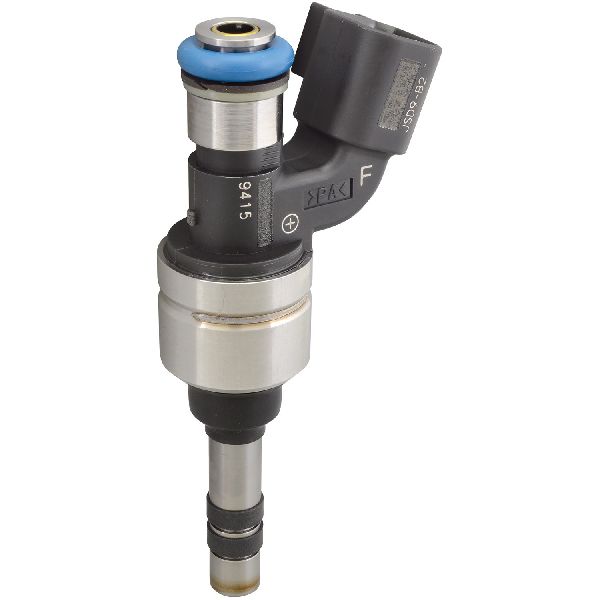
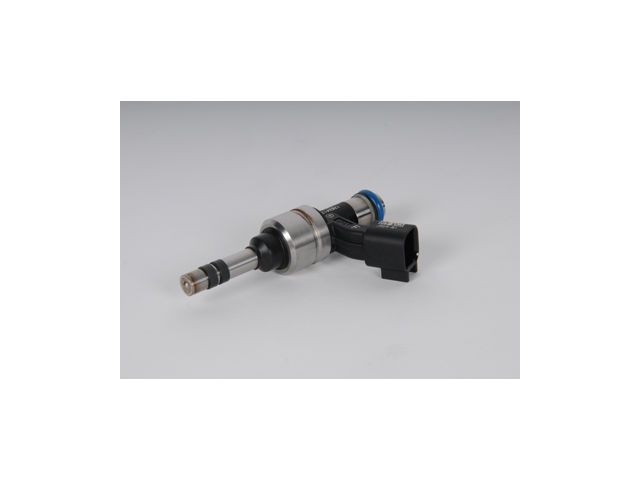
- Fuel Injector
(OEM #12638530)— This is the most common cause of P2099 on the 3.6L V6 engine, as identified in GM's own Technical Service Bulletin (PIP4964F). This part number fits many GM 3.6L engines from this era.
Trusted brands: ACDelco (OEM), Bosch, Delphi, Hitachi
OEM price range: $100-$180
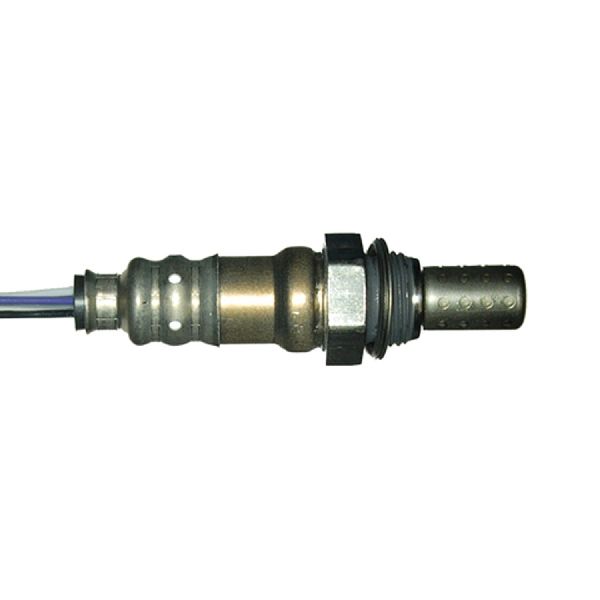
Aftermarket price range: $50-$120 - Downstream Oxygen Sensor (Bank 2, Sensor 2)
(OEM #213-4230)— This part is replaced only if it is proven to be faulty after injectors and exhaust leaks have been ruled out. It is a common misdiagnosis. Note: The part number 213-4764 cited in pass 1 appears to be for upstream sensors on different GM engines. 213-4230 is a more likely candidate for the downstream sensor on this platform.
Trusted brands: ACDelco (OEM), Denso, Bosch, NGK/NTK
OEM price range: $80-$150
Aftermarket price range: $50-$100 - Exhaust Manifold Gasket — Required to fix an exhaust leak at the manifold, which is a possible but less common cause of the code.
Trusted brands: Fel-Pro, ACDelco, Mahle
OEM price range: $20-$50
Aftermarket price range: $10-$30
Related Codes That Often Appear With This One
- P2097 — This is the equivalent 'too rich' code for Bank 1. If both P2097 and P2099 are present, it strongly suggests a systemic issue affecting both banks, such as a fuel pressure problem, a faulty MAF sensor, or a major vacuum leak.
- P0300, P0302, P0304, P0306 — Misfire codes (P0300 for random, P0302, P0304, P0306 for Bank 2 cylinders) can occur if a leaking injector is fouling a spark plug with excess fuel, leading to incomplete combustion.
- P0430 — This code for 'Catalyst System Efficiency Below Threshold (Bank 2)' can be triggered because the unburnt fuel from the rich condition is overheating and damaging the catalytic converter over time.
- P0158 — This code for 'O2 Sensor Circuit High Voltage (Bank 2, Sensor 2)' can appear with P2099. It indicates the sensor signal is stuck high, which is the exact condition that leads to the P2099 'too rich' calculation.
Platform-Specific Known Issues
- TSB #PIP4964F: This bulletin is the most critical piece of information for this code. It explicitly advises technicians to perform an injector balance test before replacing other parts, highlighting that a leaking injector is the most probable cause on the 3.6L LFX engine.
Mechanic-Grade Diagnostic Values
- Downstream O2 Sensor (Bank 2, Sensor 2) Voltage — expected: Relatively steady voltage between 0.4V and 0.8V at idle on a warm engine.. Failure: Stuck high (consistently above 0.8V) indicates a true rich condition is being detected.
- Long Term Fuel Trim (Bank 2) — expected: Within a normal range of -13% to +13%.. Failure: Consistently high negative values (e.g., -15% or more) confirm the ECM is trying to compensate for a rich condition.
- Low-Pressure Fuel System Pressure — expected: 35 to 75 PSI, supplied by the in-tank pump.. Failure: Pressure below this range could indicate a weak in-tank pump, though this typically affects both banks.
- High-Pressure Fuel System Pressure — expected: 500 to over 2,000 PSI, depending on engine load, supplied by the HPFP.. Failure: Significantly low pressure (e.g., P0087) would cause lean issues, not rich. This test helps rule out a broader fuel system failure.
- AFIT / Injector Balance Test Pressure Drop — expected: Pressure drop between injectors should be minimal.. Failure: A pressure drop difference of more than 2.9 psi (20 kPa) between injectors indicates a faulty (likely leaking) injector.
Scan Tool Commands That Help
- GDS2 (GM Dealer/Professional Scan Tool): Injector Test / Active Fuel Injector Test (AFIT) — This is the primary diagnostic step recommended by GM TSB PIP4964F. It pressurizes the fuel rail and measures the pressure drop for each injector to accurately identify a leaking or over-fueling injector, which is the most common cause of P2099.
- GDS2 (GM Dealer/Professional Scan Tool): Fuel Trim Reset — After replacing a fuel injector, O2 sensor, or repairing an exhaust leak, this function must be used to clear the PCM's long-term learned fuel trim values. This forces the computer to relearn the fuel strategy immediately, confirming the fix and preventing the code from returning due to old data.
- GDS2 (GM Dealer/Professional Scan Tool): Oxygen Sensor Test — This function can be used to verify if the O2 sensor is responding correctly to commanded rich/lean conditions. It is useful for definitively ruling out a faulty sensor after injectors and leaks have been checked.
Wiring & Ground Locations
- G109 (for 3.6L V6) — On the right front of the engine block.. This is a primary engine ground. A loose or corroded connection here can introduce electrical noise or voltage offsets into sensor readings, including the oxygen sensors. This could potentially lead to incorrect fuel trim calculations by the PCM.
- Bank 2 O2 Sensor Harness — Routes from the sensors on the front exhaust manifold down towards the transmission and main engine harness.. The harness is susceptible to heat damage from the exhaust manifold or chafing against the engine block. Melted or shorted wires can cause a false high voltage (rich) signal to be sent to the PCM, directly causing the P2099 code.
Real Owner Repair Stories
- Chevrolet Equinox Forum User (via Go-Parts article on platform-mate GMC Terrain) (2013 Chevrolet Equinox 3.6L V6) — Check Engine Light with code P2099.
❌ Tried (didn't work) Replaced oxygen sensors, Performed a smoke test which came back clean
✅ What actually fixed it A dealer performed a fuel injector balance test and found two injectors on Bank 2 were leaking. Replacing the faulty injectors and all spark plugs resolved the P2099 code.
"I Checked Everything" — The Actual Cause
- In multiple owner-reported cases for vehicles with the 3.6L V6 engine, a smoke test for exhaust and vacuum leaks comes back clean. The actual cause is an internally leaking direct fuel injector. A smoke test is designed to find air leaks (vacuum or exhaust) and cannot detect excess fuel being dripped directly into a cylinder. This scenario perfectly aligns with GM's TSB (PIP4964F) that directs technicians to perform an injector balance test, often bypassing leak tests as the initial step.
OEM Part Supersession History
12611545, 12632255→12638530, 12669384— Standard part evolution for improved performance, reliability, or manufacturing efficiency.
Heads up: While all are for the 3.6L engine family, it is critical to use the correct part for the LFX engine. Aftermarket sellers warn not to mix original and aftermarket injectors on the same bank due to potential differences in flow rate and atomization.
Model Year Variations Within This Range
- 2016-2017: There are no significant engine hardware or software differences reported between the 2016 and 2017 model year Equinox with the 3.6L LFX V6 that would alter the diagnosis or common causes for a P2099 code. The 2016 model year was a refresh for the second generation, but the LFX engine carried over from 2013.
Helpful Videos
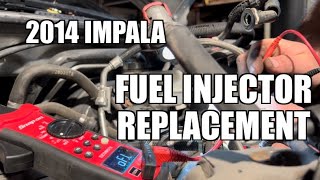
![How to Fix P2099 Engine Code in 4 Minutes [2 DIY Methods / Only $9.49]](https://img.youtube.com/vi/tZdHNVnheeA/mqdefault.jpg)

We Have This Part in Stock


The information in this article is provided for general reference and educational purposes only. Vehicle specifications, procedures, and part compatibility can vary by production date, trim level, and region. Always consult your vehicle's factory service manual and verify part numbers before purchasing or performing repairs. Safety-critical components such as airbags, seat belts, and braking systems should be installed by a qualified professional.
- Chevrolet EQUINOX:
- 🧭 Diagnostic Flowchart
- 🎬 Helpful Videos
- 🛍️ Shop This Part
- What's Unique About the 2016-2017 Chevrolet EQUINOX
- Symptoms You May Notice
- Most Likely Causes
- Rare But Worth Checking
- Diagnosis Steps
- Parts You'll Likely Need
- Related Codes That Often Appear With This One
- Platform-Specific Known Issues
- Mechanic-Grade Diagnostic Values
- Scan Tool Commands That Help
- Wiring & Ground Locations
- Real Owner Repair Stories
- "I Checked Everything" — The Actual Cause
- OEM Part Supersession History
- Model Year Variations Within This Range
- 🎟️ Get 5% Off