

P2099 on 2012-2019 Chevrolet Impala 3.6L V6: Rich Fuel Trim Causes & Fixes
On a 2012-2019 Impala with the 3.6L V6, code P2099 is most often caused by a leaking fuel injector on Bank 2 (the cylinder bank closer to the radiator). A professional diagnosis is recommended to test the injectors before replacing oxygen sensors, which is a common misstep. GM has issued a service bulletin (PIP4964F) that specifically directs technicians to check injectors first.
- For a P2099 code on a 2012-2019 Impala V6, suspect a leaking fuel injector on the front cylinder bank (Bank 2) before anything else.
- Do not replace the oxygen sensor as a first step. This is a common misdiagnosis that often fails to fix the problem.
- A professional diagnosis is highly recommended, as specialized tools are needed to properly test the fuel injectors as per GM's service bulletin.
- Driving for an extended period with this code can lead to reduced fuel efficiency and costly damage to the catalytic converter.
What's Unique About the 2012-2019 Chevrolet IMPALA
Unlike generic advice that often points to oxygen sensors, General Motors has issued a Technical Service Bulletin (TSB #PIP4964F) specifically for this code on the 3.6L engine family. It directs technicians to check for fuel injector problems using special tools *before* performing other diagnostics. This indicates that leaking or malfunctioning fuel injectors are a known and primary cause for this code on this platform, making it a critical first check. This applies to a wide range of GM vehicles using this engine, including the Camaro, Traverse, and Acadia.
Diagnostic Flowchart
Tap your situation to follow the diagnostic path that matches what you're seeing on this vehicle.
Generation note: This guide covers both the end of the ninth generation (2012-2013, LFX engine) and the tenth generation (2014-2019, LFX and LGX engines) Impala, as both offered the 3.6L V6 engine where this code is applicable. The 2.5L 4-cylinder engine will not set a P2099 code as it only has one bank.
Symptoms You May Notice
- Check Engine Light is on
- Decreased fuel economy
- Rough idle or hesitation during acceleration
- A noticeable smell of gasoline 🎬 See this video for common causes of the P2099 code. from the exhaust
- Engine may stumble or hesitate
- Replacing the Bank 2, Sensor 2 (downstream) oxygen sensor without proper diagnosis. A GM diagnostic aid explicitly warns that a faulty O2 sensor is unlikely to be the cause of P2099 unless other O2 sensor-specific codes are present. The sensor is often correctly reporting a rich condition caused by another component, like a leaking injector.
Most Likely Causes
- Leaking or Faulty Fuel Injector(s) on Bank 2 🔴 High Probability → Shop Fuel Injector A GM Technical Service Bulletin (PIP4964F) specifically instructs technicians to investigate fuel injectors for this code, indicating it's a known issue on this platform. A real-world owner of a 2011 Camaro with the same 3.6L engine reported P2099 was fixed by addressing a faulty #2 fuel injector.
How to confirm: A professional technician will use a scan tool to monitor fuel trims and perform a fuel injector balance test to see if one or more injectors on Bank 2 are flowing more fuel than commanded. A DIY method involves checking the spark plugs on 🎬 Watch: How to remove the intake to access spark plugs. Bank 2; a plug that is dark and black indicates a rich condition in that cylinder.
Typical fix: The faulty fuel injector(s) must be replaced. It is often 🎬 Watch: Full walkthrough of intake removal and injector replacement. recommended to replace all three injectors on that bank at the same time, along with the intake manifold gaskets which must be removed for access.
Est. part cost: $50-$150 per injector - High Fuel Pressure 🟡 Medium Probability The 3.6L LFX/LGX engines use a high-pressure fuel system. A failing high-pressure fuel pump (HPFP) or a faulty fuel pressure sensor can lead to excessive fuel pressure, causing a bank-wide rich condition.
How to confirm: Connect a scan tool to monitor the fuel rail pressure PID. Compare the desired pressure with the actual pressure. A mechanical fuel pressure gauge can also be connected to the low-pressure side, but the high-pressure side requires a scan tool for diagnosis.
Typical fix: Replace the faulty high-pressure fuel pump or fuel rail pressure sensor.
Est. part cost: $150-$500 - Faulty or Contaminated Mass Airflow (MAF) Sensor 🟡 Medium Probability
How to confirm: A MAF sensor that is dirty or failing may under-report the amount of air entering the engine, causing the ECM to inject too much fuel. Use a scan tool to monitor the MAF reading at idle (typically 4-6 g/s for a 3.6L engine). Inspect the sensor element for dirt or debris. Cleaning the MAF with a dedicated electronic cleaner can be a first step.
Typical fix: Clean the MAF sensor with a dedicated cleaner. If the problem persists, replace the MAF sensor.
Est. part cost: $20 (cleaner) - $150 (replacement sensor) - Faulty Downstream Oxygen (O2) Sensor ⚪ Low Probability → Shop Oxygen Sensor This is a common cause on many vehicles, but GM diagnostic aids specifically state not to replace the O2 sensor for this DTC unless a separate O2 sensor circuit code is also present. The sensor is usually correctly reporting the rich condition, it is not the cause of it.
How to confirm: Use a scan tool to observe the live voltage data from the Bank 2, Sensor 2. A sensor that is stuck high (above 0.8v) and not responding may be faulty. However, this reading is also the expected result of an actual rich condition, making this a tricky diagnosis without ruling out fuel delivery issues first.
Typical fix: Replace the Bank 2, Sensor 2 (downstream) O2 sensor.
Est. part cost: $40-$120
Rare But Worth Checking
- Chafed Engine Wiring Harness: TSB #PI0631G notes that the engine harness on the 3.6L LFX engine can rub against the front right and/or rear right side of the transmission case. This can cause a short in various circuits, including fuel injector or O2 sensor circuits, which could trigger a P2099 code. A thorough inspection of the harness in this area is warranted if common causes are ruled out.
- Exhaust Leak Before the O2 Sensor: → Shop Oxygen Sensor While exhaust leaks typically cause lean codes by drawing in oxygen, a leak can sometimes disrupt exhaust flow in a way that fools the downstream O2 sensor. A GM TechLink document has associated P2099 with a broken exhaust flex pipe bracket on some models, including the Impala.
Diagnosis Steps
- Scan for any other DTCs. Address any codes related to the MAF sensor, fuel pressure, or O2 sensor circuits first.
- Inspect the MAF sensor for contamination. If dirty, clean it with a dedicated MAF sensor cleaner and re-evaluate.
- Following GM TSB #PIP4964F, the most critical step is to perform a fuel injector balance test. This professional-level step will identify if any injectors on Bank 2 are leaking or flowing too much fuel.
- If injector tests are inconclusive, monitor fuel rail pressure with a scan tool to ensure it is within OEM specifications (comparing desired vs. actual pressure).
- Inspect the exhaust system between the engine and the downstream O2 sensor for any leaks, paying close attention to the flex pipe and its brackets.
- Visually inspect the engine wiring harness where it runs near the transmission case for any signs of chafing or damage, as noted in TSB #PI0631G.
- As a final step, if all other possibilities have been ruled out, test the Bank 2 downstream O2 sensor's response using a scan tool to ensure it is not faulty.
Parts You'll Likely Need
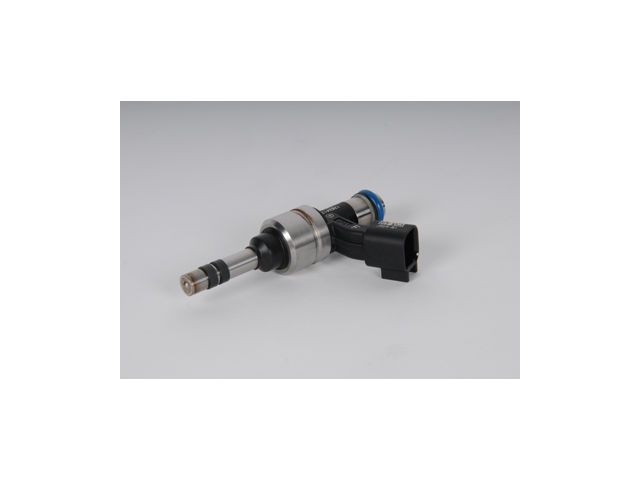
- Fuel Injector (Bank 2)
(OEM #12669384 (for LFX), 12672368 (for LGX))— This is the most likely cause according to GM's own service bulletin (PIP4964F) for the P2099 code on this engine.
Trusted brands: ACDelco, Bosch, Standard Motor Products
OEM price range: $90-$140
Aftermarket price range: $50-$90 - Downstream Oxygen Sensor (Bank 2, Sensor 2)
(OEM #12670099)— This part is often replaced incorrectly but can be the cause if it fails. It should only be replaced after confirming the fuel system is operating correctly.
Trusted brands: ACDelco, Denso, NTK
OEM price range: $70-$120
Aftermarket price range: $40-$80
Related Codes That Often Appear With This One
- P0175 — System Too Rich (Bank 2). This is the upstream equivalent of P2099 and indicates the entire bank is running rich, often strengthening the case for a fuel delivery problem like a leaking injector or high fuel pressure.
- P0158 — O2 Sensor Circuit High Voltage (Bank 2, Sensor 2). This code can be set if the downstream O2 sensor is constantly saturated with unburned fuel, causing its voltage signal to remain high for an extended period.
- P0302, P0304, P0306 — Cylinder Misfire on Bank 2. A leaking injector can foul the spark plug in its corresponding cylinder (e.g., cylinder 2, 4, or 6), leading to a misfire code alongside the rich code.
Technical Service Bulletins (TSBs) & Recalls
- PIP4964F: Directs technicians to perform an injector balance test when diagnosing P2097 or P2099.
- PI0631G: Identifies a chafed engine wiring harness on the 3.6L LFX engine as a possible cause for a wide range of DTCs, including P2099. The chafe point is often on the front right or rear right side of the transmission housing.
Platform-Specific Known Issues
- TSB #PIP4964F points to faulty fuel injectors as a primary cause for P2099.
- TSB #PI0631G warns of a potential for the engine wiring harness to chafe on the transmission case, causing various electrical faults including P2099.
Mechanic-Grade Diagnostic Values
- Mass Airflow (MAF) Sensor at idle — expected: ~3.6 g/s (grams/second). A common rule of thumb is for the g/s value to approximate the engine displacement in liters.. Failure: A significantly higher reading (e.g., 7-8 g/s) at idle suggests the sensor is over-reporting airflow, which can cause a rich condition if the ECM cannot compensate. A very low reading could indicate a vacuum leak after the sensor.
- Downstream O2 Sensor (Bank 2, Sensor 2) Voltage at idle — expected: A relatively stable voltage between 0.6V and 0.8V.. Failure: A voltage that is stuck high (consistently >0.8V) confirms the rich condition that sets the P2099 code. If the voltage fluctuates rapidly like the upstream sensor (0.1V-0.9V), the catalytic converter has likely failed.
- Low-Pressure Fuel System Check — expected: 55-60 PSI on key-on, engine-off prime pulse when measured with a mechanical gauge.. Failure: Pressure that is significantly higher than spec could indicate a faulty regulator and overwhelm the high-pressure system, causing a rich condition. The scan tool's Fuel Rail Pressure sensor reading should closely match the mechanical gauge reading at key-on.
- High-Pressure Fuel System — expected: Operates at pressures that can exceed 2,000 PSI while running.. Failure: A faulty high-pressure fuel pump or rail pressure sensor can cause excessive pressure, leading to a rich condition. This is diagnosed by comparing the 'Desired Fuel Rail Pressure' to the 'Actual Fuel Rail Pressure' on a scan tool.
- Fuel Injector Coil Resistance — expected: Approximately 1.5 ohms across the two terminals of the injector.. Failure: A reading that is significantly different (open circuit or shorted) indicates a failed injector coil. However, this test does not check for mechanical issues like leaking or clogging, which are more common.
Scan Tool Commands That Help
- GDS2 (GM Dealer Software): Fuel Injector Balance Test — This is the primary diagnostic test recommended by GM TSB PIP4964F. The function commands each injector to fire individually with the engine running and measures the drop in fuel rail pressure. An injector that causes a significantly larger pressure drop than the others is flowing too much fuel and is the likely cause of P2099.
Wiring & Ground Locations
- Engine Harness Chafe Point (TSB PI0631G) — The engine wiring harness may rub through on the front right side of the transmission case. Other documented chafe points for the 3.6L engine family include against the intake plenum, at valve cover bolts, and on the side of the cylinder head under the plenum.. A short-to-ground or short-to-voltage in the fuel injector or O2 sensor circuits within the harness can cause erratic signals, leading to a P2099 code. If injectors and sensors test good, inspecting this harness is a critical next step.
- Engine Ground Points — The 3.6L engine typically has several main ground straps. One key ground is often located on the top of the engine block, bolting from the harness to the block itself. Another ground point for some systems on the Impala is designated G103.. A poor engine ground can cause electrical noise and voltage offsets, potentially affecting the readings of sensitive components like O2 sensors and the ECM's interpretation of those signals, leading to incorrect fuel trim adjustments.
Model Year Variations Within This Range
- 2015 and later: On some later 3.6L LFX engines (approx. 2015+), the rear PCV orifice is a permanent, non-serviceable metal fitting pressed into the valve cover, unlike earlier versions which may have a more accessible component. Attempting to pry or twist this fitting out can damage the valve cover, requiring its replacement. This makes addressing a potential PCV clog significantly more difficult on later models.
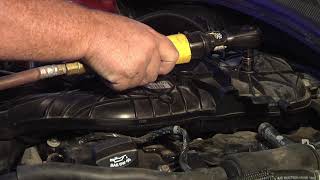
Helpful Videos

We Have This Part in Stock



The information in this article is provided for general reference and educational purposes only. Vehicle specifications, procedures, and part compatibility can vary by production date, trim level, and region. Always consult your vehicle's factory service manual and verify part numbers before purchasing or performing repairs. Safety-critical components such as airbags, seat belts, and braking systems should be installed by a qualified professional.
- Chevrolet IMPALA:
- 🧭 Diagnostic Flowchart
- 🎬 Helpful Videos
- 🛍️ Shop This Part
- What's Unique About the 2012-2019 Chevrolet IMPALA
- Symptoms You May Notice
- Most Likely Causes
- Rare But Worth Checking
- Diagnosis Steps
- Parts You'll Likely Need
- Related Codes That Often Appear With This One
- Technical Service Bulletins (TSBs) & Recalls
- Platform-Specific Known Issues
- Mechanic-Grade Diagnostic Values
- Scan Tool Commands That Help
- Wiring & Ground Locations
- Model Year Variations Within This Range
- 🎟️ Get 5% Off