

P2099 on 2009-2016 Chevrolet Traverse: Post Catalyst Fuel Trim Too Rich Bank 2
On a 2009-2016 Traverse, P2099 means the exhaust is too rich on Bank 2. While this can be a bad oxygen sensor or an exhaust leak, a GM Technical Service Bulletin (TSB PIP4964F) and numerous owner experiences point to leaking or poorly atomizing fuel injectors as a highly common cause on this specific platform and its siblings (Acadia, Enclave). Always check for exhaust leaks and O2 sensor function first, but be prepared to test the injectors using a specialized tool.
- P2099 on a Traverse means the exhaust on the front bank (Bank 2) is too rich.
- While a bad O2 sensor or exhaust leak are possible, a GM TSB strongly suggests checking for leaking fuel injectors.
- Diagnosis should involve checking for exhaust leaks, watching O2 sensor data on a scan tool, and performing a fuel injector balance test.
- Do not immediately assume the catalytic converter is bad; it is usually the victim of the rich condition, not the cause of the code.
What's Unique About the 2009-2016 Chevrolet TRAVERSE

While many vehicles trigger a P2099 code due to a simple exhaust leak or a failing oxygen sensor, the GM 3.6L V6 direct-injection engine (LLT and LFX) used in the Traverse and its Lambda-platform mates has a documented history of this code being caused by fuel injector problems. A specific Technical Service Bulletin (TSB PIP4964F) advises technicians to perform a fuel injector balance test early in the diagnosis for P2099, suggesting it's a more common issue on this platform than on others. Technicians note that even injectors that aren't leaking but have a degraded spray pattern can cause this code, which might not be obvious with simple fuel trim analysis. Ignoring this possibility can lead to replacing parts that are not the root cause of the problem.
Diagnostic Flowchart

Tap your situation to follow the diagnostic path that matches what you're seeing on this vehicle.
Symptoms You May Notice
- Check Engine Light is on
- Decreased fuel economy
- Rough idle or hesitation, especially on cold starts
- Smell of gasoline from the exhaust
- Black smoke from the tailpipe
- Engine misfires in some cases
- Replacing the catalytic converter. A P2099 code indicates a problem with the fuel mixture *reading*, not necessarily a failed converter. A persistent rich condition will damage the converter over time, but the converter itself is rarely the root cause of this specific code.
- Replacing the O2 sensor without proper diagnosis. While the O2 sensor reports the problem, it may be accurately reporting a rich condition caused by a leaking injector or exhaust leak. Replacing the sensor will not fix the underlying issue.
Most Likely Causes

- Leaking or Poorly Performing Fuel Injector(s) on Bank 2 🔴 High Probability → Shop Fuel Injector A key GM Technical Service Bulletin (#PIP4964F) specifically identifies fuel injectors as the most common concern for P2099 on this platform. Forum discussions among technicians confirm this is a known issue, with degraded spray patterns from clogged tips being as much of a cause as outright leaking. These are direct-injection engines, and injector issues are a noted weak point.
How to confirm: The definitive method is to perform a fuel injector balance test using a capable scan tool or an Active Fuel Injector Tester (AFIT), as recommended by GM. 🎬 Watch: How to perform a professional fuel injector balance test. Note that the TSB states this specific test may not be available on 2009 models. Another method is to remove the spark plugs on Bank 2 (front bank) and inspect them. Plugs that are black, sooty, or wet with fuel are a strong indicator of a leaking injector in that cylinder.
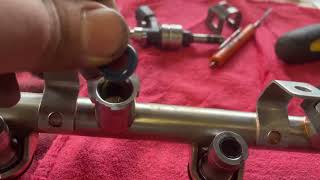
Typical fix: Replace the faulty fuel injector(s) on Bank 2. Many owners and technicians recommend replacing all three injectors on the affected bank at the same time to prevent future failures. 🎬 Watch: Step-by-step guide to removing the intake and replacing injectors.
Est. part cost: $50-$150 per injector - Exhaust Leak 🟡 Medium Probability Exhaust components like gaskets and flex pipes can fail from corrosion and heat cycles. TSB PIP4964F specifically suggests checking for small leaks at the outlet of the catalytic converter, which can pull in air and skew O2 sensor readings.
How to confirm: Visually inspect the exhaust system for Bank 2 (front side) for cracks or black soot trails. The TSB recommends a low-pressure test: apply 5-8 PSI of air to the tailpipe and spray gasket areas and O2 sensor bungs with soapy water, looking for bubbles. A smoke test is also effective.
Typical fix: Replace the leaking gasket or repair/replace the cracked exhaust component. The TSB suggests filing the mating surface of the pipe flange when replacing a gasket to ensure a good seal.
Est. part cost: $20-$100 - Faulty Downstream Oxygen Sensor (Bank 2, Sensor 2) 🟡 Medium Probability → Shop Oxygen Sensor Oxygen sensors are consumable parts that degrade over time and can fail, sending incorrect signals to the ECM.
How to confirm: Use a scan tool to monitor the live voltage data from the Bank 2, Sensor 2. A healthy downstream sensor should show a relatively stable voltage when cruising. If it's stuck high (e.g., above 0.8V) or fluctuating wildly like the upstream sensor, it may be faulty or indicating a separate issue.
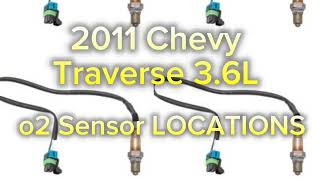
Typical fix: Replace the Bank 2, Sensor 2 oxygen sensor. 🎬 See this video to quickly locate all O2 sensor positions.
Est. part cost: $50-$120 - High Fuel Pressure ⚪ Low Probability The 3.6L is a direct injection engine with both a low-pressure in-tank pump and a high-pressure fuel pump (HPFP) driven by the camshaft. While less common, a failing HPFP can cause fuel pressure regulation issues.
How to confirm: Connect a fuel pressure gauge to the low-pressure line to check the in-tank pump. For the high-pressure side, a capable scan tool is needed to monitor the desired vs. actual fuel rail pressure. A significant deviation can indicate a failing HPFP or sensor. A typical reading at idle is 300-350 kPa.
Typical fix: Replace the fuel pressure regulator, high-pressure fuel pump, or in-tank fuel pump module, depending on the diagnosis.
Est. part cost: $200-$700
Rare But Worth Checking
- Faulty Upstream Oxygen Sensor (Bank 2, Sensor 1): → Shop Oxygen Sensor A failing upstream O2 sensor can cause the ECM to make incorrect fuel adjustments, which are then detected as a problem by the downstream sensor. However, a faulty upstream sensor will typically set its own code (e.g., P0151, P0152, P0153).
- Mechanical Valvetrain Issue: TSB PIP4964F mentions that if no fuel or exhaust leaks are found, a sticking valve or a lifter/follower issue could be the cause. This may or may not trigger a separate misfire code.
- Failing High Pressure Fuel Pump (HPFP): As these are direct injection engines, the HPFP is a critical component. A failure can lead to incorrect fuel pressure and trigger rich or lean codes. This would often be accompanied by other codes like P0087 (Fuel Rail/System Pressure - Too Low).
Diagnosis Steps
- Scan for any other stored trouble codes. Codes for misfires, fuel pressure, or the upstream O2 sensor can help pinpoint the root cause.
- Use a scan tool to observe live data. Check the Long Term Fuel Trim (LTFT) for Bank 2. A significantly negative number (e.g., -10% or lower) confirms the ECM is trying to correct a rich condition. Monitor the Bank 2 Sensor 2 (downstream) O2 voltage. It should be stable; if it's stuck high (over 0.8V), it confirms a rich reading.
- Perform a thorough visual inspection of the exhaust system for Bank 2 (front of the engine). Look for cracks, rust, and black soot marks indicating a leak.
- If visual inspection is inconclusive, perform a low-pressure exhaust leak test as per TSB PIP4964F. Pressurize the exhaust with 5-8 PSI of air and spray flanges and welds with soapy water.
- If no exhaust leaks are found, focus on the a fuel system. Following GM's TSB (#PIP4964F), perform a fuel injector balance test with an AFIT tool to check for leaking or poorly atomizing injectors on Bank 2.
- As a simpler alternative to the balance test, pull the spark plugs on Bank 2 (cylinders 2, 4, 6). Black, sooty, or fuel-fouled plugs strongly suggest a leaking injector in that cylinder.
- If injectors and exhaust are good, test the fuel pressure, including monitoring the high-pressure rail with a scan tool to rule out an HPFP issue.
- Only after confirming the above should you consider replacing the O2 sensor, as it is often just reporting the problem correctly.
Parts You'll Likely Need
- Fuel Injector
(OEM #ACDelco 217-3445 (supercedes to 12638530) for LLT engine (2009-2011); ACDelco 12669384 for LFX engine (2012-2016))— A GM TSB and extensive owner feedback point to leaking or poorly performing fuel injectors as a primary cause for this code on the Traverse.
Trusted brands: ACDelco, Bosch, Standard Motor Products
OEM price range: $100-$180
Aftermarket price range: $50-$120 - Bank 2 Downstream Oxygen Sensor (Sensor 2)
(OEM #12667438 (ACDelco 213-4768))— The sensor itself can fail and send false rich signals. It's a common wear item, though less likely to be the root cause than injectors on this vehicle.
Trusted brands: ACDelco, Denso, Bosch
OEM price range: $80-$130
Aftermarket price range: $50-$100
Related Codes That Often Appear With This One
- P2097 — This is the equivalent code for Bank 1 ('Post Catalyst Fuel Trim System Too Rich Bank 1'). The TSBs for the Traverse often group P2097 and P2099 together as having the same potential causes, like fuel injectors or exhaust leaks on the opposite engine bank.
- P0430 — This code means 'Catalyst System Efficiency Below Threshold (Bank 2)'. A persistent rich condition (P2099) can overwhelm and damage the catalytic converter by overheating it, eventually leading to an efficiency code like P0430.
- P0300-P0306 — Misfire codes (P0300 for random, P0302, P0304, P0306 for Bank 2 cylinders). A severely leaking fuel injector can foul the spark plug and cause a misfire on the corresponding cylinder.
Technical Service Bulletins (TSBs) & Recalls
- PIP4964F: This is the key document for this issue. It advises technicians to check for leaking/underperforming fuel injectors via a balance test (AFIT) and also to check for small exhaust leaks at the converter outlet when diagnosing P2097 or P2099. It covers the Traverse, Acadia, Enclave, and Outlook.
Platform-Specific Known Issues
- TSB Priority on Fuel Injectors: → Shop Fuel Injector Technical Service Bulletin PIP4964F explicitly states that for P2099 (and P2097), fuel injectors are a primary concern and an injector balance test should be performed early in the diagnostic process, even before extensive exhaust leak testing if no obvious leak is present.
- Owner Repair Story: Leaking Injector Fix: A user on traverseforum.com with a 2011 Traverse reported a P2099 code that persisted after replacing the O2 sensor. The final fix was replacing a leaking fuel injector on cylinder 4 (Bank 2). The owner noted a slight fuel smell on the oil dipstick, which can be a secondary symptom of fuel diluting the engine oil due to a leaking injector.
Mechanic-Grade Diagnostic Values
- Downstream O2 Sensor (Bank 2, Sensor 2) Voltage — expected: A healthy downstream sensor should have a relatively stable voltage, typically fluctuating slowly between 0.6V and 0.8V when the engine is at operating temperature and cruising.. Failure: A voltage stuck high (above 0.8V) indicates a persistent rich condition. Wild fluctuations similar to the upstream sensor (0.1V to 0.9V) can indicate a failing sensor or a bad catalytic converter.
- Exhaust Leak Test Pressure — expected: 5-8 PSI applied to the tailpipe.. Failure: Large bubbles forming when soapy water is applied to exhaust flanges, gaskets, or O2 sensor bungs. Foam leaks are considered normal.
- High Pressure Fuel Rail (Scan Tool) — expected: Desired and Actual pressure should be closely matched. At idle, this is typically around 300-350 kPa.. Failure: A significant, sustained deviation between desired and actual fuel rail pressure can indicate a problem with the High Pressure Fuel Pump (HPFP) or its sensor.
Scan Tool Commands That Help
- GDS2 / Tech2 / AFIT (Active Fuel Injector Tester): Injector Balance Test — This is the GM-recommended procedure to identify leaking or poorly performing fuel injectors, which are a primary cause of P2099 on this platform. It measures the pressure drop for each injector to see if one is flowing more fuel than the others. This test should be performed early in the diagnosis if no exhaust leaks are found.
Wiring & Ground Locations
- G107 — On the upper left (driver's) side of the engine block for the 3.6L engine.. This is a primary engine ground. A poor or corroded connection at G107 can affect the Engine Control Module (ECM) and its sensor readings, potentially causing erratic signals from O2 sensors or other components, leading to false diagnostic codes.
- Bank 2, Sensor 2 Connector — Located on the front side of the engine (closer to the radiator), downstream of the catalytic converter. The sensor is threaded into the exhaust pipe, and its electrical connector is typically clipped to the chassis or a heat shield nearby.. This is the direct connector for the sensor reporting the P2099 fault. Checking for corrosion, damage, or a loose connection here is a critical step before replacing the sensor itself.
- ECM Connector X2 — The ECM is mounted on top of the battery cover. It has multiple large connectors; X2 is one of them.. The signal wire for the Bank 2 Sensor 2 (typically a tan wire) runs to this connector. If the sensor and its local wiring are good, a diagnostic test may involve checking for continuity and voltage at the pin on this connector to rule out a wiring break between the sensor and the ECM.
Real Owner Repair Stories
- traverseforum.com user (2011 Chevrolet Traverse LT, mileage not specified) — Check Engine Light with code P2099. No other drivability issues mentioned.
❌ Tried (didn't work) Replaced the Bank 2 Sensor 2 (downstream) oxygen sensor., Replaced the Bank 2 Sensor 1 (upstream) oxygen sensor., Replaced the catalytic converter on Bank 2.
✅ What actually fixed it The owner took the vehicle to a dealer who performed a fuel injector flow test. The test revealed that the injectors on Bank 2 were leaking. Replacing all three fuel injectors on Bank 2 finally resolved the P2099 code.
"I Checked Everything" — The Actual Cause
- In some documented cases on Traverse and Acadia forums, a smoke test revealed no leaks, and O2 sensors were replaced without fixing the issue. The ultimate cause was confirmed via a dealer's injector balance test to be one or more leaking fuel injectors on Bank 2, which aligns with GM's TSB PIP4964F.
OEM Part Supersession History
12611545, 12632255→12638530 (also sold as ACDelco 217-3445)— Standard part evolution for improved performance or manufacturing.
Heads up: Part number 12638530 is for the LLT engine. The LFX engine (2012-2016) uses a different injector, part number 12669384. They are not interchangeable.
Model Year Variations Within This Range
- 2009: According to TSB PIP4964F, the dealer-level 'Fuel Injector Balance Test' function may not be available on 2009 models, making it harder to diagnose faulty injectors with a scan tool and requiring alternative methods like inspecting spark plugs.
- 2012-2016: These model years use the updated LFX engine. While it shares the same 3.6L displacement, it has integrated exhaust manifolds (making exhaust leaks at the head/manifold gasket impossible), a different ECM (Delphi instead of Bosch), and different fuel injectors (PN 12669384) compared to the 2009-2011 LLT engine.
- 2013-2016: The timing chain design was reportedly improved starting in the 2013 model year, making these later LFX engines less prone to the premature chain stretch that plagued earlier 3.6L engines. While not a direct cause of P2099, severe timing issues could potentially affect valvetrain operation and contribute to rich/lean conditions.
Helpful Videos
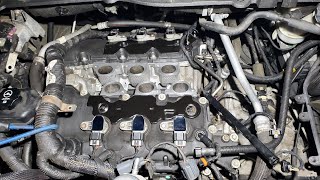
We Have This Part in Stock

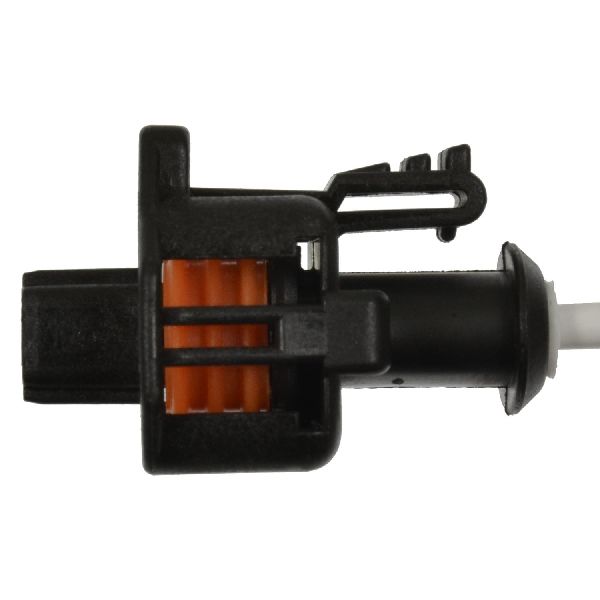
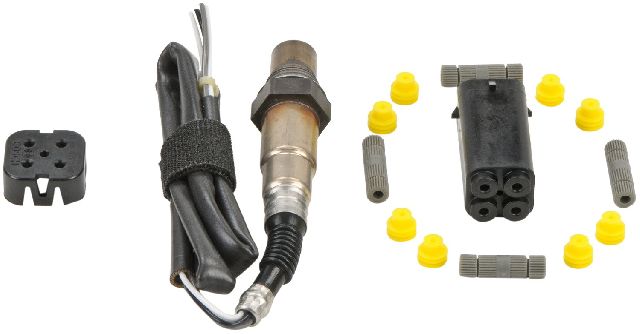
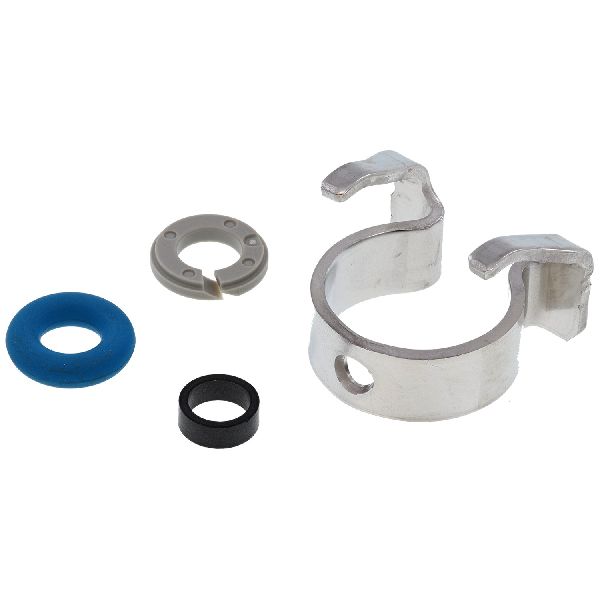

The information in this article is provided for general reference and educational purposes only. Vehicle specifications, procedures, and part compatibility can vary by production date, trim level, and region. Always consult your vehicle's factory service manual and verify part numbers before purchasing or performing repairs. Safety-critical components such as airbags, seat belts, and braking systems should be installed by a qualified professional.
- Chevrolet TRAVERSE:
- 🧭 Diagnostic Flowchart
- 🎬 Helpful Videos
- 🛍️ Shop This Part
- What's Unique About the 2009-2016 Chevrolet TRAVERSE
- Symptoms You May Notice
- Most Likely Causes
- Rare But Worth Checking
- Diagnosis Steps
- Parts You'll Likely Need
- Related Codes That Often Appear With This One
- Technical Service Bulletins (TSBs) & Recalls
- Platform-Specific Known Issues
- Mechanic-Grade Diagnostic Values
- Scan Tool Commands That Help
- Wiring & Ground Locations
- Real Owner Repair Stories
- "I Checked Everything" — The Actual Cause
- OEM Part Supersession History
- Model Year Variations Within This Range
- 🎟️ Get 5% Off