

P2099 on 2017-2023 Chevrolet Traverse: Causes and Fixes for Rich Fuel Trim
On a 2017-2023 Traverse, code P2099 is most often caused by a leaking fuel injector on Bank 2 or a cracked exhaust pipe due to a failed weld, as noted in GM Technical Service Bulletins. Inspect the exhaust system thoroughly before replacing any sensors. GM has issued a special coverage adjustment (N222385510) for some model years related to the exhaust pipe issue.
- For a P2099 code on a 2017-2023 Traverse, do not immediately replace the O2 sensor.
- Your first step should be a thorough visual inspection of the Bank 2 exhaust pipe for cracks near the support brackets, as specified in TSB #PIP5681C.
- If the exhaust is intact, the next most likely cause is a leaking fuel injector on Bank 2, per TSB #PIP4964F.
- Addressing this code promptly can prevent damage to the catalytic converter, a much more expensive repair.
What's Unique About the 2017-2023 Chevrolet TRAVERSE

For the second-generation Chevrolet Traverse with the 3.6L LFY V6 engine, this code is specifically addressed by multiple manufacturer bulletins. While generic causes like O2 sensors are possible, GM has identified two more likely culprits: leaking fuel injectors and, notably, cracked exhaust pipes due to failed bracket welds. 🎬 Watch: See how these exhaust brackets fail on the Traverse. These platform-specific issues mean a thorough inspection of the fuel and exhaust systems is critical before assuming a sensor has failed. GM even issued a Special Coverage bulletin (N222385510, later N212356540 for 2019 models) for the 2021 model year, extending the warranty for this specific exhaust pipe failure to 15 years or 150,000 miles.
Diagnostic Flowchart

Tap your situation to follow the diagnostic path that matches what you're seeing on this vehicle.
Generation note: The 2017-2023 model years span the end of the first generation (2017 Traverse 'Limited') and the entire second generation (2018-2023). This guide primarily focuses on the second-generation Traverse with the 3.6L LFY V6 engine, as this is the platform specifically mentioned in related technical service bulletins. The exhaust weld issue is documented for 2018-2022 models in TSB PIP5681C and covered by special warranties for certain years.
Symptoms You May Notice

- Check Engine Light is on
- Decreased fuel economy
- Rough idle or hesitation during acceleration
- Smell of gasoline from the exhaust
- Rattling noise from the exhaust
- Replacing the downstream O2 sensor without first checking for exhaust leaks or testing the fuel injectors. Given the specific TSBs for this vehicle, these other causes are more probable. The TSB for the exhaust leak explicitly states that the catalytic converter should not be replaced for this concern.
Most Likely Causes

- Cracked Exhaust Pipe / Failed Weld 🔴 High Probability → Shop Exhaust Pipe A known issue documented in GM Technical Service Bulletin #PIP5681C. A poor weld on an exhaust pipe bracket for Bank 2 can fail, causing the pipe to crack. This leak disrupts oxygen sensor readings and can trigger various codes, including P2099, P2097, P0171, P0174, P0420, and P0430. GM issued Special Coverage N212356540 for 2019 models and N222385510 for 2021 models, covering this repair for 15 years/150,000 miles.
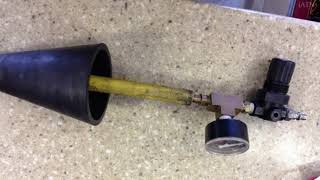
How to confirm: Visually inspect the exhaust pipes and brackets, particularly on Bank 2 (the front bank, closer to the radiator). Look for cracks or black soot marks, listen for rattling noises, or use a smoke machine to find leaks. The crack typically occurs where the support bracket is welded to the pipe.
Typical fix: Replace the affected section of the exhaust pipe. The TSB specifies replacing the pipe from the Bank 2 converter to the mid-exhaust assembly. Some owners or shops may opt to re-weld the cracked area.
Est. part cost: $150-$400 - Leaking or Faulty Fuel Injector (Bank 2) 🔴 High Probability → Shop Fuel Injector GM Technical Service Bulletin #PIP4964F directly links P2099 to potential fuel injector issues. Direct injection systems can be sensitive, and an injector that is stuck open or leaking will cause a rich condition. The TSB instructs technicians to perform an injector balance test before other diagnostics.
How to confirm: As recommended by the TSB, perform a fuel injector balance test using a capable scan tool (like a GM GDS2) or an Active Fuel Injector Tester (AFIT). A pressure drop difference of more than 2.9 psi (20 kPa) between injectors indicates a fault. You can also check fuel trims with a scan tool; Bank 2 trims will likely be highly negative as the PCM tries to reduce fuel. Another method is to check the spark plugs on Bank 2; a dark, black, sooty plug points to a rich condition in that cylinder.
Typical fix: Replace the faulty fuel injector on Bank 2. It is often recommended to replace all injectors on that bank at the same time, along with their seals.
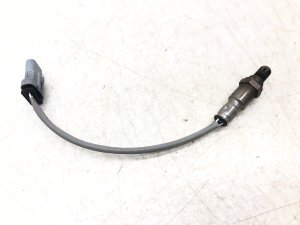
Est. part cost: $50-$140 per injector - Faulty Downstream Oxygen (O2) Sensor (Bank 2, Sensor 2) 🟡 Medium Probability → Shop Oxygen Sensor
How to confirm: Use a scan tool to monitor the voltage of the Bank 2, Sensor 2. A sensor that is stuck reading high (consistently above 0.8V) or is slow to respond after the engine is warm may be faulty. However, this is often a symptom of another issue, not the root cause.
Typical fix: Replace the Bank 2 downstream O2 sensor. This should only be done after confirming there are no exhaust leaks or fuel delivery issues.
Est. part cost: $40-$100 - Exhaust Leak (before O2 Sensor) ⚪ Low Probability While the TSB-related crack is most common, other leaks from manifold gaskets or pipe connections can also occur.
How to confirm: Visually inspect the exhaust manifold and all piping before the downstream O2 sensor for cracks or gasket leaks. A smoke test is the most effective method. TSB PIP4964F also suggests checking for small leaks at the outlet of the engine converter.
Typical fix: Repair the leak by replacing the gasket or the damaged exhaust component.
Est. part cost: $20-$200
Rare But Worth Checking
- Faulty Mass Air Flow (MAF) Sensor: A dirty or failing MAF sensor can under-report the amount of air entering the engine, causing the computer to inject too much fuel. This usually affects both banks, so you might also see a P2097 code.
- Failing Fuel Pressure Regulator: → Shop Fuel Injection Pressure Regulator If the regulator allows fuel pressure to become too high, it can overpower the injectors and lead to a rich condition across the entire engine.
- PCM Software Issue: In some cases, the logic for setting the P2099 code can be too sensitive, and a PCM software update from the manufacturer may be required to correct it. One case on a Ford F-150 was resolved with a PCM firmware update.
Diagnosis Steps
- Scan for codes: Use an OBD-II scanner to confirm P2099 and check for any other related codes. Note any freeze frame data.
- Check for Special Coverage: For 2019 or 2021 models, check with a GM dealer if your vehicle's VIN is covered under Special Coverage N212356540 or N222385510 for the exhaust pipe repair.
- Inspect the exhaust system: Following TSB #PIP5681C, carefully inspect the Bank 2 (front) exhaust pipe and its support bracket for cracks or signs of a failed weld. Listen for any rattling noises. A smoke test is highly effective.
- Analyze live data: Use a scan tool to view live data. Watch the short-term and long-term fuel trims for Bank 2. Also, observe the voltage of the Bank 2 downstream O2 sensor. A consistently high voltage (e.g., >0.8V) confirms a rich condition.
- Test fuel injectors: If no exhaust leak is found, follow TSB #PIP4964F and perform a fuel injector balance test to check for a leaking injector on Bank 2. A pressure drop difference greater than 2.9 psi (20 kPa) between injectors indicates a fault.
- Test the O2 Sensor: If injectors and exhaust are confirmed to be good, test the Bank 2 downstream O2 sensor for proper response. It should fluctuate between 0.1V and 0.9V. If it's stuck high, it may be faulty, but this is less likely to be the root cause.
- Check for other causes: If the issue persists, investigate less common causes like the MAF sensor or fuel pressure.
Parts You'll Likely Need
- Exhaust Front Pipe (Bank 2)
(OEM #85542639 (replaces 84297423, 84486635, 84336160))— A known failure point due to a weak weld on a bracket, as documented in GM TSB #PIP5681C.
Trusted brands: ACDelco (GM Genuine), Walker Exhaust, Dorman
OEM price range: $250-$400
Aftermarket price range: $150-$300 - Fuel Injector
(OEM #12634126)— Identified as a primary cause of P2099 in GM TSB #PIP4964F.
Trusted brands: ACDelco, Bosch, Hitachi
OEM price range: $90-$150
Aftermarket price range: $50-$120 - Downstream Oxygen Sensor (Bank 2, Sensor 2) — This sensor is what detects the rich condition. It can fail and send false readings, though it should be tested after checking for TSB-related issues.
Trusted brands: ACDelco, Denso, NGK
OEM price range: $70-$120
Aftermarket price range: $40-$100
Related Codes That Often Appear With This One
- P2097 — This is the same code but for Bank 1. If both are present, it points to a systemic issue like a faulty MAF sensor or fuel pressure problem affecting the whole engine.
- P0174 — This is a lean code for Bank 2. While it seems contradictory, TSB #PIP5681C notes that a cracked exhaust pipe can cause a variety of codes, including both lean (P0174) and rich (P2099) codes, depending on the nature of the leak and sensor feedback.
- P0300, P0302, P0304, P0306 — These are misfire codes for Bank 2 cylinders. A severely leaking fuel injector can foul the spark plug and cause misfires on the affected cylinders.
- P0430 — This code indicates "Catalyst System Efficiency Below Threshold (Bank 2)". TSB #PIP5681C mentions this code can be set as a result of the exhaust leak, which can mislead a technician into unnecessarily replacing the catalytic converter.
Technical Service Bulletins (TSBs) & Recalls
- PIP4964F: Service Engine Soon Malfunction Indicator Lamp on, with DTC P2097 or P2099 set.
- PIP5681C: Exhaust leak, Lean Codes, Rattle Noise, or Catalytic Converter Failure Codes.
- N222385510: Special Coverage for front exhaust pipe bracket separation on certain 2021 models.
Platform-Specific Known Issues
- TSB #PIP5681C: Notes that a broken or poorly welded exhaust flex pipe bracket on Bank 2 is a common cause for multiple exhaust-related codes, including P2099. The fix is to replace the entire pipe section.
- TSB #PIP4964F: Instructs technicians to check for leaking fuel injectors using a balance test as a primary diagnostic step for P2099.
Mechanic-Grade Diagnostic Values
- Downstream O2 Sensor Voltage (Bank 2, Sensor 2) — expected: Should fluctuate slowly between 0.1V and 0.9V when the engine is at operating temperature and in closed loop.. Failure: A voltage that is consistently stuck high (above 0.8V) indicates a persistent rich condition or a faulty sensor.
- Fuel Injector Balance Test (Pressure Drop) — expected: The pressure drop across all injectors should be relatively uniform.. Failure: If the difference in pressure drop between the highest and lowest reading injector is greater than 2.9 psi (20 kPa), it indicates a faulty (leaking or restricted) injector.
- Long-Term Fuel Trim (LTFT) - Bank 2 — expected: Ideally close to 0%. Small deviations are normal.. Failure: A significant negative value (e.g., -10% or more) shows the PCM is consistently trying to remove fuel to correct a rich condition.
Scan Tool Commands That Help
- GM GDS2 / Tech 2 or equivalent professional scan tool: Injector Balance Test — This command, referenced in TSB PIP4964F, is a critical step for diagnosing P2099. It pulses each fuel injector individually while monitoring fuel rail pressure drop, allowing a technician to identify a leaking or poorly flowing injector without removing them from the engine.
Wiring & Ground Locations
- G103 — Located at the left rear of the engine compartment on the cowl, above the brake booster.. This is a major ground point for the Body Control Module (BCM), Instrument Panel Cluster (IPC), and Data Link Connector (DLC). While not a direct ground for the O2 sensor or ECM, a poor connection here can cause a wide range of bizarre electrical issues and communication faults that could indirectly contribute to false sensor readings or module errors.
- Bank 2 O2 Sensor Connector — Bank 2 is the front bank on the Traverse, closer to the radiator. The downstream sensor (Sensor 2) is located after the catalytic converter. The connector is a 4-wire, gray male connector.. This is the primary sensor that triggers the P2099 code. Technicians need to access this connector to test sensor voltage, resistance, and signal integrity back to the ECM. A damaged connector or wiring can mimic a failed sensor.
Real Owner Repair Stories
- YouTube channel 'Red Beard Auto Hub' (2023 Chevrolet Traverse) — Loud exhaust noise and an exhaust leak.
✅ What actually fixed it The exhaust pipe had separated from its mounting bracket, creating a large crack. The technician removed the affected pipe section, cleaned the broken area with a wire brush, and re-welded the bracket and the crack. - YouTube channel '2018-2023 Chevrolet Traverse exhaust recall repair' (2018-2023 Chevrolet Traverse with a rebuilt title) — Loud noise like a four-wheeler, visible black soot around an exhaust pipe.
❌ Tried (didn't work) Taking it to a GM dealer for the recall repair, which was denied due to the vehicle's rebuilt title.
✅ What actually fixed it The owner purchased the replacement Bank 2 exhaust pipe and replaced it themselves. The repair involved unbolting the pipe at the manifold (15mm nuts) and at the rear connection, and removing a support bracket to gain clearance.
OEM Part Supersession History
84297423, 84336160, 84396964, 84486635→85542639— These part numbers have been superseded over time, likely due to revisions to address the weak weld at the bracket which causes the crack and triggers code P2099.
Model Year Variations Within This Range
- 2018-2019: A 2.0L turbocharged I4 engine was available on the RS FWD trim, but was discontinued for the 2020 model year, leaving the 3.6L V6 as the sole engine. P2099 diagnosis on a 2.0L model would not involve Bank 2, as it's an inline engine with only one bank.
- 2022-2023: The Traverse received a facelift for the 2022 model year which included updated styling and technology, but the 3.6L V6 powertrain and its related components remained the same.
- 2017: The 2017 model year was a transition year. The first-generation body style was sold as the Traverse 'Limited', while the all-new second generation was also introduced. The TSBs and common issues in this guide primarily apply to the second-generation (2018-2023) platform.
Helpful Videos


We Have This Part in Stock

The information in this article is provided for general reference and educational purposes only. Vehicle specifications, procedures, and part compatibility can vary by production date, trim level, and region. Always consult your vehicle's factory service manual and verify part numbers before purchasing or performing repairs. Safety-critical components such as airbags, seat belts, and braking systems should be installed by a qualified professional.
- Chevrolet TRAVERSE:
- 🧭 Diagnostic Flowchart
- 🎬 Helpful Videos
- 🛍️ Shop This Part
- What's Unique About the 2017-2023 Chevrolet TRAVERSE
- Symptoms You May Notice
- Most Likely Causes
- Rare But Worth Checking
- Diagnosis Steps
- Parts You'll Likely Need
- Related Codes That Often Appear With This One
- Technical Service Bulletins (TSBs) & Recalls
- Platform-Specific Known Issues
- Mechanic-Grade Diagnostic Values
- Scan Tool Commands That Help
- Wiring & Ground Locations
- Real Owner Repair Stories
- OEM Part Supersession History
- Model Year Variations Within This Range
- 🎟️ Get 5% Off