

P2099 on 2010-2011 Dodge Dakota: Post-Catalyst Rich Fuel Trim Fixes
P2099 on a 2010-2011 Dodge Dakota means the engine is running rich on Bank 2 (passenger side). The most common causes are a failing downstream O2 sensor or an exhaust leak before the sensor. In some cases, after all physical repairs fail, a PCM software update may be needed, though the TSBs addressing this code specifically mention the 5.7L engine.
- P2099 means the exhaust on the passenger side (Bank 2) is running too rich.
- The most likely culprits are a bad downstream O2 sensor or an exhaust leak near the sensor.
- Don't replace any parts until you've checked for exhaust leaks first.
- A fuel-soaked, black spark plug on the passenger side points toward a leaking fuel injector.
- Due to multiple TSBs, a dealer software update might be the required fix if no physical problems are found.
What's Unique About the 2010-2011 Dodge DAKOTA
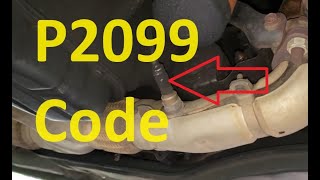
For this generation of Dodge trucks, including the Dakota, Chrysler released several software updates for the Powertrain Control Module (PCM). Specifically, TSB #18-066-16 REV. A applies to the 2010-2011 Dakota with the 3.7L and 4.7L engines. While this TSB lists P2099 as a fix for 5.7L engines, it also provides crucial drivability improvements for the Dakota's engines, including fixes for power loss at high RPMs and EVAP system diagnostics. This indicates that the PCM's calibration is a known area of concern. 🎬 Watch: Overview of P2099 causes and common fixes If a P2099 code persists after physical repairs, investigating a PCM reflash is a valid, albeit secondary, step, as a user on Reddit discovered after replacing headers, cats, and O2 sensors to no avail.
Diagnostic Flowchart
Tap your situation to follow the diagnostic path that matches what you're seeing on this vehicle.
Symptoms You May Notice
- Check Engine Light is on
- Decreased fuel economy
- Poor engine performance or lack of power
- Rough idle or hesitation during acceleration
- Black smoke from the exhaust
- Smell of unburned gasoline from the exhaust
- Replacing the upstream (Bank 2, Sensor 1) O2 sensor when the code is for the post-catalyst system.
- Replacing the O2 sensor without first performing a thorough check for exhaust leaks, which can cause the new sensor to report the same false code.
- Immediately assuming the catalytic converter is bad, which is an expensive repair, before ruling out sensor and fuel delivery issues.
Most Likely Causes
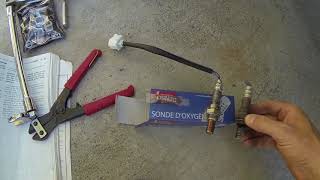
- Failing Downstream Oxygen (O2) Sensor 🔴 High Probability → Shop Oxygen Sensor O2 sensors are wear items that degrade over time from heat and contaminants like oil, coolant, or contaminated fuel. A slow or biased sensor can send incorrect rich readings (stuck high voltage) to the PCM.
How to confirm: Use a scan tool to monitor the voltage of the Bank 2, Sensor 2 (passenger side, after catalytic converter). A healthy downstream sensor should show a relatively steady voltage (typically 0.5v-0.7v). If it's stuck high (above 0.8v) or switching erratically like an upstream sensor, it's likely faulty.
Typical fix: Replace the Bank 2, Sensor 2. Ensure the replacement sensor meets OEM specifications.
Est. part cost: $40-$110 - Exhaust Leak 🟡 Medium Probability The exhaust manifolds on the 4.7L and 3.7L engines are known for broken bolts and gasket leaks. Rust and vibration can cause cracks or gasket failures anywhere in the system. A leak before or near the O2 sensor can draw in outside air, confusing the sensor and sometimes causing a false rich code.
How to confirm: Visually inspect the exhaust system from the manifold to the catalytic converter for soot trails or cracks. A smoke test is the most effective method. A Dodge service manual procedure involves pressurizing the exhaust and spraying soapy water on joints; a 'Type 2' leak with pea-sized bubbles (8mm) requires immediate repair.
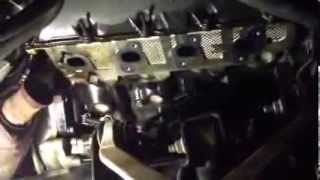
Typical fix: Repair the leak by replacing the gasket, welding the cracked component, or replacing broken manifold bolts, which often requires drilling and extraction. 🎬 See this guide on removing the 4.7L exhaust manifold
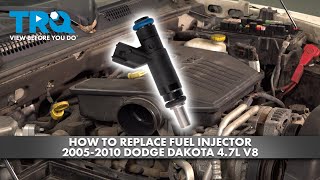
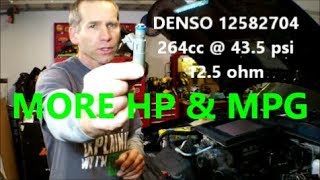
Est. part cost: $10-$150 - Leaking Fuel Injector(s) on Bank 2 🟡 Medium Probability → Shop Fuel Injector Injectors can become stuck open or leak from worn seals, allowing excess fuel into one or more cylinders on Bank 2, creating a genuine rich condition.
How to confirm: Check the spark plugs on Bank 2 (passenger side). If one or more are black and sooty, it points to a rich condition in those cylinders. A fuel pressure leak-down test can also confirm a leaking injector.
Typical fix: Replace the faulty fuel injector(s). It is often recommended to replace them as a set for the affected bank.
Est. part cost: $50-$120 per injector - PCM Software Update Needed ⚪ Low Probability As documented in TSB #18-066-16 REV. A, Chrysler issued software updates to address overly sensitive diagnostic logic. While the P2099 fix was for the 5.7L, the TSB also addresses other power and transmission issues for the 3.7L/4.7L, making it a relevant update if other symptoms are present.
How to confirm: A Dodge dealer or a well-equipped independent shop can check your PCM's current software version against the latest available version using your VIN.
Typical fix: Reprogram the PCM with the latest software (a "reflash"). This is often a last resort after physical causes are ruled out.
Est. part cost: $100 - $250
Rare But Worth Checking
- Failing Catalytic Converter: → Shop Catalytic Converter While less common, a deteriorating or contaminated catalytic converter can fail to properly store oxygen, causing erratic readings from the downstream O2 sensor and leading to a P2099 code.
- Faulty Fuel Pressure Regulator: → Shop Fuel Injection Pressure Regulator If the regulator fails and causes high fuel pressure system-wide, it can lead to a rich condition that might trigger this code on one bank first.
- Faulty Mass Air Flow (MAF) Sensor: Though these engines use a MAP sensor, some owners in forums have explored issues with air metering sensors causing rich conditions that can lead to P2099. A dirty or failing sensor can misreport airflow, causing the PCM to inject the wrong amount of fuel.
Diagnosis Steps
- Check for other Diagnostic Trouble Codes (DTCs) that could provide more clues about the root cause (e.g., misfire codes, fuel system codes).
- Perform a thorough visual inspection of the exhaust system on Bank 2 (passenger side) for any signs of leaks (soot, cracks, broken bolts), especially around the manifold, gaskets, and O2 sensor bungs.
- Use a scan tool to observe live data. Look at the short-term and long-term fuel trims for Bank 2. High negative numbers (e.g., -15% or more) indicate the PCM is trying to remove fuel to correct a rich condition.
- Monitor the voltage of the Bank 2, Sensor 2 (downstream) O2 sensor. It should be relatively stable between 0.5V and 0.7V. If it's stuck high (e.g., >0.8V), the sensor is likely bad or there is a true rich condition.
- If an exhaust leak is suspected, perform a smoke test to pinpoint its location.
- If fuel delivery is suspected, pull the spark plugs on Bank 2 to check for black, sooty deposits that indicate a rich burn. Compare them to Bank 1 plugs.
- Check for contaminants that may have damaged the O2 Sensor, such as contaminated fuel, unapproved silicone, oil, and coolant.
- If all physical components test okay and the code persists, contact a dealership to see if a PCM software update is available for your vehicle's VIN, referencing TSB #18-066-16 REV. A.
Parts You'll Likely Need
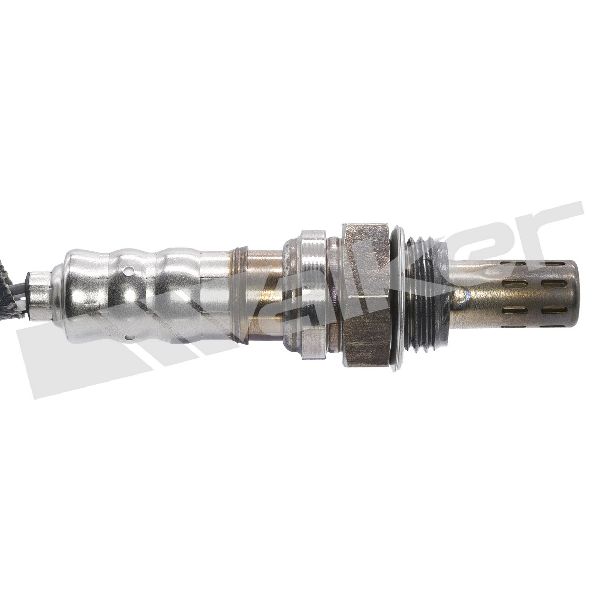
- Downstream Oxygen Sensor (Bank 2, Sensor 2)
(OEM #56029049AA)— This sensor is the most common failure point that directly causes a P2099 code by sending inaccurate 'rich' signals to the PCM.
Trusted brands: Mopar, Denso, NTK, Bosch
OEM price range: $90-$150
Aftermarket price range: $40-$100 - Upstream Oxygen Sensor (Bank 2, Sensor 1)
(OEM #56029050AA)— While not the direct cause of a post-catalyst code, a failing upstream sensor can affect fuel trim and sometimes contribute to downstream issues. Often replaced as a pair with the downstream sensor.
Trusted brands: Mopar, Denso, NTK, Bosch
OEM price range: $75-$120
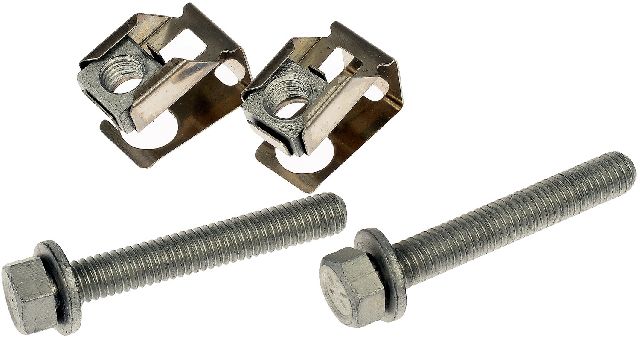
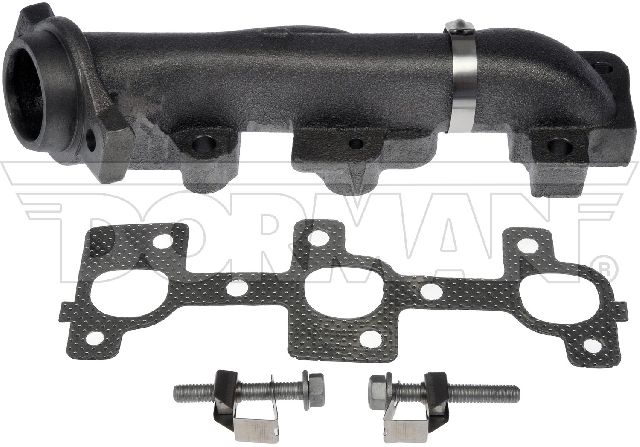
Aftermarket price range: $40-$90 - Exhaust Manifold Gasket (Bank 2) — If an exhaust leak at the manifold is found to be the cause, this gasket will need to be replaced. Broken bolts are common and should be replaced at the same time.
Trusted brands: Fel-Pro, Mahle, Mopar
OEM price range: $20-$40
Aftermarket price range: $10-$25
Related Codes That Often Appear With This One
- P0302, P0304, P0306, P0308 — If a leaking fuel injector or other issue is causing a rich condition in specific cylinders, you may also get misfire codes for those cylinders on Bank 2 (passenger side).
- P0175 — System Too Rich (Bank 2). This code indicates the upstream sensor is also detecting a rich condition, pointing more strongly toward a systemic fuel delivery issue (like a bad fuel pressure regulator or leaking injectors) rather than just a faulty downstream sensor.
Technical Service Bulletins (TSBs) & Recalls
- 18-066-16 REV. A: Applies to 2010-2011 Dakota with 3.7L/4.7L engines. Lists P2099 fix for 5.7L, but provides other crucial software updates for Dakota engines.
- 18-103-15: Mentions P2099 and PCM software updates, but is primarily focused on 5.7L engines, making it less directly applicable to the Dakota. [NHTSA 18-103-15]
Platform-Specific Known Issues
- PCM Software Updates (TSB #18-066-16 REV. A): Chrysler issued this TSB for 2010-2011 Dakotas with 3.7L/4.7L engines. While it lists the P2099 fix for the 5.7L engine, it contains important updates for the Dakota's engines related to power loss, transmission shifting, and EVAP diagnostics. This makes a PCM reflash a valid consideration if other symptoms are present or if direct repairs for P2099 fail.
- Exhaust Manifold Bolt Failure: → Shop Exhaust Manifold The 3.7L and 4.7L engines are known for exhaust manifold bolts breaking, especially those
Mechanic-Grade Diagnostic Values
- Fuel Pressure (Key On, Engine Off) — expected: 407 kPa +/- 34 kPa (59 psi +/- 5 psi).. Failure: Pressure significantly above this range can force too much fuel, causing a rich condition.
- Downstream O2 Sensor (Bank 2, Sensor 2) Voltage — expected: Relatively stable, slow fluctuation between 0.5V and 0.7V on a warm engine in closed loop.. Failure: A voltage stuck high (above 0.8V) indicates a persistent rich signal being sent to the PCM.
- Upstream O2 Sensor (Bank 2, Sensor 1) Voltage — expected: Rapidly and constantly fluctuating between approximately 0.1V and 0.9V on a warm, closed-loop engine.. Failure: A sluggish or flat-lined signal indicates a failing upstream sensor, which can affect overall fuel control.
- O2 Sensor Heater Element Resistance — expected: Between 3 and 15 ohms when the sensor is at ambient temperature. Some sources indicate a healthy reading is around 4.5-6 ohms.. Failure: A reading of infinite ohms (open circuit) or near zero ohms (short circuit) indicates a failed heater element, which will prevent the sensor from reaching operating temperature quickly.
Scan Tool Commands That Help
- Chrysler wiTECH: ASD Fuel System Test — This function is used to actuate the fuel pump with the engine off, allowing a technician to safely and accurately measure fuel pressure against specifications.
- Chrysler wiTECH or equivalent: O2 Sensor Heater Actuation — This allows a technician to command the O2 sensor heater on and monitor the sensor's voltage response with the scan tool to see if it heats up and begins to function correctly.
Wiring & Ground Locations
- G101 — Located on the left front of the engine compartment.. This is a primary engine compartment ground. A poor connection here can cause a variety of sensor and module communication issues.
- G107 — Located on the right side of the engine compartment.. As a major ground point on the passenger side (Bank 2), corrosion or a loose connection here could potentially affect the Bank 2 O2 sensor readings or heater circuit performance.
- G200 — Located on the left side of the dash.. This is an interior ground point that can affect instrument cluster and PCM operation. While less likely to be the direct cause, a fault here can lead to erratic electronic behavior.
- PCM Connector C3 — The Powertrain Control Module (PCM) is located on the right side (passenger side) of the engine compartment.. The O2 sensor signal, heater, and ground circuits all terminate at the PCM. Verifying pin integrity and checking for corrosion at the PCM connectors is a critical step if wiring issues are suspected.
OEM Part Supersession History
56029049AA→56029049AA— No supersession found. This part number appears to be stable.
Heads up: This part number is listed as compatible with a wide range of Chrysler/Dodge/Jeep vehicles, serving as both upstream and downstream sensor depending on the application. Ensure it is correct for the specific position (Bank 2, Sensor 2) on a 2010-2011 Dakota before purchasing.
Model Year Variations Within This Range
- 2011: For the 2011 model year, the 'Dodge Dakota' was officially re-branded as the 'Ram Dakota' as part of the spin-off of Ram as a standalone truck brand. However, this was primarily a marketing change; the truck itself saw no significant mechanical or system differences from the 2010 model.
Helpful Videos
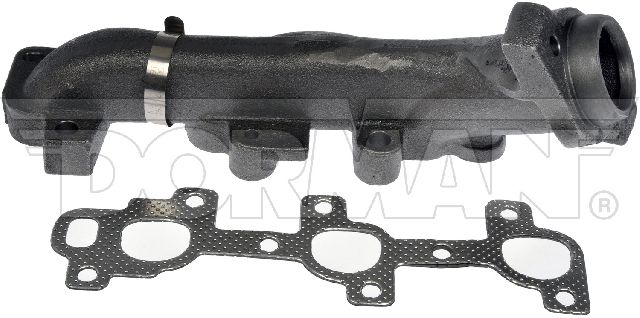
We Have This Part in Stock


The information in this article is provided for general reference and educational purposes only. Vehicle specifications, procedures, and part compatibility can vary by production date, trim level, and region. Always consult your vehicle's factory service manual and verify part numbers before purchasing or performing repairs. Safety-critical components such as airbags, seat belts, and braking systems should be installed by a qualified professional.
- Dodge DAKOTA:
- 🧭 Diagnostic Flowchart
- 🎬 Helpful Videos
- 🛍️ Shop This Part
- What's Unique About the 2010-2011 Dodge DAKOTA
- Symptoms You May Notice
- Most Likely Causes
- Rare But Worth Checking
- Diagnosis Steps
- Parts You'll Likely Need
- Related Codes That Often Appear With This One
- Technical Service Bulletins (TSBs) & Recalls
- Platform-Specific Known Issues
- Mechanic-Grade Diagnostic Values
- Scan Tool Commands That Help
- Wiring & Ground Locations
- OEM Part Supersession History
- Model Year Variations Within This Range
- 🎟️ Get 5% Off