

P2099 on 2021 Dodge Durango: Post Catalyst Fuel Trim Too Rich (Bank 2) Causes and Fixes
On a 2021 Dodge Durango, code P2099 usually points to a failing downstream oxygen (O2) sensor on Bank 2. It can also be triggered by exhaust leaks or, as noted in manufacturer bulletins, be related to a cylinder misfire dumping unburnt fuel into the exhaust. For the 3.6L V6, a PCM update may be required per TSB 18-072-22. For V8 models, if accompanied by a P0306 misfire, TSB 18-033-26 points towards a faulty catalytic converter. Replacing the Bank 2, Sensor 2 O2 sensor is the most common standal
- P2099 means the exhaust is too rich on Bank 2 (driver's side), according to the sensor *after* the catalytic converter.
- Before replacing the O2 sensor, check for other codes. On a 2021 Durango, this code is specifically linked in a TSB to cylinder misfires, so check spark plugs and coils on Bank 2.
- A thorough inspection for exhaust leaks between the engine and the downstream sensor is a critical diagnostic step.
- The most common part to fail is the Bank 2, Sensor 2 (downstream) oxygen sensor itself.
- Ignoring this code can lead to failed emissions tests, poor gas mileage, and eventual damage to the catalytic converter.
What's Unique About the 2021-2021 Dodge DURANGO
For the 2021 Dodge Durango, this code has documented links to other engine issues. Manufacturer Technical Service Bulletins (TSBs) are critical here. TSB 18-033-26 shows that P2099 can appear alongside a P0306 code, indicating a misfire in cylinder 6, particularly on V8 models. The prescribed fix is not just a tune-up part; it involves replacing the Bank 2 catalytic converter and updating the PCM software, suggesting the misfire may be a result of a failing converter causing excessive backpressure. Separately, TSB 18-072-22 applies to 2021 models with the 3.6L V6 engine and notes that a PCM software update is available to correct false P2099 triggers. These TSBs make it crucial to check for software updates and investigate related codes before replacing sensors.
Diagnostic Flowchart
Tap your situation to follow the diagnostic path that matches what you're seeing on this vehicle.
Symptoms You May Notice
- Check Engine Light is on
- Reduced fuel economy
- Rough or unstable idle, especially on cold starts [18-033-26]
- Engine misfires or hesitation during acceleration
- Engine noise [18-033-26]
- Strong gasoline odor from the exhaust
- Black smoke from the exhaust in severe cases
- Replacing the upstream (Sensor 1) O2 sensor when the code points to the post-catalyst (Sensor 2) system.
- Replacing the O2 sensor without first checking for exhaust leaks or related misfire codes, which could be the true root cause.
- Failing to check for applicable TSBs (18-033-26 for V8s with misfires, 18-072-22 for 3.6L V6s), leading to unnecessary parts replacement when a software update or different component (catalytic converter) is the real solution.
Most Likely Causes
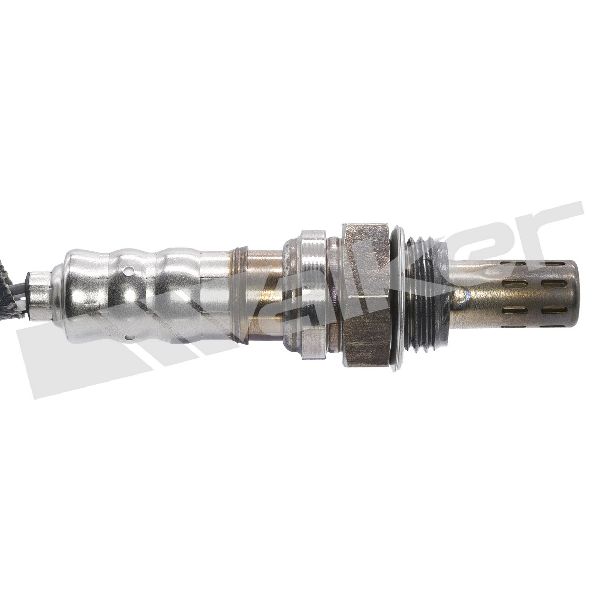
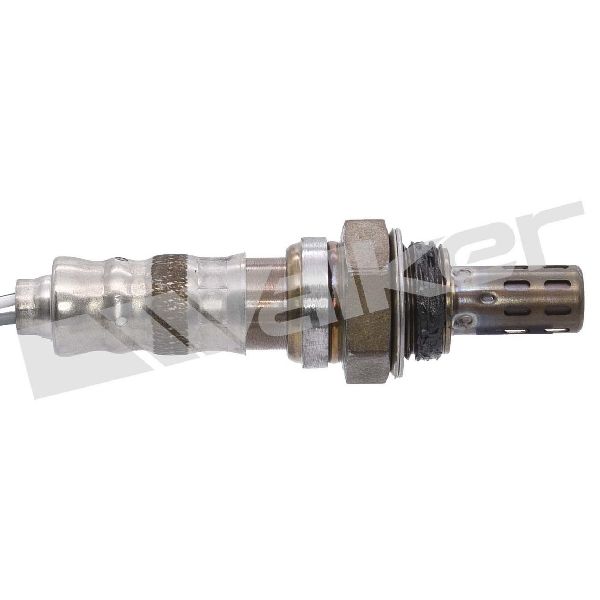
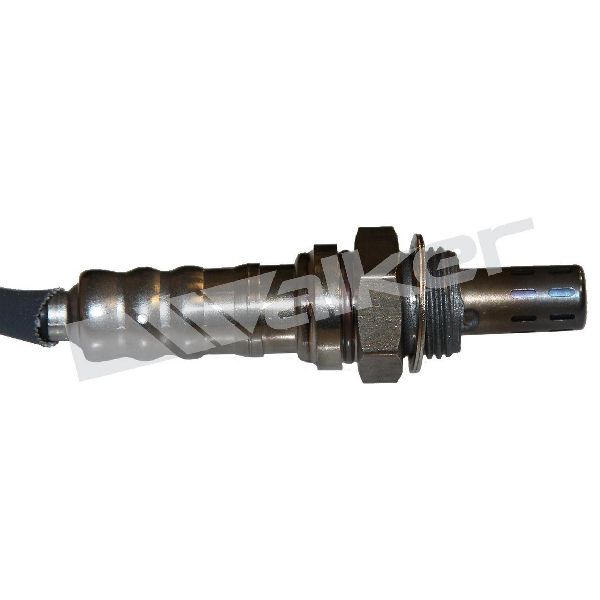
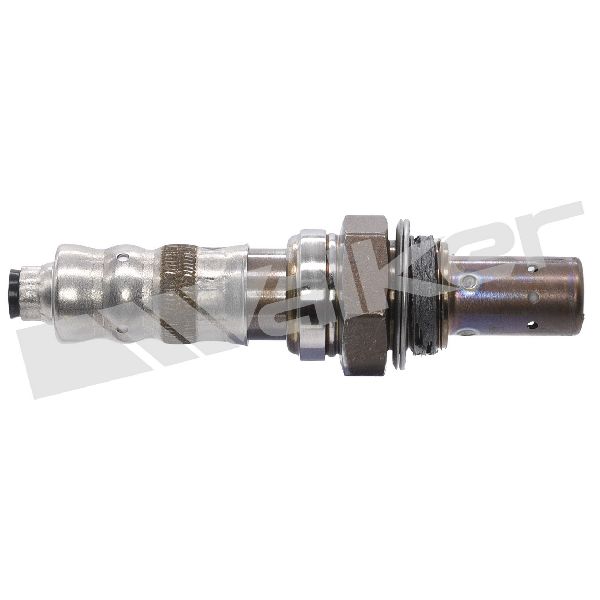
- Failing Downstream Oxygen Sensor (Bank 2, Sensor 2) 🔴 High Probability → Shop Oxygen Sensor O2 sensors are wear-and-tear items that degrade over time, becoming slow or biased. They can send false rich signals to the PCM, even when the air-fuel mixture is correct.
How to confirm: Use a diagnostic scan tool to monitor the live voltage data from the Bank 2, Sensor 2 O2 sensor. A healthy downstream sensor should show a relatively steady voltage (typically 0.5V-0.8V). If it's stuck high (above 0.8V) or fluctuating rapidly like an upstream sensor, it's likely faulty.
Typical fix: Replace the Bank 2, Sensor 2 oxygen sensor. On the Durango's V6 or V8 engines, Bank 2 is the driver's side. The downstream sensor is located after the catalytic converter.
Est. part cost: $50-$150 - Exhaust System Leak 🟡 Medium Probability Leaks from gaskets, flanges, or weld cracks between the engine and the downstream O2 sensor can disrupt sensor readings. While often causing lean codes, an exhaust leak can sometimes draw in air that cools the sensor, causing it to produce a higher voltage and signal a false rich condition.
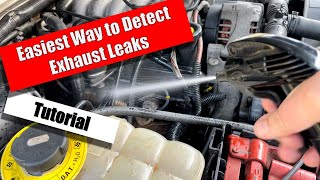
How to confirm: Visually inspect the exhaust system for soot marks or cracks, especially around the manifold and flanges. A common method is to have the engine running and carefully feel for escaping air, or to use a smoke machine to pressurize the exhaust and see where smoke escapes. 🎬 See this simple trick to find hidden exhaust leaks.
Typical fix: Repair the leak. This may involve replacing a gasket, tightening a flange, or having a cracked pipe welded.
Est. part cost: $10-$200 - Engine Misfire / Faulty Catalytic Converter (TSB 18-033-26) 🟡 Medium Probability → Shop Catalytic Converter TSB 18-033-26 specifically links a cylinder 6 misfire (P0306) with P2099. This isn't a simple spark plug issue; the bulletin points to a failing Bank 2 catalytic converter as the root cause. The failing converter can create backpressure, leading to a misfire, which then dumps unburnt fuel into the exhaust, confirming the rich reading.
How to confirm: Check for other stored trouble codes, particularly P0306. If P0306 is present with P2099, reference TSB 18-033-26. Diagnosis would involve checking spark and fuel for cylinder 6, but the ultimate confirmation may require a dealership to follow the TSB procedure.
Typical fix: Per TSB 18-033-26, the fix is to replace the Bank 2 catalytic converter 🎬 Watch: Step-by-step Bank 2 catalytic converter replacement walkthrough. and update the PCM software.
Est. part cost: $500-$1500+ - Leaking Fuel Injector(s) ⚪ Low Probability → Shop Fuel Injector A fuel injector that is stuck open or leaking will dump excess fuel into a cylinder, leading to a rich condition on that entire engine bank.
How to confirm: This is more complex to diagnose. It may involve monitoring fuel pressure bleed-down after the engine is off or removing the fuel rail and injectors to have them professionally flow-tested. Examining the spark plugs on Bank 2 can also provide clues; a plug that is significantly darker or blacker than the others points to an over-fueling cylinder.
Typical fix: Replace the faulty fuel injector(s) on Bank 2.
Est. part cost: $70-$250 per injector
Rare But Worth Checking
- PCM Software Issue (TSB 18-072-22): For 2021 Durangos with the 3.6L V6, TSB 18-072-22 was issued to address false P2099 codes. The fix is a simple PCM software update to adjust monitoring sensitivity. It's crucial to check with a dealer if this TSB applies before performing other repairs.
- Faulty Mass Air Flow (MAF) or Manifold Absolute Pressure (MAP) Sensor: A faulty MAF or MAP sensor can provide incorrect airflow data to the PCM, causing it to calculate an incorrect fuel mixture for the entire engine. While this would typically set other codes or affect both banks, it can sometimes manifest as a single-bank code initially.
- Damaged Catalytic Converter: → Shop Catalytic Converter Outside of the specific TSB, a deteriorating catalytic converter can fail to process exhaust gases correctly, leading to erratic readings from the downstream O2 sensor.
Diagnosis Steps
- Scan for all stored DTCs. Immediately note if P0306 (Cylinder 6 Misfire) or P2097 (Bank 1 Rich) are present, as this drastically changes the diagnostic path.
- Check for applicable TSBs. Specifically, ask a dealer to check your VIN against TSB 18-033-26 (if P0306 is present) and TSB 18-072-22 (if you have a 3.6L V6). This should be a primary step.
- If misfire codes are present (and TSB 18-033-26 does not apply), address the misfire first. Inspect the spark plugs, ignition coils, and fuel injectors on Bank 2 (driver's side).
- Thoroughly inspect the exhaust system from the engine manifold to the downstream O2 sensor for any signs of leaks (soot, cracks, audible hissing). Pay close attention to manifold-to-head and flange gaskets.
- Using a scan tool with live data, observe the voltage of the Bank 2 Sensor 2 (downstream) O2 sensor. It should be relatively stable between 0.5V and 0.8V at operating temperature. If it's stuck high (above 0.8V), it's a strong indicator the sensor is faulty.
- Inspect the wiring and connector for the Bank 2 Sensor 2 for any damage, corrosion, or loose connections. Melted wiring from contact with the exhaust is a possibility.
- If all other components check out, the issue may be a leaking fuel injector or a failing catalytic converter, which may require more advanced diagnostics like a fuel pressure leak-down test or an exhaust backpressure test.
Parts You'll Likely Need
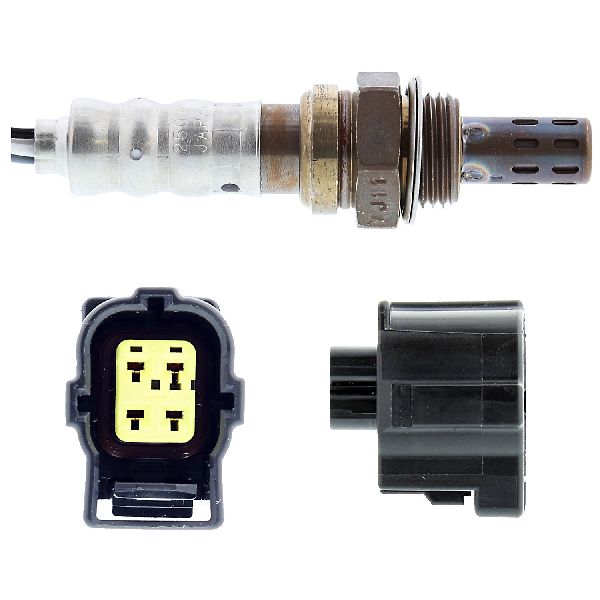
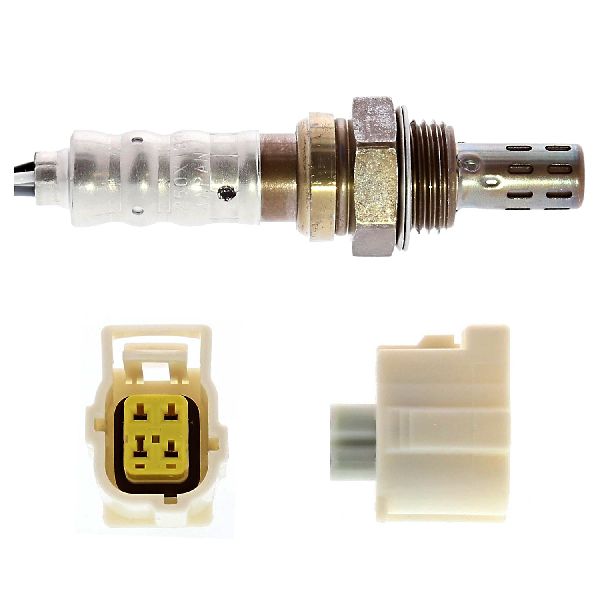
- Downstream Oxygen Sensor (Bank 2, Sensor 2)
(OEM #5149180AB (Replaces 5149180AA))— This is the sensor that directly reports the condition triggering the code. It is the most frequent point of failure for this specific DTC.
Trusted brands: Mopar, NTK, Denso, Bosch
OEM price range: $120-$185
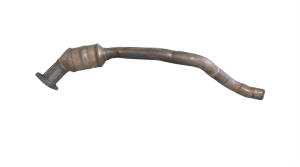
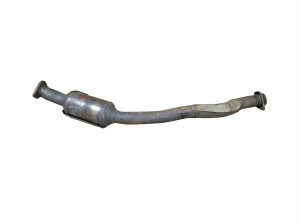
Aftermarket price range: $50-$120 - Catalytic Converter (Bank 2) — Required if diagnosis points to TSB 18-033-26, where the converter itself is the root cause of the P2099 and accompanying P0306 misfire.
Trusted brands: Mopar, Walker, MagnaFlow
OEM price range: $1000-$1800+
Aftermarket price range: $400-$900 - Exhaust Gasket — If an exhaust leak is found at a flange connection, a new gasket will be required to create a proper seal.
Trusted brands: Fel-Pro, Mopar, Walker
OEM price range: $20-$50
Aftermarket price range: $10-$30
Related Codes That Often Appear With This One
- P2097 — This is the equivalent 'rich' code for Bank 1. Seeing both P2097 and P2099 together points to a problem affecting the entire engine, like a fuel pressure issue or a faulty MAF sensor, not just one bank.
- P0306 — This indicates a misfire on cylinder 6. TSB 18-033-26 specifically links this misfire code with P2099 on the 2021 Durango, as cylinder 6 is on Bank 2. This combination strongly suggests the catalytic converter is the root cause.
- P0300 — A random misfire code. If seen with P2099, it points to a systemic issue like a vacuum leak, fuel delivery problem, or major exhaust restriction affecting multiple cylinders.
Technical Service Bulletins (TSBs) & Recalls
- 18-033-26: Addresses P2099 in conjunction with cylinder misfires, rough idle, and engine noise, recommending a catalytic converter replacement and PCM update.
- 1807222: Notes that P2099 and P2097 are known DTCs that may be found by technicians on this platform.
Platform-Specific Known Issues
- TSB #18-033-26: For V8 models, notes that P2099 can be set along with a P0306 (Cylinder 6 Misfire) during cold starts, causing a rough idle. The official fix involves replacing the Bank 2 catalytic converter and updating the PCM software.
- TSB #18-072-22: Applies to 2021 Durango models with the 3.6L V6 engine. It acknowledges that P2099 (and P2097 for Bank 1) can be falsely triggered. The repair is to reprogram the PCM with updated software that has revised logic.
Mechanic-Grade Diagnostic Values
- Downstream O2 Sensor (2/2) Voltage at Idle — expected: Relatively stable voltage between 0.5V and 0.8V.. Failure: Voltage is stuck high (consistently >0.8V) for a rich code.
- O2 Sensor Heater Control Circuit Resistance — expected: Below 5.0 Ω.. Failure: Resistance is higher than 5.0 Ω, indicating an open or high resistance in the heater circuit.
- O2 Return Downstream Circuit Voltage (Key On, Engine Off) — expected: Approximately 2.5 volts.. Failure: Voltage significantly different from 2.5V, suggesting a short to ground, open, or short to voltage in the return circuit.
- Long Term Fuel Trim (LTFT) for Bank 2 — expected: Close to 0%, ideally within +/- 10%.. Failure: Highly negative value (e.g., -20% or more), indicating the PCM is consistently removing large amounts of fuel to compensate for a rich condition.
Scan Tool Commands That Help
- wiTECH (or equivalent dealer-level scanner): PCM Flash / Software Update — Required to resolve false P2099 triggers on 3.6L V6 models as per TSB 18-072-22, or as part of the catalytic converter replacement procedure outlined in TSB 18-033-26 for V8 models.
Wiring & Ground Locations
- Bank 2, Sensor 2 Connector — On some Durango models, the connector is located between the transmission and the vehicle body, potentially requiring the removal of the transmission crossmember bracket for access.. Physical access for testing or replacing the sensor is difficult and requires additional labor, which is important for estimating repair time and cost.
- (K243) O2 Sensor 2/2 Signal Circuit — This is the wire that carries the voltage signal from the O2 sensor back to the PCM. It runs from the sensor connector to the PCM connector.. This circuit must be tested for opens, shorts to ground, or shorts to voltage if the sensor is suspected to be good but readings are incorrect.
- (K399) O2 Sensor 2/2 Heater Control Circuit — This wire provides the power for the sensor's internal heater. It runs from the power distribution center (or relay) to the sensor connector.. A failure in this circuit will prevent the sensor from reaching operating temperature quickly, causing incorrect readings and potentially setting heater circuit codes alongside P2099. Resistance should be checked on this circuit.
- (K904) O2 Return Downstream Circuit — This is a reference or ground circuit provided by the PCM for the oxygen sensor. It runs between the sensor connector and the PCM.. A fault on this circuit can cause the sensor's signal voltage to be skewed, leading to a false rich or lean code. It should be tested for proper voltage (approx 2.5V).
Real Owner Repair Stories
- Jeep Wrangler JK Forum (Jeep with 3.6L Pentastar V6 (same engine family as Durango)) — Persistent misfire and oxygen sensor codes.
❌ Tried (didn't work) Replacing oxygen sensors with aftermarket Bosch 15510 sensors.
✅ What actually fixed it The problem was resolved after replacing the aftermarket sensors with OEM NTK sensors, installed in their specific, correct locations (upstream vs. downstream).
OEM Part Supersession History
5149180AA→5149180AB— Standard part revision by the manufacturer.
Heads up: While many aftermarket sensors (e.g., Bosch, Denso) are listed as compatible, owner experiences suggest that for Chrysler's 3.6L Pentastar engine, using the OEM supplier (NTK) is highly recommended to avoid persistent codes.
Model Year Variations Within This Range
- 2021: The 2021 model year was a significant refresh, featuring updated exterior styling, a redesigned interior with a new instrument panel, and the introduction of the Uconnect 5 infotainment system. While these changes don't directly cause the P2099 code, the associated TSB for a PCM update (18-072-22) is specific to the software on these newer models.
Helpful Videos
![How to Fix P2099 Engine Code in 4 Minutes [2 DIY Methods / Only $9.49]](https://img.youtube.com/vi/tZdHNVnheeA/mqdefault.jpg)

Used OEM Parts in Stock
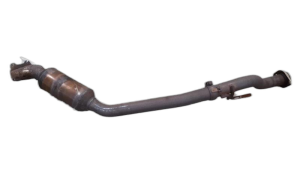
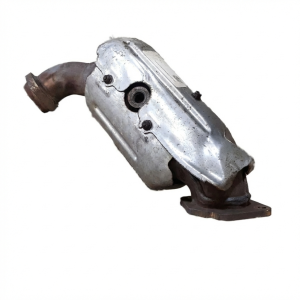
New Aftermarket Parts Available

The information in this article is provided for general reference and educational purposes only. Vehicle specifications, procedures, and part compatibility can vary by production date, trim level, and region. Always consult your vehicle's factory service manual and verify part numbers before purchasing or performing repairs. Safety-critical components such as airbags, seat belts, and braking systems should be installed by a qualified professional.
- Dodge DURANGO:
- 🧭 Diagnostic Flowchart
- 🎬 Helpful Videos
- 🛍️ Shop This Part
- What's Unique About the 2021-2021 Dodge DURANGO
- Symptoms You May Notice
- Most Likely Causes
- Rare But Worth Checking
- Diagnosis Steps
- Parts You'll Likely Need
- Related Codes That Often Appear With This One
- Technical Service Bulletins (TSBs) & Recalls
- Platform-Specific Known Issues
- Mechanic-Grade Diagnostic Values
- Scan Tool Commands That Help
- Wiring & Ground Locations
- Real Owner Repair Stories
- OEM Part Supersession History
- Model Year Variations Within This Range
- 🎟️ Get 5% Off