

P2099 on 2008-2016 GMC Acadia 3.6L: Causes for Post Catalyst Rich Trim Bank 2
On a first-generation GMC Acadia, code P2099 most often points to leaking fuel injectors on Bank 2 (the front cylinder bank). A GM Technical Service Bulletin (TSB) highlights this issue. Before replacing O2 sensors, investigate the fuel injectors and check for exhaust leaks, as the sensor is usually just reporting the problem correctly.
- Do not immediately replace the oxygen sensor for a P2099 code on this Acadia. It is likely just reporting the problem correctly.
- The most probable cause is a leaking fuel injector on Bank 2 (the front bank), as identified in a GM service bulletin.
- The second most likely cause is a small exhaust leak between the engine and the downstream O2 sensor.
- Diagnosing the fuel injectors and checking for exhaust leaks first can save you from buying unnecessary parts.
- Ignoring this code can lead to poor fuel mileage and eventual failure of the expensive catalytic converter.
What's Unique About the 2008-2016 GMC Acadia
For the first-generation GMC Acadia and its platform-mates (Buick Enclave, Chevy Traverse, Saturn Outlook) with the 3.6L V6, this code is specifically addressed by GM Technical Service Bulletin (TSB) #PIP4964F. This TSB directs technicians to check for fuel injector balance problems as a primary cause, which is a notable difference from many other vehicles where a faulty O2 sensor is the most common culprit. This suggests a higher-than-average probability of a fuel delivery issue on this specific GM Lambda platform.
Symptoms You May Notice
- Check Engine Light is on
- Decreased fuel economy
- Rough idle or engine hesitation
- Smell of raw fuel from the exhaust
- Black smoke from the exhaust in some cases
- Engine running slightly rougher than usual
- Replacing the downstream O2 sensor without first checking for fuel injector issues or exhaust leaks. The sensor is often just the messenger, not the problem.
- Replacing the catalytic converter. A P2099 code indicates a problem with the fuel mixture being delivered to the engine or a leak before the sensor. A failing converter typically sets a P0430 efficiency code.
Most Likely Causes
- Leaking Fuel Injector(s) on Bank 2 🔴 High Probability → Shop Fuel Injector This is a known issue documented in GM TSB #PIP4964F for this engine and its platform-mates. An injector can leak fuel into the cylinder or have a poor spray pattern, delivering too much fuel to one or more cylinders in Bank 2.
How to confirm: A professional can perform a fuel injector balance test with a tool like an AFIT (Active Fuel Injector Tester), as recommended by the TSB. A DIY method is to remove the spark plugs on Bank 2 (front bank) and check for a plug that is black, sooty, and smells of fuel, which indicates a rich condition in that cylinder.
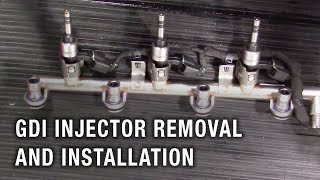
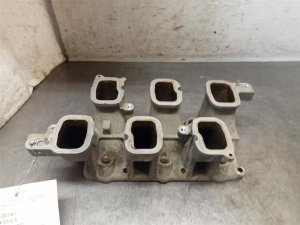
Typical fix: Replace the faulty fuel injector(s) on Bank 2. It is highly recommended to replace all three injectors on the bank at the same time. 🎬 Watch: Step-by-step GDI injector removal and installation guide. The intake manifold must be removed for access, so the intake manifold gaskets must also be replaced.
Est. part cost: $40-$150 per injector - Exhaust Leak (before downstream O2 sensor) 🟡 Medium Probability Leaks can develop at the exhaust manifold gaskets, flange gaskets, or cracks in the flex pipe over time. TSB #PIP4964F also lists this as a secondary diagnostic step if the injectors test good. An exhaust leak before the O2 sensor can draw in outside air, fooling the upstream O2 sensor into thinking the engine is lean, causing the ECM to add fuel and create a genuinely rich condition reported by the downstream sensor.
How to confirm: Visually inspect the exhaust manifold and pipes on Bank 2 for cracks or black soot trails. Listen for a ticking or hissing sound when the engine is cold. The most effective method is to perform a smoke test to pressurize the exhaust system and see where smoke escapes.
Typical fix: Replace the leaking gasket or repair/replace the cracked section of the exhaust pipe.
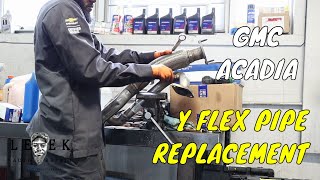
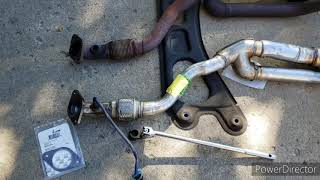
Est. part cost: $10-$50 for gaskets, $100-$300 for flex pipe repair 🎬 See how to replace a leaking exhaust Y-flex pipe.
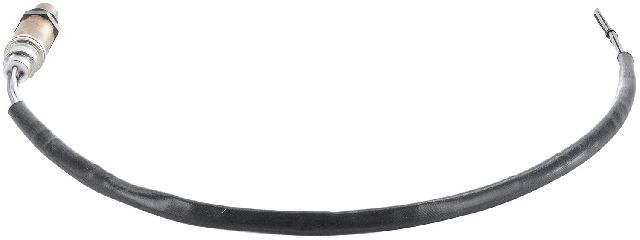
- Faulty Downstream Oxygen Sensor (Bank 2, Sensor 2) ⚪ Low Probability → Shop Oxygen Sensor While O2 sensors are wear items, on this platform they are more likely to be correctly reporting a problem caused by injectors or an exhaust leak, rather than being the root cause themselves. Replacing the sensor without diagnosing other causes often results in the code returning.
How to confirm: Use a scan tool to monitor the live voltage data from the Bank 2, Sensor 2. A sensor correctly reading a rich condition will show a sustained high voltage (typically above 0.8V). If the sensor is faulty, its readings may be stuck high regardless of the actual fuel mixture, or show no activity, but this is less common than it simply doing its job.
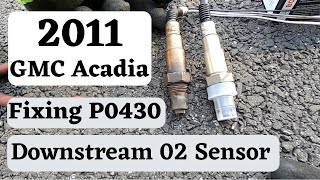
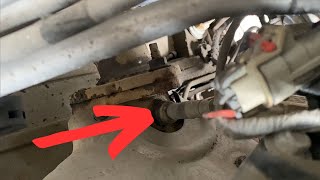
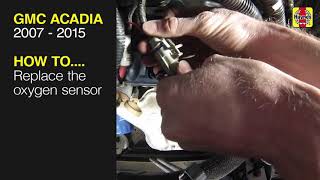
Typical fix: Replace the Bank 2, Sensor 2 oxygen sensor. This sensor is located on the front exhaust pipe, after the catalytic converter. 🎬 Watch: How to replace the Bank 2 downstream O2 sensor.
Est. part cost: $40-$130
Rare But Worth Checking
- High Fuel Pressure: A failing fuel pressure regulator or a problem with the high-pressure fuel pump (on direct injection models) can cause excessive fuel delivery to all cylinders, which may trigger a rich code on one bank first.
- Faulty Mass Airflow (MAF) Sensor: A dirty or failing MAF sensor can send incorrect airflow data to the ECM, causing an improper air/fuel mixture. While a possible cause for rich codes in general, it's less specific to Bank 2 and would likely affect both banks.
- EVAP System Purge Valve Stuck Open: A stuck-open EVAP purge valve can allow unmetered fuel vapors from the charcoal canister to enter the intake manifold, creating a rich condition that the ECM may struggle to compensate for.
Diagnosis Steps
- Scan for other DTCs. Additional codes (e.g., for misfires or the other bank) can provide important clues.
- Check for TSBs. Confirm TSB #PIP4964F applies and prioritize its diagnostic steps.
- Analyze Fuel Injector Performance. Following the TSB, perform a fuel injector balance test. If unavailable, pull the Bank 2 spark plugs (front bank, cylinders 2, 4, 6) and inspect them. A single plug that is black, wet, or sooty is a strong indicator of a leaking injector in that cylinder.
- Inspect for Exhaust Leaks. If injectors seem okay, perform a smoke test on the exhaust system, focusing on the Bank 2 manifold, gaskets, and the flex pipe leading to the downstream O2 sensor.
- Monitor O2 Sensor Live Data. Use a scan tool to observe the voltage of the Bank 2 Sensor 2. A steady high voltage (above 0.8V) confirms the ECM is seeing a rich condition. This step helps verify the sensor is reading correctly, not that it's the cause.
- Inspect O2 Sensor Wiring. Check the harness and connector for the Bank 2 downstream O2 sensor for any damage, corrosion, or loose connections.
- If all else fails, consider replacing the Bank 2, Sensor 2, but only after ruling out the more probable causes.
Parts You'll Likely Need
- Fuel Injector (Bank 2)
(OEM #12638530 (ACDelco))— This is the most likely cause according to GM TSB #PIP4964F for this specific vehicle and code.
Trusted brands: ACDelco, GM Genuine Parts, Bosch
OEM price range: $80-$150
Aftermarket price range: $40-$90 - Downstream Oxygen Sensor (Bank 2, Sensor 2)
(OEM #213-4229 (ACDelco, GM OE# 12609457))— This part is often replaced, but should only be done after confirming injectors and exhaust are not the issue. It is the sensor that reports the fault condition.
Trusted brands: ACDelco, Denso, Bosch, NTK
OEM price range: $70-$130
Aftermarket price range: $40-$80 - Intake Manifold Gasket Set
(OEM #MS96918 (Fel-Pro), 12679526 (ACDelco))— These gaskets must be replaced when removing the intake manifold to access the fuel injectors. Using a quality aftermarket set like Fel-Pro is common.
Trusted brands: Fel-Pro, ACDelco, Mahle
OEM price range: $40-$70
Aftermarket price range: $20-$40
Related Codes That Often Appear With This One
- P2097 — This is the identical code but for Bank 1 (rear bank). TSB #PIP4964F mentions both codes, as a systemic fuel issue could affect either or both banks.
- P0300, P0302, P0304, P0306 — Misfire codes for Bank 2 cylinders (2, 4, 6) can occur if a leaking injector fouls a spark plug with excess fuel.
- P0430 — This code for 'Catalyst System Efficiency Below Threshold (Bank 2)' can appear if the P2099 rich condition is ignored for too long, as the excess fuel can overheat and damage the catalytic converter.
Technical Service Bulletins (TSBs) & Recalls
- PIP4964F (NHTSA ID: 10163584): SES Light With A P2097 Or P2099 - Advises checking fuel injector balance and then for small exhaust leaks as the primary diagnostic paths for the GM Lambda platform vehicles.
Platform-Specific Known Issues
- TSB #PIP4964F explicitly links DTC P2099 to potential fuel injector balance problems, advising technicians to perform an injector test before other diagnostics.
- The transverse mounting of the 3.6L V6 makes accessing Bank 1 (rear bank) difficult, but thankfully Bank 2 (front bank) is relatively accessible for spark plug inspection and injector service.
Mechanic-Grade Diagnostic Values
- Downstream O2 Sensor (Bank 2, Sensor 2) Voltage — expected: Relatively stable voltage between 0.6V and 0.8V on a warm, running engine in closed loop.. Failure: A voltage consistently stuck high, above 0.8V, confirms a rich condition is being detected.
- Fuel Injector Coil Resistance (2009-2011 3.6L LLT Engine) — expected: 11 - 14 Ohms. Failure: A reading of 0 ohms (short), infinity/OL (open), or significant deviation from this range.
- Fuel Injector Coil Resistance (2012-2016 3.6L LFX Engine) — expected: 1.2 - 2.5 Ohms. Failure: A reading outside this narrow range indicates an internal injector fault. Note the significant difference from the earlier LLT engine.
- Low-Pressure Fuel System (In-Tank Pump) — expected: 50-65 PSI (345-448 kPa) at idle.. Failure: Pressure below 50 PSI can starve the high-pressure fuel pump (HPFP). While this usually causes lean codes, regulator issues can contribute to pressure problems.
- High-Pressure Fuel System (HPFP) at Idle (Direct Injection models) — expected: Desired vs. Actual pressure on a scan tool should match closely, around 580 PSI (4 MPa).. Failure: While a failure here typically sets other codes like P0087 or P0089, erratic pressure can contribute to fuel control issues.
- Mass Airflow (MAF) Sensor Reading at Idle — expected: Approximately 3.5 to 7.0 grams/second (g/s) for a fully warm 3.6L engine.. Failure: A contaminated sensor can send incorrect data, leading to improper fueling calculations by the ECM.
Scan Tool Commands That Help
- GM GDS2 / Tech2 (or equivalent professional scan tool): Fuel Injector Balance Test / Automated Injector Balance (AFIT) — This is the specific diagnostic function recommended by GM TSB #PIP4964F to identify leaking or poorly performing fuel injectors, which is the primary suspected cause for P2099 on this platform.
- GM GDS2 / Tech2: Fuel Pressure Control — Allows a technician to command specific fuel pressures to test the response of both the low and high-pressure pumps and the fuel rail pressure sensor, helping to rule out fuel supply issues.
- GM GDS2 / Tech2: Fuel System Depressurize — This is a critical safety function that must be used before servicing any high-pressure fuel system components (like injectors or the HPFP) to safely bleed off pressure that can exceed 2,000 PSI.
Wiring & Ground Locations
- Bank 2 O2 Sensor Harness — The wiring for the Bank 2 sensors runs down the front of the engine, near the exhaust manifold and radiator fans.. This harness is susceptible to melting or damage from contact with hot exhaust components or chafing against engine brackets. A short in the wiring can mimic a failed sensor.
- Injector Wiring Harness (per TSB PIP4924D) — The harness that serves the fuel injectors can chafe against the intake plenum, valve cover bolts, and engine hoist brackets.. While this TSB specifically calls out injector circuit codes (like P0265), the harness vulnerability is relevant. A short in the injector harness could potentially cause an injector to stick open, creating a rich condition that leads to P2099.
Real Owner Repair Stories
- acadiaforum.net (2011 GMC Acadia) — Check Engine Light with code P2099.
❌ Tried (didn't work) Replaced Bank 2 Sensor 2 (downstream) O2 sensor., Replaced Bank 2 Sensor 1 (upstream) O2 sensor.
✅ What actually fixed it The owner discovered a crack in the flex pipe on the Bank 2 exhaust. After repairing the cracked flex pipe, the P2099 code was resolved. - traverseforum.com (platform-mate) (2012 Chevrolet Traverse, 105,000 miles) — P2099 and P0302 (Cylinder 2 Misfire).
❌ Tried (didn't work) Initial diagnosis focused on O2 sensors.
✅ What actually fixed it The owner pulled the spark plug for cylinder #2 (Bank 2) and found it was black and wet with fuel. Replacing the #2 fuel injector fixed both the misfire and the P2099 code. - YouTube - RandomFIX (2010 Chevrolet Traverse (platform-mate)) — P2099 Check Engine Light.
❌ Tried (didn't work) Not specified, but implied standard checks were done.
✅ What actually fixed it The problem was resolved by replacing a faulty Mass Air Flow (MAF) sensor. The owner noted that after replacement, the code did not return.
OEM Part Supersession History
12611545, 12632255→12638530— Standard part updates for improved reliability and performance.
Heads up: These part numbers are for the LLT direct-injection engine (2009-2011). They are NOT compatible with the later LFX engine (2012-2016), which uses a different injector (e.g., 12669384) with a different electrical resistance. Using the wrong injector will cause immediate circuit codes.12638530→12669384— Part consolidation and update for newer engine versions (LFX).
Heads up: While some sources list 12669384 as a supersession, it is critical to verify by VIN. 12638530 is for the LLT engine with ~11-14 ohm resistance, while 12669384 is for the LFX engine with ~1.5-2.5 ohm resistance. They are not interchangeable.
Model Year Variations Within This Range
- 2008: The 2008 model year (and some early 2009s) used the 3.6L LY7 V6 engine, which has port fuel injection. This is a different fuel system than the direct injection (GDI) LLT engine used from 2009-2016. While P2099 can still occur, the diagnostic focus for a rich condition would be on traditional port injectors, fuel pressure regulator, and potential vacuum leaks rather than high-pressure fuel pumps or GDI-specific injector issues.
- 2009-2011 vs 2012-2016: Within the direct injection models, the 2009-2011 models used the LLT engine, while 2012-2016 models used the updated LFX engine. A key difference for diagnostics is the fuel injector resistance: LLT injectors are ~11-14 ohms, while LFX injectors are ~1.5-2.5 ohms. Using the wrong injector will cause fault codes and potential ECM damage.
Diagnostic Flowchart
Other Known Issues on This Vehicle
Issues unrelated to this code that are worth knowing about as an owner of this generation:
- Premature Timing Chain Stretch 🔴 High — Very common, especially on 2007-2012 models. Often occurs between 70,000 and 120,000 miles. Caused by a combination of original chain design and long oil change intervals. (Ref: TSB #12-06-01-009F (updated parts), Special Coverage Adjustment #11340C (extended warranty to 10yr/120k miles for certain years).)
- Broken 3-5-R Transmission Wave Plate 🔴 High — Common on 2007-2009 models, leading to loss of 3rd, 5th, and Reverse gears. Failure can be sudden and typically occurs before 100,000 miles. (Ref: Special Coverage Adjustment #14404B extended warranty coverage for this specific failure.)
- Power Steering Pump/Line/Gear Leaks 🟠 Medium — Frequent owner complaints of power steering fluid leaks from the pump, high-pressure lines, or the steering gear itself, leading to whining noises and loss of assist. (Ref: Recall #14356 / NHTSA 14V339000 was issued for leaking power steering hose clamps on some model years.)
- Leaking Water Pump 🟠 Medium — The water pump, which is internal and driven by the timing chain, can leak coolant. Due to its location, this is a labor-intensive repair.
Used vs. New Parts: Buying Guide for This Vehicle
When a used part is the smart pick: For this repair, used parts are generally not recommended for the primary failure items. However, if an entire exhaust section (like a manifold or downpipe) is needed due to a crack, a low-mileage, rust-free part from a junkyard can be a cost-effective alternative to a new OEM assembly.
Donor-vehicle mileage cap: roughly under 80000 miles for the part to have meaningful remaining life.
What to inspect on the donor part:
- For exhaust components: Check for rust, especially at welds and flanges. Ensure there are no visible cracks or dents.
- For any electronic part (sensors, etc.): Ask for the donor vehicle's VIN to check for service history if possible. Avoid parts from flood or fire-damaged vehicles.
OEM-only on this vehicle (don't cheap out):
- Fuel Injectors: Due to the precision required for direct injection and the known issues on this platform, using new OEM (ACDelco/GM Genuine) or a top-tier OE manufacturer like Bosch is critical. Remanufactured injectors from reputable sources are an option, but cheap, unbranded injectors from online marketplaces are a significant gamble.
Aftermarket brands forum-validated for this vehicle:
- Oxygen Sensors: Denso, NTK, and Bosch are the primary OE suppliers and are widely trusted as aftermarket replacements.
- Intake Gaskets: Fel-Pro is a highly regarded brand for gaskets and seals in the aftermarket.
Brands owners have reported issues with on this vehicle:
- Unbranded Fuel Injectors: Avoid no-name or unbranded fuel injector sets from marketplaces like eBay or Amazon. Forum discussions are filled with stories of these parts failing prematurely or being out-of-spec upon arrival, causing more diagnostic headaches.
Real Owner Stories
Aggregated from forums and TSBs cited above. Mileages and costs reflect what owners reported in those sources.
2012 Chevrolet Traverse 3.6L V6
Symptoms: Check Engine Light with codes P2099 and P0302 (misfire cylinder 2). The spark plug in cylinder 2 was found to be black and wet with fuel.
What fixed it: Replacing the #2 fuel injector.
Source hint: traverseforum.com - Thread 'P2099 Code'
GMC Acadia 3.6L V6
Symptoms: Check Engine Light with code P2099. An initial attempt to fix it by replacing the O2 sensor failed.
What fixed it: Finding and repairing a cracked exhaust flex pipe.
Source hint: acadiaforum.net - Thread 'Check Engine Light P2099'
GMC Acadia 3.6L V6
Symptoms: Check Engine Light with code P2099.
What fixed it: The problem was traced to leaking fuel injectors.
Source hint: acadiaforum.net - Thread 'Check Engine Light P2099'
Related OBD-II Codes
Frequently Asked Questions
Is there a specific Technical Service Bulletin (TSB) for code P2099 on my 2008-2016 Acadia?
My mechanic wants to replace the O2 sensor for P2099. Is this the correct fix?
Which side of the engine is Bank 2 on the 3.6L V6, and is it hard to access?
What is the most common cause of P2099 on this specific GMC Acadia?
How can I check for a leaking fuel injector myself without special tools?
I have a P2099 code and hear a ticking noise from the engine. Are these related?
Helpful Videos
Used OEM Parts in Stock
New Aftermarket Parts Available


The information in this article is provided for general reference and educational purposes only. Vehicle specifications, procedures, and part compatibility can vary by production date, trim level, and region. Always consult your vehicle's factory service manual and verify part numbers before purchasing or performing repairs. Safety-critical components such as airbags, seat belts, and braking systems should be installed by a qualified professional.
- GMC Acadia:
- 🧭 Diagnostic Flowchart
- 🎬 Helpful Videos
- 🛍️ Shop This Part
- What's Unique About the 2008-2016 GMC Acadia
- Symptoms You May Notice
- Most Likely Causes
- Rare But Worth Checking
- Diagnosis Steps
- Parts You'll Likely Need
- Related Codes That Often Appear With This One
- Technical Service Bulletins (TSBs) & Recalls
- Platform-Specific Known Issues
- Mechanic-Grade Diagnostic Values
- Scan Tool Commands That Help
- Wiring & Ground Locations
- Real Owner Repair Stories
- OEM Part Supersession History
- Model Year Variations Within This Range
- Other Known Issues on This Vehicle
- Used vs. New Parts: Buying Guide for This Vehicle
- Real Owner Stories
- 2012 Chevrolet Traverse 3.6L V6
- GMC Acadia 3.6L V6
- GMC Acadia 3.6L V6
- Related OBD-II Codes
- Frequently Asked Questions
- 🎟️ Get 5% Off