

P2099 on 2016-2023 GMC Acadia: Post-Catalyst Rich Fuel Trim Causes and Fixes
P2099 on a GMC Acadia means the engine is running rich on Bank 2, as detected by the oxygen sensor after the catalytic converter. The most common causes are a failing downstream oxygen sensor, an exhaust leak before the sensor, or a leaking fuel injector. A sensor replacement is often the first step if no leaks are found.
- P2099 means your Acadia's computer thinks the engine's Bank 2 (front side) is running too rich.
- The most likely causes are a bad downstream O2 sensor, an exhaust leak, or a faulty fuel injector.
- A GM Technical Service Bulletin specifically points to fuel injectors as a possible cause for this code on these vehicles.
- Do not immediately replace the expensive catalytic converter; diagnose the cheaper components like sensors and leaks first.
- Driving with this code active can hurt your gas mileage and eventually damage your catalytic converter.
What's Unique About the 2016-2023 Gmc ACADIA
For this generation of GMC Acadia and its platform mates (like the Chevy Traverse and Buick Enclave), the P2099 code is specifically mentioned in manufacturer documents alongside fuel injector issues. A Technical Service Bulletin (TSB), #PIP4964F, for the 2019 model year directs technicians to perform fuel injector balance tests when this code appears, suggesting that faulty injectors are a known issue on this platform. This is a key difference from many other vehicles where an exhaust leak or a simple sensor failure is the almost-certain cause. Forum discussions among GM technicians confirm that this TSB is a primary diagnostic path.
Diagnostic Flowchart
Tap your situation to follow the diagnostic path that matches what you're seeing on this vehicle.
Generation note: The specified range of 2016-2023 covers two different generations of the GMC Acadia. The 2016 model year is the last of the first generation. The second generation began in 2017. While the code's meaning is the same, engine configurations and component locations differ. Bank 2 on the V6 is typically the front bank (near the radiator) on both generations. The issue is also common on platform mates like the Chevrolet Traverse. The 2016 model uses an engine from the LFX family, while 2017 and newer models use the redesigned LGX 3.6L V6, which added features like Active Fuel Management. Parts are generally not interchangeable between generations.
Symptoms You May Notice
- Check Engine Light is on
- Reduced fuel economy
- Rough or uneven idle
- Engine hesitation during acceleration
- Black smoke from the exhaust in severe cases
- Odor of raw gasoline
- Replacing the upstream (Bank 2, Sensor 1) O2 sensor when the code points to the post-catalyst system.
- Replacing the catalytic converter when the actual problem is a much cheaper exhaust leak or faulty sensor.
- Assuming the O2 sensor is bad without checking for exhaust leaks or fuel system problems first.
Most Likely Causes
- Failing Downstream Oxygen (O2) Sensor (Bank 2, Sensor 2) 🔴 High Probability → Shop Oxygen Sensor O2 sensors are wear items and can fail over time, sending incorrect voltage signals to the PCM that suggest a rich condition even if one doesn't exist. A sensor stuck reporting a high voltage (above 0.8V) will trick the computer into thinking the engine is running rich.
How to confirm: Use a scan tool to monitor the live data for the Bank 2, Sensor 2 O2 sensor. A healthy downstream sensor should show a relatively stable voltage. If it's stuck high (above 0.8V) or fluctuating wildly like an upstream sensor, it's likely faulty.
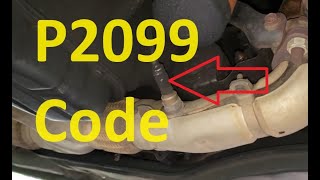
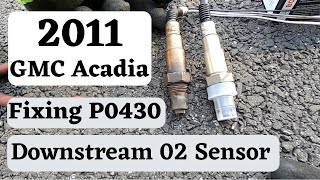
Typical fix: Replace the Bank 2, Sensor 2 oxygen sensor. On the Acadia V6, this sensor is located on the front exhaust pipe (Bank 2), after the catalytic converter. 🎬 Watch: How to replace the Bank 2 downstream sensor.
Est. part cost: $40-$160 - Exhaust Leak 🟡 Medium Probability Leaks in the exhaust manifold, gaskets, or pipes between the engine and the downstream O2 sensor can allow outside air to be pulled into the exhaust stream. This can confuse the O2 sensors and lead to incorrect fuel trim adjustments, which can sometimes manifest as a rich code. A loose flange bolt on the catalytic converter has been reported by an owner as the cause.
How to confirm: Perform a visual inspection of the exhaust system from the engine to the catalytic converter on Bank 2 (front side) for any signs of cracks, rust, or black soot indicating a leak. A smoke test is a more definitive method to pinpoint the leak's location. Spraying soapy water on a cold, running exhaust can also reveal leaks by showing bubbles.
Typical fix: Repair the leak. This may involve replacing a gasket, tightening bolts, or using exhaust putty or wrap for small cracks.
Est. part cost: $10-$200 - Leaking or Malfunctioning Fuel Injector(s) 🟡 Medium Probability → Shop Fuel Injector As noted in TSB #PIP4964F, fuel injector problems can cause a P2099 code on these vehicles. An injector may be stuck open or leaking, delivering too much fuel to one or more cylinders in Bank 2. This is a known issue on the GM 3.6L V6 engine family.
How to confirm: A professional technician can perform a fuel injector balance test to see if all injectors are flowing at the same rate, as recommended by the TSB. A DIY method is to check the spark plugs on Bank 2; a plug that is black and sooty indicates a rich condition in that cylinder.
Typical fix: Replace the faulty fuel injector(s). It is often recommended to replace all injectors on the affected bank at the same time. The intake manifold typically needs to be removed for access.
Est. part cost: $80-$200 per injector
Rare But Worth Checking
- Mass Airflow (MAF) Sensor Issues: A dirty or failing MAF sensor can provide incorrect airflow readings to the PCM, causing it to miscalculate the fuel mixture. While less common for a single-bank code, it's worth checking and cleaning. One owner of a platform-mate (Chevy Traverse) with a P2099 fixed the issue by replacing the MAF sensor.
- High Fuel Pressure: A failing fuel pressure regulator can cause system-wide high fuel pressure, leading to a rich condition that may trigger the code on one bank first. Fuel pressure should be tested with a gauge.
- Failing Catalytic Converter: → Shop Catalytic Converter While a P0430 code is more common for a failing converter, a partially clogged or inefficient converter can sometimes cause erratic readings from the downstream O2 sensor, leading to a P2099 code. A backpressure test can help diagnose a clogged converter.
- PCM Software Issues: In some cases, the logic for setting the code can be overly sensitive. A dealer may have an updated software calibration for the Powertrain Control Module (PCM) that can resolve the issue.
Diagnosis Steps
- Read the code with an OBD-II scanner and confirm P2099 is present. Note any other codes, as they can provide critical clues.
- Visually inspect the Bank 2 (front) exhaust system for obvious leaks, cracks, or soot trails, especially at manifold and flange gaskets.
- Use a scan tool to monitor live data. Watch the voltage of the Bank 2, Sensor 2 (downstream) O2 sensor. It should be relatively steady between 0.1V and 0.9V. If it's stuck high (e.g., >0.8V), the sensor is a likely suspect.
- Inspect the wiring and connector for the Bank 2, Sensor 2 O2 sensor for any damage, melting, or corrosion.
- If no sensor or exhaust issues are found, investigate the fuel system. Check short-term and long-term fuel trims. As per TSB #PIP4964F, a fuel injector balance test is the next logical step for a professional.
- Inspect the spark plugs on Bank 2 (front three cylinders). Plugs that are black, sooty, or wet with fuel are a strong indicator of a leaking injector in that specific cylinder.
- Check for vacuum leaks using a smoke machine, as unmetered air can sometimes cause the PCM to overcompensate with fuel.
Parts You'll Likely Need
- Downstream Oxygen Sensor (Bank 2, Sensor 2)
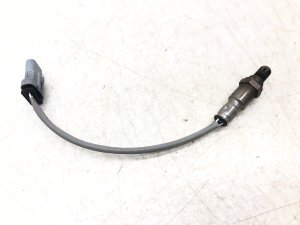
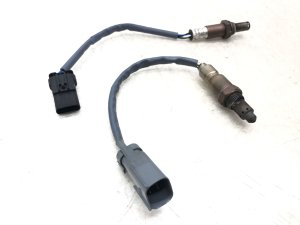
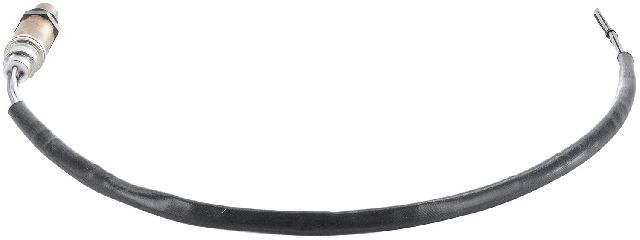
(OEM #ACDelco 213-4768 (GM 12673833) - Varies by year/engine, confirm fitment)— This sensor is the primary source of the signal that triggers the P2099 code. It's a common wear item and often the direct cause of the fault.
Trusted brands: ACDelco, Denso, Bosch, NTK
OEM price range: $100-$180
Aftermarket price range: $40-$120 - Fuel Injector
(OEM #ACDelco 12692884 (For 3.6L LGX V6) - Varies by year/engine, confirm fitment)— A known issue on this platform, as cited by a GM TSB. A leaking injector directly causes a rich condition on the affected bank.
Trusted brands: ACDelco, Bosch, GB Remanufacturing
OEM price range: $115-$200
Aftermarket price range: $60-$120 - Exhaust Gasket — If an exhaust leak is found at a flange, replacing the gasket is the required fix.
Trusted brands: Fel-Pro, ACDelco
OEM price range: $20-$50
Aftermarket price range: $10-$30
Related Codes That Often Appear With This One
- P0175 — System Too Rich (Bank 2). This is a more general code indicating a rich condition on Bank 2, often set along with the more specific P2099.
- P0430 — Catalyst System Efficiency Below Threshold (Bank 2). This code may appear if the rich condition has persisted long enough to damage the catalytic converter, or if the converter itself is the root cause.
- P2097 — Post Catalyst Fuel Trim System Too Rich (Bank 1). This is the companion code for the other engine bank. The TSB #PIP4964F mentions both P2097 and P2099 together, indicating a potential shared cause like a fuel system problem.
Technical Service Bulletins (TSBs) & Recalls
- PIP4964F: SES Light With A P2097 Or P2099 - Directs technicians to perform an injector balance test. This is the most relevant TSB for this specific code.
- PIP4925B: SES Light with Fuel Trim and or Oxygen Sensor Codes - A more general TSB mentioned in forums that could relate to fuel trim issues causing the P2099 code.
Platform-Specific Known Issues
- Technical Service Bulletin #PIP4964F was issued for 2019 models, indicating that codes P2097 or P2099 may be caused by fuel injector problems, requiring an injector balance test for proper diagnosis. A Reddit user identifying as a GMC technician confirmed this TSB (in its 'D' revision) is a key diagnostic step.
- A user on iATN (International Automotive Technicians Network) with a 2011 Chevy Traverse (a platform mate) with P2099 leaned toward an injector problem after checking fuel pressure and for exhaust leaks, highlighting this as a common professional diagnosis path for this engine family.
Mechanic-Grade Diagnostic Values
- Downstream O2 Sensor (Bank 2, Sensor 2) Voltage — expected: Relatively stable voltage between 0.1V and 0.9V in closed loop.. Failure: Consistently stuck high, above 0.8V, indicates a rich condition or faulty sensor.
- Fuel Injector Coil Resistance (Direct Injection Models) — expected: Approximately 1.5 to 1.6 Ohms when tested with a multimeter.. Failure: A reading near zero ohms suggests a shorted coil; an infinite reading indicates an open coil.
- Mass Airflow (MAF) Sensor Reading at Idle — expected: Approximately 3.5 to 5.0 grams/second (g/s) for a 3.6L V6 at normal operating temperature.. Failure: Significantly lower readings may indicate a vacuum leak after the sensor; significantly higher readings could indicate a faulty sensor.
- Low-Pressure Fuel System (In-Tank Pump) — expected: 50-100 PSI with key-on, engine-off when commanded by a scan tool. Aftermarket pump specs show a range of 87-130 PSI for Gen 1 models.. Failure: Pressure below specification can cause lean conditions, but a faulty regulator could potentially cause high pressure.
- High-Pressure Fuel System (Engine-Mounted HPFP) — expected: Can exceed 2,000 PSI during operation.. Failure: This is typically diagnosed via specific low-pressure codes (e.g., P0087) if it fails, not directly via P2099.
Scan Tool Commands That Help
- GM GDS2 (or equivalent professional scan tool): Fuel Injector Balance Test / Automated Injector Balance — This is the manufacturer-recommended next step (per TSB #PIP4964F) when P2099 is present and exhaust leaks or O2 sensor faults are not obvious. The test individually pulses each injector and measures the fuel pressure drop, identifying injectors that are leaking or have poor flow.
- GM GDS2: Fuel Trim Reset — After a repair is completed (e.g., replacing a leaking injector or fixing an exhaust leak), resetting the fuel trims will clear the PCM's learned long-term adjustments and allow it to re-learn based on the new, correct conditions.
Wiring & Ground Locations
- G103 — Located at the left rear of the engine compartment on the cowl, above the brake booster.. This is a critical ground point that serves the Body Control Module (BCM), Instrument Panel Cluster (IPC), and the Data Link Connector (DLC). A poor connection here can cause a wide range of communication and sensor reading errors.
- G104 — Mounted on the left (rear/firewall side) cylinder head.. This is a primary engine ground. A poor engine ground can cause incorrect readings from engine-mounted sensors, including oxygen sensors, as they may not have a stable reference to chassis ground.
- Bank 2 O2 Sensor Harness — The harness for the Bank 2 (front) sensors runs down the front of the engine.. Due to its location, this harness is exposed to heat from the radiator and exhaust manifold. Inspect carefully for any signs of melting, chafing, or brittle wires, which can cause a short or open circuit mimicking a bad sensor.
Real Owner Repair Stories
- Camaro6 Forums user (2016 Chevrolet Camaro (with 3.6L LGX engine, same as 2017+ Acadia)) — P2099 code
✅ What actually fixed it Found a loose flange bolt on the passenger side (Bank 2) catalytic converter. Tightening the bolt to fix the exhaust leak cleared the code. - Reddit user 'Imlouwhoareyou' (GMC Technician) (2016 GMC Acadia (35k miles)) — P2099 code
❌ Tried (didn't work) Owner was incorrectly told by an auto parts store it could be 'bad gas'.
✅ What actually fixed it Technician advised the owner to bring the vehicle to a dealer for proper diagnosis, citing TSB PIP4925B and stating the likely cause was a fuel injector issue or a small intake/exhaust leak, confirming the factory diagnostic path.
OEM Part Supersession History
12647362, 12650300→12692884— Part has been updated by the manufacturer.
Model Year Variations Within This Range
- 2016: The 2016 Acadia is a first-generation model and typically uses the 3.6L LFX V6 engine. Diagnostic paths may be more similar to 2009-2016 Traverse/Enclave models. This engine does not have Active Fuel Management (AFM).
- 2017-2023: These second-generation models use the redesigned 3.6L LGX V6 engine. This engine has Active Fuel Management (cylinder deactivation), a different timing chain design, and potentially different sensor calibrations. Issues like carbon buildup on intake valves, a known concern for all DI engines, are addressed by GM TSB 16-NA-383.
Helpful Videos


Used OEM Parts in Stock
New Aftermarket Parts Available

The information in this article is provided for general reference and educational purposes only. Vehicle specifications, procedures, and part compatibility can vary by production date, trim level, and region. Always consult your vehicle's factory service manual and verify part numbers before purchasing or performing repairs. Safety-critical components such as airbags, seat belts, and braking systems should be installed by a qualified professional.
- Gmc ACADIA:
- 🧭 Diagnostic Flowchart
- 🎬 Helpful Videos
- 🛍️ Shop This Part
- What's Unique About the 2016-2023 Gmc ACADIA
- Symptoms You May Notice
- Most Likely Causes
- Rare But Worth Checking
- Diagnosis Steps
- Parts You'll Likely Need
- Related Codes That Often Appear With This One
- Technical Service Bulletins (TSBs) & Recalls
- Platform-Specific Known Issues
- Mechanic-Grade Diagnostic Values
- Scan Tool Commands That Help
- Wiring & Ground Locations
- Real Owner Repair Stories
- OEM Part Supersession History
- Model Year Variations Within This Range
- 🎟️ Get 5% Off