

P2099 on 2010-2017 GMC Terrain V6: Causes and Fixes for Rich Fuel Trim
On a 2010-2017 GMC Terrain with a V6 engine, code P2099 is most often caused by leaking fuel injectors or an exhaust leak near the catalytic converter. A GM Technical Service Bulletin (PIP4964F) explicitly advises testing the fuel injectors for leaks before replacing any other parts, as misdiagnosing the issue and replacing O2 sensors is a common mistake.
- P2099 on a 2010-2017 GMC Terrain V6 points to a rich fuel condition on Bank 2.
- Before replacing any parts, follow GM's advice and test the fuel injectors on Bank 2 for leaks.
- If the injectors are good, the next most likely cause is an exhaust leak between the engine and the catalytic converter.
- Replacing the oxygen sensor is a common misdiagnosis and should only be done if the sensor is proven to be faulty through testing.
- This code only applies to V6 models (3.0L or 3.6L), not the 2.4L 4-cylinder engine.
What's Unique About the 2010-2017 Gmc TERRAIN
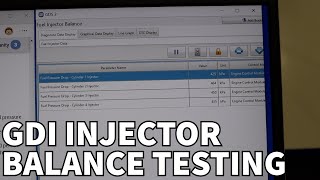
For the V6 engines in the 2010-2017 GMC Terrain (3.0L and 3.6L), General Motors has specifically identified faulty direct fuel injectors as a primary cause for P2099. A Technical Service Bulletin (TSB #PIP4964F) directs technicians to perform a fuel injector balance test before pursuing other diagnostic paths. 🎬 Watch: How to perform a scan tool injector balance test. This is a crucial distinction, as many mechanics might otherwise default to replacing oxygen sensors, which is often not the root cause on this particular platform. This issue is common across other GM vehicles using these V6 engines, such as the Chevrolet Equinox and Cadillac SRX.
Diagnostic Flowchart
Tap your situation to follow the diagnostic path that matches what you're seeing on this vehicle.
Symptoms You May Notice
- Check Engine Light is on.
- Decreased fuel economy.
- Poor engine performance or sluggish acceleration.
- Rough idle.
- Smell of gasoline from the exhaust.
- Black soot on the rear of the vehicle.
- Replacing the downstream oxygen sensor without first testing the fuel system. The TSB for this vehicle explicitly advises against this by prioritizing an injector balance test.
- Replacing the mass airflow (MAF) sensor. While a faulty MAF can cause fuel trim issues, it is not a primary cause for a bank-specific code like P2099 on this platform.
Most Likely Causes
- Leaking Fuel Injectors 🔴 High Probability → Shop Fuel Injector A GM Technical Service Bulletin (PIP4964F) specifically highlights this as a common concern for this code on this platform due to the design of the direct injection system.
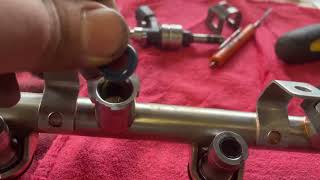
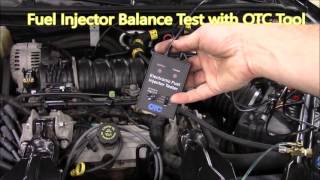
How to confirm: Perform a fuel injector balance test or an Active Fuel Injector Test (AFIT) using a capable scan tool. This measures the pressure drop for each injector to see if one is flowing more fuel than the others. Another method is to check the spark plugs on Bank 2; a plug that is black and sooty indicates a rich condition in that cylinder.
Typical fix: Replace the faulty fuel injector(s) on Bank 2. It is often recommended to replace all three injectors on that bank at the same time.
Est. part cost: $50-$150 per injector - Exhaust Leak 🟡 Medium Probability Leaks can occur at the exhaust manifold gasket or the gasket between the manifold and the catalytic converter. A GM bulletin notes this as a possible cause if injectors test good. Flex pipes are another common point of failure.
How to confirm: Visually inspect the exhaust system on Bank 2 for soot trails or broken studs. A smoke test or pressurizing the exhaust with low pressure and spraying soapy water on gaskets can reveal leaks. Sometimes the leak is audible.
Typical fix: Replace the leaking gasket and/or repair the flange. Filing the mating surface of the pipe may be necessary for a good seal. Small leaks or cracks can sometimes be repaired with exhaust putty or a heat wrap kit.
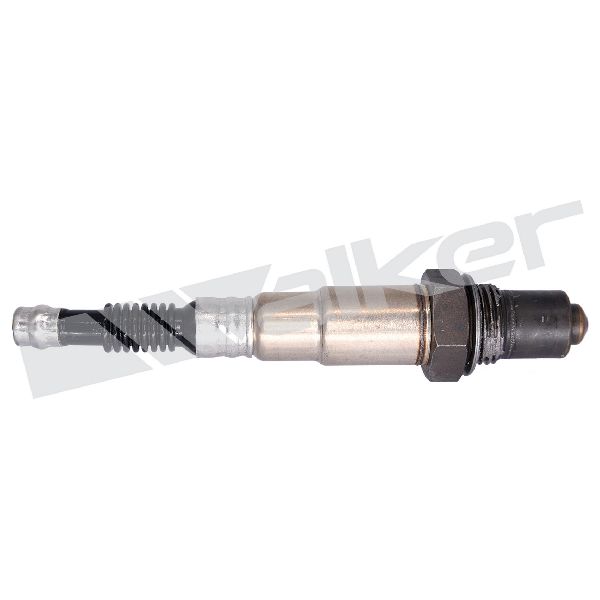
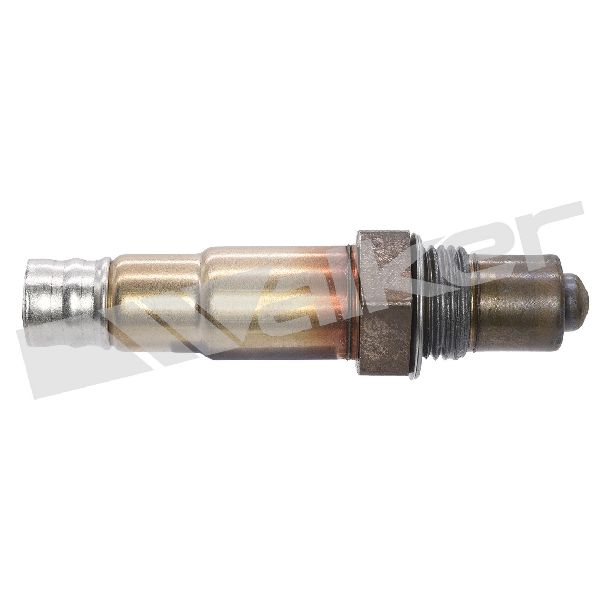
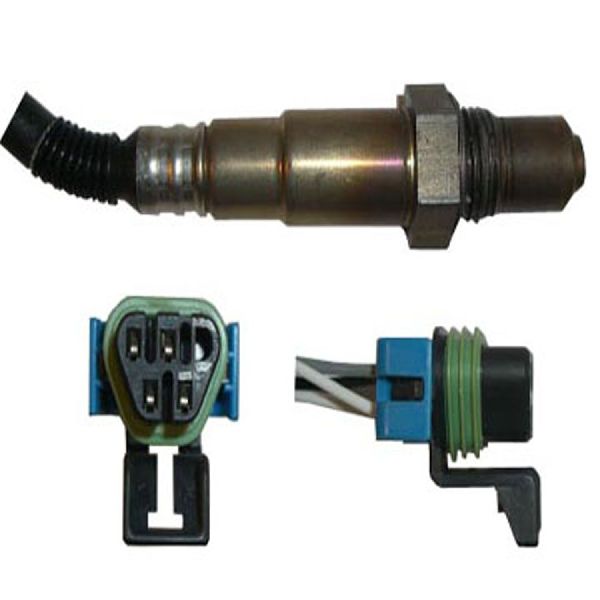
Est. part cost: $20-$60 for gaskets - Faulty Downstream Oxygen (O2) Sensor ⚪ Low Probability → Shop Oxygen Sensor
How to confirm: Use a scan tool to monitor the live data for the Bank 2, Sensor 2 O2 sensor. A healthy downstream sensor on a warm engine should show a relatively steady voltage (typically between 0.6V and 0.8V). If it's stuck high (above 0.8V) or fluctuating rapidly like the upstream sensor, it may be faulty or indicating a bad catalytic converter.
Typical fix: Replace the Bank 2 downstream O2 sensor. This should only be done after confirming injectors and the exhaust system are not the cause.
Est. part cost: $50-$120 - High Fuel Pressure ⚪ Low Probability While less common, a failing high-pressure fuel pump (HPFP) can cause a system-wide rich condition on these direct-injection engines.
How to confirm: Connect a fuel pressure gauge to the fuel rail and check if the pressure is within the manufacturer's specifications. A scan tool can also monitor desired vs. actual fuel rail pressure.
Typical fix: Replace the fuel pressure regulator or high-pressure fuel pump module.
Est. part cost: $70-$300
Rare But Worth Checking
- Failing Catalytic Converter: → Shop Catalytic Converter While a rich condition can damage the converter, a clogged or inefficient converter can also sometimes contribute to this code by trapping exhaust gases and affecting O2 sensor readings.
- Mechanical Valvetrain Issue: A GM bulletin mentions that a sticking valve or a lifter follower out of place could be a root cause if fuel and exhaust systems check out.
- PCM Software Issue: In some cases, the vehicle's Powertrain Control Module may require a software update to correct logic errors. This is a dealer-level fix.
- Contaminated Engine Oil: If a high-pressure fuel pump or injector leaks internally, it can dilute the engine oil with gasoline. This fuel-saturated oil can then be circulated through the PCV system, creating a rich condition. Check the oil dipstick for a strong gasoline smell.
Diagnosis Steps
- Scan the PCM for any other stored trouble codes to see if they provide clues.
- Check live data on a scan tool, focusing on short-term and long-term fuel trims for both banks, as well as the voltage readings for all four oxygen sensors. Compare Bank 1 and Bank 2 fuel trims; a significant difference points to a bank-specific issue.
- As per TSB #PIP4964F, perform a fuel injector balance test or an Active Fuel Injector Test (AFIT) to check for leaking or over-fueling injectors on Bank 2.
- If injectors test normal, thoroughly inspect the Bank 2 exhaust system for leaks, especially at the manifold-to-head and manifold-to-converter gaskets, and any flex pipes.
- Check the engine oil for any smell of gasoline, which could indicate a leaking high-pressure fuel pump or injector.
- Test fuel pressure (both low and high pressure systems) to ensure it is within OEM specifications.
- If all other tests are inconclusive, test the Bank 2 downstream O2 sensor for proper operation by observing its voltage waveform on a scan tool or oscilloscope.
- As a final step, consider the possibility of a mechanical engine issue or a failing catalytic converter.
Parts You'll Likely Need
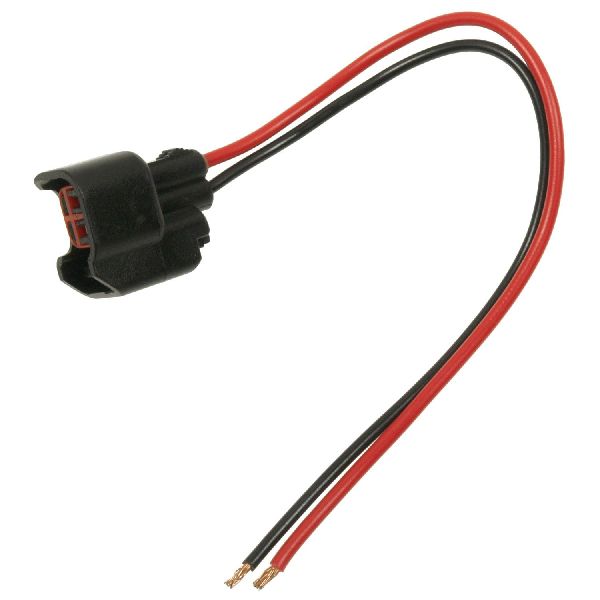
- Fuel Injector
(OEM #12638530 (For 3.6L LFX))— This is the most likely cause according to GM's own technical service bulletins for the P2099 code on this vehicle.
Trusted brands: ACDelco, Bosch, Delphi
OEM price range: $100-$180
Aftermarket price range: $50-$120 - Exhaust Manifold Gasket — An exhaust leak before the O2 sensors is a common cause that can trick the system into thinking there's a rich condition.
Trusted brands: ACDelco, Fel-Pro, Mahle
OEM price range: $30-$60
Aftermarket price range: $15-$40 - Downstream Oxygen Sensor (Bank 2, Sensor 2)
(OEM #213-4230 (ACDelco))— While often replaced, it's less likely to be the root cause than injectors or exhaust leaks. It should only be replaced after confirming it has failed through testing.
Trusted brands: ACDelco, Denso, Bosch
OEM price range: $80-$150
Aftermarket price range: $50-$100
Related Codes That Often Appear With This One
- P0300 — A random misfire code can occur if a leaking injector or other fuel issue is severe enough to affect combustion stability.
- P0302, P0304, P0306 — Misfire codes for the specific cylinders on Bank 2 (the front bank, closer to the radiator) can help pinpoint which cylinder has the leaking fuel injector.
- P2097 — This is the equivalent 'rich' code for Bank 1. Seeing both P2097 and P2099 together would point towards a systemic issue like high fuel pressure rather than a single bank problem like an injector.
Technical Service Bulletins (TSBs) & Recalls
- PIP4964F: Directs technicians to check for Diagnostic Trouble Code P2097 or P2099 and perform an injector balance or Active Fuel Injector Tester prior to further diagnosis.
Platform-Specific Known Issues
- A GM Preliminary Information bulletin (#PI0727D, an update to the one cited in the prompt) confirms that for P2097/P2099 codes, the most common issues are related to fuel injectors, followed by small exhaust leaks at the outlet of the engine converter.
Mechanic-Grade Diagnostic Values
- High-Pressure Fuel System (Direct Injection) — expected: 300-500 PSI at idle, rising to 2000+ PSI under load.. Failure: Pressure significantly below or above the PCM's desired pressure reading on a scan tool.
- Low-Pressure Fuel System — expected: 50-60 PSI with Key On, Engine Off (KOEO).. Failure: Pressure dropping off or well below 50 PSI indicates a weak in-tank pump.
- Downstream O2 Sensor (Bank 2, Sensor 2) Voltage — expected: Relatively steady voltage between 0.6V and 0.8V on a warm, running engine in closed loop.. Failure: Voltage stuck high (above 0.8V) confirms the rich condition seen by the PCM. If it fluctuates rapidly like an upstream sensor, the catalytic converter may be failing.
- Fuel Injector Resistance (3.6L LFX) — expected: While direct injection injectors are not typically tested by resistance, older port injection injectors are around 11-17 Ohms. The primary test for DI injectors is a flow/balance test.. Failure: A significant deviation on one injector compared to others. However, the AFIT balance test is the correct procedure for this engine.
Scan Tool Commands That Help
- GDS2 (GM Dealer/Professional Scan Tool): Fuel System > Injector Test (or Active Fuel Injector Test - AFIT) — This is the primary diagnostic step recommended by GM TSB PIP4964F. It pressurizes the fuel rail and individually fires each injector to measure the pressure drop, accurately identifying a leaking or over-fueling injector.
- GDS2 (GM Dealer/Professional Scan Tool): Fuel Trim Reset — After replacing a fuel injector or repairing an exhaust leak, this function must be used to clear the PCM's long-term learned fuel trim values, allowing it to relearn based on the new, correct conditions.
- GDS2 (GM Dealer/Professional Scan Tool): Oxygen Sensor Test — This can be used to verify if the O2 sensor is responding correctly to induced rich/lean conditions, helping to rule it out as the cause if it passes.
Wiring & Ground Locations
- G109 (for 3.6L V6) — Located on the right front of the engine block.. This is a primary engine ground. A loose or corroded connection at G109 can introduce electrical noise or voltage offsets into sensor readings, including the oxygen sensors and crankshaft position sensor, potentially leading to incorrect fuel trim calculations.
- Bank 2 O2 Sensor Harness — The harness for the Bank 2 sensors (front of engine) routes from the sensors on the exhaust manifold down towards the transmission and main engine harness.. This harness is susceptible to heat damage from the exhaust manifold or chafing against the engine block or transmission case. Melted or shorted wires can cause false rich signals to be sent to the PCM.
Real Owner Repair Stories
- Chevrolet Equinox Forum User (2013 Chevrolet Equinox 3.6L V6 (platform mate)) — P2099 code, Check Engine Light.
❌ Tried (didn't work) Replaced oxygen sensors, Performed a smoke test which came back clean
✅ What actually fixed it A dealer performed a fuel injector balance test and found two injectors on Bank 2 were leaking. Replacing the faulty injectors and all spark plugs resolved the P2099 code. - Cadillac Forums User (2012 Cadillac SRX 3.6L V6 (platform mate)) — P2099 and P0306 (Cylinder 6 misfire).
❌ Tried (didn't work) Replaced spark plug on cylinder 6, Replaced ignition coil on cylinder 6
✅ What actually fixed it The root cause was a leaking fuel injector on cylinder 6. Replacing the injector fixed both the misfire and the P2099 code.
"I Checked Everything" — The Actual Cause
- In several owner-reported cases on platform-mate vehicles (Chevy Equinox, Cadillac SRX) with the same V6 engine, a smoke test for exhaust leaks came back negative. The ultimate cause of the P2099 was diagnosed as leaking direct fuel injectors, which is an internal fuel system issue that a smoke test cannot detect. This aligns with GM's TSB directing technicians to perform an injector balance test.
OEM Part Supersession History
12638530→12669384— This fuel injector for the 3.6L LFX engine was updated by GM. The new part number represents design improvements to increase durability and address the leaking issues that were common with the original injectors.213-4230→12611165 (GM Part Number)— The ACDelco part number 213-4230 for the downstream oxygen sensor has been updated. The new part may feature improved materials or technology for better longevity and more stable readings.
Model Year Variations Within This Range
- 2010-2012 (V6 models): These earlier models used the 3.0L LF1 or LFW V6 engine. While they suffer from the same P2099 issues related to injectors, the specific fuel injector part number is different (e.g., 12634126). The diagnostic principle remains the same.
- 2013-2017 (V6 models): These later models used the 3.6L LFX V6 engine. They use fuel injector part number 12638530 or its successor, 12669384. The TSB PIP4964F applies to both the 3.0L and 3.6L engines.
Helpful Videos

![What is P2099 Engine Code [Quick Guide]](https://img.youtube.com/vi/R-7ET0YPDPE/mqdefault.jpg)
![How to Fix P2099 Engine Code in 4 Minutes [2 DIY Methods / Only $9.49]](https://img.youtube.com/vi/tZdHNVnheeA/mqdefault.jpg)
We Have This Part in Stock



The information in this article is provided for general reference and educational purposes only. Vehicle specifications, procedures, and part compatibility can vary by production date, trim level, and region. Always consult your vehicle's factory service manual and verify part numbers before purchasing or performing repairs. Safety-critical components such as airbags, seat belts, and braking systems should be installed by a qualified professional.
- Gmc TERRAIN:
- 🧭 Diagnostic Flowchart
- 🎬 Helpful Videos
- 🛍️ Shop This Part
- What's Unique About the 2010-2017 Gmc TERRAIN
- Symptoms You May Notice
- Most Likely Causes
- Rare But Worth Checking
- Diagnosis Steps
- Parts You'll Likely Need
- Related Codes That Often Appear With This One
- Technical Service Bulletins (TSBs) & Recalls
- Platform-Specific Known Issues
- Mechanic-Grade Diagnostic Values
- Scan Tool Commands That Help
- Wiring & Ground Locations
- Real Owner Repair Stories
- "I Checked Everything" — The Actual Cause
- OEM Part Supersession History
- Model Year Variations Within This Range
- 🎟️ Get 5% Off