

P2099 on 2014-2021 Jeep Cherokee 3.2L: Post Catalyst Fuel Trim Too Rich Bank 2
P2099 on a Jeep Cherokee 3.2L V6 often indicates a rich fuel mixture on Bank 2. Before replacing parts, check for exhaust leaks and verify if your vehicle needs a powertrain software update. Multiple Technical Service Bulletins (TSBs), especially for 2014-2016 models, address this exact code with a calibration improvement, which is often the primary fix.
- P2099 means the engine is running rich on Bank 2 (front/radiator side on the 3.2L V6).
- Before buying any parts, contact a Jeep dealer with your VIN to see if a software update (TSB) is available to fix this code.
- The most common physical causes are exhaust leaks before the rear O2 sensor or a faulty downstream O2 sensor itself.
- Driving with this code can hurt fuel economy and eventually damage the expensive catalytic converter.
- This code only applies to the 3.2L V6 engine in the Jeep Cherokee, not the 4-cylinder models.
What's Unique About the 2014-2021 Jeep CHEROKEE
For the 2014-2021 Jeep Cherokee (KL) with the 3.2L V6, the P2099 code is frequently linked to software calibration issues, particularly in the 2014-2016 model years. Multiple Technical Service Bulletins (TSBs) have been issued by FCA (Fiat Chrysler Automobiles) for a "Downstream Fuel Trim System 2 Rich DTC Calibration Robustness Improvement." TSBs like 18-064-20 and 18-002-16 REV. C specifically call for reprogramming the PCM with updated software 🎬 Watch: How a PCM update fixes multiple Jeep engine codes. to fix this issue without replacing any parts. This means that in many cases, the code is triggered not by a faulty part, but by overly sensitive PCM software. A dealership software update is a critical first diagnostic step that can often resolve the issue.
Diagnostic Flowchart
Tap your situation to follow the diagnostic path that matches what you're seeing on this vehicle.
Symptoms You May Notice
- Check Engine Light is on
- Reduced fuel economy
- Rough idle or hesitation during acceleration
- A smell of gasoline or black smoke from the exhaust
- Poor engine performance or lack of power
- Replacing the oxygen sensor without first checking for required software updates. Given the numerous TSBs for 2014-2016 models, a PCM flash should be the first consideration before replacing hardware.
- Replacing the catalytic converter when the actual issue is a software glitch, a minor exhaust leak, or a faulty sensor.
Most Likely Causes
- Powertrain Control Module (PCM) Software Requires Update 🔴 High Probability → Shop Engine Control Module (ECM) Manufacturer TSBs #18-064-20, #18-002-16 REV. C, and #18-060-16 specifically call out a need for a 'Calibration Robustness Improvement' for this code on 2014-2016 model years. This is the most common and well-documented fix.
How to confirm: A Jeep dealership or a qualified shop with a wiTECH scan tool can check your vehicle's VIN and current software calibration ID against the latest available updates mentioned in the TSBs.
Typical fix: Reprogramming the PCM with the latest manufacturer software. The TSBs explicitly state this bulletin involves reprogramming the PCM.
Est. part cost: $0 - Exhaust Leak 🟡 Medium Probability Leaks in the exhaust system between the engine and the downstream O2 sensor can allow outside air to enter, which skews the sensor's readings and can falsely trigger a rich code as the PCM tries to compensate. This is a common issue on many vehicles, not just the Cherokee.
How to confirm: Visually inspect the exhaust manifold, gaskets, and pipes for cracks or black soot trails. A professional smoke test is the most effective way to pinpoint hard-to-see leaks. 🎬 See this quick trick to find any exhaust leak fast.
Typical fix: Repairing the leak, which may involve replacing a gasket (e.g., exhaust manifold gasket) or welding a cracked pipe.
Est. part cost: $20-$100 - Faulty Downstream Oxygen (O2) Sensor 🟡 Medium Probability → Shop Oxygen Sensor
How to confirm: Use a scan tool to monitor the live voltage data from the Bank 2, Sensor 2 (downstream) O2 sensor. A healthy downstream sensor should show a relatively stable voltage (e.g., 0.65V-0.75V) when the engine is warm and at a steady RPM. If it's stuck high (above 0.8V) or fluctuating rapidly like the upstream sensor, it may be faulty. Many owners replace this sensor first, but it's often not the root cause for this specific vehicle.
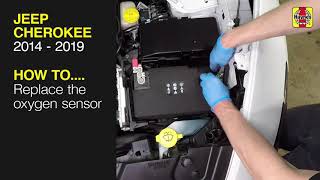
Typical fix: Replace the Bank 2, Sensor 2 oxygen sensor. On the 3.2L Cherokee, this is the sensor on the front-facing (radiator side) catalytic converter 🎬 Watch: Step-by-step guide to replacing the downstream oxygen sensor., in the lower position.
Est. part cost: $50-$150 - Leaking Fuel Injector(s) on Bank 2 ⚪ Low Probability → Shop Fuel Injector
How to confirm: This is more complex to diagnose. It may involve a fuel pressure leak-down test or having a professional perform a fuel injector balance test. Another method is to check the spark plugs on Bank 2 (front bank); if one is significantly darker or wetter than the others, it could indicate a leaking injector in that cylinder.
Typical fix: Replace the faulty fuel injector(s) and their seals.
Est. part cost: $70-$200 per injector
Rare But Worth Checking
- Failing Catalytic Converter: → Shop Catalytic Converter While less common, a deteriorating catalytic converter can fail to process exhaust gases correctly, leading to abnormal readings from the downstream O2 sensor. This is often accompanied by a P0430 code (Catalyst Efficiency Below Threshold Bank 2).
- High Fuel Pressure: A faulty fuel pressure regulator can cause excessive fuel to be delivered to the engine, resulting in a system-wide rich condition that may trigger this code on one or both banks.
- Faulty Mass Air Flow (MAF) Sensor: A dirty or failing MAF sensor can under-report the amount of air entering the engine, causing the PCM to inject too much fuel. This is a less common cause for a single-bank code.
Diagnosis Steps
- Check for TSBs: The absolute first step for this specific vehicle and code is to check if your VIN is covered by TSBs 18-073-22, 18-064-20, 18-002-16, or 18-060-16 related to PCM updates for P2099. A dealer can confirm this. This is the most likely fix, especially on 2014-2016 models.
- Scan for Other Codes: Use an OBD-II scanner to check for any other codes that could provide clues to the root cause, such as P2097 (both banks rich) or P0430 (catalyst issue).
- Inspect for Exhaust Leaks: Carefully inspect the entire exhaust system for Bank 2 (front side of the engine) from the exhaust manifold to the post-catalyst O2 sensor. Look for black soot, cracks, or listen for hissing sounds. A smoke test is the most reliable method.
- Analyze O2 Sensor Live Data: Use a scan tool to observe the voltage of the Bank 2 downstream O2 sensor (B2S2). It should hold a steady voltage (typically 0.65V-0.75V) when the engine is warm and at a steady RPM. If it's stuck high or switching rapidly like the upstream sensor, the sensor may be bad or there's a significant issue upstream.
- Check Fuel Trim Values: Observe short-term and long-term fuel trims. Long-term fuel trim values more negative than -10% on Bank 2 indicate the PCM is actively trying to remove a large amount of fuel, confirming the rich condition.
- Investigate Fuel System: If the above steps don't reveal the cause, proceed to more advanced diagnostics like checking fuel pressure (expect 40-60 PSI for this port-injected engine) and testing for leaking fuel injectors on Bank 2.
Parts You'll Likely Need
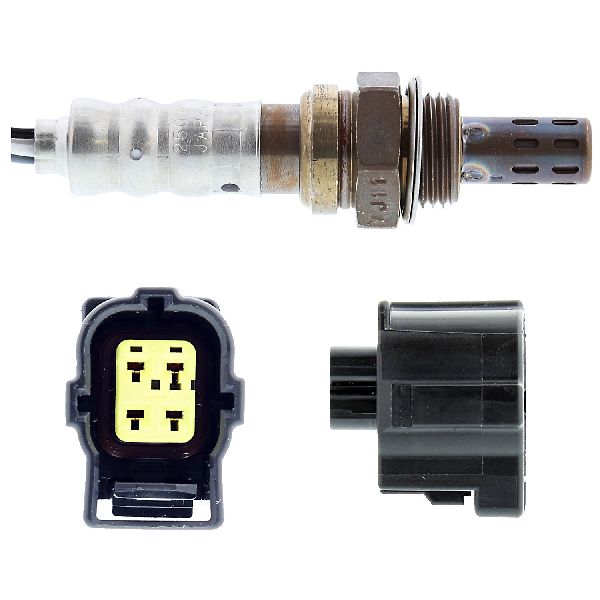
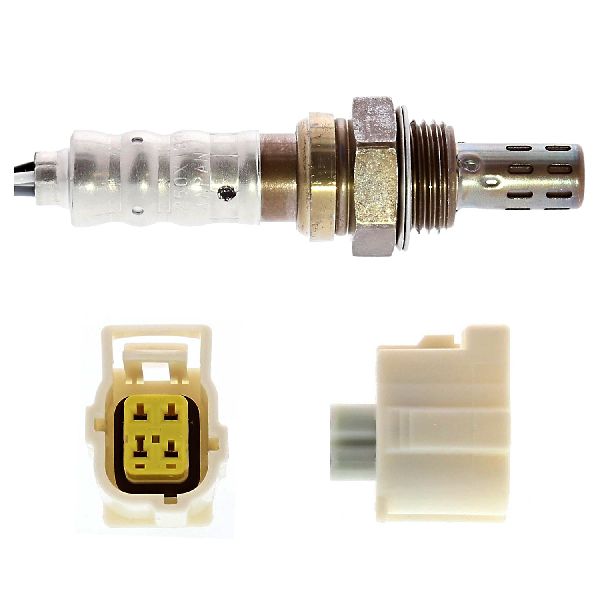
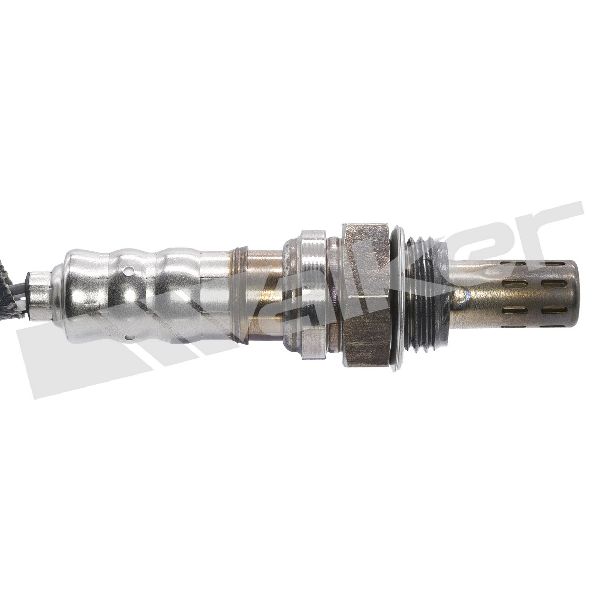
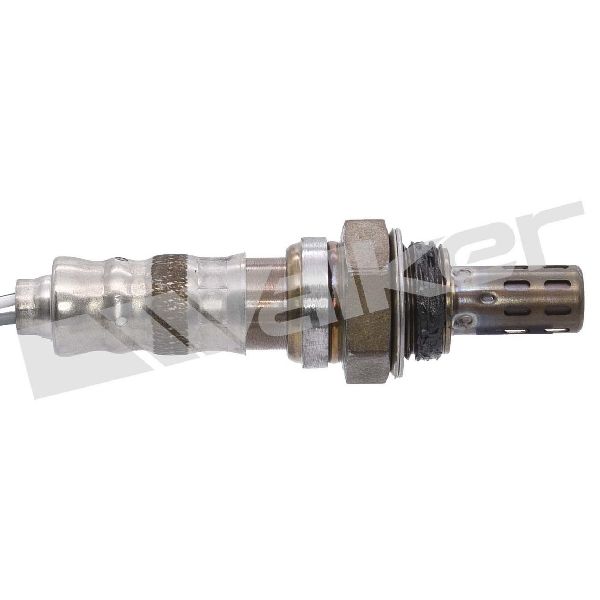
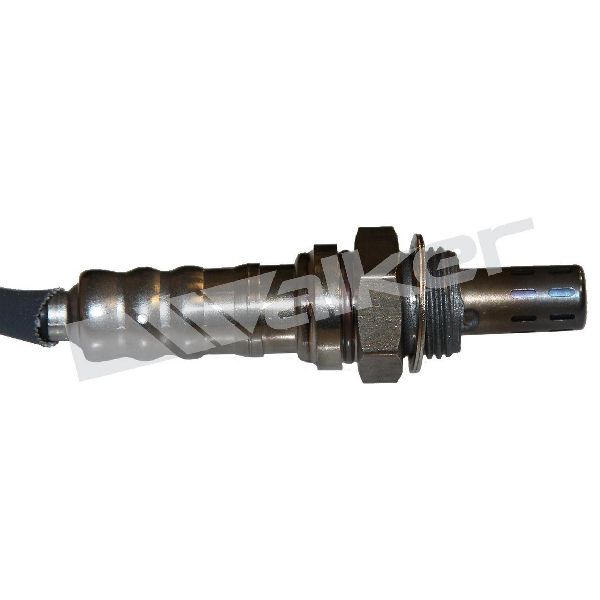
- Downstream Oxygen Sensor (Bank 2, Sensor 2)
(OEM #68227423AA)— This sensor is the primary source of the signal that triggers the code. If it fails, becomes contaminated, or is slow to respond, it can send false rich readings to the PCM. While often replaced, it may not be the root cause on this vehicle.
Trusted brands: Mopar, NTK, Denso
OEM price range: $100-$180
Aftermarket price range: $50-$120 - Exhaust Manifold Gasket (Bank 2) — If an exhaust leak is found at the manifold on the front bank, this gasket will need to be replaced to create a proper seal. Leaks are a common cause of incorrect O2 sensor readings.
Trusted brands: Fel-Pro, Mahle, Mopar
OEM price range: $30-$60
Aftermarket price range: $15-$40
Related Codes That Often Appear With This One
- P2097 — This is the equivalent code for Bank 1 ('Downstream Fuel Trim System 1 Rich'). Seeing both P2097 and P2099 together is specifically mentioned in TSBs, strongly suggesting a problem affecting the entire engine that is correctable with a PCM software update.
- P0430 — This code indicates 'Catalyst System Efficiency Below Threshold (Bank 2)'. If the catalytic converter is failing, it can cause the P2099 code to appear as a symptom of the converter's inability to properly store and use oxygen.
- P0456 — This code for a small EVAP system leak has been noted in the same TSBs as P2099, suggesting they can appear concurrently due to software-related diagnostic sensitivity that is addressed by the same PCM flash.
Technical Service Bulletins (TSBs) & Recalls
- Bulletin #1807322
- Bulletin #1806420
- Bulletin #18-060-16
- Bulletin #1800216REVC
- Bulletin #18-002-16 REV. C
Platform-Specific Known Issues
- A significant number of 2014-2016 Jeep Cherokees with the 3.2L engine have TSBs issued for this code, where the primary fix is a PCM software update to improve the diagnostic's sensitivity and prevent false triggers.
- Owners on forums frequently report that dealers perform the PCM flash as the first and often only step needed to resolve the P2099 code, reinforcing the importance of checking for software updates before replacing parts.
Mechanic-Grade Diagnostic Values
- Downstream O2 Sensor (B2S2) Voltage — expected: Relatively stable voltage between 0.65V and 0.75V at warm idle.. Failure: Voltage is stuck high (e.g., >0.8V), stuck low, or fluctuating rapidly like an upstream sensor.
- Long Term Fuel Trim (Bank 2) — expected: Between -10% and +10%.. Failure: A value more negative than -10% confirms the PCM is compensating for a rich condition.
- Fuel Rail Pressure — expected: 40-60 PSI (275-413 kPa) at idle.. Failure: Pressure significantly above this range can force too much fuel past the injectors.
- O2 Sensor Heater Circuit Resistance — expected: 10-25 Ohms.. Failure: A reading of 0 Ohms (short) or infinite Ohms (open circuit) indicates a failed heater element within the sensor.
Scan Tool Commands That Help
- wiTECH or equivalent professional scan tool: Injector Balance Test — Use this function when a leaking fuel injector is suspected. The tool commands each injector and measures the corresponding drop in fuel pressure to identify an injector flowing at a different rate than the others.
- wiTECH or equivalent professional scan tool: O2 Sensor Heater Test — To verify the integrity of the oxygen sensor's internal heater circuit. This is a quick way to condemn a sensor without having to measure resistance manually at the sensor connector.
- wiTECH or equivalent professional scan tool: O2 Sensor Response Test — To check if the sensor is lazy or slow to respond. The tool will guide the user to change engine conditions (e.g., snap throttle) and will monitor if the sensor voltage responds within the expected time frame.
Wiring & Ground Locations
- O2 Sensor Harness Chafe Point — Inspect the O2 sensor wiring harness for any areas where it may be pinched or rubbing, particularly where it routes near the back of the cylinder head and valve cover.. A pinched or chafed wire can short the sensor's signal or heater circuit to ground or to another wire, causing incorrect readings that can trigger a false P2099 code. This type of fault can be intermittent and difficult to find.
"I Checked Everything" — The Actual Cause
- A tiny, almost invisible pinhole leak in the exhaust system, even after the catalytic converter, can cause a P2099 code. As high-velocity exhaust gas passes over the pinhole, it creates a Venturi effect that sucks fresh, oxygen-rich air into the exhaust pipe. This outside air flows over the downstream O2 sensor, which incorrectly interprets it as a lean condition. The PCM then overcompensates by adding fuel, creating an actual rich condition that triggers the P2099 code. This is missed by technicians who only look for large, obvious leaks where exhaust is pushing out.
Model Year Variations Within This Range
- 2014-2018 vs 2019-2021: The Jeep Cherokee received a major facelift for the 2019 model year, which included revised styling and new infotainment options. While the 3.2L V6 engine carried over, the TSBs addressing P2099 with a software update are specifically for earlier 2014-2016 models. This strongly suggests that models from 2017 onwards, and especially the refreshed 2019+ models, likely left the factory with the improved software calibration, making a software bug a less probable cause on later model years.
Helpful Videos

We Have This Part in Stock


The information in this article is provided for general reference and educational purposes only. Vehicle specifications, procedures, and part compatibility can vary by production date, trim level, and region. Always consult your vehicle's factory service manual and verify part numbers before purchasing or performing repairs. Safety-critical components such as airbags, seat belts, and braking systems should be installed by a qualified professional.
- Jeep CHEROKEE:
- 🧭 Diagnostic Flowchart
- 🎬 Helpful Videos
- 🛍️ Shop This Part
- What's Unique About the 2014-2021 Jeep CHEROKEE
- Symptoms You May Notice
- Most Likely Causes
- Rare But Worth Checking
- Diagnosis Steps
- Parts You'll Likely Need
- Related Codes That Often Appear With This One
- Technical Service Bulletins (TSBs) & Recalls
- Platform-Specific Known Issues
- Mechanic-Grade Diagnostic Values
- Scan Tool Commands That Help
- Wiring & Ground Locations
- "I Checked Everything" — The Actual Cause
- Model Year Variations Within This Range
- 🎟️ Get 5% Off