

P2099 on 2010-2015 Lexus RX350: Post Catalyst Fuel Trim Too Rich Bank 2 Causes & Fixes
On a 2010-2015 Lexus RX350, code P2099 most often means the Bank 2, Sensor 2 (downstream rear) oxygen sensor has failed. It's typically sending a false rich signal. Replacing this sensor is the most common fix, costing around $70-$150 for an OEM-quality part like Denso (p/n 234-4512). The repair is DIY-friendly (2/5 difficulty) and primarily involves accessing the sensor on the rear exhaust pipe near the firewall.
- P2099 on your RX350 almost always points to the rear downstream oxygen sensor (Bank 2, Sensor 2).
- Before buying any parts, use a scan tool to watch the live voltage of the Bank 2, Sensor 2. A reading stuck above 0.8V confirms a likely bad sensor.
- Bank 2 is the cylinder bank against the firewall. Sensor 2 is the one located *after* the catalytic converter on that bank.
- This is a DIY-friendly repair. Ensure the exhaust is cool, use a 22mm or 7/8" O2 sensor socket, and apply anti-seize to the threads of the new sensor.
- Always use a quality OEM brand like Denso (p/n 234-4512) or NGK/NTK for replacement to ensure compatibility and longevity.
What's Unique About the 2010-2015 Lexus RX350
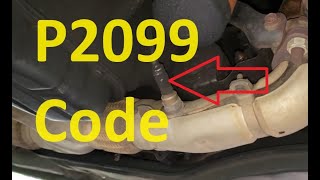
The 2GR-FE engine in the RX350 is known for its reliability, and this code is not indicative of a major engine flaw. 🎬 Watch: A quick breakdown of P2099 causes and symptoms. The issue is almost always related to the emissions control sensors rather than a mechanical problem. The most common failure point is the downstream oxygen sensor itself, which gets lazy or fails with age, sending incorrect voltage readings to the computer. Unlike some platforms where this code points to complex vacuum leaks or fuel delivery issues, on the RX350, the diagnostic path typically starts and ends with the Bank 2, Sensor 2 oxygen sensor.
Symptoms You May Notice
- Check Engine Light is illuminated
- Decreased fuel economy
- Possible rough idle or slight hesitation on acceleration
- Potential for a faint smell of gasoline from the exhaust if the condition is severe
- Black smoke from the exhaust on startup or acceleration in severe cases.
- Replacing the upstream Air/Fuel Ratio Sensor (Bank 2, Sensor 1). This sensor is more expensive and measures the pre-catalyst mixture; P2099 is specifically a post-catalyst code.
- Replacing the Mass Airflow (MAF) sensor. While a MAF sensor can cause fuel trim issues, it typically affects both engine banks and would likely set other codes.
Most Likely Causes
- Faulty Downstream Oxygen Sensor (Bank 2, Sensor 2) 🔴 High Probability → Shop Oxygen Sensor Oxygen sensors are wear items. With age and exposure to exhaust gases, they can degrade, lose accuracy, or fail entirely, often getting stuck sending a high voltage (rich) signal. This is the most common failure for P2099 on the RX350 and similar Toyota/Lexus models with the 2GR-FE engine.
How to confirm: Use an OBD-II scan tool to monitor the live data for the B2S2 oxygen sensor voltage. A healthy, warm downstream sensor should show a relatively stable voltage, typically between 0.5V and 0.7V. If it's stuck high (e.g., above 0.8V) or fluctuating wildly like an upstream sensor, it has likely failed.
Typical fix: Replace the Bank 2, Sensor 2 oxygen sensor. This sensor is located on the rear exhaust manifold (near the firewall) after the catalytic converter. Access is from underneath the vehicle. A 22mm or 7/8" oxygen sensor socket is required.
Est. part cost: $70-$180 - Exhaust Leak ⚪ Low Probability Rust and corrosion can cause leaks at gasket flanges or cracks in the exhaust pipes. While leaks between the engine and the upstream sensor typically cause lean codes, a leak between the catalytic converter and the downstream sensor can disrupt airflow and cause erratic readings, sometimes triggering a rich code.
How to confirm: Perform a visual inspection of the exhaust system from the engine to the tailpipe, looking for black soot marks, cracks, or holes. A smoke test, where smoke is forced into the exhaust system, is the most effective way to find small leaks. Pay close attention to the flange gaskets around the catalytic converter.
Typical fix: Replace the leaking gasket or repair/replace the damaged section of the exhaust pipe.
Est. part cost: $20-$300 - Leaking Fuel Injector(s) on Bank 2 ⚪ Low Probability → Shop Fuel Injector
How to confirm: This creates a true rich condition. A mechanic can perform a fuel injector balance test. Another method is to check the spark plugs on Bank 2 (rear bank); if one or more are black and sooty, it indicates a rich condition in those cylinders. You can also monitor short-term and long-term fuel trims for Bank 2; if the ECM is commanding a strong negative correction (e.g., -10% or more), it's trying to compensate for excess fuel.
Typical fix: Replace the faulty fuel injector(s) and their seals.
Est. part cost: $100-$300 per injector
Rare But Worth Checking
- Failing Catalytic Converter: → Shop Catalytic Converter While a failing catalytic converter more commonly causes a P0420 or P0430 (catalyst efficiency) code, it can sometimes lead to incorrect readings from the downstream O2 sensor, potentially triggering P2099.
- Engine Control Module (ECM) Issue: → Shop Engine Control Module (ECM) In very rare cases, a software glitch or internal failure in the ECM can cause it to misinterpret sensor data. This should only be considered after all other possibilities have been exhaustively ruled out.
- Dirty or Faulty Mass Airflow (MAF) Sensor: A contaminated MAF sensor can under-report airflow, causing the ECM to create a rich mixture across both banks. While this would typically set codes for both banks (like P2097 and P2099), it can sometimes manifest on only one bank initially.
Diagnosis Steps
- Connect an OBD-II scanner and confirm P2099 is the primary code. 🎬 Watch: Two simple DIY methods to fix the P2099 code. If other codes exist (especially for MAF, fuel pressure, or misfires), address them first.
- View the live data stream on the scanner. Focus on the voltage for the Bank 2, Sensor 2 (B2S2) oxygen sensor. The engine should be fully warmed up.
- Analyze the B2S2 voltage. If it is stuck high (e.g., >0.8V) and not responding, the sensor is almost certainly bad. A healthy downstream sensor should have a relatively stable voltage.
- If the sensor voltage appears normal, inspect the wiring and connector for the B2S2 sensor for any signs of damage, melting, or corrosion. The connector is located under a splash guard on the driver's side.
- If the sensor and wiring are good, the next step is to check for a true rich condition. Inspect the spark plugs on Bank 2 for heavy carbon fouling.
- Check for exhaust leaks between the catalytic converter and the downstream O2 sensor using a smoke machine or careful visual inspection.
- If all other steps fail to identify the issue, the problem could be a leaking fuel injector or, in very rare cases, the catalytic converter or ECM.
Parts You'll Likely Need
- Oxygen Sensor (Bank 2, Sensor 2)
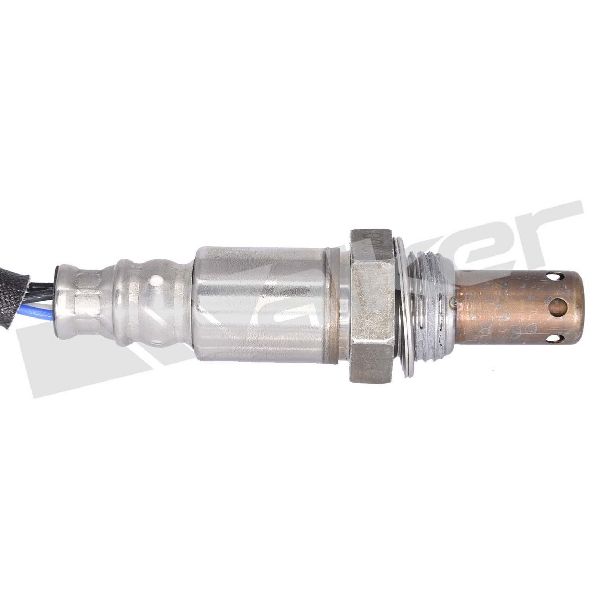
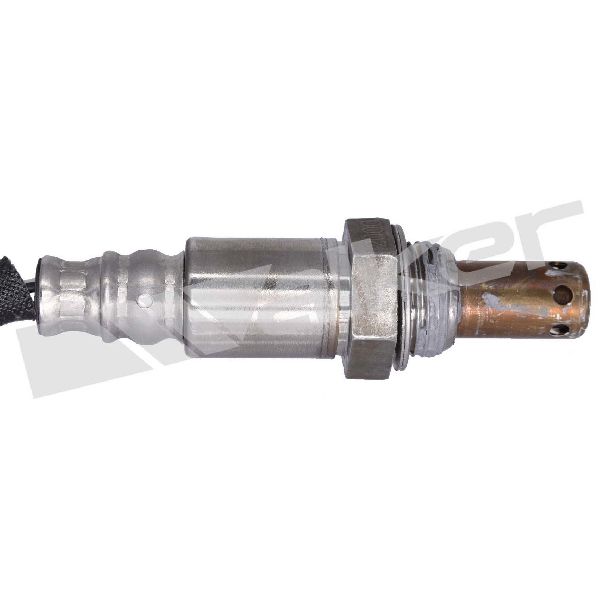
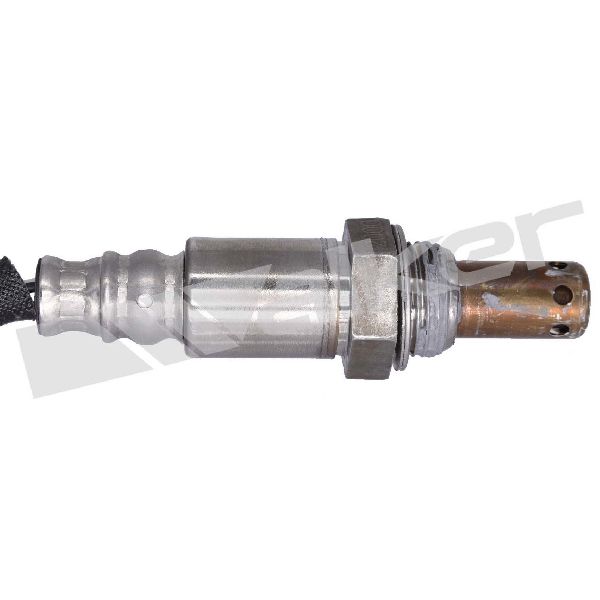
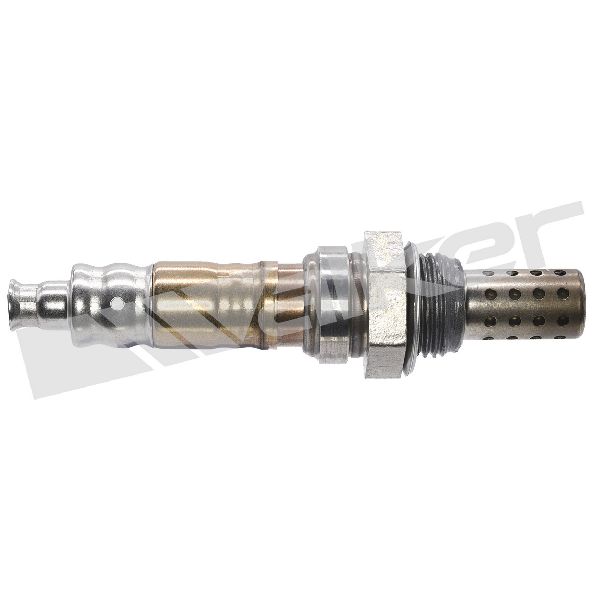
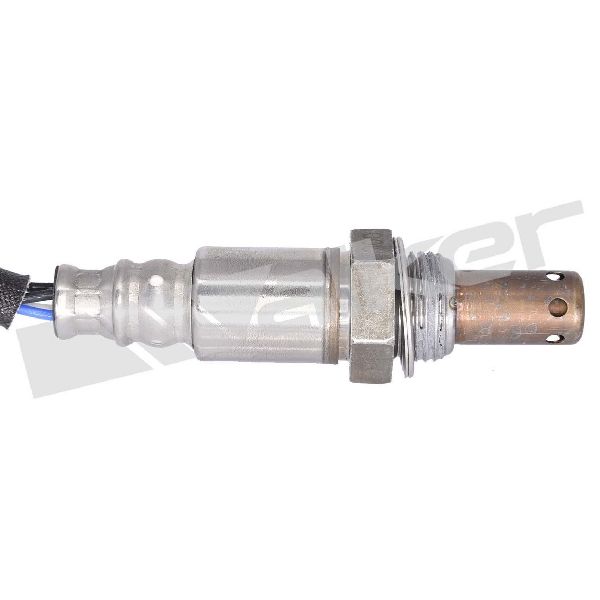
(OEM #89465-0E040 (superseded by 89465-48240, 89465-0E050))— This is the sensor that measures the post-catalyst exhaust mixture and triggers the code. It is the most common failure point for P2099 on this vehicle.
Trusted brands: Denso (OEM Manufacturer), NGK/NTK
OEM price range: $150-$220
Aftermarket price range: $70-$150
Related Codes That Often Appear With This One
- P0430 — If the catalytic converter on Bank 2 is failing, it can cause both an efficiency code (P0430) and erratic readings from the downstream O2 sensor, potentially triggering P2099.
- P0137 / P0138 — These codes relate to low or high voltage from a downstream O2 sensor. They are more specific circuit/sensor faults, while P2099 is a fuel trim code. Seeing them together strongly points to a failed O2 sensor.
Platform-Specific Known Issues
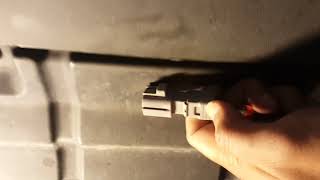
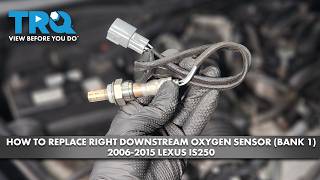
- Owner Experience Replacing B2S2 Sensor: A YouTube video for a 2010 RX350 shows the location of the Bank 2 Sensor 2 connector and sensor. The connector is accessed by removing a small splash shield on the driver's side underneath the car. The sensor itself is then visible on the exhaust pipe, pointing towards the front of the vehicle, and can be removed with a 22mm wrench.
Mechanic-Grade Diagnostic Values
- Downstream O2 Sensor (B2S2) Voltage — expected: A healthy downstream sensor on a warm engine should show a relatively stable voltage between 0.1V and 0.9V, ideally holding steady around 0.5V to 0.7V.. Failure: A voltage consistently stuck high (e.g., >0.8V) indicates a rich signal and is a primary trigger for P2099, often pointing to a failed sensor.
- Short-Term Fuel Trim (STFT) & Long-Term Fuel Trim (LTFT) for Bank 2 — expected: Within +/- 10%.. Failure: If the ECM is trying to correct a true rich condition (like from a leaking injector), you will see strong negative fuel trim values (e.g., -10% or more) as the computer pulls fuel to compensate.
- Mass Airflow (MAF) Sensor Reading at Idle — expected: Approximately 3-5 g/s at a stable, warm idle.. Failure: Significantly lower readings can cause the ECM to calculate a rich mixture across both banks.
Scan Tool Commands That Help
- Toyota Techstream: A/F Control — This function allows a technician to perform an active test by commanding the fuel mixture to be richer or leaner (+/- 25%). By observing the reaction of the Bank 2 Sensor 1 (A/F sensor) and Bank 2 Sensor 2 (O2 sensor), a technician can confirm if the sensors are responding correctly to commanded changes, which helps differentiate a bad sensor from a true rich condition.
- Toyota Techstream: Data List for O2 Sensor — Allows for graphing O2S B2S2 voltage over time. This is the most effective way to see if the sensor is stuck high, lazy, or fluctuating improperly, confirming the diagnosis of a failed sensor.
- Toyota Techstream: Reset Memory — After replacing a component like an O2 sensor or cleaning the MAF, it is critical to use this function to clear the long-term fuel trim adaptations from the ECM. This forces the computer to relearn the fuel strategy with the new, correctly functioning part, preventing the old bad habits from causing the code to return immediately.
Wiring & Ground Locations
- Engine Harness Ground (Bank 2 Head) — On the 2GR-FE, a primary engine harness ground attaches to the side of the Bank 2 cylinder head (the one near the firewall), directly underneath the throttle body.. A corroded or loose ground at this location can cause erratic and incorrect readings from all sensors on Bank 2, including the downstream O2 sensor, potentially leading to a false P2099 code.
- Chassis to Engine Ground — There is a main ground strap that connects from the lower firewall area to the back of the engine block.. A poor connection on this main ground can create a voltage potential difference between the engine block (where sensors are grounded) and the chassis (where the ECM is grounded), leading to a variety of sensor signal integrity issues.
- B2S2 Sensor Connector — The connector for the Bank 2 Sensor 2 is located under a plastic splash shield on the driver's side of the vehicle, near the subframe. The wiring harness runs up towards the firewall from there.. This connector is exposed to road debris and moisture. Corrosion or physical damage to the pins or wires at this connector can cause a high resistance or short, mimicking a failed sensor.
Real Owner Repair Stories
- iCarsoft-US Case Study (2017 Lexus RX350) — Check Engine Light with code P2099, black smoke, and poor fuel economy.
✅ What actually fixed it Diagnosis with a scan tool showed the Bank 2, Sensor 2 O2 sensor was outputting a constant 0.9V. Replacing the sensor and clearing the codes resolved all issues.
OEM Part Supersession History
89465-0E040→89465-48240, 89465-0E050— Standard part updates for improved performance, reliability, or manufacturing process changes.
Model Year Variations Within This Range
- 2013-2015: Starting in 2013, Lexus updated the 2GR-FE engine tune to officially run on regular 87 octane fuel, whereas earlier models specified 91 octane premium fuel. While not a direct cause of P2099, this indicates a potential software difference in the ECM between the 2010-2012 and 2013-2015 models.
- 2013-2015 (Facelift): The 2013 model year introduced a mid-cycle refresh with a new 'spindle' grille, updated headlights/taillights, and a revised interior infotainment controller. While most mechanical components related to P2099 remained the same, wiring harness routing and connector locations could have minor differences.
Diagnostic Flowchart
Other Known Issues on This Vehicle
Issues unrelated to this code that are worth knowing about as an owner of this generation:
- VVT-i Oil Line Rupture 🔴 High — Common on earlier 2GR-FE engines (pre-2010). An original rubber hose section degrades and can burst, leading to rapid oil loss and catastrophic engine failure if not shut down immediately. (Ref: LSC 9LH / LSC 9LG. Lexus issued a Limited Service Campaign to replace the rubber hose with an all-metal line.)
- Cracked or Melting Dashboard 🟡 Low — Very common in vehicles exposed to high heat and humidity. The dashboard surface becomes sticky, shiny, and may crack. (Ref: Warranty Enhancement Program ZLD. Lexus extended the warranty to cover replacement, though this program may now be expired.)
- Power Steering Rack Leaks 🟠 Medium — Fairly common at higher mileage (100k+ miles). Leaks develop in the steering rack seals or hoses, requiring topping off of fluid or an expensive rack replacement.
- Water Pump Failure 🟠 Medium — One of the more common major failures on the 2GR-FE engine. Often presents as a slow coolant leak (pink crusty residue near the pulley) or a grinding/howling noise from the drive belt area.
- Timing Cover Oil Leak 🟡 Low — A slow oil leak can develop from the timing chain cover gasket over time. It is typically not an urgent repair but can be costly to fix due to the labor involved.
Used vs. New Parts: Buying Guide for This Vehicle
When a used part is the smart pick: For this specific code (P2099), using used parts is generally not recommended for the most common failure items. A used exhaust pipe section could be considered if an exhaust leak is the confirmed cause and the part is from a low-mileage, rust-free vehicle.
Donor-vehicle mileage cap: roughly under 75000 miles for the part to have meaningful remaining life.
What to inspect on the donor part:
- For an exhaust pipe: check for thin, flaky rust, cracks at welds, and integrity of flange mating surfaces.
- Never buy a used oxygen sensor; it is a wear item with a finite lifespan.
OEM-only on this vehicle (don't cheap out):
- Catalytic Converter: Aftermarket catalytic converters for Lexus vehicles are notorious for failing to meet the strict efficiency monitoring of the stock ECM, often leading to catalyst efficiency codes (P0420/P0430) shortly after installation.
Aftermarket brands forum-validated for this vehicle:
- Denso (OEM supplier for Toyota/Lexus)
- NTK
Brands owners have reported issues with on this vehicle:
- Bosch: While a quality brand, some owners report issues when mixing Bosch sensors with OEM Denso sensors on Toyota/Lexus vehicles, as their heating elements and response curves can differ slightly, potentially confusing the ECM.
- Unbranded or 'universal' oxygen sensors that require splicing wires. These are a frequent source of comebacks due to poor connections and incorrect resistance.
Real Owner Stories
Aggregated from forums and TSBs cited above. Mileages and costs reflect what owners reported in those sources.
2010 Lexus RX350 2GR-FE 3.5L V6
Symptoms: Check Engine Light was illuminated, triggering code P2099.
What fixed it: Replaced the Bank 2, Sensor 2 (downstream) oxygen sensor. The connector was accessed by removing a splash shield on the driver's side underneath the car, and the sensor was removed with a 22mm wrench.
Source hint: vehicle_specific_issues: Owner Experience Replacing B2S2 Sensor
Related OBD-II Codes
Frequently Asked Questions
Where is the Bank 2, Sensor 2 oxygen sensor located on my 2010-2015 RX350?
What specific tool do I need to replace the downstream oxygen sensor for a P2099 code?
How can I test the B2S2 oxygen sensor on my Lexus before replacing it?
My mechanic suspects an exhaust leak is causing the P2099 code. Is this a common issue on the RX350?
Could the P2099 code be related to the VVT-i oil line recall on the 2GR-FE engine?
What other Toyota or Lexus models with the 3.5L V6 experience this same P2099 issue?
Helpful Videos
![How to Fix P2099 Engine Code in 4 Minutes [2 DIY Methods / Only $9.49]](https://img.youtube.com/vi/tZdHNVnheeA/mqdefault.jpg)
We Have This Part in Stock


The information in this article is provided for general reference and educational purposes only. Vehicle specifications, procedures, and part compatibility can vary by production date, trim level, and region. Always consult your vehicle's factory service manual and verify part numbers before purchasing or performing repairs. Safety-critical components such as airbags, seat belts, and braking systems should be installed by a qualified professional.
- Lexus RX350:
- 🧭 Diagnostic Flowchart
- 🎬 Helpful Videos
- 🛍️ Shop This Part
- What's Unique About the 2010-2015 Lexus RX350
- Symptoms You May Notice
- Most Likely Causes
- Rare But Worth Checking
- Diagnosis Steps
- Parts You'll Likely Need
- Related Codes That Often Appear With This One
- Platform-Specific Known Issues
- Mechanic-Grade Diagnostic Values
- Scan Tool Commands That Help
- Wiring & Ground Locations
- Real Owner Repair Stories
- OEM Part Supersession History
- Model Year Variations Within This Range
- Other Known Issues on This Vehicle
- Used vs. New Parts: Buying Guide for This Vehicle
- Real Owner Stories
- 2010 Lexus RX350 2GR-FE 3.5L V6
- Related OBD-II Codes
- Frequently Asked Questions
- 🎟️ Get 5% Off