

P2099 on 2008-2009 Pontiac G8: Causes for Post-Catalyst Fuel Trim Too Rich Bank 2
On a 2008-2009 Pontiac G8, code P2099 is often caused by a leaking fuel injector on Bank 2 (passenger side). A GM Technical Service Bulletin (PIP4964F) specifically advises testing fuel injectors before replacing oxygen sensors, which are another common cause. Ignoring this can lead to unnecessary parts replacement and potential damage to the catalytic converter.
- For a P2099 code on a 2008-2009 Pontiac G8, do not automatically replace the oxygen sensor.
- Follow the guidance of GM TSB PIP4964F and test the fuel injectors on Bank 2 (passenger side) first. A leaking injector is the most likely culprit.
- Check for exhaust leaks between the catalytic converter and the downstream O2 sensor if injector tests pass.
- Addressing this code promptly can prevent costly damage to the catalytic converter.
What's Unique About the 2008-2009 Pontiac G8
For this specific vehicle, General Motors issued a Technical Service Bulletin (TSB) that dramatically changes the typical diagnostic path. While many technicians might first suspect an oxygen sensor, TSB PIP4964F explicitly states that the most common concerns seen for a P2099 code on the G8 and related vehicles are related to fuel injectors. This bulletin advises performing a fuel injector balance test early in the diagnosis, suggesting that a leaking injector is a more probable cause on this platform than on many other vehicles. Forum discussions and owner experiences confirm that replacing O2 sensors often fails to fix the code, with the root cause later identified as a faulty injector.
Diagnostic Flowchart
Tap your situation to follow the diagnostic path that matches what you're seeing on this vehicle.
Symptoms You May Notice
- Check Engine Light is on.
- Reduced fuel economy, potentially a 15-25% drop.
- Rough idle or engine hesitation.
- Black smoke from the exhaust, especially on acceleration.
- Strong smell of gasoline from the exhaust.
- Sluggish or poor acceleration.
- Immediately replacing the oxygen sensor without testing the fuel system. The manufacturer TSB for the G8 specifically advises against this by pointing to fuel injectors as a more common cause.
Most Likely Causes
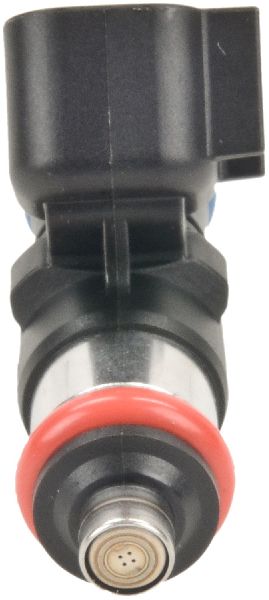
- Leaking or Faulty Fuel Injector(s) on Bank 2 🔴 High Probability → Shop Fuel Injector A specific GM Technical Service Bulletin (PIP4964F) identifies faulty fuel injectors as a primary cause for this code on the 2008-2009 Pontiac G8 and other vehicles with the same engines. The injectors can leak fuel into the cylinder even when closed, causing the rich condition.
How to confirm: Perform a fuel injector balance test or an Active Fuel Injector Test (AFIT) as recommended by the TSB. Another sign is a strong fuel smell on startup or difficulty restarting when the engine is warm. You can also pull the spark plugs on Bank 2; a plug that is black and sooty indicates a rich condition in that cylinder.
Typical fix: Replace the faulty fuel injector(s) on Bank 2. It is often recommended to replace all injectors on that bank, or even all 8, at the same time for consistent performance.
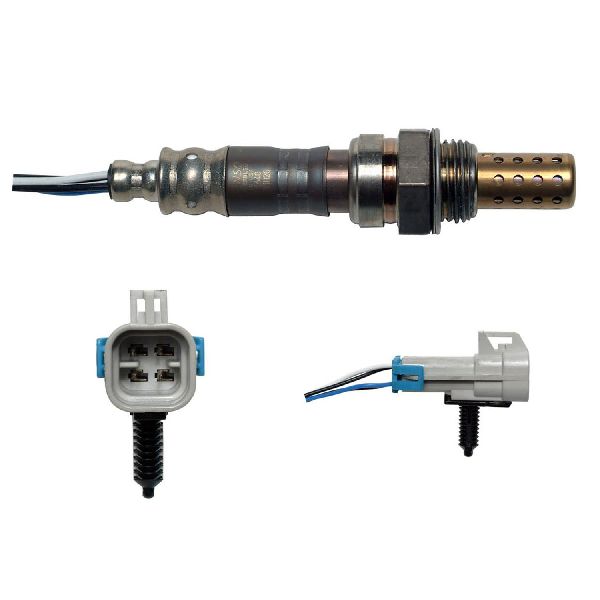
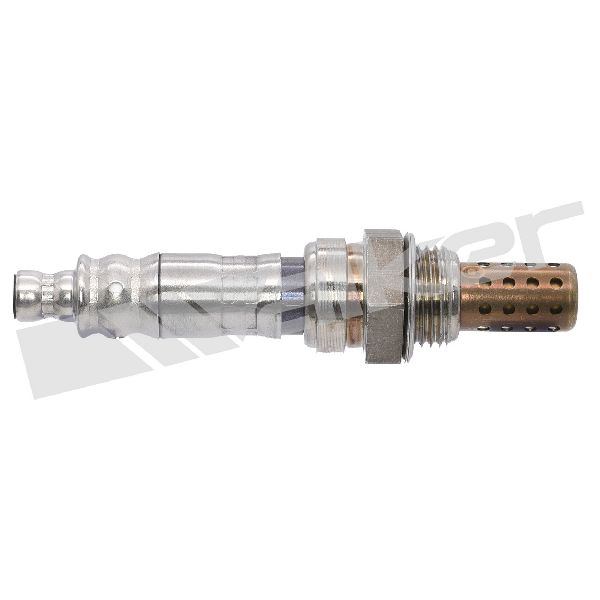
Est. part cost: $40-$100 per injector - Faulty Downstream Oxygen Sensor (Bank 2, Sensor 2) 🟡 Medium Probability → Shop Oxygen Sensor
How to confirm: Use a scan tool to monitor the voltage of the Bank 2 Sensor 2. A healthy downstream sensor should show a relatively stable voltage (e.g., around 0.5-0.7V). If it's stuck high (above 0.8V) or fluctuating rapidly like an upstream sensor, it has likely failed. However, TSB PIP4964F explicitly warns against replacing the O2 sensor without first ruling out fuel system and exhaust leak issues.
Typical fix: Replace the Bank 2, Sensor 2 oxygen sensor.
Est. part cost: $50-$150 - Exhaust Leak 🟡 Medium Probability The same TSB that points to injectors also mentions that small exhaust leaks, particularly at the gasket for the catalytic converter outlet, can cause this code. While an exhaust leak typically introduces unmetered air and causes a lean code (P2097), it can sometimes confuse the sensor and trigger a rich code.
How to confirm: Visually inspect the exhaust system from the engine to the post-catalyst O2 sensor for cracks or gasket failures. A smoke test or applying low-pressure air (5-8 psi) to the tailpipe and spraying joints with soapy water can reveal leaks. Do not use high-pressure shop air, as this can damage the converter.
Typical fix: Repair the leak, which may involve replacing a gasket or welding a cracked pipe. The TSB suggests filing the mating surface of the pipe when replacing the gasket to ensure a good seal.
Est. part cost: $10-$50 for a gasket - High Fuel Pressure ⚪ Low Probability
How to confirm: Connect a fuel pressure gauge to the fuel rail. If the pressure is above the manufacturer's specification, the fuel pressure regulator may be faulty. The L76 V8 uses a returnless fuel system where the regulator is in the tank.
Typical fix: Replace the fuel pressure regulator or the fuel pump module if the regulator is integrated.
Est. part cost: $70-$250
Rare But Worth Checking
- Mechanical Valvetrain Issue: TSB PIP4964F notes that if no injector or exhaust leak issues are found, a mechanical problem like a sticking valve or a lifter follower off the camshaft could be the cause, which may or may not trigger a misfire code. This is particularly relevant for the L76 engine with Active Fuel Management (AFM).
- Mass Airflow (MAF) Sensor Malfunction: A dirty or failing MAF sensor can send incorrect airflow data to the PCM, causing a rich condition across the entire engine, though it may only trigger a code on one bank initially.
- Catalytic Converter Failure: → Shop Catalytic Converter While often a consequence of a persistent rich condition, a failing or clogged catalytic converter can itself contribute to the P2099 code. If the converter is inefficient, it may not be processing the exhaust gases correctly, leading to false readings by the downstream O2 sensor.
Diagnosis Steps
- Scan the PCM for any other stored trouble codes. Address other codes, especially for misfires or the MAF sensor, first.
- Following GM TSB PIP4964F, perform a fuel injector balance test or use an Active Fuel Injector Tester to check for leaking or malfunctioning injectors on Bank 2. This is the most critical vehicle-specific step.
- If injector tests are inconclusive, inspect the exhaust system on Bank 2 (passenger side) for any leaks. Pay close attention to the gasket between the catalytic converter and the exhaust pipe. Use a low-pressure smoke test for best results.
- Use a scan tool to observe live data from the Bank 2, Sensor 2 (downstream) oxygen sensor. Once the engine is at operating temperature, a healthy sensor should have a steady voltage. If it is stuck high (above 0.8v) or fluctuating wildly, it may be faulty, but confirm steps 2 and 3 first.
- Check fuel pressure to ensure it is within the specified range.
- Inspect the air intake system for any blockages or a severely clogged air filter.
- If all else fails, consider the possibility of a rare mechanical engine issue as noted in the TSB, such as a valvetrain problem.
Parts You'll Likely Need
- Fuel Injector
(OEM #12576341 (For L76 6.0L V8), 0280156300 (For LY7 3.6L V6))— Identified by a manufacturer TSB as the most common cause for this code on this specific vehicle.
Trusted brands: ACDelco, Bosch
OEM price range: $80-$150
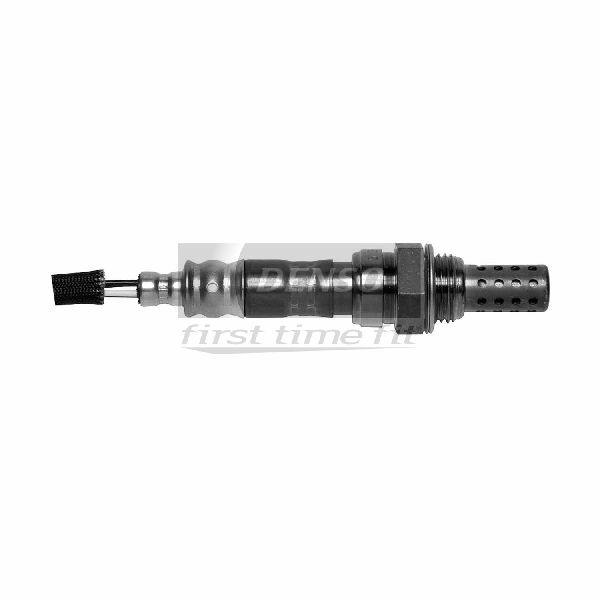
Aftermarket price range: $40-$100 - Downstream Oxygen Sensor (Bank 2, Sensor 2)
(OEM #ACDelco 213-1568 (V8), ACDelco 213-4325 (V6))— This sensor is what detects the rich condition. If it fails, it can send false rich signals to the computer.
Trusted brands: ACDelco, Denso, Bosch, NTK
OEM price range: $100-$180
Aftermarket price range: $50-$150 - Exhaust Gasket (Converter Outlet) — The TSB also mentions that exhaust leaks are a possible cause, often occurring at the catalytic converter outlet gasket.
Trusted brands: ACDelco, Fel-Pro, Walker Exhaust
OEM price range: $20-$40
Aftermarket price range: $10-$25
Related Codes That Often Appear With This One
- P2097 — This is the code for 'Post Catalyst Fuel Trim System Too Lean Bank 2'. The same TSB (PIP4964F) covers both P2097 and P2099, as faulty injectors or exhaust leaks can cause both lean and rich conditions depending on the failure mode.
- P0300-P0308 — If a leaking fuel injector is severe enough, it can foul the spark plug for that cylinder, leading to a misfire code (e.g., P0302, P0304, P0306, P0308 for Bank 2).
Technical Service Bulletins (TSBs) & Recalls
- PIP4964F: "SES Light With A P2097 Or P2099" - States that the most common concerns are related to fuel injectors and advises performing an injector balance test. Also mentions checking for small exhaust leaks at the converter outlet and, in rare cases, valvetrain issues.
Platform-Specific Known Issues
- GM Technical Service Bulletin PIP4964F (and its revisions) specifically calls out P2099 on the 2008-2009 Pontiac G8. It directs technicians to check for faulty fuel injectors or exhaust leaks as the primary causes, rather than immediately suspecting the O2 sensors.
Mechanic-Grade Diagnostic Values
- Downstream O2 Sensor (Bank 2, Sensor 2) Voltage — expected: Relatively stable voltage, typically between 0.5V and 0.7V when the catalyst is working efficiently.. Failure: Voltage is stuck high (consistently >0.8V) or fluctuating rapidly like an upstream sensor.
- Long Term Fuel Trim (Post-Catalyst) — expected: Between -10% and +10%.. Failure: A value more negative than -10% confirms the PCM is trying to correct a long-term rich condition.
- Fuel Pressure (L76 6.0L V8) — expected: The L76 uses a returnless fuel system; pressure is regulated in the tank. Check service manual for specific KOEO (Key On, Engine Off) pressure, typically 58-60 PSI.. Failure: Pressure significantly above or below the specified range indicates a faulty regulator or pump.
- Engine Oil Pressure (L76 6.0L V8, Hot) — expected: Minimum of 6 psig (41 kPa) at 1,000 RPM and 24 psig (165 kPa) at 4,000 RPM.. Failure: Significantly lower pressure could indicate internal engine wear, which in rare cases could relate to valvetrain issues mentioned in TSB PIP4964F.
Scan Tool Commands That Help
- GM Tech2 / GDS2: Active Fuel Injector Tester (AFIT) — This is the specific diagnostic test recommended by TSB PIP4964F to identify leaking or malfunctioning fuel injectors, which are the primary suspect for P2099 on this vehicle.
- GM Tech2 / GDS2: Injector Balance Test — An alternative method to the AFIT for checking if all injectors are flowing a comparable amount of fuel. A leaking injector will show a significant pressure drop.
- Professional Scan Tool: Fuel Trim Reset — After replacing a component like a fuel injector or O2 sensor, this command should be used to clear the PCM's learned long-term fuel adjustments, allowing for a faster relearn process and validation of the fix.
Wiring & Ground Locations
- G102 — In the engine compartment on the right (passenger side) frame rail. This ground serves the eight ignition coils.. A poor ground for the ignition coils could potentially lead to incomplete combustion, contributing to a rich exhaust mixture.
- G103 — In the engine compartment on the cowl, often near or on the EBCM (ABS) bracket, above the brake booster.. This is a major ground point for the Body Control Module (BCM) and Data Link Connector (DLC). A fault here can cause widespread communication and diagnostic issues.
- G108 / G112 — G108 is an engine block ground. G112 is a ground from the left-hand (driver side) rear cylinder head to the engine harness. A similar ground exists on the right-hand (passenger side) head.. The ECM and its sensors rely on a solid engine ground reference. A loose or corroded engine-to-chassis or cylinder-head-to-harness ground can cause erratic sensor readings, including from the O2 sensors, leading to false codes.
Real Owner Repair Stories
- Multiple threads on G8Board.com (2008-2009 Pontiac G8 GT (6.0L V8)) — Check Engine Light with code P2099, sometimes accompanied by a rough idle and a noticeable fuel smell from the exhaust.
❌ Tried (didn't work) Replacing the Bank 2, Sensor 2 (downstream) oxygen sensor., Replacing both oxygen sensors on Bank 2., Cleaning the MAF sensor.
✅ What actually fixed it The issue was resolved by replacing one or more leaking fuel injectors on Bank 2 (passenger side). This aligns directly with the advice in GM TSB PIP4964F. Many owners reported finding a fuel-fouled spark plug in one of the Bank 2 cylinders, which pinpointed the faulty injector.
"I Checked Everything" — The Actual Cause
- Per TSB PIP4964F, if a smoke test for exhaust leaks comes back clean and the fuel injector balance tests are normal, the actual cause could be an internal mechanical engine issue. A sticking valve or a problem with a lifter could cause a single cylinder to run rich, triggering P2099 without any fuel system or exhaust leaks being present.
OEM Part Supersession History
GM 12569429→ACDelco 213-1568— Standard part number update and consolidation across the GM line.
Heads up: The new part number is the correct service replacement for the V8 models.N/A→N/A— The V8 fuel injector, GM part 12576341, has been used across many LS-family engines (LS3, L99, LS7, L76) from 2006 to 2017, indicating a stable design without major revisions.
Model Year Variations Within This Range
- 2009 only: The G8 GXP model was introduced with the 6.2L LS3 V8 engine. Unlike the 6.0L L76 V8 in the GT, the LS3 does not have Active Fuel Management (AFM), which eliminates AFM-related valvetrain components as a potential cause for this code on the GXP.
- 2008 vs 2009: The ECM (E67 for V8s) requires specific programming based on the vehicle's VIN, year, and engine. An ECM from a 2008 model is not directly interchangeable with a 2009 model without correct programming.
Helpful Videos
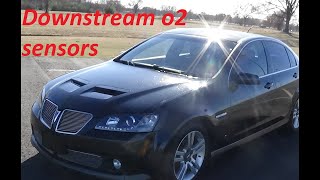
![How to Fix P2099 Engine Code in 4 Minutes [2 DIY Methods / Only $9.49]](https://img.youtube.com/vi/tZdHNVnheeA/mqdefault.jpg)
We Have This Part in Stock


The information in this article is provided for general reference and educational purposes only. Vehicle specifications, procedures, and part compatibility can vary by production date, trim level, and region. Always consult your vehicle's factory service manual and verify part numbers before purchasing or performing repairs. Safety-critical components such as airbags, seat belts, and braking systems should be installed by a qualified professional.
- Pontiac G8:
- 🧭 Diagnostic Flowchart
- 🎬 Helpful Videos
- 🛍️ Shop This Part
- What's Unique About the 2008-2009 Pontiac G8
- Symptoms You May Notice
- Most Likely Causes
- Rare But Worth Checking
- Diagnosis Steps
- Parts You'll Likely Need
- Related Codes That Often Appear With This One
- Technical Service Bulletins (TSBs) & Recalls
- Platform-Specific Known Issues
- Mechanic-Grade Diagnostic Values
- Scan Tool Commands That Help
- Wiring & Ground Locations
- Real Owner Repair Stories
- "I Checked Everything" — The Actual Cause
- OEM Part Supersession History
- Model Year Variations Within This Range
- 🎟️ Get 5% Off