

P2099 on 2011 Ram 2500 5.7L HEMI: Causes for Post-Catalyst Rich Trim Bank 2
On a 2011 Ram 2500 5.7L HEMI, P2099 is most often caused by an exhaust leak from broken manifold bolts or the need for a PCM software update. Before replacing parts, check for a ticking noise (leak) and ask a dealer about TSB #18-066-16.
- Before buying any parts for a P2099 code on this truck, first check for exhaust leaks and ask a dealer if the PCM software update from TSB #18-066-16 has been performed.
- The most common physical cause is an exhaust leak from broken manifold bolts on the passenger side (Bank 2). Listen for a 'ticking' noise when the engine is cold.
- Do not automatically replace the O2 sensor or catalytic converter; they are often not the root cause.
- Bank 2 is the passenger side of the 5.7L HEMI engine.
- Ignoring this code will lead to poor gas mileage and can eventually damage the expensive catalytic converter.
What's Unique About the 2011-2011 Ram 2500
The 5.7L HEMI engine in this generation of Ram trucks has two very common and well-documented issues that directly cause the P2099 code. Firstly, the factory exhaust manifold bolts are prone to breaking, especially the rearmost ones, due to thermal stress and corrosion. This creates an exhaust leak that is a primary cause. Secondly, Chrysler issued Technical Service Bulletin #18-066-16 REV. A, indicating the PCM's software was overly sensitive and could falsely trigger this code, making a software update a crucial and often-required first step.
Symptoms You May Notice
- Check Engine Light is on
- Reduced fuel economy
- A ticking noise from the engine bay, especially when cold, that often quiets down as the engine warms up (indicates an exhaust manifold leak 🎬 Watch: How to tell if your tick is a lifter or a leak.)
- Smell of unburnt gasoline at idle
- Poor engine performance or rough idle
- Replacing the oxygen sensor without first checking for exhaust leaks or required software updates. The O2 sensor is often just accurately reporting a problem caused by something else. This is the most common mistake.
- Replacing the catalytic converter. This code points to a fuel mixture problem, not typically a converter failure. A bad converter usually sets an efficiency code like P0420 or P0430.
Most Likely Causes
- Outdated Powertrain Control Module (PCM) Software 🔴 High Probability → Shop Engine Control Module (ECM) The manufacturer released TSB #18-066-16 REV. A specifically to address P2099 (and related codes) on 5.7L engines, as the original software logic was too sensitive and could set the code erroneously.
How to confirm: Contact a Ram dealership or a qualified shop with access to OEM service information (like wiTECH). They can check your vehicle's VIN to see if the TSB applies and if the update has been performed. The TSB applies to 2011 (DJ) Ram 2500 trucks with the 5.7L engine built before February 01, 2011.
Typical fix: Reprogramming the PCM with the updated software. This must be done by a dealer or a shop with a J2534 pass-thru device and a subscription to the OEM software. The process itself is quick but requires the proper tools.
Est. part cost: $0-$200 - Exhaust Leak (Broken Manifold Bolts/Gasket) 🔴 High Probability The 5.7L HEMI is notorious for the steel exhaust manifold bolts snapping due to thermal stress and corrosion. This most often occurs on the bolts closest to the firewall. The leak sucks in outside air, which paradoxically causes the PCM to enrich the mixture to compensate for what the upstream sensor sees, leading to a rich code from the downstream sensor.
How to confirm: Listen for a distinct 'ticking' sound from the passenger side of the engine, especially on a cold start, that may quiet down as the engine warms up. Visually inspect the exhaust manifold for black soot trails or missing/broken bolt heads. A shop can use a smoke machine to definitively find the leak.
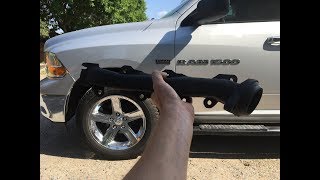
Typical fix: The broken bolts must be extracted and replaced. The exhaust manifold should be checked for warping and replaced or machined flat if necessary. 🎬 See this walkthrough on fixing a Hemi exhaust manifold leak. Always use a new gasket. Many owners opt to upgrade to aftermarket headers and higher quality bolts (like ARPs) to prevent a recurrence.
Est. part cost: $50-$400 - Faulty Downstream Oxygen (O2) Sensor 🟡 Medium Probability → Shop Oxygen Sensor The sensor is the direct input for this code. Over time, sensors can become contaminated, slow, or fail entirely, sending inaccurate 'rich' signals to the PCM. It's a common wear item.
How to confirm: Use a scan tool to monitor the voltage of the Bank 2, Sensor 2 (downstream) O2 sensor. A healthy downstream sensor should show a relatively stable voltage (typically 0.6-0.8V) once the catalyst is warm. If it's stuck high (above 0.8v) or fluctuating rapidly like the upstream sensor, it is likely faulty.
Typical fix: Replace the Bank 2, Sensor 2 oxygen sensor. This is located on the passenger side, after the catalytic converter. 🎬 Watch: Step-by-step guide to replacing the downstream O2 sensor.
Est. part cost: $50-$150
Rare But Worth Checking
- Leaking Fuel Injector: → Shop Fuel Injector A fuel injector on Bank 2 can get stuck open or leak, dumping excess fuel into a cylinder. This can cause a legitimate rich condition that the O2 sensor correctly reports. This is less common than leaks or software issues and would likely be accompanied by other symptoms like a cylinder misfire code (P030X).
- Failing Catalytic Converter: → Shop Catalytic Converter While this code is for a condition *after* the converter, a contaminated or internally damaged converter can sometimes cause strange readings from the downstream O2 sensor. This should only be considered after all other causes are ruled out. A persistent rich condition is more likely to damage the converter than be caused by it.
- Vacuum Leak: A significant vacuum leak from something like an intake manifold gasket can introduce unmetered air, causing the PCM to overcompensate by adding fuel, which can paradoxically lead to a rich code being set by the downstream sensor.
Diagnosis Steps
- Check for Technical Service Bulletins (TSBs). Contact a dealer with your VIN to see if TSB #18-066-16 REV. A applies to your truck and has not been performed. This should be the very first step.
- Inspect for exhaust leaks. Start the engine when it's cold and listen carefully for a 'ticking' noise from the passenger side engine bay. Visually inspect the exhaust manifold for broken bolts or soot trails. A smoke test can be used for a more definitive check.
- Analyze O2 sensor data. Using an OBD-II scanner with live data capability, observe the voltage for the Bank 2 Sensor 2 (downstream) O2 sensor. It should be relatively steady. If it's stuck high (over ~0.8V) or switching rapidly, the sensor is suspect.
- Check fuel trims. Observe the short-term and long-term fuel trims for Bank 2. If the PCM is commanding a strong negative correction (e.g., -15% or more), it confirms the system is trying to counteract a rich condition.
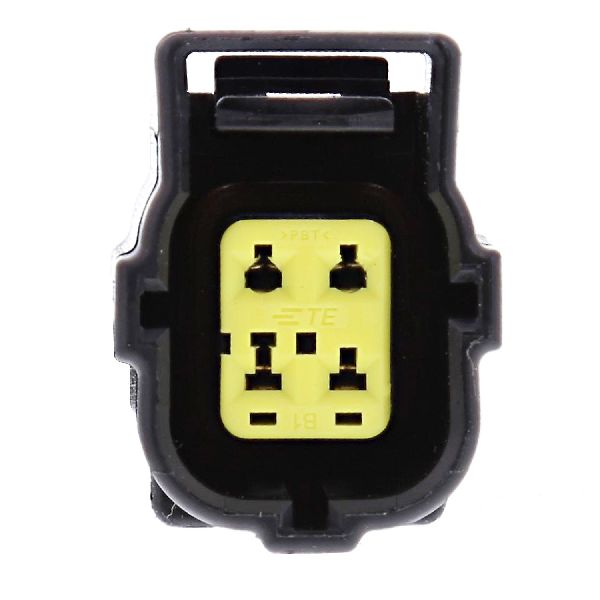
- Inspect the O2 sensor wiring. Check the harness and connector for the Bank 2 downstream O2 sensor for any signs of melting, chafing, or corrosion.
- If all else fails, investigate fuel delivery. A repair shop invoice for a similar vehicle with P2099 also showed misfire codes, which were traced to bad spark plugs and broken manifold bolts on bank 2, demonstrating how multiple issues can be linked.
- Consider vacuum leaks. On higher mileage engines, intake manifold gaskets can fail, creating a vacuum leak that forces the PCM to enrich the mixture, leading to this code.
Parts You'll Likely Need
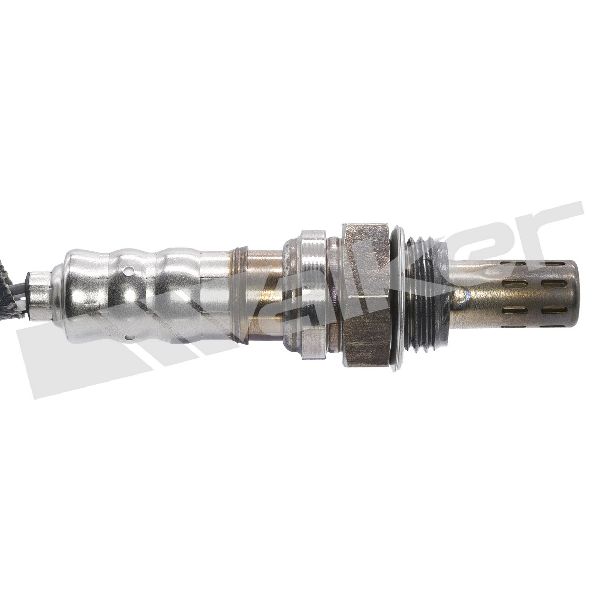
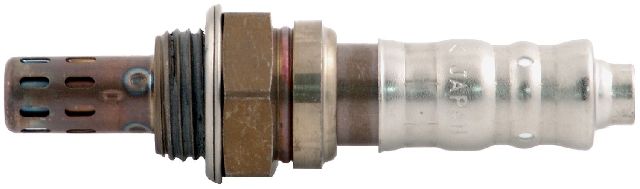
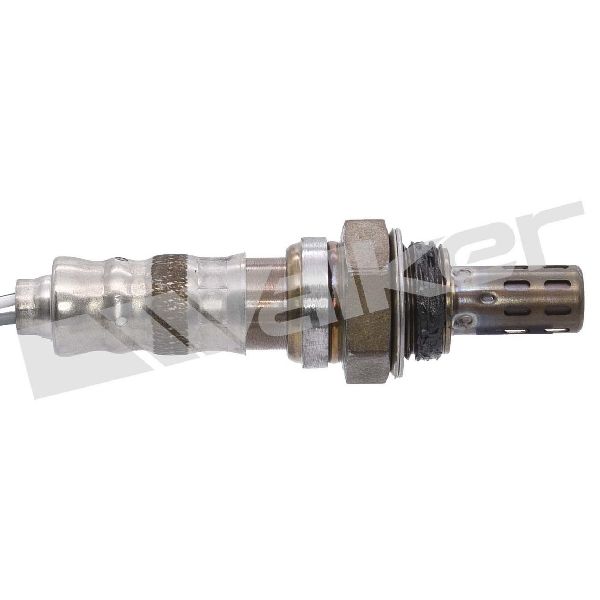
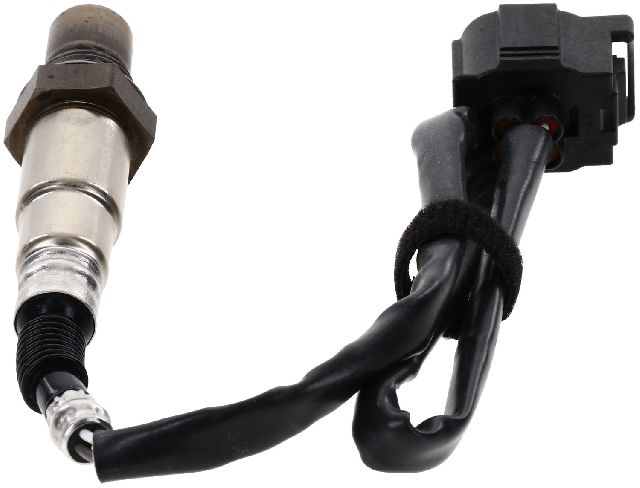
- Downstream Oxygen Sensor (Bank 2, Sensor 2)
(OEM #56029049AA)— This is the sensor that triggers the code. If it fails, it can send a false rich signal. It's a common replacement after ruling out leaks and software issues.
Trusted brands: Denso, NTK, Bosch
OEM price range: $80-$120
Aftermarket price range: $50-$90 - Exhaust Manifold Gasket
(OEM #53013944AA)— Required when repairing a leaking or warped exhaust manifold, which is a very common cause of this code due to broken manifold bolts on the 5.7L HEMI.
Trusted brands: Fel-Pro, Mahle, Mopar
OEM price range: $20-$30
Aftermarket price range: $10-$20 - Exhaust Manifold Bolt Kit — Necessary when repairing an exhaust manifold leak, as the original bolts are often the point of failure and will need to be replaced. Upgraded bolts are recommended.
Trusted brands: Dorman, Mopar, ARP
OEM price range: $30-$50
Aftermarket price range: $20-$40
Technical Service Bulletins (TSBs) & Recalls
- TSB #18-066-16 REV. A: Addresses a PCM software update to correct false P2099 codes (among others) due to overly sensitive diagnostic logic. It applies to 2011 DJ (2500) models with the 5.7L engine.
Platform-Specific Known Issues
- A Powertrain Control Module (PCM) software update is addressed by TSB #18-066-16 REV. A to correct overly sensitive diagnostics that can cause a false P2099 code.
- The 5.7L HEMI engine is widely known for breaking the rear exhaust manifold bolts, causing a leak that is a primary trigger for this code.
Mechanic-Grade Diagnostic Values
- Downstream O2 Sensor (Bank 2, Sensor 2) Voltage at Idle/Cruise — expected: Relatively stable voltage between 0.6V and 0.8V on a warm engine.. Failure: Voltage is stuck high (above 0.8V) or fluctuating rapidly like an upstream sensor.
- O2 Sensor Heater Circuit Resistance — expected: Between 4 and 20 ohms when the sensor is cold.. Failure: Infinite resistance (open circuit) or zero resistance (short circuit) when measured across the two heater pins on the sensor connector.
- Long Term Fuel Trim (Bank 2) — expected: Close to 0%, ideally within +/- 5%.. Failure: A strong negative number (e.g., -15% to -25%) indicates the PCM is trying to remove a large amount of fuel to correct a perceived rich condition.
Scan Tool Commands That Help
- wiTECH or equivalent J2534 tool: O2 Sensor Operation Test — After checking for leaks and TSBs, this function can be used to force the system lean and rich to observe the O2 sensor's response time and voltage range, helping to confirm if the sensor is slow or biased without having to swap it physically.
- wiTECH or equivalent J2534 tool: PCM Reflash/Update — This is the primary fix if TSB #18-066-16 REV. A applies to the vehicle and has not been performed. It updates the diagnostic logic to prevent false P2099 codes.
Wiring & Ground Locations
- Bank 2, Sensor 2 Connector — On the passenger side of the vehicle, on the exhaust pipe after the catalytic converter. The connector is often attached to a bracket on the transmission or frame rail.. This connector and its wiring are exposed to heat, moisture, and road debris, making it a potential point of failure. Corrosion or damaged wires can cause incorrect signals, mimicking a faulty sensor.
- G108 — Located on the right rear of the engine.. This is a shared ground point for several engine components. A poor connection here due to corrosion or looseness can introduce electrical noise and cause erratic behavior from sensors, including the O2 sensors.
Real Owner Repair Stories
- Go-Parts Repair Database (High-mileage 5.7L HEMI (year not specified, but behavior is applicable)) — Persistent P2099 code.
❌ Tried (didn't work) Exhaust smoke test came back clean (no leaks found)., Downstream O2 sensor was replaced.
✅ What actually fixed it The actual cause was found to be failing intake manifold gaskets. The resulting vacuum leak caused the PCM to add excessive fuel, which the downstream O2 sensor correctly reported as a rich condition. Replacing the intake manifold gaskets resolved the code.
"I Checked Everything" — The Actual Cause
- A common scenario reported for the 5.7L HEMI is passing an exhaust smoke test, only to later find the root cause is a vacuum leak from failing intake manifold gaskets. The unmetered air from the intake leak forces the PCM to command a rich mixture, which the downstream O2 sensor then reports, setting the P2099 code. Technicians can miss this by focusing solely on the exhaust system.
OEM Part Supersession History
53032098AD→53013944AA— Part has been updated by the manufacturer.
Model Year Variations Within This Range
- 2011 models built before 02/01/2011: Vehicles built before this date may have the original, overly sensitive PCM software that can falsely trigger a P2099 code. TSB #18-066-16 REV. A provides the corrective software update.
Diagnostic Flowchart
Other Known Issues on This Vehicle
Issues unrelated to this code that are worth knowing about as an owner of this generation:
- HEMI Lifter/Camshaft Failure ('Hemi Tick') 🔴 High — Common, especially on engines with extended idle time or less frequent oil changes. Often occurs between 70k-130k miles. The sound is often confused with an exhaust manifold leak, but lifter tick is more prominent when the engine is warm, whereas an exhaust leak is loudest on a cold start.
- Totally Integrated Power Module (TIPM) Failure 🔴 High — A well-documented issue for 2011-2012 Ram trucks. Can cause a wide range of bizarre electrical problems, including fuel pump issues, no-start conditions, horn or wipers activating randomly, and battery drain. (Ref: Though no formal recall for the 2500, it's a widely acknowledged component failure.)
- Heater Core Failure 🟠 Medium — These trucks are known for heater core problems, which can manifest as no heat or heat only on the passenger side. Diagnosis should first rule out a simpler blend door actuator failure.
- Water Pump Failure 🟠 Medium — A relatively common failure point mentioned by owners, leading to coolant leaks and potential overheating.
Used vs. New Parts: Buying Guide for This Vehicle
When a used part is the smart pick: An OEM exhaust manifold from a junkyard can be a cost-effective choice if it is verified to be flat and not cracked. Given the high cost of new OEM manifolds, a used one from a low-mileage, non-salt-belt donor vehicle is a viable option.
Donor-vehicle mileage cap: roughly under 80000 miles for the part to have meaningful remaining life.
What to inspect on the donor part:
- For an exhaust manifold, place a straight edge across the cylinder head mating surface to check for warping.
- Inspect carefully for hairline cracks, especially near the bolt holes and collector.
- Ensure all studs are intact and not seized or broken off in the manifold.
- Check the donor vehicle's location history if possible; avoid parts from heavy salt-belt states due to excessive corrosion.
OEM-only on this vehicle (don't cheap out):
- Exhaust Manifold Gaskets: Aftermarket exhaust gaskets have a reputation for leaking on this engine. It is strongly recommended to use genuine Mopar multi-layer steel (MLS) gaskets (P/N 53013944AA) for a reliable seal, even when installing aftermarket headers.
Aftermarket brands forum-validated for this vehicle:
- Oxygen Sensors: NTK and Denso are the original equipment manufacturers for Mopar and are considered reliable alternatives. Bosch is also a well-regarded option.
- Exhaust Manifold Bolts: ARP (Automotive Racing Products) offers high-strength bolt and stud kits that are considered a significant upgrade over the failure-prone factory bolts.
Brands owners have reported issues with on this vehicle:
- Unbranded/white-box oxygen sensors from online marketplaces often have high failure rates and may not be calibrated correctly for the vehicle, leading to persistent codes.
Real Owner Stories
Aggregated from forums and TSBs cited above. Mileages and costs reflect what owners reported in those sources.
2019 Ram 1500 Classic 5.7L
Symptoms: A passenger side exhaust leak, which typically presents as a ticking noise from the engine bay.
What fixed it: The repair involved stud extraction and manifold repair. Another owner in the same discussion recommended upgrading to JBA shorty headers and SRT gaskets as a permanent solution.
Source hint: RamForum.com thread titled 'Exhaust Manifold Leak'
Ram 5.7L HEMI V8 (similar vehicle)
Symptoms: Check Engine Light with code P2099 and accompanying misfire codes.
What fixed it: The issue was traced to multiple linked problems; the fix involved replacing bad spark plugs and repairing broken manifold bolts on bank 2.
Source hint: Repair shop invoice cited in diagnosis steps
Related OBD-II Codes
Frequently Asked Questions
I have a 2011 Ram 2500, does TSB #18-066-16 REV. A apply to my truck for the P2099 code?
I hear a ticking noise from my 5.7L HEMI. Is this the exhaust leak causing my P2099 code?
Where is the Bank 2, Sensor 2 oxygen sensor located on my 2011 Ram 2500?
My exhaust manifold bolts broke again. Is there a permanent fix to prevent this on my Ram?
What is the very first thing I should do when diagnosing a P2099 code on this truck?
How can I tell if my downstream O2 sensor has failed?
Helpful Videos
![How to Fix P2099 Engine Code in 4 Minutes [2 DIY Methods / Only $9.49]](https://img.youtube.com/vi/tZdHNVnheeA/mqdefault.jpg)
We Have This Part in Stock


The information in this article is provided for general reference and educational purposes only. Vehicle specifications, procedures, and part compatibility can vary by production date, trim level, and region. Always consult your vehicle's factory service manual and verify part numbers before purchasing or performing repairs. Safety-critical components such as airbags, seat belts, and braking systems should be installed by a qualified professional.
- Ram 2500:
- 🧭 Diagnostic Flowchart
- 🎬 Helpful Videos
- 🛍️ Shop This Part
- What's Unique About the 2011-2011 Ram 2500
- Symptoms You May Notice
- Most Likely Causes
- Rare But Worth Checking
- Diagnosis Steps
- Parts You'll Likely Need
- Technical Service Bulletins (TSBs) & Recalls
- Platform-Specific Known Issues
- Mechanic-Grade Diagnostic Values
- Scan Tool Commands That Help
- Wiring & Ground Locations
- Real Owner Repair Stories
- "I Checked Everything" — The Actual Cause
- OEM Part Supersession History
- Model Year Variations Within This Range
- Other Known Issues on This Vehicle
- Used vs. New Parts: Buying Guide for This Vehicle
- Real Owner Stories
- 2019 Ram 1500 Classic 5.7L
- Ram 5.7L HEMI V8 (similar vehicle)
- Related OBD-II Codes
- Frequently Asked Questions
- 🎟️ Get 5% Off