

P2099 on 2009-2010 Saturn Outlook: Post Catalyst Fuel Trim Too Rich Causes and Fixes
On a 2009-2010 Saturn Outlook, code P2099 is most often caused by a leaking or faulty fuel injector on Bank 2. A GM Technical Service Bulletin (TSB #PIP4964F) points directly to this issue. Before replacing O2 sensors, the fuel injectors should be tested, as the sensor is often correctly reporting a rich condition caused by the injector.
- For a P2099 code on a 2009-2010 Saturn Outlook, the most likely culprit is a faulty fuel injector on Bank 2 (the front bank).
- Do not immediately replace the oxygen sensor; it is likely reporting the problem correctly. Follow GM's TSB guidance and test the fuel injectors first.
- A thorough inspection for exhaust leaks between the engine and the catalytic converter should be the second step in diagnosis.
- Driving with this code active can lead to poor fuel mileage and will eventually damage the catalytic converter, a much more costly repair.
What's Unique About the 2009-2010 Saturn OUTLOOK
The Saturn Outlook shares its platform (GM Lambda) and 3.6L V6 LLT direct-injection engine with the Chevrolet Traverse, GMC Acadia, and Buick Enclave. For this specific engine family, General Motors issued a Technical Service Bulletin (TSB #PIP4964F) that strongly suggests faulty or leaking fuel injectors are a primary cause for code P2099. This makes an injector balance test a more critical diagnostic step on the Outlook compared to other vehicles where an O2 sensor or exhaust leak might be the first assumption. The TSB notes that for 2009 models, a scan tool-based injector balance test may not be available, making an Active Fuel Injector Tester (AFIT) the required tool.
🎬 Watch: How to use the AFIT tool on GM 3.6L engines.Diagnostic Flowchart
Tap your situation to follow the diagnostic path that matches what you're seeing on this vehicle.
Symptoms You May Notice
- Check Engine Light is on
- Reduced fuel economy
- Rough or stumbling acceleration
- Black smoke from the exhaust upon acceleration or startup
- A strong smell of gasoline from the exhaust
- Uneven cranking on a hot restart, as if the engine is hydro-locked, which can be caused by a leaking injector dripping fuel into a cylinder after shutdown.
- Replacing the downstream oxygen sensor (Bank 2, Sensor 2) without performing further diagnosis. The sensor is often just doing its job by reporting the rich condition caused by a leaking injector or an exhaust leak.
Most Likely Causes
- Leaking or Faulty Fuel Injector(s) on Bank 2 🔴 High Probability → Shop Fuel Injector A GM Technical Service Bulletin (TSB #PIP4964F) explicitly identifies faulty or leaking fuel injectors as a primary cause for P2099 on the 3.6L V6 engine family. Direct injection systems operate under very high pressure, and injectors can fail by leaking fuel into the cylinder or having a poor spray pattern.
How to confirm: Perform a fuel injector balance test or use an Active Fuel Injector Tester (AFIT), as recommended by the TSB. Note that the TSB states the scan tool balance test may not be available on 2009 models, requiring an AFIT. Another method is to pull the spark plugs on Bank 2 and inspect them; black, sooty plugs indicate a rich condition.
Typical fix: Replace the faulty fuel injector(s) on Bank 2. It is often recommended to replace all three injectors on that bank at the same time, along with their seals.
Est. part cost: $50-$150 per injector - Exhaust System Leak 🟡 Medium Probability The GM Lambda platform vehicles, including the Outlook, are known for exhaust leaks at flanges or welds, particularly on the Y-pipe or the flange at the outlet of the catalytic converter. TSB #PIP4964F lists this as the second thing to check after injectors.
How to confirm: Visually inspect the exhaust system from the engine to the downstream O2 sensor for cracks, rust, or loose connections. A smoke test is the most effective way to pinpoint a leak. The TSB recommends applying low pressure (5-8 psi) air to the tailpipe and spraying a soapy solution on gaskets and welds to look for bubbles.
Typical fix: Repair the leak. This may involve replacing a gasket, welding a crack, or replacing the affected section of the exhaust pipe. The TSB suggests filing the mating surface of the pipe flange when replacing a gasket to ensure a good seal.
Est. part cost: $10-$300 depending on the nature of the repair - Faulty Downstream Oxygen Sensor (Bank 2, Sensor 2) ⚪ Low Probability → Shop Oxygen Sensor While O2 sensors can fail, GM service information and numerous owner experiences suggest it's unlikely to be the root cause for this specific code without other sensor-related circuit codes also being present. The sensor is often correctly reporting the rich condition caused by another component.
How to confirm: Use a scan tool to monitor the live voltage data from the Bank 2 Sensor 2. A healthy sensor on a warm engine should show a relatively stable voltage. If it's stuck high (above 0.8V) even when the engine is forced lean (e.g., during deceleration fuel cut-off), the sensor may be faulty. A common diagnostic step is to swap the downstream sensors between Bank 1 and Bank 2 to see if the code follows the sensor and changes to P2097.
Typical fix: Replace the Bank 2 downstream oxygen sensor.
Est. part cost: $40-$100
Rare But Worth Checking
- High Fuel Pressure: A failing high-pressure fuel pump (HPFP), specific to direct injection engines like the LLT, can cause a rich condition. This would typically affect both engine banks and set code P2097 as well, but it can sometimes appear on a single bank first. One owner reported high fuel pressure of 1600-1700 psi (normal is closer to 725-800 psi at idle) on a 3.6L Outlook with rich running issues on one bank.
- Faulty Mass Air Flow (MAF) Sensor: A dirty or failing MAF sensor can provide incorrect airflow readings, causing the ECM to calculate the wrong fuel mixture. This usually sets other MAF-specific codes but has been anecdotally reported to resolve P2099 in some cases.
- Mechanical Valvetrain Issue: TSB #PIP4964F notes that if no injector or exhaust leak issues are found, the cause could be a mechanical valvetrain problem, such as a sticking valve or a lifter follower that is out of place. This may or may not cause a misfire code. A related TSB, #PIP5029H (superseded by 16-NA-383), discusses excessive carbon buildup on valves causing misfires and compression loss, which could potentially affect fuel trim.
Diagnosis Steps
- Scan for all DTCs. Note any other codes that are present, as they can provide valuable clues (e.g., P2097, P0430, P0017).
- Follow the guidance of TSB #PIP4964F and perform a fuel injector balance test using an Active Fuel Injector Tester (AFIT), especially on 2009 models where a scan tool test may not be supported. This is the highest probability cause.
- If injectors test good, inspect the exhaust system thoroughly for any signs of leaks, especially between the cylinder head and the downstream O2 sensor on Bank 2. Pay close attention to the catalytic converter outlet flange and Y-pipe welds. A low-pressure smoke test is the recommended method.
- Use a scan tool to monitor live data. Observe the short-term and long-term fuel trims for both banks, as well as the voltage readings from all four oxygen sensors. The Bank 2 Sensor 2 voltage will likely be stuck high (above 0.75V).
- Check fuel pressure, including the high-pressure fuel system, to ensure it is within the manufacturer's specified range. High fuel pressure can cause a rich condition.
- Inspect the wiring and connector for the Bank 2 downstream O2 sensor for any damage, melting, or corrosion.
- If all other possibilities have been exhausted, the downstream O2 sensor itself may be faulty. Consider swapping the left and right downstream sensors to see if the code migrates to Bank 1 (P2097).
Parts You'll Likely Need
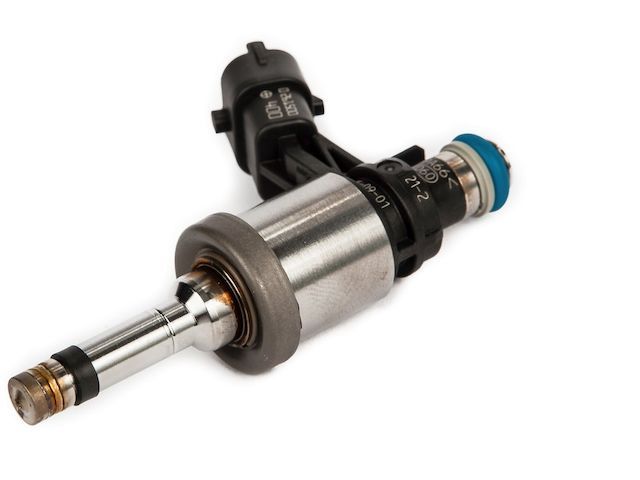
- Fuel Injector
(OEM #12638530)— This is the most likely cause according to GM's own Technical Service Bulletin (PIP4964F) for this engine and code. This part number is widely referenced for the 3.6L LLT engine.
Trusted brands: ACDelco, Bosch
OEM price range: $100-$180
Aftermarket price range: $50-$120 - Downstream Oxygen Sensor (Bank 2, Sensor 2)
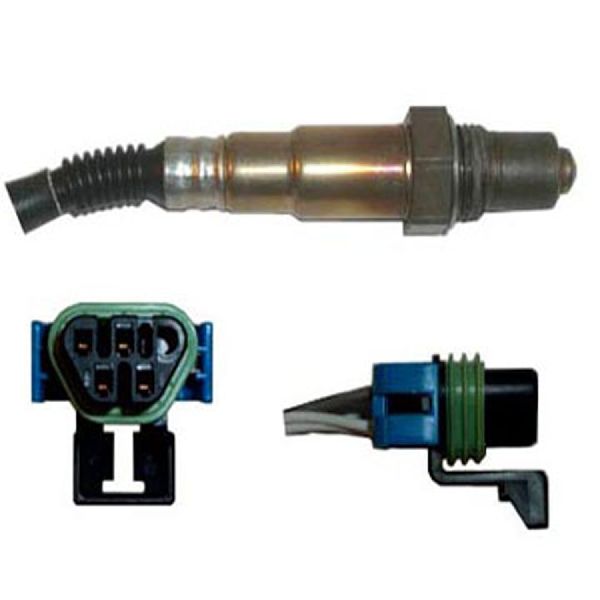
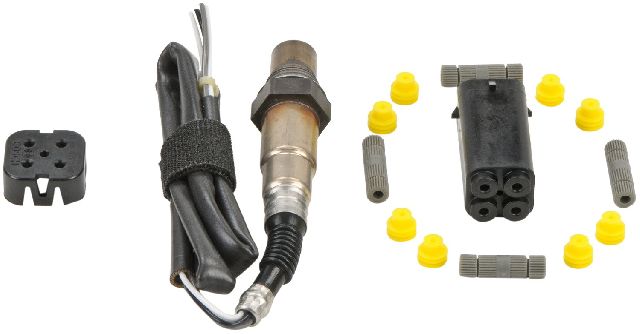
(OEM #12616125)— This part is sometimes replaced unnecessarily, but it can fail. It is responsible for reporting the post-catalyst air/fuel mixture that triggers the code. Bank 2 is the front (radiator side) bank, and Sensor 2 is downstream (post-converter).
Trusted brands: ACDelco, Denso, Bosch, Walker Products
OEM price range: $70-$120
Aftermarket price range: $40-$80 - Exhaust Gasket / Pipe Section — If an exhaust leak is found to be the cause, a gasket or an entire pipe section (like the Y-pipe) may need to be replaced. TSB PIP4964F specifically mentions checking for leaks at the converter outlet.
Trusted brands: Walker Exhaust, AP Exhaust, Fel-Pro
OEM price range: $50-$400
Aftermarket price range: $30-$250
Related Codes That Often Appear With This One
- P2097 — This is the equivalent code for Bank 1 ('Post Catalyst Fuel Trim System Too Rich Bank 1'). If both codes are present, it points towards a systemic issue like high fuel pressure or a faulty MAF sensor affecting the entire engine.
- P0430 — This code means 'Catalyst System Efficiency Below Threshold (Bank 2)'. A persistent rich condition from P2099 can overheat and damage the catalytic converter, eventually leading to a P0430 code.
- P0017 — This code for 'Crankshaft Position - Camshaft Position Correlation Bank 1 Sensor B' has been seen alongside P2099 on Saturn Outlooks and their platform mates. It often points to timing chain issues, which are a known problem on the 3.6L V6 and can affect overall engine performance and fuel mixture, though it is a separate issue from the direct cause of P2099.
- P0496 — This code indicates an 'Evaporative Emission System High Purge Flow'. A stuck-open EVAP purge solenoid can create a vacuum leak that affects fuel trims. While it typically causes a lean condition, forum users have reported seeing it alongside P2099, complicating diagnosis.
Technical Service Bulletins (TSBs) & Recalls
- PIP4964F: Advises technicians to check for a Service Engine Soon lamp with DTC P2097 or P2099 and to perform an injector balance test prior to further diagnosis. If injectors are good, the next step is to check for small exhaust leaks at the converter outlet. It also mentions the possibility of mechanical valvetrain issues.
Platform-Specific Known Issues
- TSB #PIP4964F: This bulletin from General Motors specifically addresses codes P2097 and P2099. It instructs technicians to perform a fuel injector balance test first, before suspecting other components like O2 sensors or exhaust leaks.
- TSB #PIP5029H (superseded by 16-NA-383): While not directly for P2099, this bulletin addresses rough idle and misfires on the 3.6L LLT engine due to heavy carbon buildup on intake valves. This underlying condition could potentially contribute to fuel trim issues.
Mechanic-Grade Diagnostic Values
- Low-Pressure Fuel System (In-Tank Pump) — expected: 345-414 kPa (50-60 psi) with ignition on, engine off.. Failure: Pressure below this range indicates a failing in-tank pump or clogged filter. Pressure should not drop more than 34 kPa (5 psi) in one minute during a leak-down test.
- High-Pressure Fuel System (HPFP) — expected: 1.9-5.0 MPa (276-725 psi) at idle. Can range from 2 to 15 MPa (290 to 2,176 psi) depending on engine speed and load.. Failure: Pressure that does not respond to scan tool commands or is significantly outside the expected range at idle or under load. One owner reported pressures of 1600-1700 psi at idle on a faulty Outlook, indicating a stuck regulator.
- Downstream O2 Sensor (Bank 2, Sensor 2) Voltage — expected: Should fluctuate, but generally hold a relatively steady voltage between 0.1V and 0.9V on a warm engine.. Failure: A voltage signal stuck consistently high (above 0.8V) indicates the rich condition that triggers P2099. If the sensor is suspected of being faulty, it will remain stuck high even when a lean condition is forced.
Scan Tool Commands That Help
- GM GDS2 / Tech2: Injector Balance Test / AFIT (Active Fuel Injector Test) — This is the primary diagnostic step recommended by GM TSB #PIP4964F to directly test for leaking or poorly performing fuel injectors, which is the most common cause of P2099 on this platform.
- GM GDS2 / Tech2: Fuel Trim Reset — After replacing a fuel system component like an injector or an O2 sensor, this function should be used to clear the learned long-term fuel trim data from the ECM, allowing it to re-learn values with the new part.
- Scan Tool with Bi-Directional Control: Fuel Pump ON/OFF — Used to command the low-pressure fuel pump on with the engine off to test for correct fuel pressure and perform a leak-down test.
Wiring & Ground Locations
- G305 — Under the vehicle, near the battery area or to the rear of the left B-pillar at the third body mount on the frame.. While not exclusively for the O2 sensor, this is a major body and chassis ground. Poor grounds can introduce electrical noise and voltage offsets into sensor circuits, potentially causing incorrect readings that could contribute to fuel trim codes. Service manuals warn that a proper ground is essential for correct O2 sensor operation.
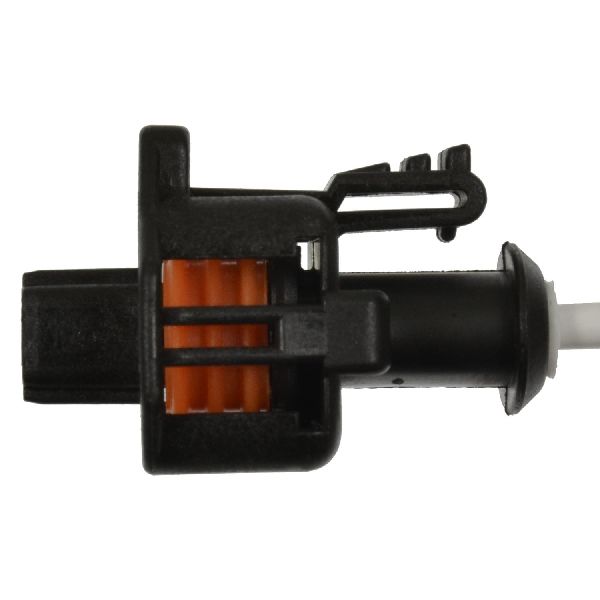
- Bank 2 O2 Sensor Harness — Bank 2 is the cylinder bank closer to the radiator. The downstream sensor (Sensor 2) is located after the catalytic converter.. The wiring for the front-mounted O2 sensor is susceptible to damage from road debris, heat from the exhaust, and corrosion. Service instructions explicitly warn against repairing damaged sensor wiring; the entire sensor should be replaced if the pigtail is compromised.
Real Owner Repair Stories
- YouTube user 'Random Fix' (2010 Chevrolet Traverse (platform mate)) — Check Engine Light with code P2099.
❌ Tried (didn't work) Initially cleared the code, but it returned.
✅ What actually fixed it Replacing the Mass Air Flow (MAF) sensor resolved the P2099 code. The fix was confirmed to be holding two weeks after the repair.
OEM Part Supersession History
12638530→12669384— Part has been updated by the manufacturer. The new part is the current service replacement.
Heads up: Some vendors note that due to potential differences in flow and atomization, it is best practice to replace all injectors on a bank rather than mixing old and new part numbers.
Model Year Variations Within This Range
- 2009: According to TSB #PIP4964F, the scan tool-based fuel injector balance test may not be available on 2009 models. For these vehicles, an Active Fuel Injector Tester (AFIT) is the required tool for proper diagnosis of the most common cause.
Helpful Videos
![How to Fix P2099 Engine Code in 4 Minutes [2 DIY Methods / Only $9.49]](https://img.youtube.com/vi/tZdHNVnheeA/mqdefault.jpg)
We Have This Part in Stock


The information in this article is provided for general reference and educational purposes only. Vehicle specifications, procedures, and part compatibility can vary by production date, trim level, and region. Always consult your vehicle's factory service manual and verify part numbers before purchasing or performing repairs. Safety-critical components such as airbags, seat belts, and braking systems should be installed by a qualified professional.
- Saturn OUTLOOK:
- 🧭 Diagnostic Flowchart
- 🎬 Helpful Videos
- 🛍️ Shop This Part
- What's Unique About the 2009-2010 Saturn OUTLOOK
- Symptoms You May Notice
- Most Likely Causes
- Rare But Worth Checking
- Diagnosis Steps
- Parts You'll Likely Need
- Related Codes That Often Appear With This One
- Technical Service Bulletins (TSBs) & Recalls
- Platform-Specific Known Issues
- Mechanic-Grade Diagnostic Values
- Scan Tool Commands That Help
- Wiring & Ground Locations
- Real Owner Repair Stories
- OEM Part Supersession History
- Model Year Variations Within This Range
- 🎟️ Get 5% Off