

P2100 on 2020 Jeep Cherokee: Electronic Throttle Control Circuit Fixes
For a 2020 Jeep Cherokee, code P2100 usually means a problem with the electronic throttle body, a wiring issue, or the need for a software update. The most common symptom is the vehicle entering 'limp home mode.' A full throttle body replacement is a frequent fix, but a mandatory throttle relearn procedure must be performed afterward.
- P2100 on a 2020 Jeep Cherokee is a critical code that will likely put your vehicle in 'limp mode,' making it unsafe to drive.
- Before replacing parts, check with a dealer to see if your vehicle needs a software update as specified in TSB #09-003-20 REV. C.
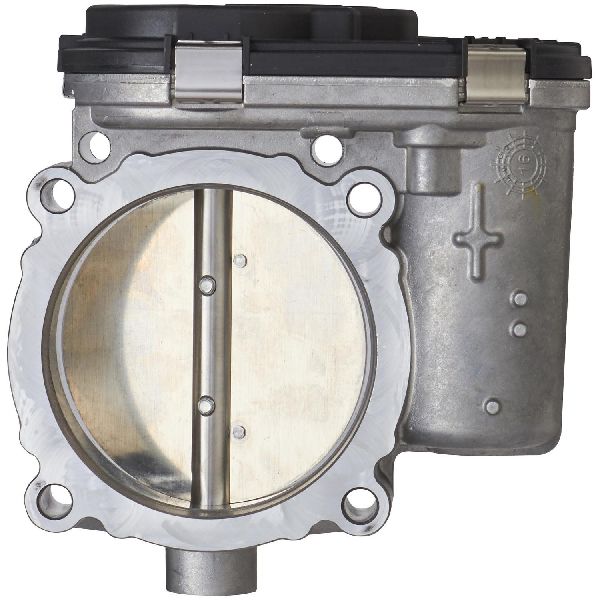
- The most common hardware fix is replacing the entire electronic throttle body assembly.
- Always inspect the wiring and connectors at the throttle body for damage before buying new parts, as an 'open circuit' code often points to a wiring fault.
- Due to safety concerns with the throttle system, professional diagnosis is highly recommended.
What's Unique About the 2020-2020 Jeep CHEROKEE
For the 2020 Jeep Cherokee (KL), this code is directly addressed by TSB #09-003-20 REV. C. This bulletin acknowledges the fault and outlines a procedure to inspect the throttle body's Julian date and possibly replace it, rather than just a software update as previously suggested. This highlights that a known batch of faulty parts may be the root cause. The bulletin also explicitly states that an Electronic Throttle Control (ETC) relearn routine must be performed after replacement. This is a critical step that, if skipped, can lead to incorrect vehicle operation.
Diagnostic Flowchart
Tap your situation to follow the diagnostic path that matches what you're seeing on this vehicle.
Symptoms You May Notice
- Check Engine Light is on
- Vehicle enters 'limp home mode' with severely reduced power and speed.
- Blinking red throttle control warning light (red lightning bolt) on the dashboard.
- Little to no throttle response when pressing the accelerator pedal.
- Engine may stall or have a rough, unstable, or surging idle.
- Service Traction Control message may appear.
- Hesitation or jerking during acceleration.
- Replacing the accelerator pedal when the issue is actually the throttle body or wiring.
- Replacing the throttle body but failing to perform the mandatory ETC relearn procedure, leading to a belief that the new part is also faulty.
- Assuming a software update is the only fix when TSB 09-003-20 REV. C points towards hardware inspection and replacement.
Most Likely Causes
- Faulty Throttle Body Assembly 🔴 High Probability → Shop Fuel Injection Throttle Body The electronic motor that fails is integrated into the throttle body assembly. TSB #09-003-20 REV. C points to a potential batch of defective throttle bodies requiring inspection and replacement. This is the most common failure point for the FCA electronic throttle control system.
How to confirm: After ruling out wiring, a mechanic can test the motor's resistance (should be between 2.5 and 25 ohms per service manuals) or swap in a known-good throttle body. Visual inspection for a stuck or dirty throttle plate is also recommended.
Typical fix: Replace the entire throttle body assembly, followed by a mandatory ETC relearn procedure.
Est. part cost: $75-$250 - Wiring Harness or Connector Issue 🟡 Medium Probability The P2100 code specifically indicates an 'open circuit'. This can be caused by a broken wire, a loose pin, or corrosion at the throttle body electrical connector. Wires can chafe against engine brackets or other components over time.
How to confirm: Visually inspect the wiring harness leading to the throttle body for any signs of damage, chafing, or corrosion. Use a multimeter to test for continuity and proper voltage (typically 5V for signal, 12V for power) at the connector according to the service manual.
Typical fix: Repair the damaged section of the wiring harness or clean/replace the connector. Ensure the connector is fully seated and the locking tab is engaged.
Est. part cost: $10-$100 - Software/Component Mismatch (Requires Update or Relearn) 🟡 Medium Probability While TSB #09-003-20 REV. C focuses on hardware, other software glitches can cause this code. More importantly, replacing the throttle body without performing the ETC relearn procedure will cause the system to remain in a fault state, mimicking the original problem.
How to confirm: A Jeep dealership or a qualified shop can check for any applicable PCM software updates. If the throttle body was recently replaced and the issue persists, a failed or skipped relearn procedure is a likely cause.
Typical fix: Flash the Powertrain Control Module (PCM) with the latest software or perform the ETC Relearn procedure using a compatible scan tool or manual process.
Est. part cost: $0-$200
Rare But Worth Checking
- Faulty Accelerator Pedal Position (APP) Sensor: While less common for an 'open circuit' code, a failing pedal sensor can send erratic signals that the PCM misinterprets as a throttle body circuit fault.
- Blown Fuse or Faulty Relay: The throttle actuator circuit is protected by a fuse and controlled by a relay. A simple blown fuse can cause the entire circuit to lose power and trigger this code.
- Faulty Powertrain Control Module (PCM): → Shop Engine Control Module (ECM) This should be the last consideration after all other possibilities have been exhausted. A PCM failure is rare but can cause this code if the internal driver for the throttle motor fails.
Diagnosis Steps
- Check for Technical Service Bulletins (TSBs). Specifically, check if TSB #09-003-20 REV. C applies to your vehicle's VIN. This may involve inspecting the Julian date on the throttle body itself.
- Scan the PCM for P2100 and any other related codes (e.g., P2101, P2107, P2110).
- Inspect the throttle body bore and plate for any foreign material (ice, dirt, carbon buildup) that could cause it to stick.
- Carefully inspect the wiring harness and connector at the throttle body for any visible damage, corrosion, loose pins, or chafing against other components.
- Check the fuses and relays related to the electronic throttle control system in the vehicle's fuse box.
- Using a multimeter, verify that the throttle body connector has the correct power (approx. 12V) and ground signals as specified in the vehicle's service manual.
- Test the resistance of the motor circuit through the connector to confirm if it is open. A healthy motor should have a resistance between 2.5 and 25 ohms.
- If wiring, power, and resistance are good, and the throttle body was replaced, perform the ETC Relearn procedure. This can be done with a scan tool or sometimes a manual key-on/pedal-press sequence.
- If all other steps fail, the fault is likely the throttle body assembly itself or, in rare cases, the PCM.
Parts You'll Likely Need
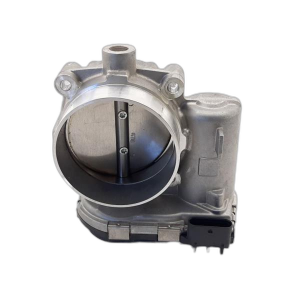
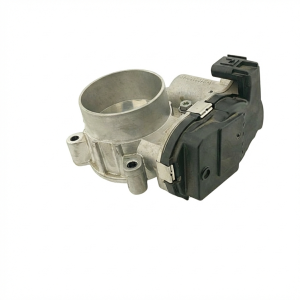
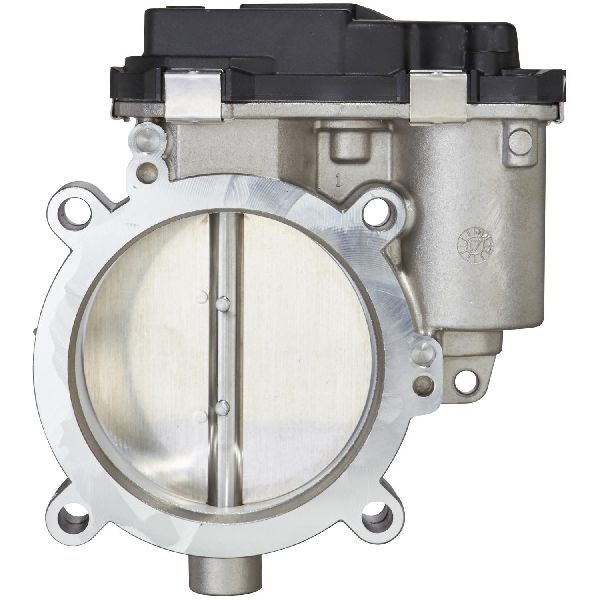
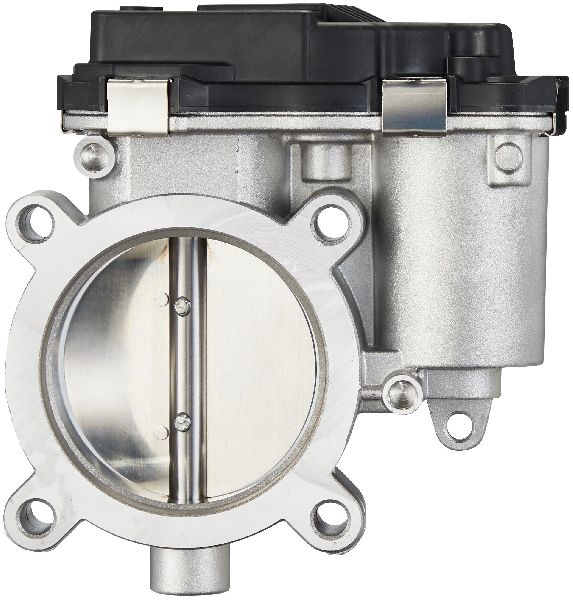
- Electronic Throttle Body Assembly
(OEM #05184349AE)— This is the most common point of failure for P2100, especially given TSB 09-003-20 REV. C. The internal motor or position sensor fails, and the entire assembly must be replaced.
Trusted brands: Mopar, Bosch, Dorman
OEM price range: $250-$500
Aftermarket price range: $75-$200
Related Codes That Often Appear With This One
- P2101 — This code relates to 'Throttle Actuator Control Motor Performance,' suggesting the PCM is seeing a discrepancy between the commanded and actual throttle position, which can occur alongside a circuit fault.
- P2107 — This code points to a fault within the throttle actuator control module processor itself. It often appears with P2100, indicating a more severe internal failure of the throttle control system.
- P2110 — Indicates 'Throttle Actuator Control System - Forced Limited RPM'. This is a companion code that confirms the PCM has actively placed the vehicle into limp mode due to a detected throttle system fault like P2100.
Technical Service Bulletins (TSBs) & Recalls
- 09-003-20 REV. C: Involves inspecting the Julian date on the throttle body and possibly replacing it for the P2100 code. Mandates an ETC relearn procedure after replacement. [1, 2, ⭐ MANUFACTURER TSB]
Platform-Specific Known Issues
- TSB #09-003-20 REV. C specifically addresses MIL illumination with DTC P2100 on 2020 Jeep Cherokees. The bulletin requires inspecting the Julian date on the throttle body and potentially replacing the unit, followed by a mandatory ETC relearn. [2, ⭐ MANUFACTURER TSB]
- The 'red lightning bolt' on the dash is the hallmark symptom for this failure across many Jeep, Dodge, and Chrysler vehicles, immediately indicating an Electronic Throttle Control fault and impending limp mode.
Mechanic-Grade Diagnostic Values
- ETC Motor Resistance — expected: 2.5 to 25 ohms. Failure: A reading outside this range, especially infinite resistance (open circuit), indicates a failed motor.
- Throttle Position Sensor (TPS) Voltage Sweep — expected: Smoothly sweep from ~0.5V (closed) to ~4.5V (wide open). Failure: Any voltage drops, spikes, or dead spots during the sweep indicate a faulty sensor.
- ETC Motor Circuit Short to Voltage Test — expected: Test light should NOT illuminate. Failure: If a 12V test light connected to ground illuminates when probing the (K124) or (K126) circuit wires, it indicates a short to battery voltage.
- Throttle Body Connector Power Supply — expected: ~12V (Battery Voltage). Failure: Significantly lower or no voltage indicates a power supply issue, possibly a blown fuse or wiring fault.
Scan Tool Commands That Help
- wiTECH, Autel, iCarsoft, or other professional scanner: ETC Relearn / Throttle Body Calibration / Learn Electronic Throttle Body — This is a mandatory step after replacing the throttle body assembly. It calibrates the new part's closed, open, and idle positions with the PCM. Skipping this step will likely cause continued running issues.
Wiring & Ground Locations
- (K124) / (K126) — Wires running between the Powertrain Control Module (PCM) and the 6-pin throttle body connector.. These are the specific circuit designators for the ETC Motor (+) and (-) wires. P2100 directly points to an open in one of these circuits, so they are the primary wires to test for continuity and shorts.
- Fuse F14 / F22 — In the under-hood fuse box, also known as the Power Distribution Center.. These fuses are often tied to the power supply for the electronic throttle control system. A blown fuse will cause a complete loss of power and trigger an open circuit code like P2100.
- PCM Connector C2 — One of the main harness connectors at the Powertrain Control Module (PCM).. Technicians disconnect this specific connector to safely test the K124 and K126 circuits for opens or shorts between the PCM and the throttle body, isolating the fault to the wiring or the component.
- Dipstick Tube Stud Ground — A ground wire attached to the stud that holds the engine oil dipstick tube to the engine block.. While not exclusive to P2100, a loose or corroded main engine ground is a known issue on Jeeps that can cause a wide range of erratic electronic faults and false sensor codes. It's a wise 'while you're in there' check.
Real Owner Repair Stories
- Reddit user on r/JeepPatriot (2013 Jeep Patriot Latitude (shares FCA ETC logic)) — Erratic acceleration/deceleration issues immediately after replacing the throttle body.
❌ Tried (didn't work) Replacing the throttle body alone did not solve the driveability issue.
✅ What actually fixed it A manual throttle relearn procedure. The user reported immediate improvement after performing these steps: 1. Turn key to ON (engine off), wait for dash lights to settle. 2. Slowly press accelerator pedal to the floor and hold for a count of 10. 3. Slowly release the pedal over a count of 10. 4. Turn key OFF. 5. Wait 1 minute, then start the car normally.
OEM Part Supersession History
05184349AB, 05184349AC, 05184349AD, 05184349AE→05184349AF— Part revision and improvement by the manufacturer over time.
Heads up: While older versions may fit, it is always recommended to use the latest superseded part number (05184349AF for the 3.2L V6) to ensure all design updates are included.
Model Year Variations Within This Range
- 2020: The TSB #09-003-20 REV. C specifically applies to 2020 Cherokee models equipped with the 2.4L engine and built between September 6, 2019, and September 20, 2019. The throttle body part number for the 2.4L is different (e.g., 5281796AC) from the 3.2L V6 (e.g., 5184349AF).
Helpful Videos

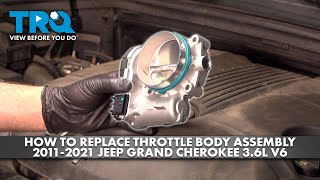
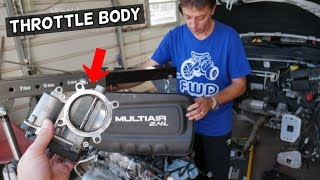

Used OEM Parts in Stock
New Aftermarket Parts Available


The information in this article is provided for general reference and educational purposes only. Vehicle specifications, procedures, and part compatibility can vary by production date, trim level, and region. Always consult your vehicle's factory service manual and verify part numbers before purchasing or performing repairs. Safety-critical components such as airbags, seat belts, and braking systems should be installed by a qualified professional.
- Jeep CHEROKEE:
- 🧭 Diagnostic Flowchart
- 🎬 Helpful Videos
- 🛍️ Shop This Part
- What's Unique About the 2020-2020 Jeep CHEROKEE
- Symptoms You May Notice
- Most Likely Causes
- Rare But Worth Checking
- Diagnosis Steps
- Parts You'll Likely Need
- Related Codes That Often Appear With This One
- Technical Service Bulletins (TSBs) & Recalls
- Platform-Specific Known Issues
- Mechanic-Grade Diagnostic Values
- Scan Tool Commands That Help
- Wiring & Ground Locations
- Real Owner Repair Stories
- OEM Part Supersession History
- Model Year Variations Within This Range
- 🎟️ Get 5% Off