

P2101 on 2015-2018 Cadillac CTS: Throttle Actuator Performance Causes and Fixes
On a 2015-2018 Cadillac CTS, especially performance models (V-Sport, CTS-V), code P2101 is frequently caused by a deformed or incorrect air filter, not a faulty throttle body. Before replacing expensive parts, inspect the air filter and air intake duct for damage or collapse, as documented in GM TSBs. The correct OEM filter has visible glue lines for reinforcement.
- Always inspect the engine air filter and intake duct first for code P2101 on a 2015-2018 CTS. This is the most likely cause, per GM's own service bulletins.
- Do not immediately replace the throttle body. This is an expensive part and may not be the root cause of the problem.
- The vehicle may enter a 'Reduced Engine Power' mode, which is a serious safety concern. Avoid driving until the issue is resolved.
- This code is almost always seen with other throttle-related codes like P0121 and P2119, which reinforces the diagnosis.
- If the throttle body does need to be replaced, a 'throttle relearn' procedure is mandatory to ensure the car idles and drives correctly.
What's Unique About the 2015-2018 Cadillac CTS
Unlike many vehicles where P2101 almost always points to a failed throttle body, the 2015-2018 Cadillac CTS, particularly models with higher-output engines like the 6.2L LT4, has a well-documented history of this code being triggered by air intake issues. Manufacturer Technical Service Bulletins (TSBs) repeatedly link P2101 to incorrect or collapsed air filters that restrict airflow, especially during aggressive, wide-open throttle (WOT) driving. This restriction creates a significant pressure differential that the system misinterprets as a throttle performance fault, leading to unnecessary and expensive throttle body replacements. TSB PIP5424A explicitly shows the difference between an incorrect filter (no glue lines) and the correct, reinforced filter (with visible glue lines).
Diagnostic Flowchart
Tap your situation to follow the diagnostic path that matches what you're seeing on this vehicle.
Symptoms You May Notice
- Reduced Engine Power message on the dashboard 🎬 Watch: Solving the mystery of the Reduced Engine Power light
- Check Engine Light (Malfunction Indicator Lamp) is on
- Engine stalling or shutting off, especially after aggressive acceleration or wide-open throttle (WOT) maneuvers.
- Unstable or rough idle
- Poor or unresponsive acceleration.
- Idle surge
- Vehicle will restart and may drive normally after being shut off and sitting for a minute.
- Replacing the throttle body without first inspecting the air filter and intake duct. The TSBs for this specific vehicle strongly indicate the air intake system is a primary and often overlooked cause, especially TSB PIP5424A which explicitly says 'Do not replace ECM, Throttle Body'.
Most Likely Causes
- Incorrect or Deformed Air Filter 🔴 High Probability → Shop Air Cleaner Assembly As documented in TSBs GCUS-3-885 and PIP5424A, certain air filters can collapse under high airflow (like wide-open throttle), restricting the intake and triggering throttle performance codes. This is especially common in high-output supercharged models like the CTS-V.
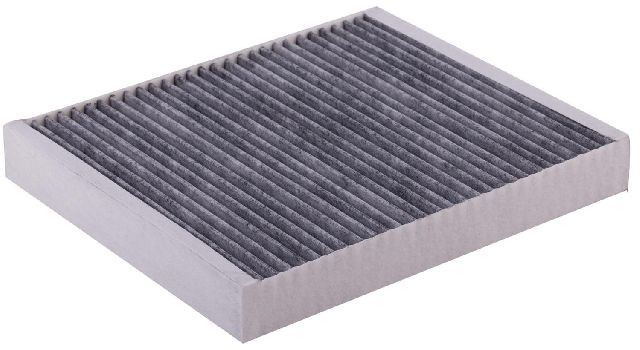
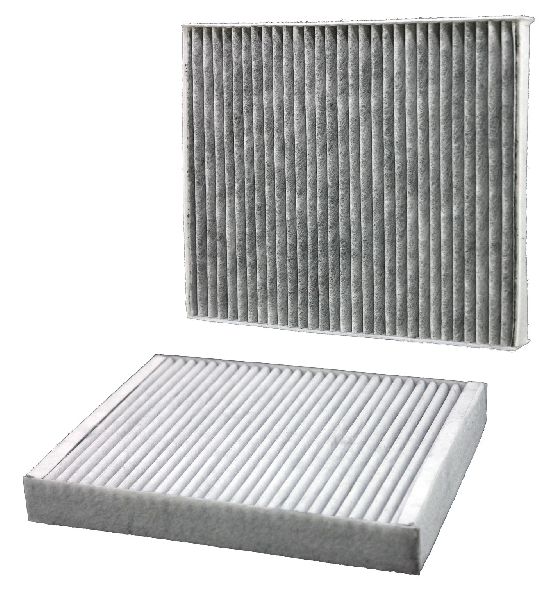
How to confirm: Remove the air filter from the airbox. Inspect it for physical deformation, collapse, or signs that it is not the correct part for the vehicle. TSB PIP5424A notes that the correct filter has visible glue lines for reinforcement, while the incorrect one does not.
Typical fix: Replace the air filter with a new, correct, high-quality OEM or equivalent part. Ensure it is seated correctly in the airbox. The correct ACDelco part for many affected performance models is noted as having reinforcement.
Est. part cost: $25-$70 - Damaged or Collapsed Air Intake Duct 🟡 Medium Probability TSB GCUS-3-885 and PIP5424A state that a collapsed air filter can lead to the air duct also collapsing and being cut or damaged, potentially by the supercharger idler pulley on applicable models.
How to confirm: Visually inspect the entire air intake tube between the airbox and the throttle body. Look for cracks, cuts, tears, or signs of collapse.
Typical fix: Replace the damaged air intake duct. The TSB recommends replacing the duct along with the filter if it has collapsed.
Est. part cost: $80-$200 - Failing Throttle Body Assembly ⚪ Low Probability → Shop Fuel Injection Throttle Body While less common than intake issues on this platform, the internal motor or position sensors of the electronic throttle body can fail over time. Carbon buildup can also cause the throttle plate to stick.
How to confirm: After confirming the air intake system is perfect, inspect the throttle body for heavy carbon buildup. If clean, a technician can use a scan tool to monitor commanded vs. actual throttle position to confirm a malfunction. A vibrating noise from the throttle body after shutdown can also indicate a failure.
Typical fix: Clean the throttle body bore and plate with dedicated cleaner. If the problem persists, replace the entire throttle body assembly. A throttle relearn procedure is required after replacement.
Est. part cost: $150-$450
Rare But Worth Checking
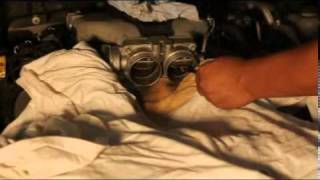
- Debris in Throttle Body: → Shop Fuel Injection Throttle Body A YouTube video on a similar model showed leaves and debris from a mouse nest in the airbox getting sucked into the intake and physically jamming the throttle plate, causing P2101, P2119, and P2176. This can happen if the air filter is missing or improperly installed.
- Wiring Harness Issue: Damage to the wiring or connector at the throttle body can cause intermittent signal loss. Check for frayed wires, corrosion, or loose pins in the connector.
- Powertrain Control Module (PCM) Failure or Software Anomaly: → Shop Engine Control Module (ECM) This is extremely rare, but a faulty PCM can misinterpret sensor data and incorrectly set a P2101 code. TSB 17-NA-348 also notes a software anomaly on some 2017-2018 GM vehicles that could falsely set P2101, requiring an ECM reprogram. Another TSB (PIP5756) for newer models notes that P2101 in history alone should not prompt throttle body replacement, as many returned parts test with no trouble found.
Diagnosis Steps
- Read all stored fault codes with an OBD-II scanner. Note any other codes that appear with P2101, especially P0121 and P2119.
- Check for relevant Technical Service Bulletins (TSBs) for your vehicle's VIN. Specifically look for GCUS-3-885, PIP5424A, and PIP4578B.
- Open the air filter housing and carefully inspect the air filter. Check for collapse, deformation, dirt, and ensure it is the correct part. Look for the reinforcing glue lines mentioned in TSB PIP5424A.
- Inspect the air intake duct between the filter housing and the throttle body for any cracks, tears, or signs of collapse. On supercharged models, check for contact with the idler pulley.
- If the intake system is in perfect condition, remove the intake duct from the throttle body and inspect the throttle plate and bore for heavy carbon buildup or foreign debris like leaves from a rodent nest.
- Clean the throttle body with a dedicated throttle body cleaner 🎬 See how to properly clean a Cadillac throttle body and a soft cloth if dirty. Do not push the plate open manually unless the manufacturer's procedure allows it. Be careful not to let cleaner enter the electronic components.
- If the issue persists, inspect the throttle body electrical connector and wiring for any signs of damage, corrosion, or looseness. Perform a 'wiggle test' on the harness with the engine running to check for intermittent faults.
- If all else fails, the throttle body assembly itself is likely faulty and requires replacement. A throttle relearn procedure must be performed after installation.
- The throttle relearn procedure typically involves turning the ignition on (engine off) for a period, then off, then starting the engine to idle, but procedures can vary. A scan tool provides the most reliable method.
Parts You'll Likely Need
- Engine Air Filter
(OEM #ACDelco A3221C (Example for CTS-V, verify by VIN))— Per multiple TSBs, an incorrect or collapsed air filter is a primary cause of P2101 on this vehicle by restricting airflow. TSB PIP5424A specifically calls out the need for a filter with reinforcing glue lines.
Trusted brands: ACDelco, Wix, Fram
OEM price range: $40-$70
Aftermarket price range: $25-$50 - Throttle Body Assembly
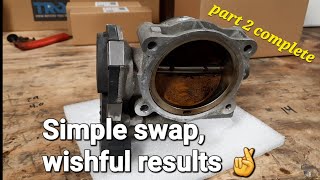
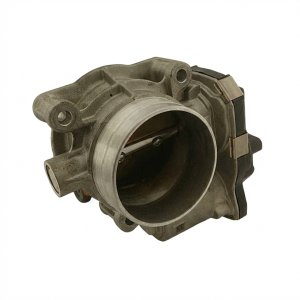
(OEM #12671223 (Superseded, verify by VIN))— If the air intake system is not the cause, the internal motor or sensors in the throttle body have likely failed. On this model, the sensors are integrated and the entire assembly must be replaced. 🎬 Watch: Step-by-step guide to installing a new throttle body
Trusted brands: ACDelco, Bosch, Standard Motor Products
OEM price range: $250-$450
Aftermarket price range: $150-$300
Related Codes That Often Appear With This One
- P0121 — Throttle/Pedal Position Sensor 'A' Circuit Range/Performance. This code is frequently set with P2101 as they both relate to the throttle body's performance not matching expectations. It is cited in all three TSBs.
- P2119 — Throttle Actuator Control Throttle Body Range/Performance. This code also points to a problem with the throttle body's ability to move correctly and is cited alongside P2101 in the TSBs.
- P0068 — MAP/MAF - Throttle Position Correlation. This code indicates a mismatch between the airflow sensors and the throttle position, which can be caused by an intake restriction.
- P2176 — Throttle Actuator Control System - Idle Position Not Learned. This often appears when the throttle body is failing, extremely dirty, or has been replaced without performing the relearn procedure, preventing the ECM from finding the correct idle position.
- P1516 — Throttle Actuator Control (TAC) Module Performance. This is a GM-specific code that often accompanies P2101, indicating a discrepancy between the predicted and actual throttle position. It is common on modified vehicles with aftermarket throttle bodies or intakes.
Technical Service Bulletins (TSBs) & Recalls
- GCUS-3-885: Mentions P2101 caused by a cut air duct and deformed air filter.
- PIP5424A: Links P2101 to engine stalling after WOT due to an incorrect/collapsed air filter.
- PIP4578B: Associates P2101 with idle surge and reduced power on high-mileage vehicles.
Platform-Specific Known Issues
- TSB #GCUS-3-885 notes that a deformed air filter can cause the engine to stall and the air duct to be cut, storing codes P0121, P2101, and P2119.
- TSB #PIP5424A points to an incorrect air filter causing engine shut-offs after wide-open throttle maneuvers on 2016-2017 CTS-V models. It shows a picture of the correct filter (with glue lines) vs the incorrect one (without) and explicitly states not to replace the throttle body for this issue.
- TSB #PIP4578B covers idle surge and reduced power with P2101 on high mileage vehicles, often related to carbon buildup or throttle body failure.
Mechanic-Grade Diagnostic Values
- Throttle Position Sensor (TPS) Signal Voltage — expected: Approximately 0.5V - 1.0V at idle (throttle closed) and smoothly increasing to 4.5V - 5.0V at wide-open throttle (WOT).. Failure: Voltage readings that are jumpy, intermittent, outside the expected range, or do not change smoothly as the throttle plate is moved.
- Throttle Body 5V Reference Circuit — expected: Approximately 5.0 volts with the key on, engine off.. Failure: Voltage significantly lower than 5.0V or no voltage, indicating a wiring issue or a problem with the ECM's 5V reference supply.
- Throttle Body Ground Circuit Resistance — expected: Less than 2 ohms between the ground pin at the throttle body connector and a known good chassis ground.. Failure: High resistance (greater than 2 ohms) or an open circuit (infinite resistance), indicating a poor ground connection which is critical for sensor and motor operation.
Scan Tool Commands That Help
- GDS2 / Tech2 (or equivalent professional scan tool): Throttle Position / Engine Speed and Throttle — To compare the 'Commanded Throttle Position' from the ECM against the 'Indicated Throttle Angle' from the sensors in real-time. A significant discrepancy between desired and actual values while operating the pedal confirms a fault in the TAC system.
- GDS2 / Tech2 (or equivalent professional scan tool): Idle Learn Reset / Throttle Relearn — This function is required after cleaning or replacing the throttle body. It commands the ECM to recalibrate the throttle plate's closed and idle positions. Failure to perform this can cause high idle, stalling, and set codes like P2176.
- GDS2 / Tech2 (or equivalent professional scan tool): Throttle Actuator Control (TAC) Test — This is a bidirectional test that allows the technician to command the throttle motor to open and close to specific percentages. It is used to verify the motor's function and sensor response without needing to press the accelerator pedal, isolating the throttle body for testing.
Wiring & Ground Locations
- G101 / G106 — G101 is located on the left side of the engine block. It often jumpers to G106, located on the front center of the frame cross rail, under the crank pulley.. These are primary engine and frame grounds. The Engine Control Module (ECM) and Transmission Control Module (TCM) rely on these grounds. A poor connection here can cause erratic behavior and fault codes for various engine sensors, including the throttle body.
- G103 — Located at the left rear of the engine compartment on the cowl, often above the brake booster.. This ground serves the Body Control Module (BCM) and the Data Link Connector (DLC). While not a direct engine ground, a fault here can cause communication issues between modules, potentially leading to incorrect diagnostic codes.
- Throttle Body Connector — The electrical connector directly on the electronic throttle body assembly.. This is the single most critical connection point. It contains the 5V reference, ground, and signal wires for the two throttle position sensors, as well as the two control wires for the actuator motor. Corrosion or loose pins here are a direct cause of P2101.
Real Owner Repair Stories
- GMTNation Forum User (2005 GMC Envoy 4.2L I6 (similar GM TAC system)) — Recurring 'Reduced Engine Power' / limp mode.
❌ Tried (didn't work) Initial diagnosis was inconclusive.
✅ What actually fixed it The user found hidden broken wires in the MAF/IAT sensor harness. While not the throttle body itself, the PCM uses MAF data to predict throttle response, and bad data led to a throttle performance code. This highlights the importance of checking related sensor wiring. - Reddit r/Cartalk user (2008 Chevrolet Impala (similar GM TAC system)) — Reduced Engine Power, codes P1516 and P2101.
❌ Tried (didn't work) Suspected the MAF sensor based on parts store advice.
✅ What actually fixed it The owner resolved the codes by performing basic maintenance: thoroughly cleaning the MAF sensor, cleaning the throttle body, and replacing a very dirty engine air filter. This reinforces the TSBs for the CTS, where airflow restrictions are a primary cause.
OEM Part Supersession History
12620263→12678223— Part has been updated by the manufacturer. Reasons are often for improved reliability or minor design changes.
Heads up: These parts are for the 6.2L V8 engines (LT1/LT4) found in the CTS-V. While they may physically fit other GM models, the calibration could be different. Always verify the part number by VIN.
Model Year Variations Within This Range
- 2016-2018: For the 2016 model year, the 3.6L V6 was updated from the LFX to the new LGX engine. The LGX is a significant redesign with a larger bore, improved cooling, and different power output. Additionally, the 6-speed automatic was replaced by an 8-speed 8L45 automatic for the 2.0T and 3.6L engines. While the P2101 diagnosis remains similar, technicians should be aware that the throttle body and ECM are different between an LFX and LGX engine.
Helpful Videos

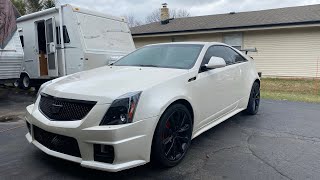
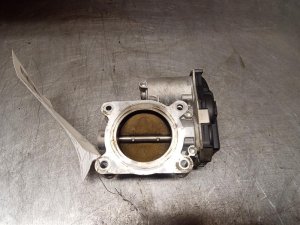
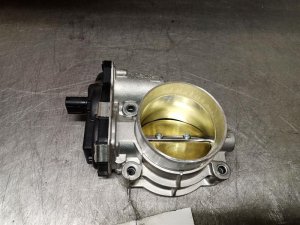
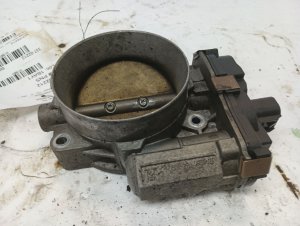
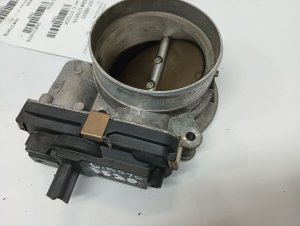
Used OEM Parts in Stock
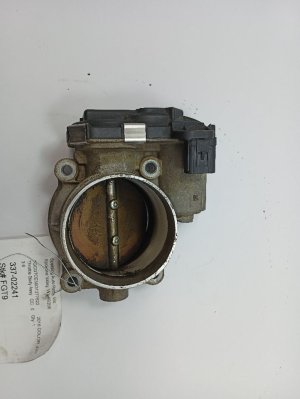
New Aftermarket Parts Available



The information in this article is provided for general reference and educational purposes only. Vehicle specifications, procedures, and part compatibility can vary by production date, trim level, and region. Always consult your vehicle's factory service manual and verify part numbers before purchasing or performing repairs. Safety-critical components such as airbags, seat belts, and braking systems should be installed by a qualified professional.
- Cadillac CTS:
- 🧭 Diagnostic Flowchart
- 🎬 Helpful Videos
- 🛍️ Shop This Part
- What's Unique About the 2015-2018 Cadillac CTS
- Symptoms You May Notice
- Most Likely Causes
- Rare But Worth Checking
- Diagnosis Steps
- Parts You'll Likely Need
- Related Codes That Often Appear With This One
- Technical Service Bulletins (TSBs) & Recalls
- Platform-Specific Known Issues
- Mechanic-Grade Diagnostic Values
- Scan Tool Commands That Help
- Wiring & Ground Locations
- Real Owner Repair Stories
- OEM Part Supersession History
- Model Year Variations Within This Range
- 🎟️ Get 5% Off