

P2101 on 2017-2018 Cadillac Escalade ESV: Throttle Actuator Causes & Fixes
On 2017-2018 Escalade ESVs, code P2101 is most often caused by a software glitch that requires an ECM update from a dealer, as documented in GM Technical Service Bulletins. This is due to a conflict with the 'Driver Door Open Prime' feature. If it's not a software issue, the throttle body assembly is the next most likely culprit.
- For a 2017-2018 Escalade ESV, P2101 is very likely a software issue, not a failed part.
- The first step in diagnosis should be to check with a dealer if TSB #18-NA-037 (ECM reprogram) applies and has been performed.
- Do not replace the throttle body without first confirming the ECM software is up to date, especially if P2101 is the only code present.
What's Unique About the 2017-2018 Cadillac ESCALADE ESV
For this specific generation of Escalade and its platform mates, the P2101 code is uniquely tied to a software problem. In 2017, GM introduced a 'Driver Door Open Prime' (DDOP) feature to improve cold starting by priming the fuel system when the driver's door is opened. However, a software anomaly could cause the electronic throttle control diagnostics to run during this priming event, falsely setting the P2101 code, as detailed in GM TSB #PIP5501B and #18-NA-037. This means a simple software reflash at the dealership is often the correct fix, rather than replacing any hardware. Some owners have reported this issue occurring after the vehicle sits for an extended period, like overnight.
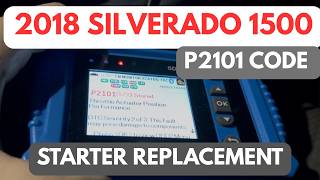
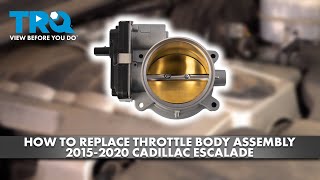
🎬 Watch: Real-world diagnosis of P2101 on this GM platform.Diagnostic Flowchart
Tap your situation to follow the diagnostic path that matches what you're seeing on this vehicle.
Symptoms You May Notice
- Reduced Engine Power message on the driver information center
- Check Engine Light (Malfunction Indicator Lamp) is on
- Vehicle may be stuck in a fixed, high idle or run rough
- Poor, jerky, or no acceleration.
- Vehicle may stall.
- In some cases, a no-start condition where the engine clicks but does not crank.
- Replacing the throttle body when only an ECM software update was needed. This is the most common misdiagnosis due to the specific TSBs for this vehicle.
- Replacing the accelerator pedal position (APP) sensor. While related to the throttle system, a faulty APP sensor will typically set its own specific trouble codes (like P2138).
Most Likely Causes
- Engine Control Module (ECM) Software Anomaly 🔴 High Probability → Shop Engine Control Module (ECM) A 'Driver Door Open Prime' (DDOP) feature introduced in 2017 had a software bug that could falsely trigger P2101. This is a well-documented issue by GM affecting the K2XX platform.
How to confirm: A GM dealer or a shop with access to GM's service information can check if TSB #18-NA-037 applies to the vehicle's VIN and if the ECM software has been updated. The TSB explicitly states if P2101 is the only code set, the ECM should be reprogrammed.
Typical fix: Reprogramming the ECM with the latest software version using GM's Service Programming System (SPS). No parts are replaced. A dealer may charge between $150 and $250 for this service if the vehicle is out of warranty.
Est. part cost: $0 - Faulty Throttle Body Assembly 🟡 Medium Probability → Shop Fuel Injection Throttle Body Carbon buildup can restrict plate movement, or the internal motor/gears can wear out over time, causing it to fail to respond to ECM commands correctly. Moisture and oil can also intrude and foul the internal electronics.
How to confirm: After ruling out software, a technician can use a scan tool to command the throttle plate open and closed while observing its actual position (TPS percentage). A visual inspection for heavy carbon buildup is also necessary. Any sticking, jumping, or failure to respond indicates a faulty throttle body.
Typical fix: Cleaning the throttle body bore and plate with a dedicated cleaner. If cleaning doesn't work or the internal motor has failed, the entire throttle body assembly must be replaced. An idle relearn procedure is required after cleaning or replacement.
Est. part cost: $150-$400 - Wiring or Connector Issue ⚪ Low Probability Engine vibrations and heat can, over time, cause wires to chafe or connector pins to lose tension at the throttle body harness. The pigtail connector itself is a known point of failure on some GM vehicles.
How to confirm: Visually inspect the wiring harness leading to the throttle body for any signs of damage, chafing, or corrosion. Check for a secure connection at the throttle body and the ECM. A multimeter can be used to check for proper voltage and ground at the connector.
Typical fix: Repairing the damaged section of the wiring harness or replacing the throttle body pigtail connector. Cleaning/tightening the connector pins.
Est. part cost: $20-$75
Rare But Worth Checking
- Failing Powertrain Control Module (PCM/ECM): → Shop Engine Control Module (ECM) This is rare. The module itself could be faulty, but all other possibilities, especially the documented software glitch, must be eliminated first. A faulty ECM may not correctly interpret sensor signals or send proper commands.
- Low Battery Voltage: A weak or failing battery can cause a variety of seemingly unrelated electronic issues, including setting a P2101 code. The TSB for the software reflash specifically notes that the vehicle battery may be in a reduced state of charge and that stable voltage is critical during programming.
Diagnosis Steps
- Connect a professional-grade OBD-II scanner to the vehicle.
- Verify that P2101 is the only code present. If other codes are stored, diagnose them first. TSB #18-NA-037 specifically applies if P2101 is the only DTC set.
- Check for applicable Technical Service Bulletins (TSBs). Specifically, reference GM TSB #18-NA-037 and #PIP5501B to see if the vehicle requires an ECM reprogram.
- If a software update is available and has not been performed, this is the first and most likely fix. Proceed with the ECM reprogram using a GM-authorized tool. Stable battery voltage is critical during this process.
- If the software is up to date or the reprogram does not fix the issue, proceed to hardware diagnosis.
- Turn the ignition off and inspect the wiring harness and connector at the electronic throttle body for any signs of damage, corrosion, or loose pins.
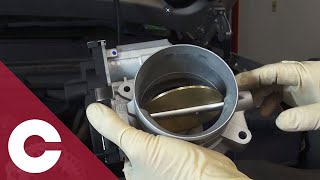
- Remove the air intake duct from the throttle body and inspect the throttle bore and plate for heavy carbon buildup. Clean if necessary with a dedicated throttle body cleaner and a soft cloth, 🎬 See how to properly clean an LS-type throttle body. ensuring no rags are left behind.
- Using the bi-directional controls of a scan tool, command the throttle plate to sweep from open to closed. Monitor the throttle position sensor data (e.g., TPS1 and TPS2) to see if it tracks the command smoothly and within the expected voltage range (typically 0.5V at closed to 4.5V at wide-open).
- If the throttle body fails the sweep test or shows erratic readings, it needs to be replaced.
- After replacement or cleaning, a throttle relearn procedure is required. 🎬 Watch: How to perform the electronic throttle body relearn procedure. This can be done with a scan tool or by a manual procedure (e.g., run engine in Park for 3 mins, turn off for 60 seconds, run for another 3 mins).
Parts You'll Likely Need
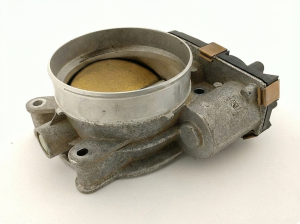
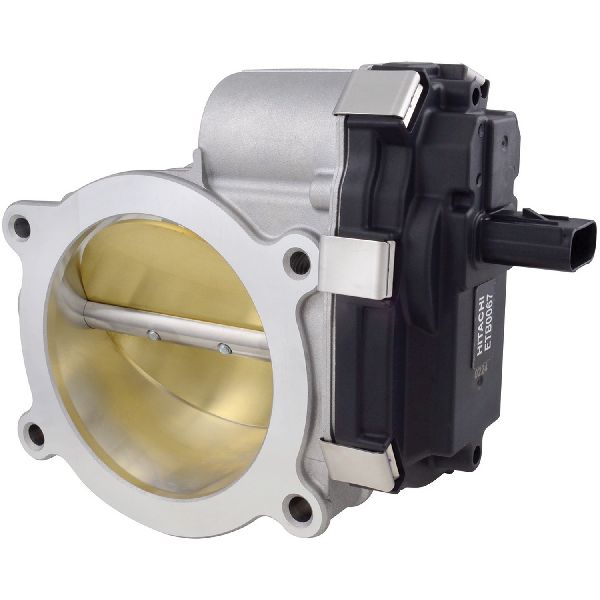
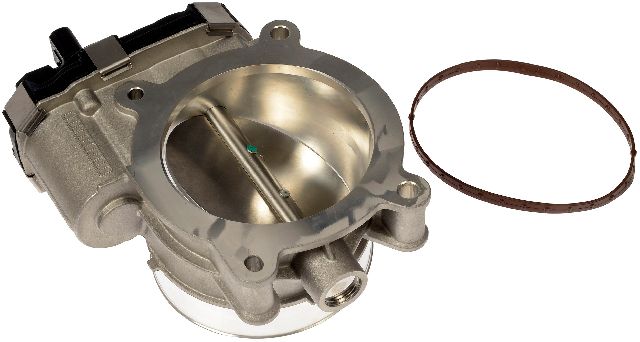
- Electronic Throttle Body Assembly
(OEM #ACDelco 12679524 (Supersedes older numbers))— If a software update does not resolve the code, or if the unit fails a sweep test, the internal motor or position sensor has likely failed. The assembly is typically replaced as a single unit.
Trusted brands: ACDelco (GM Genuine), Dorman (OE Fix), Standard Motor Products
OEM price range: $250-$400
Aftermarket price range: $150-$250
Technical Service Bulletins (TSBs) & Recalls
- 18-NA-037: Provides the ECM reprogramming information to correct a falsely set DTC P2101 caused by the Driver Door Open Prime (DDOP) feature. It explicitly lists the 2017-2018 Escalade with the 6.2L L86 engine.
- PIP5501B: Preliminary information communicating that vehicles may be setting DTC P2101 falsely due to the DDOP feature.
- PIE0415: An engineering informational bulletin requesting field data on vehicles setting DTC P2101, showing GM's investigation into the issue.
Platform-Specific Known Issues
- A primary issue for the 2017-2018 model years is a software anomaly related to the 'Driver Door Open Prime' (DDOP) feature, which can falsely set DTC P2101.
- GM issued TSB #18-NA-037 to provide a specific ECM reprogramming procedure to correct this false DTC P2101.
- An earlier bulletin, #PIP5501B, was released to communicate that the P2101 code might be setting falsely due to this new DDOP feature.
- Owners on forums for platform-mate vehicles like the Silverado have confirmed paying dealers around $250 for the software update, which fixed the issue.
Mechanic-Grade Diagnostic Values
- Throttle Position Sensor (TPS) Voltage — expected: Should rise smoothly from approximately 0.5V at closed throttle to 4.5V at wide-open throttle (WOT).. Failure: Voltage is erratic, has dead spots, jumps, or does not change with throttle plate movement.
- Throttle Actuator Control (TAC) Motor Resistance — expected: Between 2 and 15 Ohms across the two motor terminals.. Failure: Resistance is infinite (Open Loop) or less than 1 Ohm (shorted).
- 5-Volt Reference at TPS Connector — expected: 4.75 to 5.25 Volts between the 5V reference and ground pins with the key on, engine off.. Failure: Voltage outside of this range indicates a problem with the ECM or wiring, not the sensor itself.
Scan Tool Commands That Help
- GM GDS2 / Professional Scan Tool: Throttle Position Sweep / Actuator Test — After ruling out the software TSB, use this bidirectional control to command the throttle plate from 0% to 100% and back. While commanding, watch the live data for TPS1 and TPS2 to ensure they track smoothly and without glitches, which confirms or denies mechanical/sensor failure in the throttle body.
- GM GDS2 / Professional Scan Tool: Idle Learn Reset / Throttle/Idle Learn — This function MUST be used after cleaning or replacing the throttle body assembly. It erases the old learned idle airflow values from the ECM, allowing it to learn the new baseline for the clean or new throttle plate. Failure to perform this can result in a high or unstable idle.
Wiring & Ground Locations
- G103 — Located on the cowl in the engine compartment, typically on the driver's side above the brake booster.. This is a major ground point for the Body Control Module (BCM), Instrument Panel Cluster (IPC), and Data Link Connector (DLC). A poor connection here can cause a wide range of communication and electrical issues, potentially contributing to false codes or erratic module behavior that could mimic a P2101 fault.
- Throttle Body Connector Pins — The 6-pin connector at the electronic throttle body.. Knowing the function of each pin is critical for testing. On many GM vehicles, the wire colors are: Gray (5V Reference), Black (Ground), and Blue (TPS Signal Output). The other pins are for the TAC motor. Testing for 5V reference and good ground at the connector is a key step before condemning the throttle body.
Real Owner Repair Stories
- Reddit user on r/Silverado (2017 Chevrolet Silverado 1500 (platform mate)) — Vehicle would not crank, just a single click. 'ENGINE POWER IS REDUCED' message on the dash. Check engine light on.
❌ Tried (didn't work) A local shop tested the battery (it was good) and initially suspected the starter but was not confident.
✅ What actually fixed it The Chevrolet dealer diagnosed code P2101. They stated the first required fix, per GM's procedure for this code, was a specific software update. The dealer charged $250 for the ECM reflash. This aligns directly with TSB #18-NA-037.
OEM Part Supersession History
12572658, 12580760→12679524— GM regularly updates service parts to integrate new materials, technologies, or design improvements.
Heads up: While the newer part is a direct replacement, it's crucial to know the supersession history when sourcing used or new-old-stock parts to ensure you are getting the most current revision. All versions require an idle relearn procedure after installation.
Model Year Variations Within This Range
- 2017-2018: No significant variations related to the P2101 fault have been identified between these two model years. The 'Driver Door Open Prime' (DDOP) feature and the associated software anomaly that causes the false code are present in both 2017 and 2018 models covered by TSB #18-NA-037.
Helpful Videos

Used OEM Parts in Stock
New Aftermarket Parts Available


The information in this article is provided for general reference and educational purposes only. Vehicle specifications, procedures, and part compatibility can vary by production date, trim level, and region. Always consult your vehicle's factory service manual and verify part numbers before purchasing or performing repairs. Safety-critical components such as airbags, seat belts, and braking systems should be installed by a qualified professional.
- Cadillac ESCALADE ESV:
- 🧭 Diagnostic Flowchart
- 🎬 Helpful Videos
- 🛍️ Shop This Part
- What's Unique About the 2017-2018 Cadillac ESCALADE ESV
- Symptoms You May Notice
- Most Likely Causes
- Rare But Worth Checking
- Diagnosis Steps
- Parts You'll Likely Need
- Technical Service Bulletins (TSBs) & Recalls
- Platform-Specific Known Issues
- Mechanic-Grade Diagnostic Values
- Scan Tool Commands That Help
- Wiring & Ground Locations
- Real Owner Repair Stories
- OEM Part Supersession History
- Model Year Variations Within This Range
- 🎟️ Get 5% Off