

P2101 on 2006-2013 Chevrolet Corvette: Throttle Actuator Control Fault Causes and Fixes
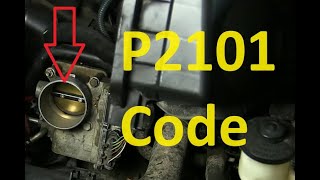
On a 2006-2013 C6 Corvette, code P2101 almost always points to a failing electronic throttle body. This triggers the 'Reduced Engine Power' mode. The most common fix is replacing the entire throttle body assembly, which costs between $150 for an aftermarket part and $300+ for an OEM unit. Wiring issues at the connector are a secondary, but notable, cause.
- P2101 on a C6 Corvette almost always means the throttle body is failing.
- The primary symptom is the car entering 'Reduced Engine Power' mode.
- Before replacing the throttle body, check its electrical connector for a secure fit and any signs of damage.
- Replacing the throttle body is a straightforward DIY job that takes less than an hour.
- After replacement or cleaning, a throttle relearn procedure is recommended to ensure proper idle and performance.
What's Unique About the 2006-2013 Chevrolet CORVETTE
The C6 Corvette relies on a sensitive drive-by-wire throttle system. As noted in GM Technical Service Bulletin #PIP4578B, high-mileage vehicles are prone to this fault, suggesting a known wear-and-tear pattern in the throttle body assembly. Owners frequently report this code appearing intermittently at first, often after hitting a bump or during steady highway cruising, before becoming more frequent. The result is the infamous 'Reduced Engine Power' and 'Service Traction System' messages on the driver information center. A known weak point is the wiring harness that makes a sharp U-bend to the throttle body, which can lead to broken internal wires from vibration and heat over time, especially on 2005-2007 models.
Diagnostic Flowchart
Tap your situation to follow the diagnostic path that matches what you're seeing on this vehicle.
Symptoms You May Notice
- "Reduced Engine Power" message on the dash.
- "Service Traction System" or "Service Active Handling" message appearing simultaneously.
- Check Engine Light is on.
- Severely limited throttle response and acceleration (limp mode).
- Unstable, rough, or surging idle, sometimes described by owners as a 'big cam lope' when in limp mode.
- Engine may stall.
- Car may run perfectly fine after a restart, only for the issue to return intermittently.
- Replacing the Accelerator Pedal Position (APP) sensor. P2101 specifically points to a fault at the throttle body motor circuit, not the pedal sensor. Other codes, like P2138, point more directly to the APP sensor.
Most Likely Causes
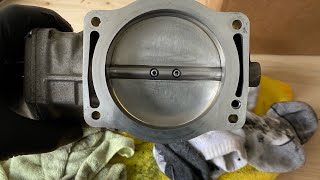
- Failing Throttle Body Assembly 🔴 High Probability → Shop Fuel Injection Throttle Body As cited in TSB #PIP4578B, the electronic components (motor and sensors) inside the throttle body wear out on high-mileage vehicles. Forum discussions overwhelmingly confirm this is the most common failure point for this code on the C6 platform. The internal plastic gears can wear down, or the contacts on the internal potentiometer can fail, causing a delay or mismatch in position reading.
How to confirm: With the engine off and ignition on, use a scan tool to command the throttle plate to open and close. Observe for any sticking, hesitation, or noise. If the actual position doesn't track the commanded position smoothly, the throttle body is faulty. Many owners report that cleaning the throttle body provides only a temporary fix, with the problem returning days later, pointing towards a failed electronic component rather than just carbon buildup.
Typical fix: Replace the entire throttle body assembly. A throttle relearn procedure is required after replacement.
Est. part cost: $150 - $350 - Wiring or Connector Issue at Throttle Body 🟡 Medium Probability → Shop Fuel Injection Throttle Body The engine harness connector at the throttle body is subject to engine vibration and heat. The harness makes a sharp U-bend, which can lead to internal wire fatigue and breakage over time, especially on early C6 models (2005-2007). This can cause an intermittent connection that is hard to diagnose statically. Corrosion on the connector pins is also a possibility.
How to confirm: Visually inspect the throttle body connector and nearby wiring for any signs of damage, corrosion, or loose-fitting pins. Unplug and replug the connector to ensure it is secure. With the engine idling, carefully wiggle the U-shaped section of the harness leading to the throttle body; if this triggers the code and limp mode, the harness is faulty.
Typical fix: Repair the damaged section of the wiring harness or replace the pigtail connector if the terminals are loose or corroded. Pigtail connectors are readily available.
Est. part cost: $15 - $50 - Dirty or Obstructed Throttle Body ⚪ Low Probability → Shop Fuel Injection Throttle Body Carbon and oil vapor from the PCV system can build up around the throttle plate, causing it to stick or bind. TSB #PIP4578B specifically mentions that as carbon builds up, the ECM learns to compensate, but a large buildup can still trigger this DTC. While cleaning is a valid first step, owners often find the problem returns, indicating the root cause was a failing electronic part, not the carbon itself.
How to confirm: Remove the air intake tube and visually inspect the throttle bore and plate for heavy carbon buildup. Manually (with ignition off) push the plate to feel for any stickiness or binding. A user on YouTube reported triggering this code after accidentally leaving a cleaning rag in the intake tube, which obstructed the throttle plate.
Typical fix: Clean the throttle body bore and plate thoroughly with a dedicated throttle body cleaner and a soft cloth or brush. A throttle relearn procedure must be performed after cleaning.
Est. part cost: $5 - $15
Rare But Worth Checking
- Faulty Engine Control Module (ECM): → Shop Engine Control Module (ECM) This is very rare. The ECM should only be considered after all other possibilities, including the throttle body and its wiring, have been definitively ruled out. It often appears with other codes like P0606. A separate TSB (#18-NA-037) for newer GM vehicles notes a software anomaly can falsely set P2101, requiring an ECM reprogram, though this TSB does not apply to the C6 Corvette.
Diagnosis Steps
- Scan the ECM for all stored trouble codes. Note any other codes that appear with P2101, especially P1516.
- Inspect the throttle body electrical connector for looseness, corrosion, or damaged pins/wires. Ensure it is fully seated.
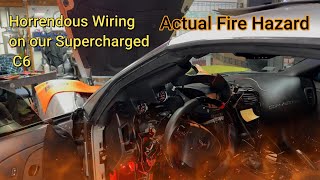
- With the engine at idle, carefully wiggle the U-shaped wiring harness leading to the throttle body. If this action causes the engine to stumble or enter Reduced Power Mode, the harness has an internal break and needs repair. 🎬 Watch: How to find and fix damaged C6 wiring.
- Inspect the air intake tract for any obstructions that could be blocking the throttle plate.
- With the ignition on and engine off, use a bidirectional scan tool to command the throttle from 0% to 100% while monitoring the throttle position sensor PIDs. The movement should be smooth and the sensor readings should match the commanded position.
- If the throttle plate sticks, moves erratically, or doesn't respond, and the wiring is confirmed to be good, the throttle body assembly is faulty and should be replaced.
- If the throttle body does not respond at all, use a multimeter to check for power and ground at the throttle body connector according to your vehicle's service manual.
- After any repair (cleaning or replacement), a throttle body relearn procedure is necessary. This can be done with a scan tool or by following a specific manual procedure (e.g., idle for 3 min, ignition off for 60 sec, idle for 3 min again).
- If the wiring and throttle body are confirmed good, the issue may lie with the ECM, but this is highly unlikely.
Parts You'll Likely Need
- Throttle Body Assembly
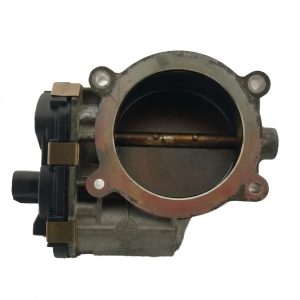
(OEM #12605109, superseded by 19420707)— This is the most common failure part for code P2101 on the C6 Corvette. The internal motor or position sensors fail, causing a mismatch between the commanded and actual throttle position.
Trusted brands: ACDelco, Bosch
OEM price range: $250-$350
Aftermarket price range: $150-$250 - Throttle Body Connector Pigtail
(OEM #ACDelco PT2713 (Alternate: 88988106))— If the connector at the throttle body is damaged, corroded, or the wires are broken from stress, replacing the pigtail is the correct repair.
Trusted brands: ACDelco, Michigan Motorsports, Racetronix
OEM price range: $30-$50
Aftermarket price range: $15-$25
Related Codes That Often Appear With This One
- P1516 — This is a GM-specific code for 'Throttle Actuator Control (TAC) Module Throttle Actuator Position Performance'. It is very commonly set alongside P2101 as both relate to the ECM not seeing the expected throttle response. Many forum threads show these two codes appearing together as a pair. 🎬 Watch: Diagnosing the P1516 and P2101 code combination.
- P2119 — This code indicates 'Throttle Actuator Control Throttle Body Range/Performance', also pointing directly to the throttle body's mechanical or electrical function. It is listed in TSB #PIP4578B as a related code.
- P0606 — This code indicates an internal ECM/PCM processor fault. While it can appear on its own, seeing it with P2101 could suggest a more complex electrical issue or, rarely, a failing ECM.
Technical Service Bulletins (TSBs) & Recalls
- PIP4578B: Idle surge, reduced engine power mode, and/or DTCs P0068, P0121, P1516, P2101, P2119, and/or P2176 that may be experienced on high mileage vehicles. The bulletin advises inspecting for carbon buildup and performing an idle learn reset after cleaning.
Platform-Specific Known Issues
- TSB #PIP4578B specifically addresses this code on high-mileage vehicles, indicating a known pattern of failure for the throttle body assembly.
- Owners of Corvettes with aftermarket ported throttle bodies sometimes report this code if the tune is not adjusted for the modified airflow characteristics or if the ported unit is from a bad batch.
- The U-shaped bend in the wiring harness leading to the throttle body is a known stress point, particularly in 2005-2007 models, and can cause intermittent wire breaks that are difficult to find.
Mechanic-Grade Diagnostic Values
- Throttle Actuator Motor Resistance — expected: 2 to 15 Ohms between terminals A and B. Failure: A reading over the limit indicates an open circuit; a reading less than 1 Ohm indicates a short circuit.
- Throttle Position Sensor 1 (TPS1) Resistance Sweep — expected: Resistance between terminals D and E should start around 2.7 kOhms, increase as the throttle plate opens, and decrease as it closes.. Failure: No change in resistance, or gaps in the reading as the plate moves, indicates a faulty sensor.
- Throttle Position Sensor 2 (TPS2) Resistance Sweep — expected: Resistance between terminals E and F should start around 2.2 kOhms, decrease as the throttle plate opens, and increase as it closes.. Failure: No change in resistance, or gaps in the reading as the plate moves, indicates a faulty sensor.
- Throttle Actuator Motor Control Circuit Voltage — expected: Peak voltage should be within 1 volt of battery voltage (B+) when the ignition is turned ON.. Failure: If peak voltage is not within 1 volt of B+, it indicates an open or high resistance in the circuit.
Scan Tool Commands That Help
- GM Tech2 / GDS2 or equivalent: Reset ECM learned values — This function should be used after cleaning or replacing the throttle body to clear the old adaptive values from the ECM before performing the manual idle relearn procedure.
- GM Tech2 / GDS2 or equivalent: Throttle/Idle Learn — To initiate the relearn process for the new throttle body's idle position and range of motion, ensuring the ECM calibrates to the new component correctly.
Wiring & Ground Locations
- G106 — On the engine block, just forward and above the starter motor.. This is a primary ground location for the Powertrain Control Module (PCM). A loose or corroded connection here can cause erratic behavior and various engine management codes, including P2101.
- G107 — On the engine block, near G106.. This is another critical engine block ground. Both G106 and G107 serve as the ground path for the ECM and its related sensors and actuators, including the electronic throttle body.
- G102 — On the frame rail behind the driver's side headlamp.. This is a major chassis ground point. While not a direct ECM ground, poor chassis grounds can create electrical noise and voltage drop issues that may affect sensitive electronics like the throttle control system.
- Throttle Body Connector — The 6-pin electrical connector on the electronic throttle body itself.. This is the direct interface for the throttle actuator motor and position sensors. The pins for the motor are typically A and B. The pins for the two throttle position sensors are C, D, E, and F.
Real Owner Repair Stories
- CorvetteForum user (C6 Corvette, year not specified) — P2101 and P1516 codes, along with traction control, ABS, and stability system warnings, and 'Reduced Engine Power' mode.
❌ Tried (didn't work) Replacing the accelerator pedal assembly., Replacing the TAC module with a known-good unit., Replacing the throttle body with a new OEM GM part (this initially cleared some codes but P2101 returned at wide-open throttle)., Replacing the throttle body with a second new OEM GM part (this caused both P1516 and P2101 to return).
✅ What actually fixed it Replacing the throttle body with a known-good USED OEM GM part finally resolved all codes and drivability issues, suggesting quality control issues with new replacement parts. - CorvetteForum user (2006 C6 Corvette) — P2101 code and limp mode occurred for the second time in 1000 miles. Restarting the car temporarily fixed it.
❌ Tried (didn't work) Considering routine cleaning as a fix.
✅ What actually fixed it The user replaced the throttle body, which fixed the issue. Another user in the same thread suggested ensuring the wiring connector is snug at the throttle body, and if loose, to replace the pigtail connector.
OEM Part Supersession History
12570790→N/A— Original throttle body for 2005-2008 models (LS2 and early LS3).
Heads up: This is the 'silver blade' throttle body. It is NOT compatible with 2009+ Corvettes which use a different ECM and wiring logic.12605109→19420707— Updated throttle body for 2009-2013 models (LS3, LS7, L99).
Heads up: This is the 'gold blade' throttle body. It is NOT compatible with 2005-2008 models. Installing it on an '08 car can cause codes at wide-open throttle because the WOT voltage is different.
Model Year Variations Within This Range
- 2006-2008: These models (LS2 and early 2008 LS3) use the 'silver blade' throttle body (PN 12570790). The ECM for these years is the E40 or E67, which is programmed for the specific electronics of this throttle body.
- 2009-2013: These models use the 'gold blade' throttle body (PN 12605109, superseded by 19420707) and the E38 ECM. The electronics and direction of blade opening are different from the earlier version. The two types are not interchangeable; using a gold blade unit on a 2008 car will cause codes, typically at wide-open throttle.
Helpful Videos

Used OEM Parts in Stock
New Aftermarket Parts Available




The information in this article is provided for general reference and educational purposes only. Vehicle specifications, procedures, and part compatibility can vary by production date, trim level, and region. Always consult your vehicle's factory service manual and verify part numbers before purchasing or performing repairs. Safety-critical components such as airbags, seat belts, and braking systems should be installed by a qualified professional.
- Chevrolet CORVETTE:
- 🧭 Diagnostic Flowchart
- 🎬 Helpful Videos
- 🛍️ Shop This Part
- What's Unique About the 2006-2013 Chevrolet CORVETTE
- Symptoms You May Notice
- Most Likely Causes
- Rare But Worth Checking
- Diagnosis Steps
- Parts You'll Likely Need
- Related Codes That Often Appear With This One
- Technical Service Bulletins (TSBs) & Recalls
- Platform-Specific Known Issues
- Mechanic-Grade Diagnostic Values
- Scan Tool Commands That Help
- Wiring & Ground Locations
- Real Owner Repair Stories
- OEM Part Supersession History
- Model Year Variations Within This Range
- 🎟️ Get 5% Off