

P2101 on 2014-2018 Chevrolet Corvette: Throttle Actuator Fault Causes and Fixes
On a 2014-2018 C7 Corvette, code P2101 almost always indicates a problem with the electronic throttle body, forcing the car into 'Reduced Engine Power' mode. The most common fix is replacing the entire throttle body assembly. Cleaning the throttle plate and bore is a recommended first step, but the failure is often due to internal electronics or motor wear.
- P2101 on a C7 Corvette will put the car in 'Reduced Engine Power' mode, making it unsafe for normal driving.
- The most likely cause is a failing electronic throttle body assembly.
- Before replacing the part, inspect the wiring and perform a thorough cleaning of the throttle plate and bore.
- A throttle body relearn procedure is necessary after cleaning or replacement.
- Use genuine OEM parts for replacement, as aftermarket or even new OEM parts have been reported to be faulty.
- If the car is modified with an aftermarket throttle body or forced induction, a custom tune may be required to prevent this code.
What's Unique About the 2014-2018 Chevrolet CORVETTE
The C7 Corvette's electronic throttle system is generally reliable, but it is sensitive. A GM Technical Service Bulletin (TSB #PIP4578B) acknowledges that P2101 can appear on higher mileage vehicles, often alongside idle surge issues, due to carbon buildup affecting the throttle plate's movement. Additionally, the Corvette and Camaro communities frequently discuss this code in relation to aftermarket ported or larger throttle bodies (e.g., Soler, Nick Williams), which can sometimes operate outside the ECM's expected parameters and trigger the fault, occasionally requiring a custom tune to resolve. For a stock vehicle, this code strongly points to a failing original throttle body. Another TSB (#18-NA-037) notes a rare software anomaly on some 2017-2018 GM vehicles where opening the driver's door could falsely set a P2101, requiring an ECM reprogram.
Diagnostic Flowchart
Tap your situation to follow the diagnostic path that matches what you're seeing on this vehicle.
Symptoms You May Notice
- Reduced Engine Power message displayed
- Check Engine Light is on
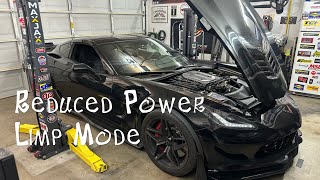
- Severely limited acceleration and speed (Limp Mode). 🎬 See how to fix reduced power limp mode on a Corvette.
- Unstable or surging idle.
- Delayed or unresponsive throttle pedal.
- Engine may stall at low speeds or when stopping.
- Jerky or uneven acceleration.
- Replacing the Accelerator Pedal Position (APP) sensor. P2101 specifically relates to the throttle body's actuator circuit performance. A faulty pedal sensor would typically set codes like P2138 or P0120.
Most Likely Causes
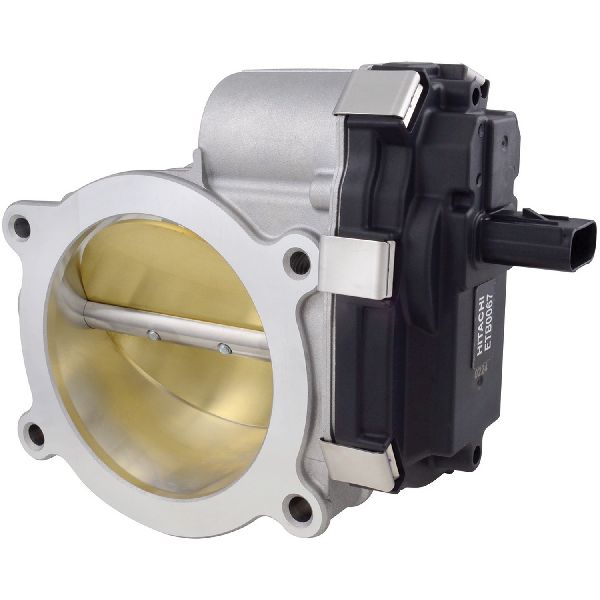
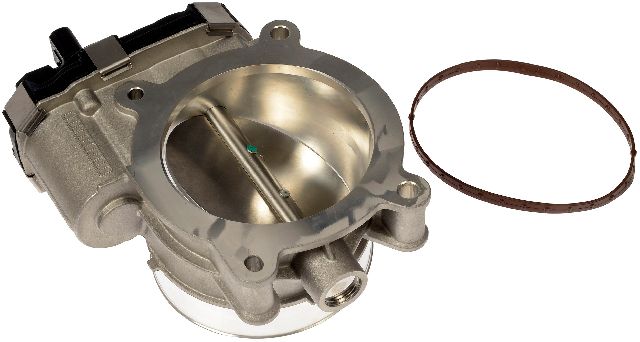
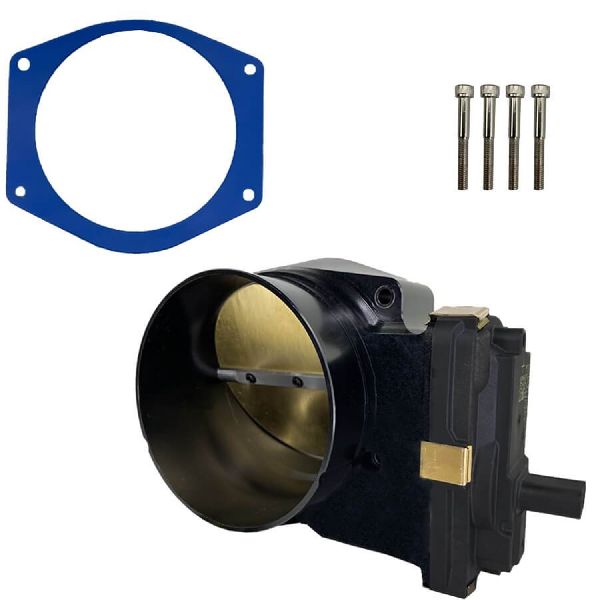
- Failing Electronic Throttle Body Assembly 🔴 High Probability → Shop Fuel Injection Throttle Body A GM TSB mentions this code can occur on high-mileage vehicles. The internal motor can wear out, the plastic gears can strip, or the integrated position sensors can fail, leading to a performance mismatch. Forum users report that even new OEM replacement parts can sometimes be faulty out of the box.
How to confirm: After checking wiring, command the throttle plate open and closed with a bi-directional scan tool. Observe the 'Commanded Throttle Position' and 'Actual Throttle Position' PIDs; they should track each other closely. If it moves slowly, sticks, or the values show a significant discrepancy, the throttle body is faulty. You can also have a helper press the gas pedal (with ignition on, engine off) to watch the blade move.
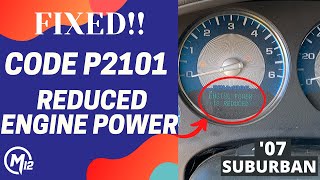
Typical fix: Replace the entire throttle body assembly. 🎬 Watch this walkthrough of a successful throttle body replacement. A throttle body relearn procedure is required after replacement. It is highly recommended to use a genuine GM or ACDelco part, as some users report issues with aftermarket brands and parts from online marketplaces like Amazon.
Est. part cost: $150-$350 - Dirty or Obstructed Throttle Body 🟡 Medium Probability → Shop Fuel Injection Throttle Body Carbon and oil vapor from the PCV system can build up around the throttle bore and plate, restricting its movement and causing the motor to work harder than expected. TSB #PIP4578B specifically calls this out on high-mileage vehicles.
How to confirm: Remove the intake ducting and visually inspect the throttle bore and plate for a thick, black layer of carbon buildup. Check for any foreign objects that could be jamming the plate.
Typical fix: Clean the throttle body thoroughly with a dedicated throttle body cleaner and a soft cloth or toothbrush. Do not use carburetor cleaner, as it can damage the throttle body's coating. A throttle relearn procedure should be performed after cleaning to reset the learned idle values.
Est. part cost: $10-$20 - Wiring Harness or Connector Issue ⚪ Low Probability Engine vibration and heat can, over time, cause issues with the wiring or the connector at the throttle body. Poor ground connections are also a known, though less common, cause of intermittent electronic throttle codes on GM vehicles.
How to confirm: Visually inspect the harness for any signs of damage, chafing, or melting. Unplug the connector and check for corrosion, moisture, or bent/loose pins. A multimeter can be used to check for proper voltage and ground at the connector.
Typical fix: Repair the damaged section of wiring or replace the connector pigtail.
Est. part cost: $20-$50
Rare But Worth Checking
- Faulty Powertrain Control Module (PCM): → Shop Engine Control Module (ECM) This is very rare. The PCM should only be considered after all other possibilities, including the throttle body and wiring, have been definitively ruled out. Sometimes a software glitch can be the cause, which may be resolved by an ECM reprogram as noted in TSB #18-NA-037 for some 2017-2018 models.
Diagnosis Steps
- Scan the vehicle for any other stored trouble codes. Note any codes that appear alongside P2101, such as P1516 or P2119.
- Check for any relevant Technical Service Bulletins (TSBs). TSB #PIP4578B is known for this issue on high-mileage cars, and #18-NA-037 for a specific software glitch on 2017-2018 models.
- Visually inspect the wiring harness and connector going to the throttle body. Look for any loose connections, corrosion, or damaged wires.
- Remove the air intake tube from the throttle body. Inspect the throttle plate and bore for heavy carbon buildup or any foreign objects that could restrict movement.
- If dirty, clean the throttle body using a dedicated cleaner and a soft rag. Do not spray directly into the electronic components. To open the plate for cleaning, turn the ignition on (engine off) and have a helper press the accelerator pedal.
- Using a bi-directional scan tool, perform a throttle sweep test. Command the throttle from 0% to 100% and observe the 'Commanded Throttle Position' and 'Actual Throttle Position' data PIDs. They should track each other closely. If there is a significant lag or discrepancy, the throttle body is likely faulty.
- If a scan tool is not available, and the wiring and cleanliness are good, the throttle body assembly is the most probable cause of failure.
- After any repair (cleaning or replacement), perform a throttle body relearn procedure. This can be done with a scan tool or often by following a manual procedure, which typically involves idling the engine for several minutes.
Parts You'll Likely Need
- Electronic Throttle Body Assembly
(OEM #12670839)— This is the most common failure point for code P2101. The internal motor or sensors fail, requiring replacement of the complete unit.
Trusted brands: ACDelco, GM Genuine
OEM price range: $200-$400
Aftermarket price range: $150-$250
Related Codes That Often Appear With This One
- P1516 — This is a GM-specific code for 'Throttle Actuator Control (TAC) Module Throttle Actuator Position Performance'. It is often set along with P2101 as they both relate to the ECM not seeing the expected throttle response.
- P2119 — This code indicates 'Throttle Closed Position Performance', suggesting the throttle plate isn't closing correctly, which can be caused by the same mechanical (carbon buildup) or electrical faults that trigger P2101.
- P0068 — This code relates to a mismatch between the MAP sensor, MAF sensor, and throttle position. A throttle body that isn't responding correctly can cause this correlation fault.
Technical Service Bulletins (TSBs) & Recalls
- PIP4578B: Mentions that DTCs including P2101 may be experienced on high mileage vehicles, often related to idle surge and reduced engine power. The recommended fix is to clean the throttle body and perform an idle learn reset.
- 18-NA-037: Notes a software anomaly on some 2017-2018 models where opening the driver's door could falsely set DTC P2101, requiring an ECM reprogram.
Platform-Specific Known Issues
- GM Technical Service Bulletin #PIP4578B directly addresses DTCs including P2101 related to idle surge and reduced power mode on high mileage vehicles, recommending cleaning the throttle body and performing an idle learn reset.
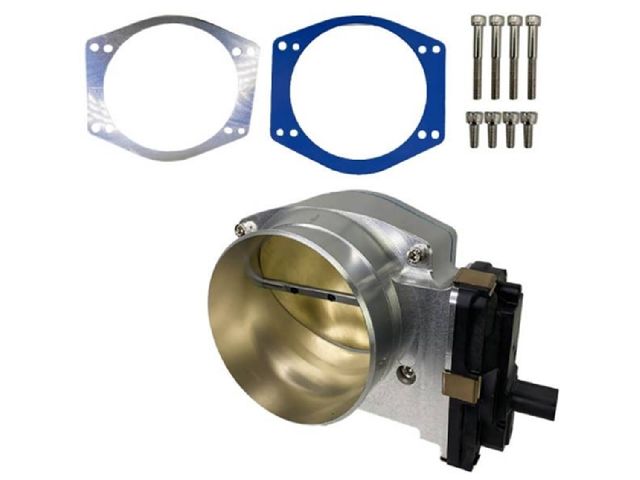
- Corvette owners who install aggressively ported or aftermarket throttle bodies (like Soler Performance) sometimes encounter this code if the airflow characteristics fall outside of the stock ECU's expected range, occasionally requiring a custom tune to resolve.
- A specific owner on CorvetteForum shared an experience where after getting P2101, two brand-new OEM throttle bodies were also faulty, and the issue was only resolved by installing a known-good used unit, highlighting potential quality control issues with new parts.
- TSB #18-NA-037 describes a software issue on some 2017-2018 GM models where the P2101 code could be falsely triggered when the driver's door is opened. The fix is to reprogram the ECM.
Mechanic-Grade Diagnostic Values
- Throttle Position Sensor (TPS) Signal Voltage — expected: One sensor should read approx. 0.5V-0.7V at idle and sweep smoothly to ~4.5V at wide-open throttle. The second, redundant sensor should read the inverse (approx. 4.5V at idle, sweeping to ~0.5V).. Failure: Voltage that is erratic, has dead spots when opening the throttle, or is outside the expected range indicates a failing sensor within the throttle body assembly.
- Throttle Actuator Motor Circuit Voltage Drop — expected: Less than 0.5V difference between the voltage supplied by the PCM and the voltage measured at the motor connector with the ignition on.. Failure: A voltage drop greater than 0.5V points to excessive resistance in the wiring harness or a poor connection.
- Throttle Actuator Motor Power Feed Resistance — expected: ≤0.2 Ω.. Failure: Resistance higher than 0.2 ohms on the power feed wire indicates a fault in the harness.
Scan Tool Commands That Help
- GDS2 (or equivalent bi-directional scanner): Throttle Sweep Test / Actuation Test — This is a primary diagnostic step. The command allows the technician to command the throttle plate from 0-100% open while observing the 'Commanded vs. Actual' position PIDs. A lag or mismatch confirms a fault in the throttle body motor or sensors.
- GDS2 (or equivalent bi-directional scanner): Idle Learn Reset — This function should be performed after cleaning or replacing the throttle body. It clears the old learned idle airflow values from the ECM, allowing it to recalibrate to the new/cleaner throttle plate position.
Wiring & Ground Locations
- Throttle Body Motor Wires — In the harness near the 8-pin connector at the throttle body.. The heavier gauge yellow and brown wires for the throttle motor are prone to internal breaks from engine vibration over time. This can cause a weak or intermittent motor connection, leading directly to a P2101 code.
- Engine Harness Ground — Bolted to the top, right, rear of the engine block, just behind the intake manifold.. A poor connection at this primary ground point can cause a host of issues, including lost communication with the Throttle Actuator Control (TAC) module (U0107) and intermittent throttle performance codes like P2101.
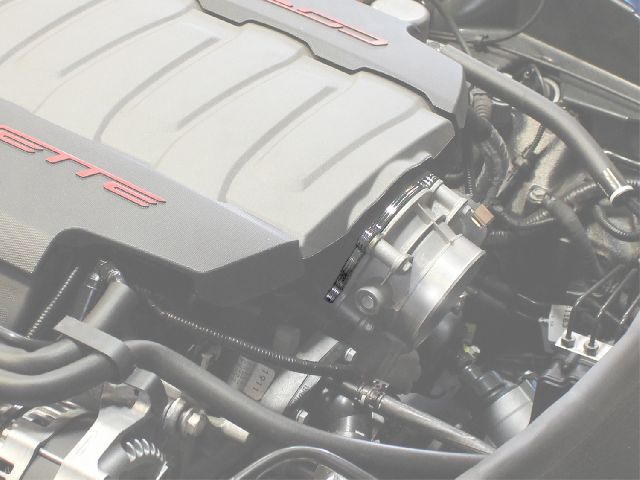
- Throttle Body Connector — The main electrical connector on the electronic throttle body.. Harness routing is critical. Wires can get pinched between other components (like a supercharger bracket) during installation or other service, causing a short or open circuit that triggers P2101.
Real Owner Repair Stories
- CorvetteForum thread 'Help Gettin Reduced Power P1516 P2101 Throttle Body' (C7 Corvette Z06 (year not specified)) — Reduced Engine Power message and codes P1516/P2101 immediately after cleaning the throttle body.
❌ Tried (didn't work) Checking all electrical connections.
✅ What actually fixed it The throttle plate (butterfly) had become misaligned on its shaft. The owner loosened the two small bolts holding the plate to the shaft, re-centered it so it could close properly, and retightened them. This resolved the codes. - CorvetteForum thread 'P0101, P1516 and P2101 Help' (2007 Corvette Z06 with A&A Supercharger and Nick Williams 102mm throttle body) — Reduced Engine Power mode with codes P0101, P1516, and P2101.
❌ Tried (didn't work) Initial assumption was a bad throttle body or accelerator pedal module.
✅ What actually fixed it After replacing a weak battery, the owner inspected the throttle body connector and discovered the wiring harness had been improperly routed and was pinched by the supercharger bracket. Freeing the pinched wires and clearing the codes fixed the issue. - CorvetteForum thread 'Reduced power and P2101 code' (C7 Corvette Z06 with an aftermarket Soler throttle body) — Intermittent Reduced Power mode with code P2101, occurring at low RPMs and different altitudes.
❌ Tried (didn't work) Clearing codes.
✅ What actually fixed it The owner contacted Soler, the throttle body manufacturer, who sent a replacement unit. The new throttle body resolved the problem, indicating the original aftermarket part was faulty. Other users noted this can be a common issue with aggressively ported throttle bodies that sometimes requires a custom tune to resolve.
"I Checked Everything" — The Actual Cause
- Code P2101 is an electrical or electromechanical performance fault, so a smoke test (for vacuum leaks) is not a primary diagnostic step and would typically come back clean. The true root cause often requires looking beyond simple part failure. In one documented case, a technician might perform all standard electrical checks (voltage, ground, resistance) and find them to be normal, only to discover the issue was purely mechanical: the throttle plate itself had been knocked off-center on its shaft during a cleaning, preventing it from closing to the position the ECM expected. In another case, the wiring harness passed a simple visual inspection, but the fault was a pinched wire hidden by a supercharger bracket, which would only be found by physically tracing the entire harness path.
OEM Part Supersession History
12627217, 12669073→12670839— Standard part evolution, integrating design or material updates by the manufacturer.
Heads up: The replacement part requires a throttle body relearn procedure (sometimes called an idle learn or calibration) to be performed after installation for proper function.
Model Year Variations Within This Range
- 2014-2018: The core LT1 (base) and LT4 (Z06, starting 2015) engines and their electronic throttle control systems remained fundamentally consistent through this period. The primary variation noted is a software-related TSB (#18-NA-037) that applies specifically to some 2017-2018 models, where a glitch could falsely set P2101.
Helpful Videos
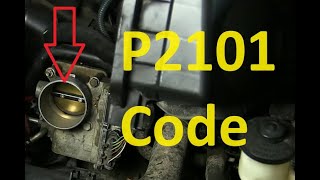
Used OEM Parts in Stock
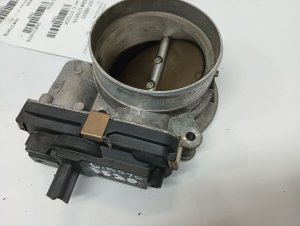
New Aftermarket Parts Available


The information in this article is provided for general reference and educational purposes only. Vehicle specifications, procedures, and part compatibility can vary by production date, trim level, and region. Always consult your vehicle's factory service manual and verify part numbers before purchasing or performing repairs. Safety-critical components such as airbags, seat belts, and braking systems should be installed by a qualified professional.
- Chevrolet CORVETTE:
- 🧭 Diagnostic Flowchart
- 🎬 Helpful Videos
- 🛍️ Shop This Part
- What's Unique About the 2014-2018 Chevrolet CORVETTE
- Symptoms You May Notice
- Most Likely Causes
- Rare But Worth Checking
- Diagnosis Steps
- Parts You'll Likely Need
- Related Codes That Often Appear With This One
- Technical Service Bulletins (TSBs) & Recalls
- Platform-Specific Known Issues
- Mechanic-Grade Diagnostic Values
- Scan Tool Commands That Help
- Wiring & Ground Locations
- Real Owner Repair Stories
- "I Checked Everything" — The Actual Cause
- OEM Part Supersession History
- Model Year Variations Within This Range
- 🎟️ Get 5% Off