

P2101 on 2011-2015 Chevrolet Express: Throttle Actuator Faults and Fixes
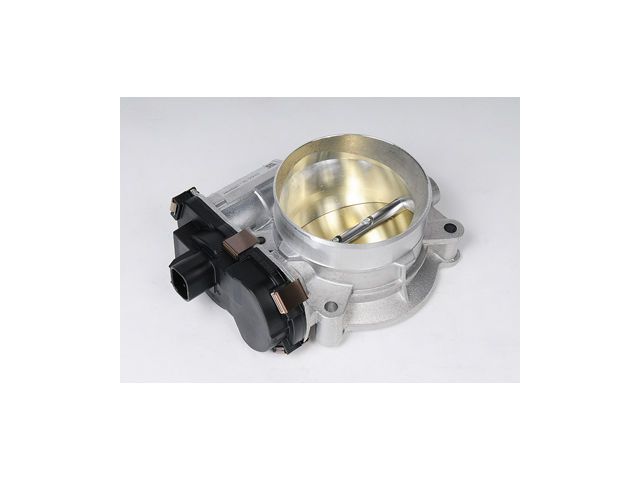
On a 2011-2015 Chevy Express, especially those with the 4.8L or 6.0L V8, code P2101 almost always means the electronic throttle body is failing or clogged with carbon. This triggers the 'Reduced Engine Power' warning and severely limits acceleration. The most common fix is to replace the entire throttle body assembly and perform an idle relearn procedure. Expect to pay $150-$400 for the part.
- P2101 on a 2011-2015 Express almost always points to a problem with the electronic throttle body.
- The most common symptom is the 'Reduced Engine Power' warning, which severely limits vehicle speed.
- Before replacing the throttle body ($150-$400), inspect the wiring connector for damage and try cleaning the throttle plate of any carbon buildup.
- If you replace or clean the throttle body, a throttle idle relearn procedure is necessary to ensure proper idle speed.
- Do not mistake this for a bad gas pedal (APP sensor); P2101 is specific to the throttle body itself.
What's Unique About the 2011-2015 Chevrolet EXPRESS
On this generation of Chevrolet Express and its V8-powered GM truck siblings, P2101 is a well-documented issue on high-mileage vehicles. GM's Technical Service Bulletin #PIP4578B acknowledges that carbon buildup can prevent the throttle plate from moving correctly, causing this code along with others. Over time, the ECM adapts to this carbon buildup; however, if the buildup becomes excessive or the throttle body's internal electronics fail, the system can no longer compensate, triggering the fault. The problem is rarely a complex wiring issue and most often points directly to an aging, dirty, or failing throttle body assembly.
Diagnostic Flowchart
Tap your situation to follow the diagnostic path that matches what you're seeing on this vehicle.
Symptoms You May Notice
- "Reduced Engine Power" message on the dashboard.
- Check Engine Light is on.
- Severely limited acceleration and speed (limp mode). 🎬 Watch: How to quickly fix the Reduced Engine Power message.
- Unstable, rough, or surging idle.
- Engine may stall at low speeds or when coming to a stop.
- Delayed or unresponsive throttle pedal.
- "Service StabiliTrak" or "Service Traction Control" messages may appear simultaneously.
- Replacing the Accelerator Pedal Position (APP) sensor. P2101 specifically points to a fault at the throttle body motor, not the pedal. Other codes, like P2135 or P2138, are more indicative of a pedal sensor issue.
- Replacing the Mass Airflow (MAF) sensor. A dirty MAF can cause performance problems but does not typically trigger P2101 on its own. A forum user noted being incorrectly advised to clean the MAF, while the actual issue was the throttle body.
Most Likely Causes
- Failing Throttle Body Assembly 🔴 High Probability → Shop Fuel Injection Throttle Body As noted in TSB #PIP4578B, these components are a known failure point on high-mileage GM V8 vehicles. The internal electronic sensors or the plastic gears for the actuator motor wear out over time, causing a discrepancy between the commanded and actual throttle position.
How to confirm: After ruling out heavy carbon buildup and wiring issues, this is the most likely cause. A scan tool can monitor commanded vs. actual throttle position to confirm a discrepancy. Often, given the high failure rate, replacement is the most straightforward diagnostic step if cleaning doesn't provide a lasting solution.
Typical fix: Replace the entire throttle body assembly. A throttle relearn procedure is required after replacement.
Est. part cost: $150-$400 - Carbon Buildup in Throttle Body 🟡 Medium Probability → Shop Fuel Injection Throttle Body All engines develop carbon deposits, but the PCV system on these V8 engines can route oil vapors that bake onto the throttle body bore and plate. This buildup physically restricts the movement of the throttle plate, causing the motor to struggle and trigger a performance code.
How to confirm: Visually inspect the inside of the throttle body bore and the edges of the throttle plate for a thick, black, sticky layer of carbon that could impede movement.
Typical fix: Remove the throttle body from the intake manifold and clean it thoroughly with a dedicated throttle body cleaner and a soft brush or rag. 🎬 Watch: A step-by-step guide to cleaning your GM throttle body. Do not spray cleaner into the unit while it's on the engine. After cleaning and reinstallation, an idle relearn procedure is mandatory to reset the ECM's learned compensation values.
Est. part cost: $10-$20 for cleaner - Damaged Wiring or Connector ⚪ Low Probability Engine vibrations and heat can cause wires to break or chafe, especially in the harness near the throttle body connector. On related GM trucks, wiring harnesses have been known to chafe on engine brackets, the corner of the cylinder head, or shock towers, leading to intermittent electrical issues.
How to confirm: Visually inspect the wiring harness leading to the throttle body for any signs of damage, chafing, or corrosion at the connector pins. Wiggle the connector with the engine running to see if it affects idle or triggers the code.
Typical fix: Repair the damaged section of wire or replace the connector pigtail.
Est. part cost: $20-$50
Rare But Worth Checking
- Failing Powertrain Control Module (PCM): → Shop Engine Control Module (ECM) This is very rare. Before condemning the PCM, all other possibilities, especially the throttle body, its wiring, and its connector, must be exhaustively ruled out. Sometimes a PCM software update is required, as noted by some GM dealers for similar models.
Diagnosis Steps
- Check for other stored DTCs. Codes like P1516, P2119, or P2135 can provide additional context.
- Visually inspect the wiring harness and connector at the throttle body. Look for any signs of chafed wires, loose connections, or corrosion on the pins. Wiggle the harness to check for intermittent faults.
- Remove the air intake tube from the throttle body. Inspect the throttle bore and plate for heavy carbon buildup that could cause it to stick. IMPORTANT: Do not force the throttle plate open with your fingers, as this can damage the internal gears. Have an assistant turn the key to 'ON' (engine off) and press the gas pedal to open the plate electronically, or use a soft, non-metallic tool to gently push it open.
- If significant carbon is present, remove the throttle body and clean it thoroughly. Reinstall and perform a throttle idle relearn procedure.
- If the code returns after cleaning, the throttle body assembly is the most likely culprit.
- Using a capable scan tool, monitor the live data for Commanded Throttle Position vs. Actual Throttle Position (TPS 1 and 2). If the actual position does not follow the commanded position accurately, or if the sensors do not agree, the throttle body is faulty.
- If all else fails, use a multimeter to check for proper voltage and ground at the throttle body connector according to the vehicle's service manual to rule out a wiring break or a problem with the PCM.
Parts You'll Likely Need
- Throttle Body Assembly
(OEM #12670834 (Supersedes 12629992))— This is the most common failure point for code P2101 on this vehicle. The internal motor or position sensors fail, requiring replacement of the complete unit. 🎬 See this walkthrough on how to replace the throttle body. Cleaning is often only a temporary fix.
Trusted brands: ACDelco (GM Genuine), Bosch, Dorman, Standard Motor Products (SMP)
OEM price range: $250-$400
Aftermarket price range: $150-$250
Related Codes That Often Appear With This One
- P1516 — This is a GM-specific code for 'Throttle Actuator Control (TAC) Module Throttle Actuator Position Performance'. It often appears with P2101 as they both relate to the ECM detecting a mismatch between the commanded and actual throttle position. TSB PIP4578B lists them together.
- P2119 — This code indicates 'Throttle Closed Position Performance', suggesting the throttle plate isn't returning to the correct rest position, which can be caused by the same mechanical (carbon) or electrical faults that trigger P2101.
- P2176 — This code means 'Throttle Actuator Control System - Idle Position Not Learned'. It often appears after a battery disconnect or throttle body replacement if the idle relearn procedure hasn't been completed successfully. The TSB #PIP4578B also groups it with P2101.
- P0068 — This code indicates a discrepancy between the MAF, MAP, and Throttle Position sensors. It can be triggered alongside P2101 if the throttle plate's actual position (due to sticking) causes airflow that doesn't correlate with what other sensors are reporting. It is also mentioned in TSB PIP4578B.
Technical Service Bulletins (TSBs) & Recalls
- PIP4578B: Mentions that DTCs P0068, P0121, P1516, P2101, P2119, and/or P2176 can be experienced on high mileage vehicles, leading to idle surge or reduced power. It applies to a wide range of GM V8-powered vehicles from 2006-2018, including the Express/Savana, Silverado/Sierra, and Tahoe/Yukon. The prescribed fix is to clean the throttle body and perform an Idle Learn Reset.
Platform-Specific Known Issues
- GM Technical Service Bulletin #PIP4578B specifically addresses this code on high-mileage vehicles, noting it can cause idle surge and reduced engine power. This bulletin confirms that the throttle body is a known wear item and that cleaning followed by an idle learn reset is the first recommended diagnostic step.
Mechanic-Grade Diagnostic Values
- Throttle Position Sensor (TPS) Voltage — expected: TP Sensor 1 signal voltage decreases and TP Sensor 2 signal voltage increases as the throttle opens. Typical range is 0.5V-1.0V at idle to 4.0V-4.5V at wide-open throttle.. Failure: Voltage that is stuck, intermittent, or does not change smoothly when the throttle plate moves.
- Throttle Actuator Control (TAC) Motor Resistance — expected: 5 to 15 Ohms between the two motor control pins on the throttle body.. Failure: Infinite resistance (open circuit) or zero resistance (short circuit) indicates a failed motor.
- Throttle Body Ground Circuit Resistance — expected: Less than 1 Ohm between the low reference pin at the connector and a known good chassis ground.. Failure: Resistance greater than 1 Ohm indicates a poor ground connection, which can cause erratic behavior.
- Throttle Body Connector Pinout (Typical 6-Pin) — expected: Pin A: TAC Motor Control - 2 (Brown wire), Pin B: TAC Motor Control - 1 (Yellow wire), Pin C: Low Reference (Tan wire), Pin E: 5-Volt Reference 2 (Gray wire). Pins D and F are for the other TPS sensor.. Failure: Incorrect or missing voltages at these pins when testing with a multimeter.
Scan Tool Commands That Help
- GDS2 / Tech 2: Idle Learn Reset / TAC System Reset — This function, found under 'Module Set Up' or 'Special Functions,' must be used after cleaning or replacing the throttle body to erase the old learned idle values from the ECM. Failure to do so can result in an unstable idle and code P2176.
- Professional Scan Tool: Throttle Actuator Control (TAC) Test — This is a bidirectional test that allows the technician to command the throttle plate to open and close. It's used to verify if the TAC motor is responding to ECM commands and to check for voltage and ground signals at the motor connector during activation.
Wiring & Ground Locations
- G103 / G104 — Located on the rear of the driver's side (Left Hand) cylinder head.. A poor connection at this critical engine ground can cause a variety of driveability issues and seemingly unrelated codes. A GM service bulletin recommends ensuring this ground has a clean and tight connection when diagnosing powertrain control issues.
- Engine Harness Chafe Points — On related GM trucks, the engine harness is known to chafe in three primary locations: against the sharp edge of the ECM/TCM bracket, on the driver's side upper control arm, and on a shock tower bolt.. Vibration can cause the harness to rub through at these points, leading to a short or open circuit for the wires that control the throttle body, causing an intermittent P2101 code.
- Throttle Body Connector — The 6-pin electrical connector on the throttle body assembly itself.. The terminals inside the connector can lose tension or corrode, and the wires can break internally right behind the connector, causing an intermittent open circuit that is difficult to find with only a visual inspection.
Real Owner Repair Stories
- Tahoe Yukon Forum (2003 Express Van (similar platform)) — Reduced Engine Power message, codes P1516 and P2101, especially on cold starts or after hitting a bump.
❌ Tried (didn't work) Not specified, but the problem was intermittent, suggesting simple part replacement was not the immediate answer.
✅ What actually fixed it The owner discovered a loose connection where the wires enter the throttle body connector. Wiggling the harness would replicate the fault. Securing the connection resolved the issue permanently. - Reddit r/Cartalk (2008 Impala (common GM issue)) — Check Engine Light with P1516 and P2101, 'Reduced Engine Power' message.
❌ Tried (didn't work) The owner was incorrectly advised by a parts store employee to clean the Mass Air Flow sensor.
✅ What actually fixed it A mechanic commented with the correct diagnostic procedure: check the throttle body connector terminals for corrosion/poor contact, check wire integrity, then remove the throttle body to clean it thoroughly, and finally perform a throttle relearn procedure. This addresses the actual root causes for this code on GM vehicles.
OEM Part Supersession History
12629992→12670834— Standard part revision and improvement by the manufacturer.
Heads up: Part number 12670834 is often listed as a replacement for other throttle bodies (like 12632101, 12669146) used on smaller 4-cylinder GM engines; ensure you are purchasing the correct part for the V8 engine in the Express van.
Helpful Videos
Used OEM Parts in Stock
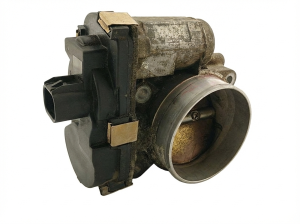
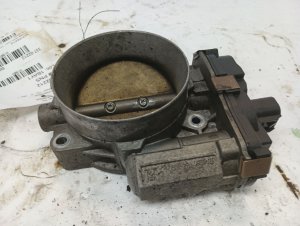
New Aftermarket Parts Available

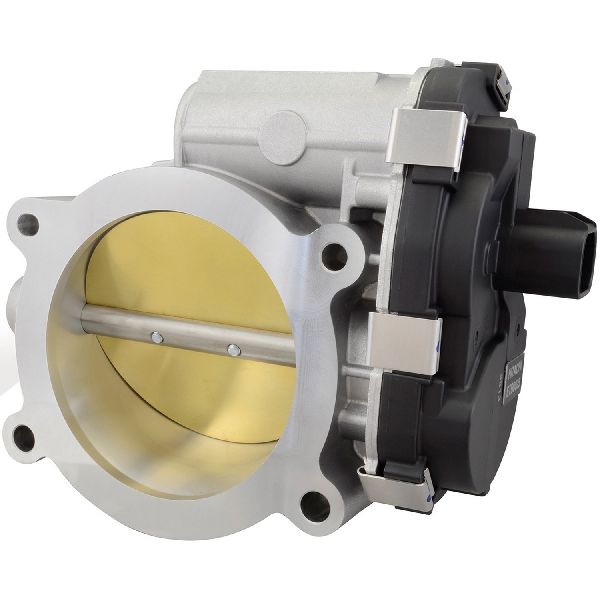
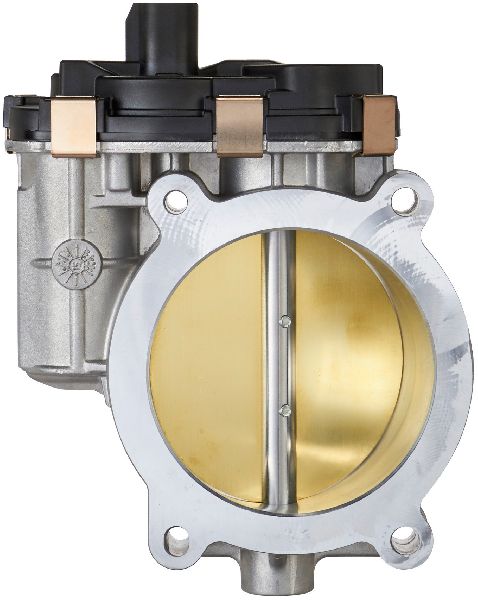

The information in this article is provided for general reference and educational purposes only. Vehicle specifications, procedures, and part compatibility can vary by production date, trim level, and region. Always consult your vehicle's factory service manual and verify part numbers before purchasing or performing repairs. Safety-critical components such as airbags, seat belts, and braking systems should be installed by a qualified professional.
- Chevrolet EXPRESS:
- 🧭 Diagnostic Flowchart
- 🎬 Helpful Videos
- 🛍️ Shop This Part
- What's Unique About the 2011-2015 Chevrolet EXPRESS
- Symptoms You May Notice
- Most Likely Causes
- Rare But Worth Checking
- Diagnosis Steps
- Parts You'll Likely Need
- Related Codes That Often Appear With This One
- Technical Service Bulletins (TSBs) & Recalls
- Platform-Specific Known Issues
- Mechanic-Grade Diagnostic Values
- Scan Tool Commands That Help
- Wiring & Ground Locations
- Real Owner Repair Stories
- OEM Part Supersession History
- 🎟️ Get 5% Off