

P2101 on 2014-2018 Chevrolet Suburban: Throttle Actuator Fixes & Causes
On a 2014-2018 Suburban, P2101 usually means a problem with the electronic throttle body or its software. For 2017-2018 models, a simple ECM software update from a dealer often fixes it due to a known 'Driver Door Open Prime' bug. For older or high-mileage models, the fix is typically cleaning the throttle body of carbon buildup or, more commonly, replacing the entire throttle body assembly (Part #12670839 for 5.3L, #12629992 for 6.2L), which costs around $150-$350 for the part.
- For 2017-2018 Suburbans, your first step should be to check with a dealer for a simple software update (TSB #18NA037) before replacing any parts.
- The most common physical failure causing P2101 is the throttle body assembly itself, especially on higher mileage vehicles.
- Symptoms are severe and include 'Reduced Engine Power' mode, making the vehicle unsafe for normal driving.
- Before replacing the throttle body, a thorough cleaning is a worthwhile and inexpensive diagnostic step.
- Do not mistake this code for a bad gas pedal (APP sensor); P2101 points specifically to the throttle body end of the system.
What's Unique About the 2014-2018 Chevrolet SUBURBAN
The 2014-2018 Suburban spans two generations: the 2014 (GMT900 platform) and the 2015-2018 (K2XX platform). This is critical because GM issued Technical Service Bulletins (TSBs) specifically for the newer K2XX models. A software anomaly related to a 'Driver Door Open Prime' (DDOP) feature, introduced in 2017 to improve cold starts, can falsely trigger code P2101. TSB #18-NA-037 details that when the driver's door is opened, the fuel system primes; a software glitch can misinterpret a voltage fluctuation during this event as a throttle fault. This makes a simple software update the correct fix for many 2017-2018 vehicles. For earlier years or high-mileage vehicles, the cause is more likely a physical failure of the throttle body itself.
Diagnostic Flowchart
Tap your situation to follow the diagnostic path that matches what you're seeing on this vehicle.
Generation note: This range covers the end of the 10th generation (2014 model on the GMT900 platform) and the beginning of the 11th generation (2015-2018 models on the K2XX platform). TSBs #18NA037 and #PIP5501B specifically address a software issue on the K2XX platform, particularly for 2017 and 2018 model years, which may not apply to the 2014 model.
Symptoms You May Notice
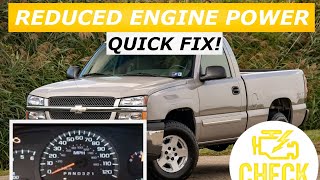
- Reduced Engine Power message on the dash 🎬 Watch: How to diagnose and fix the Reduced Engine Power message.
- Check Engine Light is on
- Service StabiliTrak and Service Traction Control messages may appear
- Poor or no acceleration; unresponsive gas pedal
- Unstable or rough idle
- Engine may stall at stops
- Buzzing or vibrating noise from the throttle body for a few seconds after turning the engine off.
- Replacing the Accelerator Pedal Position (APP) Sensor. Code P2101 specifically points to a performance problem at the throttle body motor itself, not the pedal sensor. Other codes, like P2138, are more directly related to the APP sensor.
Most Likely Causes
- ECM Software Anomaly 🔴 High Probability A 'Driver Door Open Prime' (DDOP) feature introduced in 2017 on the K2XX platform can cause the ECM to falsely set DTC P2101. The TSB explains that an intermittent pulse on the ECM's run/crank input during the door-open fuel prime can trigger the throttle diagnostic erroneously, especially if the battery's state of charge is low.
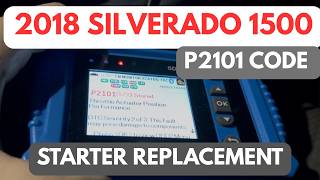
How to confirm: This primarily affects 2017-2018 models. A GM dealer or a shop with access to GM's service information can check if TSB #18NA037 applies to your vehicle's VIN and if the ECM software is outdated. A tell-tale sign from the freeze-frame data would be the code setting when Engine Speed is 0 RPM and Power Mode is OFF. 🎬 See a real-world diagnosis of the P2101 code on a 2018 model.
Typical fix: Reprogram the Engine Control Module (ECM) with the latest software, which corrects the faulty diagnostic logic. This is a dealer-only or qualified shop repair.
Est. part cost: $0 - Faulty Throttle Body Assembly 🔴 High Probability → Shop Fuel Injection Throttle Body The internal motor, gears, or position sensors within the throttle body can wear out over time, especially on high-mileage vehicles, leading to a discrepancy between the commanded and actual throttle position. This is a very common failure point across all model years in this range.
How to confirm: After ruling out software issues, a technician can use a scan tool to command the throttle plate open and closed while monitoring sensor data (Desired vs. Actual Throttle Position). A lack of response, erratic readings, or a persistent difference between the two PIDs points to a failed throttle body. A buzzing noise after shutdown can also indicate a failing motor. The internal potentiometer tracks can also develop heavy wear, visible upon disassembly.
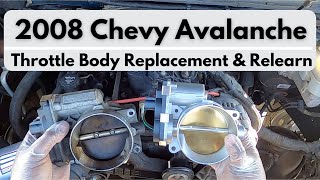
Typical fix: Replace the entire throttle body assembly. 🎬 Watch: Step-by-step throttle body replacement and relearn procedure. Cleaning a heavily worn or electronically failed unit is usually not a permanent solution. A throttle relearn procedure is required after replacement.
Est. part cost: $150-$350 - Carbon Buildup in Throttle Body 🟡 Medium Probability → Shop Fuel Injection Throttle Body Carbon and gunk from the PCV system can accumulate in the throttle bore, restricting the movement of the throttle plate and causing it to bind or stick, preventing it from reaching the position commanded by the ECM.
How to confirm: Visually inspect the throttle body bore and plate for a heavy black ring of buildup. The plate may feel sticky or slow to move when pushed manually (with the engine off and key on, have an assistant press the gas pedal to open the plate).
Typical fix: Thoroughly clean the throttle body bore and plate with a dedicated throttle body cleaner and a soft brush or rag. Do not spray cleaner directly into the electronics. An idle relearn procedure should be performed afterward.
Est. part cost: $5-$15 - Wiring or Connector Issue ⚪ Low Probability The wiring harness to the throttle body is subject to engine heat and vibration, which can lead to frayed wires or corroded connector pins over time. Check for chafing on engine brackets. Poor engine block ground straps are also a known, though less common, culprit for various electrical faults on these trucks.
How to confirm: Visually inspect the wiring harness leading to the throttle body for any signs of damage, melting, or chafing. Unplug the connector and check for corrosion (green crust) or fretting (dark dust) on the pins. Wiggle the harness with the engine running to see if the idle changes or the code appears. A voltage drop test across the power and ground wires at the connector should show less than 0.5V.
Typical fix: Repair the damaged section of the wiring harness or replace the connector pigtail. Clean corroded pins with electrical contact cleaner and apply dielectric grease.
Est. part cost: $20-$50
Rare But Worth Checking
- Failing Engine Control Module (ECM): → Shop Engine Control Module (ECM) This is very rare. Before condemning the ECM, all other possibilities (software, throttle body, wiring, grounds) must be exhaustively ruled out. An ECM failure can sometimes cause this code, but it's an unlikely culprit.
Diagnosis Steps
- Check for Technical Service Bulletins (TSBs): For 2017-2018 models, the first step is to check if TSB #18NA037 applies. A software update may be the only fix needed.
- Scan for Additional Codes: Check for other codes that may point to a more specific issue, such as pedal sensor or other throttle-related faults.
- Inspect Wiring: Visually inspect the throttle body connector and wiring harness for any signs of damage, corrosion, or loose connections. Pay close attention to where the harness may rub against engine components.
- Clean the Throttle Body: Before replacing parts, remove the air intake tube and clean the throttle body thoroughly with throttle body cleaner and a rag to remove any carbon buildup that could be causing the plate to stick.
- Test Throttle Body with a Scan Tool: Use a bi-directional scan tool to command the throttle actuator motor to open and close. Observe the live data for 'Desired Throttle Position' and 'Actual Throttle Position'. If it doesn't respond smoothly or the values do not match, the throttle body is likely faulty.
- Perform Idle Relearn Procedure: After cleaning or replacing the throttle body, an idle relearn procedure is necessary. This can be done with a scan tool ('Idle Learn Reset') or manually. A common manual method is to start the engine and let it idle in Park for 3 minutes, turn the engine off for 60 seconds, then restart and idle for another 3 minutes.
- Replace Throttle Body: If cleaning and software updates do not resolve the issue and testing points to a hardware failure, replace the throttle body assembly.
Parts You'll Likely Need
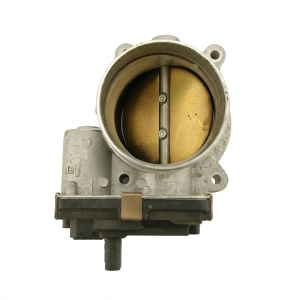
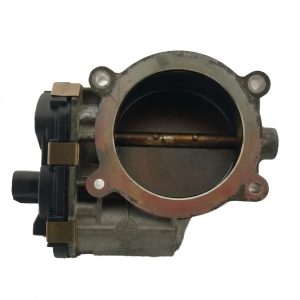
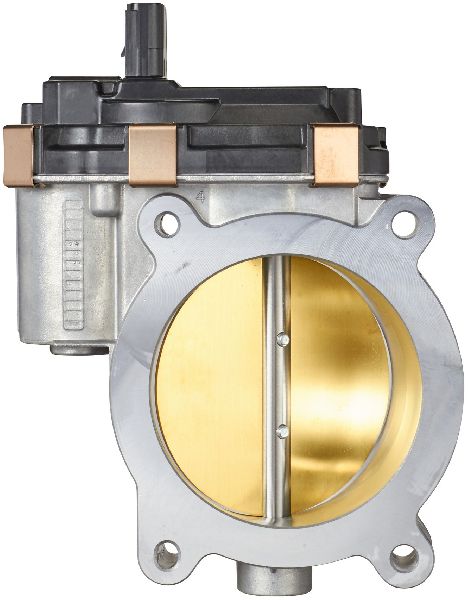
- Throttle Body Assembly (5.3L L83 Engine)
(OEM #12670839)— This is the most common hardware failure for P2101 on the 5.3L engine. The internal motor or sensors fail, requiring replacement of the complete unit.
Trusted brands: ACDelco, GM Genuine Parts, Standard Motor Products, Dorman
OEM price range: $220-$350
Aftermarket price range: $130-$250 - Throttle Body Assembly (6.2L L86 Engine)
(OEM #12629992)— This is the correct part for the larger 6.2L engine, which fails for the same reasons as the 5.3L unit (internal motor or sensor wear).
Trusted brands: ACDelco, GM Genuine Parts
OEM price range: $250-$400
Aftermarket price range: $150-$280
Related Codes That Often Appear With This One
- P1516 — This is a GM-specific code for Throttle Actuator Control (TAC) Module Throttle Actuator Position Performance. It often appears with P2101 as both relate to the ECM not getting the expected response from the throttle body.
- P2119 — This code relates to Throttle Closed Position Performance, indicating the throttle plate isn't closing as expected, which is a common companion to general performance issues flagged by P2101. [Bulletin #PIP4578B]
- P0068 — This code indicates a correlation error between the MAP/MAF sensor and the throttle position. If the throttle isn't where the ECM thinks it is (P2101), it can cause a mismatch with airflow readings. [Bulletin #PIP4578B, 16]
Technical Service Bulletins (TSBs) & Recalls
- 18NA037: Provides the specific ECM reprogramming instructions to correct a false P2101 code on 2017-2018 models caused by the DDOP software anomaly. It advises technicians to reprogram the ECM if P2101 is the only code set.
- PIP5501B: This is a Preliminary Information bulletin that first identified the false P2101 issue. It explains that the DDOP feature can cause an intermittent pulse that the ECM misinterprets as a throttle fault, especially with a low battery. It advises against replacing parts if freeze frame data matches specific conditions (e.g., engine off).
- PIP4578B: Mentions P2101 in the context of idle surge and reduced power on high-mileage vehicles, often alongside other throttle-related codes like P0068 and P1516, suggesting a worn throttle body.
- PIE0415: An early engineering informational bulletin requesting data from the field on vehicles setting DTC P2101, which likely contributed to the discovery of the software bug.
Platform-Specific Known Issues
- On 2017-2018 models, a software anomaly related to the 'Driver Door Open Prime' feature can falsely trigger P2101, especially with a low battery. A dealer software update (TSB #18NA037) is the specific fix.
Mechanic-Grade Diagnostic Values
- Freeze Frame Data (for 2017+ software issue) — expected: Engine Speed: 0 RPM, Power Mode: OFF, Ignition 1 Signal: ~11.9V or lower.. Failure: If these values are present in the freeze frame data for a P2101 code, it strongly indicates the false code was set by the 'Driver Door Open Prime' software anomaly.
- Throttle Actuator Control (TAC) Motor Resistance — expected: 2 to 15 Ohms between the two motor control pins.. Failure: A reading below 1 Ohm suggests a short, while an open or infinite reading (OL) indicates a failed motor winding.
- Voltage Drop on Throttle Body Harness — expected: Less than 0.5V. Failure: A voltage drop greater than 0.5V on either the power feed or ground circuit while under load indicates high resistance in the wiring or connectors.
- Scan Tool Live Data: Commanded vs. Actual Throttle Position — expected: Values should track each other closely with less than a few percent difference.. Failure: A persistent discrepancy between the commanded and actual position, or a lagging/no response from the actual position, points to a faulty throttle body.
Scan Tool Commands That Help
- GDS2 (GM Global Diagnostic System 2): Idle Learn Reset — This function must be used after cleaning or replacing the throttle body to reset the learned idle airflow values in the ECM. Failure to do so can result in an unstable idle or other DTCs.
- GDS2 (GM Global Diagnostic System 2): Throttle Position Control — This is a bidirectional test that allows a technician to command the throttle plate to specific angles (e.g., 10%, 25%, 50%) while observing the actual throttle position sensor readings to verify actuator and sensor functionality.
Wiring & Ground Locations
- G103 / G104 — On the K2XX platform, a primary engine-to-chassis ground is located on the front of the engine block, typically on the driver's side. Another critical ground strap runs from the rear of the driver's side cylinder head to the firewall.. A poor engine ground can cause a voltage differential between the ECM and its sensors, including the throttle body. This can lead to erratic sensor readings and false performance codes like P2101. Cleaning these grounds is a crucial step when diagnosing persistent electronic issues.
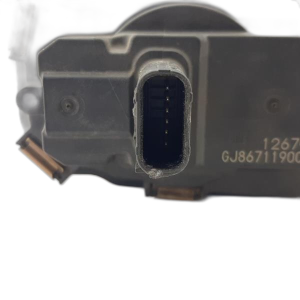
- Throttle Body Connector — Directly on the electronic throttle body, where the main engine harness connects.. This 6-pin connector carries all power, ground, and signal wires for the throttle actuator motor and the dual throttle position sensors. Corrosion, spread pins, or wire damage at this connector are common points of failure.
Real Owner Repair Stories
- Tahoe Yukon Forum (2007 Yukon Denali XL (GMT900 platform, similar electronics)) — Reduced Engine Power (Limp Mode), codes P1516 and P2101.
❌ Tried (didn't work) Replacing the throttle body assembly.
✅ What actually fixed it The issue persisted after replacing the throttle body and having the dealer perform a relearn. The forum discussion pointed towards needing a more advanced diagnostic tool (like a Tech2) to investigate deeper wiring or module communication issues that were not resolved by the simple part swap. The final resolution was not posted, but it highlights that a new throttle body is not always a guaranteed fix. - Reddit user, r/ChevyTrucks (2017 Silverado 1500 (K2XX platform)) — Reduced Engine Power, Stabilitrak warnings, code P2101.
❌ Tried (didn't work) Initial owner speculation about bad fuel or other components.
✅ What actually fixed it The dealership identified TSB #18NA037 for the P2101 code and performed an ECM software update. This resolved the issue. The owner noted the repair cost was around $250 for labor, highlighting that even software fixes at a dealer are not free.
OEM Part Supersession History
12627217, 12669073→12670839— Standard part evolution for improved reliability or manufacturing changes by GM.
Heads up: While this part fits many GM vehicles with a 2.5L engine, it is also the specified part for the 5.3L V8 in the Suburban. Always verify the part number with the vehicle's VIN.
Model Year Variations Within This Range
- 2017-2018: These model years introduced the 'Driver Door Open Prime' (DDOP) feature. A software anomaly can cause this feature to falsely trigger DTC P2101, a problem not present in earlier years. The specific fix is an ECM reprogram per TSB #18NA037.
- 2014: The 2014 model is on the older GMT900 platform. While it can still suffer from P2101 due to physical throttle body failure, carbon buildup, or wiring issues, it is not susceptible to the software-related DDOP issue found in 2017-2018 K2XX models.
Helpful Videos
Used OEM Parts in Stock
New Aftermarket Parts Available

The information in this article is provided for general reference and educational purposes only. Vehicle specifications, procedures, and part compatibility can vary by production date, trim level, and region. Always consult your vehicle's factory service manual and verify part numbers before purchasing or performing repairs. Safety-critical components such as airbags, seat belts, and braking systems should be installed by a qualified professional.
- Chevrolet SUBURBAN:
- 🧭 Diagnostic Flowchart
- 🎬 Helpful Videos
- 🛍️ Shop This Part
- What's Unique About the 2014-2018 Chevrolet SUBURBAN
- Symptoms You May Notice
- Most Likely Causes
- Rare But Worth Checking
- Diagnosis Steps
- Parts You'll Likely Need
- Related Codes That Often Appear With This One
- Technical Service Bulletins (TSBs) & Recalls
- Platform-Specific Known Issues
- Mechanic-Grade Diagnostic Values
- Scan Tool Commands That Help
- Wiring & Ground Locations
- Real Owner Repair Stories
- OEM Part Supersession History
- Model Year Variations Within This Range
- 🎟️ Get 5% Off