

P2101 on 2014-2018 Chevrolet Tahoe: Throttle Actuator Control Fault Causes & Fixes
P2101 on a 2014-2018 Tahoe typically indicates a problem with the electronic throttle body, often causing 'Reduced Engine Power' mode. The most common fix is cleaning or replacing the throttle body assembly. For 2017-2018 models, a known software glitch related to the 'Driver Door Open Prime' (DDOP) feature can falsely trigger the code, especially on vehicles with a low battery charge, and requires an ECM update from a dealer as outlined in TSB 18-NA-037.
- P2101 on a 2014-2018 Tahoe will almost always trigger the 'Reduced Engine Power' warning.
- The first and most cost-effective diagnostic step is to thoroughly clean the electronic throttle body.
- For 2017-2018 models, be aware that a known software glitch can cause this code, and a dealer reprogram may be the only fix.
- Do not replace the gas pedal (APP sensor) for this code; the fault lies at the throttle body.
- After cleaning or replacing the throttle body, an idle relearn procedure is necessary for the engine to run correctly.
What's Unique About the 2014-2018 Chevrolet TAHOE
General Motors has issued several Technical Service Bulletins (TSBs) for this code on the K2XX platform, indicating known issues. For 2017 and newer models, a software anomaly related to a 'Driver Door Open Prime' (DDOP) feature—designed to improve cold starts—can falsely set DTC P2101, particularly if the battery is in a reduced state of charge. This requires an ECM reprogram to fix, as detailed in TSB 18-NA-037. Other bulletins, like PIP4578B, address the code on high-mileage vehicles where carbon buildup is the primary cause, showing a pattern of both software and mechanical issues related to the throttle system on these trucks.
Diagnostic Flowchart
Tap your situation to follow the diagnostic path that matches what you're seeing on this vehicle.
Generation note: This range covers the final year of the 3rd generation (2014 GMT900) and the early years of the 4th generation (2015-2018 K2XX). Some issues, like the software glitch related to the 'Driver Door Open Prime' feature, are specific to 2017 and newer models on the K2XX platform, as confirmed by TSB 18-NA-037 and PIP5501B.
Symptoms You May Notice
- Reduced Engine Power message on the dash
- Check Engine Light is on
- Unstable or fluctuating idle
- Poor or no acceleration (Limp Mode)
- Vehicle may stall at stops.
- A buzzing or vibrating noise from the throttle body area after engine shutdown.
- Service StabiliTrak or Traction Control lights may also illuminate.
- Replacing the Accelerator Pedal Position (APP) sensor. While part of the same system, the APP sensor typically sets its own specific codes (like P2138 on GM vehicles) and is not the cause of P2101.
Most Likely Causes
- Dirty or Carbon-Fouled Throttle Body 🔴 High Probability → Shop Fuel Injection Throttle Body Over time, carbon and oil vapor from the PCV system can build up in the throttle body, restricting the movement of the throttle plate. This is a very common issue on GM trucks. TSB PIP4578B specifically mentions this issue on high-mileage vehicles, where the buildup causes the plate to bind and trigger the code.
How to confirm: Remove the air intake tube from the throttle body and visually inspect for a ring of black carbon buildup around the throttle plate and bore. The buildup is often heaviest on the back side of the plate.
Typical fix: Thoroughly clean the throttle body bore and plate with a dedicated throttle body cleaner and a soft cloth or brush. Do not force the throttle plate open manually; have an assistant press the accelerator pedal with the key on (engine off) to open it electronically. A throttle relearn procedure is required after cleaning.
Est. part cost: $10-$20 - Faulty Throttle Body Assembly 🔴 High Probability → Shop Fuel Injection Throttle Body The internal electric motor or plastic gears within the throttle actuator can wear out or fail, especially on higher mileage vehicles. This wear can create excessive play in the throttle plate, leading to a mismatch between commanded and actual position.
How to confirm: If cleaning the throttle body does not resolve the issue, and wiring is confirmed to be good, the throttle body itself is the likely failure point. A scan tool can monitor commanded vs. actual throttle position to confirm a discrepancy. A vibrating or buzzing noise from the throttle body after shutdown is also a strong indicator of failure.
Typical fix: Replace the entire throttle body assembly. This is typically a bolt-on part that includes a new throttle position sensor.
Est. part cost: $150-$400 - Outdated ECM Software 🟡 Medium Probability TSB #18-NA-037 and #PIP5501B specifically identify a software anomaly on 2017-2018 models where a feature called 'Driver Door Open Prime' (DDOP) can falsely trigger P2101. This happens when the driver's door is opened, which primes the fuel system, but a glitch can also initialize throttle diagnostics incorrectly, especially if the battery voltage is low.
How to confirm: A GM dealer or a shop with a subscription to GM's service information system can check the vehicle's VIN for applicable software updates. The issue is more likely if the code sets on startup with a no-crank condition that is resolved by a jump start.
Typical fix: Reprogram the Engine Control Module (ECM) with the latest software. This must be done by a dealer or qualified repair shop with a J2534 pass-thru device.
Est. part cost: $0 (if under warranty) - $250 - Wiring or Connector Issue ⚪ Low Probability Engine vibrations and heat can, over a long period, cause issues with the wiring harness or the connector at the throttle body. Poor ground connections are a known weak point on GM trucks and can cause various electronic issues.
How to confirm: Visually inspect the wiring harness leading to the throttle body for any signs of damage, chafing, or corrosion. Wiggle the connector with the engine running to see if it affects the idle. Check for a solid ground connection. In some cases, a faulty ground wire was the root cause even after a new throttle body was installed.
Typical fix: Repair the damaged section of wire or replace the connector pigtail. Adding a supplemental ground wire can be a permanent solution 🎬 Watch: Solving the mystery of P2101 and reduced engine power in some cases.
Est. part cost: $15-$50
Rare But Worth Checking
- Failing Engine Control Module (ECM): → Shop Engine Control Module (ECM) This is very rare. Before condemning the ECM, all other possibilities, including throttle body, wiring, and software updates, must be exhaustively ruled out.
Diagnosis Steps
- Scan for any other trouble codes. If codes like P1516, P2119, or P2176 are present, it strongly indicates a throttle body fault.
- Check for applicable Technical Service Bulletins (TSBs) for your vehicle's VIN. For 2017-2018 models, prioritize checking for the ECM software update mentioned in TSB 18-NA-037.
- Inspect the wiring harness and connector at the throttle body for damage, corrosion, or loose pins. Check ground connections.
- Remove the air intake duct and inspect the throttle body for heavy carbon buildup. A thick black ring is a common culprit.
- If dirty, clean the throttle body thoroughly using a dedicated cleaner and a soft cloth. Do not force the throttle plate open manually. Use the accelerator pedal with the key on to open it.
- After cleaning or replacement, perform a throttle relearn procedure. A common method without a scan tool is to let the engine idle for 3 minutes, shut it off for 60 seconds, then idle again for 3 minutes. A scan tool is the most reliable method. 🎬 See how to perform a manual idle relearn procedure
- If the code returns after cleaning and a relearn, the throttle body assembly is likely faulty and should be replaced.
- If the issue persists with a new throttle body, have a dealer perform the ECM software update if applicable, or investigate for a more complex wiring issue.
Parts You'll Likely Need
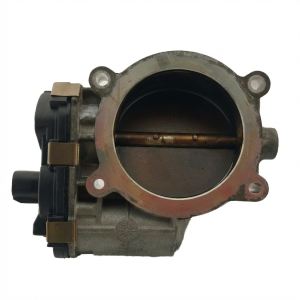
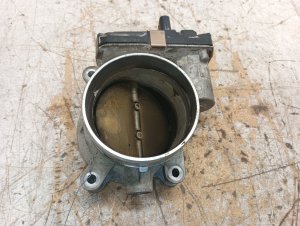
- Throttle Body Assembly
(OEM #12679524 (For 5.3L L83), 12740727 (For 6.2L L86))— This is the most common part to fail, either due to a worn internal motor or because it is heavily contaminated with carbon. Replacement is often more effective than repeated cleaning on high-mileage vehicles. The part number varies by engine.
Trusted brands: ACDelco, Bosch, Hitachi
OEM price range: $250-$400
Aftermarket price range: $150-$250
Related Codes That Often Appear With This One
- P1516 — This is a GM-specific code for 'Throttle Actuator Control (TAC) Module Throttle Actuator Position Performance'. It is very similar to P2101 and often appears with it, pointing directly to a throttle body performance issue.
- P2119 — This code indicates 'Throttle Closed Position Performance', suggesting the throttle plate is not returning to its resting position correctly, often due to carbon buildup or a weak actuator.
- P0068 — This code indicates a conflict between the MAP sensor, MAF sensor, and the throttle position. A throttle that isn't where the ECM expects it to be can cause this correlation code.
- P2176 — This code, 'Minimum Throttle Position Not Learned', often appears after a throttle body has been cleaned or replaced but the relearn procedure was not performed correctly.
Technical Service Bulletins (TSBs) & Recalls
- 18-NA-037: ECM reprogramming information to Correct DTC P2101.
- PIP4578B: Addresses idle surge, reduced power, and multiple DTCs including P2101 on high mileage vehicles, often related to throttl
Platform-Specific Known Issues
- Bulletin #18-NA-037: Specifies that an ECM reprogram is available to correct a false DTC P2101 on 2017-2018 models, caused by a software anomaly related to the 'Driver Door Open Prime' (DDOP) feature, especially when the battery is low.
- Bulletin #PIP5501B: Provides preliminary details on the false P2101 code on 2017+ models caused by the DDOP feature, noting that it often occurs on vehicles with a low battery state of charge, such as new dealer stock.
- Bulletin #PIP4578B: Links P2101 with several other codes and symptoms like idle surge on high-mileage vehicles, often due to carbon buildup in the throttle body.
Mechanic-Grade Diagnostic Values
- Throttle Actuator Motor Resistance — expected: 5–15 ohms. Failure: Infinite resistance (open circuit) or 0 ohms (short circuit).
- Throttle Position Sensor (TPS) Voltage — expected: Rises smoothly from ~0.5V (closed throttle) to ~4.5V (wide open throttle).. Failure: Erratic spikes, dropouts to 0V, or a signal that doesn't change with throttle plate movement.
- Ground Circuit Resistance — expected: < 1 ohm. Failure: Resistance greater than 1 ohm indicates a poor ground connection which can cause erratic behavior.
- Live Data: Desired vs. Actual Throttle Position — expected: The values should be within 2 degrees of each other.. Failure: A larger deviation indicates the throttle plate is not responding to the ECM's command, triggering P2101.
Scan Tool Commands That Help
- GDS2 (GM Dealer Software): Throttle Control Actuator Test — This bidirectional command allows a technician to command the throttle plate to specific percentages (e.g., 10%, 50%, 100%) while the engine is off. It's used to verify if the actuator motor is physically responding to commands, helping to distinguish between a mechanical failure (stuck plate) and an electrical one.
- GDS2 (or high-end aftermarket scanner): Idle Learn Reset / ETC Learn — This function must be used after cleaning or replacing the throttle body. It clears the old learned idle airflow values from the ECM, forcing it to recalibrate to the new, clean throttle plate's baseline position. Failure to perform this reset is a common cause of code P2176 appearing after a P2101 repair.
Wiring & Ground Locations
- Q38 Throttle Body Connector — On the electronic throttle body assembly, where the engine wiring harness connects.. This is the primary connection point for all power, ground, and signal wires for the throttle actuator motor and position sensors. Corrosion or loose pins here are a direct cause of P2101. Pin G (Dark Green) is TP Sensor 1 Signal, Pin F (Purple) is TP Sensor 2 Signal, and Pins A (Yellow) and C (Brown) are the motor control circuits.
- G103 / G104 — On C/K trucks, these are critical engine grounds. G103 is often located on the cowl, above the brake booster, while G104 is on the rear of the cylinder head/engine block.. The ECM and its related sensors rely on a clean ground path. A GM service document specifically mentions performing voltage drop tests on grounds G103 and G104 when diagnosing throttle-related DTCs on C/K trucks, as high resistance here can cause a range of unpredictable electronic faults, including P2101.
- Frame Grounds (Behind Front Wheels) — On the frame rails directly behind both front wheels.. These grounds are in a terrible location prone to corrosion from tire splash. While not a direct ECM ground, poor chassis grounds can create electrical noise and voltage stability issues that affect sensitive components like the electronic throttle control system.
Real Owner Repair Stories
- Reddit user in r/Volkswagen (commenting on a similar issue) ('13 Jetta (concept applies universally)) — EPC light and P2101 code.
❌ Tried (didn't work) The dealer replaced the throttle body.
✅ What actually fixed it The user suspected a wiring issue. The recommended next step was to check for spread pins or corrosion in the connector and, if that failed, to run a temporary overlay harness from the ECM to the throttle body to confirm a break in the original wiring. This highlights that even with a new part, the fault can persist if the wiring is the true root cause. - YouTube video by 'The Flat Rate Mechanic' ('07 Suburban (similar GMT900 platform)) — Reduced Engine Power, Service StabiliTrak, P2101 code, no throttle response.
❌ Tried (didn't work) Initially, clearing the code did not resolve the issue.
✅ What actually fixed it The creator had cleaned the throttle body but accidentally left a shop rag inside the intake, physically obstructing the throttle plate. After removing the obstruction and performing an 'Idle Learn Reset' with a scan tool, the problem was resolved. This serves as a real-world, albeit unusual, example of physical obstruction causing the code.
OEM Part Supersession History
12572658, 12580760→12679524— Unknown, but part supersessions often involve internal improvements to address common failure points or manufacturing efficiencies.
Model Year Variations Within This Range
- 2017-2018: These model years introduced the 'Driver Door Open Prime' (DDOP) feature, which can falsely trigger P2101 due to a software glitch, especially with a low battery. This specific cause is not present on 2014-2016 models and requires a dealer-installed ECM update per TSB 18-NA-037.
Helpful Videos


Used OEM Parts in Stock
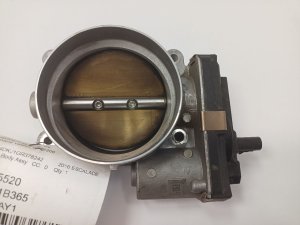
New Aftermarket Parts Available


The information in this article is provided for general reference and educational purposes only. Vehicle specifications, procedures, and part compatibility can vary by production date, trim level, and region. Always consult your vehicle's factory service manual and verify part numbers before purchasing or performing repairs. Safety-critical components such as airbags, seat belts, and braking systems should be installed by a qualified professional.
- Chevrolet TAHOE:
- 🧭 Diagnostic Flowchart
- 🎬 Helpful Videos
- 🛍️ Shop This Part
- What's Unique About the 2014-2018 Chevrolet TAHOE
- Symptoms You May Notice
- Most Likely Causes
- Rare But Worth Checking
- Diagnosis Steps
- Parts You'll Likely Need
- Related Codes That Often Appear With This One
- Technical Service Bulletins (TSBs) & Recalls
- Platform-Specific Known Issues
- Mechanic-Grade Diagnostic Values
- Scan Tool Commands That Help
- Wiring & Ground Locations
- Real Owner Repair Stories
- OEM Part Supersession History
- Model Year Variations Within This Range
- 🎟️ Get 5% Off