

P2101 on 2004-2011 GMC Canyon: Throttle Actuator Control Fixes & Reduced Power Causes
On a 2004-2011 GMC Canyon, code P2101 almost always points to a problem with the electronic throttle body, causing the truck to enter 'Reduced Engine Power' mode. The most common fix is cleaning the carbon buildup from the throttle plate. If that doesn't work, the entire throttle body assembly needs to be replaced. This is a very common issue shared with its platform mates, the Chevrolet Colorado and Hummer H3.
- P2101 on a 2004-2011 GMC Canyon almost always means a problem with the electronic throttle body.
- The most common symptom is the truck entering 'Reduced Engine Power' mode, which severely limits speed.
- Always start with the simplest and cheapest fix: thoroughly cleaning the carbon buildup from the throttle body.
- After cleaning or replacing the throttle body, you must perform an idle relearn procedure.
- If cleaning doesn't solve the problem, replacing the entire throttle body assembly is the definitive repair.
What's Unique About the 2004-2011 Gmc CANYON
The first-generation GMC Canyon (2004-2012) and its siblings, the Chevy Colorado and Hummer H3, are well-known for issues with their electronic throttle body, frequently leading to the 'Reduced Engine Power' warning. The problem became so common that GM issued Technical Service Bulletins (TSBs) and a Special Coverage program (11273A) related to the issue. The primary culprits are heavy carbon buildup that restricts the throttle plate's movement and internal electronic failure of the throttle body unit itself. This issue is prevalent across the Atlas engine family (I4 and I5) used in these trucks.
Diagnostic Flowchart
Tap your situation to follow the diagnostic path that matches what you're seeing on this vehicle.
Symptoms You May Notice
- Reduced Engine Power message displayed
- Check Engine Light is on
- Vehicle will not accelerate or has very poor throttle response
- Unstable, high, or low idle speed
- Engine may stall
- Idle surge, especially on high-mileage vehicles [TSB #PIP4578B].
- Traction Control or Stability System light may illuminate simultaneously, as reported by owners.
- Replacing the Accelerator Pedal Position (APP) sensor. P2101 specifically points to a problem at the throttle body motor circuit, not the driver's pedal input. A faulty pedal sensor would typically set different codes, such as P2138 or P2135.
Most Likely Causes
- Dirty/Binding Throttle Body 🔴 High Probability → Shop Fuel Injection Throttle Body Carbon buildup around the throttle plate is extremely common on these engines, preventing the plate from moving freely. The ECM detects this as a performance error when the plate sticks. TSBs for the Canyon specifically mention this issue on high-mileage vehicles and in cold weather, which can worsen the binding. [TSB #PIP4578B, TSB #PIP4573B].
How to confirm: Remove the air intake duct and visually inspect the throttle bore and plate for a thick black ring of carbon. Manually (with the engine off) check if the plate moves smoothly or sticks.
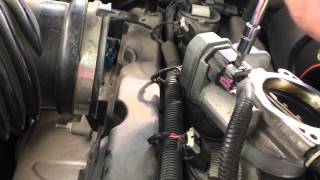
Typical fix: Thoroughly clean the throttle body bore and plate using a dedicated throttle body cleaner and a soft brush or rag. 🎬 Watch: Step-by-step guide to cleaning your Canyon's throttle body. Do not spray cleaner directly into the electronics. A throttle relearn procedure is required after cleaning.
Est. part cost: $5-$15 - Failed Throttle Body Assembly 🟡 Medium Probability → Shop Fuel Injection Throttle Body Beyond just being dirty, the internal electronics or the DC motor of the throttle actuator are a known failure point on this generation of Canyon/Colorado/H3. If cleaning does not resolve the 'Reduced Power' mode, the unit itself has likely failed internally.
How to confirm: If a thorough cleaning and relearn procedure do not fix the code and symptoms, the throttle body is the next logical point of failure. A diagnostic scan tool can monitor commanded vs. actual throttle position to confirm the discrepancy. A user on Hummer4x4Offroad noted that even after cleaning, the code returned immediately upon restart, pointing to a bad throttle body.
Typical fix: Replace the entire throttle body assembly. This is a bolt-on part that includes the new motor and position sensors. 🎬 See this walkthrough on how to replace the throttle body assembly.
Est. part cost: $150-$350 - Wiring Harness or Connector Issue ⚪ Low Probability Vibrations and heat can cause wires leading to the throttle body to fray, or pins in the connector can become corroded or loose, leading to an intermittent signal. Poor engine-to-chassis grounds are also a known issue on this platform and can cause this code.
How to confirm: Visually inspect the wiring harness going to the throttle body for any signs of damage, chafing, or corrosion. Wiggle the connector with the engine running to see if it affects the idle. Check main engine ground straps for corrosion and tightness.
Typical fix: Repair the damaged section of wire, clean/replace the connector pigtail, or clean/tighten the main engine ground connections. 🎬 Watch: How to find and fix common ground wire issues.
Est. part cost: $10-$50
Rare But Worth Checking
- Faulty Powertrain Control Module (PCM): → Shop Engine Control Module (ECM) This is rare. The PCM is the last component to suspect. All other possibilities, especially the throttle body itself and its wiring, should be exhaustively ruled out before considering PCM replacement.
- Shorted Wire in Main Harness: A Hummer H3 owner with P2101 reported that a shop found a low-volt power wire from the fuse box to the main computer had shorted to ground within the main wiring harness, which is not something found with a simple visual inspection.
Diagnosis Steps
- Check for other stored DTCs. Codes like P1516, P2119, and P2176 strongly point towards the throttle body.
- Visually inspect the wiring harness and connector at the throttle body for any obvious damage, corrosion, or loose connections.
- Inspect and clean the main engine-to-chassis ground points. A poor ground connection is a known cause of erratic electronic behavior on this platform.
- Remove the air intake tube from the throttle body. Inspect the throttle bore and plate for heavy carbon buildup.
- If carbon is present, perform a thorough cleaning using throttle body cleaner and a soft cloth or brush. Do not force the throttle plate open aggressively.
- Reassemble the intake, clear the codes, and perform a throttle body relearn procedure. A common method is to start the engine and let it idle in Park for 3 minutes, turn the engine off for 60 seconds, then restart and idle for another 3 minutes.
- Test drive the vehicle. If the 'Reduced Engine Power' message and code P2101 return, the throttle body assembly is the most likely cause and should be replaced.
- If a new throttle body does not solve the issue, perform a circuit integrity test on the wiring between the PCM and the throttle body, checking for shorts or opens as noted in some owner experiences, before suspecting a faulty PCM.
Parts You'll Likely Need
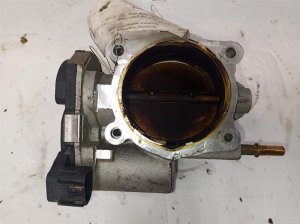
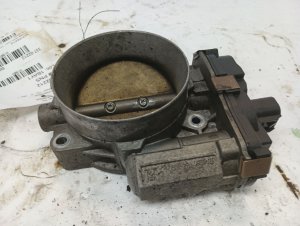
- Throttle Body Assembly
(OEM #12631016 (superseded by 12694877))— This is the most common fix when cleaning fails to resolve the 'Reduced Engine Power' mode, as the internal electronics of the original part are a known failure point.
Trusted brands: ACDelco, Standard Motor Products, Hitachi, Cardone (Remanufactured)
OEM price range: $250-$400
Aftermarket price range: $150-$250 - Throttle Body Cleaner — Required for the first and most common diagnostic and repair step: cleaning carbon buildup from the throttle plate.
Trusted brands: CRC, Berryman, WD-40
Aftermarket price range: $5-$15
Related Codes That Often Appear With This One
- P1516 — This is a manufacturer-specific code for Throttle Actuator Control (TAC) Module Throttle Actuator Position Performance, often set alongside P2101 as they both indicate a mismatch between commanded and actual throttle position. [TSB #PIP4578B, 15]
- P2119 — Relates to Throttle Closed Position Performance, indicating the throttle plate isn't returning to the correct closed position, often due to carbon buildup. [TSB #PIP4578B, 33]
- P2176 — Means 'Minimum Throttle Position Not Learned', which often occurs after a battery disconnect or when the throttle body is too dirty for the ECM to establish a baseline idle position. [TSB #PIP4578B, 15]
- P0068 — Indicates a discrepancy between the MAP sensor, MAF sensor, and throttle position, which can be triggered by the erratic throttle behavior causing P2101. [TSB #PIP4578B]
Technical Service Bulletins (TSBs) & Recalls
- PIP4578B: Addresses idle surge, reduced engine power, and multiple TAC-related DTCs including P2101 on high-mileage vehicles. Recommends throttle body cleaning.
- PIP4573B: Mentions P2101 occurring during cold starts in freezing temperatures.
- 11273A: Special Coverage for the throttle position sensor, primarily on V8 models from 2009-2011.
Platform-Specific Known Issues
- NHTSA Technical Service Bulletin PIP4578B notes that P2101 can occur on high-mileage vehicles, causing idle surge and reduced power mode. The bulletin explicitly recommends cleaning the throttle body and performing an idle learn reset.
- NHTSA Technical Service Bulletin PIP4573B links P2101 to issues when starting the engine in very cold temperatures (around -10°F / -23°C), suggesting throttle icing or sticking.
- GM issued a Special Coverage program (11273A) for throttle position sensor issues, which could trigger reduced power modes. This primarily covered 2009-2011 Canyon/Colorado models equipped with the V8 engine, but acknowledges the broader issue with the TAC system on this platform.
Mechanic-Grade Diagnostic Values
- Throttle Actuator Control (TAC) Motor Resistance — expected: 2 to 15 Ohms. Failure: A reading of less than 1 Ohm indicates a short, while an Over Limit (OL) or infinite reading indicates an open circuit.
- Throttle Position Sensor (TPS) 1 Resistance Sweep — expected: Resistance should increase smoothly as the throttle plate is opened and decrease smoothly as it is closed.. Failure: Gaps, spikes, or no change in resistance indicates a faulty sensor.
- Throttle Position Sensor (TPS) 2 Resistance Sweep — expected: Resistance should decrease smoothly as the throttle plate is opened and increase smoothly as it is closed (inverse of TPS1).. Failure: Gaps, spikes, or no change in resistance indicates a faulty sensor.
Scan Tool Commands That Help
- GM Factory Scan Tool (e.g., Tech2): ETC Learn (Electronic Throttle Control Learn) — This function should be used after cleaning or replacing the throttle body to force the PCM to relearn the new closed and wide-open throttle positions. A video demonstrates accessing this via the 'miscellaneous functions' menu in the PCM section.
- Bidirectional Scan Tool (e.g., iCarsoft CR MAX): Throttle Control > Actuator Test — This allows a technician to command the throttle plate to open at specific percentages (e.g., 10%, 50%, 100%) while the engine is off. It's used to verify if the actuator motor is physically responding to commands from the ECM, helping to distinguish a mechanical failure from a wiring or sensor issue.
Wiring & Ground Locations
- SP105 (Splice Pack) — Driver's side of the engine bay, near the battery and ABS module.. This ground point serves numerous critical components, including the Electronic Brake Control Module (EBCM) and the Run/Crank relay. Corrosion here is a well-documented cause of widespread, intermittent electrical problems, including those that can mimic throttle body failure.
- SP106 (Splice Pack) — Passenger side of the engine bay, typically behind the engine airbox.. This ground serves the HVAC control module and the Data Link Connector (DLC). A poor connection here can cause communication issues and other strange electrical symptoms that may accompany a P2101 code.
- G103 — On the left front of the engine block, as part of the main negative battery cable harness.. This is a primary ground for the Engine Control Module (ECM). A loose or corroded G103 can cause low voltage to the ECM, leading to a host of erroneous codes, including P2101 and other communication faults.
- Throttle Body Connector (8-pin) — Directly on the electronic throttle body assembly.. This is the single point of connection for the two throttle position sensors and the throttle actuator motor. The pins for the motor are typically thicker gauge wires than the sensor wires. Testing for 5V reference, ground, and signal voltage occurs at this connector.
Real Owner Repair Stories
- YouTube video from 'The Flat Rate Mechanic' (2008 GMC Canyon) — Limp mode, Check Engine Light, and a host of codes including P2101 (Throttle Actuator Position Performance) and P2135 (Throttle Position Sensor Correlation), plus low voltage codes in other modules.
❌ Tried (didn't work) Another shop misdiagnosed the issue and recommended replacing the ECM.
✅ What actually fixed it The technician found a severely corroded positive battery terminal and a bad battery that failed a load test. After cleaning the terminals and replacing the battery, the throttle-related codes were resolved, indicating the root cause was a system-wide low voltage condition, not a faulty throttle body. - YouTube video from 'Philos Garage' (1st Gen Chevrolet Colorado (platform twin)) — Intermittent issues with blower motor, door locks, fuel gauge, and anti-theft system, which are common symptoms of bad grounds on this platform.
❌ Tried (didn't work) Chasing individual symptoms without addressing the root cause.
✅ What actually fixed it The owner identified and cleaned the main under-hood ground splice packs, specifically SP105 (driver's side) and SP106 (passenger's side). He demonstrates how corrosion at these common points causes numerous, seemingly unrelated electrical faults that worsen with under-hood heat. Cleaning these grounds resolved the electrical gremlins.
OEM Part Supersession History
12631016→12694877— Standard part revision and improvement by the manufacturer.
Heads up: Part number 12631016 also replaces older numbers 12588244 and 12616438. The newest number, 12694877, is the current recommended OEM replacement.
Model Year Variations Within This Range
- 2007 vs 2009 (and similar): While not on the Canyon specifically, forum discussions on GM trucks of the same era show that there were physical differences in the throttle body design between model years like 2007 and 2009. This included changes to the shape of the throttle body opening, which could affect airflow characteristics. While the core electronic function remained similar, using a throttle body from a different year could potentially cause tuning issues if the PCM is not calibrated for it.
Helpful Videos
Used OEM Parts in Stock
New Aftermarket Parts Available






The information in this article is provided for general reference and educational purposes only. Vehicle specifications, procedures, and part compatibility can vary by production date, trim level, and region. Always consult your vehicle's factory service manual and verify part numbers before purchasing or performing repairs. Safety-critical components such as airbags, seat belts, and braking systems should be installed by a qualified professional.
- Gmc CANYON:
- 🧭 Diagnostic Flowchart
- 🎬 Helpful Videos
- 🛍️ Shop This Part
- What's Unique About the 2004-2011 Gmc CANYON
- Symptoms You May Notice
- Most Likely Causes
- Rare But Worth Checking
- Diagnosis Steps
- Parts You'll Likely Need
- Related Codes That Often Appear With This One
- Technical Service Bulletins (TSBs) & Recalls
- Platform-Specific Known Issues
- Mechanic-Grade Diagnostic Values
- Scan Tool Commands That Help
- Wiring & Ground Locations
- Real Owner Repair Stories
- OEM Part Supersession History
- Model Year Variations Within This Range
- 🎟️ Get 5% Off