

P2101 on 2015-2019 GMC Sierra 1500: Throttle Body Causes and Fixes
On a 2015-2019 GMC Sierra 1500, code P2101 almost always points to a problem with the electronic throttle body, causing a 'Reduced Engine Power' message. The fix often requires cleaning or replacing the throttle body assembly, but an ECM reprogram should also be considered as per a manufacturer TSB. In some cases, a failing starter motor can cause voltage drops that trigger this code.
- P2101 on a 2015-2019 Sierra will almost certainly trigger the 'Reduced Engine Power' warning, making the truck unsafe to drive in normal traffic.
- Before replacing parts, check if your truck needs the ECM reprogram mentioned in TSB #18NA037, especially if it's a 2019 model.
- The simplest and cheapest first step is to clean the throttle body of any carbon buildup.
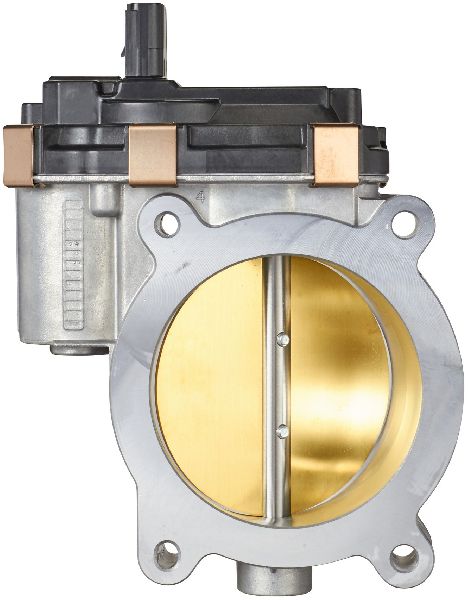
- If cleaning doesn't work, the most likely fix is replacing the entire throttle body assembly.
- After cleaning or replacing the throttle body, a 'relearn' procedure is necessary to ensure proper idle and performance.
What's Unique About the 2015-2019 Gmc SIERRA 1500

General Motors has issued multiple Technical Service Bulletins (TSBs) for this generation of trucks regarding P2101 and related throttle body issues. These bulletins acknowledge problems ranging from carbon buildup on high-mileage vehicles (PIP4578B) to software logic errors that can be corrected with an ECM update (18-NA-037). The software issue is particularly unique, as it was found to be caused by a conflict between the electronic throttle diagnostics and a 'Driver Door Open Prime' (DDOP) feature designed to improve cold starts, falsely setting the code. This indicates a known pattern of failure or sensitivity in the throttle control system for these specific trucks.
Diagnostic Flowchart

Tap your situation to follow the diagnostic path that matches what you're seeing on this vehicle.
Generation note: The 2015-2019 year range covers the end of the third generation (K2XX, 2014-2018) and the start of the fourth generation (T1XX, 2019-present) of the GMC Sierra 1500. While the underlying cause is similar, TSB #18NA037 specifically applies to 2017-2019 models with a software anomaly, suggesting some issues may be generation-specific. It is crucial to distinguish if a 2019 model is the new T1XX body style or the carryover 'K2XX' Limited model, as electrical architectures differ.
Symptoms You May Notice
- Reduced Engine Power message on the dashboard
- Check Engine Light is on
- Vehicle will not accelerate properly (limp mode)
- Unstable or surging idle
- Delayed throttle response
- No-start or delayed start, sometimes with a single click from the starter
- Replacing the Accelerator Pedal Position (APP) sensor. An APP sensor fault will typically set a different set of codes (e.g., P2135 or P2138) and does not usually cause P2101 on its own.
Most Likely Causes

- Faulty Throttle Body Assembly 🔴 High Probability → Shop Fuel Injection Throttle Body Multiple TSBs (PIP5660B, PIP4578B) directly link P2101 to throttle body issues on these trucks, indicating a common failure point. The internal motor or position sensors wear out over time.
How to confirm: Use a scan tool to monitor commanded vs. actual throttle position. A discrepancy, a jumpy reading, or failure to respond to scan tool commands points to a faulty throttle body. A buzzing sound from the throttle body after key-off can also indicate internal failure.
Typical fix: Replace the entire throttle body assembly. A throttle relearn procedure is required after replacement.
Est. part cost: $170-$464 - Dirty or Carbon-Fouled Throttle Body 🟡 Medium Probability → Shop Fuel Injection Throttle Body TSB #PIP4578B specifically mentions issues on high-mileage vehicles due to carbon buildup from the PCV system, which can cause the throttle plate to stick or move slowly.
How to confirm: Remove the air intake tube and visually inspect the throttle plate and bore for heavy black carbon deposits.
Typical fix: Thoroughly clean the throttle body bore and plate with a dedicated throttle body cleaner and a soft brush/rag. Do not force the plate open by hand; 🎬 Watch: How to safely clean your throttle body have an assistant press the accelerator with the key on. A throttle relearn procedure is needed afterward.
Est. part cost: $10-$20 - ECM Software Needs Update 🟡 Medium Probability TSB #18NA037 was issued specifically to provide an ECM reprogramming to correct DTC P2101 on 2017-2019 models. A software anomaly caused the throttle diagnostic to run during the 'Driver Door Open Prime' feature, falsely setting the code.
How to confirm: A GM dealership or a qualified shop with access to GM's programming software can check if the vehicle's ECM calibration is up to date by referencing the VIN.
Typical fix: Reprogram the Engine Control Module with the updated software. This is often the first step a dealer will take.
Est. part cost: $0 (parts), labor cost varies ($150-$250) - Wiring or Connector Issue ⚪ Low Probability Vibrations and heat in the engine bay can cause wires in the harness to the throttle body to fray or connector pins to become loose or corroded over time.
How to confirm: Visually inspect the wiring harness going to the throttle body for any signs of damage, chafing, or corrosion. Wiggle the connector while the engine is running to see if the idle changes. Check for a secure connection at the throttle body and the ECM.
Typical fix: Repair the damaged section of the wiring harness or clean/replace the connector.
Est. part cost: $5-$50
Rare But Worth Checking
- Faulty Engine Control Module (ECM): → Shop Engine Control Module (ECM) This is rare, but if a new throttle body and verified wiring do not resolve the code, the ECM's internal driver for the throttle actuator may have failed.
- Failing Starter Motor or Low Battery Voltage: → Shop Starter Motor Multiple owner reports on forums for 2017-2018 models describe a scenario where a failing starter causes a voltage drop during cranking, which incorrectly triggers the P2101 code and reduced power mode, even though the throttle body is fine. Symptoms include a no-start or delayed start followed by the P2101 code. Replacing the starter resolved the issue after throttle body replacement failed. 🎬 Watch: How a failing starter can trigger this code
Diagnosis Steps
- Scan for all stored DTCs. Note P2101 and any other codes like P1516, P2119, or P0068.
- For 2017-2019 models, the first step should be to check with a GM dealer if the ECM reprogram specified in TSB #18NA037 has been performed. This is a common and known software fix.
- If experiencing no-start or slow-crank issues along with P2101, test the battery and starting system thoroughly. A failing starter can cause voltage drops that trigger this code.
- Visually inspect the wiring harness and connector at the throttle body for damage, corrosion, or loose pins.
- Remove the air intake duct and inspect the throttle body for heavy carbon buildup. If dirty, clean it thoroughly with throttle body cleaner.
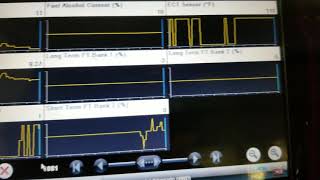
- Using a capable scan tool, monitor the live data for commanded throttle position vs. actual throttle position sensors 1 and 2. They should track each other closely as the pedal is pressed.
- If the readings are erratic or do not match, and cleaning/reprogramming did not work, the throttle body assembly is the most likely cause.
- Replace the throttle body assembly.
- Perform the throttle body relearn procedure. A reliable non-scan tool method is to start the engine and let it idle in Park for 3 minutes, turn the engine off for 60 seconds, then start and idle again for 3 minutes. A scan tool provides the most certain method.
Parts You'll Likely Need
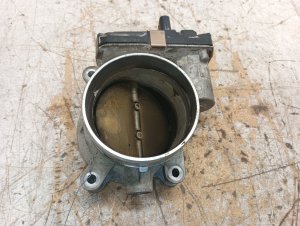
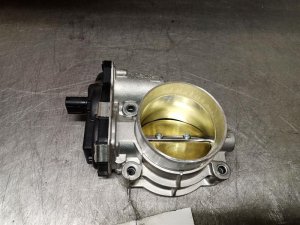
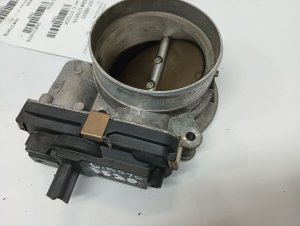
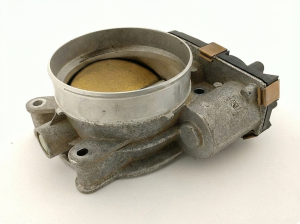
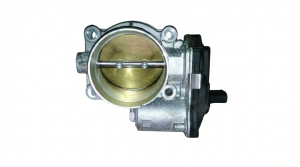
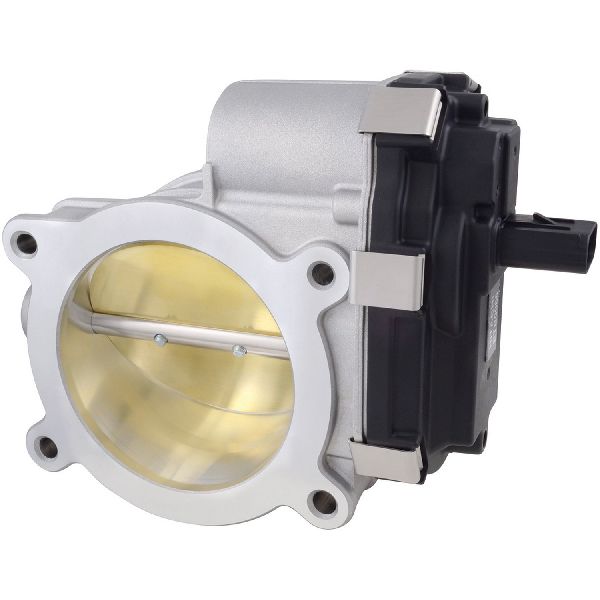
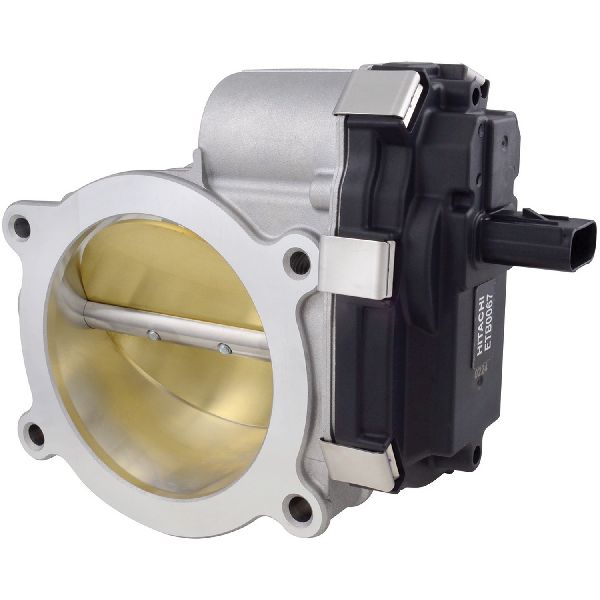
- Throttle Body Assembly
(OEM #12679524)— This is the most frequent cause of P2101 on this platform, as confirmed by multiple TSBs. The internal motor or position sensors fail, requiring replacement of the whole unit. 🎬 See this step-by-step throttle body replacement walkthrough Note: Part number 12670839 cited elsewhere is for 4-cylinder engines, not the V6/V8 in the Sierra 1500.
Trusted brands: ACDelco, Bosch, Hitachi
OEM price range: $220-$350
Aftermarket price range: $170-$280
Related Codes That Often Appear With This One
- P1516 — This is a GM-specific code for 'Throttle Actuator Control (TAC) Module Throttle Actuator Position Performance'. It is often set alongside P2101 as they both relate to a disagreement between the commanded and actual throttle position. TSB #PIP5660B and #PIP4578B cite both codes.
- P2119 — This code relates to 'Throttle Closed Position Performance'. It can be triggered if carbon buildup prevents the throttle from closing properly, which is a known cause for P2101. TSB #PIP4578B cites this code.
- P0068 — This code indicates a correlation error between the MAP sensor, MAF sensor, and the throttle position. A faulty throttle body can cause this discrepancy. TSB #PIP4578B cites this code.
Technical Service Bulletins (TSBs) & Recalls
- PIP5660B: Reduced power with DTC P2101 due to potential throttle body issue.
- PIP4578B: Idle surge, reduced engine power, and DTCs including P2101 on high mileage vehicles.
- 18NA037: ECM reprogramming information to correct DTC P2101.
Platform-Specific Known Issues
- TSB #PIP5660B: Notes that a reduced power message with DTC P2101 can be due to a potential throttle body issue.
- TSB #PIP4578B: Mentions that P2101 can occur on high-mileage vehicles due to carbon buildup, leading to reduced power and idle surge.
- TSB #18NA037: Provides a specific ECM reprogramming to correct a false P2101 triggered by the 'Driver Door Open Prime' (DDOP) feature on 2017-2019 models.
Mechanic-Grade Diagnostic Values
- Throttle Position Sensor 1 (TP1) Voltage — expected: Varies from < 1.0V at closed throttle to > 3.5V at wide-open throttle.. Failure: Voltage is jumpy, erratic, or does not change smoothly when the throttle plate moves.
- Throttle Position Sensor 2 (TP2) Voltage — expected: Varies inversely to TP1, from > 3.9V at closed throttle to < 1.5V at wide-open throttle.. Failure: Voltage does not move inversely to TP1 or shows erratic readings.
- Throttle Actuator Control (TAC) Motor Resistance — expected: Typically 2-10 Ohms between the two motor control pins.. Failure: An open circuit (infinite resistance) or a short (near zero resistance) indicates a failed motor.
- ECM Ground Circuit Resistance — expected: < 1 Ohm between the ground pin at the ECM connector and the chassis ground.. Failure: High resistance indicates a poor ground connection, which can cause erratic module behavior.
Scan Tool Commands That Help
- GDS2 (GM Dealer Tool): Throttle Position Control / ETC Learn — This is a bidirectional control used to command the throttle plate to specific angles (e.g., 25%, 50%). It's the definitive test to see if the throttle body responds correctly to ECM commands, confirming if the motor and sensors are working.
- GDS2 (GM Dealer Tool): Idle Learn Reset — This function must be performed after cleaning or replacing the throttle body. It resets the ECM's learned idle airflow values, preventing issues like high idle, stalling, or the code returning.
Wiring & Ground Locations
- Throttle Body Connector (X87) — Directly on the electronic throttle body assembly at the front of the intake manifold.. This is the primary connection point for all power, ground, and signal wires for the throttle actuator motor and position sensors. A loose connection, corrosion on pins, or broken wires here are a direct cause of P2101. The pinout is typically: E & F (TAC Motor Control), D (TP Sensor 1 Signal), A (TP Sensor 2 Signal), B (5V Reference), C (Low Reference/Ground).
- G103 — On the front of the passenger side (right side) cylinder head.. This is a primary engine ground point, and the ECM relies on it for a stable reference. A loose or corroded G103 can cause erratic voltage and unpredictable behavior from engine sensors and actuators, including the throttle body, leading to false P2101 codes.
- Underhood Fuse Block (X50A) — On the driver's side of the engine bay.. This block contains the fuses and relays that supply power to the ECM and related circuits. Internal corrosion or a failing 175A mega fuse can cause voltage drops that affect the entire engine management system, potentially triggering P2101.
Real Owner Repair Stories
- Reddit user on r/silverado (2017 Silverado 1500) — Single click no-start, followed by 'Reduced Engine Power' message and P2101 code.
❌ Tried (didn't work) Jump starting the vehicle (worked temporarily), Battery health check (passed), ECM software update per TSB #18NA037
✅ What actually fixed it Replacing the starter motor. The failing starter was causing a significant voltage drop during the initial key-on sequence, which was enough to trigger the sensitive throttle body diagnostics and set code P2101, even though the throttle body was not faulty. - Forum user on gm-trucks.com (2015 Silverado) — P2101 and P1516 codes with reduced power mode.
❌ Tried (didn't work) Replacing the throttle body assembly, Replacing the accelerator pedal position (APP) sensor
✅ What actually fixed it Cleaning a corroded engine ground connection. The poor ground (likely G103 on the cylinder head) was causing intermittent voltage issues to the engine controls, which was misdiagnosed as a component failure. - YouTube repair video (GM Truck (similar platform)) — P2101, engine stumbling when wiggling harness.
❌ Tried (didn't work) Visual inspection of the wiring harness (appeared undamaged)
✅ What actually fixed it Repairing a broken wire inside the insulation, about 4 inches back from the throttle body connector. The wire was broken internally from vibration and heat stress but looked fine from the outside. A 'tug test' on each individual wire revealed the break.
When the Usual Fixes Don't Work
- In multiple documented cases, replacing the throttle body—the most common fix—did not resolve the P2101 code. One common alternative cause was a failing starter motor causing a voltage drop on startup, which falsely triggered the throttle diagnostic. Another confirmed fix, after both a new throttle body and accelerator pedal failed to solve the problem, was locating and cleaning a corroded main engine ground (G103), which restored stable voltage to the ECM and throttle circuits.
OEM Part Supersession History
12572658, 12580760→12679524— Standard part evolution, likely for improved reliability or manufacturing efficiency.
Heads up: While physically similar, throttle bodies for different engines (e.g., 4.3L V6 vs 5.3L V8) are not interchangeable. Always verify the correct part number using the vehicle's VIN.
Model Year Variations Within This Range
- 2017-2019: These model years may have the 'Driver Door Open Prime' (DDOP) feature. A software glitch can cause this feature to falsely trigger DTC P2101. TSB #18NA037 provides a specific ECM reprogram to fix this, which should be the first diagnostic step for these years.
- 2019: The 2019 model year was a transition year. GM produced both the older K2XX platform (as the Sierra 1500 'Limited') and the new T1XX platform. The T1XX has a completely different electrical architecture. It is critical to identify which platform the truck is, as diagnostic procedures and part numbers may not be the same.
Helpful Videos
Used OEM Parts in Stock
New Aftermarket Parts Available


The information in this article is provided for general reference and educational purposes only. Vehicle specifications, procedures, and part compatibility can vary by production date, trim level, and region. Always consult your vehicle's factory service manual and verify part numbers before purchasing or performing repairs. Safety-critical components such as airbags, seat belts, and braking systems should be installed by a qualified professional.
- Gmc SIERRA 1500:
- 🧭 Diagnostic Flowchart
- 🎬 Helpful Videos
- 🛍️ Shop This Part
- What's Unique About the 2015-2019 Gmc SIERRA 1500
- Symptoms You May Notice
- Most Likely Causes
- Rare But Worth Checking
- Diagnosis Steps
- Parts You'll Likely Need
- Related Codes That Often Appear With This One
- Technical Service Bulletins (TSBs) & Recalls
- Platform-Specific Known Issues
- Mechanic-Grade Diagnostic Values
- Scan Tool Commands That Help
- Wiring & Ground Locations
- Real Owner Repair Stories
- When the Usual Fixes Don't Work
- OEM Part Supersession History
- Model Year Variations Within This Range
- 🎟️ Get 5% Off