

P2101 on 2017 GMC Sierra: Throttle Actuator Causes and Software Fixes
On a 2017 GMC Sierra, code P2101 is frequently caused by a software glitch that can be fixed with an ECM update from a dealer. This should be your first step before considering a costly throttle body replacement. The software issue is well-documented in GM Technical Service Bulletins (TSBs) and confirmed by numerous owner experiences. However, a faulty throttle body or electrical system issues, like a failing starter, can also trigger this code.
- For a 2017 GMC Sierra with code P2101, the most likely cause is a software glitch, not a failed part.
- Always check for and perform the ECM software update specified in TSB #18NA037 before replacing any hardware.
- Replacing the throttle body without first addressing the software issue is a common and expensive misdiagnosis.
- Symptoms are serious and include 'Reduced Engine Power' mode, making the truck unsafe to drive in normal traffic.
- If the software update doesn't fix the code, then proceed with standard diagnosis of the throttle body and its wiring.
What's Unique About the 2017-2017 Gmc SIERRA
For the 2017 model year, GM introduced a new engine start feature called 'Driver Door Open Prime' (DDOP) on its K2XX platform trucks like the Sierra. This feature primes the fuel system when the driver's door is opened to improve cold start times. However, a software anomaly could cause the electronic throttle control diagnostics to run at the same time, creating a conflict that falsely sets a P2101 code, often when the vehicle battery was in a reduced state of charge. This makes it a unique, software-based problem for this specific model year that often requires no parts replacement.
Diagnostic Flowchart
Tap your situation to follow the diagnostic path that matches what you're seeing on this vehicle.
Symptoms You May Notice
- Check Engine Light is on
- "Reduced Engine Power" message displayed on the driver information center
- Vehicle enters "limp mode" with severely limited acceleration and a fixed throttle position
- Poor, delayed, or unresponsive throttle
- Unstable, high, or rough idle
- Vehicle may stall or hesitate
- Intermittent no-start condition with a single click
- Replacing the throttle body assembly when only an ECM software update was needed. This is the most common and costly mistake for this specific code on a 2017 Sierra, as confirmed by multiple owner experiences online.
- Replacing the Accelerator Pedal Position (APP) sensor. A faulty APP sensor typically sets its own specific codes (like P2138) and is not the indicated cause for P2101.
Most Likely Causes
- ECM Software Anomaly 🔴 High Probability A 'Driver Door Open Prime' feature introduced in 2017 could falsely trigger DTC P2101, as documented in GM TSBs #18-NA-037 and #PIP5501B. This is the most common cause for this specific model year.
How to confirm: A GM dealer or qualified shop must check the current ECM software calibration ID against the latest version available in the GM service system. If the vehicle has the old software and only P2101 is set (especially if freeze frame data shows it occurred at 0 RPM and 0% throttle), this is the confirmed cause.
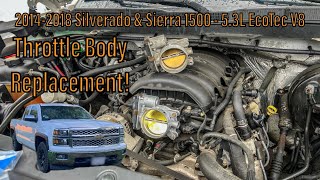
Typical fix: Reprogram the Engine Control Module (ECM) with the updated software provided by GM. This is a software-only fix and requires no parts. 🎬 See this step-by-step walkthrough for replacing the throttle body assembly. The dealer cost is typically $150-$250 for this service if out of warranty.
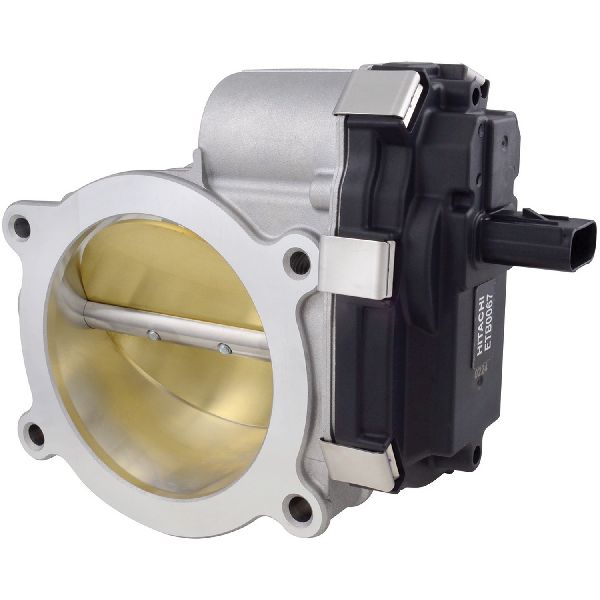
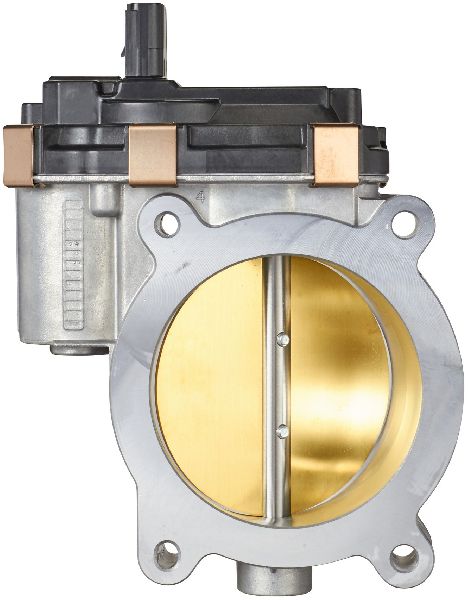
Est. part cost: $0 - Faulty Throttle Body Assembly 🟡 Medium Probability → Shop Fuel Injection Throttle Body This is the most common hardware failure for this code across all vehicles. Carbon buildup can cause the throttle plate to stick, or the internal motor, gears, or position sensors can fail electronically.
How to confirm: After ruling out software issues, a technician can use a bi-directional scan tool to command the throttle plate open and closed while monitoring sensor data for smooth, corresponding movement. A noisy or binding throttle plate during this test indicates failure. Visual inspection after removing the intake duct can reveal heavy carbon buildup.
Typical fix: Replace the entire throttle body assembly. While cleaning a dirty throttle body is a possible first step, if the internal motor or sensors are failing, replacement is necessary. A throttle relearn procedure must be performed after replacement.
Est. part cost: $100-$250 - Wiring or Connector Issues ⚪ Low Probability Vibrations and heat in the engine bay can cause wires to break or connector pins to lose contact over time. The harness near the throttle body is a common area to check for chafing or damage.
How to confirm: Visually inspect the wiring harness and connector at the throttle body for damage, corrosion, or loose pins. A multimeter can be used to check for continuity and proper voltage/ground at the connector pins according to the service manual. A voltage drop greater than 0.5V suggests high resistance.
Typical fix: Repair the damaged section of the wiring harness or replace the connector pigtail.
Est. part cost: $20-$50
Rare But Worth Checking
- Failing Powertrain Control Module (PCM): → Shop Engine Control Module (ECM) This is extremely rare. The PCM should only be considered a cause after all other possibilities, including software, wiring, and the throttle body itself, have been exhaustively tested and ruled out.
Diagnosis Steps
- Read all stored DTCs with a quality OBD-II scanner.
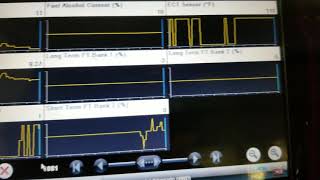
- CRITICAL: Check for applicable Technical Service Bulletins (TSBs) for your vehicle's VIN. For a 2017 Sierra, specifically look for TSB #18-NA-037 regarding P2101. 🎬 Watch a professional diagnostic teardown of this specific P2101 issue.
- If TSB #18-NA-037 applies and the ECM software has not been updated, have a GM dealer or qualified shop perform the ECM reprogram. This is the most likely fix and should be done first.
- If software is up to date or the issue persists, inspect the wiring harness and connector going to the electronic throttle body for any signs of damage, corrosion, or loose connections.
- Check critical ground connections, especially G101 on the lower front of the engine block, which is a primary ground for the ECM.
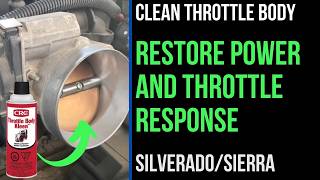
- Remove the air intake duct and visually inspect the throttle body bore and plate for heavy carbon buildup. A dirty throttle body can be carefully cleaned with a dedicated throttle body cleaner and a soft cloth. 🎬 Watch this simple guide on how to clean your throttle body.
- Using a bi-directional scan tool (like a Snap-On Verus or GM's GDS2), command the throttle actuator to open and close (a 'throttle sweep' test), observing the live data for throttle position percentage. The movement should be smooth and the reported position should match the commanded position.
- If the throttle body fails the scan tool test, is audibly noisy, or feels gritty when moved by hand (with battery disconnected), it is likely faulty and needs replacement.
- After any repair (cleaning or replacement), a throttle relearn procedure is necessary. This can be performed with a scan tool or manually.
- Manual Throttle Relearn Procedure: 1. Turn ignition ON (engine off) and let it sit for 3 minutes. 2. Turn ignition OFF for at least 60 seconds. 3. Turn ignition ON (engine off) again for 3 minutes. 4. Turn ignition OFF for at least 60 seconds. 5. The PCM has now learned the new closed-throttle position. Start the engine. It may idle high initially but should settle down. A drive cycle may be required for final adjustments.
Parts You'll Likely Need
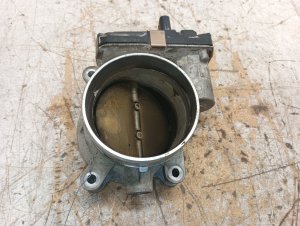
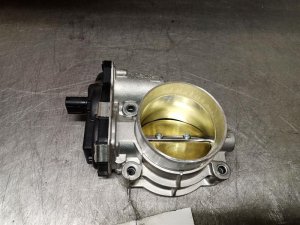
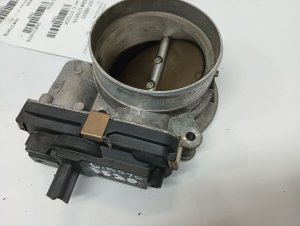
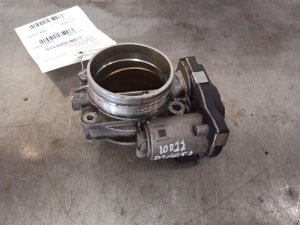
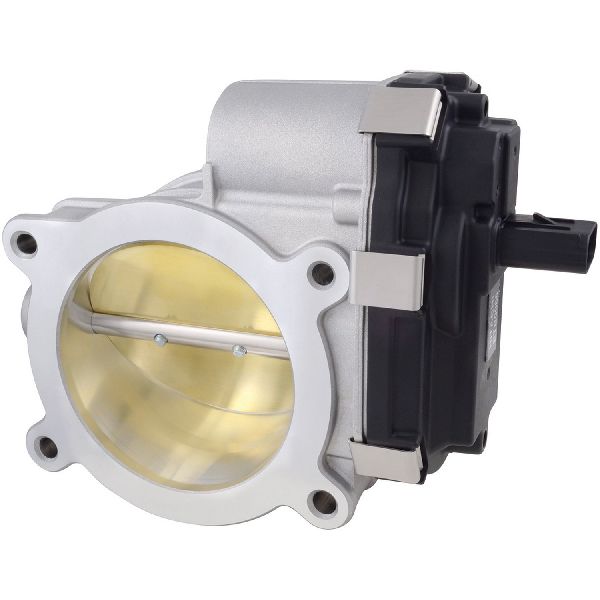
- Electronic Throttle Body Assembly
(OEM #12673449)— If the ECM software update does not resolve the issue, the internal motor or position sensor of the throttle body has likely failed, requiring replacement of the complete assembly.
Trusted brands: ACDelco (OEM), Dorman, Standard Motor Products
OEM price range: $180-$250
Aftermarket price range: $100-$180
Related Codes That Often Appear With This One
- P1516 — This is a GM-specific code for 'Throttle Actuator Control (TAC) Module Throttle Actuator Position Performance'. It is often set alongside P2101 as they both relate to the PCM's commands to the throttle body not matching the outcome.
- P2119 — This code indicates 'Throttle Actuator Control Throttle Body Range/Performance', pointing to an issue with the throttle plate's resting (closed) position, which can be caused by carbon buildup or a mechanical fault that also triggers P2101.
Technical Service Bulletins (TSBs) & Recalls
- 18-NA-037: Provides ECM reprogramming information to Correct DTC P2101.
- PIP5501B: Communicates that Vehicles may be setting DTC P2101 falsely due to the 'Driver Door Open Prime' feature.
- PIE0415: An engineering request for information from the field on vehicles setting DTC P2101.
Platform-Specific Known Issues
- GM issued Technical Service Bulletin #18-NA-037 specifically for 2017-2018 Sierra, Silverado, Tahoe, Yukon, and Escalade models to address a software anomaly that falsely sets DTC P2101. The fix is to reprogram the ECM.
- Preliminary Information bulletin #PIP5501B was released to inform technicians that the new 'Driver Door Open Prime' (DDOP) feature on 2017 K2XX trucks was the root cause of false P2101 codes, especially if the battery's state of charge was low.
- Engineering bulletin #PIE0415 shows that GM was actively investigating this specific issue on 2017 models as it was happening.
Mechanic-Grade Diagnostic Values
- Throttle Actuator Control (TAC) Motor Resistance — expected: 2 to 15 Ohms. Failure: A reading of less than 1 Ohm (short circuit) or an infinite/OL reading (open circuit) indicates a failed motor.
- Throttle Body Bolt Torque — expected: 89 in-lbs. Failure: Improper torque can lead to vacuum leaks or damage to the throttle body.
- System Voltage During Cranking — expected: Should remain above 11V. Failure: A significant voltage drop during cranking can trigger false electronic codes, including P2101.
Scan Tool Commands That Help
- GDS2 / Professional Scan Tool: Throttle Sweep / Actuator Test — This functional test is used after ruling out software issues. It commands the throttle plate through its full range of motion while graphing commanded vs. actual position to identify sticking, slow response, or electronic faults within the throttle body assembly.
- GDS2 / Professional Scan Tool: Idle Learn / Throttle Relearn — This procedure is required after cleaning or replacing the throttle body to reset the learned idle values in the ECM and prevent high idle or stalling issues.
Wiring & Ground Locations
- G101 — Located on the lower front of the engine block.. This is a primary ground point for the Engine Control Module (ECM). A poor connection here can cause erratic sensor readings, incorrect ECM calculations, and trigger false throttle-related codes.
- G102 / G103 — Located on the rear of the cylinder heads, near the firewall.. These are critical engine-to-chassis grounds. Corrosion or looseness can cause a host of electrical issues, including problems with sensor readings that rely on a stable ground reference from the ECM.
- Throttle Body Connector — The 6-pin electrical connector on the electronic throttle body assembly.. This is the direct connection point for the throttle motor and position sensors. It should be inspected for corrosion, pushed-out pins, or harness damage. Specific pinout testing should be done with reference to an official GM service manual.
Real Owner Repair Stories
- Reddit user Bright_Kaleidoscope5 (2017 Chevrolet Silverado 1500) — Intermittent no-start with a single click, 'ENGINE POWER IS REDUCED' message, and DTC P2101.
❌ Tried (didn't work) A local shop tested the battery and found it to be good., The dealer recommended a $250 software update as the first step, which did not solve the problem.
✅ What actually fixed it Replacing the starter motor. The failing starter was likely causing a significant voltage drop during attempted cranking, which in turn triggered the sensitive electronic throttle body to set a fault code. The final cost at the dealer was ~$900. - YouTube channel 'Pine Hollow Auto Diagnostics' (2017 Chevrolet Silverado 6.2L) — Check Engine Light, 'Reduced Engine Power' message, and DTC P2101.
❌ Tried (didn't work) Cleaning the throttle body., Checking for wiring issues visually.
✅ What actually fixed it Replacing the entire throttle body assembly. A bidirectional scan tool test (throttle sweep) confirmed the internal electric motor was faulty and not responding correctly to commands. This confirms that while software is a common cause, true hardware failure of the throttle body does occur on these trucks.
Helpful Videos


Used OEM Parts in Stock
New Aftermarket Parts Available



The information in this article is provided for general reference and educational purposes only. Vehicle specifications, procedures, and part compatibility can vary by production date, trim level, and region. Always consult your vehicle's factory service manual and verify part numbers before purchasing or performing repairs. Safety-critical components such as airbags, seat belts, and braking systems should be installed by a qualified professional.
- Gmc SIERRA:
- 🧭 Diagnostic Flowchart
- 🎬 Helpful Videos
- 🛍️ Shop This Part
- What's Unique About the 2017-2017 Gmc SIERRA
- Symptoms You May Notice
- Most Likely Causes
- Rare But Worth Checking
- Diagnosis Steps
- Parts You'll Likely Need
- Related Codes That Often Appear With This One
- Technical Service Bulletins (TSBs) & Recalls
- Platform-Specific Known Issues
- Mechanic-Grade Diagnostic Values
- Scan Tool Commands That Help
- Wiring & Ground Locations
- Real Owner Repair Stories
- 🎟️ Get 5% Off