

P2101 on 2017 GMC Yukon Denali: Throttle Control Fault Causes and Fixes
On a 2017 GMC Yukon Denali, code P2101 is often set falsely due to a software glitch related to a cold-start feature. Before replacing parts, check for TSB #PIP5501B and the superseding TSB #18-NA-037. If the throttle body is actually faulty, expect to pay $180-$250 for an OEM part.
- For a 2017 GMC Yukon Denali, P2101 is very often a false code caused by a software issue detailed in TSB #PIP5501B. Always investigate this first.
- Symptoms are serious and include 'Reduced Engine Power' mode, making the vehicle unsafe for normal driving.
- If the throttle body is actually faulty, the most common fix is to replace the entire assembly. Cleaning it is a good first step, but may not be a permanent solution.
- After cleaning or replacing the throttle body, an idle relearn procedure is required to ensure proper engine operation.
- Do not mistake this code for a bad gas pedal; P2101 points specifically to the throttle body circuit.
What's Unique About the 2017-2017 Gmc YUKON DENALI
For the 2017 model year, GM K2XX platform trucks and SUVs like the Yukon Denali introduced a feature called “Driver Door Open Prime” (DDOP) to improve cold starting. An engineering investigation by GM found that this feature could inadvertently trigger a false P2101 code, especially if the vehicle's battery had a low state of charge. This is a critical vehicle-specific issue to be aware of before assuming a hardware failure. A subsequent TSB (#18-NA-037) was released, calling for an ECM software update to correct this anomaly.
Diagnostic Flowchart
Tap your situation to follow the diagnostic path that matches what you're seeing on this vehicle.
Symptoms You May Notice
- Reduced Engine Power message on the dash 🎬 Watch: Troubleshooting reduced engine power and P2101 codes on GM trucks.
- Check Engine Light is on
- Traction Control or StabiliTrak light may illuminate
- Severely limited acceleration and engine power (limp mode)
- Vehicle may not accelerate past a certain speed or RPM
- Unstable or fluctuating idle
- No response from the throttle pedal
- In some cases, a no-start condition where the engine won't crank, accompanied by P2101.
- Replacing the Accelerator Pedal Position (APP) sensor. P2101 specifically points to a problem at the throttle body motor circuit, not the driver's pedal input. A faulty APP sensor would typically set a different code, such as P2135 or P2138.
Most Likely Causes
- False Code Due to Software Logic (DDOP Feature) 🔴 High Probability As documented in TSB #PIP5501B and later #18-NA-037, the 2017 model year introduced the 'Driver Door Open Prime' feature which can falsely set P2101, often when the battery is in a reduced state of charge. This is a known software anomaly.
How to confirm: Use a scan tool (like GDS2) to read the freeze frame data for the P2101 code. If the parameters match those listed in TSB #PIP5501B (e.g., Engine Speed 0 RPM, Power Mode OFF, Ignition 1 Signal ~11.9V), the code is a false positive. A dealer can also confirm if the software update from TSB #18-NA-037 has been applied.
Typical fix: Do not replace any parts. First, clear the code and ensure the battery is fully charged. If the code returns, the official fix is to have a GM dealer reprogram the ECM with the updated software specified in TSB #18-NA-037. A Reddit user with a 2017 Silverado confirmed the dealer charged them $250 for this software update as the first required step.
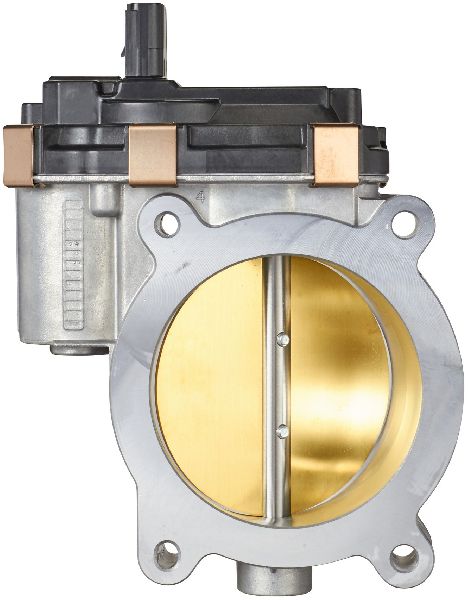
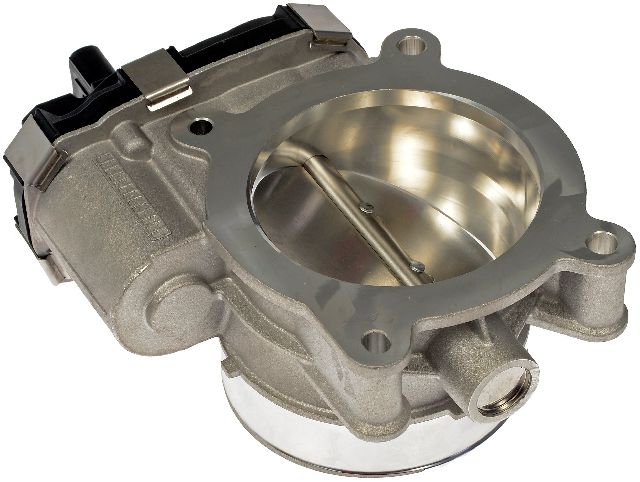
Est. part cost: $0 - Faulty Throttle Body Assembly 🟡 Medium Probability → Shop Fuel Injection Throttle Body The electronic motor and position sensors within the throttle body can wear out over time, leading to performance deviations that trigger the code. Carbon buildup can also cause the throttle plate to stick, impeding its movement.
How to confirm: With the engine off, remove the air intake tube and visually inspect the throttle bore for heavy carbon buildup. Use a scan tool to monitor commanded vs. actual throttle position; the values should track each other closely. A significant deviation or a throttle plate that visibly sticks, hesitates, or makes a vibrating/buzzing noise after shut-off points to a faulty unit.
Typical fix: First, try thoroughly cleaning the throttle body bore and plate with a dedicated throttle body cleaner and a soft microfiber cloth. 🎬 Watch: How to properly clean the throttle body to clear codes. If cleaning does not resolve the issue, the entire throttle body assembly must be replaced. After cleaning or replacement, a throttle relearn procedure is required.
Est. part cost: $180-$250 - Wiring or Connector Issue ⚪ Low Probability Engine vibration and heat can cause wires to fray or connectors to become loose or corroded over time, especially at the throttle body harness. This can cause intermittent voltage drops to the throttle motor.
How to confirm: Visually inspect the wiring harness and connector at the throttle body for any signs of damage, corrosion, or loose pins. Perform a 'wiggle test' on the harness with the engine running to see if it affects idle or triggers the code. Check for voltage drop at the motor connector compared to the PCM supply voltage; a drop over 0.5V is significant.
Typical fix: Repair the damaged section of wiring or replace the connector pigtail.
Est. part cost: $15-$50
Rare But Worth Checking
- Faulty Engine Control Module (ECM): → Shop Engine Control Module (ECM) This is very rare and should only be considered after all other possibilities, including the TSB, throttle body, and wiring, have been definitively ruled out.
- Failing Starter Motor: → Shop Starter Motor In a documented case on a similar platform truck, a failing starter motor caused a significant voltage drop during cranking, which in turn falsely triggered the P2101 code. This is an unusual but possible cause if the issue only occurs during startup.
Diagnosis Steps
- Check for Technical Service Bulletins (TSBs). The first step for this specific vehicle is to check for TSB #PIP5501B and the superseding TSB #18-NA-037, which indicates a software update is the likely fix.
- Analyze Freeze Frame Data. If a scan tool is available, compare the P2101 freeze frame data to the parameters in TSB #PIP5501B. If they match (Engine Speed 0 RPM, Power Mode OFF), the code is likely a false positive caused by the DDOP software anomaly.
- Verify Battery Health. Since the false code is often triggered by a low state of charge, test the battery and charging system to ensure they are operating correctly.
- Inspect the Throttle Body. If the TSB does not apply or the software is already updated, remove the air intake hose and inspect the throttle body for heavy carbon buildup.
- Clean the Throttle Body. Thoroughly clean the throttle plate and bore using throttle body cleaner and a soft rag. Do not force the plate open manually.
- Perform Throttle Relearn Procedure. After cleaning or replacement, a throttle idle learn procedure is necessary. This can often be done without a scan tool by idling the engine in Park for 3 minutes, turning the engine off for 60 seconds, and then idling again for 3 minutes.
- Test with a Scan Tool. If the code returns, use a scan tool to monitor commanded vs. actual throttle position. If they do not match or the plate movement is erratic, the throttle body is likely faulty.
- Inspect Wiring. If the throttle body appears to function correctly, inspect the connector and wiring harness between the ECM and the throttle body for any damage, corrosion, or loose terminals.
- Replace Throttle Body. If the throttle body is confirmed to be faulty, replace it with a new assembly. 🎬 See this step-by-step walkthrough for replacing the throttle body assembly.
- Consider ECM. If a new, known-good throttle body and verified wiring do not fix the issue, the ECM may be at fault, but this is highly unlikely.
Parts You'll Likely Need
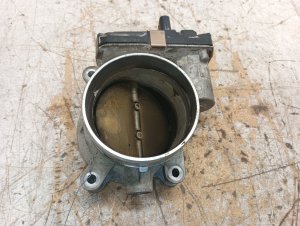
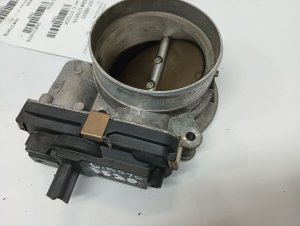
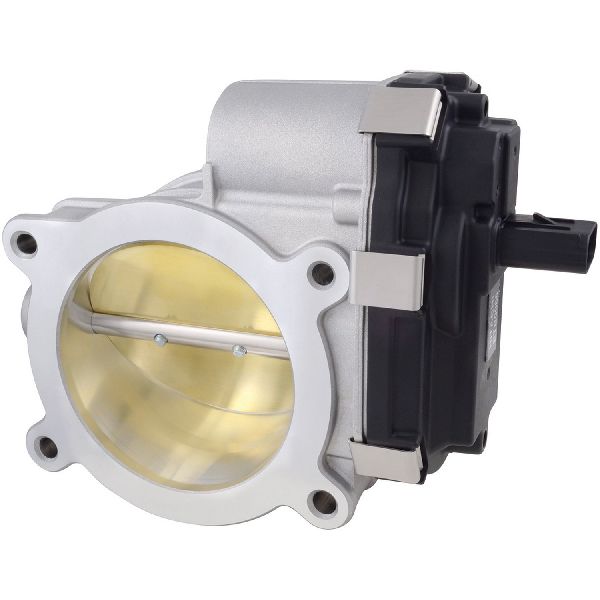
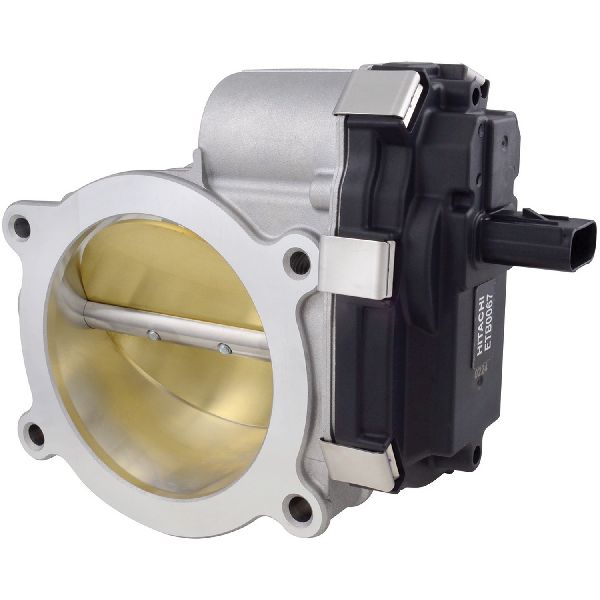
- Throttle Body Assembly
(OEM #12670839)— This is the most common hardware failure for P2101 after ruling out the software TSB. The internal motor or sensors fail, requiring replacement of the complete unit.
Trusted brands: ACDelco (GM Genuine Parts)
OEM price range: $180-$250
Aftermarket price range: $120-$180
Related Codes That Often Appear With This One
- P1516 — This is another GM-specific code for 'Throttle Actuator Control (TAC) Module Throttle Actuator Position Performance'. It is often set alongside P2101 as both relate to the ECM detecting a mismatch between the commanded and actual throttle positions.
- P2119 — This code indicates 'Throttle Closed Position Performance', suggesting the throttle plate is not returning to its proper closed or resting position, which can be a symptom of a binding or failing throttle body that also causes P2101.
- P2110 — This code, 'Throttle Actuator Control System - Forced Limited RPM', is often a companion to P2101. It signifies that the ECM has actively engaged the 'Reduced Engine Power' mode as a direct result of the fault detected by P2101.
Technical Service Bulletins (TSBs) & Recalls
- PIP5501B: Communicates that DTC P2101 may be set falsely on 2017 models due to the 'Driver Door Open Prime' (DDOP) feature, especially with a low battery. Advises against replacing parts if freeze frame data matches specific conditions.
- 18-NA-037: Supersedes PIP5501B. Acknowledges the same DDOP software anomaly and instructs technicians to reprogram the ECM with updated software as the official correction, rather than just clearing the code.
Platform-Specific Known Issues
- A primary issue for the 2017 Yukon is TSB #PIP5501B, which states that P2101 can be set falsely by the 'Driver Door Open Prime' (DDOP) feature, especially with a low battery.
- A superseding bulletin, TSB #18-NA-037, was later issued, providing a permanent fix via an ECM software reprogram to correct the anomaly. This should be the first check at a dealership.
Mechanic-Grade Diagnostic Values
- Throttle Body Connector Pinout (8-Pin) — expected: Pin A: TAC Motor Control-1 (Yellow), Pin B: Low Reference (Black/White), Pin C: TAC Motor Control-2 (Brown), Pin D: Low Reference (Black), Pin E: 5V Reference (Light Blue/Black), Pin F: TP Sensor 2 Signal (Purple), Pin G: TP Sensor 1 Signal (Dark Green), Pin H: 5V Reference (Grey).. Failure: Incorrect voltages, opens, or shorts on any of these pins when testing.
- Throttle Position Sensor (TPS) Signal Voltage — expected: Approximately 0.5V to 0.7V at idle (throttle closed) and smoothly increasing to around 4.5V at wide-open throttle (WOT).. Failure: Voltage that is jumpy, inconsistent, or outside the expected range as the throttle is manually opened indicates a faulty TPS.
- Throttle Actuator Control (TAC) Motor Resistance — expected: Generally between 2 and 10 ohms across the two motor control pins (Pins A and C).. Failure: A reading of infinite resistance (open) or very low resistance (short) indicates a failed motor.
Scan Tool Commands That Help
- GDS2 / Tech2: Throttle Position Control / Actuator Test — This bidirectional command allows a technician to command the throttle plate to specific angles (e.g., 10%, 25%, 50%) while observing the actual position PID. It is used to definitively confirm if the throttle motor is responding correctly, sticking, or lagging, which isolates the fault to the throttle body itself.
Wiring & Ground Locations
- Throttle Body Connector — The 8-pin electrical connector on the electronic throttle body assembly.. This is the central connection point for the throttle actuator motor and the dual throttle position sensors. All voltage and signal tests for the throttle body are performed here.
- G103 — Likely on the front of the passenger's side cylinder head.. This is a primary engine ground. A poor connection here can cause erratic voltage to engine sensors and actuators, including the throttle body, potentially leading to performance codes like P2101.
- G104 — Likely on the rear of the driver's side cylinder head, where a large ground strap connects to the firewall.. This is a critical ground path between the engine and the body/firewall. Corrosion or looseness is a known cause of intermittent 'Reduced Engine Power' messages and various electronic issues on GM trucks.
Real Owner Repair Stories
- YouTube channel 'Pine Hollow Auto Diagnostics' (2017 Chevrolet Silverado 6.2L) — Check Engine Light, Reduced Engine Power message, and DTC P2101.
❌ Tried (didn't work) The mechanic proceeded directly to component replacement after initial diagnosis.
✅ What actually fixed it The throttle body assembly was replaced. The mechanic also replaced an EVAP vent solenoid for other codes and cleaned the MAF sensor as part of the service, but the P2101 was resolved by the new throttle body.
OEM Part Supersession History
12627217, 12669073→12670839— GM regularly updates service parts to integrate new materials and technologies for improved reliability.
Helpful Videos

Used OEM Parts in Stock
New Aftermarket Parts Available


The information in this article is provided for general reference and educational purposes only. Vehicle specifications, procedures, and part compatibility can vary by production date, trim level, and region. Always consult your vehicle's factory service manual and verify part numbers before purchasing or performing repairs. Safety-critical components such as airbags, seat belts, and braking systems should be installed by a qualified professional.
- Gmc YUKON DENALI:
- 🧭 Diagnostic Flowchart
- 🎬 Helpful Videos
- 🛍️ Shop This Part
- What's Unique About the 2017-2017 Gmc YUKON DENALI
- Symptoms You May Notice
- Most Likely Causes
- Rare But Worth Checking
- Diagnosis Steps
- Parts You'll Likely Need
- Related Codes That Often Appear With This One
- Technical Service Bulletins (TSBs) & Recalls
- Platform-Specific Known Issues
- Mechanic-Grade Diagnostic Values
- Scan Tool Commands That Help
- Wiring & Ground Locations
- Real Owner Repair Stories
- OEM Part Supersession History
- 🎟️ Get 5% Off