

P2101 on 2017-2018 GMC Yukon XL: Throttle Actuator Fault Causes and Fixes
On a 2017-2018 GMC Yukon XL, code P2101 is most often caused by a software glitch that can be fixed with an ECM reprogram at a dealership. This issue is so common that GM issued a Technical Service Bulletin (TSB #18-NA-037) to address it. This should be your first step before replacing any parts, as many owners have confirmed the software update resolves the issue.
- For a 2017-2018 Yukon XL, your first step for a P2101 code should always be to check with a dealer if the ECM software update from TSB #18NA037 has been performed.
- Do not replace the throttle body or any other parts until you have confirmed the ECM software is up-to-date, as the code is often set falsely.
- If the software is current, the next most likely cause is carbon buildup, which can be fixed with a thorough cleaning and an idle relearn procedure.
- Driving with this code is not recommended as the vehicle will be in 'Reduced Engine Power' mode, making it dangerously slow in traffic.
What's Unique About the 2017-2018 Gmc YUKON XL
For this specific generation of GMC Yukon XL and its platform mates (Chevy Tahoe, Suburban, Silverado, Cadillac Escalade), the P2101 code is frequently a false positive. In 2017, GM introduced a 'Driver Door Open Prime' (DDOP) feature to improve cold starts by priming the fuel system when the driver's door opens. A software anomaly related to this feature can cause the ECM to run throttle diagnostics at the wrong time (e.g., during vehicle unlock) and falsely trigger the P2101 code, as detailed in manufacturer TSBs #PIP5501B and #18-NA-037. Because of this, the most common and manufacturer-recommended fix is not a part replacement, but a simple software update.
Diagnostic Flowchart
Tap your situation to follow the diagnostic path that matches what you're seeing on this vehicle.
Symptoms You May Notice
- Check Engine Light is on
- "Reduced Engine Power" message on the dashboard
- Vehicle is in "Limp Mode" with very limited acceleration
- Unstable or fixed idle speed
- Engine may stall
- Unresponsive or sluggish accelerator pedal
- Vehicle may fail to start, producing only a single click
- Replacing the Accelerator Pedal Position (APP) sensor. A faulty APP sensor typically sets different codes (like P2138) and is not the cause of a P2101, which specifically points to a performance issue at the throttle body motor circuit.
Most Likely Causes
- ECM Software Anomaly 🔴 High Probability A 'Driver Door Open Prime' (DDOP) feature introduced in 2017 can cause a software glitch that falsely sets DTC P2101, as documented in GM TSB #18-NA-037 and #PIP5501B. The TSB notes this can happen when the DDOP feature runs while the vehicle battery is in a reduced state of charge.
How to confirm: A GM dealership or a shop with access to GM's service information can check if the vehicle's ECM software is up-to-date and if TSB #18-NA-037 applies and has been performed. The TSB procedure specifically involves verifying P2101 is the only code set.
Typical fix: Reprogram the Engine Control Module (ECM) with the latest software. No parts are required for this repair. Owners on forums have reported paying dealers around $250 for this service, which resolved the code.
Est. part cost: $0 - Dirty or Sticking Throttle Body 🟡 Medium Probability → Shop Fuel Injection Throttle Body Over time, carbon and oil residue from the PCV system can build up inside the throttle body, preventing the throttle plate from moving smoothly. This binding can cause the motor's performance to fall out of the expected range.
How to confirm: Remove the air intake duct and visually inspect the throttle plate and bore for a thick black layer of carbon. The plate should move freely when commanded by a scan tool. A user on TahoeYukonForum reported this exact issue and fix on their Yukon.
Typical fix: Thoroughly clean the throttle body bore and plate with a dedicated throttle body cleaner and a soft cloth or brush. 🎬 See this step-by-step guide for cleaning your throttle body. An idle relearn procedure must be performed after cleaning.
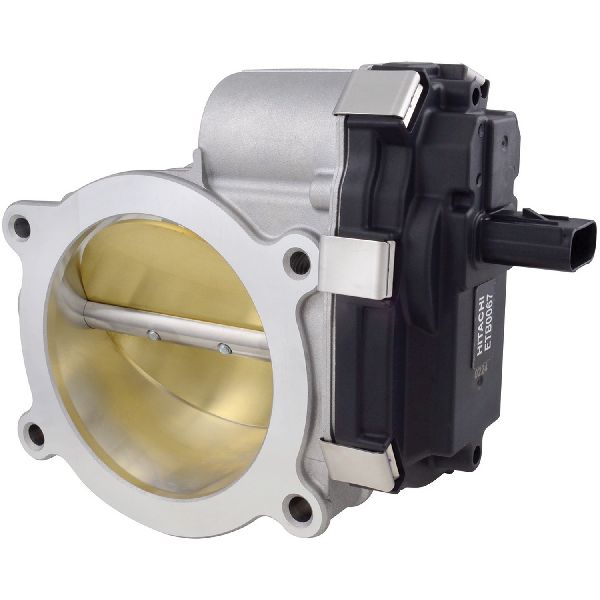
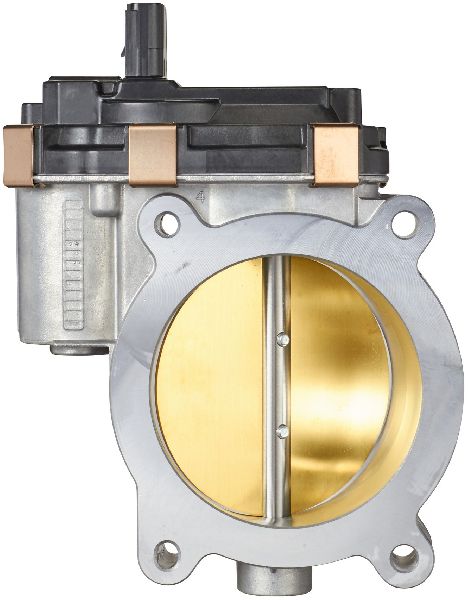
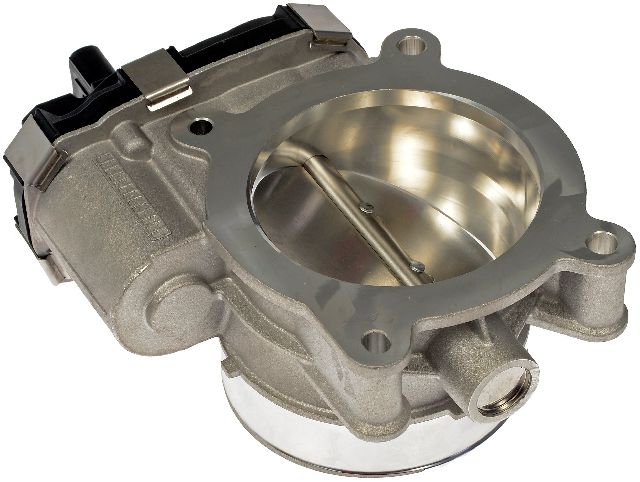
Est. part cost: $10-$20 - Faulty Throttle Body Assembly ⚪ Low Probability → Shop Fuel Injection Throttle Body If a software update and cleaning do not resolve the issue, the internal motor or position sensor within the throttle body assembly may have failed. This is an electronic failure that cleaning cannot fix.
How to confirm: Using a bidirectional scan tool, command the throttle to various positions and watch the live data for the throttle position sensor (TPS). If the actual position is erratic, lags significantly, or doesn't match the commanded position, the throttle body is likely faulty.
Typical fix: Replace the entire throttle body assembly. An idle relearn procedure is required after installation.
Est. part cost: $150-$450
Rare But Worth Checking
- Wiring Harness or Connector Issue: While less common, damage to the wiring between the ECM and the throttle body, or corrosion in the connector, can cause intermittent signal loss and trigger P2101. This should be investigated after the more common causes are ruled out.
- Poor Ground Connections: Corroded or loose engine and frame ground straps are a known issue on GM trucks that can cause a variety of electrical problems, including P2101. A user on a Yukon forum fixed their 'Reduced Engine Power' issue by cleaning the frame ground under the driver's side door and the ground on the firewall. 🎬 Watch: Solving the mystery of the Reduced Engine Power light.
Diagnosis Steps
- Check for Technical Service Bulletins (TSBs). The first step for this specific vehicle and code is to verify with a dealer if TSB #18-NA-037 (ECM Reprogram) has been performed. This is the most likely fix.
- If the software is up-to-date, scan for other DTCs. If P2101 is the only code present, proceed with physical inspection.
- Inspect the throttle body. Remove the air intake hose and check for heavy carbon buildup on the throttle plate and in the bore.
- Clean the throttle body thoroughly if it is dirty. Use appropriate throttle body cleaner and a soft cloth. Do not force the plate open manually.
- Perform an idle relearn procedure. This can be done with a capable scan tool or sometimes by a manual procedure (e.g., idle in Park for 3 minutes, turn off for 60 seconds, idle again for 3 minutes).
- If the code returns, inspect the wiring and connector at the throttle body for any signs of damage, corrosion, or loose pins. Pay special attention to the harness for chafing or heat damage.
- Check main engine/frame ground connections. On GM trucks, poor grounds are a known cause of intermittent electronic issues. Clean and tighten grounds on the frame (G104), firewall (G103), and engine block.
- Test the throttle body with a bidirectional scan tool. Command the throttle plate to different percentages and observe the actual position sensor data. If it fails to respond correctly, the throttle body assembly is the likely culprit.
- If all other steps fail, replace the throttle body assembly and perform the idle relearn procedure again.
Parts You'll Likely Need
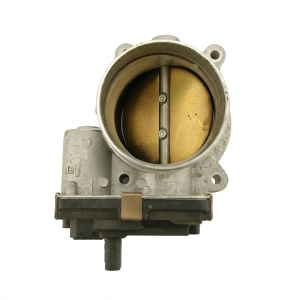
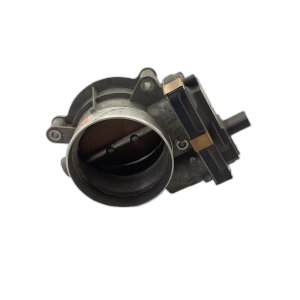
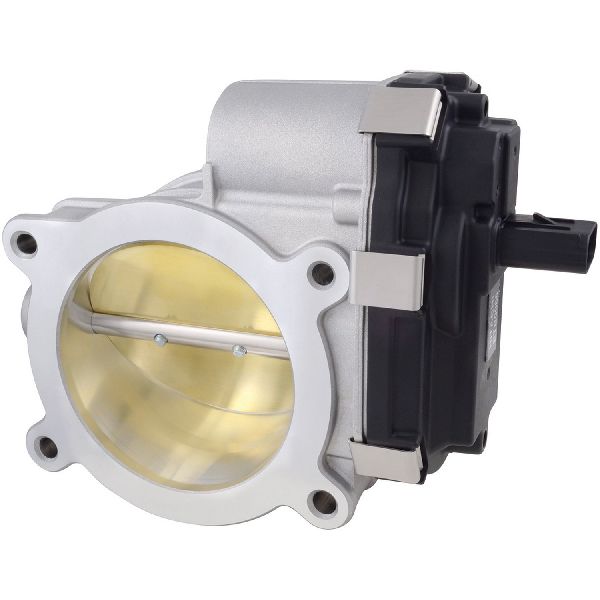
- Throttle Body Assembly
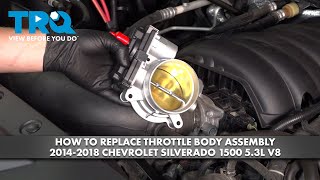
(OEM #12670839)— If an ECM reprogram and cleaning do not fix the issue, the internal motor or sensor has likely failed, requiring replacement of the entire assembly. Part number 12670839 is listed for many GM vehicles of this era, but always verify fitment with your VIN. 🎬 Watch: How to replace the throttle body assembly yourself.
Trusted brands: ACDelco, Bosch, Hitachi
OEM price range: $250-$450
Aftermarket price range: $150-$300
Related Codes That Often Appear With This One
- P1516 — This is another GM-specific code for 'Throttle Actuator Control (TAC) Module Throttle Actuator Position Performance.' It is often set alongside P2101 as they both relate to the ECM detecting a mismatch between the commanded and actual throttle position.
- P2119 — This code indicates 'Throttle Closed Position Performance,' suggesting the throttle plate isn't returning to its proper resting position, which can be caused by the same carbon buildup or mechanical binding that triggers P2101.
- P0507 — This code for 'Idle Air Control System RPM Higher Than Expected' can appear after a throttle body has been cleaned or replaced if the mandatory idle relearn procedure is not performed correctly.
Technical Service Bulletins (TSBs) & Recalls
- 18-NA-037: Provides information for an ECM reprogram to correct DTC P2101 being set falsely due to the DDOP feature. It instructs technicians to perform the update only if P2101 is the only code present.
- PIP5501B: Explains that the 'Driver Door Open Prime' (DDOP) feature introduced in 2017 can cause P2101 to be set falsely when an intermittent pulse on the ECM Run/Crank input occurs during the priming sequence.
- PIE0415: An engineering bulletin from 2017 requesting field information on vehicles setting DTC P2101, showing early manufacturer awareness of the problem.
Platform-Specific Known Issues
- A software anomaly related to the 'Driver Door Open Prime' (DDOP) feature, introduced in 2017, can cause the ECM to falsely set DTC P2101. GM issued TSB #18-NA-037 to correct this with an ECM software update.
- GM initiated an engineering investigation (PIE0415) in 2017 specifically to gather data on vehicles setting the P2101 code, indicating this was a known issue during the vehicle's launch.
- The TSB for the software fix also notes that this false code may be triggered when the vehicle's battery is in a reduced state of charge, which can be common on new dealer stock or if the radio has been used with the engine off.
Mechanic-Grade Diagnostic Values
- Throttle Actuator Control (TAC) Motor Resistance — expected: 2 to 15 Ohms. Failure: A reading below 1 Ohm (short) or an over-limit/infinite reading (open) indicates a failed motor.
- Throttle Position Sensor (TPS) Voltage Sweep — expected: A smooth transition from approximately 0.95V at closed throttle to ~4.6V at wide-open throttle.. Failure: Any jumps, drops, or dead spots in the voltage reading as the throttle plate is slowly opened indicates a faulty sensor.
- Voltage Drop Test on Power/Ground Wires — expected: Less than 0.5V drop between the source (ECM) and the throttle body connector.. Failure: A voltage drop greater than 0.5V points to high resistance in the wiring or a corroded connector.
- Throttle Body Connector Pinout (GM) — expected: Pin A (Yellow): TAC Motor Control -1; Pin C (Brown): TAC Motor Control -2; Pin E (Lt. Blue/Blk): 5V Reference; Pin F (Purple): TP Sensor 2 Signal; Pin G (Dk. Green): TP Sensor 1 Signal; Pin H (Grey): 5V Reference.. Failure: Incorrect voltages or lack of continuity on these specific pins helps isolate faults to the wiring, ECM, or throttle body.
Scan Tool Commands That Help
- GDS2 / Professional Scan Tool: Throttle Position Control / ETC Learn — To command the throttle plate from 0% to 100% while observing live data and listening for mechanical binding or motor noise, which indicates a physical fault in the throttle body.
- GDS2 / Professional Scan Tool: Idle Learn Reset — This function, found under 'Module Setup' or 'Special Functions,' must be performed after cleaning or replacing the throttle body to reset the ECM's learned idle values and prevent high idle or stalling issues.
Wiring & Ground Locations
- G103 — On the cowl in the left rear of the engine compartment, often above the brake booster.. This ground serves the Body Control Module (BCM) and the Data Link Connector (DLC). A poor connection here can cause a wide range of communication and electrical issues.
- G104 — On the passenger's side rear of the engine block/cylinder head.. This ground is critical for the Vehicle Control Module (VCM/ECM) and the fuel pump relay trigger. An intermittent connection can directly cause performance issues and trigger various codes, including P2101.
- Main Engine to Frame Ground — A braided strap typically running from the rear of the passenger side cylinder head to the frame.. This is a primary ground path for the engine's electrical system. Corrosion or looseness is a common issue on GM trucks and can cause intermittent and hard-to-diagnose electrical faults.
Real Owner Repair Stories
- Reddit user on r/Silverado (2017 Chevrolet Silverado 1500) — No crank, single click, 'ENGINE POWER IS REDUCED' message, code P2101. Battery tested good.
❌ Tried (didn't work) A local shop suspected the starter but was not confident.
✅ What actually fixed it The Chevrolet dealer's first required step was to perform the software update outlined in the TSB for P2101, which cost $250 in labor. This aligns perfectly with the manufacturer's recommendation being the primary fix. - YouTube video by 'Smart Auto Service' (2009 GMC Terrain (different vehicle, but demonstrates an edge-case diagnostic logic for P2101)) — Check engine light, no-rev condition, codes P2101, P2119, P0121.
❌ Tried (didn't work) Initial assumption was a bad throttle body based on codes.
✅ What actually fixed it Technician back-probed the TPS1 signal wire at the throttle body and measured a steady 4.2V. However, the scan tool's live data showed the voltage fluctuating wildly. This discrepancy proved the throttle body was sending a good signal but the Engine Control Module (ECM) was misinterpreting it. Replacing and reprogramming a used ECM resolved the issue.
"I Checked Everything" — The Actual Cause
- Code P2101 is an electronic control and performance code, not an EVAP or vacuum leak code. A smoke test is not a relevant diagnostic procedure for this specific fault.
OEM Part Supersession History
12627217, 12669073→12670839— GM regularly updates service parts to integrate new materials and technologies or address failure trends.
Model Year Variations Within This Range
- 2017+: The introduction of the 'Driver Door Open Prime' (DDOP) feature in 2017 is the specific change that created the conditions for the software glitch that falsely triggers P2101. This issue is addressed by TSB #18-NA-037 and is not applicable to earlier model years that lack this feature.
Helpful Videos

Used OEM Parts in Stock
New Aftermarket Parts Available


The information in this article is provided for general reference and educational purposes only. Vehicle specifications, procedures, and part compatibility can vary by production date, trim level, and region. Always consult your vehicle's factory service manual and verify part numbers before purchasing or performing repairs. Safety-critical components such as airbags, seat belts, and braking systems should be installed by a qualified professional.
- Gmc YUKON XL:
- 🧭 Diagnostic Flowchart
- 🎬 Helpful Videos
- 🛍️ Shop This Part
- What's Unique About the 2017-2018 Gmc YUKON XL
- Symptoms You May Notice
- Most Likely Causes
- Rare But Worth Checking
- Diagnosis Steps
- Parts You'll Likely Need
- Related Codes That Often Appear With This One
- Technical Service Bulletins (TSBs) & Recalls
- Platform-Specific Known Issues
- Mechanic-Grade Diagnostic Values
- Scan Tool Commands That Help
- Wiring & Ground Locations
- Real Owner Repair Stories
- "I Checked Everything" — The Actual Cause
- OEM Part Supersession History
- Model Year Variations Within This Range
- 🎟️ Get 5% Off