

P2101 on 2007-2011 Toyota Camry: Throttle Actuator Control Motor Fixes
This code means the electronic throttle body motor is failing or the throttle plate is stuck. The ECM has triggered 'limp mode' as a safety precaution. The most common fix is to replace the entire throttle body assembly, which costs around $200-$400 for the part. Cleaning heavy carbon buildup from the throttle plate is a valid first step, but if the internal motor is worn, replacement is the only long-term solution. A 'relearn' procedure is required after replacement.
- P2101 on a 2007-2011 Camry almost always points to a problem with the electronic throttle body.
- The vehicle will likely enter a 'limp mode' with severely reduced power, making it unsafe to drive.
- While cleaning a dirty throttle body can sometimes work, the most reliable, long-term fix is to replace the entire throttle body assembly.
- Check the wiring and connector to the throttle body for damage before buying expensive parts.
- This is a DIY-friendly repair for those with basic tools, with a difficulty of 2 out of 5.
What's Unique About the 2007-2011 Toyota Camry
The 2AZ-FE engine in this generation of Camry (the XV40) is known for having its electronic throttle body get dirty with carbon buildup. This buildup can restrict the movement of the throttle plate, causing the motor to work harder and eventually fail, triggering the P2101 code. While cleaning can sometimes help temporarily, the issue often points to a worn-out throttle body motor that requires full replacement. Toyota issued a technical service bulletin for the Camry Hybrid (which uses a variant of this engine) noting the release of an updated throttle body, suggesting an acknowledgment of potential issues with the original design.
Symptoms You May Notice
- Check Engine Light is on
- Vehicle enters 'limp mode' (drastically reduced power and speed)
- No throttle response or delayed acceleration
- Engine will not accelerate past a certain RPM (e.g., 2,000 RPM)
- Unstable or rough idle
- Engine may stall at stops
- Jerky or uneven acceleration as the motor struggles.
- Replacing the Accelerator Pedal Position (APP) Sensor. While the APP sensor is part of the electronic throttle system, it typically generates its own set of specific trouble codes (e.g., P0121). P2101 points directly to the motor/actuator side of the system, not the pedal sensor.
Most Likely Causes
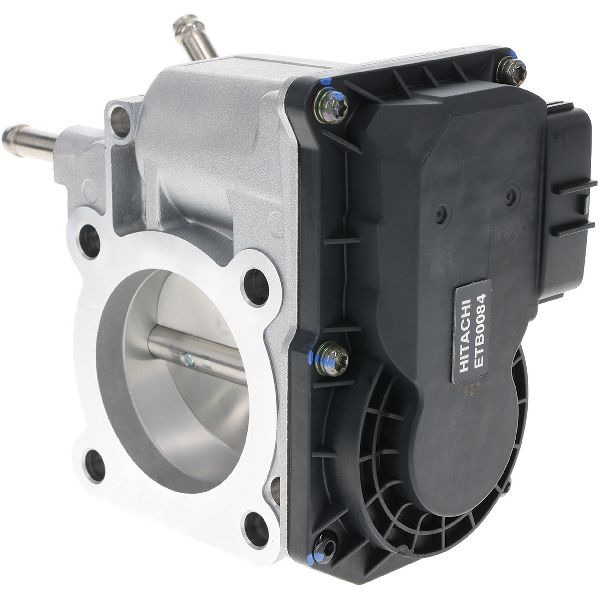
- Failing Throttle Body Assembly 🔴 High Probability → Shop Fuel Injection Throttle Body The internal electric motor wears out over time, and carbon buildup on the throttle plate can accelerate this wear by causing the motor to struggle. This is a very common failure point for the P2101 code.
How to confirm: Use a scan tool to monitor the desired vs. actual throttle position. A significant discrepancy points to the throttle body. You can also listen for unusual buzzing or clicking from the throttle body when the key is on. If cleaning does not resolve the issue, the motor is likely the culprit.
Typical fix: Replace the entire throttle body assembly. After replacement, a throttle body 'relearn' procedure must be performed to calibrate the new unit with the ECM.
Est. part cost: $180-$450 - Dirty Throttle Body 🟡 Medium Probability → Shop Fuel Injection Throttle Body The 2AZ-FE engine's PCV system can contribute to oil and carbon deposits inside the throttle body, restricting the movement of the throttle plate and causing it to bind.
How to confirm: Remove the air intake hose and visually inspect the throttle bore and plate for black carbon deposits. Check if the plate moves smoothly or sticks.
Typical fix: Clean the throttle body bore and plate thoroughly with a dedicated throttle body cleaner and a soft brush or rag. A relearn procedure may be necessary even after cleaning.
Est. part cost: $5-$15 - Wiring or Connector Issue ⚪ Low Probability Engine vibrations and heat can cause wires to fray or the connector at the throttle body to become loose or corroded over time. Pins can back out or lose tension.
How to confirm: Visually inspect the wiring harness leading to the throttle body for any signs of damage, chafing, or melting. Unplug the connector and check for corrosion (green tint) or bent/backed-out pins. Use a multimeter to check for proper voltage and ground at the connector according to the vehicle's wiring diagram.
Typical fix: Repair the damaged section of wiring or clean/replace the connector. Apply dielectric grease to the connector pins to prevent future corrosion.
Est. part cost: $10-$50
Rare But Worth Checking
- Faulty Engine Control Module (ECM): → Shop Engine Control Module (ECM) This is very rare. The ECM should only be considered after all other possibilities (throttle body, wiring) have been exhaustively tested and ruled out. An ECM failure can mimic a throttle body failure by sending incorrect signals or misinterpreting feedback.
Diagnosis Steps
- Scan the vehicle for all stored trouble codes. Note any other codes that appear alongside P2101.
- Visually inspect the wiring harness and connector going to the electronic throttle body. Look for any signs of damage, corrosion, or loose connections.
- Remove the air intake tube from the throttle body. Inspect the throttle plate and bore for heavy carbon buildup.
- If significant carbon is present, clean the throttle body thoroughly using throttle body cleaner and a soft cloth. Do not spray cleaner directly on the electrical components.
- After cleaning, perform a throttle body relearn procedure. Clear the codes and perform a test drive. If the code returns, the issue is likely the throttle body motor itself.
- With a capable scan tool, observe the live data for 'Desired Throttle Position' and 'Actual Throttle Position' while pressing the accelerator pedal (with the engine off, key on). If the actual position lags, jumps, or doesn't match the desired position, the throttle body is faulty.
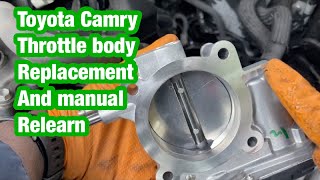
- If replacing the throttle body, a relearn/initialization procedure is mandatory. This can often be done without a scan tool by following a specific sequence of key cycles and idling periods.
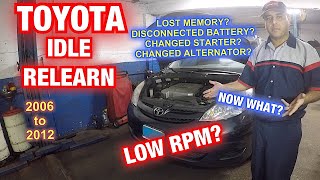
- A common manual relearn procedure: Warm up the engine, turn it off. Turn the key to 'ON' (without starting) for 10 seconds, then 'OFF' for 10 seconds. Start the engine and let it idle for several minutes to allow the ECM to adjust. 🎬 See: How to perform a Toyota idle relearn
- If the wiring and throttle body are confirmed to be good, the final and least likely step would be to test the ECM outputs, which is best left to a professional.
Parts You'll Likely Need
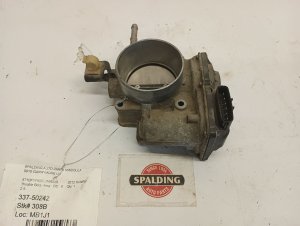
- Throttle Body Assembly
(OEM #22030-0H021)— This is the most common failure for code P2101. The assembly contains the throttle plate, position sensor, and the actuator motor, which is the typical point of failure. The original part number 22030-0H020 was superseded by 22030-28060, 22030-28061, and finally 22030-0H021. Other compatible numbers include 22030-28070 and 22030-0H040.
Trusted brands: Aisin (OEM supplier), Denso, Hitachi, TRQ
OEM price range: $350-$500
Aftermarket price range: $150-$300
Related Codes That Often Appear With This One
- P2111 — This code means 'Throttle Actuator Control System - Stuck Open' and often appears with P2101 when the throttle plate is physically jammed by carbon buildup.
- P2112 — This code means 'Throttle Actuator Control System - Stuck Closed' and can be triggered if the motor fails completely or the plate cannot open.
- P0505 — This code relates to the 'Idle Air Control System'. A malfunctioning throttle body can cause erratic idle, which may trigger this code as the ECM struggles to maintain the correct idle speed.
Technical Service Bulletins (TSBs) & Recalls
- A bulletin for the 2007-2011 Camry HV with the 2AZ-FE engine regarding an updated throttle body part (Vehicle Service Pros, May 20, 2019).
Platform-Specific Known Issues
- Toyota issued a technical service bulletin for the 2007-2011 Camry Hybrid (which uses the 2AZ-FXE, a variant of the 2AZ-FE) noting the release of an updated throttle body with housing, indicating a known issue with the original part.
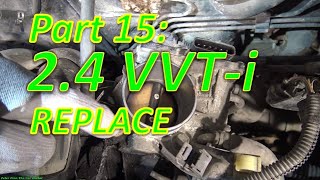
- A video guide by TRQ demonstrates the replacement on a 2007 Camry and emphasizes the need for the relearn procedure.
Mechanic-Grade Diagnostic Values
- Throttle Control Motor Resistance — expected: 0.3 to 100 Ω at 20°C (68°F). Failure: A reading outside this range indicates a faulty motor, requiring throttle body replacement.
- Throttle Position Sensor (TPS) Live Data — expected: Scan tool should show 'THROTTLE POS' at 60% or more when the throttle valve is fully open.. Failure: A value less than 60% at full open suggests a problem with the sensor or its adjustment.
- Throttle Actuator Duty Cycle (Live Data) — expected: 0% to 40% at idle for both 'THRTL MOT (OPN)' and 'THRTL MOT (CLS)' parameters.. Failure: Values significantly outside this range at idle can indicate the ECM is struggling to control the throttle plate position.
Scan Tool Commands That Help
- Toyota Techstream: Active Test: 'Control the Throttle Actuator' — This bidirectional command allows the technician to manually open and close the throttle plate using the scan tool. It's used to verify if the motor responds to commands, helping to isolate the problem between the ECM, wiring, and the throttle body itself.
- Toyota Techstream: Data List: 'THROTTLE POS' — Monitor this data parameter to see the throttle valve opening percentage in real-time. Comparing this to the 'Desired Throttle Position' helps confirm if the actuator is performing as commanded by the ECM.
Wiring & Ground Locations
- Throttle Body Connector (C5) — Directly on the electronic throttle body assembly, where the engine harness connects.. This is the primary connection point for power and signal to the throttle actuator motor and position sensor. Corrosion or loose pins here are a direct cause of P2101.
- Throttle Motor Pins (M+, M-) — Pins 1 (M-) and 2 (M+) on the 6-pin throttle body connector (C5).. These are the specific pins for the actuator motor. Resistance should be checked across these two pins to verify the health of the motor windings.
- ETCS Fuse — A 10A fuse located in the engine compartment fuse box.. This fuse supplies power to the Electronic Throttle Control System. A blown fuse will cut power to the throttle body, causing a P2101 code and a no-throttle-response condition.
- Engine Ground (EG) — On the left side of the cylinder head.. A poor ground connection at this point can cause erratic behavior and incorrect readings from various engine sensors, including the throttle body assembly, potentially leading to a P2101 code.
Model Year Variations Within This Range
- 2010-2011: For the 2010 model year, Toyota replaced the 2.4L 2AZ-FE engine with a new 2.5L 2AR-FE four-cylinder engine. This new engine produces more power (169 hp vs 158 hp) and is paired with a six-speed transmission instead of the previous five-speed. While the P2101 code can still occur, the throttle body part number and some diagnostic procedures may differ from the 2007-2009 models.
Diagnostic Flowchart
Other Known Issues on This Vehicle
Issues unrelated to this code that are worth knowing about as an owner of this generation:
- Excessive Oil Consumption 🔴 High — Very common in 2007-2009 models. Caused by a faulty piston and ring design. Can lead to engine failure if oil level is not monitored frequently. (Ref: Toyota TSB T-SB-0094-11 Rev2 and Warranty Enhancement Program ZE7 addressed this issue by replacing the piston assembly.)
- Stripped Cylinder Head Bolts 🔴 High — More common on earlier 2AZ-FE engines (pre-2007) but can still occur. Threads in the aluminum engine block pull out, causing head gasket failure and catastrophic coolant loss. (Ref: Toyota TSB EG015-07 and TSB 0015-11 describe the issue and repair, which involves installing thread inserts (e.g., Time-Serts).)
- Melting/Sticky Dashboard 🟡 Low — Common in vehicles exposed to high heat and sun. The dashboard material degrades, becoming shiny, sticky, and soft. (Ref: Toyota had a customer support program (ZLD) to replace dashboards, but it has since expired.)
- Water Pump Failure 🟠 Medium — The water pump may develop leaks over time, identifiable by pink/crusty residue near the passenger side of the engine and a faint coolant smell.
- Transmission Hesitation/Shudder 🟠 Medium — Some models with the automatic transmission may exhibit a hesitation or shudder, particularly during light acceleration or between shifts. (Ref: Software updates and a Limited Service Campaign were issued for some torque converter issues, but general hesitation can persist.)
Used vs. New Parts: Buying Guide for This Vehicle
When a used part is the smart pick: A used throttle body is generally not recommended for this repair. The primary failure mode is the internal electric motor wearing out over time. A used part from a junkyard carries a high risk of having significant wear already, offering only a short-term solution before the same P2101 code returns.
Donor-vehicle mileage cap: roughly under 50000 miles for the part to have meaningful remaining life.
What to inspect on the donor part:
- Verify the part number matches the required OEM number or a known compatible supersession.
- Inspect the connector pins for any signs of corrosion (green tint) or heat damage.
- Check the throttle plate for excessive carbon buildup, which may indicate a hard life.
- If possible, ask for the mileage of the donor vehicle; lower is always better.
Aftermarket brands forum-validated for this vehicle:
- Aisin (often the original OEM supplier)
- Denso
Brands owners have reported issues with on this vehicle:
- Unbranded, no-name parts from online marketplaces are a significant gamble and may have poor internal electronics, leading to premature failure.
Real Owner Stories
Aggregated from forums and TSBs cited above. Mileages and costs reflect what owners reported in those sources.
2007 Toyota Camry 2.4L 2AZ-FE
Symptoms: The vehicle went into limp mode with the Check Engine Light on. The owner experienced a lack of throttle response and the car would not accelerate properly.
What fixed it: Replacing the entire throttle body assembly and performing a relearn procedure as demonstrated in the TRQ guide.
Source hint: A video guide by TRQ demonstrates the replacement on a 2007 Camry
2007-2011 Toyota Camry 2AZ-FE
Symptoms: Experienced P2101 and the vehicle entered limp mode. The owner tried cleaning the throttle body, but the issue returned.
What fixed it: Full replacement of the throttle body assembly, as cleaning provided only a temporary fix.
Source hint: ToyotaNation Forums: Numerous owner threads describe experiencing P2101
Related OBD-II Codes
Frequently Asked Questions
Is there a TSB for the throttle body on my 2007-2011 Camry Hybrid?
Can I just clean the throttle body on my 2AZ-FE to fix the P2101 code?
Do I need a scan tool to perform the throttle body relearn on my 2007 Camry?
Why does my 2.4L Camry keep getting carbon buildup in the throttle body?
Is the P2101 code related to the excessive oil consumption TSB for the 2007-2009 Camry?
What is the estimated cost for a new throttle body for a 2010 Camry 2.4L?
Helpful Videos
Used OEM Parts in Stock
New Aftermarket Parts Available


The information in this article is provided for general reference and educational purposes only. Vehicle specifications, procedures, and part compatibility can vary by production date, trim level, and region. Always consult your vehicle's factory service manual and verify part numbers before purchasing or performing repairs. Safety-critical components such as airbags, seat belts, and braking systems should be installed by a qualified professional.
- Toyota Camry:
- 🧭 Diagnostic Flowchart
- 🎬 Helpful Videos
- 🛍️ Shop This Part
- What's Unique About the 2007-2011 Toyota Camry
- Symptoms You May Notice
- Most Likely Causes
- Rare But Worth Checking
- Diagnosis Steps
- Parts You'll Likely Need
- Related Codes That Often Appear With This One
- Technical Service Bulletins (TSBs) & Recalls
- Platform-Specific Known Issues
- Mechanic-Grade Diagnostic Values
- Scan Tool Commands That Help
- Wiring & Ground Locations
- Model Year Variations Within This Range
- Other Known Issues on This Vehicle
- Used vs. New Parts: Buying Guide for This Vehicle
- Real Owner Stories
- 2007 Toyota Camry 2.4L 2AZ-FE
- 2007-2011 Toyota Camry 2AZ-FE
- Related OBD-II Codes
- Frequently Asked Questions
- 🎟️ Get 5% Off