

OBD-II Code P2102: Throttle Actuator Control Motor Circuit Low
The Ultimate 2026 Guide to Diagnosing and Fixing P2102
- P2102 flags a 'Circuit Low' electrical fault, meaning a short to ground exists in the throttle actuator motor's wiring or the internal motor.
- Driving with P2102 is unsafe because the PCM instantly forces the vehicle into 'limp mode,' capping speeds at 5-20 mph to prevent unintended acceleration.
- Over 80% of P2102 cases stem from a chafed wiring harness shorting to the engine block or a failed internal DC motor within the throttle body assembly.
- Perform the 'unplug test' before buying parts: if unplugging the throttle body changes the code to P2100, the short is inside the throttle body; if P2102 remains, the wiring harness is shorted.
- Replacing the throttle body requires a mandatory OBD-II 'idle relearn' procedure to sync the new motor with the PCM and restore normal idle RPM.
What Does P2102 Mean?

P2102 means the Powertrain Control Module (PCM) detects a low voltage condition in the throttle actuator motor circuit. In 'drive-by-wire' systems, this motor opens and closes the throttle valve to regulate engine airflow based on gas pedal input. A 'Circuit Low' fault indicates an electrical short to ground prevents the motor from receiving operating voltage.
Technical definition: The official OBD-II definition for P2102 is 'Throttle Actuator 'A' Control Motor Circuit Low'. The PCM sets this code when voltage or current in the throttle actuator control circuit drops below a specified threshold for under 2 seconds. For example, Toyota systems trigger the code if the PCM commands the motor at an 80% duty cycle but measures less than 0.5 amps of current draw, indicating a severe circuit fault.
Can I Drive With P2102?
No — Do Not Drive. Driving with code P2102 is a severe safety risk. The PCM commands 'limp mode' instantly upon detecting this fault, causing a drastic loss of engine power and leaving you unable to accelerate in traffic. Your vehicle is limited to speeds of 5-20 mph, making highway driving dangerous. Ignoring the code leads to complete stalling or a stuck-open throttle, risking unintended acceleration.
Common Causes

- Damaged or Shorted Wiring/Connectors (Very Common) — This is the most frequent culprit. The wiring harness to the throttle body is exposed to intense engine heat and vibration, causing wires to chafe, melt, or fray and short circuit against the engine block. Connector pins also suffer from moisture corrosion or become loose, disrupting the electrical signal.
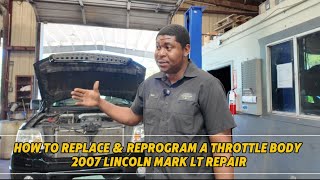
- Faulty Throttle Body Assembly (Internal Motor Failure) (Common) — The DC motor inside the throttle body wears out or develops an internal short circuit in its windings. In modern vehicles, this motor is integrated into the throttle body assembly; the entire unit must be replaced. 🎬 See this walkthrough on how to replace and reprogram a throttle body.
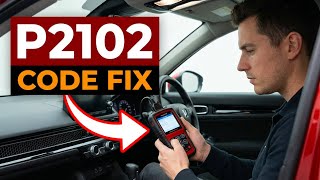
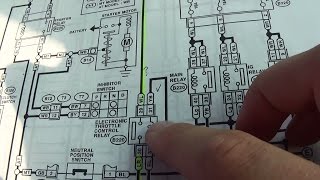
- Faulty Electronic Throttle Control (ETC) Relay (Less Common) — Certain vehicles, particularly Subaru models, utilize a dedicated relay to supply power to the electronic throttle system. This relay fails, corrodes, or shorts internally, preventing proper voltage from reaching the throttle motor. 🎬 Watch: How to diagnose and fix the P2102 circuit low code.
- Weak or Failing Battery/Charging System (Rare) — An underperforming alternator or a weak battery causes overall system voltage to drop. If voltage falls below 11.8V, the throttle actuator circuit fails to receive required power, triggering P2102.
- Poor Ground Connections (Rare) — A corroded or loose ground strap for the engine or PCM creates a voltage potential difference. The system relies on a stable ground reference; a poor ground forces the PCM to misinterpret throttle circuit voltage.
- Faulty Powertrain Control Module (PCM) (Very Rare) — The internal driver circuit that controls the throttle motor fails. Consider this only after exhaustively testing and ruling out wiring, connectors, relays, and the throttle body itself.
Symptoms

- Reduced Engine Power ('Limp Mode') & Dead Pedal — The PCM intentionally limits engine power to prevent unsafe conditions, resulting in a top speed of 5-10 MPH. Pressing the gas pedal produces zero change in engine RPM.
- Engine Stalls, Hesitates, or Idles Roughly — The engine stalls unexpectedly when stopping, hesitates violently during acceleration, or idles erratically (locked at 1000-1200 RPM) due to unmanaged airflow.
- Failure to Start — If the short circuit forces the throttle plate permanently closed, the engine starves for air and cranks without firing.
- Check Engine Light and/or Wrench Light On (also visible on scanner) — The Malfunction Indicator Lamp (MIL) illuminates instantly. Many vehicles display a wrench icon or a 'Reduced Power' dashboard warning.
Diagnostic Flowchart
Tap your situation to follow the diagnostic path that matches what you're seeing on this code.
Common Fixes & Costs
- Repairing Damaged Wiring or Connector — Parts: $10-$60, Labor: $150-$300, ~1.5 hr book time (Intermediate)
- Replacing the Throttle Body Assembly — Parts: $200-$600, Labor: $100-$250, ~1.2 hr book time (DIY)
- Replacing the ETC Relay — Parts: $20-$70, Labor: $50-$125, ~0.5 hr book time (Beginner)
- Replacing the Powertrain Control Module (PCM) — Parts: $800-$1500+, Labor: $150-$350, ~2 hr book time (Professional)
Used vs. New Parts: Buying Guide
When a used part is worth it: A used OEM throttle body from a low-mileage donor vehicle is a cost-effective option for older cars, and is vastly superior to cheap, non-OEM aftermarket parts.
Donor-vehicle mileage cap: roughly under 80000 miles for the part to have meaningful remaining life.
Donor quality checklist:
- Verify the donor vehicle wasn't scrapped for engine or electrical failure.
- Match the part number exactly.
- Inspect connector pins for any signs of green corrosion.
Decision logic:
- If Vehicle is less than 8 years old or has under 100,000 miles → Buy a new OEM or high-quality aftermarket (e.g., Hitachi, Bosch) part. The longevity justifies the cost.
- If Vehicle is over 10 years old or has over 150,000 miles → A used OEM part from a reputable salvage yard is the best financial choice. Avoid cheap Amazon/eBay aftermarket options.
- If The part is for a Ford or Nissan with a known high failure rate → Buy a new OEM part. Used units carry a massive risk of premature failure.
Warranty tradeoff: Used parts typically include a 30-90 day warranty. New aftermarket parts offer 1-year to limited lifetime warranties. New OEM parts carry a 1-2 year warranty.
Worst-case if a used part fails: $300-$500 if a cheap aftermarket part fails shortly after installation, requiring repeat labor and a second replacement part.
What Happens If You Wait — Timeline
- Immediate (First Occurrence): Check Engine Light illuminates. Vehicle enters 'limp mode' with zero throttle response. The fault is logged in the PCM as a hard code. (MPG impact: 0-5%% · Added cost: $100-$300 in immediate towing fees.)
- 0-1 month: Drivability is entirely unreliable. The car stalls at stops and hesitates violently. The driver loses all ability to accelerate safely in traffic. (MPG impact: 5-15%% · Added cost: $50-$150 in wasted fuel.)
- 1-6 months: Persistent incorrect air-fuel mixtures from an uncontrolled throttle force the catalytic converter to operate outside its temperature range, causing it to overheat and melt internally. (MPG impact: 10-20%% · Added cost: $1200-$2800 for catalytic converter replacement.)
- 6+ months: Constant electrical stress from the short circuit burns out the driver circuit within the Powertrain Control Module (PCM). The car becomes permanently immobilized. (MPG impact: 15-25%% · Added cost: $1000-$2000+ for PCM replacement and programming.)
Cost of Not Fixing It
- Immediate (0-1 month): Unpredictable 'limp mode' activation creates a severe safety hazard. Fuel economy drops 5-15% due to inefficient engine operation. (Added cost: $100-$300 in towing fees.)
- 1-6 months: Persistent incorrect air-fuel mixtures cause the catalytic converter to overheat and melt internally. (Added cost: $1200-$2800 for catalytic converter replacement.)
- 6+ months: Increased strain on the PCM's throttle driver circuit leads to complete module failure. (Added cost: $1000-$2000+ for PCM replacement and programming.)
Diagnosis Steps

- Scan for All DTCs and Review Freeze Frame Data
Use an OBD-II scanner to read all stored codes. Codes for the Throttle Position Sensor (P2135) provide critical diagnostic clues. Analyze freeze frame data to pinpoint engine speed, load, and system voltage when the P2102 fault triggered.
Tools: OBD-II Scanner (Beginner) - Pro Tip: The 'Unplug Test' to Isolate the Short
With the key on, unplug the throttle body connector. Clear the P2102 code and immediately rescan. If P2100 (Circuit Open) appears, the wiring is intact and the short is internal to the throttle body. If P2102 returns, the short is in the wiring harness between the PCM and the connector.
Tools: OBD-II Scanner (Intermediate) - Thorough Visual Inspection
Inspect the throttle body wiring harness for chafing against engine components, melted insulation near exhaust parts, and pinched wires. Unplug the connector and check for green corrosion or bent pins. Verify engine ground straps are tight.
Tools: Flashlight, Inspection Mirror (Beginner) - Measure Throttle Actuator Motor Resistance
With the throttle body unplugged, use a multimeter to measure resistance (Ohms) between the two motor pins on the throttle body. A typical healthy range is 0.3 to 100 Ω at 68°F. An infinite reading ('O.L.') indicates an open circuit; zero ohms indicates a dead short. Either confirms a faulty throttle body.
Tools: Digital Multimeter, Vehicle-specific repair manual (Advanced) - Test for a Short to Ground in the Harness
With the throttle body and PCM disconnected, set a multimeter to Ohms. Check for continuity between each motor control wire at the throttle body connector and a known good chassis ground. A low resistance reading confirms that wire is shorted to ground in the harness.
Tools: Digital Multimeter, Vehicle-specific wiring diagram (Advanced) - Check for Power and Ground at the Connector
Identify the power and ground pins for the throttle motor at the connector. With the key on, check for battery voltage at the power supply pin. Check for good ground by measuring continuity between the ground pin and the battery's negative terminal (should read under 0.1 ohms). No power indicates a blown fuse or bad ETC relay.
Tools: Digital Multimeter, Vehicle-specific wiring diagram (Intermediate) - Check Battery and Charging System Health
Verify the battery has a static charge of at least 12.4V with the engine off. With the engine running, confirm the alternator charges between 13.5V and 14.5V. Low system voltage triggers false P2102 codes.
Tools: Digital Multimeter (Beginner) - Analyze Live Data PIDs
Using a bidirectional scan tool, monitor 'Commanded Throttle Position' and 'Actual Throttle Position'. With P2102, the 'Actual' position fails to respond to the 'Commanded' position. Monitor 'Throttle Actuator Circuit Voltage', which reads near 0 volts, confirming the low circuit condition.
Tools: Advanced OBD-II Scanner with Live Data (Advanced) - Check for Technical Service Bulletins (TSBs)
Before replacing a PCM, check for TSBs related to P2102 for your specific vehicle. Manufacturers release bulletins for known wiring routing problems or software updates that save significant diagnostic time.
Tools: Online Repair Database Subscription or Search (Intermediate) - Analyze the Motor Control Signal with an Oscilloscope
Connect a lab scope to the two motor control wires. A healthy circuit shows a clean Pulse-Width Modulated (PWM) signal when the throttle is commanded to move. For P2102, expect a flat line near zero volts, confirming the circuit is shorted to ground.
Tools: Oscilloscope, Scan tool with bidirectional controls (Professional)
When This Code Triggers (Freeze-Frame Conditions)
- Engine Coolant Temp: 170-220°F (77-104°C) (Fully warmed up. The fault often appears after the engine reaches normal operating temperature and under-hood heat peaks.)
- RPM: 700-2500 RPM (During idle, light acceleration, or steady-state cruise when the PCM commands a throttle position change.)
- Engine Load: 15-40% (Low to moderate load conditions, consistent with city or light highway driving.)
- Vehicle Speed: 0-55 mph (Occurs at a standstill or during normal driving when the throttle actuator is commanded to move.)
Related Codes
- P2100 — P2100 means 'Throttle Actuator Control Motor Circuit/Open'. If you unplug the throttle body and P2102 changes to P2100, the short is inside the throttle body. If P2102 persists, the short is in the wiring harness.
- P2103 — P2103 is the direct opposite: 'Circuit High'. P2102 indicates a short to ground (low voltage), while P2103 indicates a short to a power source (high voltage).
- P2101 — P2101 means 'Range/Performance'. The PCM sees the motor circuit working, but the throttle plate's actual position doesn't match the commanded position, pointing to physical carbon buildup rather than an electrical short.
- P2111 / P2112 — These mean 'Stuck Open' (P2111) or 'Stuck Closed' (P2112). They are companion codes to P2102, indicating the physical result of the electrical failure.
Climate & Environmental Factors
- Cold Weather: Cold temperatures exacerbate issues with failing electronic components, particularly the ETC relay in Subaru models, which fails frequently on cold starts. Cold also causes wiring insulation to become brittle and crack.
- High Humidity / Road Salt: Living in humid climates or the 'Salt Belt' significantly increases corrosion rates. This destroys throttle body connector pins and critical engine ground points, leading to persistent 'Circuit Low' faults.
How to Talk to a Mechanic About This Code
Say this: "I have a P2102 code and the car is in limp mode. Since this is a circuit code, please have the technician specifically test the wiring harness for a short to ground before recommending a new throttle body."
This signals you understand the code's nature. It directs the shop to perform a proper electrical diagnosis, saving you hundreds if the expensive throttle body is not the actual problem.
Avoid saying:
- 'My car won't accelerate, just fix it.'
- 'The check engine light is on, can you just replace the throttle?'
- 'I read online it's the throttle body, please give me a quote to replace it.'
Questions to ask before authorizing the repair:
- Did you perform the 'unplug test'? Did the code change to P2100 or stay as P2102?
- If you're recommending a wiring repair, can you show me where the short or chafe is?
- If you're recommending a throttle body, what was the resistance reading across the motor pins?
- Does your estimate include the mandatory throttle relearn procedure?
Where to Take It: Dealer vs Independent vs Chain
- Dealer:
A safe but expensive option. Best for in-warranty repairs.
Best for: Vehicles still under powertrain warranty., Complex, manufacturer-specific issues (e.g., VW TDI intake flap)., When you want a guaranteed OEM part and procedure.
Downsides: Highest labor rates., May replace the entire throttle body assembly rather than diagnose a simpler wiring issue. (Typical cost: +50% vs. baseline) - Independent Shop:
Best fit. A good independent diagnostician correctly identifies if the fault is in the wiring or the component, saving you money.
Best for: Out-of-warranty vehicles where cost is a factor., Finding an ASE-certified technician who specializes in electrical diagnostics.
Downsides: Shop quality and diagnostic skill vary greatly. Vet shops based on reviews. (Typical cost: +0% vs. baseline) - Chain Shop:
AVOID for this code. The risk of misdiagnosis and being sold an unnecessary part is very high.
Best for: Simple maintenance like oil changes or tires.
Downsides: Technicians are rarely equipped for in-depth electrical diagnosis., High pressure to replace parts quickly leads to misdiagnosis. (Typical cost: -10% vs. baseline)
When to Walk Away From the Repair
If the estimated repair cost exceeds 40-50% of the car's private-party value, consider selling or trading it in.
- Car worth $4500, fix is $800: Fix it. The repair cost is well under the threshold and restores a critical function.
- Car worth $3000, fix is $1200: Borderline. At 40% of the car's value, get a second opinion and assess the car's overall health before proceeding.
- Car worth $2000, fix is $1500: Walk away. The repair costs 75% of the vehicle's value. It is not a sound investment.
What Scan Tool You Need for This Code
Minimum: A code reader that reads/clears codes and views live data PIDs for throttle position.
A basic $20 reader cannot perform the critical 'throttle relearn' procedure required after replacement, leaving your car running poorly. It also cannot perform active tests to command the throttle motor.
Budget: BlueDriver Pro or Ancel BD310 (~$100) — Reads/clears codes, displays freeze frame data, and graphs live data for commanded vs. actual throttle position. Enough to perform the 'unplug test', but will not perform the relearn.
Mid-range: Foxwell NT510 Elite or XTOOL D7 (~$200) — Adds crucial functionality: bidirectional control to actively test the throttle motor and the service function to perform the throttle body relearn after repair.
Professional: Autel MaxiCOM MK808 / MK906BT or Launch X431 Series (~$400-1200) — Provides full OE-level bidirectional control, all service and relearn functions, and faster processing. Allows a technician to command the throttle and watch its response in real-time.
Rent vs buy: Auto parts stores read codes for free, but their loaner tools are basic readers. They cannot perform the required relearn procedure. If you plan to do the repair yourself, you must buy a midrange scanner.
How to Clear the Code After You Fix It
- Reconnect the battery if disconnected.
- Use an OBD-II scan tool to formally clear all DTCs.
- Perform the vehicle-specific throttle body relearn procedure using a capable scan tool.
- Complete a full OBD-II drive cycle to reset readiness monitors.
Drive cycle (~30 minutes): Start cold. Idle for 3 minutes with A/C and defroster on. Accelerate to 55 MPH and hold steady for 5 minutes. Decelerate to 20 MPH without braking, then accelerate back to 55 MPH. Hold steady for 5 minutes. Decelerate to a stop.
Readiness monitors affected: Catalyst Monitor, Oxygen (O2) Sensor Monitor, Comprehensive Component Monitor
Before emissions retest: drive at least 100 miles to fully set monitors.
Watch out for:
- Disconnecting the battery clears the code but resets all readiness monitors to 'Not Ready', causing an automatic emissions failure.
- Failing to perform the throttle relearn procedure after replacement causes high idle, stalling, and immediate new trouble codes.
Will This Fail Emissions / State Inspection?
Yes — this code typically fails an OBD-II emissions inspection.
- California: An active P2102 code is an automatic failure. All applicable readiness monitors must be 'Ready'. After repair, a drive cycle of 50-100 miles is required before re-testing.
- New York: A vehicle fails the OBD-II inspection if the Check Engine Light is on for P2102. For 2001+ vehicles, only one non-continuous readiness monitor can be 'Not Ready'.
- Texas: In emissions-testing counties (Harris, Dallas, Travis), an illuminated Check Engine Light from P2102 causes an automatic failure.
Most Commonly Affected Vehicles
- Ford F-150, Fusion, Focus, Escape (2005-2016) — Extremely common due to faulty electronic throttle bodies. For the 2011-2014 F-150, this is a well-documented issue.
- Nissan Altima, Sentra, Rogue, Titan (2005-2017) — Frequently cited for P2102, pointing to either a failing throttle body or chafed wiring harnesses.
- Hyundai/Kia Elantra, Sonata, Optima, Sorento (2010-2020) — Multiple models are susceptible. The issue is almost always the internal motor of the throttle body assembly failing.
- Subaru Impreza, Legacy, Forester, Outback (2006-2014) — An intermittent P2102 on cold starts is frequently caused by a faulty Electronic Throttle Control (ETC) relay behind the glove box, not the throttle body.
- Chevrolet Cruze, Malibu, Equinox, Sonic (2011-2018) — Commonly seen on 1.4L and 1.8L engines. The cause is typically a faulty throttle body or chafed wiring near the engine block.
- Toyota Prius, Corolla, Camry (2010-2015) — The Gen 3 Prius ECM sets the fault when throttle motor current is less than 0.5A while commanded at an 80% duty cycle, pointing to an open circuit.
- Volkswagen/Audi Jetta, Passat, Golf, A4 (TDI) (2008-2019) — On diesel models, P2102 relates to the intake manifold flap failing electrically or jamming with carbon buildup.
- Dodge/Chrysler/Jeep Various models with ETC (2007-2017) — Appears across a wide range of vehicles, typically resolved by checking the throttle body and its wiring harness.
Manufacturer-Specific Notes
- Ford: Ford had widespread issues with electronic throttle bodies from 2009-2013, leading to Customer Satisfaction Program 13N03. While expired, it highlights the extreme prevalence of internal throttle body failures on these models.
- Subaru: On 2006-2014 models, an intermittent P2102 on cold starts is very often caused by a failing Electronic Throttle Control (ETC) relay, not the throttle body. The relay is located behind the glove compartment.
- Toyota: Toyota's ECM logic triggers P2102 if the throttle motor is commanded with a duty cycle of 80% or more, but measures a current of less than 0.5 amps. This points directly to an open circuit or high resistance fault.
- Volkswagen (TDI): In VW diesel engines, the component throwing P2102 is the 'intake manifold flap' or 'anti-shudder valve'. It is prone to failure from both internal electrical faults and heavy carbon buildup from the EGR system.
Real Owner Stories
2007 Subaru Impreza 2.5i - The Misdiagnosis
Owner retrieved the car from a dealership after an airbag wiring repair. Upon pickup, the car had no throttle response and a new P2102 code.
What they tried:
- Replaced the ETC relay and performed an idle relearn procedure with no success.
- Disconnected the Throttle Position Sensor (TPS), triggering a new code and ruling out the TPS.
- Re-inspected the dealer's wiring fix and found frayed wires shorting against the chassis.
Outcome: The P2102 code remained until the owner properly spliced and heat-shrunk the damaged wire section, proving the dealership's hasty tape job caused a lasting short to ground.
Lesson: If P2102 appears immediately after a repair, the recent work is the cause. A simple visual 'fix' like taping a chafed wire is insufficient for sensitive 5V/12V reference circuits.
2003 Toyota Camry V6 (150k miles) - The Parts-Changer's Dilemma
The car intermittently entered limp mode with a stuck throttle and set the P2102 code.
What they tried:
- Replaced the entire throttle body assembly and throttle position sensor.
Outcome: The intermittent stuck throttle and P2102 code returned within a week, proving the root cause was a wiring harness short, not the throttle body itself.
Lesson: Never assume the component named in the code is the faulty part. P2102 is a circuit code. Always diagnose the wiring harness for shorts to ground before replacing a $400 throttle body.
2020 Subaru WRX - The Simple Reset
After a 5-day vacation, the owner jump-started a completely dead battery. The car ran fine, but the scanner showed a hard P2102 code.
What they tried:
- Cleared the code using an AccessPort scanner and reset the ECU.
Outcome: The code never returned. The extreme low-voltage event during the dead battery and jump-start triggered a false circuit low fault.
Lesson: A dead battery or jump-start causes sensitive modules to set spurious fault codes. If P2102 appears directly after a voltage drop with no drivability symptoms, clear the code first.
How to Prevent This Code From Triggering
- Inspect and secure the throttle body wiring harness (During any under-hood maintenance (e.g., oil change)) — The primary cause of P2102 is a wiring harness vibrating and chafing against a hot or sharp engine component. Securing the harness in its factory clips prevents shorts.
- Clean engine ground connections (Every 30,000 miles or 2 years) — Corroded main engine grounds cause unstable voltage across the electrical system, forcing the throttle controller to malfunction. Cleaning connections to bare metal ensures a stable ground reference.
- Install protective heat-resistant loom on vulnerable wiring (Once, as a proactive upgrade) — For harnesses routed near exhaust manifolds, adding a fiberglass split loom provides a thermal barrier, preventing insulation from melting and shorting out.
Frequently Asked Questions
What is the most common misdiagnosis for a P2102 code?
The most common mistake is replacing the expensive throttle body assembly without performing the 'unplug test' or checking the wiring harness. A simple chafed wire is often the actual problem. Replacing the throttle body will not fix a shorted wire.
Can I just clean the throttle body to fix P2102?
No. P2102 is an electrical circuit fault indicating a short or open wire. While cleaning fixes performance issues like carbon buildup (code P2101), it cannot repair a shorted wire or a failed internal motor.
Do I need to perform a 'relearn' procedure after replacing the throttle body?
Yes. Most modern vehicles require a throttle body relearn procedure after replacement. This syncs the PCM to the new throttle's precise positions, preventing high idle, stalling, or immediate drivability problems.
How much does it cost to fix code P2102 in 2026?
Repair costs range from $150 for a simple wiring fix to $900 for a full throttle body replacement. Replacing a faulty relay costs $75-$200. For example, a 2018 Ford F-150 throttle body replacement averages $600-$700.
Can a weak battery cause a P2102 code?
Yes. The electronic throttle control system is highly sensitive to voltage. A weak battery or failing alternator causes low system voltage, inadvertently triggering a false P2102 code.
What is the difference between P2102 and P2135?
P2102 points to a problem in the motor circuit that physically moves the throttle plate. P2135 points to a problem with the sensors that report the throttle plate's position back to the PCM.
Can I bypass 'limp mode' to get home?
Turning the car off, waiting a few minutes, and restarting temporarily resets the computer. However, if the hard short circuit is still present, the car re-enters limp mode immediately. This is not a fix.
Key Takeaways
- P2102 flags a 'Circuit Low' electrical fault, meaning a short to ground exists in the throttle actuator motor's wiring or the internal motor.
- Driving with P2102 is unsafe because the PCM instantly forces the vehicle into 'limp mode,' capping speeds at 5-20 mph to prevent unintended acceleration.
- Over 80% of P2102 cases stem from a chafed wiring harness shorting to the engine block or a failed internal DC motor within the throttle body assembly.
- Perform the 'unplug test' before buying parts: if unplugging the throttle body changes the code to P2100, the short is inside the throttle body; if P2102 remains, the wiring harness is shorted.
- Replacing the throttle body requires a mandatory OBD-II 'idle relearn' procedure to sync the new motor with the PCM and restore normal idle RPM.
Helpful Videos

Shop the Parts Behind P2102
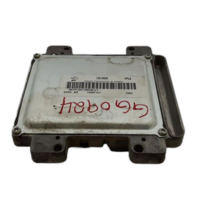
Below are the parts most often responsible for code P2102, ranked by how frequently each one is the actual culprit (per the diagnosis above). Tap any to see what we have for your vehicle.


The information in this article is provided for general reference and educational purposes only. Vehicle specifications, procedures, and part compatibility can vary by production date, trim level, and region. Always consult your vehicle's factory service manual and verify part numbers before purchasing or performing repairs. Safety-critical components such as airbags, seat belts, and braking systems should be installed by a qualified professional.
- 🧭 Diagnostic Flowchart
- 🎬 Helpful Videos
- 🛍️ Shop This Part
- What Does P2102 Mean?
- Can I Drive With P2102?
- Common Causes
- Symptoms
- Common Fixes & Costs
- Used vs. New Parts: Buying Guide
- What Happens If You Wait — Timeline
- Cost of Not Fixing It
- Diagnosis Steps
- When This Code Triggers (Freeze-Frame Conditions)
- Related Codes
- Climate & Environmental Factors
- How to Talk to a Mechanic About This Code
- Where to Take It: Dealer vs Independent vs Chain
- When to Walk Away From the Repair
- What Scan Tool You Need for This Code
- How to Clear the Code After You Fix It
- Will This Fail Emissions / State Inspection?
- Most Commonly Affected Vehicles
- Manufacturer-Specific Notes
- Real Owner Stories
- 2007 Subaru Impreza 2.5i - The Misdiagnosis
- 2003 Toyota Camry V6 (150k miles) - The Parts-Changer's Dilemma
- 2020 Subaru WRX - The Simple Reset
- How to Prevent This Code From Triggering
- Frequently Asked Questions
- What is the most common misdiagnosis for a P2102 code?
- Can I just clean the throttle body to fix P2102?
- Do I need to perform a 'relearn' procedure after replacing the throttle body?
- How much does it cost to fix code P2102 in 2026?
- Can a weak battery cause a P2102 code?
- What is the difference between P2102 and P2135?
- Can I bypass 'limp mode' to get home?
- Key Takeaways
- 🎟️ Get 5% Off