

P2107 on 2022 Jeep Gladiator: Throttle Control Module Processor Fault Guide
On a 2022 Jeep Gladiator with the 3.6L V6, code P2107 is most often caused by a software glitch in the Powertrain Control Module (PCM). The primary and manufacturer-recommended fix is a PCM software update performed by a Jeep dealer, as outlined in Technical Service Bulletin #18-071-22 REV. C. This TSB was also released as Rapid Service Update (RSU) 22-231.
- For a 2022 Jeep Gladiator, P2107 almost always points to a known software issue, not a bad part.
- The correct first step is to have a Jeep dealer check for and apply any available PCM software updates, per TSB #18-071-22 REV. C.
- Do not replace the throttle body unless the PCM software update has been performed and the issue persists.
- This code is critical and makes the vehicle unsafe to drive; it should be addressed immediately.
- A weak battery or bad ground can also trigger this code, so check the electrical system's health as a secondary step.
What's Unique About the 2022-2022 Jeep GLADIATOR
For the 2022 Jeep Gladiator with the 3.6L V6 engine, this code is the subject of multiple manufacturer-issued Technical Service Bulletins (TSBs). Unlike on many other vehicles where P2107 might lead a mechanic to replace the throttle body, on this specific platform, the TSBs strongly indicate the root cause is a software issue within the PCM. This known issue can cause P2107 to appear alongside a cluster of other seemingly unrelated codes, such as those for O2 sensors, which is a key indicator of the software bug.
Diagnostic Flowchart
Tap your situation to follow the diagnostic path that matches what you're seeing on this vehicle.
Symptoms You May Notice
- Sudden loss of engine power (limp mode)
- Check Engine Light illuminated
- Flashing Electronic Throttle Control (ETC) warning light (a red lightning bolt symbol)
- Unresponsive or sluggish accelerator pedal
- Vehicle may stall or not start
- Error messages for traction control or auto start/stop may appear simultaneously
- Rough or unstable idle
- Replacing the throttle body assembly. While a throttle body can cause many throttle-related codes, for the 2022 Gladiator, the TSBs point directly to the PCM software as the primary culprit. Replacing the throttle body without first checking for software updates is a common and expensive mistake that will not resolve the issue.
Most Likely Causes
- Powertrain Control Module (PCM) Software Requires Update 🔴 High Probability → Shop Engine Control Module (ECM) Manufacturer TSB #18-071-22 REV. C specifically calls out this code as being resolved by a PCM reflash for the 2022 Gladiator with the 3.6L engine. The TSB has also been released as a Rapid Service Update (RSU) 22-231, indicating its importance.
How to confirm: A Jeep dealership or a qualified shop with access to the DealerCONNECT/Service Library portal can check if the vehicle's VIN is covered by TSB #18-071-22 REV. C or RSU 22-231. The presence of other codes listed in the TSB (like P0138, P0152, P0158, P2100) strongly confirms the software issue.
Typical fix: Reprogramming the PCM with the latest available software using a wiTECH 2 scan tool. This is a warranty-covered repair.
Est. part cost: $0-$250 - Low Battery Voltage or Poor Ground Connection 🟡 Medium Probability → Shop Vehicle Battery The Gladiator/Wrangler platform uses a dual-battery system (main and auxiliary) for the Engine Stop-Start (ESS) feature. These complex electronics are highly sensitive to voltage drops. A failing battery or a poor ground connection at the fender studs can cause transient voltage issues, leading the PCM to fail a self-test and set a P2107 code. Forum users frequently report that disconnecting the negative terminal on both batteries is required to fully reset the system, highlighting the complexity.
How to confirm: Test the battery voltage during engine cranking. A drop below 10-11 volts can indicate a weak battery. Visually inspect all main battery terminals and the body ground studs on the passenger-side fender for tightness and corrosion. A high-resistance ground can also be a cause; resistance between the sensor ground circuit and the negative battery post should be less than 1 ohm.
Typical fix: Replace a weak main or auxiliary battery, repair the charging system, or clean and tighten all ground connections. Some owners have had to relocate ground wires for accessories to resolve issues.
Est. part cost: $5-$500 - Faulty Powertrain Control Module (PCM) ⚪ Low Probability → Shop Engine Control Module (ECM) While less common than a software issue, the processor within the PCM can fail permanently. Given the known software issues, a hardware failure is less likely but remains a possibility if a reflash does not solve the problem.
How to confirm: This is a diagnosis of exclusion. If the PCM software update (TSB #18-071-22 REV. C) has been performed and all battery/wiring/ground checks pass, but the code persists or returns immediately after clearing, the PCM itself is likely faulty.
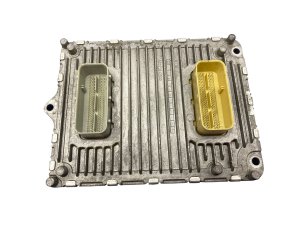
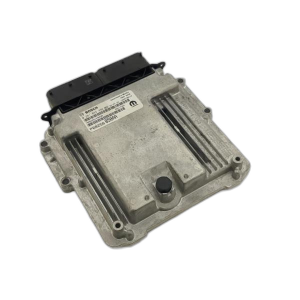
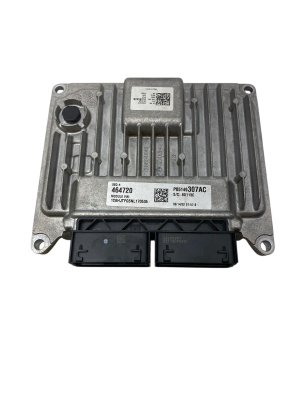
Typical fix: Replacement and programming of the PCM. The Mopar part number for the 3.6L Gas engine is 68434927AC, which supersedes previous versions.
Est. part cost: $250-$1500
Rare But Worth Checking
- Faulty Throttle Body Assembly: → Shop Fuel Injection Throttle Body While the code points to the PCM processor, it's theoretically possible that an internal short or failure in the throttle body's electronics sends an electrical spike or corrupt data back to the PCM, causing the processor fault. This should be considered only after addressing the much more common PCM software and voltage issues.
- Wiring Harness Issue: An open or short in the wiring between the PCM and the throttle body could cause erratic signals that the PCM interprets as an internal fault. In one documented case on a related platform, a wiring harness melted near the exhaust, causing chafed wires that led to multiple codes and limp mode.
Diagnosis Steps
- Check for applicable TSBs. For a 2022 Gladiator, specifically look for TSB #18-071-22 REV. C or RSU 22-231 by providing the VIN to a Jeep dealer.
- If a TSB applies, have a Jeep dealer perform the PCM software update. This is the most likely fix and should be covered under warranty.
- If no TSB applies or the code returns, fully test the vehicle's dual-battery system. Ensure voltage stays above 11V during cranking and check the health of both the main and auxiliary batteries.
- Inspect and clean all battery terminals and major ground straps. Pay close attention to the ground studs on the passenger-side fender well, as they are a known point of issue for accessories. Also check ground points in the passenger kick panel and on the frame above the spare tire.
- Visually inspect the wiring harness and connectors between the PCM and the throttle body for any signs of damage, corrosion, or looseness. Check for any melting or chafing near exhaust components.
- If all the above steps fail to resolve the issue, the PCM is the most likely failed component and may require replacement. Ensure the replacement is programmed correctly for the vehicle's VIN and options.
Parts You'll Likely Need
- Powertrain Control Module (PCM) Reprogramming
(OEM #N/A (Software))— This is not a physical part, but a software update. It is the most common and manufacturer-documented fix via TSB #18-071-22 REV. C for this specific vehicle and code.
OEM price range: $0 (under warranty) - $250
Aftermarket price range: N/A - Powertrain Control Module (PCM)
(OEM #68434927AC (supersedes 68434927AB, 68434927AA))— If a software update does not fix the issue and wiring/grounds are good, the PCM hardware itself has likely failed and requires replacement. This part is shared with the Jeep Wrangler (JL).
Trusted brands: Mopar
OEM price range: $250-$500
Aftermarket price range: $200-$400 (reprogrammed)
Related Codes That Often Appear With This One
- P2100 - Electronic Throttle Control Motor Circuit — This code is explicitly listed in the same TSBs (#18-071-22) as P2107. Its appearance strongly reinforces that the root cause is a system-wide software glitch affecting the entire throttle control system.
- P0132, P0138, P0152, P0158 - O2 Sensor Circuit Codes — These O2 sensor circuit high codes are also mentioned in TSB #18-071-22 REV. C. Their presence alongside a throttle processor code is a definitive indicator of the specific PCM software problem this TSB addresses, as they are functionally unrelated systems.
- Multiple unrelated electrical codes (U-codes, C-codes) — In cases caused by low voltage or bad grounds, it's common to see a cascade of communication (U-codes) and chassis (C-codes) faults along with P2107. This indicates a systemic electrical issue rather than a single component failure.
Technical Service Bulletins (TSBs) & Recalls
- 18-071-22 REV. C: 'Flash: Powertrain Control Module (PCM) Updates' - Dated Dec 1, 2022. Addresses P2107, P2100, and several O2 sensor codes, recommending a PCM software update. Also released as RSU 22-231.
Platform-Specific Known Issues
- The 2022 Jeep Gladiator with the 3.6L V6 engine is subject to Technical Service Bulletin #18-071-22 REV. C, which states that a PCM software update is required to fix an issue that can cause P2107 and other DTCs to set. This TSB was also issued as a Rapid Service Update (RSU 22-231), highlighting its priority.
- The dual-battery system and numerous body ground points in the engine bay can create complex electrical issues if a battery is weak or a ground is loose, often triggering seemingly unrelated processor faults like P2107.
Mechanic-Grade Diagnostic Values
- Throttle Position Sensor (TPS) Signal Voltage — expected: Approximately 0.5V - 0.7V at idle (throttle closed), smoothly increasing to 4.5V - 5.0V at wide-open throttle.. Failure: Voltage that is jumpy, does not sweep smoothly, or is outside the expected range.
- Accelerator Pedal Position (APP) Sensor Supply Voltage — expected: Approximately 5.0V at the harness connector with the key on, engine off.. Failure: No voltage or significantly lower voltage indicates a wiring issue between the PCM and the sensor.
- Sensor Ground Circuit Resistance — expected: Less than 1.0 ohm between the sensor's ground pin and the negative battery terminal.. Failure: Resistance higher than 1.0 ohm (e.g., 1.9 ohms) indicates a poor ground, which can cause erratic sensor behavior.
Scan Tool Commands That Help
- wiTECH 2 or equivalent factory-level scan tool: ETC Throttle Follower Test — After servicing or replacing the throttle body, accelerator pedal, or related sensors to verify the throttle plate correctly follows PCM commands and to recalibrate the system. The engine must be running to perform this test.
Wiring & Ground Locations
- Engine Bay Ground Studs — On the passenger-side fender well, near the main and auxiliary batteries.. These are common attachment points for aftermarket accessories. A loose or corroded connection here can introduce electrical noise and voltage drops, triggering PCM processor faults like P2107.
- Passenger Kick Panel Grounds — Inside the cabin, in the passenger-side footwell area behind the kick panel. One of the three ground points is often unused from the factory.. Provides a critical grounding point for various interior electronic modules. A fault here can cause widespread electrical issues.
- Rear Frame Grounds — On the frame rails, located above the spare tire. One on each side.. Important for grounding components at the rear of the vehicle. While less likely to be a direct cause for P2107, ensuring all major grounds are clean is part of a thorough diagnosis.
- Engine Wiring Harness Chafe Point — The section of the main engine harness that runs from under the passenger side wheel well over the exhaust and to the transmission.. This harness is susceptible to melting or chafing from exhaust heat, which can cause short circuits in critical wires for the throttle control system, leading to limp mode and various ETC codes.
Real Owner Repair Stories
- jlwranglerforums.com user (2020 Jeep Wrangler 2.0L (related platform)) — Sudden loss of power, limp mode (stuck below 1500 RPM), 'Service Electronic Throttle Control' and 'Service ESC' lights, codes P2112, P2110, P2101.
❌ Tried (didn't work) Replacing the throttle body assembly., Replacing the Powertrain Control Module (PCM).
✅ What actually fixed it The dealership found and replaced the entire engine wiring harness due to a broken wire. They also replaced the intake air temperature sensor and boost pressure sensor because of bent/broken connector pins. - jeepgladiatorforum.com user (2023 Jeep Gladiator) — Vehicle died and refused to restart. Multiple codes appeared including P2107, C121C-00 (Torque Request Signal Denied), and C2101-17 (Battery Voltage High).
❌ Tried (didn't work) Installing a freshly charged battery.
✅ What actually fixed it A forum expert diagnosed a likely blown N3 fuse in the Power Distribution Center, which can occur if the positive battery cable touches ground while changing the main battery when the auxiliary battery is still connected. The suggested fix was to move the wire from the N3 terminal to the empty N4 terminal as a workaround to restore power to system electronics.
OEM Part Supersession History
68434927AA, 68434927AB→68434927AC— Internal hardware/software revisions to improve stability and address processor-related faults.
Model Year Variations Within This Range
- 2022 (build dates starting Aug 2021): Some 2022 models may be equipped with a newer generation PCM, known as the GPEC5. This can affect compatibility with aftermarket tuners and supercharger kits, and may have different diagnostic considerations than the earlier PCM.
We Have This Part in Stock

The information in this article is provided for general reference and educational purposes only. Vehicle specifications, procedures, and part compatibility can vary by production date, trim level, and region. Always consult your vehicle's factory service manual and verify part numbers before purchasing or performing repairs. Safety-critical components such as airbags, seat belts, and braking systems should be installed by a qualified professional.
- Jeep GLADIATOR:
- 🧭 Diagnostic Flowchart
- 🛍️ Shop This Part
- What's Unique About the 2022-2022 Jeep GLADIATOR
- Symptoms You May Notice
- Most Likely Causes
- Rare But Worth Checking
- Diagnosis Steps
- Parts You'll Likely Need
- Related Codes That Often Appear With This One
- Technical Service Bulletins (TSBs) & Recalls
- Platform-Specific Known Issues
- Mechanic-Grade Diagnostic Values
- Scan Tool Commands That Help
- Wiring & Ground Locations
- Real Owner Repair Stories
- OEM Part Supersession History
- Model Year Variations Within This Range
- 🎟️ Get 5% Off