

P2111 on 2005-2008 Audi A4 2.0T: Throttle Actuator Stuck Open Causes and Fixes
On a 2005-2008 Audi A4 2.0T, code P2111 is most often caused by a failing electronic throttle body or a faulty wiring harness connection to it. Expect to pay $250-$500 for a new throttle body, with DIY difficulty rated at 3/5.
- P2111 on your A4 means the throttle plate is stuck open, which is a serious fault that will cause limp mode or stalling.
- Before replacing the expensive throttle body, always thoroughly inspect the wiring and connector for damage, as this is a known weak point.
- Cleaning carbon buildup from the throttle body is a cheap first step that can sometimes resolve the issue.
- After any repair involving the throttle body (cleaning or replacement), a Throttle Body Alignment (TBA) with a tool like VCDS is mandatory.
What's Unique About the 2005-2008 Audi A4
The B7 generation A4 with the EA113 engine is known for a few specific issues that lead to this code. While any car can have a throttle body fail, this platform has a documented history of problems with the wiring and connector terminals at the throttle body, which can mimic a complete component failure. Additionally, as a direct-injection engine, carbon buildup can sometimes be a contributing factor, causing the throttle plate to bind. Owners should investigate the wiring harness thoroughly before condemning the more expensive throttle body assembly.
Symptoms You May Notice
- Check Engine Light is on
- EPC (Electronic Power Control) warning light is illuminated
- Vehicle enters 'limp mode' with severely reduced engine power and acceleration
- Rough or high idle speed
- Hesitation or stumbling upon acceleration
- Engine may stall unexpectedly
- Unintended or sudden acceleration
- Replacing the accelerator pedal position sensor. While it is part of the throttle control system, it will typically set its own specific fault codes.
- Confusing the P2111 throttle body code with the P2015 intake manifold runner fault. While they can sometimes occur together, they are separate systems. A fix for the intake manifold runner (like a repair bracket) will not resolve a P2111 code.
Most Likely Causes
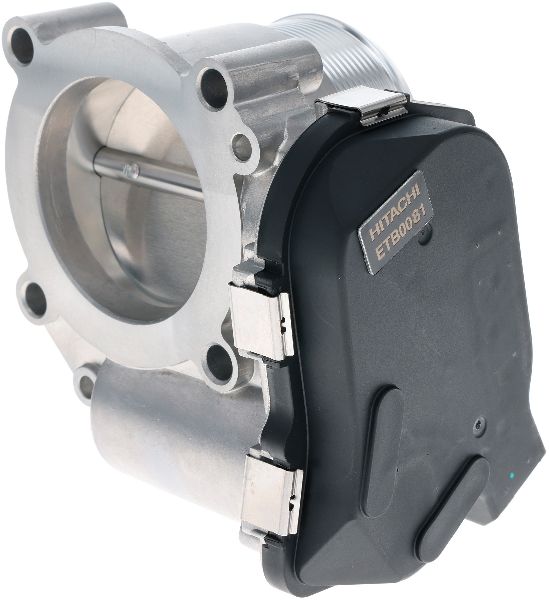
- Faulty Throttle Body Assembly 🔴 High Probability → Shop Fuel Injection Throttle Body The internal electronic components of the throttle actuator motor or the position sensors can fail over time, which is a common issue on many vehicles from this era. The internal gears can also strip or the motor can seize.
How to confirm: After confirming the wiring is intact, use a scan tool to monitor the desired vs. actual throttle position. If the actual position does not match the commanded position or is erratic, the throttle body is likely faulty. You can also visually inspect for a sticking throttle plate after removing the intake pipe. With the key on and engine off, have a helper press the accelerator and listen for smooth operation of the motor.
Typical fix: Replace the entire throttle body assembly. After replacement, a Throttle Body Alignment (TBA) procedure must be performed with a compatible scan tool like VCDS.
Est. part cost: $250-$500 - Damaged Wiring or Faulty Connector at Throttle Body 🟡 Medium Probability → Shop Fuel Injection Throttle Body Audi issued Technical Service Bulletin (TSB) 2018260 for other throttle codes on this platform, which points to high resistance in the throttle body connector terminals. This suggests the wiring harness is a known weak point. Wires can fray or break from engine vibration and heat over time.
How to confirm: Visually inspect the wiring harness and connector pins for any signs of damage, corrosion, or loose connections. Perform a 'wiggle test' on the connector while monitoring throttle position data on a scan tool to see if the reading fluctuates. Use a multimeter to check for continuity and proper voltage at the connector.
Typical fix: Repair the damaged section of the wiring harness or replace the connector pigtail. The TSB advises against soldering; use approved crimp connectors for repairs. A common repair kit part number for the 6-pin connector is 1J0973713.
Est. part cost: $20-$100 - Heavy Carbon Buildup ⚪ Low Probability The FSI direct-injection engine is prone to carbon buildup on the intake valves, and some of this can also accumulate in the throttle body, physically restricting the movement of the throttle plate and causing it to bind.
How to confirm: Remove the intake hose from the throttle body and visually inspect the throttle plate and bore for thick black carbon deposits that could cause it to bind or stick.
Typical fix: Carefully clean the throttle body bore and plate using a dedicated throttle body cleaner and a soft cloth or brush. Do not spray cleaner directly into the electronic components. A Throttle Body Alignment (TBA) is required after cleaning.
Est. part cost: $10-$20
Rare But Worth Checking
- Faulty Powertrain Control Module (PCM): → Shop Engine Control Module (ECM) This is very rare. The PCM should only be considered after all other possibilities, including the throttle body and its wiring, have been exhaustively tested and ruled out. Sometimes a software update from the dealer can resolve glitches that cause this code.
Diagnosis Steps
- Read the fault codes with an OBD-II scanner and confirm P2111 is present. Note any other codes that may be stored.
- Visually inspect the wiring harness and connector going to the throttle body. Look for any frayed wires, corrosion on the pins, or a loose connection.
- With the engine off and key on, have a helper press the accelerator pedal while you observe the throttle plate for smooth operation (intake pipe removed). Listen for any unusual noises from the actuator motor.
- If available, use a scan tool to monitor live data for both the commanded throttle angle and the actual throttle angle. They should closely match. If they do not, this points to a problem with the throttle body or its circuit.
- Perform a 'wiggle test' on the throttle body connector while watching the live data. If the readings jump around, it indicates a wiring or connector issue.
- Remove the throttle body and inspect for heavy carbon buildup that could be causing the plate to stick. Clean if necessary.
- If wiring is good and the throttle body is clean but still not responding correctly, the throttle body assembly has likely failed and requires replacement.
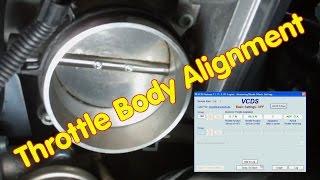
- After any cleaning or replacement, perform a Throttle Body Alignment (TBA) using a compatible scan tool (like VCDS) to reset the learned values. This is done with the key on, engine off, by going to Engine -> Basic Settings -> Group 060 and activating the proc 🎬 Watch: How to perform a Throttle Body Alignment with VCDSedure.
Parts You'll Likely Need
- Electronic Throttle Body Assembly
(OEM #06F133062T)— The internal motor or position sensors are the most common failure point leading to a P2111 code after wiring issues are ruled out.
Trusted brands: Bosch, VDO, Continental
OEM price range: $400-$550
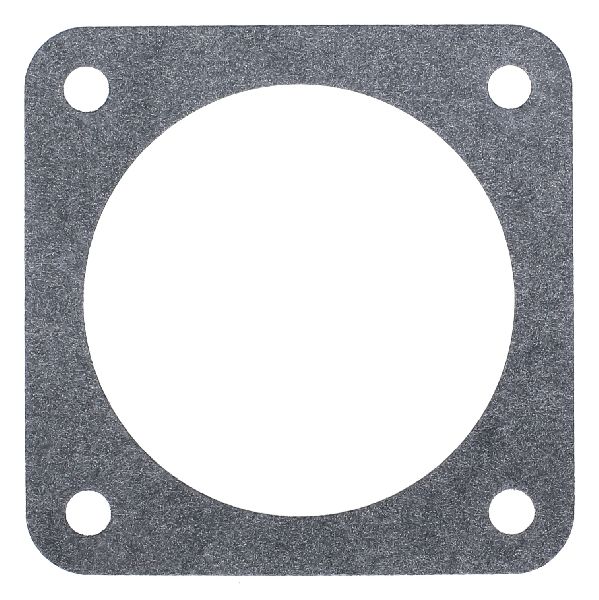
Aftermarket price range: $200-$350 - Throttle Body Gasket
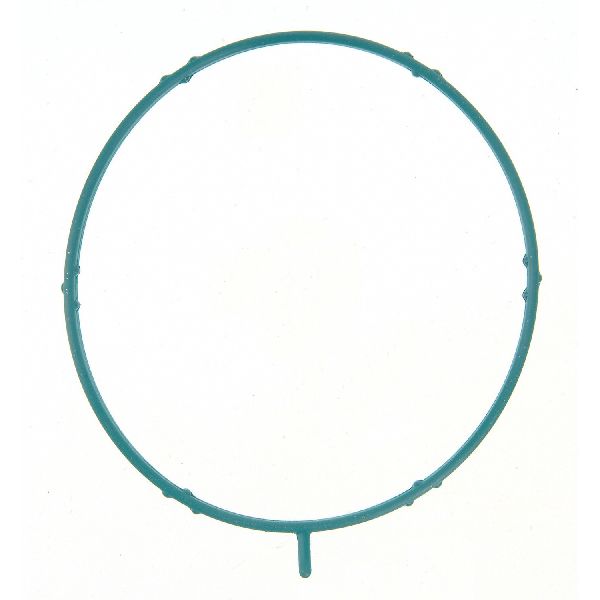
(OEM #06F133073D)— This gasket should always be replaced when the throttle body is removed to prevent vacuum leaks.
Trusted brands: Victor Reinz, Elring
OEM price range: $10-$20
Aftermarket price range: $5-$15 - Throttle Body Connector Repair Pigtail
(OEM #1J0973713)— If the connector housing or terminals are damaged, replacing the pigtail is the standard repair method.
Trusted brands: Genuine VW/Audi, Standard Motor Products
OEM price range: $30-$50
Aftermarket price range: $15-$30
Related Codes That Often Appear With This One
- P2101 — This code for 'Throttle Actuator Control Motor Circuit Range/Performance' often accompanies P2111 as it indicates a general problem with the throttle motor's operation.
- P0121 — This code relates to the 'Throttle/Pedal Position Sensor 'A' Circuit Range/Performance' and can be triggered by the same underlying electrical faults or mechanical binding that causes P2111.
- P2112 — This is the opposite code, 'Throttle Actuator Control System - Stuck Closed', and can sometimes appear if the throttle body is failing erratically.
Technical Service Bulletins (TSBs) & Recalls
- Audi TSB 2018260: While not explicitly for P2111, this TSB addresses other throttle position sensor codes (like P0121, P0221) on this engine caused by high contact resistance in the throttle body wiring connector, which is a highly relevant diagnostic path for P2111 as well.
Mechanic-Grade Diagnostic Values
- Throttle Position Sensor (G69) Voltage at Idle — expected: ~0.5V - 0.7V. Failure: Voltage is significantly higher at idle, or does not change smoothly when the throttle is opened manually (with ignition on).
- Throttle Position Sensor (G69) Voltage at Wide-Open Throttle (WOT) — expected: ~4.5V - 5.0V. Failure: Voltage does not reach the expected range, or readings are jumpy and inconsistent as the throttle opens.
- VCDS Measuring Block 060, Field 3 (Throttle Valve Angle) — expected: Should show a low percentage at idle (e.g., 2-4%) and increase smoothly to a high percentage (e.g., >85%) as the accelerator is pressed.. Failure: The value is stuck high, does not match the commanded position, or jumps erratically.
- VCDS Measuring Block 032, Fields 1 & 2 (Additive and Multiplicative Fuel Trims) — expected: Values should be as close to 0% as possible, ideally within +/- 10%.. Failure: While not a direct test for P2111, high positive fuel trims after a repair can indicate a vacuum leak from a poorly seated throttle body gasket.
Scan Tool Commands That Help
- VCDS (VAG-COM): Engine -> Measuring Blocks -> Group 060 — To view the live data of the throttle valve angle sensor (Field 3) and the status of the Throttle Body Alignment (Field 4). This is critical for comparing the actual vs. commanded throttle position.
- VCDS (VAG-COM): Engine -> Basic Settings -> Group 060 — This is the mandatory Throttle Body Alignment (TBA) procedure. It must be performed after cleaning, disconnecting, or replacing the throttle body to allow the ECU to relearn the end stops of the throttle plate.
- VCDS (VAG-COM): Engine -> Measuring Blocks -> Group 054 — To monitor the accelerator pedal position sensors and commanded throttle position. This helps differentiate a throttle body fault from an accelerator pedal fault.
Wiring & Ground Locations
- Throttle Body Connector (T6k) — 6-pin connector directly on the electronic throttle body assembly, mounted to the underside of the intake manifold.. This is the primary electrical interface for the throttle body. The TSB for this platform points to high resistance in these specific pins as a root cause for throttle faults.
- Ground Point 12 (G12) — Located at the center of the firewall in the engine bay.. This point grounds the Engine Control Module (ECM). A poor ground here can cause a wide range of erratic engine management behavior, including incorrect throttle commands or readings.
- Ground Strap - Engine to Body — A heavy braided strap connecting the engine block (often near the turbo or starter) to the vehicle's chassis/frame rail.. A corroded or broken main engine ground strap can cause the sensitive 5V reference circuits used by sensors like the throttle body to become unstable, leading to false codes.
- Ground Point 11 (G11) — In the battery box/plenum area, connecting the main chassis to the negative battery terminal.. This is the master ground for the entire vehicle. Corrosion or looseness here can cause widespread, difficult-to-diagnose electrical issues.
OEM Part Supersession History
06F133062G, 06F133062J, 06F133062Q→06F133062T, which was later superseded by 06F133062AG— Standard component revisions for improved reliability or manufacturing changes.
Heads up: All listed part numbers (G, J, Q, T, AG) are considered functionally identical and interchangeable for the B7 A4 2.0T EA113 engine. The ECU will adapt to any of these versions after a successful Throttle Body Alignment.
Model Year Variations Within This Range
- 2005.5-2008: The 2.0T FSI engine in the B7 A4 came in several variants, most commonly the BPG (early) and BWT (later, ~2007-2008) engine codes in the US. While the throttle body part number and P2111 diagnosis remain the same, there are minor differences in ECU software and other engine components. It's important to know your engine code (found on the timing belt cover sticker) for ordering other related parts.
Diagnostic Flowchart
Other Known Issues on This Vehicle
Issues unrelated to this code that are worth knowing about as an owner of this generation:
- HPFP Cam Follower Failure 🔴 High — A very common wear item. Recommended inspection/replacement every 20,000-30,000 miles. Failure can destroy the high-pressure fuel pump and camshaft.
- PCV System Failure 🟠 Medium — The diaphragm in the PCV valve frequently tears, causing boost leaks, high oil consumption, rough idle, and lean codes (e.g., P0171).
- Intake Valve Carbon Buildup 🟠 Medium — Inevitable on the FSI direct-injection engine. Typically requires manual cleaning (walnut blasting) every 60,000-80,000 miles to prevent misfires, hesitation, and power loss.
- Diverter Valve (DV) Failure 🟡 Low — The original diaphragm-style DV is prone to tearing, causing a loss of boost pressure and reduced power. Often triggers underboost code P0299. An updated piston-style valve (Revision 'D') is a common and recommended upgrade. (Ref: VW TSB 01-07-70 / 2013392)
- High Oil Consumption 🟠 Medium — Many EA113 engines consume oil, sometimes as much as 1 quart per 1,000 miles, often related to the PCV system or piston rings.
- Ignition Coil Failure 🟡 Low — Coil packs can fail without warning, causing misfires. It's a common maintenance item, and many owners carry a spare.
Used vs. New Parts: Buying Guide for This Vehicle
When a used part is the smart pick: A used throttle body can be a cost-effective option if sourced from a reputable auto recycler with a warranty and return policy. Given that the failure is electronic, it's a moderate risk, but can save significant money over a new OEM part.
Donor-vehicle mileage cap: roughly under 80000 miles for the part to have meaningful remaining life.
What to inspect on the donor part:
- Check for a clean throttle plate and bore; excessive carbon may indicate a neglected engine.
- Ensure the electrical connector pins are straight, clean, and free of corrosion.
- Verify the part number (06F133062 with any suffix) matches the original.
- Ask for the donor vehicle's mileage if possible.
OEM-only on this vehicle (don't cheap out):
- While the throttle body itself can be aftermarket, the throttle body gasket is a part where using a quality OEM or OEM-supplier (Victor Reinz, Elring) brand is critical to prevent vacuum leaks for a very low cost.
Aftermarket brands forum-validated for this vehicle:
- Bosch (often the original OEM supplier)
- VDO
- Continental
Brands owners have reported issues with on this vehicle:
- Unbranded, no-name parts from online marketplaces should be avoided, as their internal electronics and sensor calibrations may not match OEM specifications, leading to persistent codes or failed adaptation procedures.
Real Owner Stories
Aggregated from forums and TSBs cited above. Mileages and costs reflect what owners reported in those sources.
2008 Audi A4 B8 2.0TDI
Symptoms: The owner reported a P2111 fault code indicating the throttle body was stuck open.
What fixed it: The discussion suggested checking sensor data while manually moving the throttle plate to identify erratic readings, leading to a diagnosis of whether the unit required replacement.
Source hint: Reddit r/audia4 thread titled 'P2111 fault code. throttle body stuck open. do I need to get a new one?'
Related OBD-II Codes
Frequently Asked Questions
Does Audi TSB 2018260 apply to my P2111 code on the 2.0T FSI?
Can I just clean the throttle body on my A4 to fix P2111?
Is there a specific repair kit for the throttle body wiring on the 2005-2008 Audi A4?
What is a Throttle Body Alignment (TBA) and do I need it for my B7 A4?
Could my A4's PCV system or carbon buildup on intake valves cause P2111?
Why did my Audi A4 enter 'limp mode' when the EPC light came on?
Helpful Videos
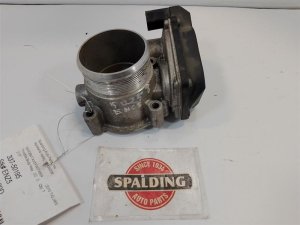
Used OEM Parts in Stock
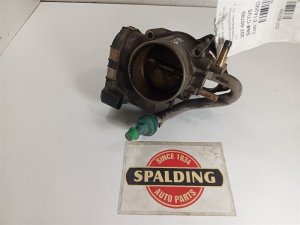
New Aftermarket Parts Available


The information in this article is provided for general reference and educational purposes only. Vehicle specifications, procedures, and part compatibility can vary by production date, trim level, and region. Always consult your vehicle's factory service manual and verify part numbers before purchasing or performing repairs. Safety-critical components such as airbags, seat belts, and braking systems should be installed by a qualified professional.
- Audi A4:
- 🧭 Diagnostic Flowchart
- 🎬 Helpful Videos
- 🛍️ Shop This Part
- What's Unique About the 2005-2008 Audi A4
- Symptoms You May Notice
- Most Likely Causes
- Rare But Worth Checking
- Diagnosis Steps
- Parts You'll Likely Need
- Related Codes That Often Appear With This One
- Technical Service Bulletins (TSBs) & Recalls
- Mechanic-Grade Diagnostic Values
- Scan Tool Commands That Help
- Wiring & Ground Locations
- OEM Part Supersession History
- Model Year Variations Within This Range
- Other Known Issues on This Vehicle
- Used vs. New Parts: Buying Guide for This Vehicle
- Real Owner Stories
- 2008 Audi A4 B8 2.0TDI
- Related OBD-II Codes
- Frequently Asked Questions
- 🎟️ Get 5% Off