

P2111 on 2009-2016 Audi A4 2.0T: Throttle Actuator Stuck Open Causes and Fixes
On the 2009-2016 Audi A4 2.0T, code P2111 almost always means the electronic throttle body has failed internally. The most common fix is to replace the entire throttle body assembly and then perform a throttle body adaptation with a scan tool. Expect to pay $150-$350 for an aftermarket part or $400+ for an OEM unit.
- P2111 on your A4 2.0T almost certainly means you need a new throttle body due to internal electronic failure.
- The vehicle will go into a low-power 'limp mode' as a safety precaution, illuminated by the EPC light.
- Do not skip the Throttle Body Adaptation (TBA) procedure after installing the new part; it is required for the car to run correctly.
- This is a DIY-friendly repair for those with basic tools and access to a VCDS/VAG-COM or equivalent professional scan tool for the adaptation.
- Always use a new gasket when replacing the throttle body to prevent future vacuum leaks.
What's Unique About the 2009-2016 Audi A4
The EA888 engine in the B8 and B8.5 generation A4 uses a sophisticated electronic throttle body that is prone to internal electronic failure over time. Unlike the TDI diesel engines where this code is often caused by heavy carbon buildup physically jamming the throttle plate, on the 2.0T TFSI gasoline engine, the cause is more frequently a failure of the internal motor, its plastic gears, or the position sensor. Cleaning the throttle body on the 2.0T TFSI rarely resolves a P2111 code, as the issue is typically electronic, not due to contamination. Replacement is straightforward, but a 'Throttle Body Adaptation' using a compatible scan tool like VCDS is a mandatory follow-up step to make the new part work correctly with the ECU.
Generation note: This guide covers the B8 generation (2009-2012) and the B8.5 facelift (2013-2016) Audi A4. The causes and repair procedures for code P2111 are consistent across both generations as they share the 2.0T TFSI EA888 engine and similar electronic throttle body designs.
Symptoms You May Notice
- Check Engine Light is on
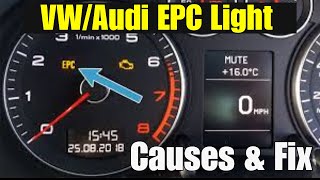
- EPC (Electronic Power Control) light is on 🎬 Watch: Why your Audi EPC light is on and how to fix it
- Vehicle enters 'limp mode' with drastically reduced power
- Poor or no acceleration
- Rough or fluctuating idle
- Engine may stall
- Unresponsive accelerator pedal
- High idle RPM (above 1,200 RPM)
- Accelerator Pedal Position (APP) Sensor: While a faulty APP sensor can cause acceleration problems, it typically generates its own set of specific trouble codes. P2111 is almost always isolated to the throttle body itself or its immediate wiring.
- Carbon Buildup: On the 2.0T TFSI engine, unlike its TDI counterpart, significant carbon buildup on the throttle plate is not a common cause for P2111. Owners who attempt to fix the code by cleaning the throttle body are often unsuccessful because the root cause is an internal electronic failure.
Most Likely Causes
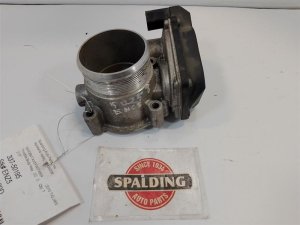
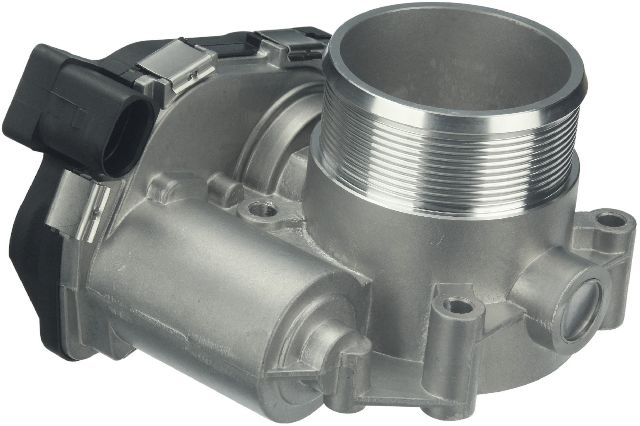
- Faulty Throttle Body Assembly 🔴 High Probability → Shop Fuel Injection Throttle Body The internal electronic components of the throttle body, such as the control motor, plastic gears, or the integrated throttle position sensor, are known to fail over time. These components are not sold separately, requiring the replacement of the entire assembly. The failure is often electronic rather than due to physical obstruction from carbon buildup.
How to confirm: After visually inspecting for physical obstructions and checking the wiring connector, the most definitive diagnosis is to replace the throttle body. If the new part, after adaptation, resolves the code and symptoms, the old unit was faulty. A failed adaptation attempt on the old part is also a strong indicator of failure.
Typical fix: Replace the entire throttle body assembly and perform a Throttle Body Adaptation (TBA).
Est. part cost: $150-$550
Rare But Worth Checking
- Wiring Harness or Connector Issue: While less common than outright throttle body failure, damage to the wiring harness or corrosion in the connector pins can interrupt the signal between the ECU and the throttle body, causing this code. It's worth inspecting the harness for any visible damage, especially near the connector, before replacing parts.
- Powertrain Control Module (PCM) Fault: → Shop Engine Control Module (ECM) In very rare cases, the engine computer itself can be the source of the problem. This should only be considered after a new throttle body and verified wiring have failed to resolve the issue. A PCM fault would likely be accompanied by other, unrelated fault codes.
Diagnosis Steps
- Scan for Codes: Use an OBD-II scanner to confirm P2111 is the primary code. Note any other codes that are present.
- Visual Inspection: Check the intake area around the throttle body for any foreign objects that could be jamming the throttle plate.
- Inspect Electrical Connector: Disconnect the throttle body connector. Check for any bent, corroded, or backed-out pins, and ensure the harness is not damaged or frayed. Reconnect it securely.
- Attempt a Throttle Body Adaptation (TBA): Using a tool like VCDS, attempt to run the TBA procedure with the key on, engine off. If it fails or the code returns immediately, it strongly suggests the throttle body has failed. During the procedure, you should hear the throttle body motor whine and cycle; silence or grinding indicates a problem.
- Replace Throttle Body: If the above steps do not resolve the issue, replace the throttle body assembly. Be sure to use a new gasket to prevent vacuum leaks.
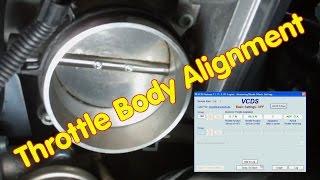
- Perform Mandatory Throttle Body Adaptation: After installing the new part, you MUST perform a TBA. With VCDS, this is done by going to [01 - Engine] -> [Basic Settings - 04] -> Group 060 -> [Go 🎬 Watch: Step-by-step VCDS throttle body alignment tutorial!]. The system will run the adaptation, and the status should change to 'ADP OK'. Wait 30 seconds before exiting.
- Clear Codes and Test Drive: Clear all fault codes and test drive the vehicle to ensure the symptoms and check engine light do not return.
Parts You'll Likely Need
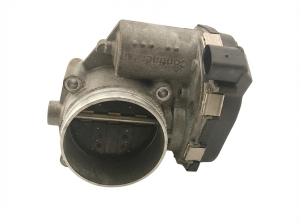
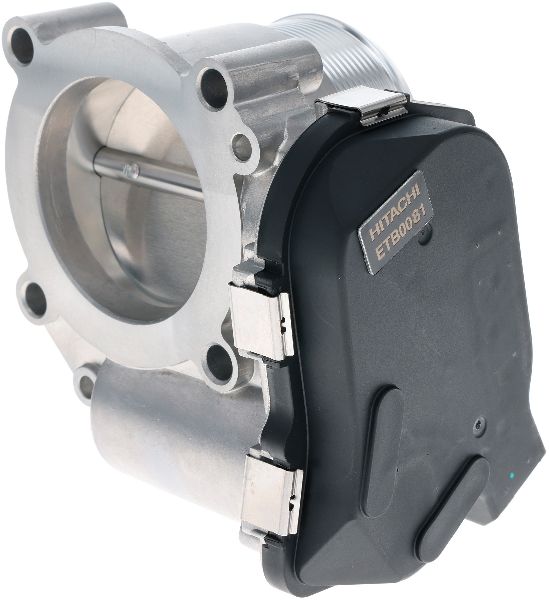
- Throttle Body Assembly
(OEM #06F133062T)— This is the complete unit that fails. The internal motor and sensors are not serviceable separately. Several part numbers may supersede, including 06F133062Q, 06F133062J, 06F133062AG, and 06F133062AB. Always verify the correct part number for your specific VIN.
Trusted brands: VAG (OEM), Bosch, VDO, Pierburg
OEM price range: $400-$550
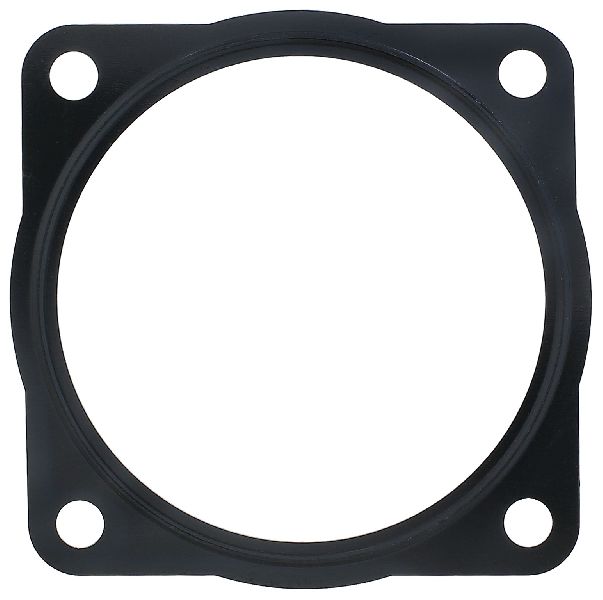
Aftermarket price range: $150-$350 - Throttle Body Gasket
(OEM #06F133073D)— A new gasket should always be used when replacing the throttle body to prevent vacuum leaks. It is often included with a new throttle body kit.
Trusted brands: Victor Reinz, Elring, Febi
OEM price range: $10-$20
Aftermarket price range: $5-$15
Related Codes That Often Appear With This One
- P2112 — This code for 'Throttle Actuator Control System - Stuck Closed' can sometimes appear alongside P2111 as the ECU struggles to determine the throttle's actual position due to an internal electronic fault.
- P0121 — This code relates to 'Throttle/Pedal Position Sensor/Switch 'A' Circuit Range/Performance' and can be triggered by the same internal electronic failure within the throttle body assembly that causes P2111.
- P0221 — Similar to P0121, this code for 'Throttle/Pedal Position Sensor/Switch 'B' Circuit Range/Performance' points to a fault with the throttle position sensor, which is integrated into the throttle body assembly. 🎬 Watch: 5 symptoms of a bad throttle position sensor
Platform-Specific Known Issues
- Owner Experience: A user on Audizine reported their 2011 A4 with 95,000 miles suddenly went into limp mode with the EPC light on. The code was P2111. After confirming the wiring was intact, they replaced the throttle body with a Bosch unit and performed the VCDS adaptation, which completely resolved the issue. They noted that cleaning the old throttle body had no effect.
- Repair Story: On the AudiWorld forums, a 2010 A4 owner experienced intermittent EPC light and limp mode, which eventually became permanent with code P2111. The dealer quoted over $900 for the repair. The owner purchased an OEM throttle body online for around $450 and a new gasket, and replaced it themselves in under an hour. A local independent shop charged them $50 to perform the throttle body adaptation, saving them hundreds of dollars.
Mechanic-Grade Diagnostic Values
- Throttle Valve Angle (Potentiometer) via VCDS Measuring Blocks, Group 003 — expected: Should increase smoothly from a low percentage at idle to a high percentage at wide-open throttle, directly corresponding to accelerator pedal input.. Failure: A value that is stuck, jumps erratically, or does not match the commanded throttle position indicates a faulty throttle body.
- Throttle Valve Control Module Voltages via VCDS Measuring Blocks, Group 060 — expected: The second field shows the learned throttle valve angle at idle stop (should be low), and the third field shows the angle at wide-open throttle (should be high).. Failure: If these values are illogical or if the adaptation status in the fourth field shows 'ADP. ERROR', the throttle body or its adaptation has failed.
- 5V Reference and Ground at Throttle Body Connector — expected: A steady 5V reference and a solid ground connection should be present at the respective pins on the harness connector with the key on.. Failure: Missing or fluctuating voltage, or high resistance to ground, points to a wiring issue or a fault in the ECM, not the throttle body itself.
Scan Tool Commands That Help
- VCDS (VAG-COM): Basic Settings - Group 060 — This is the mandatory Throttle Body Adaptation (TBA) procedure required after replacing the throttle body. It allows the ECU to learn the closed, open, and partial throttle positions of the new unit. Failure to perform this will result in continued running issues and fault codes.
- VCDS (VAG-COM): Measuring Blocks - Groups 003, 054, 060 — Used for live data diagnosis before replacing parts. These groups allow a technician to monitor the specified vs. actual throttle plate angle, sensor voltages, and adaptation status to confirm if the throttle body is responding correctly to commands from the ECU.
Wiring & Ground Locations
- J338 Connector (T6sa) — The 6-pin electrical connector directly on the throttle body assembly, which is mounted to the intake manifold.. This is the primary connection point for all signals and power to the throttle body. Poor contact, corrosion, or damaged wires at this connector are a known cause of throttle-related faults.
- ECM Ground (G12) — Located at the center of the firewall in the engine bay, in the plenum chamber (under the plastic cowl cover).. This is a main ground point for the Engine Control Module (ECM). A poor ground here can cause a wide range of erratic electronic issues, including incorrect sensor readings and actuator faults for the throttle body.
- Main Chassis Ground — In the plenum chamber, right next to the battery. This is the main ground strap from the battery negative terminal to the chassis.. A compromised main ground can lead to low voltage situations and unstable electrical signals throughout the vehicle, potentially causing the throttle control system to malfunction and set a P2111 code.
Real Owner Repair Stories
- AudiWorld Forums (2005 Audi A6 3.2 (C6 Platform, similar drive-by-wire system)) — Occasional stalling, which progressed to multiple stalls within minutes, followed by ABS, ESP, and Parking Brake warning lights.
❌ Tried (didn't work) The dealer initially had trouble with the diagnostic readiness procedure, which kept failing on the throttle body test.
✅ What actually fixed it The dealer replaced the throttle body assembly. The user reported the car ran perfectly after the replacement, confirming an intermittent internal failure of the original throttle body at 119,000 miles.
OEM Part Supersession History
06F133062J→06F133062Q, 06F133062T, 06F133062AG, 06F133062AB— Incremental manufacturing updates, possibly involving changes to internal material composition, firmware, or sensor tolerances to improve durability.
Heads up: All listed part numbers are physically and electronically interchangeable for the 2009-2016 Audi A4 2.0T. The different suffixes do not change the mounting, connector, or core function.
Diagnostic Flowchart
Other Known Issues on This Vehicle
Issues unrelated to this code that are worth knowing about as an owner of this generation:
- Excessive Oil Consumption 🔴 High — Very common on early B8 models (2009-2011) due to piston ring design. Can appear after 30,000-60,000 miles. (Ref: TSB 2027731 / TSB 17 15 67 addresses this issue and was the subject of a class-action lawsuit.)
- Timing Chain Tensioner Failure 🔴 High — Common on earlier EA888 engines (approx. before 2013). The original tensioner can fail without warning, often between 60,000-100,000 miles, causing catastrophic engine damage. (Ref: Subject of a class-action lawsuit. An updated tensioner design resolves the issue.)
- Water Pump / Thermostat Failure 🟠 Medium — The plastic water pump housing is prone to cracking and leaking, often between 50,000 and 80,000 miles.
- Intake Valve Carbon Buildup 🟠 Medium — As a direct-injection engine, carbon deposits accumulate on the intake valves over time, typically requiring cleaning every 50,000-70,000 miles to prevent misfires and performance loss.
- PCV Valve / Oil Separator Failure 🟠 Medium → Shop PCV Valve — The diaphragm inside the PCV valve can tear, leading to high crankcase vacuum, oil leaks (especially at the rear main seal), and a whistling noise. Failure is common around 60,000-90,000 miles.
Used vs. New Parts: Buying Guide for This Vehicle
When a used part is the smart pick: A used OEM throttle body from a low-mileage salvage vehicle can be a cost-effective option, as the failure is electronic and not strictly a wear-and-tear item. However, it carries the risk of premature failure since the exact age and condition are unknown.
Donor-vehicle mileage cap: roughly under 70000 miles for the part to have meaningful remaining life.
What to inspect on the donor part:
- Check for a clean throttle plate and bore with minimal carbon buildup.
- Ensure the electrical connector pins are straight, clean, and free of corrosion.
- Verify the part number matches one of the compatible OEM numbers.
- If possible, get a part from a vehicle that was not in a front-end collision.
OEM-only on this vehicle (don't cheap out):
- While not strictly 'OEM-only', using a genuine VAG part or an OEM-equivalent brand is highly recommended for the throttle body to ensure proper communication with the ECU and longevity.
Aftermarket brands forum-validated for this vehicle:
- Bosch
- VDO
- Pierburg
Brands owners have reported issues with on this vehicle:
- Unnamed, no-brand units from online marketplaces should be avoided, as they may have calibration issues or a high failure rate.
Real Owner Stories
Aggregated from forums and TSBs cited above. Mileages and costs reflect what owners reported in those sources.
2011 Audi A4 2.0T — 95000 miles
Symptoms: Suddenly went into limp mode with the EPC light on. The code was P2111. Cleaning the old throttle body had no effect.
What fixed it: Replaced the throttle body with a Bosch unit and performed the VCDS adaptation.
Source hint: Audizine.com thread cited in vehicle_specific_issues
2010 Audi A4 2.0T
Symptoms: Intermittent EPC light and limp mode, which eventually became permanent with code P2111.
What fixed it: Purchased an OEM throttle body and a new gasket; replaced it as a DIY and had an independent shop perform the adaptation.
Cost: $450-$500
Source hint: AudiWorld Forums thread cited in vehicle_specific_issues
2012 Audi A4 2.0T
Symptoms: Limp mode and EPC light; consensus from commenters confirmed these as standard symptoms for this platform.
What fixed it: Replace the throttle body and perform the adaptation.
Source hint: Reddit r/Audi thread cited in forum_citations
Related OBD-II Codes
Frequently Asked Questions
Can I fix the P2111 code on my 2011 Audi A4 by cleaning the throttle body?
Is there a specific TSB for the P2111 throttle body issue on the EA888 engine?
Do I need special tools like VCDS to replace the throttle body on my A4?
What is the specific VCDS procedure for the 2.0T TFSI throttle adaptation?
My 2010 A4 is in limp mode with an EPC light; could this be the timing chain tensioner instead of P2111?
What is the part number for the replacement throttle body?
Helpful Videos
Used OEM Parts in Stock
New Aftermarket Parts Available



The information in this article is provided for general reference and educational purposes only. Vehicle specifications, procedures, and part compatibility can vary by production date, trim level, and region. Always consult your vehicle's factory service manual and verify part numbers before purchasing or performing repairs. Safety-critical components such as airbags, seat belts, and braking systems should be installed by a qualified professional.
- Audi A4:
- 🧭 Diagnostic Flowchart
- 🎬 Helpful Videos
- 🛍️ Shop This Part
- What's Unique About the 2009-2016 Audi A4
- Symptoms You May Notice
- Most Likely Causes
- Rare But Worth Checking
- Diagnosis Steps
- Parts You'll Likely Need
- Related Codes That Often Appear With This One
- Platform-Specific Known Issues
- Mechanic-Grade Diagnostic Values
- Scan Tool Commands That Help
- Wiring & Ground Locations
- Real Owner Repair Stories
- OEM Part Supersession History
- Other Known Issues on This Vehicle
- Used vs. New Parts: Buying Guide for This Vehicle
- Real Owner Stories
- 2011 Audi A4 2.0T — 95000 miles
- 2010 Audi A4 2.0T
- 2012 Audi A4 2.0T
- Related OBD-II Codes
- Frequently Asked Questions
- 🎟️ Get 5% Off