

P2111 on 2012-2017 Chevrolet Equinox 2.4L: Throttle Stuck Open Causes and Fixes
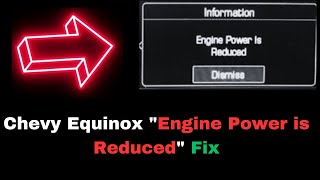
On a 2012-2017 Equinox with the 2.4L engine, P2111 almost always means the throttle body is dirty or has failed. The vehicle will enter 'Reduced Engine Power' mode. The most common fix is to clean the throttle body; if that doesn't work, replacement is necessary. A new throttle body costs between $100 and $250.
- P2111 on a 2012-2017 Equinox 2.4L is a critical code that will put the vehicle in a safe 'Reduced Engine Power' mode and should be addressed immediately.
- The most likely cause by far is a dirty throttle body. Always start by thoroughly cleaning it and performing a relearn procedure before buying a new part.
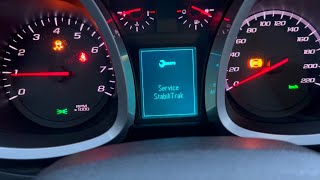
- The simultaneous 'Reduced Engine Power' and 'Service Stabilitrak' warnings are a very strong indicator of this specific throttle body problem on this vehicle.
- If cleaning fails, a complete throttle body replacement is the definitive fix.
What's Unique About the 2012-2017 Chevrolet Equinox
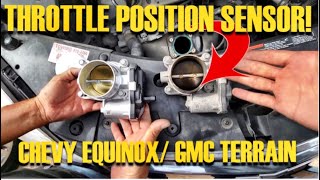
The 2.4L Ecotec engine used in the second-generation Chevrolet Equinox and its GMC Terrain platform-mate is well-known for throttle body issues leading to P2111. Carbon buildup in the throttle body is a very frequent cause, often more so than outright electronic failure. This is exacerbated by the engine's PCV system design, which can introduce oil and carbon deposits into the intake tract. While many vehicles can experience this, the Equinox/Terrain platform seems particularly susceptible, making throttle body cleaning a primary, and often successful, first step in diagnosis for owners experiencing the common 'Reduced Engine Power' and 'Service Stabilitrak' warnings that accompany this code.
Symptoms You May Notice
- Check Engine Light is on
- "Reduced Engine Power" message on the dashboard
- "Service Stabilitrak" warning light
- Vehicle has very limited acceleration (limp mode)
- Unstable, high, or fluctuating idle speed
- Vehicle may stall
- Unpredictable or delayed throttle response
- Abnormal buzzing or clicking from the throttle body area with ignition on
- Accelerator Pedal Position (APP) Sensor: While part of the same system, a faulty APP sensor would typically generate its own specific trouble codes (like P2135 or P0222). P2111 points directly to a problem at the throttle body itself.
- Mass Airflow (MAF) Sensor: A bad MAF sensor would set different codes related to air metering, not a 'stuck open' throttle plate.
Most Likely Causes
- Dirty or Carbon-Clogged Throttle Body 🔴 High Probability → Shop Fuel Injection Throttle Body The 2.4L Ecotec engine's crankcase ventilation (PCV) system can contribute to oil and carbon deposits building up in the intake tract, causing the throttle plate to stick. GM has issued service bulletins (e.g., TSB 14882) for issues with the PCV orifice freezing or clogging, which worsens this carbon buildup.
How to confirm: Remove the air intake hose connected to the throttle body and visually inspect the throttle plate and bore for a thick, black layer of carbon buildup. Manually (with the ignition off and connector unplugged) try to move the plate to feel for any binding or sticking.
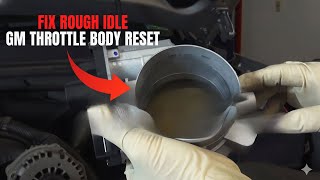
Typical fix: Remove the throttle body from the intake manifold and thoroughly clean it with a dedicated throttle body cleaner and a soft brush or cloth. A new gasket should be used upon reinstallation. A throttle relearn procedure is required after cleaning.
Est. part cost: $5-$15 for cleaner and a new gasket. - Failed Throttle Body Assembly 🟡 Medium Probability → Shop Fuel Injection Throttle Body If cleaning does not resolve the issue, the internal electronic components of the throttle body, such as the actuator motor or the integrated position sensor, have likely failed. This is a common wear item on this platform, and temporary fixes like cleaning may not resolve underlying electrical or mechanical faults.
How to confirm: If a thorough cleaning and relearn procedure does not clear the code and restore normal operation, the throttle body assembly itself is the next logical point of failure. A scan tool can monitor the commanded vs. actual throttle position to confirm a discrepancy.
Typical fix: Replace the entire throttle body assembly. 🎬 See this step-by-step throttle body replacement walkthrough The sensors and motor are integrated and not sold separately. An idle relearn procedure must be performed after replacement.
Est. part cost: $100-$250 for an aftermarket part, $350-$500 for an OEM part.
Rare But Worth Checking
- Wiring Harness or Connector Issue: Although less common than the throttle body itself, the wiring harness leading to the throttle body can become damaged or corroded, causing an intermittent connection and triggering the code. A visual inspection of the harness and connector pins is a worthwhile check during diagnosis.
- Powertrain Control Module (PCM) Fault: → Shop Engine Control Module (ECM) In very rare cases, the PCM itself can be the source of the problem. This should only be considered after all other possibilities, including the throttle body and wiring, have been definitively ruled out.
Diagnosis Steps
- Confirm the P2111 code is present using an OBD-II scanner. Note any other codes, such as P2110 or P2101.
- Visually inspect the wiring harness and electrical connector at the throttle body for any signs of damage, corrosion, or loose connections.
- Disconnect the negative battery terminal.
- Remove the engine cover and air intake ducting to gain access to the throttle body.
- Disconnect the electrical connector from the throttle body. Be careful with the red locking tab.
- Remove the four 10mm bolts securing the throttle body to the intake manifold.
- Thoroughly clean the throttle plate and the inside of the throttle body bore using a dedicated throttle body cleaner and a soft cloth or brush. Do not use harsh abrasives or push the plate open if the connector is still attached.
- Reinstall the cleaned throttle body using a new gasket to prevent vacuum leaks.
- Reconnect the electrical connector, air intake ducting, and negative battery terminal.
- Perform a throttle relearn procedure. A common manual method is: 1) Start the engine and let it idle in Park for 3 minutes. 2) Turn the engine off and wait 60 seconds. 3) Start the engine again and let it idle in Park for another 3 minutes. The idle should return to normal. 🎬 Watch: How to manually relearn your GM throttle body If not, a drive cycle with speeds over 45 mph may be needed.
- If the code returns after cleaning and a relearn procedure, the throttle body assembly is likely faulty and should be replaced.
Parts You'll Likely Need
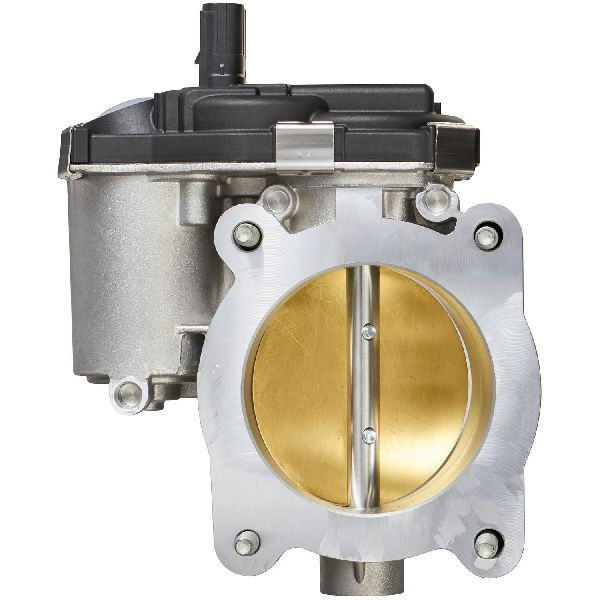
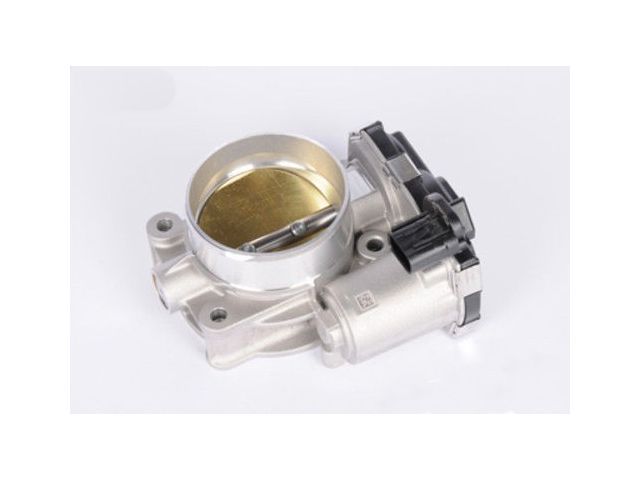
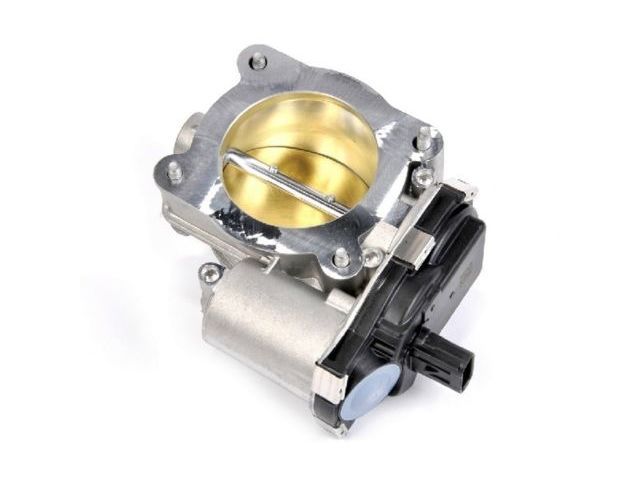
- Electronic Throttle Body Assembly
(OEM #12670834)— This is the most common point of failure. Carbon buildup causes the plate to stick, or the internal motor/sensor fails, requiring replacement of the whole unit.
Trusted brands: ACDelco (OEM), Hitachi, Dorman, Standard Motor Products
OEM price range: $350-$500
Aftermarket price range: $100-$250 - Throttle Body Gasket
(OEM #12634371)— A new gasket is required whenever the throttle body is removed to prevent vacuum leaks upon reinstallation.
Trusted brands: ACDelco, Fel-Pro, Mahle
OEM price range: $10-$20
Aftermarket price range: $5-$15
Related Codes That Often Appear With This One
- P2110 — This code, 'Throttle Actuator Control System - Forced Limited RPM,' often appears with P2111. It confirms the PCM has intentionally put the engine into 'limp mode' as a direct safety response to detecting the stuck throttle.
- P2101 — 'Throttle Actuator Control Motor Circuit Range/Performance' indicates a problem with the motor inside the throttle body. This can be the root cause of the P2111 code, as a failing motor can't properly control the throttle plate.
Technical Service Bulletins (TSBs) & Recalls
- TSB 14882 / PIP5093B: While not for P2111 directly, these bulletins address a known issue with the PCV orifice in the intake manifold freezing or clogging. A faulty PCV system increases crankcase pressure and leads to more oil and carbon deposits in the intake, which is a primary cause of the throttle plate sticking and triggering P2111.
Platform-Specific Known Issues
- The combination of 'Reduced Engine Power' and 'Service Stabilitrak' warnings is a hallmark symptom of this throttle body issue on the Equinox/Terrain platform. The Stabilitrak system relies on engine data, and when the PCM loses confidence in throttle control, it disables the stability system as a precaution.
Mechanic-Grade Diagnostic Values
- Throttle Position Sensor (TPS) 1 & 2 Voltage Sweep — expected: Using a scan tool with Key On, Engine Off, one sensor should sweep smoothly from ~0.5V to ~4.5V, while the other sweeps in the opposite direction (~4.5V to ~0.5V) as the accelerator pedal is pressed. The sum of the two voltages should remain constant at ~5.0V.. Failure: Any voltage reading that is stuck, erratic, or shows glitches/jumps indicates a failed sensor within the throttle body assembly.
- 5-Volt Reference at Throttle Body Connector — expected: A stable 5.0 Volts (typically between 4.8V and 5.2V) should be present at Pin E with the key on, engine off.. Failure: Voltage below 4.8V or above 5.2V points to a problem with the ECM or the wiring harness.
- Low Reference (Ground) at Throttle Body Connector — expected: Less than 0.1V, or near-zero resistance to a known good chassis ground, should be measured at Pin C.. Failure: Higher voltage or significant resistance indicates a poor ground connection, which can cause erratic sensor behavior.
- Throttle Actuator Control (TAC) Motor Resistance — expected: Between 2 and 15 Ohms when measured across Pins A and B of the throttle body connector.. Failure: A reading of less than 1 Ohm (short circuit) or an over-limit/infinite reading (open circuit) indicates the internal motor has failed and the throttle body must be replaced.
Scan Tool Commands That Help
- GM GDS2 (Global Diagnostic System 2): Output Control > Throttle Position Control — This bidirectional command allows a technician to command the throttle plate to a specific percentage (e.g., 10%, 25%, 50%) while observing the actual position reported by the sensors. It is the definitive test to see if the motor is physically capable of moving the plate and if it's sticking at certain points, without having the engine running.
- GM GDS2 (Global Diagnostic System 2): Configuration/Reset Functions > Throttle/Idle Learn — This function should be used after cleaning or replacing the throttle body. It forces the Engine Control Module (ECM) to relearn the closed, open, and idle positions of the new or cleaned throttle plate. While a manual relearn often works, using the GDS2 function is the GM-prescribed method and is more reliable.
Wiring & Ground Locations
- Throttle Body Connector (6-Pin) — Connected directly to the electronic throttle body at the end of the air intake tube.. This is the single connection point for the actuator motor and both position sensors. The pinout is critical for testing: Pin A (TAC Motor -), Pin B (TAC Motor +), Pin C (Low Reference/Ground), Pin D (TP Sensor 1 Signal), Pin E (5-Volt Reference), Pin F (TP Sensor 2 Signal).
- G112 — A ground stud on the engine block, located under the alternator and just above the A/C compressor on the 2.4L engine.. This is a primary ground point for the Engine Control Module (ECM). A loose or corroded connection here can cause erratic voltages and false sensor readings throughout the engine management system, including the throttle body.
- G103 — Located on the cowl in the left rear of the engine compartment, often near the brake booster.. This is another major engine and sensor ground point. While G112 is more direct, a fault at G103 can contribute to widespread electrical issues that could affect throttle control.
Real Owner Repair Stories
- chevroletforum.com user post (2013 Chevrolet Equinox 2.4L) — Classic P2111 with 'Reduced Engine Power' and 'Service Stabilitrak' warnings.
❌ Tried (didn't work) Thoroughly cleaning the throttle body.
✅ What actually fixed it The cleaning provided a temporary fix that lasted about one week before the code and symptoms returned. Replacing the entire throttle body assembly with a new OEM ACDelco unit and performing the idle relearn procedure permanently resolved the issue. - chevyequinoxforum.com user post (2011 Chevrolet Equinox 2.4L) — P2111, 'Reduced Engine Power', 'Service Stabilitrak'.
❌ Tried (didn't work) Replacing the throttle body initially did not clear the error messages, even though the engine would start.
✅ What actually fixed it The manual idle relearn procedure (idling for 3 minutes, off for 60 seconds, idling for 3 minutes) did not work initially. The problem was only resolved after performing a proper drive cycle, which included driving at speeds over 45 mph, to allow the computer to fully calibrate to the new throttle body. This highlights that a simple idle is not always sufficient for the relearn process.
OEM Part Supersession History
12632101, 12669146→12670834— Standard part revision by GM to integrate design, material, or electronics improvements for better reliability.
Model Year Variations Within This Range
- 2010-2011 vs 2012-2017: The 2010-2011 models used the LAF version of the 2.4L Ecotec engine, while the 2012-2017 models used the LEA flex-fuel version. While the fundamental design and throttle body issues are the same, there can be minor differences in ECM software. However, the diagnosis and repair for code P2111 remain consistent across the entire 2010-2017 generation.
Diagnostic Flowchart
Other Known Issues on This Vehicle
Issues unrelated to this code that are worth knowing about as an owner of this generation:
- Excessive Oil Consumption 🔴 High — Extremely common, especially on 2010-2013 models. Caused by faulty, low-tension piston rings that allow oil to burn off in the combustion chamber. Consumption can be as high as 1 quart per 1,000-2,000 miles. (Ref: Multiple Special Coverage Adjustments (e.g., 15285C for 2011, 16118 for 2012, N192291100 for 2013) were issued by GM to cover piston and ring replacement for up to 7.5 years or 120,000 miles.)
- Stretched or Worn Timing Chains 🔴 High — Common issue, often appearing between 80,000 and 120,000 miles. The problem is often attributed to failing chain tensioners and plastic guides, and is made worse by running the engine low on oil due to the consumption issue. Symptoms include a rattling noise on startup and codes like P0011/P0014. Failure can cause catastrophic engine damage.
- High-Pressure Fuel Pump (HPFP) Failure 🟠 Medium — The direct-injection 2.4L engine's HPFP is a known failure point. Symptoms include rough idle, stalling, hesitation, and fuel smell in the oil. The issue can occur as early as 40,000-50,000 miles.
- Faulty Camshaft Position Actuator Solenoids (VVT Solenoids) 🟡 Low — These solenoids are a very common failure point, leading to rough idle, stalling, and hesitation. They are sensitive to oil level and cleanliness, making them susceptible to failure on engines with oil consumption issues. The repair is simple and inexpensive. (Ref: GM TSB 17-NA-098 describes this issue for 2010-2012 models with codes P0010, P0011, P0013, or P0014.)
- Clogged/Frozen PCV Orifice 🟠 Medium → Shop PCV Valve — The PCV orifice integrated into the intake manifold can become clogged with carbon or freeze in cold weather. This leads to excessive crankcase pressure, causing oil leaks (especially from the rear main seal) and increased oil consumption. (Ref: GM TSB 14882 announced a special coverage program for this specific issue.)
Used vs. New Parts: Buying Guide for This Vehicle
When a used part is the smart pick: A used throttle body from a reputable salvage yard can be a viable, budget-friendly option, especially if sourced from a low-mileage, collision-damaged vehicle. However, since this part fails from both carbon buildup and electronic wear, it carries a higher risk than a purely mechanical used part.
Donor-vehicle mileage cap: roughly under 70000 miles for the part to have meaningful remaining life.
What to inspect on the donor part:
- Check for a relatively clean throttle plate and bore, which can indicate a well-maintained donor engine.
- Ensure the electrical connector and pins are free of corrosion, damage, or pushed-out pins.
- Manually move the throttle plate (with power off); it should move smoothly with no binding or gritty feeling.
- Ask for the donor vehicle's VIN to verify mileage and confirm it didn't have similar throttle-related issues.
OEM-only on this vehicle (don't cheap out):
- While not strictly 'OEM-only', using an OEM (ACDelco) or a reputable OEM-supplier (like Hitachi) for the throttle body is strongly recommended. It is a critical control component, and cheap, unbranded aftermarket units are known to have high failure rates.
Aftermarket brands forum-validated for this vehicle:
- ACDelco (OEM)
- Hitachi
- Standard Motor Products (SMP)
- Dorman
Brands owners have reported issues with on this vehicle:
- Unbranded, 'white-box' parts from online marketplaces should be avoided as they often use lower-quality internal electronics that can fail prematurely or be dead-on-arrival.
Real Owner Stories
Aggregated from forums and TSBs cited above. Mileages and costs reflect what owners reported in those sources.
2013 Chevrolet Equinox 2.4L
Symptoms: The vehicle exhibited 'Service StabiliTrak' and 'Reduced Engine Power' warnings simultaneously.
What fixed it: Throttle body cleaning was identified as the first and most effective step by the community to resolve these exact symptoms.
Source hint: chevroletforum.com thread titled 'Service StabiliTrak/Reduced Engine Power' from 2018
2011 Chevrolet Equinox 2.4L
Symptoms: Reduced engine power and service stabilitrak system warnings. After replacing the throttle body, the car started but the errors remained.
What fixed it: Performing the idle relearn procedure after the repair.
Source hint: chevyequinoxforum.com thread titled 'Reduced engine power, service stabilitrak system'
2012-2017 GMC Terrain 2.4L
Symptoms: P2111 code along with 'Reduced Engine Power' and 'Service Stabilitrak' warnings.
What fixed it: Cleaning or replacing the throttle body.
Source hint: terrainforum.com owner posts regarding the 2.4L engine
Related OBD-II Codes
Frequently Asked Questions
Why does my 2012-2017 Chevrolet Equinox show 'Service Stabilitrak' alongside the P2111 code?
Does TSB 14882 apply to the P2111 code on my 2.4L Ecotec engine?
Can I just clean the throttle body on my Equinox, or do I need to replace it?
Is there a specific part number for the throttle body used in the 2012-2017 Equinox 2.4L?
How do I perform the throttle relearn procedure after cleaning the throttle body?
Could my Equinox's oil consumption issue be related to the P2111 code?
Helpful Videos
Used OEM Parts in Stock
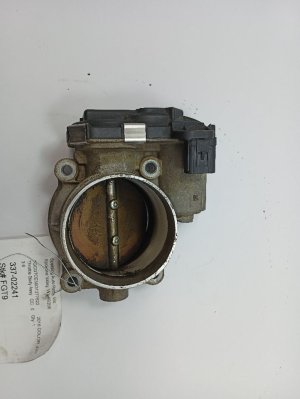
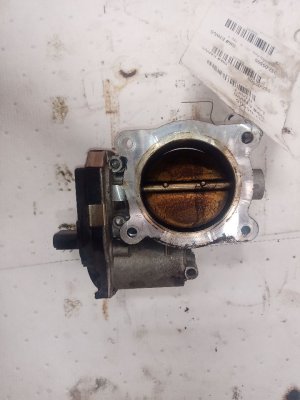
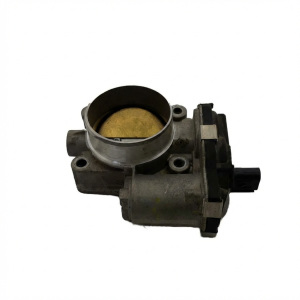
New Aftermarket Parts Available
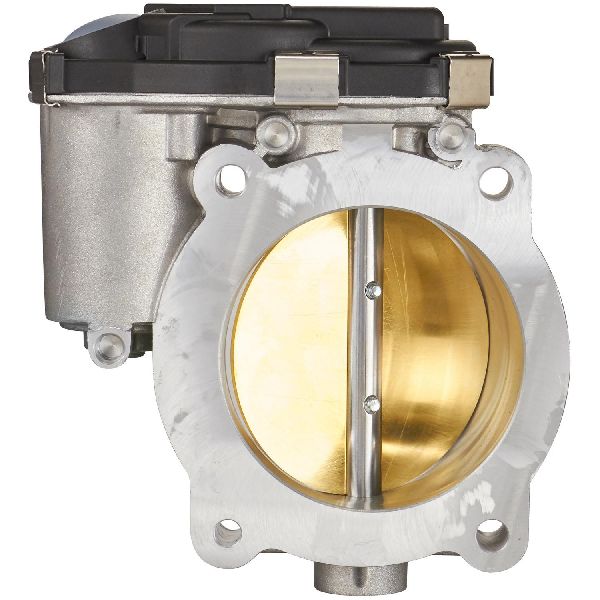


The information in this article is provided for general reference and educational purposes only. Vehicle specifications, procedures, and part compatibility can vary by production date, trim level, and region. Always consult your vehicle's factory service manual and verify part numbers before purchasing or performing repairs. Safety-critical components such as airbags, seat belts, and braking systems should be installed by a qualified professional.
- Chevrolet Equinox:
- 🧭 Diagnostic Flowchart
- 🎬 Helpful Videos
- 🛍️ Shop This Part
- What's Unique About the 2012-2017 Chevrolet Equinox
- Symptoms You May Notice
- Most Likely Causes
- Rare But Worth Checking
- Diagnosis Steps
- Parts You'll Likely Need
- Related Codes That Often Appear With This One
- Technical Service Bulletins (TSBs) & Recalls
- Platform-Specific Known Issues
- Mechanic-Grade Diagnostic Values
- Scan Tool Commands That Help
- Wiring & Ground Locations
- Real Owner Repair Stories
- OEM Part Supersession History
- Model Year Variations Within This Range
- Other Known Issues on This Vehicle
- Used vs. New Parts: Buying Guide for This Vehicle
- Real Owner Stories
- 2013 Chevrolet Equinox 2.4L
- 2011 Chevrolet Equinox 2.4L
- 2012-2017 GMC Terrain 2.4L
- Related OBD-II Codes
- Frequently Asked Questions
- 🎟️ Get 5% Off