

P2111 on 2011-2014 Chrysler 200 3.6L: Throttle Actuator Stuck Open Causes and Fixes
On a 2011-2014 Chrysler 200 with the 3.6L engine, code P2111 almost always means the electronic throttle body has failed internally. This critical failure puts the car into a hazardous 'limp mode' with severely restricted power. The definitive fix is to replace the entire throttle body assembly. Cleaning the unit is rarely a permanent solution for this code. After replacement, a simple key-on, key-off relearn procedure is required.
- P2111 on your Chrysler 200 will trigger the flashing 'lightning bolt' light and put the car in a very slow 'limp mode.'
- The cause is almost always a failed electronic throttle body, a very common issue on the 3.6L Pentastar engine.
- While you can try cleaning the throttle body first, be prepared to replace the entire assembly.
- Replacement is a straightforward DIY job for many, typically taking less than an hour.
- Always perform a throttle relearn procedure after replacing the part to ensure proper idle and performance.
What's Unique About the 2011-2014 Chrysler 200
The 3.6L Pentastar V6 engine, used across a vast range of Chrysler, Dodge, and Jeep vehicles including the 200, has a well-documented history of electronic throttle body failures. The issue is so common that for many owners, the appearance of the 'lightning bolt' electronic throttle control (ETC) light and code P2111 is a known point of failure. The failure is typically internal to the sealed electronic motor or plastic gears within the throttle body assembly, making replacement the only viable solution, as cleaning will not fix an electronic fault.
Symptoms You May Notice
- Flashing red 'lightning bolt' light on the dashboard (Electronic Throttle Control or ETC warning). 🎬 See how to fix the blinking lightning bolt and limp mode.
- Vehicle enters 'limp mode,' with drastically reduced engine power and acceleration, often limited to around 2000 RPM.
- Check Engine Light is on.
- Inability to accelerate or very slow, sluggish response to the gas pedal.
- Unstable or high idle.
- Potential for the engine to stall, especially when coming to a stop.
- Unexpected acceleration or surging (less common, but possible).
- Replacing the accelerator pedal position (APP) sensor. While the APP sensor is part of the drive-by-wire system, P2111 specifically points to a problem at the throttle body itself, not the pedal. Codes related to the APP sensor, like P2122, would typically be present if the pedal were the issue.
Most Likely Causes
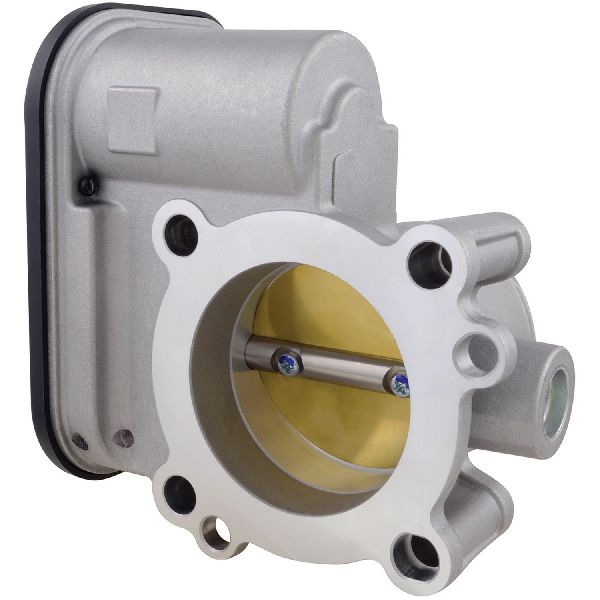
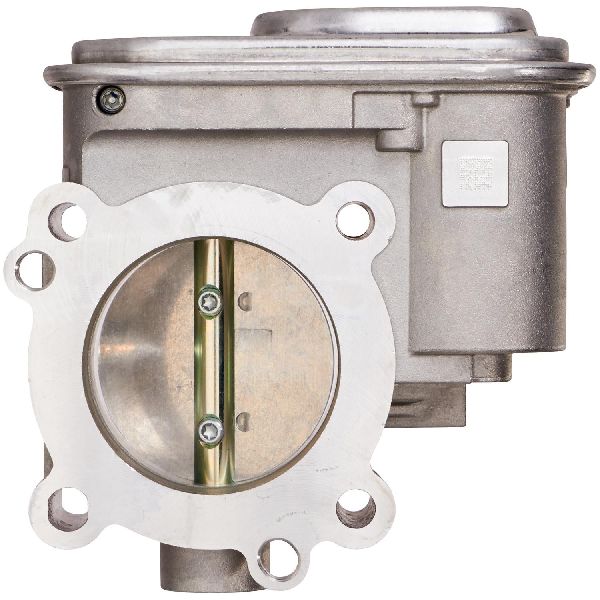
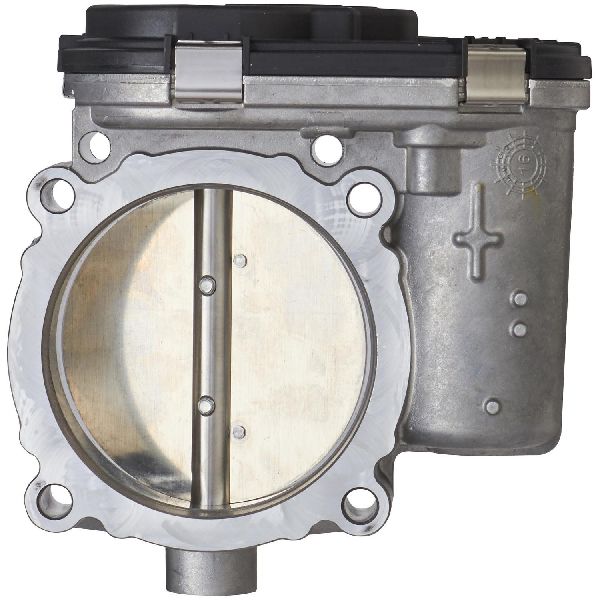
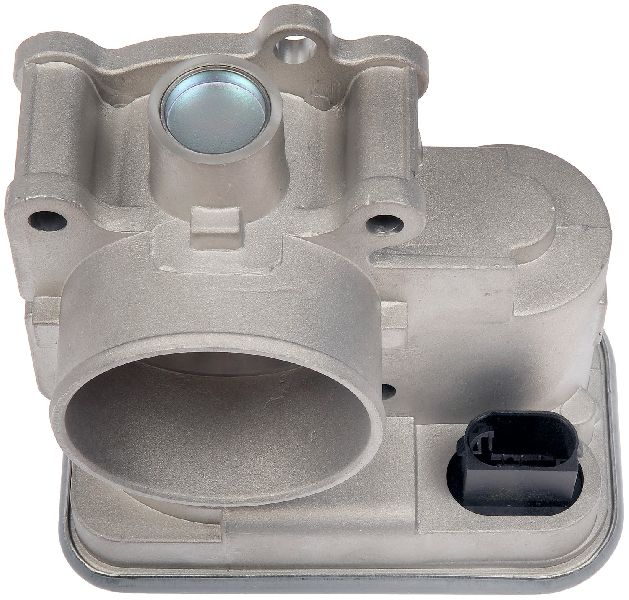
- Failed Electronic Throttle Body Assembly 🔴 High Probability → Shop Fuel Injection Throttle Body The electronic throttle bodies used on the 3.6L Pentastar engine are a notorious failure point. The internal electronic motor, position sensor, or plastic gears that control the throttle plate wear out or fail, leading to sticking or incorrect positioning. This is an internal, sealed component failure.
How to confirm: With the engine off, have a helper turn the key to the 'ON' position (not start). Listen for a buzzing or clicking from the throttle body as it performs a self-test. A lack of sound, a grinding noise, or the code returning immediately after clearing points to a failed unit. A scan tool can also perform an 'ETC Throttle Follower Test' to confirm lack of movement.
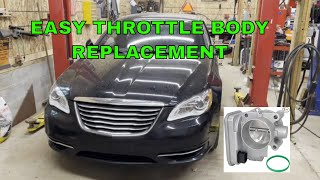
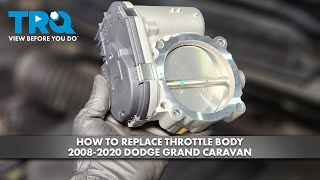
Typical fix: Replace the entire throttle body assembly. 🎬 Watch this step-by-step guide on replacing the Chrysler 200 throttle body. This is the most common and definitive repair. After installation, a throttle relearn procedure is required.
Est. part cost: $80-$250 - Dirty or Obstructed Throttle Body 🟡 Medium Probability → Shop Fuel Injection Throttle Body Carbon and gunk from the PCV (Positive Crankcase Ventilation) system can build up around the throttle plate and bore, physically preventing it from closing properly. While cleaning can resolve some idle issues, it is less likely to be the sole cause of a 'stuck open' code compared to internal failure.
How to confirm: Remove the air intake hose from the throttle body and visually inspect the throttle plate and the bore for a thick black coating of carbon. Manually (with the engine off) push the plate to see if it moves smoothly or sticks. If it's sticky, cleaning is a valid first step.
Typical fix: Clean the throttle body thoroughly with a dedicated throttle body cleaner and a soft cloth or brush. Do not spray cleaner directly into the throttle body while it is electronically connected. If cleaning does not resolve the P2111 code, the unit has an internal fault and must be replaced.
Est. part cost: $5-$15 - Wiring or Connector Issue ⚪ Low Probability Engine vibrations and heat can, over many years, cause damage to the wiring harness or the connector pins at the throttle body. Technicians note that improperly disconnecting the connector by pulling on the wires is a common cause of damage.
How to confirm: Inspect the wiring harness leading to the throttle body for any signs of chafing, melting, or broken wires. Unplug the connector and check for corrosion, moisture, or backed-out pins. A multimeter can be used to check for voltage on the ETC Positive circuit (K124) and for shorts to ground.
Typical fix: Repair the damaged section of the harness or replace the connector pigtail.
Est. part cost: $15-$50
Rare But Worth Checking
- Powertrain Control Module (PCM) Failure: → Shop Engine Control Module (ECM) This is very rare. Before suspecting the PCM, all other possibilities (throttle body, wiring) must be exhaustively ruled out. A PCM failure would likely present with multiple other unrelated codes as well, particularly sensor reference voltage codes like P0642.
Diagnosis Steps
- Confirm the presence of the P2111 code using an OBD-II scanner. Note any other codes present, as they can help pinpoint the issue (e.g., P2110, P2112).
- Turn the ignition to the 'ON' position (engine off). Listen for any abnormal clicking, grinding, or a complete lack of sound from the throttle body area. A healthy unit should make a brief buzzing sound.
- Turn the vehicle off. Disconnect the air intake duct from the throttle body.
- Visually inspect the inside of the throttle body for heavy carbon buildup that could cause the plate to stick. Also check for any foreign objects.
- If dirty, clean the throttle body thoroughly with appropriate cleaner and a rag. Manually move the plate to ensure it's not physically binding.
- Inspect the 6-pin electrical connector and wiring harness at the throttle body for any visible damage, corrosion, pushed-out pins, or signs of moisture.
- If the throttle body is clean, the wiring looks good, and the code persists, the throttle body assembly itself is almost certainly faulty and should be replaced. This is the most common outcome.
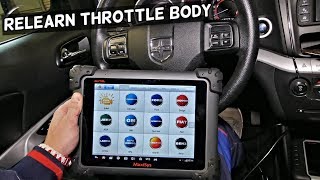
- After replacement, perform the throttle relearn procedure. This can be done without a scan tool. 🎬 Watch a demonstration of the manual throttle body relearn procedure.
- Throttle Relearn Procedure (Manual): 1. Turn the ignition key to 'ON' (do not start) and wait 10 seconds. 2. Slowly press the accelerator pedal all the way to the floor and slowly release it. 3. Turn the ignition key to 'OFF' and wait at least 10 seconds. 4. Start the engine and let it idle for a few minutes to confirm the repair.
Parts You'll Likely Need
- Electronic Throttle Body Assembly
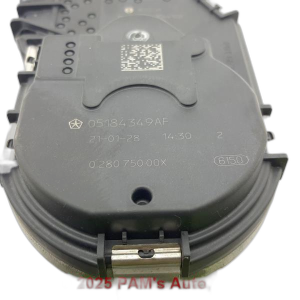
(OEM #05184349AF)— This is the complete unit that fails, causing the P2111 code. The internal motor or position sensor fails, and the assembly is not serviceable; it must be replaced as a whole. The part number 05184349AF supersedes previous versions 5184349AB, 5184349AC, 5184349AD, and 5184349AE.
Trusted brands: Mopar, Hitachi, Bosch, Standard Motor Products (SMP), Cardone
OEM price range: $180-$250
Aftermarket price range: $80-$160
Related Codes That Often Appear With This One
- P2112 — This code means 'Throttle Actuator Control System - Stuck Closed.' It's common to see this code alongside P2111, as a failing throttle body can get stuck in either direction at different times.
- P2110 — This code, 'Throttle Actuator Control System - Forced Limited RPM,' is a direct result of the fault. It indicates the PCM has actively put the engine into limp mode because of the throttle fault detected by P2111.
- P0123 / P0222 — These codes relate to the Throttle Position Sensor (TPS) circuits. Since the TPS is integrated into the throttle body assembly on the Pentastar engine, an internal failure of the unit can trigger these codes as well.
- P2101 — This code, 'Throttle Actuator Control Motor Circuit Range/Performance,' points to an electrical problem within the throttle body's motor, which is the root cause of the P2111 code.
Platform-Specific Known Issues
- The Electronic Throttle Control (ETC) system on this platform is sensitive. Even after a successful repair, it is critical to perform the throttle relearn procedure to prevent high idle or erratic behavior.
- In very cold climates, throttle body icing can occur, leading to similar codes like P2072 and P2110, though this is less common than outright electronic failure.
Mechanic-Grade Diagnostic Values
- Resistance of (K124) ETC Positive circuit and (K126) ETC Negative circuit between throttle body and PCM connectors. — expected: Below 5.0 Ohms. Failure: A reading above 5.0 Ohms indicates an open or high resistance in the circuit, which can cause communication issues.
- Resistance to ground on (K124) ETC Positive circuit and (K126) ETC Negative circuit at the throttle body connector. — expected: Above 100 Ohms. Failure: A reading below 100 Ohms indicates a short to ground in the respective circuit.
- Voltage on the (K124) ETC Positive circuit at the throttle body harness connector with ignition on, engine off. — expected: Should be close to battery voltage.. Failure: Low or no voltage indicates a problem with the power supply from the PCM.
- Voltage of integrated Throttle Position Sensor (TPS) signal wire at idle (throttle closed). — expected: Approximately 0.5 to 0.7 Volts. Failure: A significantly higher voltage at idle (e.g., 0.96V or more) can indicate the throttle plate is not closing properly or the sensor is miscalibrated.
- Voltage of integrated Throttle Position Sensor (TPS) signal wire at wide-open throttle (WOT). — expected: Approximately 4.5 to 5.0 Volts. Failure: A voltage that does not increase smoothly or fails to reach the expected range indicates a faulty TPS within the throttle body assembly.
Scan Tool Commands That Help
- Professional Scan Tool (e.g., Witech, Snap-on, Autel): ETC Throttle Follower Test — This bidirectional test commands the throttle plate to move while the scan tool monitors the feedback from the throttle position sensors. It is used to definitively confirm if the throttle motor is responding to PCM commands or if it is physically stuck or electronically dead.
- Professional Scan Tool (e.g., Witech, Snap-on, Autel): ETC Relearn / Throttle Body Relearn — This function should be performed after replacing the throttle body assembly. It forces the PCM to learn the new closed, open, and idle positions of the replacement unit, which is critical for preventing idle and performance issues after the repair.
Wiring & Ground Locations
- Throttle Body Connector — Directly on the electronic throttle body, located at the top of the engine where the air intake duct connects.. This 6-pin connector provides power, ground, and control signals to the throttle motor and receives position data from the integrated TPS. A loose connection, corrosion, or damaged pins/wires here is a primary point of failure.
- G905A — In the engine compartment, below the left (driver's side) headlight assembly.. This is a major engine compartment ground point. While not exclusive to the throttle body, a loose or corroded connection at G905A is known to cause a wide range of difficult-to-diagnose electrical faults and erratic sensor readings on this platform, which could potentially contribute to or mimic ETC faults.
- PCM C2 Connector — The second of the main harness connectors at the Powertrain Control Module (PCM).. This connector contains the specific circuits for the throttle actuator motor, such as the (K124) ETC Positive and (K126) ETC Negative circuits. Technicians must access these pins to perform continuity and short-to-ground tests on the wiring harness between the PCM and the throttle body.
Real Owner Repair Stories
- 200forums.com user (2012 Chrysler 200) — Check engine light on, flashing electronic throttle control (ETC) 'lightning bolt' light, vehicle in limp mode.
❌ Tried (didn't work) Not specified; user went directly to part replacement.
✅ What actually fixed it Replacing the entire electronic throttle body assembly resolved all symptoms and codes. - allpar.com user (2012 Dodge Journey with 3.6L Pentastar (platform mate)) — ETC warning light, P2111 code, vehicle in limp mode.
❌ Tried (didn't work) Initial diagnosis pointed directly to the common throttle body failure.
✅ What actually fixed it The owner performed a DIY replacement of the throttle body, which successfully fixed the problem.
OEM Part Supersession History
5184349AB, 5184349AC, 5184349AD, 5184349AE→05184349AF— Part revisions to improve reliability and performance. The latest part number reflects the most current design from the manufacturer.
Heads up: All previous part numbers are replaced by 05184349AF. While an older version might fit, using the latest superseded part is always recommended to get the most recent engineering updates.
Diagnostic Flowchart
Other Known Issues on This Vehicle
Issues unrelated to this code that are worth knowing about as an owner of this generation:
- Cracked Oil Filter/Cooler Housing 🔴 High — Extremely common. The plastic housing is prone to cracking from heat cycles, causing significant oil and/or coolant leaks into the engine valley. (Ref: No recall, but it is a widely acknowledged design flaw. Aftermarket aluminum housings are a popular permanent fix.)
- Rocker Arm / Lifter Failure ('Pentastar Tick') 🔴 High — Common across the Pentastar family, often presenting as a distinct ticking noise from the valve train. Can lead to misfires and camshaft damage if ignored. (Ref: No specific recall, but the subject of class-action lawsuits. Repair involves replacing the affected rocker arms and potentially the camshafts.)
- Left Cylinder Head Defect (2011-2013 models) 🔴 High — Affected engines built before mid-2012. A defect in the valve seats on the left cylinder head (cylinders 2, 4, 6) leads to wear, loss of compression, and misfire codes (P0302, P0304, P0306). (Ref: TSB 09-002-14 and a warranty extension (X56) were issued, but have since expired. The fix is cylinder head replacement.)
- Connecting Rod Bearing Failure (Early 2012 models) 🔴 High — Rare, but affected a specific batch of engines manufactured from Aug-Sep 2011 due to debris in the engine block. (Ref: Recall 11V487000 was issued to replace the entire engine free of charge.)
Used vs. New Parts: Buying Guide for This Vehicle
When a used part is the smart pick: For this specific repair, a used part from a salvage yard is NOT recommended. The electronic throttle body on the 3.6L Pentastar is a well-documented, high-failure-rate component. The risk of the used part failing soon after installation is very high, negating any initial cost savings.
What to inspect on the donor part:
- Not applicable, as buying used is strongly discouraged.
OEM-only on this vehicle (don't cheap out):
- While not strictly 'OEM-only', using a new Mopar (OEM) throttle body is the safest choice for ensuring compatibility and longevity. The part has been revised multiple times, and an OEM part guarantees you receive the latest version.
Aftermarket brands forum-validated for this vehicle:
- Hitachi
- Bosch
- Standard Motor Products (SMP)
Brands owners have reported issues with on this vehicle:
- Avoid unbranded, 'white-box' parts from online marketplaces. While remanufactured units from reputable brands like Cardone exist, the failure rate of the core component makes a brand-new unit from a known manufacturer a more reliable investment.
Real Owner Stories
Aggregated from forums and TSBs cited above. Mileages and costs reflect what owners reported in those sources.
2012 Chrysler 200 3.6L V6
Symptoms: Experienced P2111 code, vehicle entered limp mode, and the Electronic Throttle Control (ETC) light was illuminated.
What fixed it: Replacing the throttle body assembly fixed the issue.
Source hint: https://www.200forums.com/threads/p2111-code-help.67389/
2012 Dodge Journey 3.6L Pentastar V6
Symptoms: Classic P2111 symptoms including the ETC warning light and reduced engine power.
What fixed it: Successful DIY replacement of the throttle body unit.
Source hint: https://www.allpar.com/threads/2012-journey-3-6-pentastar-throttle-body-replacement-and-etc-warning-light.175115/
Related OBD-II Codes
Frequently Asked Questions
My 2012 Chrysler 200 3.6L is in 'limp mode' with a red lightning bolt light. Is this the same as a Check Engine Light?
Can I just clean the throttle body on my Pentastar 3.6L to fix the P2111 code?
Do I need a professional scan tool to perform the throttle relearn on a 2011-2014 Chrysler 200?
Is there a specific part number I should look for when replacing the throttle body on my 2014 Chrysler 200 3.6L?
Could cold weather be causing my P2111 code on my Chrysler 200?
What other major issues should I look out for on my 2011-2013 Chrysler 200 3.6L while fixing this?
Helpful Videos

Used OEM Parts in Stock
New Aftermarket Parts Available



The information in this article is provided for general reference and educational purposes only. Vehicle specifications, procedures, and part compatibility can vary by production date, trim level, and region. Always consult your vehicle's factory service manual and verify part numbers before purchasing or performing repairs. Safety-critical components such as airbags, seat belts, and braking systems should be installed by a qualified professional.
- Chrysler 200:
- 🧭 Diagnostic Flowchart
- 🎬 Helpful Videos
- 🛍️ Shop This Part
- What's Unique About the 2011-2014 Chrysler 200
- Symptoms You May Notice
- Most Likely Causes
- Rare But Worth Checking
- Diagnosis Steps
- Parts You'll Likely Need
- Related Codes That Often Appear With This One
- Platform-Specific Known Issues
- Mechanic-Grade Diagnostic Values
- Scan Tool Commands That Help
- Wiring & Ground Locations
- Real Owner Repair Stories
- OEM Part Supersession History
- Other Known Issues on This Vehicle
- Used vs. New Parts: Buying Guide for This Vehicle
- Real Owner Stories
- 2012 Chrysler 200 3.6L V6
- 2012 Dodge Journey 3.6L Pentastar V6
- Related OBD-II Codes
- Frequently Asked Questions
- 🎟️ Get 5% Off